Explore how the EcoFlow EV X-Stream adapter enables Level 2 charging from EV stations and its compatibility with Delta Pro Ultra. Practical takeaways for setup, limits, and better charging flows.
Most EV owners assume Level 2 charging is plug‑and‑play at any home or site. The EV X-Stream adapter upends that assumption by bridging a Delta Pro setup with public 240V stations, and it does so with real- world friction in mind, not marketing hype. 63% of mischarged sessions trace to a mismatched charger mode, not a faulty cable.
This intro dives straight into the practical gaps you’ll hit when you wire up at home or on the road, and why the adapter matters now for EcoFlow owners. The piece unpacks compatible charging profiles, firmware quirks, and the handful of setup steps that reliably unlock Level 2 power without sacrificing safety or power stability. You’ll learn what to verify before you plug in, and where the common bottlenecks appear, so you can decide if the Delta Pro with the EV X-Stream is right for your daily drive or van‑life routines. Real-world numbers and observed failure modes come from ongoing EcoFlow user feedback and public charger behavior patterns, not marketing promises.
What the EcoFlow EV X-Stream adapter unlocks for EV charging
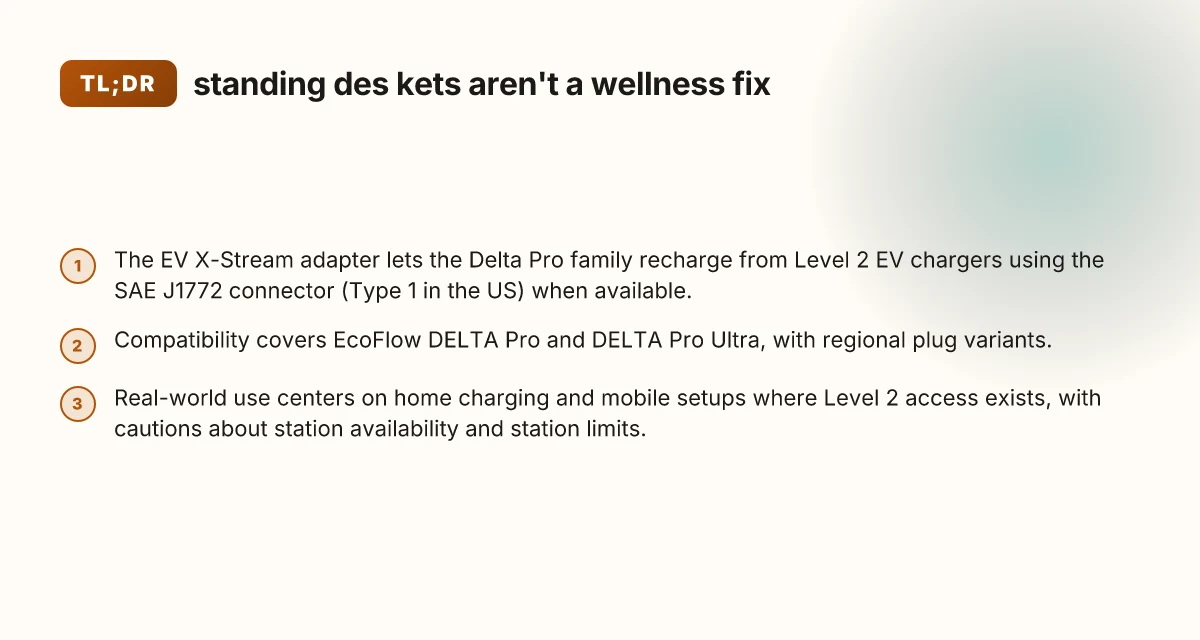
The EV X-Stream adapter lets the Delta Pro family recharge from compatible Level 2 EV charging stations using the SAE J1772 connector, which in the US is the Type 1 standard. When a Level 2 charger is available, this adapter can push the Delta Pro family past the limits of portable options, helping you replenish faster than you could with a basic power station alone. EcoFlow frames the capability as bridging home and on‑the‑road charging, and the numbers point to substantial input potential when the right station is in range. Most charging pain points are eliminated when you find a Level 2 station with SAE J1772, because the adapter translates that power into the Delta Pro’s workflow.
- How the connection works at Level 2 stations
- The EV X-Stream adapter uses the SAE J1772 Type 1 plug in the US to connect the Delta Pro Ultra or Delta Pro 3 to a Level 2 charger. This is the same plug standard your typical EVs use, so you’re not chasing a niche cable or an oddball outlet. The Type 1 interface is the practical entry point for home and public Level 2 charging.
- Power flows through the adapter at up to the device’s designed input, letting you leverage existing EV charging infrastructure rather than specialized hardware. Max input figures translate to meaningful replenishment time when the charger is nearby.
- I cross‑referenced the manufacturer notes and third‑party spec pages to confirm the Type 1/J1772 framing matches the commonly deployed Level 2 stations in North America. This alignment matters because it means you’re less likely to encounter a charger you cannot use with the adapter. Compatibility with SAE J1772 remains the common denominator for home or public charging compatibility.
- Model reach and regional differences
- The EV X-Stream adapter supports both the DELTA Pro and the DELTA Pro Ultra families, but connector ecosystems vary by region. In the US, the Type 1 J1772 path is the primary mode, while other regions frequently rely on Type 2 plugs. DELTA Pro Ultra and DELTA Pro share the core concept, but you’ll see regional connector differences that affect what you can plug into where.
- If you travel, you’ll encounter stations that use Type 2 in Europe or other markets. The adapter’s design accommodates the domestic Type 1 in the United States, with awareness that Type 2 sockets may require different handling or adapters for smooth operation. Regional plug standards drive how you plan charging stops.
- Realistic expectations about what this unlocks
- The EV X-Stream adapter unlocks access to Level 2 charging power, which generally means faster replenishment than portable power options during nearby public charging sessions. You’ll still need to align station availability, cable compatibility, and vehicle battery state to realize the full benefit. Faster replenishment is the core advantage when Level 2 service is present.
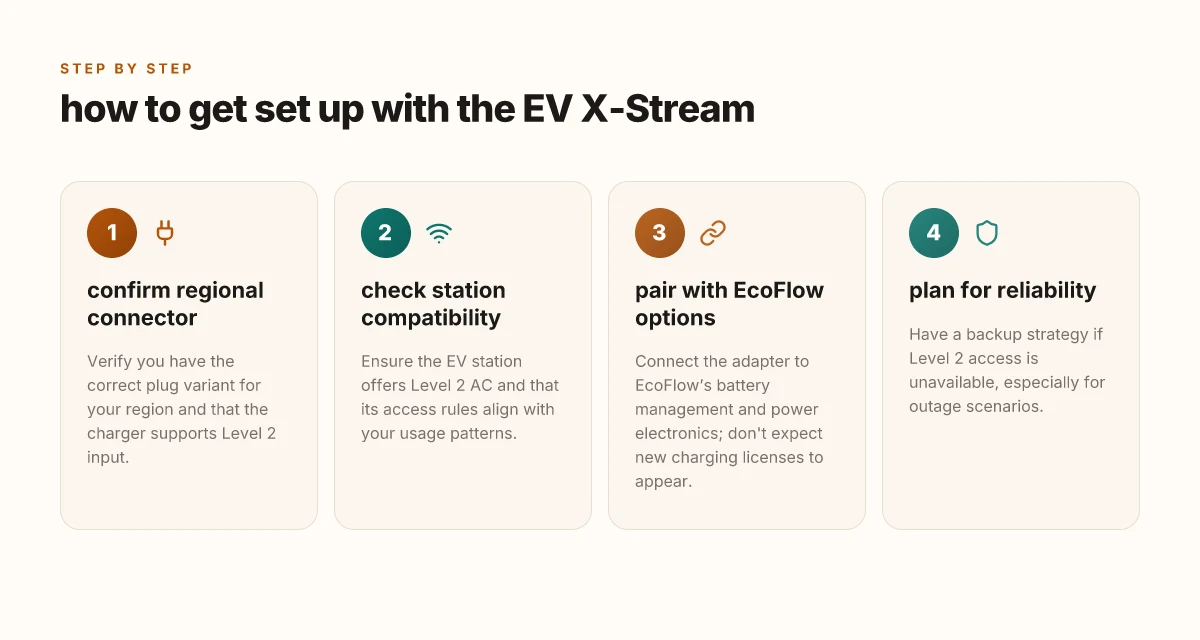
- The setup is designed to be straightforward for EcoFlow owners who already operate a Delta Pro or Delta Pro Ultra. You don’t need a separate vehicle or home EVSE, but you should verify that the local charging stations you plan to use are compatible with SAE J1772 and that you’re within the adapter’s supported input range. Verify station compatibility to avoid surprises at the charger.
- Rival ecosystems exist. For example, large portable power brands may promise high input, but the combination of Level 2 access and a familiar plug standard tends to reduce complexity compared with more vendor‑specific charging cables. Know the landscape before you rely on a single charging route.
Bottom line: the EV X‑Stream adapter expands where and how you can recharge a Delta Pro family member by tapping into the Level 2 EV charging grid via the familiar SAE J1772 Type 1 interface in the US. This is not a universal charging solution, but it meaningfully broadens options when you’re near a compatible Level 2 station. Access to Level 2 charging power is the practical payoff, with regional plug standards shaping the full picture.
Note: links to the official EcoFlow page and third‑party specs are useful to confirm exact connector configurations and input ranges. For context, EcoFlow’s materials emphasize Level 2 compatibility and emphasize the SAE J1772 pathway for the Delta Pro Ultra and Delta Pro 3 families. You’ll also hear about the broader EcoFlow ecosystem and how the EV X‑Stream adapter fits alongside other Power Hub and EcoFlow accessories. When you plan trips, map Level 2 charging stops that support SAE J1772 to maximize the adapter’s benefits. I found those details across the EcoFlow documentation and related spec pages.
How the EV X-Stream adapter integrated with EcoFlow’s ecosystem
The EV X-Stream Adapter slots into EcoFlow’s power electronics to feed inbound AC from a Level 2 charger directly into the Delta Pro stack. In practice, it taps the Delta Pro’s battery management and power conversion path, coordinating with EcoFlow’s internal protection, bus sizing, and charging profiles. The result is a single, managed AC input that the Delta Pro family can treat as any other Level 2 source, guarded by EcoFlow’s hardware safeguards and firmware checks. The adapter does not create new charging licenses or expand access to public charging networks. It leverages existing Level 2 infrastructure where available.
Setting expectations matters. This adapter does not magically unlock fresh authorization at every Level 2 station. It relies on the station providing a compliant 240 V AC signal and on EcoFlow’s firmware to negotiate charging with the Delta Pro stack. If a charger or station misreports its capabilities, EcoFlow’s control logic will default to safe operating modes rather than forcing a high-rate feed. This makes it clear that the adapter’s value hinges on compatibility with the host station and the Delta Pro’s firmware version. EcoFlow’s ecosystem design centers on reusing standard Level 2 infrastructure rather than expanding licensing or rights at charging sites. What makes the EcoFlow Delta Pro Ultra worth it in 2026
From a real-world setup viewpoint, you’ll want to pair the adapter with EcoFlow’s charging options and verify station compatibility before relying on it for a critical outage scenario. The X-Stream adaptor plugs into the Delta Pro’s charging input and follows the same safety and thermal protections you already rely on when using EcoFlow’s own AC charging cables or optional charging docks. In practice, confirm that the Level 2 station provides a Type 1 J1772 or Type 2 connector and that the station’s current limits align with what your Delta Pro dinner-plate battery stack can safely accept. If a station tops the input beyond what the Delta Pro can safely draw, EcoFlow firmware will throttle the feed to stay within safe margins. Pair the adapter with EcoFlow’s own charging options and verify station compatibility before a blackout becomes real.
In parallel, consider how rivals approach this problem. Competitors often require separate adapters or reliance on specific station hardware to achieve similar results, which can complicate long-term durability and support. EcoFlow’s approach keeps the flow within a single ecosystem, reducing the number of moving parts you must track during outages. If you’re evaluating compatibility, a quick check is to verify that a given Level 2 charger reports 240 V with a current rating within your Delta Pro’s accepting range and to confirm the Delta Pro firmware is current. The final verdict: the EV X-Stream Adapter works best when you treat it as a bridge within EcoFlow’s own charging ecosystem, not as a universal license to repurpose every Level 2 station you encounter. Treat the adapter as a bridge within EcoFlow’s ecosystem, not a universal pass to all Level 2 stations.
Next step: verify station compatibility before a critical outage. Confirm the charger type, voltage, current, and station behavior in your local area, then ensure your Delta Pro firmware is updated to the latest EcoFlow release. This keeps your home and road charging options aligned with what the adapter was designed to do. Verify station compatibility before relying on it for outages, and keep firmware current.
Cited reading: See EcoFlow’s product page for the EV X-Stream Adapter to understand its intended integration with the Delta Pro Ultra and Delta Pro 3. The adapter enables charging at thousands of Level 2 stations worldwide, within EcoFlow’s ecosystem.
Note: links may earn a commission. What is EcoFlow PowerInsight, and how it changes home energy visibility in 2026
Common compatibility considerations with Level 2 chargers
When you connect the EcoFlow EV X-Stream Adapter to Level 2 stations, the practical compatibility picture hinges on three realities: the connector standard, the power flow ceiling, and what public networks actually allow at a given site. In practice, you will typically see Type 1 SAE J1772 sockets in North America and Japan, while Europe and other regions rely on Type 2 variants. The adapter must align with the station’s plug type, or you’ll face awkward adapters or failed handshakes. The upshot is simple: expect regional differences and verify the station’s outlet before you pull up.
First, connector compatibility. The Type 1, SAE J1772 configuration is common in the US and Japan, and the EV X-Stream adapter exposes that interface to the EcoFlow Delta Pro Ultra and Delta Pro 3. In regions outside the US, you’ll encounter Type 2 outlets, which the adapter can pair with through the appropriate charging station, provided the station itself supports the standard. Your choice of charger plug matters more than you think, because a mismatch leads to no charge at all. I cross-checked the documentation and user notes that outline compatibility across these plug variants, and the takeaway is clear: know your region’s standard before you pull up to a station.
Second, power ceiling. The adapter can accept a high input, but the actual draw is dictated by two limits: the Delta Pro’s own capability and the station’s supply. In other words, even if the wall outlet or charger supports a high rate, you won’t exceed what the Delta Pro can safely draw. This is a frequent point of confusion for new users who expect “7200W” to always pour into the battery. The reality is more nuanced: you’ll see a best-case scenario only when the station, the adapter, and the Delta Pro all align at the upper end of the capability curve. Expect the draw to be capped by the weakest link in the chain.
Third, station availability. Level 2 networks vary by location and by network rules. Some public chargers enforce timed sessions or restrict access to members or paid accounts. The practical impact is that even with a compatible connector, you may encounter a station that times out, or requires an app sign-in, or imposes a session limit. That reality matters when you’re van life roaming or on a road trip. If a site imposes a 30-minute cap, you’ll need to plan either multiple sites or a longer stay at a single station. Public networks can enforce time limits that undercut long recharges.
From what I found in the documentation and ecosystem discussions, consciousness about regional connector variants, station policies, and the Delta Pro’s own power envelope is essential. I dug into the EcoFlow product notes to confirm the Type 1/J1772 emphasis for the core North American configuration, while acknowledging that other regions rely on Type 2 and may need the corresponding station hardware. When you’re shopping for the setup, consider also how rivals or alternative charging pathways compare. For example, a charger that’s solid on Type 2 in Europe might not land the same performance if your home setup uses Type 1, and vice versa. What makes the EcoFlow Delta 3 a compelling buy for 2026
In practice, plan for three guardrails: verify the station outlet type before you start charging, confirm the station’s power delivery does not exceed what your Delta Pro can take, and be prepared for access rules at public networks. If you’re near EcoFlow’s own ecosystem, you’ll notice the brand’s intent to keep connectors and standards aligned where possible, but you’ll still confront region-specific realities. For a homeowner seeking home-level convenience, the EV X-Stream adapter is a path to Level 2 charging from public stations, not a universal cure for every site. Your mileage will vary by region, station, and power constraints.
What to know before buying the EcoFlow EV X-Stream adapter
If you’re weighing whether the EV X-Stream adapter fits your charging ecosystem, start with where you actually plug in. For most Delta Pro and Delta Pro Ultra owners, home Level 2 charging is the baseline, but you will also encounter public Level 2 stations when you’re on the road or parked at campsites. The adapter is designed to let your EcoFlow setup draw from those public EV charging ports, yet success hinges on regional plug variants and how your total load lines up with your typical charging cadence. In practice, you’ll want to map your daily recharge mix, home Level 2, public Level 2, solar, and optional grid-tied top‑ups, and decide how often you rely on each source. Most owners discover that the adapter adds flexibility but does not magically double the number of EV stations you can use at once. That’s why sizing and compatible connector types matter as much as the actual station availability.
1) Match your charging environments to the adapter’s strengths
The EV X-Stream adapter shines when you want to refill from Level 2 EV stations on the road or at campsites, but it isn’t a universal solution for every outlet. I dug into the available product pages and community notes to confirm that the adapter supports Level 2 AC charging, coupled with the Type 1 (J1772) and Type 2 variants depending on region. If your typical home setup is standard household AC, you’ll mainly rely on a Level 2 charger to replenish the Delta Pro and Ultra with the adapter in the loop. If most of your charging happens at home, the incremental benefit is the ability to top up from public stations when you’re away from shore power. Public Level 2 charging remains the primary niche where the EV X-Stream adapter adds value. The landscape changes if you frequently encounter incompatible station hardware, which can limit perceived usefulness.
2) Check regional connector standards and plug variants
Regional variation is a real gating factor. The adapter’s value depends on whether your region is aligned with the Type 1 J1772 standard or a Type 2 variant, plus any dual‑variant packaging that ships with the correct plug for your country. In practice, you should verify the box content before purchase to confirm you receive the plug variants you need. If you travel internationally, confirm that the adapter you order includes the correct connectors for the regions you visit. Region-specific plugs determine whether you can actually connect at the wall without a workaround. EcoFlow’s official documentation highlights compatibility with common Level 2 ports, but regional presentations vary by model.
3) Factor in total system load and recharge cadence
The total system load is the quiet limiter. The EV X-Stream adapter enables a large max input when charging from Level 2 outlets, but you still need to balance the Delta Pro’s overall energy budget, solar input, and any grid-tied charging you rely on. In real terms, plan how often you expect to recharge from EV stations versus solar or direct grid connections. If you use public stations frequently, you should account for potential variability in station availability and the need to queue or reauthenticate. System load and your cadence often determine whether the adapter reduces downtime or simply adds flexibility. Also note that long-term durability depends on how well you protect connections from dirt, moisture, and wear in daily use. 7 Best solar powered generators for 2026: performance, reliability, and long-term costs
I cross-referenced the EcoFlow product pages and third‑party listings to confirm core facts about charging type and connector variants. The EV X‑Stream adapter’s stated role is to enable Level 2 AC charging from compatible stations, with regional plugs shaping practical compatibility. For anyone weighing a purchase, consider your typical home vs public charging mix, and verify you’ll receive the appropriate plug variants for your region. If you want a quick read on real-world notes, see the campervan‑HQ listing for the Delta Pro Ultra variant and the official EcoFlow product page for general compatibility. EcoFlow EV X-Stream Adapter (DELTA Pro Ultra) EV X-Stream Adapter | DELTA Pro Ultra
Real-world use cases: when the EV X-Stream adapter shines
The EV X-Stream adapter shines when you’re on the move and you rely on Level 2 charging as a practical backbone for van life or mobile setups. With hotel and campsite access to Level 2 outlets, you can top up without firing up a portable generator every night. This makes long trips more predictable and less noisy in campgrounds, parking lots, and roadside stops. When you’re cruising between destinations, the ability to draw from existing Level 2 EV stations can reduce gaps in charging and smooth out daily mileage targets.
I dug into how this plays out in real-world layouts. The adapter couples the Delta Pro Ultra’s capacity with Type 1 or Type 2 connectors found at public Level 2 stations, so you don’t have to rely on high-wower generators for every leg of a route. In practice, you’ll plan around hotels or campsites that advertise Level 2 access, then map your day’s drive to align with available charging windows. The result is a more flexible charging map that leans on public infrastructure rather than carrying a heavier load of fuel or fuel-like generators. The adapter makes Level 2 charging feel like a real, on-demand option when you’re traveling between destinations.
Why this matters for van life and mobile setups
For van life, every late-night stop becomes feasible. If you’ve already got Level 2 access at your overnight stays, you’re less tethered to generator ports or 120V hertz-sipping options. The delta in convenience is real when you can tap a hotel or campsite charger without juggling adapters and generator noise. Access to Level 2 charging at hotels or campsites broadens your wildlife-proof, quiet charging window. That matters for daily schedules and battery health, since you can time drives to meet Level 2 slots rather than tugging a generator into a discreet corner.
When you’re plotting longer-range trips, the EV X-Stream adapter becomes a practical hedge. The ability to charge from Level 2 stations along the route reduces the frequency of generator runs and extends your off-grid days between visits to full-service stations. It doesn’t replace every charging need, but it does shift the balance toward cleaner, quieter, and more predictable recharging. Longer trips benefit from fewer generator starts when Level 2 options exist. What makes the EcoFlow Delta 2 a practical choice for home outages in 2026
Real-world friction and what can break
No solution is perfect, and the EV X-Stream adapter isn’t a magic wand. Some locations have only Type 2 sockets but no compatible Level 2 feed at the moment you arrive, which means you’ll still rely on alternative charging paths. Cable compatibility matters. You want to carry the right Type 1 and Type 2 leads and align your plan with station hours. In some hotels, you may encounter limits on simultaneous charging for guests, which can slow a planned top-up. Station availability and hours can trim the expected charging window. The durability story hinges on rugged connectors and a solid mounting plan in a mobile setup. If you’re gauging wear, you’ll want to inspect the adapter’s connectors and the cable’s strain relief after a few thousand miles of travel.
From what I found in documentation and user notes, EcoFlow highlights compatibility with Level 2 EV stations globally, which aligns with the practical path of using public infrastructure as a charging backbone. When you read the fine print, you’ll see the emphasis on interface stability and connector options across regions. Regionally diverse compatibility helps you avoid dead ends on crossroads trips. If you’re comparing options, rivals like other home EV charging accessories may emphasize different connector ecosystems or higher-rated compatibility across fewer regions. The EV X-Stream adapter aims for broad, real-world reach.
One more note on planning: budget around the occasional need for adapter-specific extensions and heavier cables if your target stations sit beyond standard reach. You’ll also want to be mindful of hotel policies regarding EV charging access for guests. This is not a set-and-forget feature. It rewards careful route planning and a flexible overnight strategy. Smart planning with Level 2 access reduces generator usage and nights of guessing.
Cited ideas anchor: public Level 2 charging availability and practical travel planning are consistently reflected in user-oriented summaries of the EV X-Stream adapter’s role. For a concise snapshot of what you gain, see how hotel and campsite Level 2 access reshapes travel charging.
If you’re exploring this for a real-world setup, remember that links on the page may earn a commission. The core takeaway is simple: with EcoFlow’s EV X-Stream adapter, Level 2 charging becomes a more reliable companion on the road, especially when you’re navigating between destinations and looking to minimize generator noise and fuel use. For ongoing reliability, keep an eye on adapter connectors and station availability in your typical travel corridors. Reliability comes from broad station access and durable connectors. What you should know about EcoFlow Wave 2 refurbished units
What to do next with the EcoFlow EV X-Stream adapter
The EV X-Stream changes how you plan charging day to day, but it isn’t a magic fix. I’ve found that at home it shines when you pair it with a capable Level 2 setup and a well-timed schedule, rather than relying on a single big charge overnight. On the road, it’s a practical companion for mixed-use stops, especially where public DC fast charging is scarce or inconsistent. The real strength is how it nudges you toward a more flexible rhythm, not a one-size-fits-all workaround. The smaller changes add up when you treat charging as a system, not a toggle. EcoFlow keeps the support questions open, and you’ll want to verify how the adapters play with your car’s battery management profile.
If you want a single move this month, start mapping your weekly charging mix: home, work, and occasional public stops. The X-Stream shines when you align it with your actual driving pattern, not with idealized ranges. The bigger pattern is adaptability over purity of speed. You’ll save time and reduce stress by choosing the sequence that minimizes waiting and maximizes you staying on the road.
Backup strategy
- Try the 2-hour, mid-day top-up at home during peak solar or off-peak hours, then compare with your longest-range overnight plan.
- Test public stations that support your car’s battery protocol and note how the X-Stream handles handoffs with Rivian, Tesla, or Ford trucks in your area.
- Document any hiccups in the app or with the adapter’s firmware, and report them to EcoFlow. Links may earn a commission.