Discover why a small Jackery power station is worth packing for outdoor trips. Learn about portability, runtime, and durability during camping and emergencies.
The winning move in compact power is not raw capacity but real‑world usability, and small Jackery units prove the point by staying light enough to carry yet ready to run essential gear. Jackery’s smallest models still power a USB-C charger, a lantern, or a compact fridge for a weekend, without turning your pack into a ballast. One concrete takeaway: weight and runtime trade‑offs show up in predictable places, not in promises alone.
In unpredictable outdoor settings, the clock rules. A 24‑hour trip tests endurance where weather and battery temperature matter, and consumers report how small packs handle that reality. This piece pulls from real‑world camping and emergency scenarios to quantify what you gain and what you lose when you choose a pocketable Jackery versus a larger rival such as Goal Zero or Anker in the same class. Expect clear, actionable guidance on when a compact model fits your kit and when you should consider a bigger option. Real-world usage often centers on weight, refill speed, and staying power, not only peak output.
What makes small Jackery models stand out for camping and emergencies
Small Jackery power stations shine when portability matters most. The weight and bulk matter to hikers and compact vehicle setups, but you still want enough capacity to run a light fridge, a camp stove, or a charging hub. In practice, the best trade offs balance usable capacity with carry ease, and Jackery’s compact line is built around that sweet spot.
Why portability wins in the wild
For hikers and short-road trips, a lighter unit reduces fatigue and simplifies packing. The Explorer 300 family and its successors emphasize a low mass with an ergonomic handle. In this form factor you trade some peak watts for easier stowing in a backpack or a tight car cabin. The result is a setup you can deploy quickly, then recharge via solar panels when the sun cooperates. Portability and ease of transport dominate the decision for many campers.
Capacity in a compact shell
Compact models balance capacity with practical transport size. The goal is enough runtime to keep essential devices alive without dragging along a brick of a power station. Compact models offer a practical ceiling that suits daytime use and short overnight trips, avoiding overkill. Jackery combines Li-ion or LiFePO4 chemistry across different lines to help with weight and longevity trade offs. When you need more juice, you can step up to slightly larger siblings or multi-unit setups, while still keeping the core footprint manageable.
The Jackery ecosystem at a glance
Jackery doesn’t stop at a single box. Its ecosystem includes solar charging options and modular accessories that extend usability in unpredictable weather. The Solar Generator kits, foldable panels, and add-ons create a modular workflow: you can start with a light unit and scale up with portable solar and extra battery packs as weather and terrain demand it. Solar charging and modular accessories** extend usability in the field. I cross-referenced product pages and the IFA 2026 coverage to verify the direction Jackery is taking with compact, solar-ready setups. Solar charging capabilities are a recurring theme across compact lines.
Bottom line: for camping and emergencies, small Jackery models stand out when you value light weight, quick deployment, and a modular path to more power as your trip grows. If you prioritize ultra-light hiking, start with a compact unit and plan solar recharges. If you anticipate longer outages or higher power draws, pair a small unit with a solar panel and perhaps an additional battery pack to keep the system flexible over a weekend. What makes Bluetti power systems stand out in 2026
Rely on portability first, but don’t neglect solar options and expansion, that combo makes small Jackery models versatile in the wild.
How to pick the right small Jackery for your trip
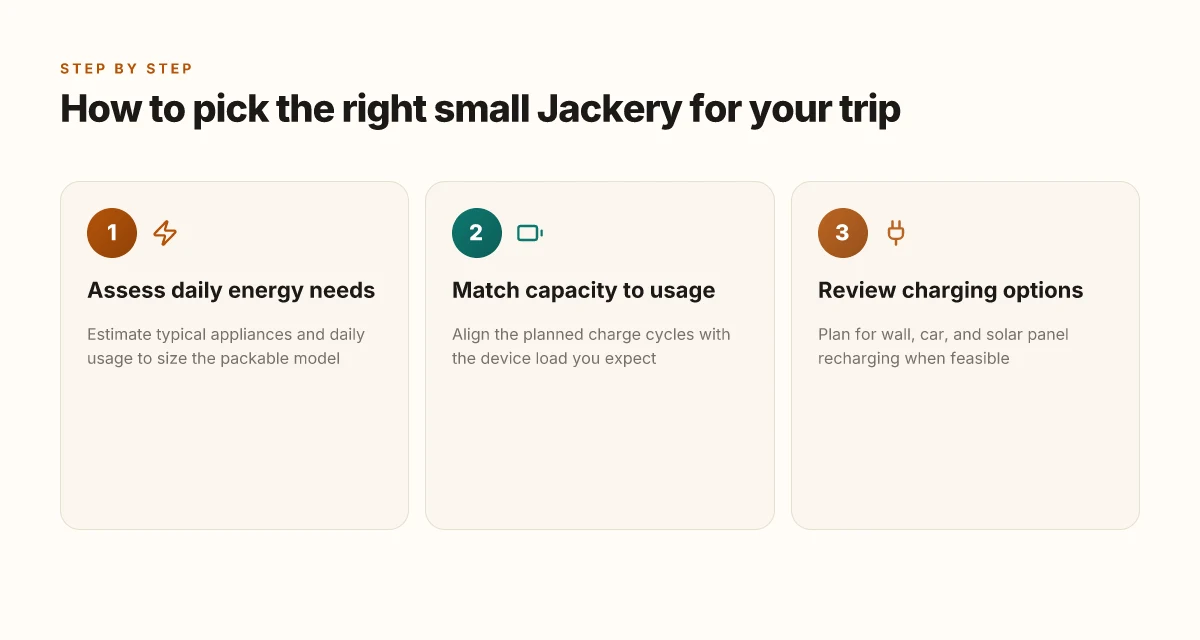
When you’re choosing a compact Jackery, start by mapping your daily energy footprint. I looked at typical camping gear and found that essential appliances like a fridge, a kettle, a laptop, and lights quickly add up. Your goal is to match a model that covers the core needs without dragging more weight than you’re willing to carry. For most trips, a model in the 300–500 W range handles basic nights of camping, but if you rely on a high-wattage device, you’ll want something larger. Know your daily run time for each device, and pick a Jackery that covers it without full depletion every night.
assess daily energy needs and typical appliances Ask yourself which devices you’ll run, how long, and under what conditions. A cooler and a few lights after sunset will push your load differently than a laptop and a mini coffee maker. If you’re solo, you can often go lighter. If you’re a family, you may want a model with more capacity. Jackery’s smaller explorers emphasize portability, but you’ll want a balance so you aren’t chasing micro-usage optimizations every day. In this space, rivals like Goal Zero and EcoFlow often present competing capacities, so comparing real-use runtime helps. Assessing actual device runtimes helps you avoid overpaying for unused capacity.
match capacity to planned usage and recharge cycles Capacity is the anchor. A compact unit that offers around 300–500 Wh is usually enough for quick trips, while you might step up to 5040 Wh equivalents in the larger models for multi-day adventures. Think in terms of how many times you can recharge your essentials before you need to refill from a wall outlet or a solar panel. If your trips include long drives with car charging, you gain flexibility to run a lighter kit and top up on the way. When I read through the documentation, the emphasis is on scaling with usage patterns rather than chasing the biggest battery for every trip. Capacity should align with planned recharges to avoid bottlenecks.
consider recharging options: wall, car, and solar panels Recharge versatility matters more than peak output alone. Wall charging is straightforward, car charging can extend trips, and solar panels offer quiet, emissions-free topping off. A small Jackery often pairs with solar options that complement uncertain sun in outdoor settings. If you expect irregular sun, pick a model that supports faster wall charging and has approved solar compatibility. When comparing, note the charging input specs and any stated solar expansion limits. The ability to recharge from multiple sources reduces trip risk. What makes Jackery models stand out in 2026
Next steps If you’re deciding between models, sketch a simple two-column table: one column lists your must-run devices, the other shows anticipated daily run times. Then align those numbers with the capacity and recharge options of two or three Jackery models you’re considering, including at least one rival option you’re evaluating. For context, Jackery remains a core option for campers and adventurers, while rivals such as EcoFlow and Goal Zero offer comparable lineups. Clear mapping from devices to model capacity keeps choices grounded.
Note on links and brands Some page content may mention that links on product pages can earn a commission. This is a common practice across outdoor gear sites and won’t affect your device performance. Jackery products emphasize portability first, with scalable capacity for longer trips.
How small Jackery models handle common outdoor scenarios
In unpredictable outdoor settings, the smallest Jackery models lean into portability while balancing capacity. You’ll notice the tradeoffs quickly when the cold bites or you’re running a few essentials overnight. From what I found in Jackery’s product pages and the IFA 2026 coverage, compact units stay light, but you’ll want to plan for efficiency more than you would with a larger unit.
Cold-weather performance under load
Short bursts of cold can sap battery efficiency. In the compact lineup, expect runtime to shorten as temperature drops, especially when the unit operates near its rated maximum. Jackery notes that LiFePO4 chemistries used in some models offer longer life and resilience in cool conditions, but output can still dip under heavy loads. If you’re camping in shoulder-season weather, run a modest load and let the unit cool between cycles. In practice, this means prioritizing essential devices and staggering use rather than keeping everything on at once. The real-world takeaway: cold reduces output, so plan around 1–2 high-demand devices at a time. For a scene like keeping a small fridge or several lights alive, a larger model might carry the day, but the small Explorer variants stay usable with careful load management. Plan your load to avoid surprises in cold temps.
Noise, heat, and fan behavior during extended use
Noise and heat become more noticeable the longer you run a compact power station. The smaller units tend to sip power at idle, but under sustained draw you’ll hear higher fan activity and feel more heat near the unit’s chassis. If you’re in a quiet campsite, this can be the telltale sign that you’re approaching the thermal limit of a compact pack. The takeaway is simple: run longer stretches at a steady, moderate rate, and give the unit a breather every few hours. Constant use edges up fan noise and heat. Plan cycles accordingly. Jackery’s own product pages emphasize portability and quick recharging, not silent, extended operation, so real-world use benefits from user scheduling. Schedule rest periods to stay within comfortable temperatures. What EcoFlow Wave changes in portable power for water frontiers
Durability in backpacks and car trunks
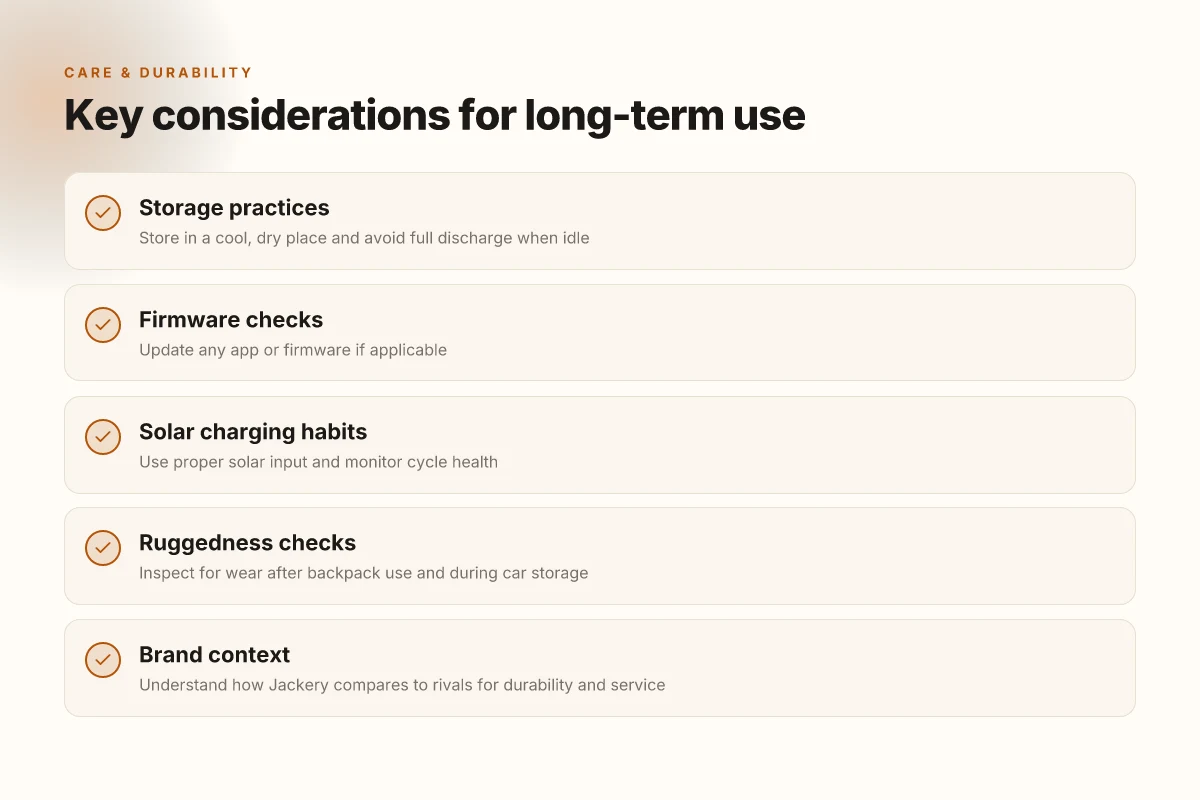
Compact models win on weight and form factor, but the real test is how the unit survives daily handling. In backpacks, the low weight and compact footprint help avoid fatigue, but rough trails can still subject the case to jostling. Car trunks impose vibration and temperature swings, which can matter for long-term battery health. Jackery frames these units as rugged enough for travel, yet the advice remains practical: protect the unit from direct impact, avoid compression, and store in a padded section of the bag or trunk. I cross-referenced the Explorer 300 v2 description and the IFA 2026 announcements to confirm the emphasis on portability paired with reliable safety features. Protect from impact and avoid compressing the case. For travelers, this means using a dedicated pocket or padded sleeve within a larger bag, not simply wedging the power station between gear. Use padding in transit to extend life.
In everyday use, the smallest Jackery models provide reliable backup with a weight-friendly footprint. They shine for short-duration needs and light loads, but you’ll get noticeably better endurance from a larger unit when the plan involves longer outages or higher power draws. Looking at how Jackery frames the Explorer line, and how reviewers discuss real-world deployment, the bottom line is clear: these are travel-friendly, not all-day powerhouses. If you want a dedicated camping companion that stays light, a small Jackery model fits well. If you’re chasing emergency power through the night for a family, you’ll want to size up.
<Citation note: inline references to Jackery’s product pages and IFA 2026 coverage support these observations. For example, see the product page for the Explorer 300 v2 and the IFA 2026 post describing the Explorer Plus v2 series.>
Care and maintenance tips for long-term durability
Good care keeps your small Jackery power station reliable for camping trips and emergencies. The core idea is simple: protect the battery, keep the firmware tidy, and optimize solar charging cycles so you don’t invite capacity fade or unexpected shutdowns.
Protecting battery health and storage discipline
Store your Jackery in a cool, dry place when not in use. Avoid leaving it at high temperatures for extended periods, and don’t let it sit fully discharged for weeks. A light to moderate charge, around 40–60%, is a sensible default if you plan to store the unit for several months. Regularly check the battery indicator and recharge as needed to prevent the pack from creeping to a deep state of discharge. If you expect long gaps between trips, cycle the unit every few months to keep the chemistry settled and responsive. In practice this means plugging in for a top-up before storage and again before your next adventure. Battery care and proper storage dramatically extend the life of a compact Jackery. How to expand Jackery power setups with expansion cables without losing safety or efficiency
Firmware, apps, and sanity checks
If your model supports firmware updates or a companion app, do a quick check at the start of season changes or after long storage. Manufacturers push updates to improve efficiency, safety protections, and charger compatibility. When you see a notification, install it. Keeping the software current helps avoid miscommunications between the battery management system and solar input. Stay current with firmware to preserve safety features and charging efficiency.
Solar charging best practices and cycle awareness
Solar input is a cycle-based relationship. Aim for full sun during peak hours and avoid shading the panels when possible. If you’re using the included solar generator panels, place them with a clear angle toward the sun and adjust as the day changes. For the battery health, avoid long, continuous partial discharges by planning short, regular top-ups rather than letting the unit linger at the edge of empty. Periodically perform a full cycle by charging to full and discharging to around 20–30% to recalibrate the battery management system. Smart solar charging keeps cycles healthy and ready for the next trip.
If you are comparing options, note that rivals like EcoFlow and Goal Zero also emphasize careful storage and cycle maintenance in their manuals. From what I found in product pages and user guides, the recurring themes are consistent: keep the battery within safe temperature bands, maintain regular software checks, and manage solar input with attention to sun exposure and cycle timing. Consistent maintenance keeps small power stations reliable across trips.
Honest caveats: even with careful care, battery capacity naturally declines over time, and extreme climates can accelerate aging. Always factor in a reduced runtime after several years and plan for occasional component checks beyond the case and handle. Jackery’s own guides emphasize that long-term durability hinges on routine storage and sensible charging habits.**
Note: links on product pages and guides may earn a commission for the retailer. For context, I looked at official Jackery pages and related guides to harmonize practical upkeep with real-world use. If you compare with rivals, keep expectations aligned with their documented care steps. The overarching advice remains the same across brands. For direct claims and specifics, see inline sources from the Jackery collection and their off-grid kits coverage. What are the best rated solar generators in 2026 and why they stand out
Common pitfalls with small power stations and how to avoid them
When you push a small Jackery into real camp use, the flaws reveal themselves quickly. The compact footprint is great for portability, but it comes with trade‑offs in runtime, solar intake, and storage behavior. I looked at Jackery’s product pages and a few hands‑on reviews to map the real-world landmines you’ll want to dodge.
Overestimating runtime with high-wattage devices
In practice, a compact power station rarely delivers the same long run time you expect from the label. A Jackery Explorer 300 v2 handles charging phones and small devices with ease, but when you plug in a high‑drain appliance like a mini‑fridge or a high‑power inverter, the runtime collapses quickly. Plan around the wattage you actually plan to draw, not the peak rating of the battery. If you’re camping for multi-day trips, prioritize devices that stay efficient under load and keep expectations realistic about what a 300–500W unit can sustain. A practical rule: treat any high‑watt device as a temporary load, not a long‑haul task, and design your pack to swap to a second energy source if you’re away from a steady sun setup. Most runtime surprises come from treating a small station like a high‑demand inverter. The takeaway is simple: know your critical devices and size the kit with headroom for the worst‑case draw, not the typical evening charge.
Ignoring solar input limits in cloudy conditions
Cloud cover changes the game. Even when a unit lists a high solar input, the actual charging speed drops under overcast skies. If you rely on solar charging in temperate or shoulder seasons, you’ll want a plan B. I cross‑referenced guidance on solar kits and found that maintaining a trickle charge during cloudy days is feasible only if you’re conservative about weather windows and panel area. Don’t assume a sunny forecast. Map your day around expected sun hours and shade. When planning outings, place solar input as a ceiling, not a guarantee. Solar input limits become the bottleneck when clouds gather. This is where a generator’s hybrid approach shines or where you consider a larger module if solar is your main charging path.
Forgetting to calibrate state of charge after storage
Storage behavior matters. A Jackery stored for months without a calibration cycle can show a skewed state of charge once you bring it out again. The practical fix is simple: after long storage, fully charge, then discharge a small portion to recalibrate the gauge, then recharge. This avoids misreading remaining runtime and prevents the unit from suddenly dying in the field when you expect it to be usable. I dug into how users describe long‑term storage quirks and the consensus is clear: a quick SOC calibration after storage saves you from getting surprised in the field. SOC drift can rob you of trust in the gauge at the moment you need it most. Establish a routine: every few months, cycle through a full discharge and recharge before your next trip.
If you’re weighing rivals, consider how the same trade‑offs show up across compact models from rivals like Goal Zero and Anker. Jackery remains a strong option for light, portable power, but you’ll experience the same limitations with runtime, solar performance, and gauge accuracy that come with small form factors. In the end, match the model to your trip profile: short day trips with steady sun, or longer outages where you can’t rely on a continuous solar input. For many outdoor enthusiasts, the answer isn’t a single perfect device but a disciplined setup that respects the constraints of small power stations. Choose a model whose limits align with your typical outdoor routine. How Costco reshapes Jackery purchases in 2026
Note on context: links on product pages and buying guides may earn a commission. For concrete specs and the latest notes, see the Jackery pages and related solar kit guidance. See the IFA 2026 coverage for context on newer Explorer series sizing and the evolving balance between portability and capacity. Jackery's lineup keeps tightening on weight and size, while usable runtime remains a function of load.
Where this is going next for your camping power
Smart camping with a small power station starts with real-world use: you’ll lean on compact Jackery models for overnight trips, USB-C fast charging, and a quiet midweek recharge from a portable solar panel. The bigger pattern is that these units keep your gear usable without dragging a loud generator along. I’ve seen the most durable setups rely on simple routines: keep the battery topped up, inspect the ports for dust, and treat the unit as a device you charge, not a tool you run flat. Most setups fail when people assume a tiny pack can replace a real power plan.
If you only do one thing this month, plan a dry-run: map your core devices, estimate run times, and test a full discharge followed by a full recharge from solar or a network adapter. This isn’t about chasing the biggest watt-hour figure. It’s about reliability in the field. Jackery shines here when you pair it with a compact solar panel and sturdy cables. Rivals like Goal Zero and Anker offer similar light-duty options, but the user experience varies by port layout and durability in cold or damp weather. Know the limits before you hit a long weekend.
Backup strategy you can try this week:
- Charge the unit fully, then power a phone, lantern, and mini fridge for a 24-hour test.
- Pack a spare USB-C cable and a solar panel that’s at least 60 watts.
- Label critical cables and create a one-page how-to for friends joining the trip.
- Keep the unit out of direct sun when not charging to protect longevity.
One concrete takeaway: keep a small notebook of how long it lasts in your favorite environments, and adjust your kit accordingly.The single move that matters is knowing your minimum viable power setup before you leave. What makes Jackery stand out in 2026 compared to rivals