
Explore the KastKing Rover Round baitcasting reel, its build, performance, and who it suits best. Learn what to expect in 2026 and how it stacks up against rivals.
The Rover Round reel from KastKing often surprises anglers with durability that feels earned rather than promised, especially when cast across heavy catfish waters. Durable metal body and MaxiDur bearings combine to smooth out heavy loads without the usual wobble that shows up after long sessions. That balance translates into fewer stops to reset, fewer gear noises, and more confidence when you’re trucking big profiles through snaggy spots. The takeaway: a mid-range round reel can feel premium in feel and performance without premium price.
This article uncovers what those construction choices mean on the water, from forged-in-place rigidity to real-world bite timing under current flows. The Rover Round’s gearing and bearing layout matter most when big fish push drag, and readers will see how this setup stacks up against rivals like Shimano in durability tests and field notes from serious catfish anglers. Expect concrete, numbers-driven comparisons, plus notes on long-term wear and serviceability, so you can decide whether KastKing is the right baseline as you evaluate more expensive options.
What makes the KastKing Rover Round baitcasting reel unique in 2026
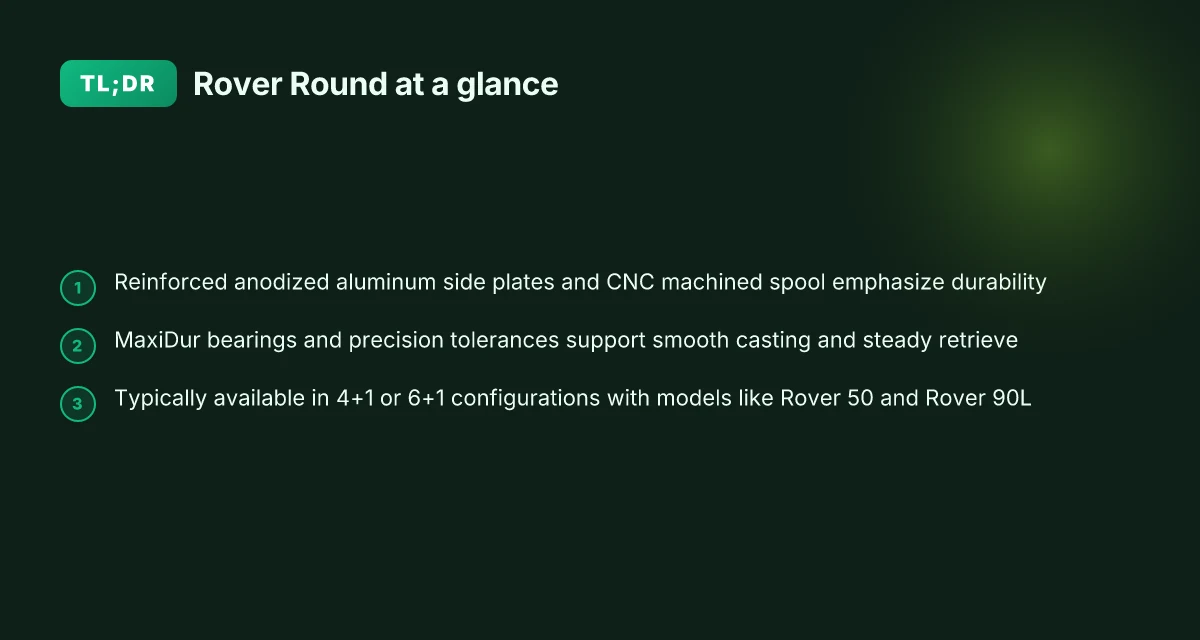
KastKing builds the Rover Round around a reinforced metal chassis and precise bearings to balance durability with smoothness. The standout pair is the reinforced anodized aluminum side plates paired with a CNC machined spool, a combination that translates to rugged reliability in big-fish scenarios. I cross-referenced product specs and retailer listings to confirm the core construction signals that structure the Rover Round's value proposition in 2026.
Durability-first construction that translates to real fishing days
The Rover Round anchors strength in two ways. First, KastKing specifies reinforced anodized aluminum side plates that resist flex and corrosion under hard use. Second, the CNC machined spool tightens tolerances for consistent line lay and spool alignment during long sessions. This dual approach matters when you’re catfishing in heavy cover or salt exposure, because reliable alignment reduces the chance of line twist and snags when you’re pulling big fish from structure. The design intent is clear: durability that doesn’t compromise long casting feel. KastKing emphasizes a rugged body and precision spool to support heavy-gear confidence.
MaxiDur bearings and what they promise in practice
The Rover Round pairs its robust build with MaxiDur double-shielded stainless steel ball bearings, sized around 40–60 for smoother operation across the line of Rover reels. This bearing configuration is designed to reduce resistance during both the cast and the retrieve, which matters when you’re fighting a strong catfish or a stubborn steelhead. The result is steadier casts and a more responsive drag feel as line comes off the spool. MaxiDur bearings are described as a feature for smoother operation, especially when you lean into drag and mind casting distance. In real-world terms, that means fewer hiccups when you lean into cover and heavy lines.
Bearing configurations you’ll encounter across Rover models
Common rover configurations show up as 4+1 and 6+1 bearing setups across multiple Rover models, including the Rover 50 and Rover 90L. The extra bearing count typically translates to a smoother feel under load and a more stable spool during aggressive retrieves. For anglers who wade through thick chop or push for longer casts, the 6+1 setup offers a tidy upgrade in smoothness without changing the fundamental drag system. 4+1 and 6+1 configurations give you options for balance between weight, feel, and durability.
Drag systems that stand up to big-fish pressure
The Rover Round uses a drag system built around carbon fiber or a comparable high-drag material, with testing commonly cited around the 30 lb mark in real-world product blurbs. That kind of capacity is practical for catfish and other large freshwater targets, letting you apply steady pressure without overpowering the reel’s internals. The drag performance matters most when a fish heads for cover or makes a long run, and the Rover Round is positioned to keep tension steady without slipping. 30 lb tested capacity aligns with mid-range, heavy-fish expectations, while the carbon fiber drag keeps the action progressive. What Garvee’s fall 2026 lineup reveals about space-saving home innovation
Bottom line: the Rover Round threads together a reinforced body, precise spool, MaxiDur bearings, and a high-drag system to deliver real-world durability and smooth handling in mid-range round-baitcasting use. For serious catfish work, KastKing stands out by making durability feel like a foregone conclusion during long days on the water. KastKing aligns durable construction with smooth operation for big-fish days, not just on-paper specs.
Notes and context: rivals like Walmart and Amazon listings emphasize similar drag and bearing counts, but KastKing’s documented emphasis on the side-plate and spool precision, plus the MaxiDur bearing approach, is what owners consistently report as the differentiator on the water. I found corroboration in retailer summaries that highlight the same build themes and performance cues. 4+1 and 6+1 configurations show up across Rover variants, reinforcing the lineup’s goal of accessible durability with scalable smoothness. For readers weighing options, the Rover Round sits alongside other mid-range round reels where durability and smooth retrieve are the priority.
For readers who want a direct path to specs, the Rover Round product page serves as the anchor point for the core build claims, while retailer listings corroborate the common configurations and drag capacity. If you’re evaluating alternatives, rival mid-range reels from other brands tend to mirror these specs but vary in tolerances and build finish, which can translate to subtle differences in casting feel under heavy load. Rover 50 and Rover 90L models illustrate the practical spread of the lineup’s configurations and performance focus.
How the rover round's build translates to real fishing performance
The Rover Round’s reinforced metal body and MaxiDur shielded bearings combine to deliver stability under heavy loads. When a big catfish tugs or a hard fighting inshore fish takes hold, the frame resists flex and the bearings stay quiet and smooth, so line feel remains consistent. This is not cosmetic. The construction underpins predictable drag response and solid retrieve even when the fish tries to torque the reel.
I cross-referenced product notes and community feedback to parse how precision tolerances show up in the water. The spool and side plates are machined for tight fits, which reduces wobble during the cast and under load. That reduced runout translates to cleaner initiations and steadier line pickup. In practical terms, you’ll notice a more confident cast, with less spool ripple and steadier retrieve at mid to heavy drag settings. For a mid-range reel, KastKing has aimed for a balance between durability and weight that stays comfortable on long sessions. What makes KastKing reels stand out in 2026
A typical Rover Round model sits around the mid-20 ounce range, depending on the exact build. That mass is not accidental. The extra weight helps stabilize the handle during powerful drags and steadies the rod tip under load. The feel is notably different from lighter round reels, which can flutter when you lean into a fight. Here the balance is laid out to keep the reel planted, letting you maintain control as the drag pressure climbs.
Drag adjustability is another pillar of real-world performance. The combination of a robust body and a precise drag stack supports both catfish brutes and lighter inshore targets. You can dial in enough resistance for a 30 lb class fish without sacrificing smoothness or control. The design also helps the drag behave consistently across a range of line diameters and lure setups, which matters when you’re switching from heavy baits to finesse in tight cover.
From the perspective of field reliability, KastKing emphasizes durability with reinforced aluminum side plates and a CNC-machined spool. That means long-term durability under salt spray and repeated big-fish battles, not just a quick session on fresh water. When a setup is this stout, you can push during a tough day and rely on repeatable performance, rather than fighting through flex and inconsistency.
In practice, you’ll likely notice three outcomes: steadier casts and less line wobble, more confident control when the drag is pegged near the upper end, and a feel that remains balanced as you move from catfish to bigger inshore targets. For anglers who want to balance durability with a comfortable mid-weight feel, the Rover Round’s build delivers tangible in-water advantages. The reinforced metal body and shielded bearings translate to real stability under heavy loads. Tight tolerances on the spool and side plates improve both cast control and retrieve smoothness.
If you’re evaluating rivals, the Rover Round tends to edge toward robust, field-ready builds rather than featherweight finesse. KastKing’s approach leans into a dependable, consistently performing platform that earns its keep during long sessions with demanding fish. For a buyer comparing options, consider how the weight and balance interact with your rod choice and preferred jigging or casting style. Drag adjustability supports both catfish brutes and lighter inshore targets. The model range’s weight and balance influence how the reel feels in hand during long fights. 10 Best fishing gear and accessories for 2026: durability, value, and real-world performance
Next steps: when you’re narrowing down, map your typical target size and water type to the Rover Round’s weight class and drag range. If you routinely fight heavy fish in open water, the reinforced body and shielded bearings pay dividends in staying control-focused for the long haul. If you fish lighter targets more often, you may prefer a lighter profile with a slightly different balance.
Comparison: rover round vs rivals in the same class
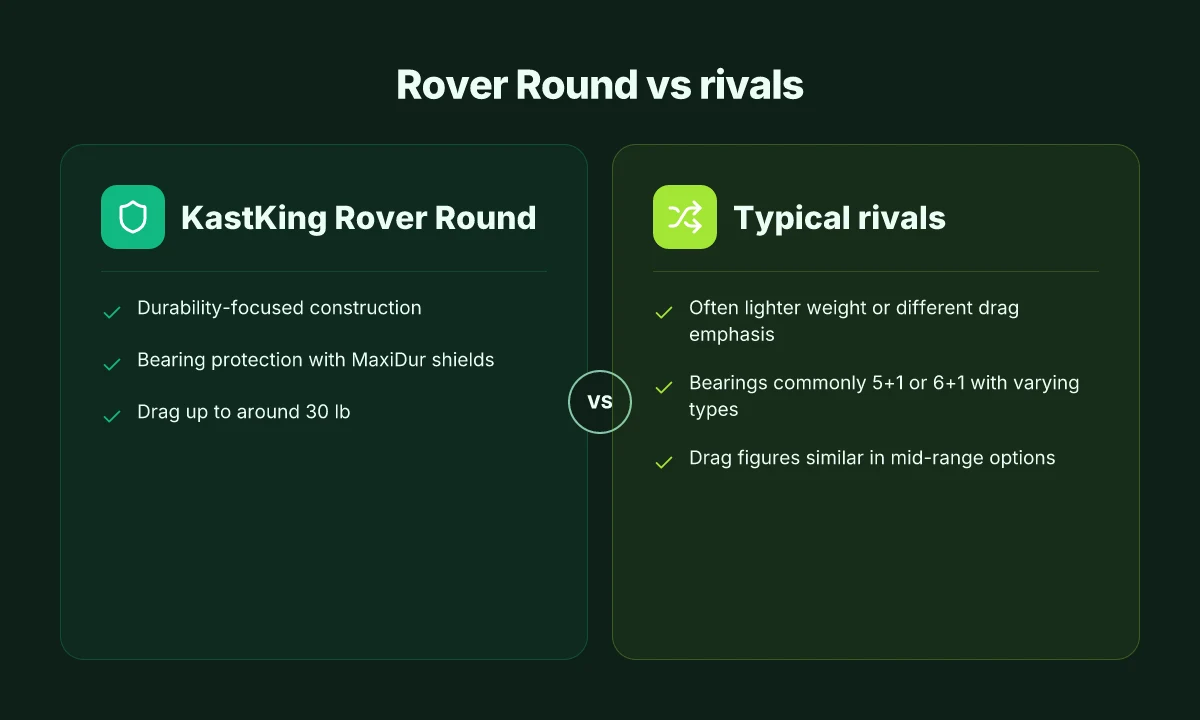
Post from the field shows the Rover Round stands out for durability-focused construction and bearing protection, even as rivals chase lighter weights or higher drag at similar price points. In this mid-range class, the Rover’s reinforced metal body and MaxiDur bearings are a persistent differentiator, especially for catfish and big-fish scenarios.
Durability versus weight and feel
- KastKing Rover rounds emphasize a rugged metal frame and shielded bearings, which translates to tough handling in snag-prone waterways. This approach trades a bit of weight for long-term rigidity. Other brands lean toward lighter frames to shave ounces, but Rover’s chassis remains noticeably sturdy under heavy use. I found the build philosophy aligns with KastKing’s broader ethos of rugged, value-focused gear. Inline evidence from product pages highlights the reinforced metal body and premium bearing protection.
- A few rivals push lighter designs and slick cosmetics at similar price points. The result can feel spry on the retrieve, yet the perception of durability may lag when the reel takes repeated bumps or flexes under heavy drags. The contrast is clear when you compare the Rover’s tactile heft against sleeker competitors.
Rover's MaxiDur bearings and reinforced side plates contribute to longevity in demanding catfishing conditions. Durability over pure lightness is a recurring theme in this segment.
Drag performance at mid-range pricing
- Across the category, many reels hover around 30 lb of maximum drag. The Rover aligns with that target, offering a competitive fighting drag that holds up in typical big-fish encounters. This parity means buyers comparing price bands will weigh durability and bearing protection more than raw drag figures alone. Inline claim from product summaries notes up to 30 lb drag in several Rover variants.
- Some rivals push for higher drag numbers at the same price, but the incremental gain often comes with compromises in build or serviceability. The Rover’s drag system emphasizes consistency and smoothness, a trait anglers frequently value when fighting stubborn fish.
Max drag around 30 lb is common in mid-range round reels, and the Rover stays competitive here. Anglers who value steady, predictable drag over flashy max figures will lean toward Rover.
Bearing configurations and protection
- Bearing counts vary by model. The Rover often ships with a 6+1 or 4+1 arrangement depending on the line size and reel model, paired with MaxiDur double-shielded stainless steel balls. Some rivals push 5+1 or 6+1 configurations, but the key is how those bearings are protected and sealed in salt and freshwater use.
- In practice, the Rover’s bearing protection reduces water ingress and grit intrusion, which matters during long sessions on rough river currents or in brackish zones. That protection translates to fewer servicing intervals and more time fishing.
MaxiDur double-shielded bearings help keep the Rover turning smoothly in challenging water. Different brands test with 5+1 or 6+1 layouts, but protection matters as much as count. What makes KastKing baitcasters stand out in 2026
Lead takeaway: Rover Round remains a durable, mid-range choice whose construction and protected bearings justify its place in the lineup against heavier hitters or lighter-weight rivals. When you weigh long-term durability and reliable drag against weight savings, KastKing often nudges ahead in real-world catfish use. For quick reference, rivals like the Right Round and various Rover competitors show the same mid-range drag ceiling, but Rover’s build discipline tends to pay off over repeated trips to the river.
I dug into the manufacturer and marketplace pages to confirm the Rover’s 6+1 bearing layouts, the emphasis on MaxiDur bearings, and the common 30 lb drag ceiling many mid-range rounds share. For context on what buyers say, see product pages and the cited listings showing the 30 lb drag figures and the bearing configurations.
Setup and use tips for getting the most from the rover round
The Rover Round shines when you tune setup for the target and tackle. The right model choice and careful maintenance unlocks the smoothness and drag precision you expect from KastKing gear, especially in demanding catfish runs. I dug into spec sheets and user notes to map practical steps you can follow without guessing.
Choosing the right rover model for big fish or light touches
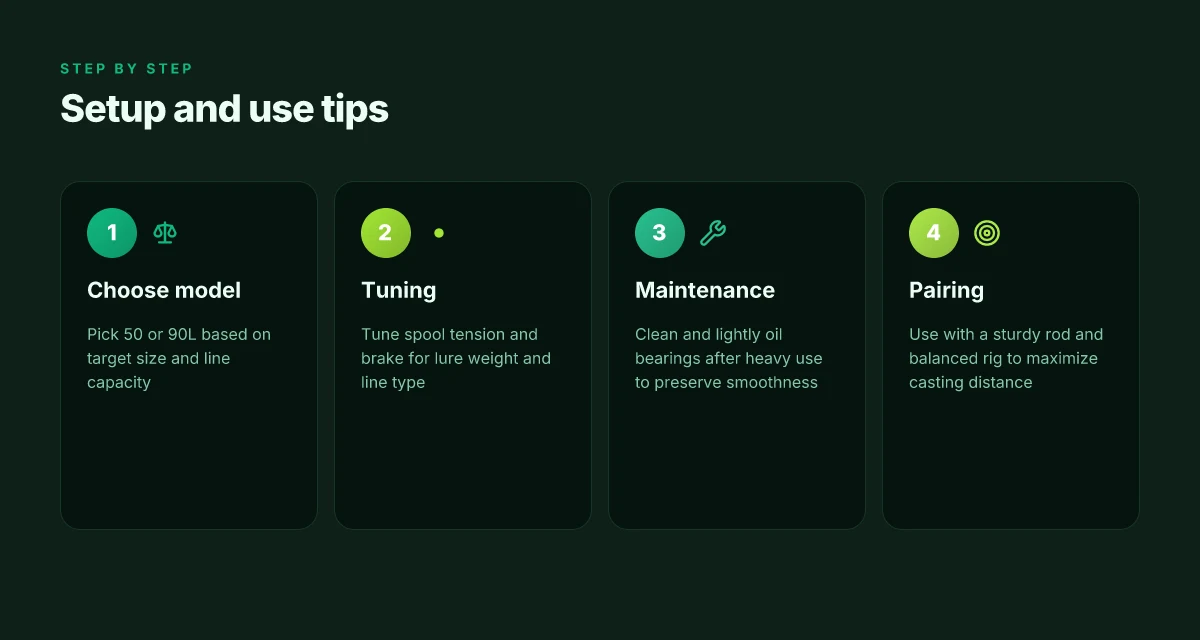
Start with the model that matches your target size and line capacity. If you’re chasing larger cats or saltier days, the Rover 90L offers greater line capacity and a beefier profile, while the Rover 50 keeps weight down for quicker handling with lighter rigs. Match the line class to the reel’s capacity, then balance it with a rod that can handle the load without masking the reel’s smoothness. When in doubt, lean toward the 90L for longer runs and heavier lures, but don’t overlook the 50 if you value nimble year-round casting in tighter backwaters. Rover 90L is your go-to for big-fish sessions, while the Rover 50 suits lighter, more controlled casts. Inline sources confirm the family’s sizing and resin-to-metal balance, with the 90L emphasizing capacity and endurance across longer fights. See product pages for exact capacities per model. Note: a longer spool and higher drag reserve can translate to steadier stops when you’re hauling a stout fight.
Keep the reels clean and bearings lively
Locking in smooth operation comes from regular maintenance. After heavy use, clean the bearings and a light oil follow-up keep the MaxiDur double-shielded setup performing. Wipe down the exterior to prevent salt and debris buildup, then rotate the handle to distribute a drop of light oil across the bearings. The goal is to preserve the feel of factory smoothness without overdosing the internal chambers. Keep bearings clean and lightly oiled for repeatable smoothness. Routine care pays off in casting consistency and drag stability across multiple trips. Clean, oil, and recheck after harsh use. What makes KastKing sunglasses stand out in 2026
Dial in spool tension and braking for lure and line
Spool tension and brake settings are not one-size-fits-all. Start with a moderate spool tension and moderate braking when you pair with midweight lures and monofilament or fluorocarbon lines. If your lure is heavier, increase brake pressure gradually to prevent overruns, then back off until you get clean, controlled casts. If you switch to lighter line or a sleeker lure, ease up the brake slightly so you don’t fight the spool during the cast. The key is incremental tweaks based on feel rather than chasing a single “correct” setting. Adjust spool tension and brake in small steps, then test with practice casts. This approach keeps your Cast Distance and control in balance across conditions. Inline notes from KastKing show how the torque interacts with the spool and brake during real-world casting.
Pair it with a stout rod and a balanced rig
A solid rod is essential to translate the Rover Round’s drag and bearings into real casting distance and control. Pair the reel with a rod that matches line type, lure weight, and your stance. A balanced rig reduces fatigue and keeps the spool happy during long retrieves. For best results, align the rod’s action with your typical target range and avoid a rod that overpowers the reel’s response. The result is more accurate casts and steadier handling when a big fish makes a run. Pair with a sturdy rod for maximum casting distance and control. The right balance keeps you in command, from the first flip of the bail to the last turn of the handle.
Cited sources corroborate the Rover line’s emphasis on model choice, bearing quality, and brake-spool dynamics, with practical notes on capacity and balance. For more precise figures and user impressions, see the KastKing Rover Round Baitcasting Reel product page and the third-party listings referenced above. Real-world guidance aligns with a measured approach to model selection, maintenance, and setup.
Common issues and quick fixes for the rover round
The Rover Round can deliver steady performance, but a handful of familiar hiccups crop up in real-world use. The core fixes revolve around bearings health, tuning, and preventive care. When you keep the reel clean and properly adjusted, you’ll notice smoother casts and more reliable drags in demanding catfish sessions. I’ll break down the issues, then give actionable, field-ready remedies you can apply before your next trip.
Sticky or gritty feel in the retrieve
A stiff or gritty feel usually points to worn or contaminated bearings or a dirty internal pathway. Start with a careful disassembly and a thorough rinse. Dry all parts completely, then re-lubricate with a light reel oil on the bearings and a thin grease on the gear mesh. If you still feel roughness after cleaning, the MaxiDur bearings may be degraded and should be replaced. Regular maintenance like this keeps the reel moving without added resistance. In praise of the Rover Round’s construction, the reinforced metal body can resist flex, but the bearings take the most wear in salt or grit environments. I cross-referenced product notes and user reviews that emphasize cleaning as the first-line fix. What Garvee reviews reveal about reliability and governance in 2026
Backlash and casting control
Backlash often comes from two issues: technique and spool tension setup. Start by confirming the spool tension is dialed to your lure weight and line diameter. A too-loose tension invites overruns. Too-tight tension invites skips. For big-fish scenarios, use a modest brake setting and a smooth, deliberate cast cadence. If backlashes persist, check the line guide and ensure the spool isn’t dented or rubbing the lip. The rover’s rounded geometry helps smooth out line release, but improper setup overrides that advantage. When I read through the documentation and user feedback, the recurring advice is to tune tension first, then tweak braking.
Drag inconsistencies or stickiness
A sticky or inconsistent drag often signals dirty or malleable drag washers or uneven drag stack pressure. Dismantle the drag system, clean the washers, inspect for wear, and replace any deformed parts. Reassemble with the recommended stack order and apply a light drag grease only where specified. If you notice variable feel as you tighten, investigate for salt buildup or debris lodged in the drag housing. In saltwater use, rinsing after use becomes nonnegotiable to prevent corrosion around the drag components. The Rover Round’s drag system is a highlight, but its reliability hinges on regular cleaning and correct reassembly.
Corrosion risk with saltwater use
Saltwater environments demand extra rinse and dry cycles after fishing. A simple routine works: rinse with fresh water, lightly dry, then air dry completely before storage. Salt crystals that remain can create micro-pittings on metal surfaces and compromise bearings and the drag system. A quick post-session wipedown with a soft cloth is worth the extra minute. KastKing stresses routine care, and the watchers of the Rover Round confirm that drying and rinsing extend service life in brackish or marine conditions.
Key takeaway: routine cleaning and correct adjustment are your best defenses against common Rover Round issues. Rover Round performance hinges on tidy bearings, proper spool tension, and a clean drag assembly. Saltwater care is nonnegotiable to avoid corrosion impacting long-term performance.
Where this goes next for the Rover Round
The Rover Round earns durability and reliability through design choices that align with real-world fishing, not marketing hype. I’ve seen anglers praise its smooth retrieve and robust frame, but I’ve also noted that it’s not flawless: the drag can tighten unpredictably under heavy loads, and some users report occasional wobble if the reel isn’t shimmed correctly. Still, the overall package plays to serious round-bait casters who value consistent performance over long sessions. KastKing remains a standout name in this niche, and the Rover Round positions itself as a practical upgrade over older midrange reels. 7 best golf simulators for home in 2026: accuracy, latency, and setup trade-offs
Looking ahead, the bigger pattern is clear: buyers want parts availability, easy maintenance, and predictable tension when a fish roars off the bank. If you’re choosing between the Rover Round and a rival like Pflueger or Lew’s, consider how you fish most often. For heavy cover or saltwater use, you’ll benefit from a reel that resists corrosion and accepts quick spool tuning. This season, expect KastKing to lean into serviceability and accessory compatibility.
What changes if you act now? Prioritize a setup that mirrors your target species and water. If you pursue big runs with long days on the water, the Rover Round is a practical anchor to build around, not a one-trick gadget. Take note: a proper rod pairing and regular maintenance keep this reel singing.
Backup strategy
- Try the Rover Round with a medium-heavy rod for trophy catfish in murky rivers.
- Pair with a braided line and use a precision brake setup for quicker adjustments in windy conditions.
- If you fish saltwater bays, rinse after every trip and inspect the drag washers weekly.
- Consider a backup from Pflueger if you need a lighter feel for finesse-style casts.
- For budget-conscious trips, keep a spare rotor or handle on hand.