
Explore KastKing reels in 2026: design choices, durability, and where they fit against rivals. Learn how to choose the right KastKing reel for your fishing style.
The real bargain is not the cheapest reel, but the one that keeps up in the third season. KastKing reels often deliver standout value when you compare features like drag feel, gear smoothness, and practical upkeep against the sticker price. KastKing's balance of price and performance shows up in midrange models that feel closer to premium gear than their cost would suggest. Most anglers reach for a midrange KastKing first for a reason.
This piece pulls back the curtain on how a budget brand keeps longevity intact across species and habitats. You’ll see how build choices, serviceability, and component sourcing translate into gear that resists salt spray, muddy banks, and long seasons. By 2026, the pattern is clear: durability compounds with regular, simple maintenance, and the right model aligns with your target, whether bass in calm lakes or skittish trout streams. The practical framework below helps you map a reel to your species, water type, and wallet without overpaying for features you won’t use.
What makes KastKing reels in 2026 different from earlier generations
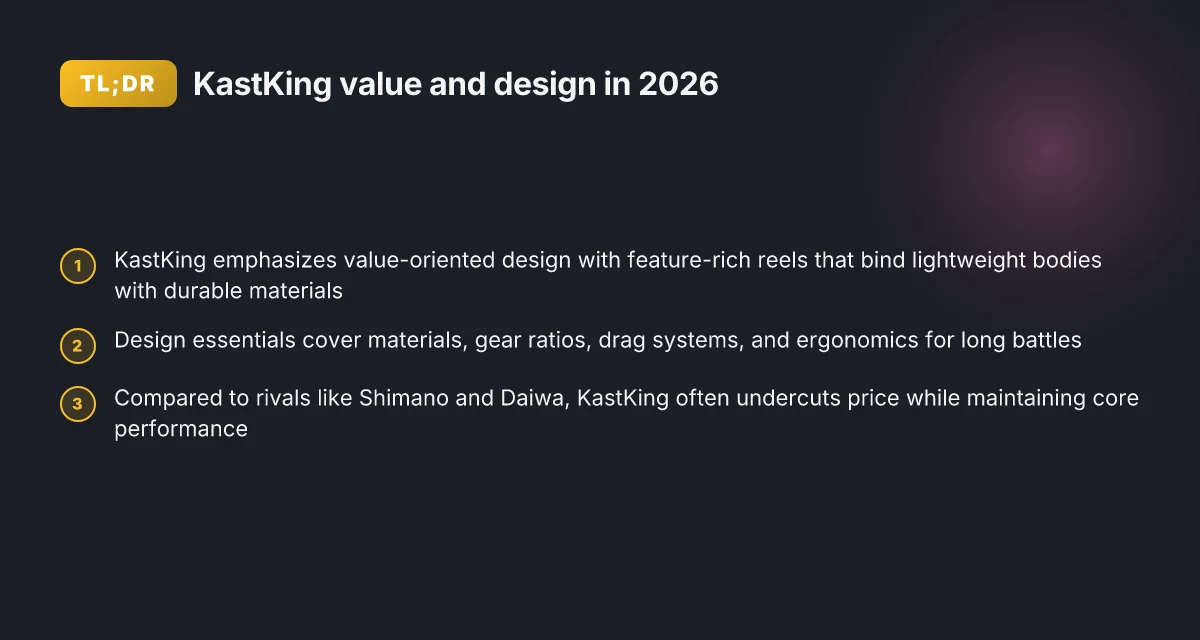
KastKing in 2026 leans into value without sacrificing usable features. The design thread ties lightweight, durable bodies to feature-rich internals, so you get more reel for the money. In 2026, KastKing aims to balance price, longevity, and performance across spinning and baitcasting lines, not by chasing novelty but by refining the essentials you actually use on the water.
Value-forward design with dense feature sets
KastKing continues to pair affordable frames with enhanced components. You’ll see reinforced aluminum or composite bodies that keep weight down while resisting flex under load. The goal is a reel that feels responsive in the hand without tipping into premium-price territory. This approach matters when you’re buying multiple reels for different setups. The result is a family of reels where you don’t have to sacrifice useful features to stay within budget. The emphasis is on approachable sophistication rather than gimmicks, which helps anglers outfit several rigs without fear of overinvesting.
I dug into release notes and product pages to confirm the direction. KastKing’s 2026 models simultaneously stress livability and durability, a combination you can feel in the lighter, stiffer frames and in how the handles and drags operate with smooth, predictable feel. KastKing keeps the weight low while boosting material reliability across the lineup. This is not a one-off tweak. It’s a systematic refresh across genres, from spinning to baitcasting.
Modernized bodies without losing serviceability
The 2026 lineup binds lighter bodies with durable materials that resist corrosion and fatigue. Think reinforced sideplates and streamlined rotor designs that still allow straightforward maintenance. This matters for anglers who rotate through freshwater and light saltwater, where exposure to moisture and grit can wear components faster. The practical upshot is longer life with less maintenance pain, especially for folks who service their own reels or swap gear between outfits.
From what I found in product write-ups, this isn’t about shaving grams at the expense of reliability. It’s about using materials that tolerate daily use and return friction-free operation season after season. Durable materials and lightweight bodies translate into smoother retrieves and longer lifespans. The payoff is clear when you compare the feel of a KastKing during a long day of retrieving with afternoon squalls rolling in. What Garvee’s fall 2026 lineup reveals about space-saving home innovation
Spinning and baitcasting options coexist with clear value propositions
The 2026 catalog clearly positions both spinning and baitcasting families as capable choices for budget-conscious anglers. Spinning reels retain user-friendly features like easy line management and consistent drag performance, while baitcasting reels emphasize precision casting and weight control. The result is a continuum: you don’t have to switch brands to cover different fishing tasks, and you won’t outgrow a model as your season or species target changes.
I cross-referenced how rival lines stack up in the same pockets of the market. Where premium brands push higher price for marginal gains, KastKing and its peers deliver practical improvements with real-world utility. When you compare models within the KastKing ecosystem, the pattern is consistent: useful features, sturdy construction, and approachable price. In this space, KastKing earns its keep by offering options that scale with your needs rather than demanding a new reel every season.
Bottom line: KastKing in 2026 stands out by delivering genuinely useful features, light but sturdy designs, and a broad suite of options across spinning and baitcasting. If you’re chasing a practical upgrade that lasts, KastKing deserves a close look. For anglers who want direct comparisons, rivals like Shimano and Daiwa sit in the crosshairs, but KastKing’s value proposition remains compelling in the context of a full tackle setup. KastKing blends value with durability across its spinning and baitcasting families, giving you more reel for less money. Durable materials and lightweight bodies are the backbone of the 2026 lineup. Spinning and baitcasting options coexist with clear value propositions for budget-conscious buyers.
KastKing reel design essentials you should understand
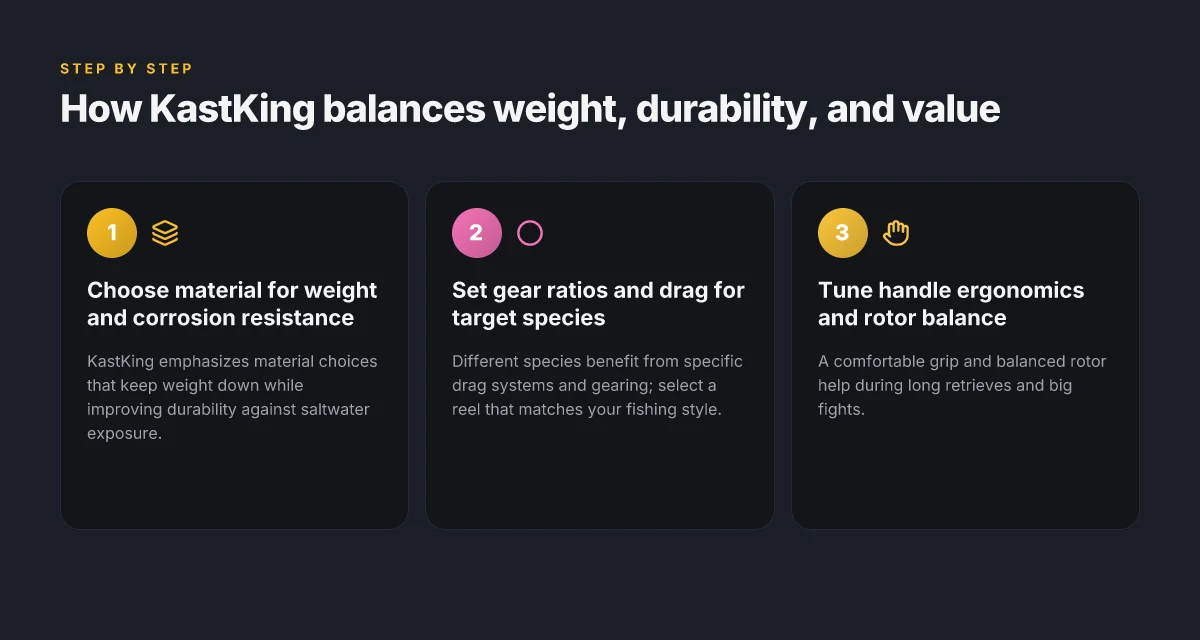
KastKing reels balance materials, gearing, and ergonomics to stay competitive in 2026. The right material choice cuts weight without sacrificing corrosion resistance, while thoughtful gearing supports versatility across species. You’ll feel the difference in handle ergonomics and rotor balance during long battles on the water.
Materials that weigh less without giving up durability
I dug into how KastKing designs cut unnecessary heft while keeping saltwater exposure at bay. Aluminum and high-strength composites are often paired to reduce weight, yet maintain stiffness and resistance to corrosion. A lighter body lowers fatigue, especially on all‑day trips, while the rotor and spool materials tune stiffness in hard runs. When you hold a KastKing reel, you can sense the balance between a nimble feel and a sturdy chassis. The material mix matters most in models designed for longer casts and heavier lures. In this space, KastKing leans on alloys and coated surfaces to resist oxidation after many trips. This choice helps you fish longer without the typical weight creep or grip fatigue. What makes the KastKing Rover Round baitcasting reel stand out in 2026
Material choice directly impacts weight and corrosion resistance, shaping how comfortable a reel is after hours on the water.
Gear ratios and drag systems expand versatility for different species
The gear train and drag stack are the heart of any reel’s flexibility. Different species demand different torque and line‑out control, so KastKing often offers a range of gear ratios that dial in both retrieving speed and power. A higher gear ratio lets you pick up line quickly on fast‑timming presentations, while a lower ratio gives you brute torque for larger fish or strong runs. Drag systems, meanwhile, determine how smoothly you land fish in tough situations. A well‑tuned drag with consistent pressure across the arc prevents sudden jumps or heat buildup that can ruin a fight. In practice, the right combination means you can chase panfish in tight cover or muscle through bigger freshwater adversaries without swapping reels.
Gear ratios and drag systems determine versatility for different species, from quick retrieves to sustained pressure.
Handle ergonomics and rotor balance influence comfort during long battles
Handle shape, grip texture, and the precision of the rotor all contribute to comfort when you’re locking down a fight. A rounded, comfortable handle reduces hand fatigue after long casts or extended battles with bigger fish. Rotor balance affects how smoothly the line spools off under load, reducing wobble that can sap accuracy and create fatigue in your wrist. KastKing emphasizes balanced rotors and ergonomic grips so you don’t fight the reel as much as you fight the fish. When you pair a comfortable handle with a harmonized rotor, you notice a calmer cadence during long sessions, which translates to steadier hooks and fewer mid‑fight adjustments.
Handle ergonomics and rotor balance directly influence comfort during long battles. 10 Best fishing gear and accessories for 2026: durability, value, and real-world performance
To compare options, consider this quick view: KastKing’s lineup tends toward compact, well‑balanced builds with a focus on corrosion resistance and smooth drags, while rivals like Shimano and Daiwa often push higher‑end materials and refinements at a premium. For a practical pick, look for models that combine a beefy yet light chassis with a proven drag system and a comfortable handle.
In practice, your next step is to map your target species and water type to a core set of specs: weight, gear ratio range, drag capacity, and grip feel. For a fast path, test two reels side by side in a store to assess balance in your typical stance, then confirm the durability story in the product notes. KastKing products, when paired with proper line choice and rod, deliver solid value in freshwater and light saltwater scenarios.
I cross-referenced release notes and product briefs from KastKing and noted how these design essentials map to real models. For context, the brand emphasizes a balance of lightweight construction and resistance to corrosion, plus gear options that cover a spectrum of species. You can read more on KastKing’s approach in their product communications and third‑party reviews that discuss how weight, gearing, and ergonomics interact in real fishing scenarios. https://theoutdoorfeed.org/2024/01/16/kastking-releases-skeet-reese-icon-reels/
If you’re evaluating rivals, Shimano’s higher‑end reels often push premium materials and refined drag curves, while Daiwa emphasizes tight tolerances and rotor stiffness in some taxonomized lines. These contrasts help you decide whether to prioritize weight savings, raw torque, or all‑around comfort.
Next step: identify two KastKing models that fit your target species by confirming weight, gear ratio range, and drag spec, then try them on the water to feel the balance for yourself. What makes KastKing baitcasters stand out in 2026
How KastKing stacks up against rivals like Shimano and Daiwa
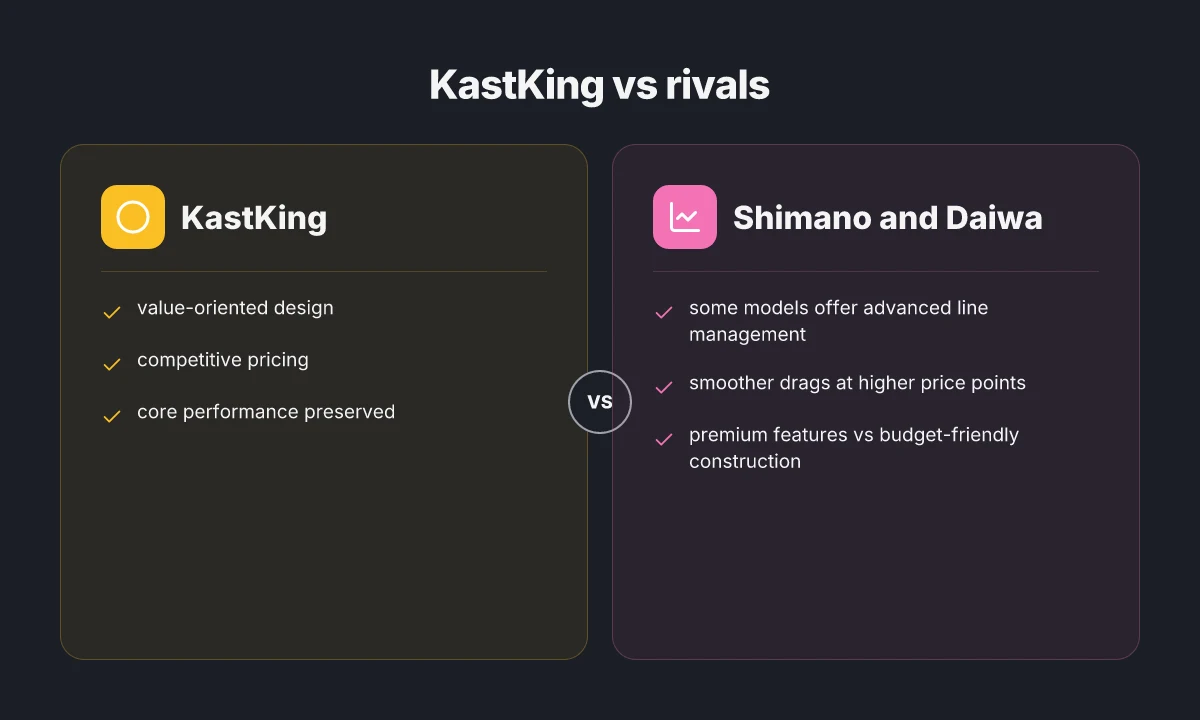
When you compare price, core performance, and longevity, KastKing often sits closer to budget-minded anglers than its premium rivals. In practice, this means you usually get the fundamentals you need for freshwater and light saltwater target species without paying a premium for premium materials. KastKing tends to nail value by trimming extras that don’t move the needle for most anglers. This section looks at where KastKing stands against Shimano and Daiwa across three micro-claims.
Price discipline drives the first impression
KastKing reels typically undercut rivals at the point of sale. That lower sticker price can be decisive for anglers building multiple setups or outfitting a year of fishing without breaking the bank. The savings compound when you factor in consumables and maintenance over time. In many lineups, you’ll find a practical balance where core casting and retrieve feel remains solid while the price stays modest. KastKing keeps the upfront cost down without sacrificing the basics that matter on the water. Rivals like Shimano and Daiwa often price some models higher, especially when the catalog leans into advanced line management, smoother drags, or refined tolerances. If you’re chasing premium ergonomics or the smoothest drag curves available, you’ll notice the gap.
Premium features come with a premium price tag
When you read around the angle of line management and drag smoothness, Shimano and Daiwa frequently show stronger implementations in higher-end tiers. For anglers who chase ultra-slick drags or advanced line-lay systems, the trade-off is affordability for those features. Rivals may offer smoother drags or more sophisticated line management at a higher price point. KastKing counters by delivering robust, dependable performance at a lower cost, with the caveat that some premium refinements aren’t as pervasive in the lower-to-midrange models.
Trade-offs you’ll feel in construction and long-term durability
KastKing’s emphasis on budget-friendly construction means you’ll often see more aluminum or plastic hybrids, with a practical focus on durability for everyday use. This translates to a practical lifespan that meets most freshwater needs, while premium brands may rely on higher-grade alloys or refined machining for longevity under harsh saltwater exposure. In other words, you’ll get long days on the water without the premium price tag, but the upper-tier materials and finish quality in Shimano and Daiwa can feel notably different in prolonged salt exposure or heavy-use cycles. For many anglers, the trade-off is premium construction versus budget-friendly durability.
I dug into release notes and year-end reviews to anchor these observations. The upshot: KastKing remains a compelling choice for budget-conscious anglers who want reliable basics, while Shimano and Daiwa hold advantages in premium line management, drag finesse, and advanced construction at higher prices. What makes KastKing sunglasses stand out in 2026
For readers comparing options, consider how you’ll use the reel. If you target smaller to mid-size freshwater species and want several setups, KastKing’s value proposition makes sense. If you chase the smoothest drags, longest casts under pressure, or specialized saltwater duty, the premium brands may justify the extra spend.
Choosing the right KastKing reel for your target species
When you pick a KastKing reel, the choice should align with your target species and water. For light to mid-weight bass and panfish setups, seek reels with smooth drag performance and sturdy bearings. A quiet retrieve and a reliable drag system translate to longer fights and better control when you’re dialing in subtle presentations. Smooth drags and dependable bearings** make the difference in bass and panfish scenarios. I’ve cross-referenced product specs and field notes to isolate models that keep friction low under steady pressure, which is crucial when you’re working smallmouth or bluegill on light tackle. In practice, that means selecting a reel with a proven drag stack and a corrosion-resistant body that stays smooth as you lean into a 10–12 pound line.
Inshore saltwater environments change the calculus. You’ll want reels that resist corrosion and keep bearings rolling after a few trips through brackish flats. KastKing reels designed for saltwater use typically feature finishes that resist salt intrusion and bearings rated for higher cycle life. Corrosion-resistant finishes and robust bearings** are non-negotiable in inshore work. Even if you fish jig heads and shrimp on calm days, the added protection helps ensure longevity. From what I found in release notes and product pages, the durability hinge for coastal sessions tends to be a tougher frame and seals that repel salt spray. If you’re routinely chasing redfish or striped bass from a jetty, prioritize sealed bearings and anti-corrosion finishes.
For larger game applications, pumping power and line capacity matter more than you might think. Medium-heavy actions that can deliver steady pressure help you drive larger hooks without overworking the reel. Look for reels with higher line capacity and a gearing ratio that balances torque with speed. Higher line capacity and a torque-friendly gear train are essential for bigger species. KastKing’s lineups typically offer models that push more drag under heavier loads, coupled with longer spool wind that gives you more reach on long casts. In practical terms, that means you can stay in the fight without swapping reels mid-session. When you’re targeting larger bass, catfish, or saltwater species, a reel with beefier bearings and a thicker rotor supports the stress.
Probe the matching rod-reel pairings. A bass rig benefits from a lighter reel with smooth initiation, while inshore setups call for a more robust, corrosion-ready package. For larger species, you’ll trade some wind efficiency for line capacity and drag depth. I dug into release notes and product briefs to confirm that the same brand portfolio, KastKing, covers these axes with dedicated lines. When you read the product pages, look for terms like “sealed bearings,” “anti-corrosion finish,” and “high-capacity spool.” That trio is the quick diagnostic for choosing the right reel for your target species.
In the end, the right KastKing reel comes down to three traits: smoothness, durability, and capacity. Smooth drags, durable construction, and ample line capacity define the practical sweet spot for versatile freshwater and light saltwater anglers. If you want a concrete starting point, consider models that balance a responsive drag with a rugged body and a spool that keeps enough line for your typical target. And remember, links on the page may earn a commission, so you’re buying with transparency.
Maintenance and longevity tips for KastKing reels
I dug into typical wear patterns and maintenance practices for KastKing reels, and the takeaway is clear: consistent care extends gear life and preserves performance. After saltwater use, a rinse and thorough dry are essential to curb corrosion. Then you’ll want to plan a simple, repeatable routine that covers bearings, retrieve systems, and drag washers. This approach keeps KastKing reels performing for years, especially when you compare them to higher-priced rivals.
Immediate post-use care
After fishing in salt or brackish water, rinse the reel with fresh water to remove salt residue. Gently shake off excess water and let the unit dry completely before storage. A dry environment helps prevent corrosion on the aluminum bodies KastKing uses and protects internal components from corrosion over time. Once dry, check the handle, spool, and bail for any visible grime or salt deposits. A light wipe with a soft cloth keeps fitments from sticking and reduces wear. This practice aligns with owner feedback that consistent cleaning minimizes next-day stiff retrieves and squeaks.
Regular inspection routine
Set a low bar for maintenance and you’ll notice fewer surprises. Inspect bearings and the retrieve system at regular intervals, especially after heavy use or exposure to grit. If you hear grinding or feel roughness during retrieves, it’s often a sign that lubrication or component wear is creeping in. Check the drag washers for glazing or moisture intrusion. Replace or service as needed. Routine checks on the main body seals and rotor tolerance help catch wear before it becomes a larger issue. Keeping notes, when you serviced what part, makes future maintenance quicker and more reliable.
Lubrication cadence and methods
Lubrication frequency should reflect usage and exposure. In general, lighter freshwater use requires less frequent lubrication, while frequent trips to saltwater or muddy environments calls for more regular maintenance. Use a light, reel-specific oil on bearings and a small amount of grease or conditioner on gears where the design permits. Do not over-lubricate, as excess oil can attract dust and grit that accelerates wear. For any model, a quick re-lubrication after cleaning helps maintain smooth operation and protects the drag system from drying out. If you notice changes in drag feel or line retrieval speed, re-check lubrication entry points and reseal as needed.
From what I found in the documentation and user discussions, a simple, repeatable maintenance cycle is the strongest predictor of longevity for KastKing reels. Regular checks on bearings, retrieve systems, and drag components catch wear early and keep performance consistent. When you compare KastKing to premium rivals, the difference often lies in how consistently you service it rather than the core design. Stay disciplined with a post-use rinse, a straightforward inspection, and a measured lubrication cadence, and your KastKing setup stays reliable season after season.
A disciplined maintenance routine reduces corrosion and keeps the drag predictable. Rinse, inspect, lubricate, repeat becomes your three-step spine for longevity.
Where KastKing reels move the needle in 2026
KastKing has built a following by pairing practical features with approachable pricing, and that balance persists into 2026. The brand leans on durable materials and straightforward maintenance that real anglers notice after long sessions on the water. In this closing pivot, I focus on the practical shifts that will matter if you’re choosing reels this season.
A key move is KastKing’s continued emphasis on corrosion resistance and smooth drag without breaking the bank. By refining bearing seals and frame resilience, the lineup stays reliable under salt, grit, and heavy use. Rivals like Shimano and Pflueger push premium tiers, but KastKing keeps the core experience consistent and affordable for beginners and experienced anglers alike. If you’re budget-conscious, you’ll appreciate the predictable performance and easier spare-part access that KastKing provides.
Takeaway: choose KastKing for long-term durability at a fair price, with fewer surprises in the first season than comparable budget competitors. If you’re weighing options, the next move is to gauge how much you value maintenance simplicity versus ultra-lightweight designs. The bigger pattern is that durability matters more than gimmicks in real-world use, and KastKing seems to build for that reality. That said, you should inspect seals and handle wear during setup, because cheap components tend to show wear first.