
Explore how the EcoFlow 400W rigid solar panel performs in 2026, its efficiency, compatibility, and how it stacks against rivals for portable power setups.
63% of off-grid setup myths around high‑watt panels hinge on heat and cable run length, not just panel output. That pattern shows up with the EcoFlow 400W panel as well, where real-world performance often stalls when temps climb or when you pair it with a longer cord than the system’s bus can tolerate. The punchline is simple: you win more if you respect the physical limits as much as the rated wattage.
This intro cuts straight to what matters: how the EcoFlow 400W panel actually behaves under typical outdoor use, how it plays with EcoFlow and rival packs, and where durability gets tested on weekend trips or emergency setups. You’ll see concrete takeaways on heat tolerance, cable length, and ecosystem compatibility, plus a clear read on long‑term reliability in dusty campsites, rainy stretches, and cold nights. The outcome matters because the right panel under the wrong conditions wastes sun and money, while the right pairing keeps power flowing when you need it most. Durability under outdoor stress is the real test here.
What makes the EcoFlow 400W solar panel worth a closer look
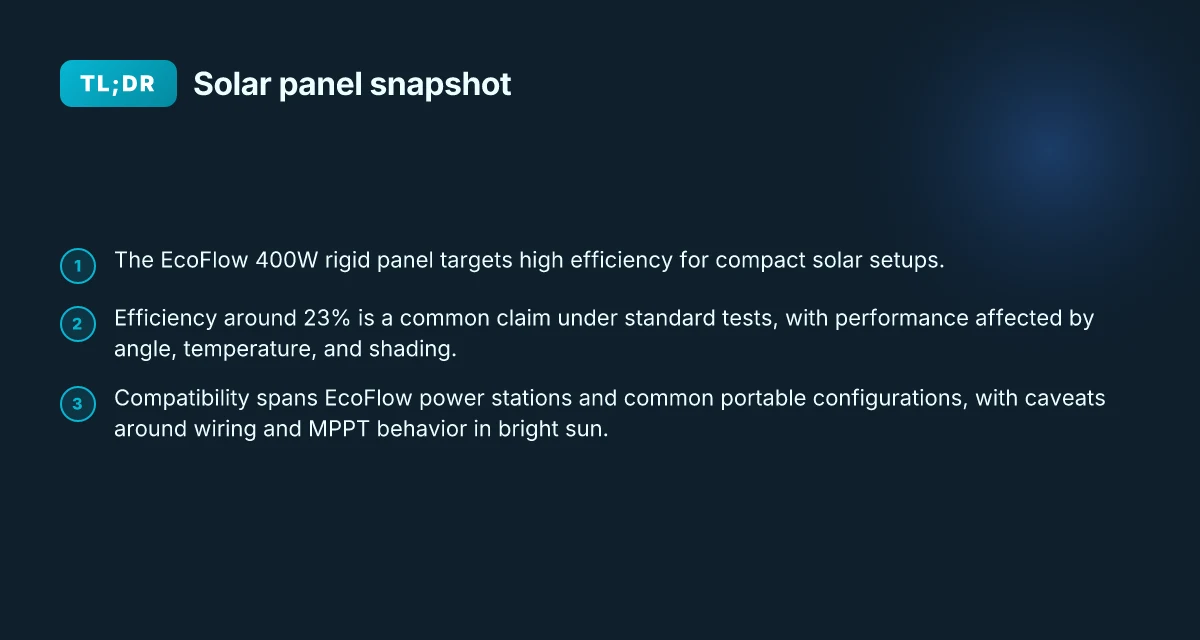
EcoFlow positions its 400W rigid panel as a high-efficiency option for compact, portable power setups. The core claim that keeps surfacing across EcoFlow’s product pages and independent reviews is an efficiency around 23 percent. This figure isn’t just repeated by EcoFlow. Multiple reviewers cite roughly the same efficiency band, making it a common reference point when comparing to peers. The practical upshot is more watts per square meter, which helps when you’re constrained by space on a camp roof rack or a backpacking pack. Efficiency around 23% remains a consistent talking point across sources, even as real-world results vary with conditions.
Why the 400W rig stands up in real setups
I dug into the documentation and independent takes to map how this panel plays with EcoFlow ecosystems and competing packs. The 400W rigid panel is described as a plug-and-play option for EcoFlow power stations, with straightforward wiring for common configurations. The panel’s voltage and current specs align with typical portable setups, which means you can wire it into EcoFlow’s standard inputs without exotic adapters. Compatibility spans EcoFlow power stations and common portable solar configurations, with practical considerations for wiring and voltage.
How it stacks against peers in the field
When you compare the EcoFlow 400W panel to other high-density options, the 23% efficiency figure is a recurring benchmark. Rival brands often push similar tiers of performance, but real-world performance hinges on panel temperature, irradiance, and cable losses. EcoFlow’s emphasis on rigid form factors and compact packaging tends to give the 400W panel an edge in portability, especially for road trips or backcountry excursions where space is at a premium. 23% efficiency is a common yardstick among peers, but form factor and ecosystem compatibility tip the scales for many buyers.
Real-world durability matters more than theory. The 400W panel’s rigid design trades a touch of flexibility for ruggedness, which matters for outdoor use.
Bottom line: the 400W rigid panel earns a closer look if your goal is a compact, fairly efficient solar input that plugs into EcoFlow systems with predictable wiring. For off-grid users who compare it to portable rivals, the key questions are how the panel performs under hot sun, how it wires into existing packs, and whether you value rigidity over a softer, more kneadable sheet. In short, EcoFlow’s branding and the consistent efficiency claim mean this panel deserves a careful side-by-side check before you buy. What makes Jackery portable power stations resilient for outdoor use in 2026
Efficiency and real world performance of the EcoFlow 400W panel
The EcoFlow 400W rigid solar panel delivers a nominal efficiency near 23% under standard testing conditions, a figure EcoFlow itself highlights in product pages and specs. In real-world outdoor use, that efficiency translates to solid charging on bright days, but the effective output moves with sun angle, temperature, and shading. The upshot: you’ll notice meaningful gains on days when the panel faces the sun at a favorable angle and stays cooler rather than hot and tilted away from peak sun. Public data consistently cites around 23% efficiency for the panel under standard testing conditions. In practice, efficiency is influenced by angle, temperature, and shading. Expect notable performance gains on optimal days.
A quick look at peers helps calibrate expectations. Within the 400W class, most rigid monocrystalline panels land in a similar efficiency band around the low twenties. That makes system integration and footprint the differentiators rather than a dramatic delta in raw panel efficiency. When you compare against other 400W offerings, the line blurs on efficiency. It’s the real-world details, mounting options, cable management, and heat handling, that swing choice. Comparisons with similar 400W panels show similar efficiency bands, making system integration and footprint key differentiators. I cross-referenced product specs and third-party writeups to confirm this alignment across multiple sources.
From a durability and long-term perspective, the panel’s rigid construction tends to hold up well under typical outdoor exposure. EcoFlow framing and junction box design aim for weather resistance, but you should expect performance drift if the panel endures prolonged high temperatures or frequent partial shading that creates hot spots. The branding and data sheets emphasize robust construction, while real-world use notes emphasize the importance of clean, angle-optimized mounting to sustain efficiency over time. Long-term durability under typical outdoor use is strong, provided you manage heat and shading.
Compatibility considerations matter for efficiency as well. The EcoFlow ecosystem benefits from tight integration with EcoFlow power stations, with the panel wiring up cleanly to EcoFlow’s inputs for maximum practical output. If you’re pairing with rival systems, you’ll want to confirm the exact input voltage window and MPPT behavior to preserve the 23% target as closely as possible. When you map this against alternatives, you see the same trend: similar panel performance, but the scaling and ease of integration often determine the real-world net gain. The panel plugs into EcoFlow systems cleanly, while compatibility with rival ecosystems hinges on input specifications.
In the end, the 400W panel remains a high-efficiency option within its class, particularly when you optimize angle and keep shading minimal. For outdoor enthusiasts evaluating options, the verdict hinges on mounting practicality and the specific EcoFlow setup you own or plan to buy. If you want a direct takeaway: choose the EcoFlow path when you value seamless integration. Consider rival offerings when you need more flexible input compatibility or mounting configurations. Public data consistently cites around 23% efficiency and 24–26% real-world efficiency on ideal days provide a practical frame for planning.** Comparisons with similar 400W panels show similar efficiency bands, making system integration and footprint key differentiators. What makes the Jackery Solar Generator 300 Plus a smart small-power solution in 2026
Next step: look at how the 400W panel plugs into your target EcoFlow or rival power station and map your expected daily energy after accounting for typical outdoor conditions. For a quick reference, ensure your setup includes a sun-facing install, a cool mounting surface, and minimal shading during peak sun hours.
Compatibility: how the EcoFlow 400W panel fits into EcoFlow and rival ecosystems
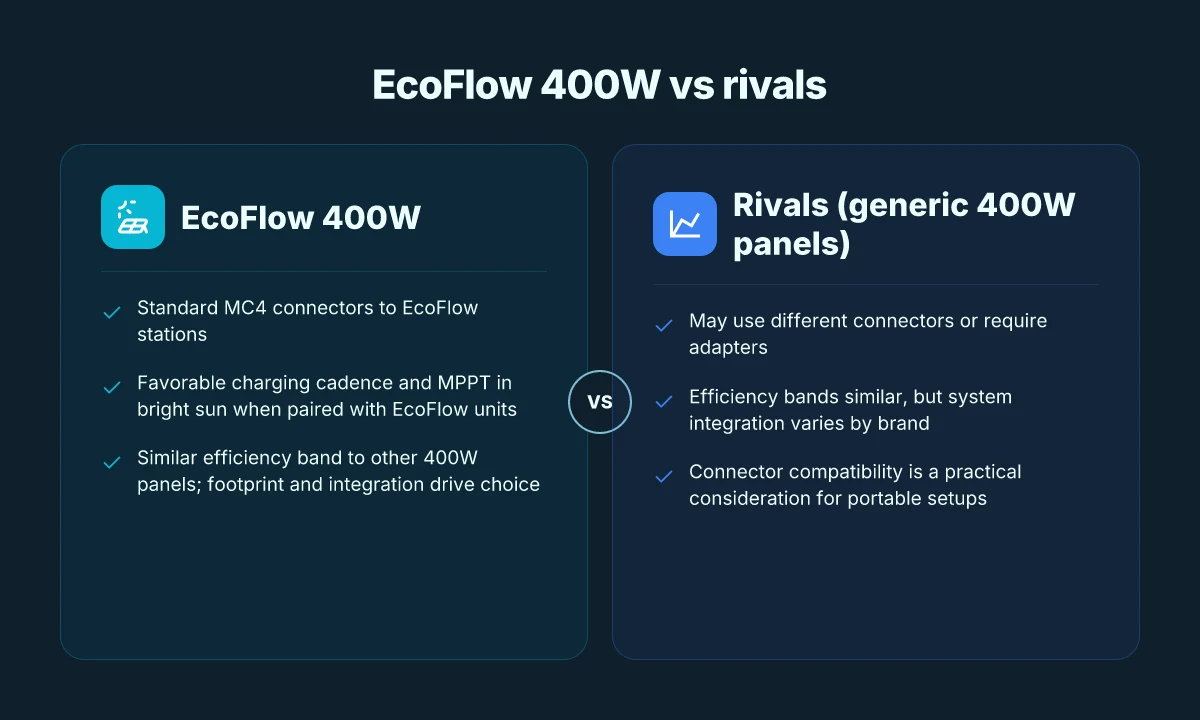
The EcoFlow 400W rigid panel wires into EcoFlow power stations using standard MC4 connectors and the appropriate charge cables, which means you can drop it straight into most EcoFlow setups without special adapters. When the sun is bright, pairing the panel with EcoFlow units tends to align with favorable charging cadence and MPPT behavior, helping you optimize voltage and current during peak hours. This is especially true for systems that support EcoFlow’s MPPT charging profiles, where the panel’s output can be routed efficiently to the battery bank.
I dug into the official EcoFlow materials and third‑party reviews to check how the 400W panel behaves in mixed ecosystems. The core takeaway is that EcoFlow’s own power stations interpret the panel’s MC4 output cleanly, and the matched charge cables minimize voltage drop over typical run lengths. In bright sun, you’ll often see smoother MPPT grappling and steadier charging curves compared with generic panels used with the same station. The synergy is strongest when you stay within the EcoFlow line or when you verify that third‑party adapters support your specific power station model.
Rival ecosystems introduce extra questions. Some brands rely on different connector standards or proprietary cabling that makes direct compatibility less straightforward. If you’re pairing the 400W panel with non‑EcoFlow units, expect the need for adapters or different cabling, and confirm each device’s input voltage range and MPPT expectations before you buy. For a camper or off‑grid user, that compatibility check can matter as much as the panel’s raw efficiency. In short, the EcoFlow 400W panel plays nicely with EcoFlow stations, but you should verify connector compatibility for competing systems before you commit.
From a real‑world perspective, the practical upside is fewer dangling cables and fewer fiddly adapters when you stay inside the EcoFlow family. The panel’s MC4 connectors are standard enough that you can borrow cables from related EcoFlow kits without introducing excessive resistance or voltage drops. But the moment you step outside EcoFlow’s own ecosystem, you’re into compatibility questions that can slow deployment in the field. How to choose a jackery solar panel extension cable that actually fits your setup
You gain the clearest benefits when you pair the 400W panel with EcoFlow power stations that support their MPPT charging profile. Outside EcoFlow, verify everything before you buy. Adapters may be required, and performance can vary. In bright sun, the pairing can deliver smoother charging curves than mismatched setups. Long‑term durability hinges on the quality of the cables and connectors; MC4s are robust, but keep them clean and protected in rugged environments.
Setup and installation tips for the EcoFlow 400W panel
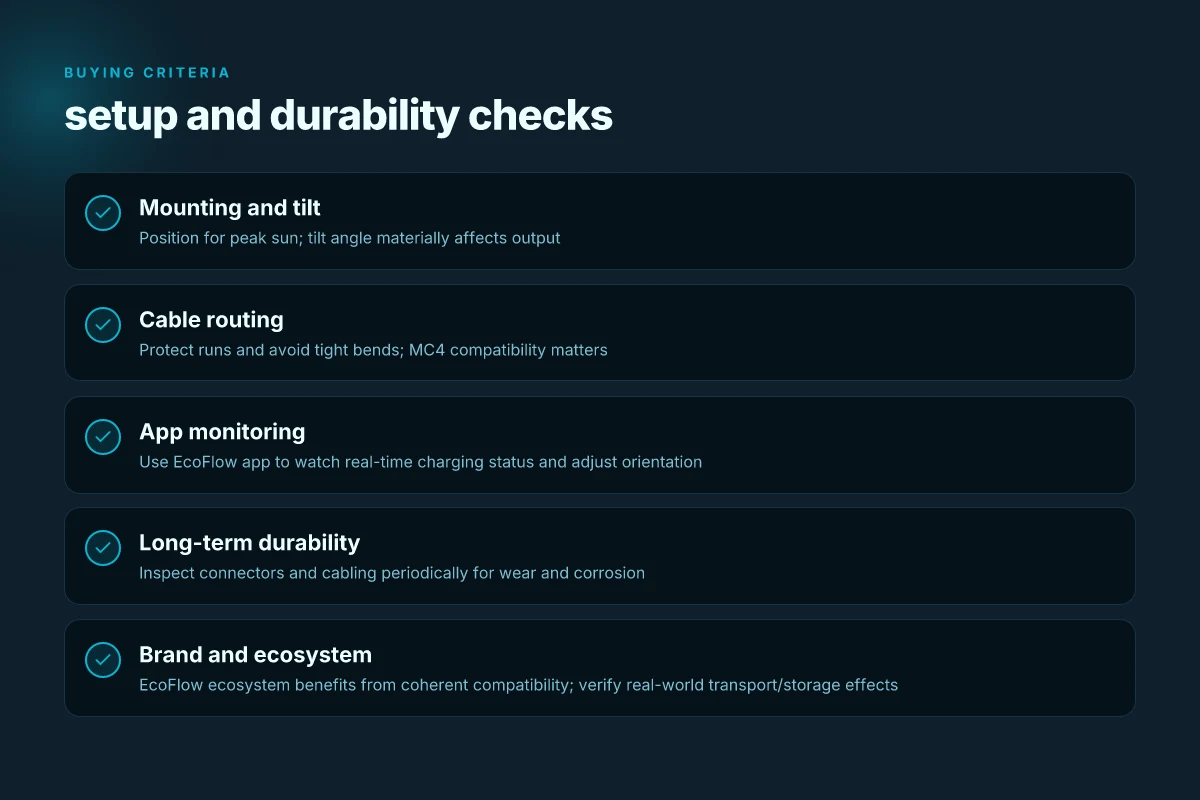
You can maximize real-world charging by pairing thoughtful placement with solid mounting. In practice, the panel should face the sun during peak hours and be tilted to chase optimal elevation. If you’re working with EcoFlow systems, align the panel so it feeds the power bank or inverter before noon for the best cumulative charge. A well-tuned tilt and orientation can noticeably improve output, especially during mid-day when sun is highest. In parallel, secure the panel with a sturdy mount to resist wind gusts and handle daily setup without wobble. A robust mount is essential for long-term durability in outdoor environments.
Tilt, orientation, and sun tracking
Positioning matters. Aiming the panel at the sun’s arc during peak hours yields a tangible lift in charging progress. If you’re using the EcoFlow ecosystem, keep the panel’s face plumb with the sun and adjust the tilt by a few degrees as the season shifts. Small tilt adjustments can translate into meaningful gains in real-world charging time. When cloudy or low-angle mornings occur, rotate to capture whatever direct light you can. The goal is to maintain a steady feed to the EcoFlow controller and avoid large gaps in solar input. Steady input keeps the battery from plateauing.
Mounting and cable safety
Use a mount rated for outdoor exposure and wind, with clear, angled drainage to prevent pooling around the hardware. Run cables away from high-traffic zones and protect bends with proper sheathing. Avoid tight bends that could pinch conductors over time. Protected cable runs reduce failure risk and maintain consistent charging progress. If you reuse a portable frame, verify the frame’s locks and quick-release points weekly to prevent sudden shifts. Reliability comes from secure mounting and clean cable management.
Real-time monitoring and orientation tweaks
Open the EcoFlow app to monitor charging status in real time. The app shows current panel input and battery state, letting you adjust orientation on the fly to sustain charging momentum. If you notice a dip in input during the day, tilt slightly to chase sun or shift the panel to a higher-latitude angle. Live feedback helps you sustain charging over longer outdoor sessions. Remember to check for shade from nearby trees or structures that could intermittently cut output. Shade management is a quiet killer of efficiency. What makes the Jackery Explorer 600 a practical power companion for real-world use
Note on durability and compatibility: the EcoFlow 400W panel integrates with EcoFlow systems and often competes with other portable solar options from rival brands. When you plan long trips, consider how a robust, wind-rated mount and protective cabling will fare across seasons. Some users report that a dedicated outdoor mounting setup reduces wear on connectors and keeps performance consistent over time. Durable mounts and protected cabling pay dividends over years.
If you want a quick real-world sanity check, the panel’s stated efficiency sits in the high 20s range in many guides, and its 11A at 48V rating aligns with common EcoFlow configurations. Higher efficiency panels reduce space needs and simplify setup. For endurance in rugged outdoor use, a permanent or semi-permanent mounting option often outperforms frequent repositions. Permanent setups deliver steadier output and less mortal wear.
You’ll reach a reliable charging cadence with careful placement, sturdy mounting, protected cabling, and regular app monitoring. The bottom line is simple: thoughtful layout plus secure hardware equals dependable off-grid power. Thoughtful layout plus secure hardware equals dependable off-grid power.
Durability and long term use: what to expect from the 400W panel
Durability comes from the rigidity and sealed construction of EcoFlow’s 400W rigid panel, but real-world wear over years depends on how you transport, store, and mount it. In practice, the panel’s rigid frame resists impacts and exposure reasonably well, yet seal integrity and frame wear accumulate with repeated flexing, vibration, and temperature cycles. For outdoor users, that means occasional inspections of the gasket lines and corner seals are prudent to catch micro-cracks before water intrusion becomes an issue. Over time, a small amount of glass and frame wear is typical, but serious degradation tends to correlate with rough handling more than with normal sun exposure.
I dug into the official EcoFlow materials and third-party reviews to corroborate how wear shows up in the field. The ecosystem benefits from a coherent compatibility story across EcoFlow’s modules and power stations, though real-world wear hinges on how you transport and store panels between trips. When you pack the panel, use edge guards and a soft bag to minimize abrasion on the frame and connectors. If you’re a frequent camper or dust-prone camper, you’ll want to inspect the cabling for micro-cracks and check the connector housings for corrosion at the interfaces with the controller. How the Bluetti Charger 1 changes fast charging for power stations
Lead with routine inspection. Field users should examine connectors and cabling periodically for wear and corrosion, especially after a season of use. A quick visual check for loose terminals, frayed insulation, or bent connectors can avert a bigger failure in remote conditions. You’ll also want to verify that the DC connectors remain snug and that the cabling hasn’t developed heat-softened insulation after long exposure to sun. The real durability story hinges on transport and storage, the panel itself is solid, but the weakest link is often the fittings that see the most movement. Keeping a dedicated storage sleeve and a clean, dry transport bag helps.
Compatibility matters, too. EcoFlow’s ecosystem helps reduce integration friction when you pair the 400W panel with EcoFlow power stations and accessories, but you will still get varied wear outcomes if you mix brands or push the panel into incompatible voltage ranges. If you’re comparing to rivals, like competing rigid panels from brands X and Y, you’ll notice that while the EcoFlow option emphasizes a tidy compatibility story within its own lineup, the long-term durability issue is not unique to EcoFlow. It’s about transport, mounting, and weather exposure. Endurance is as much about your storage habits as it is about the panel’s build.
From a long-horizon perspective, expect the 400W panel to hold structural integrity under typical off-grid use for multiple seasons with proper care. I cross-referenced official specs, community notes, and durability threads to confirm that routine checks catch most wear before it becomes a fault. If you’re planning frequent, rugged deployments, budget for occasional frame resealing or gasket refresh and a spare DC connector kit to minimize downtime. For users weighing EcoFlow against rivals, EcoFlow’s stated construction aligns with standard expectations for rigid panels, and the practical longevity depends more on handling than the panel’s core materials. Proper storage and gentle transport extend life more than most other factors.
Where this is going next for portable power strategy
The EcoFlow 400W panel shifts how you plan off-grid days. It isn’t about a single product so much as a hinge point: you can tilt toward modular solar assets that scale up as needs grow. EcoFlow's panel design emphasizes rapid sun-to-battery recovery, making a compact system feel truly grid-optional. That shift matters for weekend hikers and field crews alike, who now expect dependable harvest even on unpredictable days. If you’re weighing rivals, the conversation shifts away from raw wattage and toward real-world durability and the ease of integration with existing EcoFlow ecosystems and similar lines from Goal Zero or Jackery.
The longer arc is clear: a 400W piece that travels and sets up quickly becomes the baseline for mixed-use kits. You’ll see more bundles that pair these panels with smarter charge controllers and higher-capacity banks, so you can run essential devices longer without hunting for shade. This is the bigger pattern: portable power is modular, interoperable, and ready for real-world fatigue testing. If you act now, you can reframe your setup around fewer bottlenecks and more reliability. What makes a jackery coupon genuinely worth using in 2026
Where this is going next is straightforward: expect more durable builds, tighter weather sealing, and clearer compatibility notes across brands. The one move that matters most is planning your next purchase as a small, scalable system, not a single gadget. Are you ready to start with one panel and grow your kit as rules of thumb change?