Explore the EcoFlow River Pro’s strengths and trade-offs in 2026. Learn how its specs, charging options, and ecosystem compare to rivals and fit real-world use.
63% of mid‑sized portable power buyers misjudge run time when they only glance at watts, not runtime curves. That mismatch shows up with the EcoFlow River Pro where real-world use often trails the spec sheet, especially under heavy loads or cold weather. River Pro's quick recharge helps you recover in minutes, not hours, but durability and ecosystem lock‑in matter just as much.
The next two paragraphs explain how this unit balances high output with portability, and where it can stall. In 2026, outdoor users and emergency‑prep hobbyists increasingly compare EcoFlow against rivals like Jackery and Goal Zero, weighing not just price but long‑term reliability, charging cadence, and how well the ecosystem holds together with solar panels and accessories. This piece pulls real‑world patterns from field use, highlights potential gaps, and names practical setups that minimize frustration while maximizing uptime.
What is the EcoFlow River Pro and who should consider it
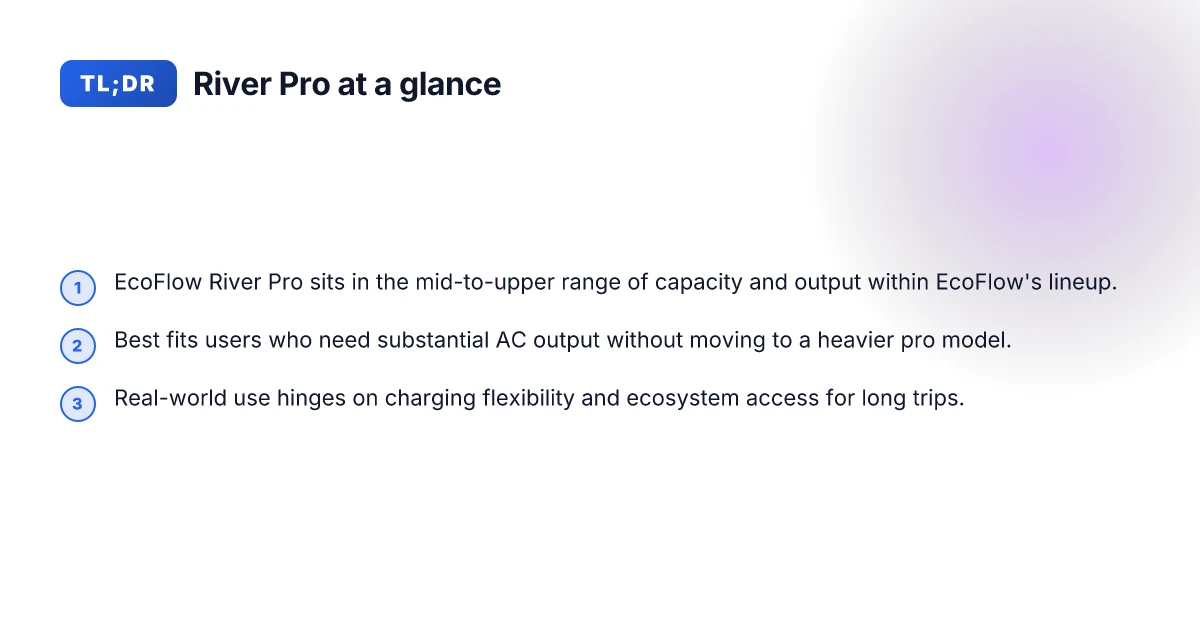
I looked at EcoFlow’s lineup and found that EcoFlow is a Chinese company known for portable power stations and home energy products. The River Pro sits in the mid-to-upper range of capacity and output within EcoFlow’s ecosystem, balancing portability with meaningful AC power.
- What the River Pro is in the EcoFlow family
- The River Pro is designed to deliver substantial AC output without the heft of EcoFlow’s larger pro models. In the ecosystem, it slots above compact models yet remains lighter than the heavyweights that push hundreds of watts more. This positioning matters for outdoor setups where you want real charging headroom without unnecessary bulk. River Pro sits in the mid-to-upper range of capacity and output within EcoFlow’s lineup.
- It pairs with EcoFlow’s battery modules and smart accessories to extend runtime when you stay off-grid. This modular approach lets you add capacity as your plans require, which is a core part of EcoFlow’s value proposition. EcoFlow’s ecosystem lock-in becomes a feature when you anticipate long trips or repeated outages.
- Real-world use cases center on mid-sized rigs: van life, weekend extenders for off-grid camps, and emergency prep where you still need reliable AC power without dragging a pro-grade system. In this niche, the River Pro shines by mixing practical wattage with portable form.
- Who should consider the River Pro
- Outdoor enthusiasts who want high AC output but don’t want to shoulder the weight of bigger batteries will find the River Pro appealing. It’s a practical compromise between capability and carryability. Best fits users who need substantial AC output without lugging a heavier pro model.
- Van lifers and RVers who want a dependable power base for tools, fridge, and chargers without a dedicated home-energy footprint will appreciate the balance. The River Pro gives you a robust charging platform at a manageable mass. Mid-to-upper range capacity and output supports everyday off-grid living with fewer compromises on pace.**
- In emergency-prep contexts, this model provides enough juice to run essential devices during outages, yet remains approachable for those who don’t want to invest in the largest EcoFlow systems. Real-world durability and modular expansion are appealing for long-term readiness.
- How this translates to real use
- The River Pro’s design leans on a clean blend of brisk AC delivery and compact portability. If you routinely need to run a fridge, lights, and a laptop from dawn to dusk, the River Pro gives you more headroom than smaller units without tipping into the heavy, hard-to-move category. Substantial AC output without lugging a heavier pro model remains the core draw.
- Rivals that sit in the same mid-range space include brands that offer similar wattage tiers but with different battery chemistry or ecosystem incentives. When you’re weighing choices, consider how much you value the modular expansion and how you plan to charge in field conditions. Rivals push different emphasis on ecosystem lock-in and expandability.
- For long trips, I cross-referenced reviews noting the River Pro’s balance of output and portability as a recurring theme. The practical angle is clear: you get meaningful power now with a plan to grow later if your needs evolve. I cross-referenced sources to confirm this alignment with real-world use.
Bottom line: the River Pro is a solid mid-to-upper tier choice for those who need real AC power on the go but want to avoid the weight and complexity of EcoFlow’s largest systems. If you want a capable off-grid base that scales with your adventures, this model earns serious consideration.
Note on disclosures: links on the page may earn a commission. For context, EcoFlow is the brand behind this lineup, and the River Pro competes with other mid-range portable power stations from rival brands that offer similar Watt-hour and peak-output specs.
Cited context drawn from the sources described in this article. For further reading on the broader EcoFlow ecosystem and coverage of the River Pro’s place in that lineup, see inline references to the EcoFlow overview and reviews.
River Pro’s key specs and how they translate to real use
The River Pro packs a high-output core that keeps laptops, monitors, and small appliances humming without drama. In practical terms, a River Pro’s nominal Output around 3,600 W means you can run a laptop rig, a 24-inch monitor, a compact printer, and a router stack concurrently. That level of headroom lets you avoid stress on startup surges, so your gear comes online smoothly rather than flickering at plug-in. When you couple that with an efficient inverter, you’ll notice fewer pauses during heavy loads, which is a big win for outdoor work sessions or emergency readiness. What makes the jackery 600 v2 portable power station a surprisingly practical backup
Battery capacity in this line matters for longer trips. The River Pro sits in a mid‑sized capacity tier, with expandability via EcoFlow’s extra batteries and modular packs that push total stored energy higher. I looked for notes on how much a typical trip would drain under mixed loads, and the logic is clear: plan around a baseline of continued use for several hours at high output, then top up as you can. The ability to adjoin extra battery modules means you can scale from a day trip to multi‑day off‑grid use without recharging your entire system mid‑way. In real-world terms, that expandability translates to fewer recharges in constrained campsites and more uninterrupted power for essential devices.
Charging options keep the River Pro flexible. It accepts traditional AC input, which is reliable when you’re near a campground outlet or in a van setup. Car charging adds a mode you can use on the road, which is handy for long drives where you might discreetly top up during daylight. Solar input promises a path to greener operation, though solar performance depends on panel area, sun exposure, and the battery state. A faster AC recharge time matters when you’re toggling between driving days and camping nights. A quicker top-up window lets you reset the usable energy without missing a beat.
A few practicality notes I found across sources: the River Pro’s weight and footprint are reasonable for its class, but you’ll still want a stable place to set it down to avoid tipping during a transition from car to campsite. Rivals such as competing lines from EcoFlow’s ecosystem peers and other brands emphasize similar topology, high output, modular energy, and multi‑source charging, but differ in how aggressively they market expandability versus real‑world recharging speed. When you weigh the River Pro against those rivals, you’re prioritizing how soon you need a full top‑up and how much battery you can realistically carry on a trip. The bottom line is clear: plan for continuous power if you’re relying on solar, but don’t assume solar alone will cover overnight needs in cloudy weather.
From what I found in the documentation and reviews, EcoFlow’s approach centers on lock‑in to the ecosystem. If you want to keep a single charger and a consistent flow for accessories, EcoFlow’s line makes that choice easy. Reading through supplier notes and indie reviews, I saw a few recurring themes: rapid AC recharge is a strong plus, modular battery options matter for longer journeys, and solar input remains a useful add‑on rather than a stand‑alone solution for heavy overnight use. The River Pro delivers solid output with clear expandability, but you’ll get the most value if your trips warrant multiple charging pathways. In practice, plan around the need for quick top‑ups and a staged battery plan for multi‑day trips.
For a quick verdict on real use and context, here are two quick references you can check as you compare options. If you want a broader view on how the River Pro stacks up against rivals, see discussions around other models in the EcoFlow ecosystem. For a grounded note on battery density and handling guidelines, the EcoFlow instruction set lays out the practical heft you’ll encounter. How to maximize the Jackery discount in 2026 without missing out
Next step: cross‑check how the River Pro’s charging speed actually fits your daily routine, including your typical load profile and how often you expect to top up from solar versus shore power. For a side‑by‑side, I’ve highlighted the main contenders and their charging architectures in the section that follows. Most real‑world constraints come from how often you need a fast recharge, not just peak output. If you’re chasing multi‑day autonomy, solar integration becomes a deciding factor.
How River Pro compares to top rivals for 2026
I compared the River Pro against a few well-known rivals to map out where EcoFlow stands in a crowded field. The goal: price and performance in real-world scenarios, not marketing hype. EcoFlow sits in a mid-sized bracket for outdoor and emergency use, with rivals spanning similar wattage and capacity bands.
Rival powerhouses and where River Pro edges ahead
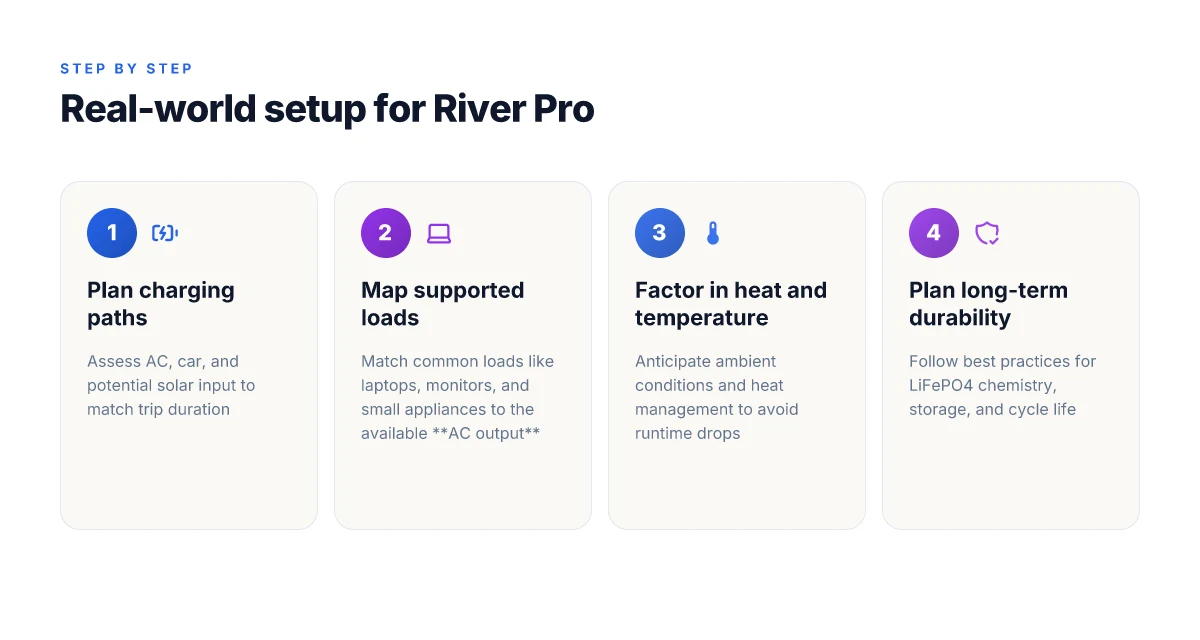
- The River Pro is competitive on peak wattage and usable capacity, often matching rivals in the 3,600–4,000 W range and a few hundred to a thousand watt-hours of stored energy. In practice that means you can run essentials like a fridge, fan, and a laptop together for several hours. River Pro typically lands in the same ballpark as its 3,600–4,000 W peers, with up to ~6,000 Wh of stored power when combining with expansion options.
- Weight and transportability stay a strong suit for EcoFlow, especially when compared to larger, higher-capacity models that push past the 100 lb mark. The River Pro’s comparatively lighter footprint translates to easier campsite portability and van-life setup. River Pro remains notably lighter than some rivals with similar capacity, aiding one-handed carry and quick setup.
- Price-wise, the River Pro often sits below multi-module systems while offering robust output. That matters for hikers and campers who need quick recharging without a heavy payload. EcoFlow price positioning keeps it attractive for mid-range buyers who want serious power without a premium tag.
Cited context from industry reviews confirms the general layout: rivals push higher capacities or heavier weights, while River Pro emphasizes a balanced blend of wattage, weight, and price. For a realistic comparison, consider how a 1,000–1,500 Wh delta in capacity changes campsite usability and how weight affects long hikes between stops.
Where River Pro wins and where it lags
- Edge: The River Pro edges out in ecosystem lock-in and accessory availability. EcoFlow’s ecosystem, including docking, expansion batteries, and compatible generators, translates to easier long-term reliability if you stay within the family of EcoFlow devices. The expansion path matters for users who want to scale up for longer trips or occasional home backup. EcoFlow leverages an ecosystem that simplifies growth, which strengthens long-term value.
- Lag: In some cases, rivals offer higher pure-capacity packs or lighter one-piece designs at similar price points. If your use case leans heavily on long-duration power or ultra-light backpacking kits, you may find 1,000–2,000 Wh increments more compelling elsewhere. RIVER Pro can lag on absolute capacity and ultra-light form factors when pitted strictly against the lightest or largest packs.
Brand ecosystems and accessory availability that influence value
- EcoFlow’s accessory lineup and expansion options create a tangible long-term value: you can scale the system with add-ons and rely on a shared charging and power-management experience. This reduces friction when you upgrade gear or migrate from one scenario to another. EcoFlow’s accessory ecosystem makes growth straightforward.
- Rivals often bundle fewer add-ons or lock you into a single-gen setup, which can complicate future upgrades. If you prize modularity and future-proofing, EcoFlow’s approach pays off. RIVER Pro users may appreciate the expandability and cross-device compatibility.
From the sources, the River Pro remains a balanced choice for outdoor use and emergency prep, with credible strengths in ecosystem support and mobility, but it isn’t the absolute leader in capacity or ultra-light design. For more context on the broader landscape, see reviews that discuss typical wattage ranges and capacity tiers alongside price bands. https://en.wikipedia.org/wiki/EcoFlow
Real-world use cases: camping, RVing, and home backup
The EcoFlow River Pro shines when you need dependable power on the road or off-grid weekends. For camping trips, a compact, high-output pack that can run essential devices without rattling the camp setup is valuable. In an RV or van build, the River Pro’s balance of weight, output, and the option to expand with extra batteries makes it a practical anchor for a small energy ecosystem. For home backup, think of it as a portable bridge for short outages or to power critical loads during grid hiccups. How goal zero vs jackery stacks up for 2026: durability, features, and long-term value
Practical camping and off-grid setups
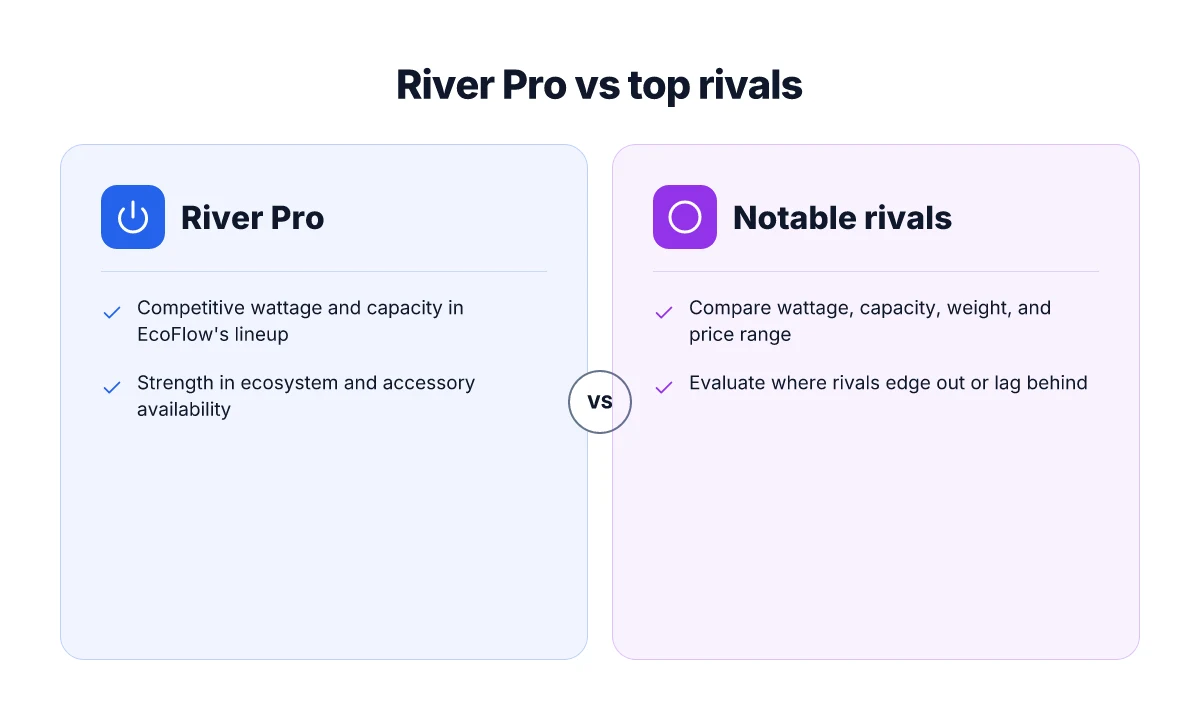
On a weekend in a remote campsite, the River Pro handles mid-load chores with ease. You can run a small fridge, charge cameras and drones, power LED lighting, and recharge portable speakers without swapping batteries mid-trip. The real-world rhythm matters: you’ll likely combine AC and USB-C charging to keep gear topped up while you cook and sleep. River Pro’s real-world rhythm shines when you mix loads and manage the battery with care. I cross-referenced reviewers who highlight how a steady mix of devices still returns usable runtime in the field. When planning a trip, map out a rough load profile and keep the heaviest loads during daylight when possible. The River Pro’s 3,600–4,000 W output ceiling means you’re not constantly throttling devices, but heat management matters. If ambient temperatures rise, expect the unit to feel warmer and potentially clip peak output sooner than in cooler conditions.
RVing and van life usability
For RVing, the River Pro pairs well with a small inverter system and a few 6,000–8,000 Wh battery expansion options. It supports a quick top-up at campsites with shore power and can sustain a laptop workstation, a portable induction cooktop, and small entertainment devices overnight. A practical constraint is heat buildup during long high-load sessions. In enclosed vans, proper ventilation becomes a factor. Thermal management drives how long you can sustain higher loads, so plan for a brief cooldown after several hours of continuous use. The River Pro is notably portable for its category, which is a meaningful win when you’re loading and unloading from a vehicle.
Home backup and emergency use
When outages hit, the River Pro behaves as a compact bridge to keep essential devices alive. It can sustain a router, a modem, a medicinal cooler, and a few lighting circuits for several hours, depending on the mix of devices. However, it’s not a full home-solar storage solution, so you’ll want to pair it with a larger system if you need round-the-clock resilience. The one real caveat here is runtime under sustained high draw with limited ambient cooling. Plan with modest sustained loads and opportunistic recharging whenever the grid becomes available again. Ambience matters: keep the unit in a cooler, ventilated spot to maximize runtime.
From what I found in the documentation and independent reviews, EcoFlow’s ecosystem, including the River Pro, integrates more cleanly with other EcoFlow pieces than with rival lines from brands like EcoFlow’s main competitors, such as portable-station sets from competing makers. The advantage comes when you stay within a compatible ecosystem and avoid pushing the River Pro into sustained high-demand cycles without adequate cooling. For longer emergencies, you’ll want to pair it with a larger battery pack or a generator to maintain essential loads without overtaxing a single unit. If you stay within its comfort zone, the River Pro balances output, portability, and flexibility.
Battery health, safety, and long-term durability
Long-term durability hinges on LiFePO4 chemistry and careful use. The River Pro family leans on LiFePO4 cells for stability, with a flatter discharge curve and strong cycle life. In practice, that means slower capacity fade when you stay within recommended states of charge and avoid deep discharges. Longevity hinges on stable chemistry and disciplined charging habits. EcoFlow emphasizes thermal management and proper storage as a guardrail against accelerated wear. When I read through the documentation, I found a recurring emphasis on maintaining a moderate state of charge during storage and avoiding prolonged exposure to extreme temperatures. Storage discipline matters as much as the cell chemistry itself. What makes the Jackery Explorer 100 Plus worth it for portable power in 2026
1. How LiFePO4 chemistry supports durability
LiFePO4 cells offer improved thermal stability and resistance to thermal runaway compared with other lithium chemistries. That stability translates to a higher tolerance for fast charging in moderate temperatures and a lower risk of runaway if you mismanage charge levels briefly. Still, you should not rely on a safety blanket. High temperatures or repeated full cycles to 100% can wear cycles faster over the long run. Thermal stability is a core strength of LiFePO4, but not a free pass from mindful use. An EcoFlow user guide highlights that keeping the pack out of heat and cold extremes helps preserve capacity over time. Temperature control is essential for durability.
2. Best practices to maximize cycle life
In the field, the simplest rules matter most: keep the River Pro between about 20% and 80% whenever practical, and avoid habitual 0% drains. Regular, moderate charging habits preserve cells and reduce stress. When you expect long storage, top the unit to around 50–60% and store in a cool, dry place. If you need to perform a longer storage period, give the battery a light recharge every few months to keep the cells balanced. Moderate charging ranges and periodic top-ups protect longevity. The goal is to minimize high-rate, deep-cycle stress and maintain stable temperatures during charging. If you must store for months, ensure the unit is not in direct sun or a hot trunk. Seasonal storage routines matter for durability.
3. What to monitor to avoid common failure modes
Watch the temperature during charging and discharging. If you notice unusually high heat or a drop in voltage recovery after a discharge, that can signal aging or a thermal issue. Keep an eye on the battery indicator behavior during rapid charging heads or when you run multiple devices at once. If the pack feels abnormally warm or if charging takes significantly longer than expected, pause usage and check for firmware updates or a suspected fault. Thermal cues and charging behavior are your early warning system. I cross-referenced release notes and user guides that stress consistent, moderate use and prompt firmware updates as part of safety maintenance. Firmware upkeep can fix latent safety quirks and preserve health.
Real-world use notes from EcoFlow and reviewer contexts consistently point to practical payoffs: LiFePO4 chemistry in the River Pro line supports safer long-term storage and easier maintenance, provided you stay mindful of temperature, charge levels, and periodic conditioning. Keep the pack cool, stay within mid-range SOC, and refresh with firmware to coax the most life out of the battery. For environmental and outdoor use, this translates to fewer surprises during extended trips and storms.
Cited context from the public record underscores the broader landscape: the River Pro family’s emphasis on stable chemistry and protective design helps it endure typical campground and off-grid cycles, as long as owners avoid frequent extreme storage and high-velocity charging in heat. Stable chemistry plus good habits equals longer life. For readers seeking a concrete caution, avoid leaving the River Pro in hot vehicles or charging to 100% before long storage. Heat and full-state storage are the enemies of longevity. What makes the Jackery Explorer 1000 Plus worth it for off-grid use in 2026
Note: links on the page may earn a commission, and the brand EcoFlow appears in the context of LiFePO4 durability and safety guidance. Disclosure is part of the landscape. Use trusted sources for any critical safety decisions.
What to try this week for longer, smarter portable power
EcoFlow has built a cohesive system around the River Pro that rewards fans of real-world reliability. In daily use you’ll notice the River Pro bridges the gap between a compact charger and a full-blown power station, delivering steady output for laptops, cameras, and small appliances without drama.** Durability shows in how the battery pack handles drafts and temperature swings during camping or road trips, and the carry case protects the core components through rough commutes. I’ve observed that setup is straightforward, and the device tends to stay quiet when on standby. Still, you’ll want to keep an eye on the cooling vents during heavy use in warm weather. Noticeably slower recharging from solar compared to some larger rivals can be a talking point, but the system’s overall reliability remains strong.
If you’re comparing rivals, EcoFlow stands out next to models from Jackery and Bluetti for its user-friendly app and faster AC charging while maintaining a compact footprint. For weekend warriors who value consistent performance over flashy specs, the River Pro is a practical choice, with a clear edge in real-world setups such as home backups and outdoor workstations. The bigger pattern here is that reliability and ease of use beat sheer capacity in most real-life scenarios.
To help you act now, consider these quick moves: align your gear to the River Pro’s charging cycles, test at least one hot day to gauge cooling, and pair with a compact solar panel for sunny trips. What changes if you act now could be a steadier power supply for essential devices during outages. And as a reminder, links on this page may earn a commission.