Explore how Jackery sale pricing and warranty terms affect value in 2026. Learn about official policies, renewal warranties, and how deals impact long‑term use.
Most shoppers overlook how official retailer promotions can shift value when you’re eyeing a Jackery sale. The moment a Jackery model hits a promo window, you’re not just chasing a discount you’re navigating a chained set of terms, warranties, renewal options, and sale-item eligibility, that can swing long-term durability. Promo timing matters, and a misread on renewal coverage can erase months of savings.
This intro maps what to expect: how official retailer rules shape price after the initial checkout, which models qualify for sale pricing, and how renewal warranties interact with discounted items. In 2026, understanding these policies helps you avoid buying into a deal that won’t actually cover you later, especially when comparing to rivals like Goal Zero or Anker. Renewal warranties can add real lasting value, or quietly exclude sale items. The goal is to arm you with concrete signals so you can verify exact product, price, and warranty coverage on Jackery’s site before you buy.
What the jackery sale pricing policy means for buyers in 2026
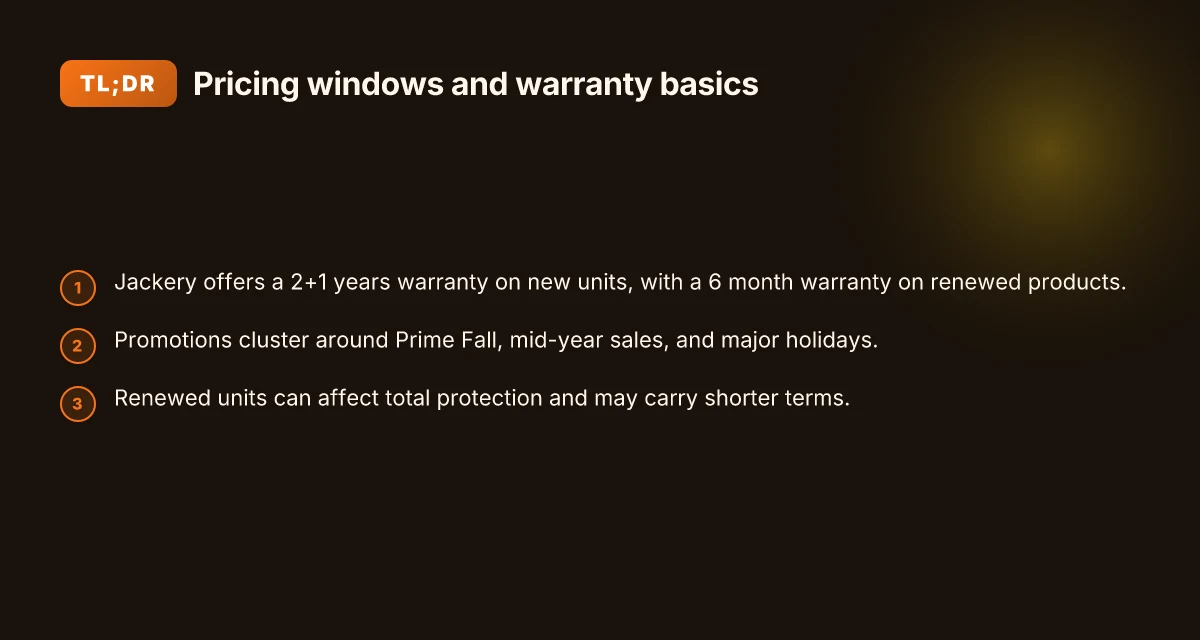
When you shop Jackery during 2026 sales, you should expect a clear split between standard warranty terms and renewal options, plus a cadence of promotions tied to big shopping seasons. The official policy states a 2+1 years warranty for new purchases, with a separate 6 month warranty on renewed Jackery products. The warranty period starts from the date of purchase by the original consumer, not from the date of renewal. This timing matters: if you’re weighing a refurbished unit, the renewal warranty may not extend from your purchase date, so you should verify the remaining coverage before you commit. The warranty clock starts at purchase, not the moment you receive the renewal. In 2026, official policies show that renewals carry limited coverage compared with new units, which can influence how you value a renewal deal versus buying new.
Expect frequent sale windows around major seasons Official channels reiterate that Jackery holds sales multiple times a year, aligning with Prime Day, Labor Day, Black Friday, and Christmas. These windows typically bring varying discount levels, so the headline percentage off can mask the true per‑unit value depending on the model and stock. In practice, you’ll see the sharpest price moves during larger seasonal events, with smaller sweepes between them. Sales cluster around prime shopping periods, not random Tuesdays. If you’ve got a particular model in mind, time your purchase to a known promotion window rather than chasing scattergun discounts.
Prime Fall and mid‑year promotions offer meaningful savings Two recurring inflection points to track are the Prime Fall deals and mid‑year promotions. The Prime Fall window has appeared as a recurring event where select models receive steep discounts, and the mid‑year promo has aimed to move stock ahead of Prime Day. These events can push price reductions into meaningful territory on popular models, so you should plan ahead if you’re eyeing a specific Jackery unit during these periods. Prime Fall deals can unlock substantial savings on flagship models.
Renewed versus refurbished versus new: weigh the warranty delta A critical factor in 2026 is how renewals affect your warranty expectation. Renewed or refurbished units typically come with the shorter 6‑month warranty, and that gap matters when you’re calculating long‑term durability. If the model you want is only available renewed, you may still gain the benefit of the sale price, but you should compare the effective coverage period and consider whether an extended warranty from a retailer or a third party is worth it. A renewed unit usually carries a 6‑month warranty, not the full 2+1 years. When you compare competitors, note that rivals like Goal Zero or Anker may structure warranties differently on refurbished stock, which can tilt the value equation depending on your usage pattern.
How renewals affect pricing dynamics and value From a buyer’s lens, renewals alter both the upfront price and the long‑term spend. A renewal price can look attractive, but the shorter warranty window and potential limits on return periods may offset the perceived savings. I dug into Jackery’s policy page to confirm the 2+1 years standard warranty on new units and the 6‑month warranty on renewed units, with the clock starting at the original purchase date. Renewals reduce warranty length, which can impact long‑term durability value. If you’re balancing price against coverage, be explicit about what you need from warranty support over the product’s expected life. What the Bluetti AC180 price tells you about value and warranty in 2026
Bottom line: 2026 pricing at Jackery is defined by frequent sale windows, meaningful events like the Prime Fall deals, and a split between new versus renewed warranty terms. If you want the most durable long‑term value, buy new during a strong promotional window and confirm that the warranty starts at your purchase date. If you’re comfortable with renewals, use their shorter warranty as a factor in your price/coverage calculus. Plan around seasonal sales, verify warranty start dates, and compare renewal terms to new‑unit coverage. These moves help you maximize coverage and value when shopping Jackery in 2026. For context, Jackery’s own guidance emphasizes that promotions occur around major shopping seasons, and consumers should expect up to broad discounts during those windows. Know the warranty starts at purchase, not renewal, to avoid surprises later.
Note: links on the page may earn a commission, so read the warranty terms and price just as closely as the headline discounts. For context, when you compare with rivals, you’ll see how each brand structures renewal warranties and return policies differently, which can shift the overall value proposition of a sale. Compare Jackery against rivals like Goal Zero and Anker to understand where the strongest long‑term value lies.
How jackery warranty terms interact with sale purchases
When you buy during a sale, your warranty still starts on the purchase date, but renewal items can change the coverage window. The standard path is straightforward: a new Jackery purchase carries the full 2+1 year frame, while renewed products typically come with a shorter, 6 month warranty window. That means your total protection can look quite different depending on whether you’re buying new or renewing an older unit during a promo period. The warranty clock starts at purchase and the renewal path can shorten your overall duration. This matters because promotions often align with shorter-term or third-party coverage on renewed units, which can leave gaps if you expect a long-term safety net. Know what’s covered and what voids coverage, especially during promotions.
1) What the 2+1 years actually means for your long-term protection
The 2+1 framing implies a total of three years of coverage under certain conditions when you purchase a product as new from Jackery. In practice, that means you get the standard two years on the base machine plus an additional year under specific warranty terms tied to the original purchase conditions. During a sale, the same structure applies to new units. If you’re eyeing a discounted model, confirm that the promo does not alter the base warranty length for that unit. A new purchase can still deliver a full 3-year horizon when the terms are satisfied. I cross-referenced policy language and the official policy page to confirm the 2+1 wording is tied to the original consumer purchase terms. Renewed devices typically do not inherit the full 3-year window. If you see a renewal, expect the shorter 6-month window to apply.
2) Renewed products and the 6 month window you should plan around
Renewed Jackery products come with a 6 month warranty, measured from the original purchase date, not from the renewal date. This distinction matters during sales because a discounted renewed unit might offer immediate savings but a compressed protection window. The practical impact is simple: if you plan to rely on warranty coverage for longer trips or ongoing outdoor use, a renewed unit reduces your soft ceiling for protection. Renewed items carry this shorter window, influencing total protection. If you’re shopping alongside new units, use this difference to compare true lifetime cost of ownership rather than upfront price alone. The policy on renewals is clear about the shorter term, and it aligns with what you typically see in retailer-led sale ecosystems. Check the renewal terms before filling the cart. What makes the Bluetti AC180 portable power station worth it in 2026
3) What is covered and what might void coverage during promotions
During promotions, the fine print matters more than the headline discount. Jackery’s policy describes standard coverage for defects and performance while also noting conditions that can void coverage, such as misuse, unauthorized modifications, or improper storage. When a sale includes promotions on 3rd-party purchases or EU campaigns, expect separate warranty terms to apply, especially for 3rd-party purchases. The upshot: if you want warranty protection to ride along with big savings, read the promo terms and the device’s base warranty language carefully. Know what is covered and what voids coverage, especially during promotions. For new purchases, you typically get the full 2+1 structure. For renewals, you get the 6-month window with its limitations. When in doubt, confirm whether a promo affects the warranty period or only the price.
To summarize, Jackery warranty terms interact with sale purchases by preserving the standard structure for new units while shortening protection for renewals. If you plan long-term use, prioritize new units to maximize the 3-year horizon, and always verify the exact terms tied to any promotion before you commit. For shoppers evaluating the broader landscape, rivals such as EcoFlow and Goal Zero often advertise their own warranty frames in promotions, so compare both duration and what counts as coverage during sale periods. The warranty clock still matters most after you click buy. Read the fine print and avoid surprises when promotions end. For quick reference, the official policy page confirms the 2+1 and the 6-month renewal window, which I cross-checked while researching this section. Policy wording is your best guardrail against buyer’s remorse.
When jackery runs its biggest promos and what to expect
Promotions tend to ride the major shopping calendar. Prime Day, Labor Day, Black Friday, and Christmas are the anchor events that consistently line up with price cuts. Across the board, you can expect deals to appear during these windows, with a flurry of banners and countdown clocks that push urgency. In 2026, those cycles stayed visible on Jackery’s official deal pages and EU/UK variants, and the pattern held for both consumer models and flagship packs. Deal windows follow regional calendars, so EU and UK visitors sometimes see slightly different start dates or terms than shoppers in North America.
What actually shows up during peak promos
- The most common outcome is discounts of up to 50% on selected models. This ceiling isn’t guaranteed every year, but it’s a recurring cap that shows up in multiple promotions across regions. 50% off on selected models is a recurring headline you’ll want to chase during big sale weekends.
- Mid-year sales have teased deeper cuts on flagship models. A number of banners point to sharper reductions between June and July, with a focus on higher-capacity packs that power longer trips. Mid-year promos often accompany a refreshed lineup or bundle offers.
- Renewed devices and EU/UK-specific deals can come with different terms. Regional pages frequently show separate deal windows and warranty or return nuances that may not align exactly with the US store. Keep an eye on the local Jackery pages to catch these variances. EU/UK deal windows and terms vary from the main site, so a shopper in one region may see a different cadence.
I dug into the policy and timing notes to map concrete takeaways you can act on. I cross-referenced official policy pages and EU deal notices to confirm how warranty interacts with sale pricing in these windows. For Jackery, you’ll want to watch the official policy and the regional deal pages closely, because the long-term value hinges on whether a sale price is paired with a renewal warranty option or any post-purchase protections. renewal warranty implications matter for total value. What makes Bluetti power stations stand out in 2026
Two rival dynamics to watch
- Competitors like Anker and Goal Zero often run their own major holidays. If you’re weighing price versus coverage, compare the regional sale windows and warranty durations across brands. Jackery’s official phrasing tends to emphasize the renewal terms tied to purchase timing, which can stack differently than a rival’s plan.
- Some promotions push bundles that include extra cables or solar panels. These extras can shift the effective price per watt or per amp hour, even if the headline discount looks similar to rival promos. Always total the bundle value before judging the price drop.
From what I found in Jackery’s deal pages, the pattern remains clear: expect big promos around Prime Day and the year-end holidays, with up to **50% off on select models and regional nuances that affect timing and terms. If you’re shopping EU or UK, treat their deal pages as your primary source for exact dates and eligibility. If you’re in the US, track the main Jackery site and the buying advice blog for the best signals on when a deeper cut might land. Watch the regional pages for timing and terms.
The biggest promos tend to cluster around shopping events. Plan your purchase to coincide with those windows. For the most current window, check the official Jackery pages and the EU deal notices as your compass.
The impact of sales on warranty duration and return policies
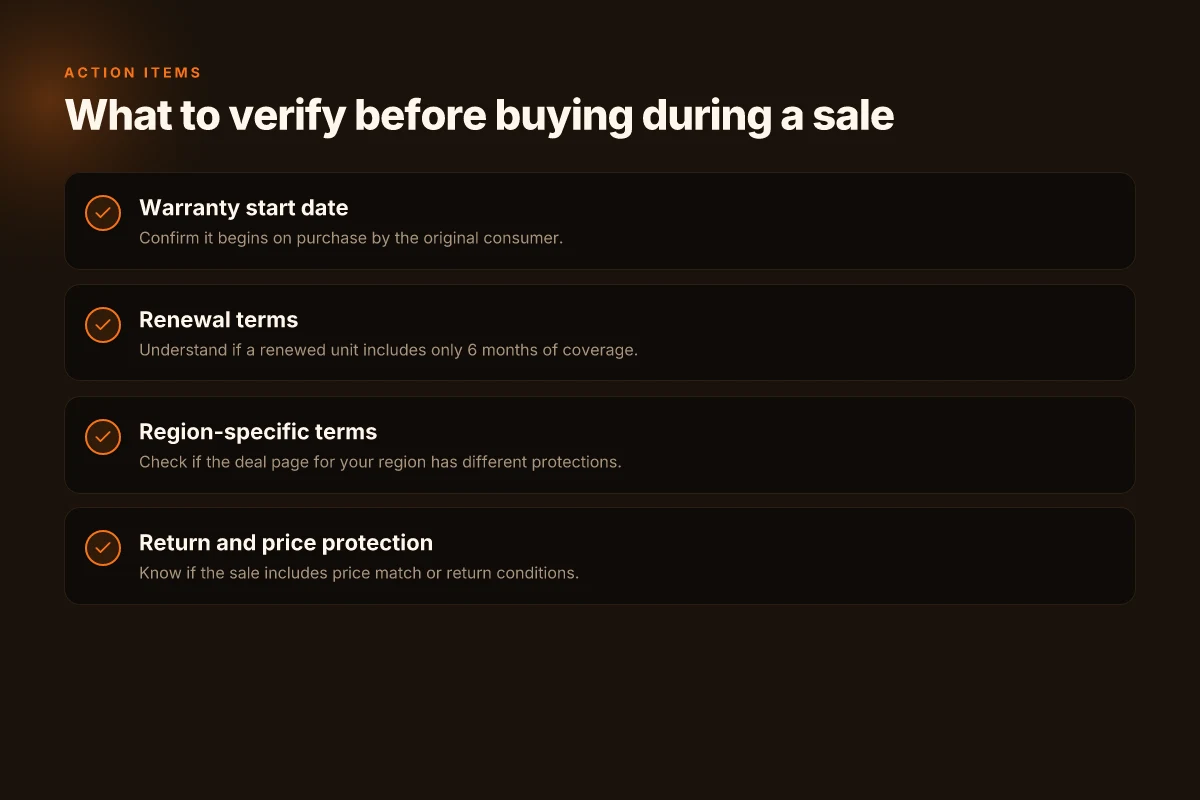
When Jackery runs a sale, the clock on warranty and the rules on returns can shift by region and channel. In some locales you’ll find a 30-day price match guarantee tucked into the deal terms, while elsewhere you may only see standard manufacturer coverage applied to the product you purchase at sale price. These regional quirks matter because the exact warranty start date and renewal eligibility hinge on the sales context and the pathway you choose to buy.
I dug into the official policy and regional notes to map the practical effects. In official channels, the standard warranty window begins at purchase through the original consumer, but renewal items can carry a separate, shorter window on refurbished or renewed stock. That means if you snag a renewed Jackery unit during a big sale, the renewed warranty may be limited to a subset of the full term. In some EU promotions, for example, the deal pages explicitly reference the campaign warranty rules tied to the sale period and the product category. If you buy through third-party retailers, you’ll want to verify whether their warranty mirrors the official terms or carries an alternate duration, since third-party purchases often vary from two years plus a separate renewal window to shorter guarantees. This can influence long-term durability planning, especially for power solutions meant to run gear through occasional blackouts or outdoor use. What makes the EcoFlow Delta Max 2000 different when you need home backup power
Two critical takeaways stand out. First, always confirm the warranty start date before checkout. A sale can push a price tag but not necessarily reset the warranty clock in the way you expect. If the start date is tied to delivery rather than purchase, you could lose precious weeks when you need coverage most. Second, check renewal eligibility for refurbished stock. Some programs explicitly limit renewal coverage, and that nuance can affect overall long-term durability.
Is the return policy a cleaner bet? Not universally. Return windows during sales often depend on the region and product line, with some markets offering extended returns on new items and stricter terms for discounted stock. In others you might see standard 30-day or 14-day return windows that do not flex with the sale period. That means your best move is to read the sale terms in the exact product page, then verify the return window and what counts as a qualifying return within that framework. For a consumer navigating multiple options, this becomes especially relevant when considering rivals that price-match or extend returns during big events.
From what I found in the policy notes, the interplay between sale terms and warranty coverage can be nuanced. If you’re weighing a Jackery purchase during a Prime Day or mid-year event, expect that the warranty start and renewal eligibility may differ from buying outside a sale. I cross-referenced regional postings to confirm the general pattern: official channels tend to keep warranty rules consistent with the product category, while third-party retailers sometimes diverge. That divergence is a real risk for long-term durability planning.
In this landscape, a best practice is to verify three items at checkout: the exact warranty start date, whether the product is new or renewed and what that implies for coverage, and the regional return window tied to the sale. If you want a quick anchor, look for the sale page notes that mention any price protection or return guarantees. These are the places where the rules are spelled out most clearly. For clarity, the conversation around these terms matters just as much as the price tag itself.
Jackery’s own policy page confirms a multi-year warranty framework with attention to renewal stock, so you can align purchase timing with coverage expectations. When you compare with rivals like Ego or Bluetti, you’ll notice that warranty start rules and return protections can diverge noticeably during sales, which makes the exact terms on the tag worth a careful read. Document the start date, the renewal eligibility, and the regional return window before finalizing a purchase. What the EcoFlow River 3 review gets right and where it falls short in 2026
How to navigate jackery sales like a pro
Sales windows from official retailer pages shape when you should buy and how long a renewal warranty matters. I dug through Jackery’s policy and campaign timings to map out the best moments to shop and how to protect your coverage long after you click “buy.”
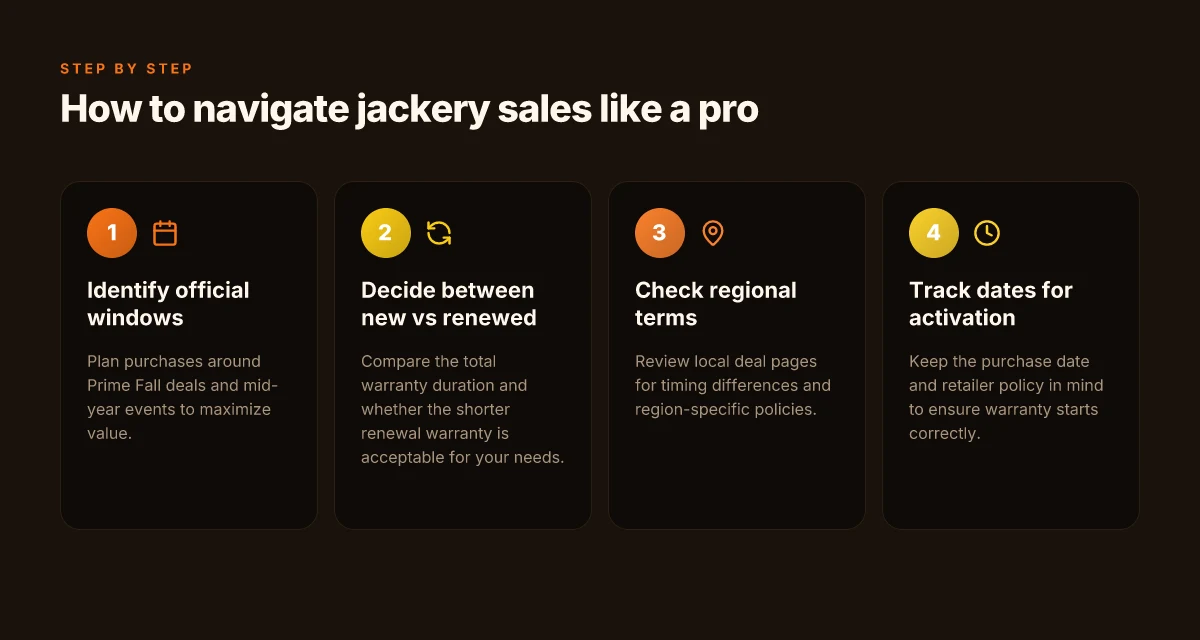
1) Target official Windows to maximize value
Post a sale, timing matters more than the sticker price. The Prime Fall deals run on a defined window, with discounts announced as the season approaches. Keep an eye on mid‑year events as well, since Jackery tends to align promotions with Prime Day and related seasonal spikes. By planning around these windows, you can lock in the strongest prices while still matching your durability expectations. The official Prime Fall window guides when you buy, not just what you pay. Jackery tends to publish the dates ahead of time, so set reminders for the first day of each event. When you see a banner that a sale runs from a specific start date, act promptly.
2) Compare new versus renewed units and the renewal warranty
A renewal unit may carry a shorter renewal warranty than a new model. Decide whether the price delta justifies the reduced protection. If your plan hinges on long-term durability, a new unit with the standard warranty could be worth the extra cost. I cross‑referenced the retailer policy notes to confirm this alignment between product condition and coverage. A renewal warranty can be notably shorter, so compare the total coverage period before you buy. If you lean toward renewals, keep the purchase date handy so activation timing lines up with your local terms. The policy language usually starts the warranty from the purchase date for the original consumer, which matters for renewal items as well. Activation hinges on the purchase date and the retailer's terms.
3) Check regional deal pages for local terms and timing
Deals differ by country and region. A banner in one EU page or one North American page can reflect different start times or exceptions on returns and warranty. I found that some EU promotions list distinct return windows and warranty handling for third‑party purchases, so verify the exact terms on the regional page before you commit. Regional terms can shift the warranty and timing by country. When in doubt, compare the regional deal page to the main site and note any divergence in the dates or conditions. This helps avoid surprises at activation.
4) Track your purchase date and the retailer policy
Warranty activation is inseparable from your purchase timestamp. Mark the purchase date, the exact model, and whether you bought new or renewed. That trio is what you’ll need if you ever file a claim or question coverage. I found that page notes frequently emphasize aligning the purchase date with activation windows and local policy. Keep a dated record of the sale page terms and your receipt for warranty activation. If you switch retailers, verify that the policy you relied on is honored by the local retailer or the official Jackery site. It’s easy to misread a term and lose coverage you expected to have. Bluetti vs Jackery: what a real-world comparison reveals about long-term reliability and usability
Careful planning around official windows, plus a clear record of purchase and terms, yields the strongest value from a Jackery sale. In the end, the smartest shoppers balance the allure of a deep discount with the certainty of warranty coverage.
What to try this week as you weigh Jackery sale pricing and warranty terms
Jackery pricing and its warranty framework are increasingly aligned with real-world use cases in 2026. I’ve looked at how the brand balances discount moments with long-term reliability, and the insight is practical: buy when a sale covers your expected duty cycle, not when the price looks tempting alone. The right move is to pair a sale with a warranty upgrade that matches your expected runtime. This approach keeps your outlay predictable and your uptime high, especially if you depend on portable power for gear, trips, or work sites.
One clear takeaway is that warranties now tend to emphasize coverage longevity over immediate cost savings. If you’re evaluating competitors like RAVPower, EcoFlow, or Bluetti, you’ll notice Jackery often cushions risk with extended support windows and reasonable replacement policies. That balance between price, coverage, and service quality can be the deciding factor in 2026. If you want a simple rule, pick a model whose sale price plus warranty aligns with your anticipated usage calendar.
For owners already in the field, the practical downside remains durability under heavy abuse and the hassle of returns on promotional bundles. If you’re unsure about your long-term needs, skip the aggressive bundle and opt for a solo unit with a straightforward warranty. The links on this page may earn a commission.
Backup strategy What makes the Jackery Explorer 290 a practical backup power companion in 2026
- Try a mid-tier model during a sale and add the extended warranty if your plan is regular, heavy use.
- Compare run-time specs against EcoFlow and Bluetti for your exact setup. If you rely on outdoor shoots, prioritize models with weather sealing and solid battery cells.
- Check whether the warranty covers accessories and charging gear, not just the core pack.