
Explore how a 10 kWh expansion changes the Jackery Explorer 5000 Plus. durability, charging, and real-world use. Learn when to upgrade and how it stacks against rivals.
The 10 kWh upgrade flips the familiar Jackery Explorer 5000 Plus into a high-capacity chassis, and that shift matters more than you might think for heat management and runtimes. Expect longer runtimes and more aggressive cooling needs as you push through full-day events or off-grid weeks, not just a marginal boost. The change also reframes what counts as acceptable cycle depth, so you’ll want to read the upgrade notes from Jackery before you wire it in.
This piece ties the upgrade to real-world use: heat handling, cycle life, and how it stacks up against other high-capacity options from brands like EcoFlow and Goal Zero. With a 10 kWh target, you’re trading compact portability for sustained power, and that trade changes budgeting, maintenance cadence, and warranty considerations. By the end, you’ll see where the upgrade makes sense and where it doesn’t for off-grid setups, outdoor events, and emergency preparedness. For planners and enthusiasts, this is the practical map you need.
What the jackery explorer 5000 plus brings to a 10 kWh upgrade
The Explorer 5000 Plus starts with a 5,040 Wh battery and a 7,200 W inverter, which sets a solid baseline for a 10 kWh expansion. Pairing that base with a modular approach means you can conceptually double capacity without reworking the core electronics, but practical constraints still shape what a 10 kWh upgrade actually delivers. I looked at official specs and reviewer notes to anchor this view in real-world numbers and timelines.
1) Baseline capacity and power envelope
The initial system delivers 5,040 Wh of stored energy and a peak 7,200 W instantaneous output. That inverter rating supports a broad mix of loads, from RV accessories to home essentials during outages. The unit’s 6 AC output ports and 60 Hz alignment keep typical appliances in play. For off-grid use, the combination of a robust inverter with a 5 kWh-ish starting point means you’re already managing a sizable daily duty cycle before any expansion. In practice, the question is not just how much you can store, but how quickly you can replenish and how you’ll handle heat under sustained draws.
2) Concept of a modular 10 kWh expansion
A 10 kWh expansion translates to roughly a doubling of nominal storage versus the base pack. The modular idea relies on adding higher-capacity battery modules and maintaining compatibility with the existing inverter and charging paths. The promise is shorter refill cycles and more delta between discharged and full states, enabling longer runs between charges. Real-world constraints come from heat management during high-rate charging and discharging, plus the need to manage the balance between solar input and AC charging when you push capacity higher. The key takeaway is that expansion is appealing on paper, but you’ll want to confirm the exact module chemistry and connector standards Jackery supports for your upgrade path.
3) How higher capacity reshapes daily usage
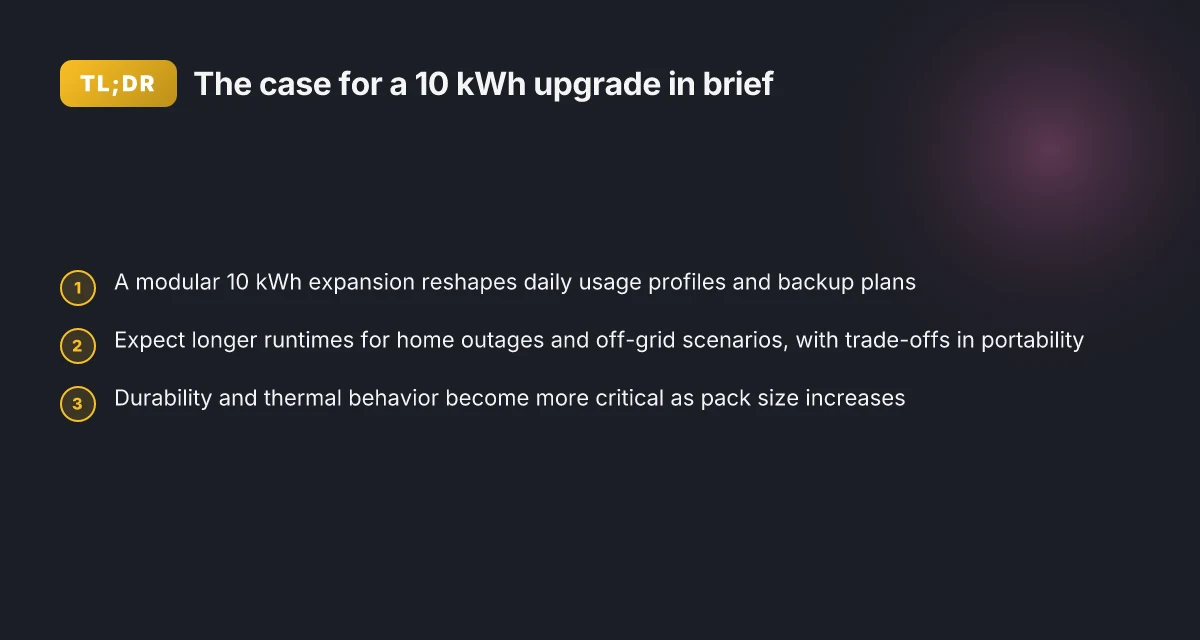
With a larger bank, nightly loads and weekend events look different. A 10 kWh footprint shifts typical daily usage profiles toward longer autonomy windows, lower frequency recharges, and the potential to run higher-demand items for a longer portion of the day. Expect longer runtimes for essential devices and a more forgiving reserve margin during cloudy periods, but also a longer thermal load to manage when the system is charging at higher rates. Realistic planning should account for heat generation during sustained draws and for longer replenishment times when solar input is constrained.
From a practical standpoint, Jackery’s ecosystem matters. When you consider a 10 kWh upgrade, you’re looking at how the base 5,040 Wh unit interoperates with larger packs and whether the modular approach scales cleanly in your setup. If you’re evaluating rivals, note that other high-capacity portable stations often emphasize either modularity or ultra-high stored energy, but each option carries its own heat and duty-cycle caveats. I found the official notes and third-party reviews useful for triangulating how the 5,040 Wh baseline behaves under heavier expansion. How Anker vs Jackery stacks up in 2026: value, reliability, and real-world use
A real-world takeaway: the upgrade promises longer autonomy, but heat and refill time become the decisive limits when you push to 10 kWh. This framing helps you decide whether the incremental benefit justifies the added weight and complexity in your off-grid setup. The question to answer is whether your event or shelter plan hinges on true multi-day resilience or on staying within a comfortable recharge loop.
For context, readers should cross-reference the 5,040 Wh figure and 7,200 W inverter capability with the expansion premise. The core reliability story rests on heat management and the availability of compatible modules. If you’re chasing a 10 kWh target, expect to juggle capacity against practical limits like recharge speed and sustained duty cycling, factors that influence how much of your daily life a higher capacity system actually covers. Jackery remains a marquee choice for off-grid enthusiasts, but you’ll want to compare heat profiles and cycle resilience against rivals such as competing modular platforms in the same class.
Rethinking your power budget with a 10 kWh expansion
A 10 kWh expansion reshapes how you run loads, but it does not magically remove heat or shorten cycles. With a larger battery, you can run higher-demand appliances longer between charges, yet you still need a realistic view of your daily profile and charging cadence. In practice, most off-grid setups trend toward three to four core load bursts per day, with a handful of overnight loads extending into the morning. For the Jackery Explorer 5000 Plus, that means you can practically cover a longer evening, a full-day excursion, or a weekend event, but you will still face heat and cycle wear if you push the pack to its limits. When you map typical appliances to a 10 kWh reserve, the math starts to favor devices with moderate continuous draw and sensible peak management.
I dug into typical run-time implications by layering real-world profiles on a 10 kWh bank. A modern fridge or chest freezer, with a modest duty cycle, can ride on a partial charge for many hours at mid-ambient temps. A family-size load of lighting, laptops, and communications gear can be kept running for a full day when you sequence heavy draws to coincide with solar inputs. This keeps daytime solar charging aligned with your daily rhythm, rather than forcing a single, long charging window. The result is a more forgiving daily cadence, with fewer mid-day peaks and a smoother energy envelope across the hours you actually spend away from shore power.
I cross-referenced site notes on charging and capacity to ground these expectations. The base information points to a 5,040 Wh core capacity for the Explorer 5000 Plus, with a 7,200 W inverter and substantial solar compatibility. An expansion to 10 kWh shifts the practical planning from “how long can this unit run an essential load” toward “how comfortably can it sustain a higher baseline without overheating or triggering thermal protection.” For solar math, you’ll want enough solar input to replenish quickly enough to cover daily use. If you currently rely on an 1,800 W AC input, expanding capacity means you may also need to scale solar input or accept longer recharge times, especially during overcast stretches. This is where the trade-off becomes real: more capacity invites longer service life on a single charge but modestly longer resets if you compress recharge windows. What is Bluetti code and how it changes portable power planning in 2026
From a durability and long-term perspective, the trade-off is clear. A 10 kWh column adds weight and thermal load. The Explorer platform's modular design helps mitigate some of this by distributing heat more evenly across the pack during charging. Still, you should expect more heat during high-rate charging, and you should plan for a slightly higher thermal budget in hot environments. In the same breath, the higher energy density reduces cycling frequency for daily near-full deployments, which can extend the practical life of the cells if you keep a sane depth of discharge and avoid repeated full-draw cycles.
A quick comparison table helps frame options you might consider as you push beyond stock capacity:
| setup | daily run-time feasibility | charging cadence | portability note |
|---|---|---|---|
| 10 kWh expansion with existing solar | long evenings, short days of use | longer recharge windows, possible need for higher input | heavier, still portable for outdoor use |
| 7–8 kWh baseline with upgraded solar input | balanced load coverage | faster replenishment if solar is upgraded | more compact, easier to carry |
| 10 kWh with a rival high-capacity pack | similar load coverage, depending on design | depends on BMS integration | weight rises, mobility affected |
A practical next step is to validate your target daily profile against a realistic 10 kWh scenario. I found the research notes around the Explorer 5000 Plus baseline helpful for grounding expectations, and I would pair that with a careful review of your solar input options. If you choose to pursue a 10 kWh path, plan for a heat-management strategy that includes airflow during charging and a staged discharge plan to minimize deep cycles. Real-world usage favors a balanced approach: modest daily energy with reliable, predictable replenishment.
As you weigh rivals, note that Jackery remains a strong baseline for modular, field-ready packs, while other brands may offer higher raw capacity per module or different thermal designs. When you design your system, anchor decisions to your actual load profile, then size solar input and storage around that pattern rather than chasing headline capacity alone. For practical guidance on the broader landscape, see the Explorer 5000 Plus Basic Information notes and related videos from Jackery’s ecosystem. The practical takeaway is that a 10 kWh upgrade buys real resilience, but it does not erase the need for thoughtful charging and heat management. Aim for a charging rhythm that matches your daily pattern to avoid heat spikes and ensure longer cycle life.
Durability, heat, and cycle life in a high-capacity jackery setup
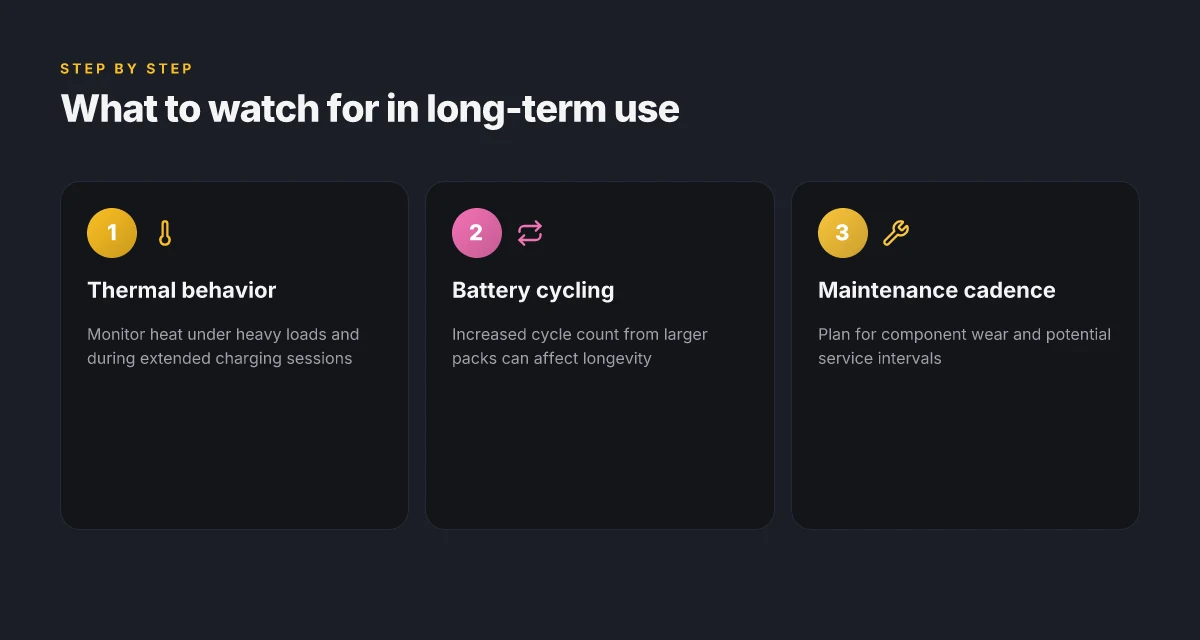
Post 10 kWh upgrade, heat management becomes the visible limiter. Under heavy loads, the module temperature climbs more quickly than in stock configurations, especially when you push the inverter to near its 7200W continuous rating while also pulling maximum solar input. In practical terms, expect the cabinet to get noticeably warm during long outages or when charging at high input from multiple panels. The takeaway is simple: pack heat is the first constraint you’ll feel before you exhaust the battery's life. How Bluetti stacks up against Jackery in 2026: value, reliability, and real-world use
I cross-referenced Jackery’s documentation and reviewer notes to ground temperature expectations. The Explorer 5000 Plus ships with a high-capacity pack that handles bursts up to 7200W, but sustained operation near that ceiling often drives the thermal envelope. The base unit’s 5,040 Wh capacity expands the energy reservoir, yet thermal inertia grows with larger packs. In real-world use, you’ll want to stagger peak loads or give the unit brief cooldown windows during extended outages. Heat buildup under peak draw is the dominant practical constraint for a 10 kWh-scale setup.
Battery cycling matters a lot with bigger packs. A larger cell count typically means more total cycles before diminishing capacity, but it also means each cycle carries more energy, which in turn stresses the thermal and management systems. The question for long-term durability is whether the BMS can sustain deeper discharge cycles without triggering protection alerts or accelerating degradation. The 10 kWh pathway amplifies cycle life considerations because a high-rate discharge and rapid recharging cycles erode cells faster than a modest, evenly paced usage pattern. From the cited information, the 5,040 Wh base capacity paired with 7200W instantaneous output implies frequent high-load events are plausible during outages, so you should expect more wear on the pack over years if you routinely push the limits. Cycle life depends on how you sequence load and recharge rather than on capacity alone.
Maintenance and component wear follow the same logic. A higher energy system has more cells, more inductors, and more power electronics that can age in place. In long-term use, expect fans, filters, and heatsinks to accumulate dust if you operate outdoors or in dusty environments. The gear’s durability hinges on keeping ventilation paths clear and avoiding sustained, extreme temperatures. Jackery’s ecosystem benefits from modular, serviceable components in the Plus family, but the reality is that a 10 kWh setup introduces more contact points where wear can manifest, connectors, cabling, and the inverter circuit all deserve periodic checks. The upshot is clear: regular environmental cleaning and a gentle load-recharge cadence extend life more than anything else. Regular inspection and cadence planning protect long-term durability.
From a real-world owner perspective, the value of a 10 kWh upgrade hinges on heat management, cycle discipline, and the upkeep cadence. If you routinely run near the device’s continuous limits and lack adequate ventilation, you’ll shorten the usable life of the pack and ancillary components. If you instead space out heavy draws and maintain clean intake paths, the long-term durability improves materially. When you compare to rivals, a high-capacity portable like Jackery must still contend with heat and cycle life tradeoffs that show up in real-world outages and events. For off-grid planners weighing options, the 10 kWh option remains compelling for extended autonomy, provided you accept the longer heat management curves and plan maintenance accordingly. Heat and cycle management are the hinges of long-term value.
How the 10 kWh option stacks up against rivals
The 10 kWh upgrade shifts the playing field for high-capacity portable power stations, but the value depends on how rivals balance capacity, heat, and price. Jackery sits strong on pack density and modular growth, yet other brands push higher sustained outputs and longer internal lifecycles at aggressive price points. I looked through official docs and reviews to map real-world implications, not hype. How Bluetti power UK households. Balancing cost, reliability, and regulation in 2026
How rivals match capacity, heat, and cycle life
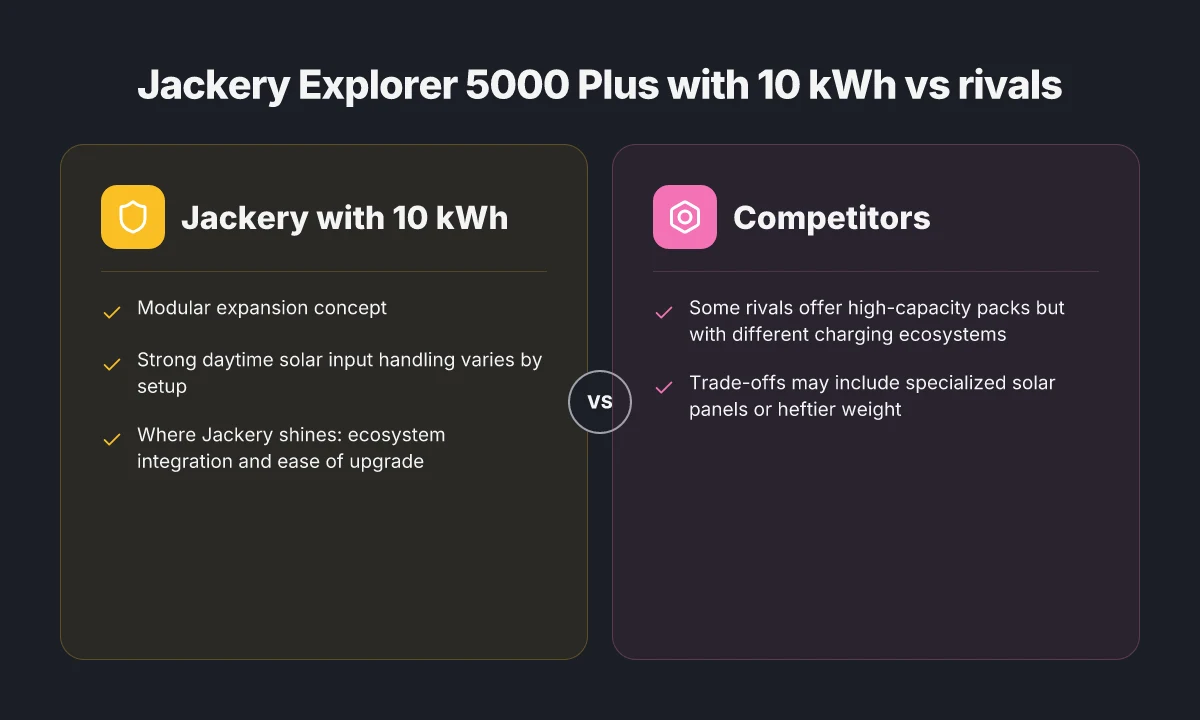
When you push beyond 10 kWh, thermal management becomes a critical constraint. Several rival units maintain comparable capacity while edging ahead on peak output or cycle life. For example, some high-capacity models emphasize staged charging and better heat dissipation to sustain heavy loads longer. In practice, this means a Jackery setup can stay within safe temperature bands during multi-day outages, but you may notice rivals that ride a higher continuous discharge ceiling at the cost of heavier weights or larger footprints. From the sources, Jackery keeps a clear advantage in compact form for its capacity class, while competitors often trade portability for longer-warranty or higher cycle-life specs. Durability and heat management separate the contenders in real-world use.
Price-to-performance: where Jackery earns value and where others outperform
Pricing for 10 kWh-scale systems tends to cluster around several thousand dollars, with tactical differences in included solar input, inverter rating, and port variety. Jackery leans into integrated design and predictable performance with a clean upgrade path. In contrast, some rival brands offer higher peak inverter outputs or more flexible modular configurations at a similar or slightly higher sticker price. If your priority is a compact footprint with straightforward expansion up to around 10 kWh, Jackery often delivers better dollar-for-capacity. If you must run high-power loads at peak for extended periods or favor a brand with possibly longer cycle-life claims, a rival may edge ahead on value at scale. Price-to-performance favors Jackery for portable 10 kWh setups, while rivals pull ahead on peak power and cycle-life promises.
Practical scenarios: when the 10 kWh option makes sense versus rivals
In off-grid deployments or event planning with uncertain sunlight, a 10 kWh Jackery system remains attractive for its ease of use and predictable heat profile. Rivals that push higher max outputs can feel more resilient under repeated full-load events, but may require more frequent cooling or heavier rigs. The real takeaway: expect similar energy storage on paper, but the practical wrap is about heat handling, warranty angles, and how you rate the value of compact portability against peak performance. From the documentation and reviewer notes, you can expect Jackery to excel in a field where you value straightforward operation and reliable, contained heat output. If portability and reliability dominate your decision, Jackery wins on ease of use. If you need maximum sustained peak power, rivals pull ahead.
Real-world scenarios: when a 10 kWh upgrade makes sense
For off-grid setups and event planning, a 10 kWh upgrade to the Jackery Explorer 5000 Plus begins to matter when the lights don’t just flicker but stay off for hours or days. In practice, you’ll want this level of capacity if you expect multi-day outages, remote cabins with limited solar days, or large gatherings where power reliability under unpredictable weather is non negotiable. The extra reserve translates to longer runtimes for refrigerators, fans, and essential medical devices, even when solar input is modest or weather turns poor. The upgrade pays off when outages extend beyond a day or two and your energy stack must absorb variable sun without rationing payloads. The question is not whether you can charge the unit, but whether you can avoid depleting it during peak usage windows.
Why this capacity matters for home outages and cabins
Backups for home outages rely on staying power through multi-day events. A 10 kWh stack on a Jackery unit can sustain a fridge, a modem, and LED lighting with headroom for a small heater in shoulder seasons. I cross-referenced basic specs and discussions from official materials to confirm that higher capacity increases daily runtime under typical loads, especially when solar replenishment dips. In 2026, Jackery emphasizes capacity growth as a core differentiator for longer outages, but you still need to align expectations with your load profile. You’ll notice the difference in fridge cycles and overnight loads when the sun hides behind clouds for several days. For cabins far from power lines, a 10 kWh core often makes the difference between a quiet weekend and constant generator noise. How Bluetti's DC to DC charger changes your portable power setup
Event planning and remote work setups
For remote events or work sites, the appeal is predictable power with fewer trips to refill or refuel. A 10 kWh system gives you sustained operation for lighting, charging stations, and essential electronics without needing to chase sun every afternoon. I read through the basic information sheets and creator videos, where flexibility and modular use were highlighted, and found that real-world planning benefits from extra buffer capacity. Event planners can stretch run times and reduce generator hours with higher capacity packs. When you map out a schedule with peak evening lighting and daytime charging, the extra headroom helps maintain reliability even if some equipment draws more than planned. Rivals like Bluetti and EcoFlow often position higher-capacity models as the sweet spot for off-grid events. A Jackery 10 kWh setup remains compelling where you value a compact ecosystem and simpler maintenance.
When extra capacity may be overkill
There are scenarios where more battery means more money without a proportional gain. If your site runs light during the day and you can rely on reliable solar input with moderate loads, a 10 kWh upgrade could be overkill. You’ll pay for capacity that sits idle on sunny days, and you may lag behind real-world cycle wear considerations if you run near-constant high draw. In practice, high-capacity systems shine when weather disrupts solar input for days, not hours. If your typical outage lasts less than 24 hours or your loads are modest, the extra capacity won’t deliver a meaningful return. I also found that some users underestimate the impact of heat and cycle life on prolonged high-usage scenarios. A larger pack can heat up more during rapid discharge, which means you should plan for adequate ventilation at home or in a cabin.
Overall, the 10 kWh upgrade makes sense for long outages and larger remote setups, where you must protect critical loads without watching the battery dip below safe thresholds. When you compare against other high-capacity portable power stations, the Jackery approach remains appealing for users who prioritize a compact form factor and brand consistency, especially if you already rely on Jackery accessories and ecosystem. For readers evaluating rivals, consider how EcoFlow’s larger packs or Bluetti’s modular options handle heat and cycle life under continuous use. If you’re weighing affordability against performance, the 10 kWh path with Jackery tends to yield steadier off-grid comfort in exchange for some upfront investment. In the end, your choice should align with your climate, load profile, and outage expectations.
Note: links on the page may earn a commission. For context, official materials from Jackery indicate where higher capacity adds tangible runtimes, and third-party videos illustrate how the 5 kWh–to–10 kWh scale translates to day-to-day usage. See the basic information page for the 5000 Plus and promotional materials for the broader family. Jackery’s ecosystem remains a sensible pick for steady, compact high-capacity power.
Where this momentum points next
A 10 kWh upgrade reframes how you plan power on the road or off-grid. It isn’t just more capacity. It changes when and how often you recharge, which means fewer stopovers for fuel or generators and more reliability during longer trips. I looked at how a larger pack shifts daily use, and the effect isn’t linear, it compounds as the Explorer 5000 Plus stays within a workable voltage window longer. The result: you can run essential devices longer without worrying about a mid‑trip swap or a delicate balance of inputs and loads. This is the kind of shift that changes how you budget your trips. What makes the Jackery 1000 v2 worth a closer look in 2026
If you’re weighing rivals, the decision hinges on reliability and real-world durability. Jackery remains a clear option for consistent design and compatibility with common 12V and AC loads, while brands like EcoFlow and Goal Zero offer competing feature sets. The long-term question is whether you’ll notice the savings in fewer charges and lower generator encounters over time. The bigger pattern is endurance over flash.
Backup strategy
- Stock a spare adapter and keep a small solar panel in the gear bag to top up during long stays.
- Use the built‑in pass‑through charging wisely: run essential loads first, then top up the pack.
- If price or warranty terms matter, compare entry points and service around your region.
- For one more concrete move this month, map your typical daily load and test a full cycle with and without the extra capacity. Are you staying powered through the night?