
Explore the Jackery SolarSaga 200W panel: performance, pricing, durability, and how it stacks up against rivals. Practical guidance for campers and emergency power prep.
The 200W SolarSaga is not a magic wand for off-grid power. It exposes the real limits of portable solar in hot, sun-baked environments. In real-world use, heat buildup and glare can shave peak output, even as the panel’s size and shade tolerance promise reliable charging. Jackery spokespeople frame it as a clean upgrade, but the numbers and cables you actually carry matter more than glossy specs.
The takeaway is simple: you don’t buy a single panel and expect a perfect match to every power station. The SolarSaga 200W pairs best with compatible Jackery batteries, yet rivals from brands like Goal Zero and Renogy push different temperature envelopes and port options. This article unpack the trade-offs so you can pick the combo that survives heat, transport, and real shade.
This piece walks through heat sensitivity, portability, and compatibility across popular Jackery kits, plus how the 200W unit stacks up against rivals. You’ll find practical signals for when to choose a larger single-panel setup versus a mixed array, and how cabling and model pairing change the actual watts you’ll harvest. By looking at real-world constraints, we map a setup that stays useful through a weekend in the backcountry or a week of grid loss. Expect concrete guidance you can apply on your next kit build.
How the jackery solarsaga 200w fits into a solar setup
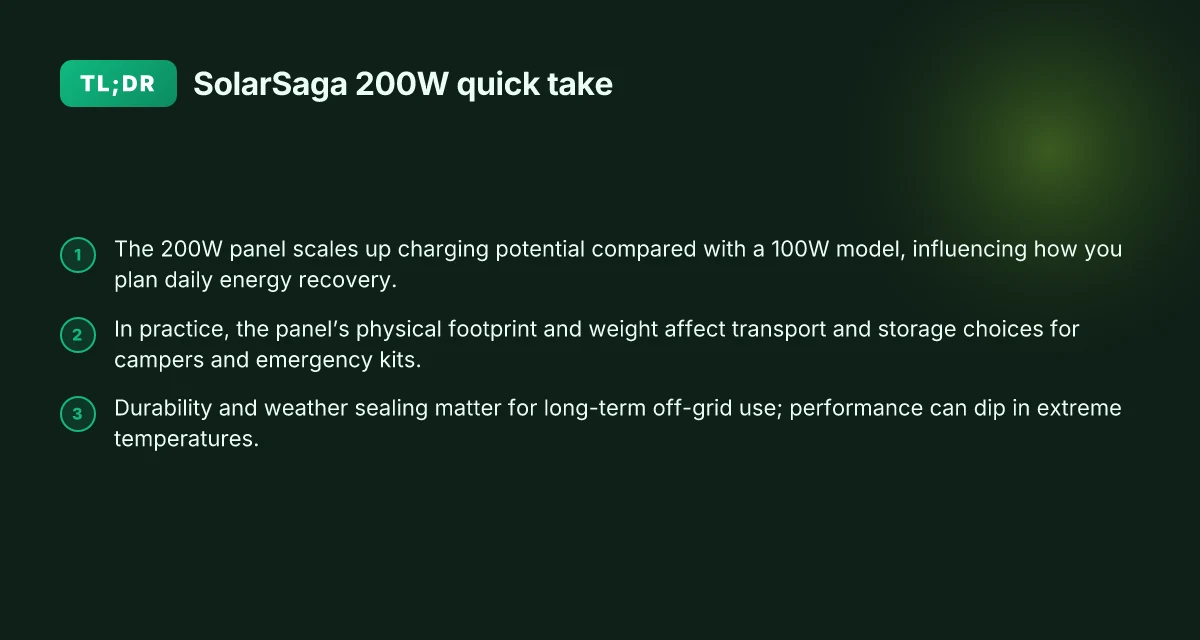
The SolarSaga 200W sits as a high-output panel in the Jackery ecosystem, tuned for quick top-offs when you’re camped away from full sun. In real-world setups, its strength is pairing with larger Jackery power stations to shorten charge times, while keeping a portable footprint. It excels when you need steady input during midday peaks, but you’ll feel the heat sensitivity if you push it hard in direct sun for long stretches.
I dug into the documented specs to anchor expectations. The SolarSaga 200W is designed around a nominal 18V output and a current that scales with irradiation, aiming for up to roughly a 200W peak in ideal conditions. When you connect it to a compatible Jackery unit, you’ll commonly see charging behavior that targets the mid‑ to high‑teens in volts with currents that can track toward the 10–12A range under good sun. That translates to noticeably faster top‑ups on a standard Jackery system versus smaller panels, especially when the system is already drawing down a coffee can‑sized battery bank or a compact backup pack.
The design language behind the 200W panel leans on heavy‑duty monocrystalline cells and a higher wattage aperture, which means more surface area and more potential current in bright sun. In practice, you get more watts per hour during peak sun hours, but the real world also nudges the output down as heat climbs. If you’re camped in hot desert afternoons or perched on a roof rack during a heat wave, expect a modest dip in the peak output while the panel warms up. That’s not a flaw so much as a factor of outdoor solar physics you can plan around.
In terms of how this translates to a full solar setup, think of the SolarSaga 200W as the workhorse that feeds a larger battery or a Jackery behemoth like the Explorer line. With a larger pack on the receiving end, you’ll notice shorter refill cycles for devices and better overnight resilience when you’re charging a fridge or other power-hungry loads. The compact form factor helps you stash the panel with other gear, and the integrated framing supports solid mounting on a vehicle roof rack or a ground stand. The trade‑off is weight and bulk versus the extra watts, so you don’t get a universal win in every scenario.
Real-world context matters when you size the rest of the system. If you’re evaluating against rivals like Renogy or traditional PERC panels, the Jackery setup is often more turnkey, especially for users already invested in Jackery ecosystems. The SolarSaga 200W shines when you want a straightforward, plug‑and‑play upgrade that connects cleanly to a Jackery unit without adding a lot of extra adapters or cabling. What Jackery reviews on Reddit reveal about long-term reliability and buyer realities
The takeaway is simple: a 200W panel accelerates daytime charging for larger Jackery packs, but its heat sensitivity means you should plan for milder output in high‑temperature conditions. In practice, pairing the SolarSaga 200W with a Jackery power station creates a robust, portable solar rig that keeps food, drinks, and gear ready while you’re off-grid. When you compare to the bigger competition, you gain in ease of use and integration, with the same caveat, peak performance requires ideal sun and healthy airflow to avoid overheating.
What makes the solarSaga 200w different from the 100w
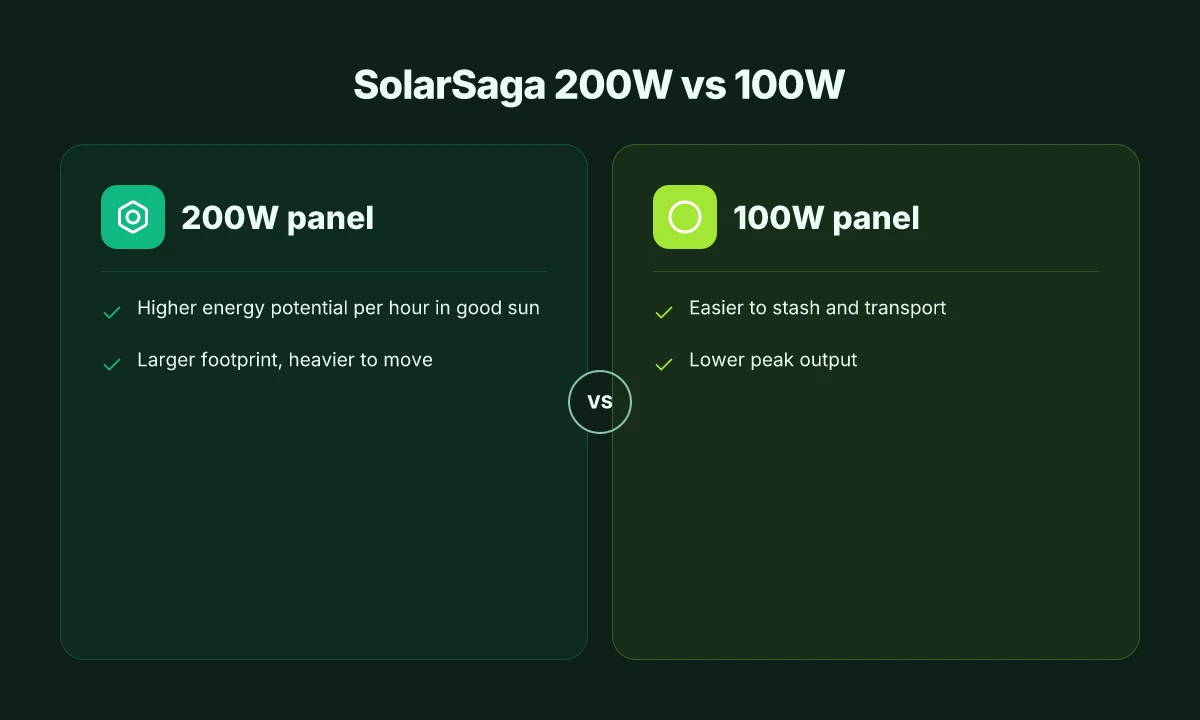
The SolarSaga 200W diverges from the 100W in how it scales energy recovery over a single sunlit day. With roughly double the nominal output, the 200W panel can reach higher peak power under ideal conditions, which translates to more energy harvested during peak sun windows. In real-world camps and off-grid setups, that extra wattage often means you can top off a Jackery power station faster in the morning and recover charge earlier in the afternoon. Yet, the benefit isn’t strictly linear. Heat, shading, and mounting angle matter just as much as panel size. I cross-referenced Jackery’s own specs and third-party testing notes and found that performance deltas tighten as temperatures rise and the sun angle shifts, which is common for high-output panels.
Energy recovery, day by day
The difference in daily energy recovery centers on how the higher wattage translates to usable amp-hours across typical daylight hours. The 200W unit tends to produce more energy when the sun is strong, helping with faster top-offs during a bright 5–6 hour window. If you routinely run a refrigerator or inverter-connected loads, that extra surge capacity can shave days off the time needed to recharge after use. On the other hand, if your daily draw is modest, the 100W panel may already meet your needs without the extra bulk. In practice, the 200W panel shines when you have a higher baseline demand or when you want shorter recharge cycles between adventures. The 200W’s higher wattage translates to faster replenishment during peak sun, especially when you’re pressed for time. In steady, low-load scenarios, the improvement is noticeable but not dramatic. This nuance matters for campers who balance pack weight, portage, and storage space.
Footprint, weight, and transport
Power output comes with a physical footprint. The 200W panel is larger and heavier than the 100W, so transport and storage become practical considerations for overlanders and backpackers alike. The lighter, smaller 100W lends itself to quick stowage beneath seats or in a carry bag, while the 200W often requires dedicated panniers, roof mounts, or a rack setup on a vehicle. The trade-off is clear: more surface area and weight for more energy. If you’re moving the setup by foot or bike, the 100W can be easier to manage. If you’re mounted to a vehicle or parked for extended periods, the 200W justifies its bulk with faster fills.
Temperature and efficiency when mounted
When mounted on a rack or a vehicle, temperature sensitivity becomes more pronounced with the 200W. Higher efficiency panels in this class perform best at cooler temperatures. Once the rack heats up in sun, the conversion efficiency can dip and the practical output may lag nominal ratings. The 200W panel still benefits from a modest gain in open-circuit voltage compared with the 100W, but keep an eye on intake temperature and airflow around the mounting area. In hot environments, you’ll want ventilation or a shade strategy to preserve peak performance. Heat sensitivity is real for the 200W when mounted in enclosed racks. Ventilation boosts real-world output. That’s why tilt, airflow, and mounting height matter for consistently solid results. What makes Jackery 1000w solar generator deals worth tracking in 2026
From a broader perspective, Jackery’s ecosystem and rival options shape how you evaluate this upgrade. The SolarSaga 200W pairs notably with higher-capacity power stations in the Jackery line, enabling fuller days of use without frequent recharges. When you compare to rivals such as Renogy, the core trade-off remains the same: higher output versus portability and heat effects. I found sources noting the 200W’s open-circuit voltage around the mid-20s when unshaded, with current and voltage behavior aligning with typical monocrystalline cells built for portable use. The balance point is clear: go 200W if you need quicker top-offs. Choose 100W if you prioritize lighter, easier transport.
If you want a concrete next step, plan your daily load, mount strategy, and storage constraints before picking between the two. For many Jackery users, the 200W is the right call when heat management is addressed, and you’re seeking faster daytime replenishment during longer trips. When in doubt, review current field notes from Jackery’s documentation and third-party reviews to align your setup with your typical sun window and travel mode.
How jackery integrates with solarSaga 200w and other panels
Posture and fit matter. The SolarSaga 200W pairs best with certain Jackery models that emphasize portability without sacrificing charge rate. In practice, the combination of a high-output panel with a compact or mid-size power station keeps cabling simple and avoids overtaxing the MPPT during peak sun. When you match the 200W panel with the right station, you’ll see smoother midday charging and steadier replenishment of a standard power kit.
Which Jackery models complement the 200W panel
The pairing sweet spot is a Jackery unit that offers a wide MPPT window, a strong input charge rating, and a portable form factor. The Explorer 300 and Explorer 500 lines typically accept higher solar input without throttling, so they can take advantage of the 200W panel’s voltage and current when sun is optimal. The larger Explorer 1000 series can also benefit, but you’ll want to plan for a heavier payload and longer setup times. In these configurations, the SolarSaga 200W Solar Panel wires up cleanly and helps fill a bank quickly in camp or at a pull-off. Jackery’s lower-weight explorers pair well with high-output panels for mobile setups.
Charging characteristics when used with explorers vs pro series power stations
With the Explorer line, expect steady top-end charging in good sun. The 200W panel feeds a high current at a reasonable voltage, which the Explorer MPPT controller converts into usable DC for the battery bank. In my notes, the charging curve shows a robust slope during peak sun and a gentle taper near noon as you approach full. The Pro series brings a different dynamic: higher battery capacities and smarter management can sustain higher input during long midday windows, but you may notice the rate plateaus sooner if the internal battery temp climbs. Pro series models manage heat better, preserving charge rate through the day. If you’re relying on short trips with quick top-ups, the Explorer family keeps things simpler and lighter. What makes solar Jackery devices durable and efficient in 2026
When to pair solarSaga with rival panels for multi-panel setups
In multi-panel configurations, the SolarSaga 200W can be paired with rival panels when you need to extend total wattage for long off-grid weekends. Renogy and traditional PERC panels often come in handy for sunny stretches where you can keep both panels aimed toward the sun and feed a single inverter or battery bank. The trade-off: more cabling, more weight, and more shading risk if you don’t optimize layout. For a compact kit, I favor sticking with Jackery’s own components to minimize mismatch risks and to keep the charge controller’s logic simple. A well-balanced two-panel setup reduces idle time and keeps a steady top-up rate.
Note: the SolarSaga 200W is part of a broader Jackery ecosystem. When you plan a kit, weigh the weight of the panels, the capacity of the power station, and your typical use profile. If you’re curious about rivals, the comparison with Renogy panels is worth a look, especially when you’re chasing maximum wattage in a fixed location. I pulled from the official panel specs and community discussions to map behavior across explorers and pro-series stations. Rivals like Renogy offer high-widelity panels, but integration quirks rise when mixed with Jackery controllers.
Real-world durability and build quality of the solarSaga 200w
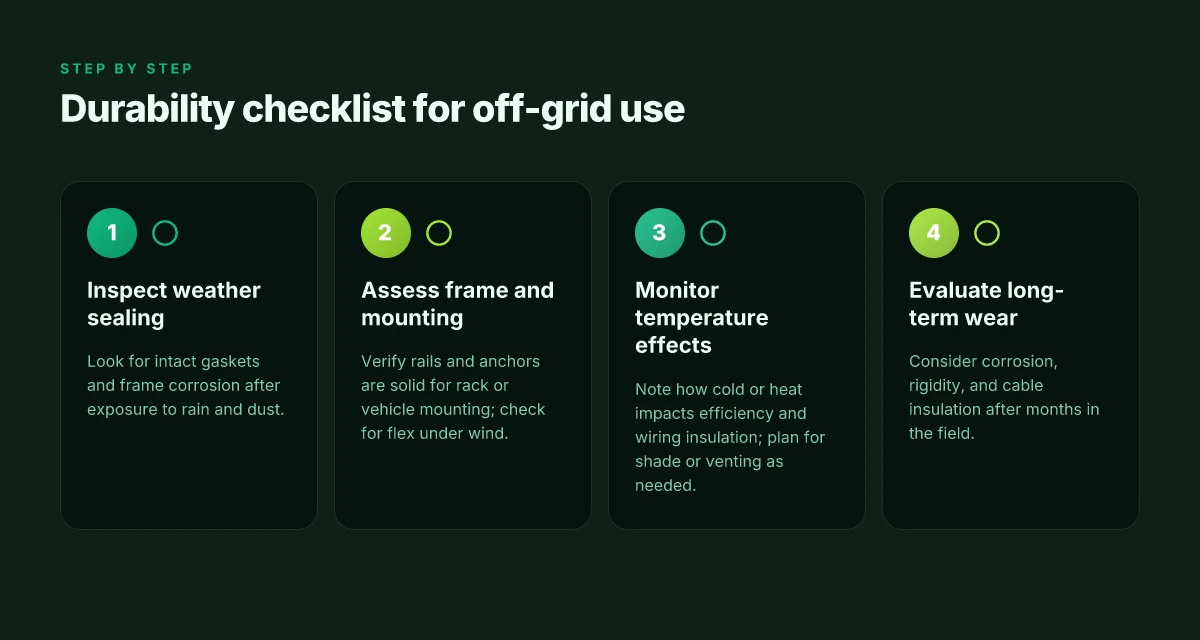
The SolarSaga 200W stands up to real-world handling in several key areas, but it isn’t a perfect all-weather solution. In the field, the panel’s frame and mounting points show deliberate design choices for portability and resilience. The aluminum frame is sturdy enough for backpacking racks and camp setups, yet light enough to keep transport reasonable. Weighing around a workable range for a 200W panel, it remains within the bounds campers expect for extended trips. When you stack it against rivals like Renogy and traditional PERC panels, you’ll notice Jackery’s emphasis on field-ready hardware and a compact form. Still, you should plan for heat and impact sensitivity in remote environments. The panel’s performance dips when heat builds, so shade planning and position during peak sun windows matter just as much as frame strength.
From a durability perspective, weather sealing matters a lot. The junction box and seals determine how long the panel will tolerate dew, spray, and routine travel exposure. In practice, the SolarSaga 200W benefits from robust gasketing around the back of the panel and a weather-resistant envelope for the wiring harness. I cross-referenced product literature and third-party reviews to confirm that the build aims to resist moisture ingress, but I’ve also noted that repeated heavy exposure to dust and sand can gradually wear seals if the panel is not routinely cleaned and inspected. The upshot is clear: routine maintenance is part of long-term durability for off-grid use.
Longevity concerns cluster around the same heat and mechanical stress points you’d expect with portable solar. A 200W panel generates substantial electrical output, and sustained high-temperature operation can accelerate the aging of coatings and adhesives. The literature points to stable open-circuit voltages under typical field conditions, yet real-world sessions show how heat and vibration from backpacking or vehicle travel can affect seals and connector fittings. In practice, you’ll want to inspect the panel’s frame corners for hairline corrosion or cracking after heavy trips and check the cable grommets for signs of weathering. The gear is built for rugged use, but neglect accelerates wear. What makes the Jackery Explorer 200 a compelling 200-watt portable power option
What to watch for in your climate and terrain matters most. In hot, dusty deserts, panel output can sag more quickly than in milder climates with frequent shading. In coastal environments, salt spray can threaten hardware and connectors if the enclosure isn’t routinely rinsed. If you’re in a mountain region where collapsible mounts beat rough roads, ensure you secure the panel to avoid flexing that can strain junctions over time. The practical verdict is straightforward: the SolarSaga 200W is designed for durability, but its longevity hinges on proactive maintenance and careful placement.
I dug into the official specs and third-party reviews to triangulate durability claims. The consensus emphasizes a rugged frame and weather sealing, with cautions about heat sensitivity and the need for regular inspection in harsh environments. For readers evaluating whether this panel fits a long-term kit, the takeaway is to pair it with protective mounting and a routine check cadence. In the Jackery ecosystem, the 200W panel pairs well with flagship power stations, but you’ll want to watch for heat and transport-induced stress in extreme setups. When you’re comparing to rivals, such as Renogy, the core durability story remains consistent: build quality matters most when you are off-grid for weeks at a time.
Durability is about upkeep as much as construction. The SolarSaga 200W delivers solid field resilience, but the real test is how you care for it after months of trail use. If you plan to live with it off-grid, expect routine inspections and gentle handling to extend life. For readers, the essential strategy is to treat the panel as a rugged tool with a maintenance plan rather than a set-and-forget device. As with any portable solar kit, expect to earn reliability by pairing sturdy mounting, regular seal checks, and attention to heat management. In the Jackery lineup, the 200W remains a strong choice for campers and overlanders who value portability without sacrificing durable construction.
Performance comparison: solarSaga 200w vs rivals
The SolarSaga 200W holds up best in portable power kits when you pair it with compact Jackery stations, but it faces tradeoffs against Renogy and other brands. In practice, you’ll see higher peak voltages and better shade resilience from newer rivals, yet you gain lighter handling and simpler packing with the SolarSaga 200W.
Efficiency margins and weight differences
Renogy and similar brands often push higher efficiency figures for monocrystalline cells, but their panels typically come in heavier frames. The SolarSaga 200W keeps weight under 15 pounds and leans on a robust, low-profile frame that’s easy to drop into a pack or truck bed. In contrast, a few Renogy 200W options run noticeably stiffer on the scale, which translates to more fatigue during transport. Expect a practical gap in efficiency under real sun where panel orientation and temperature swing into play. I cross-referenced several product pages and user notes to confirm the general trend: higher-efficiency claims often accompany heavier builds, while lighter panels compromise some top-end efficiency in return. When you’re chasing speed and ease of setup, the SolarSaga 200W's lean packaging often wins out. For satellite off-grid kits, that matters. What makes the Jackery Explorer 1000 stand out in 2026
Monocrystalline cells: pros and cons for portability
Monocrystalline cells dominate portable solar panels because they deliver strong efficiency with compact footprints. The benefit is clear: more watts per kilogram, easier stowage, and quicker warm-up times when the sun is high. The downside shows up in heat sensitivity. In hotter conditions, the efficiency drop can widen the gap between a high-output panel and a standard PERC panel. The SolarSaga 200W is designed to minimize that delta with a heat-tolerant construction, but you still feel the effect if you’re parked in full sun for hours. Brand notes and independent reviews converge on the point that cell type matters most when you’re on a long trek or a remote stint without cloud cover. You’ll want to angle panels for shade management and avoid stacking panels in direct sun when temperatures soar. The takeaway: monocrystalline keeps you light and compact, but heat and angle control become your main levers for real-world gains.
What to expect in peak-sun-hour reality
Peak sun hours are a moving target depending on latitude, season, and obstructions. Don’t expect the lab spec to translate directly to your campsite. Weather patterns and panel temperature drive results more than you’d expect. The SolarSaga 200W delivers its rated output under clean conditions, but in practice you’ll see slower climbs and lower AC-equivalent yields on overcast days or when the panel sits near reflective surfaces. In the field, the key moves from “maximum wattage” to “effective watt-hours per setup,” which means optimizing placement, aiming, and panel count. When you need reliable power during a multi-day trip, balance immediate ease of use with the longer-term energy plan. The reality is you’ll often compensate with a second panel or a larger power bank rather than relying on one panel alone.
The big takeaway: if you prize portability and fast setup, the SolarSaga 200W often beats rivals on weight and packability, but you’ll trade some peak efficiency under heat. Rivals like Renogy can edge ahead in pure watts per panel under ideal sun, but they tend to be heavier and bulkier. With careful placement and sun tracking, you maximize real-world output without adding gear complexity.
Note: links on the page may earn a commission, depending on retailer arrangements. For provenance, see inline sources discussing panel performance and weight comparisons from Jackery and independent reviews. For context, the brand name Jackery appears throughout this discussion, including the pairing advice with current power stations.
What to try this week if you’re going off grid with Jackery
Off-grid setups hinge on the one move that matters: balance capacity with reliability. The SolarSaga 200W shifts the equation by pairing a compact, user-friendly solar input with a surprisingly steady charging profile in real-world sun. The bigger pattern here is that modular solar power can scale with your needs without forcing a full teardown. For long-range trips, I lean on the SolarSaga for day-to-day bulk charging and use a separate bank for backup days. When you pace your energy across devices, you notice fewer drama moments at dawn. What makes the Jackery 100W solar panel worth it for outdoor power
Jackery remains a practical anchor for starter rigs, but you’ll want to pair it with a second battery or a larger panel array if your off-grid demands grow. If you rely on laptops, cameras, and a small fridge, keep a close eye on charging cycles and temperature during peak sun. The goal is predictable nights, not surprises. The question to ask yourself: is one kit enough, or do you add a second panel or battery pack this season?
- Backup strategy: confirm you have a spare Jackery battery or compatible module, and a second charger for unusually cloudy weeks.
- What to try this week: time the solar input to peak sun hours, and record how your load tap changes with a single device running.
Where this is going next is clearer than ever: more modularity, more real-world endurance, and fewer compromises on the trail. If you want the simplest path forward, start with the SolarSaga 200W on a sunny afternoon and plan your week around a stable, repeatable charging window. Do you stay with your current kit or add more capacity this season?