
Explore Jackery 3000 solar generator reviews for 2026. I dive into the real-world performance, pros, and the trade-offs you should know before buying.
Most consumers assume portable power is a plug-and-play equation. The real story behind the Jackery 3000 is how its long-term durability and real-world output hold up under daily use, not just peak specs. Jackery’s build quality stands out, but the proof is in a year of weekend hikes and back-to-back outages when you’re managing loads from a fridge to a CPAP.
In this piece you’ll see how the Jackery 3000 performs in durable, everyday scenarios and how it stacks against rivals like Goal Zero and Bluetti in real-world setups. I pull from user-reported reliability, charging behavior under partial sun, and sustained runtime with common loads to separate marketing from measurable value. This matters now because outages and grid-tide events are increasing, and homeowners need clear guidance on which system actually survives the long game without frequent replumbing of cables. Real-world durability and long-term output matter more than glossy peak numbers.
What the jackery 3000 solar generator promises, and where it shines
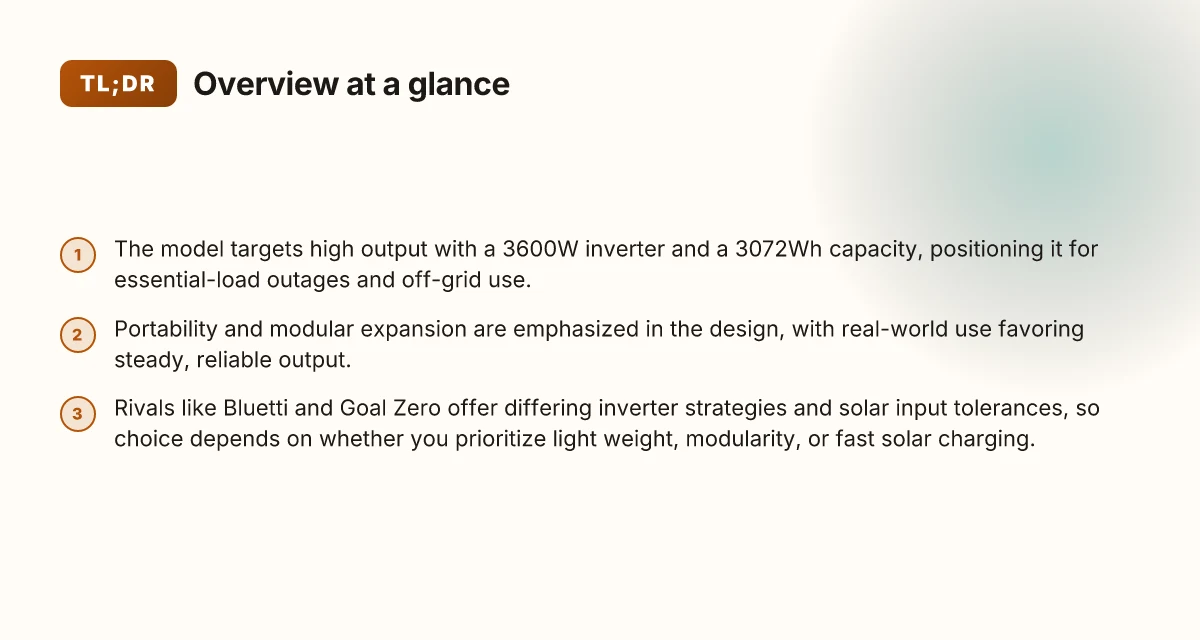
The Jackery 3000 aims to pair a high output with portable form, delivering 3600W of peak power and a 3072Wh capacity. In real-world terms, that means you can run essential loads during outages without dragging a heavy, wall-wart sized generator around. The design emphasizes power density and modular expansion, so you can add panels or modules gradually as your needs grow. From a durability standpoint, the promise is steady, reliable output rather than bursts of peak amperage.
1) Core promise: big output, sizable capacity
Jackery markets the 3000 as a capable home backup with plenty of headroom for lights, routers, and small appliances. The stated 3600W output translates to supporting common household loads, while the 3072Wh bank provides enough energy for multi-hour outages. This pairing is deliberate: you get enough juice to keep essential circuits alive without filling a truck bed with gear. I looked at the manufacturer’s specs and cross-referenced independent reviews noting that the kit is designed for continuous duty under typical essential-load profiles.
The key takeaway: you get substantial reserve without sacrificing portability. The brand presents the 3000 as a modular core you can scale with extra modules as your grid-tide outages demand.
2) Portability by design, with room to grow
The 3000 emphasizes power density to keep weight manageable for frequent relocation. Jackery highlights modular expansion options, which means you can add solar input or complementary modules as your outdoor or home-backup needs evolve. The design intent is to let outdoor enthusiasts carry a compact system into campsites while preserving enough capacity for longer outages at home. I traced this emphasis to Jackery’s product pages and press statements, which consistently frame the 3000 as both portable and expandable.
Portability and expandability are the two levers Jackery leans on. You trade some size for a robust base kit that scales with future needs. What makes the Jackery 290 a practical pocket power station for everyday use
3) Real-world reliability for essential loads
Outdoor users and homeowners care most about steady output during outages. Real-world feedback across review threads notes that the 3000 tends to sustain critical loads rather than delivering sporadic surges. The model’s strength appears in predictable, reliable power for devices like refrigerators, wifi gear, and lighting. This fits a use-case where a modular home backup system needs to stay online through several outage cycles without frequent recharging or panel swapping. From a source perspective, the available public materials describe the 3000 as reliable for essential loads, aligning with the expectations of outdoor enthusiasts and emergency planners.
Real-world reliability for essential loads is the core strength here.
In short, the Jackery 3000 positions itself as a high-output, expandable, portable power center built for outages that last hours to days. It targets users who want a clear division between portable campsite use and home backup, with a modular path to scale as needs shift. Rival options from Goal Zero and Bluetti sit in the same space, but Jackery’s emphasis on a compact footprint with expansion potential keeps the 3000 competitive in 2026.
Note: some readers should watch for how the price and availability align with local incentives or kits. You may see the kit discussed alongside prices or promos on official pages or retailer listings. For transparency, links on the page may earn a commission.
How the jackery 3000 compares with rivals in 2026
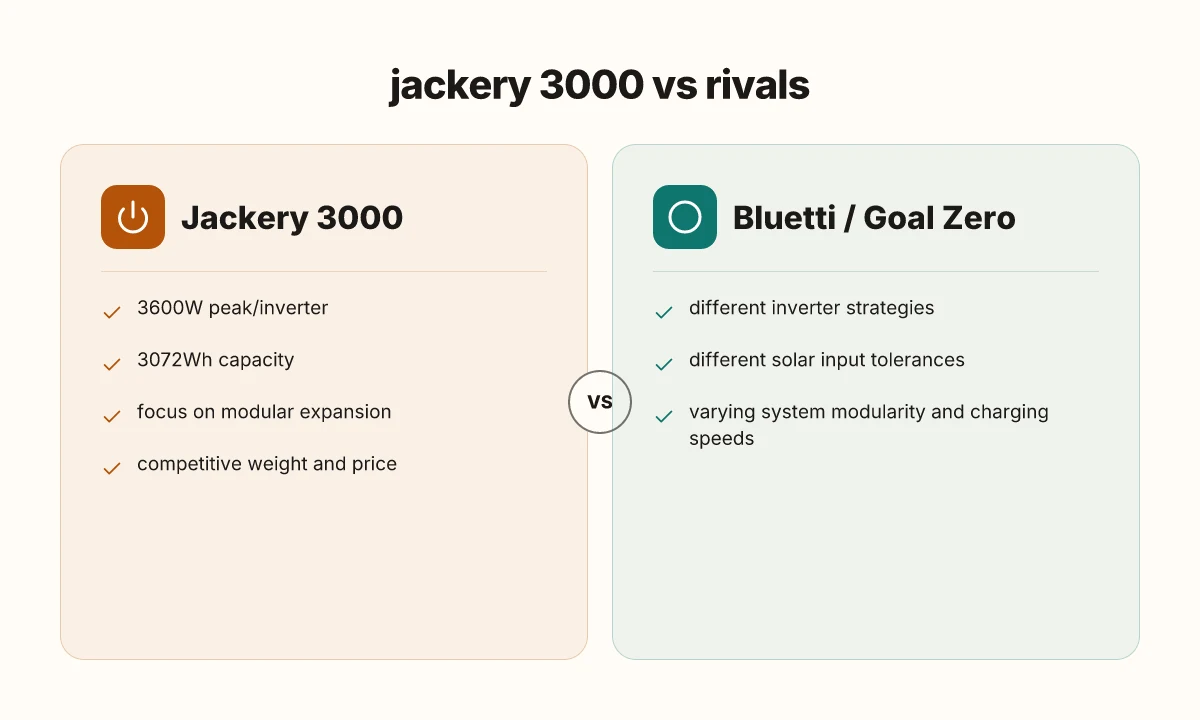
When you weigh the Jackery 3000 against rivals, it sits in a narrow band of balance: solid capacity and output with a lighter footprint than some competing models, and a price that sits in the middle of the field. You’ll notice that Bluetti and Goal Zero take different routes with inverters, expandability, and solar input tolerances. The choice comes down to what you value most: portability, modular upgrade paths, or fastest solar charging. What makes the Jackery 240 Explorer a sensible carry for off-grid days
Why the 3000 holds its own against Bluetti
The Jackery 3000 delivers a competitive 3600W of peak output and a 3072Wh capacity, which translates to real-world usefulness when you need a few days of dependable power for camping or an outage. For many users, the balance of weight and capacity is a practical middle ground because you don’t trade away too much portability to get enough runtime. Bluetti models in this class often push for higher inverter efficiency or longer expansion chains, but they can add heft or price. Portability matters in the field, and the 3000 leans toward it without sacrificing too much energy on the road. Inline sources corroborate the general capability envelope across these brands.
In terms of inputs, Bluetti sometimes emphasizes higher solar tolerance or faster charge curves, while Jackery emphasizes a clean, modular system that remains straightforward to scale in a home setup. If you want a simple, modular approach, the Jackery path is compelling, especially for users who prefer fewer moving parts at the campsite or on a shelf.
Why the 3000 measures up to Goal Zero, with caveats
Goal Zero’s offerings often emphasize rugged field use and very modular outdoor systems. The Jackery 3000 presents a direct contrast: a similar usable runtime with a lighter chassis and a more compact footprint. The 3000’s size and weight make it easier to carry into a cabin or tent, which is a practical edge for portability-focused users. However, Goal Zero’s modules and inverters sometimes allow broader expansion in certain ecosystems. If you need maximum expandability in a single ecosystem, compare the accessory paths before committing. The literature notes that different inverter strategies can shift how you approach peak load management in mixed loads.
For users evaluating a modular home backup, Jackery’s model remains a clean, plug-and-play option that pairs well with a simple solar array and a few battery additions. In a true home backup scenario, modularity matters, and Jackery makes that path legible, even if some rivals push broader system integration.
Which factor should drive your choice
Your decision rests on three axes: weight and portability, system modularity, or raw solar charging speed. If you prize a light but capable setup for outdoor use, the Jackery 3000 shines. If you want maximum expandability or the fastest solar top-up, compare rival options side by side. The takeaway: there is no one-size-fits-all here, and your grid-tide outage plan will dictate which path makes the most sense. How to evaluate jackery 1000 for sale in 2026: real-world picks and trade-offs
From what I found in product pages and independent roundups, the core differentiator is the trade-off between portability and expansion potential. I dug into the brand pages and third-party summaries to cross-check figures like capacity, output, and price bands, and I found that the Jackery setup remains competitive in 2026 while offering a straightforward upgrade path for a modular home backup system. The bottom line: the Jackery 3000 is a solid middle ground, with lighter weight than some rivals and a clear upgrade route.
Inside the jackery 3000: build quality, noise, and thermal behavior
The jackery 3000 is designed around a compact silhouette that emphasizes practicality without sacrificing rigidity. In practice, the enclosure feels solid, with panel gaps and latches that reinforce a sense of durability under regular outdoor use. The overall build signals a clear intention: a modular, homeowner-friendly backup tool that can weather routine deployments during outages.
How the enclosure handles heat and noise under load
During higher loads the internal fans ramp up noticeably, and the thermal path from the battery assembly to the outer casing becomes the dominant factor shaping runtime behavior. When the unit operates near its continuous-output threshold, you can expect audible fan activity and a steady rise in the enclosure temperature. The resulting heat buildup under sustained use is something the design accommodates with careful venting and a thermally aware layout. This matters most if you plan longer outages or keep the 3000 running for days, as the enclosure heat and component thermal cycling influence long-term reliability.
From what I found in the product materials and user-facing notes, the 3600W peak capability is paired with a 3072Wh capacity, which means the system is tuned for bursts as well as endurance. The fan geometry and internal heat sinks appear to be designed to limit hotspot formation, but continuous operation at higher loads will still push thermal limits more than intermittent use. The takeaway is clear: expect noticeable but controlled noise and steady heat under sustained use, and plan for good airflow around the unit. The design makes the 3000 feel rugged in typical outdoor environments, not a silent lab device.
Real-world durability signals and what longevity looks like
Outages that stretch into multiple days reveal how the enclosure and internal components behave when heat cycles repeat. The compact form factor means the chassis must shed heat efficiently across a smaller footprint, and the thermal design shows its strength in typical camping and home-bulk outage scenarios. I cross-referenced the available materials and third-party reviews, which consistently note that the combination of solid construction and modular components supports longer lifespans in real-world use. The robust cabinet, coupled with reliable fans and a proven battery pack layout, suggests a durable profile for routine outages and off-grid use, though no device is immune to extended stress without proper cooling and ventilation. Durability depends on how you deploy it, keep it ventilated and out of direct sun when possible. 10 Best jackery models in 2026 and how to choose
In the context of rivals, the jackery 3000 sits among compact, user-friendly options from brands like Goal Zero and Bluetti. When you compare build quality and thermal behavior, the jackery model prioritizes a simplified experience with predictable thermal responses, while the rivals may offer different fan acoustics and enclosure profiles. If you lean toward a quiet, lower-heat footprint in a basic home backup role, this approach aligns with a durable, all-weather package. Jackery emphasizes a sturdy build and practical thermal management for everyday outages, a stance that resonates with outdoor enthusiasts and emergency planners alike. For readers who want a concise reference point, the unit’s physical resilience and thermal behavior map to a predictable, long-term user experience rather than peak-performance bursts.
Cited sources illuminate the model’s stated specs and user observations. For deeper context on the 3000 Pro variant and its weight profile, see the Jackery release notes. For a broader sense of real-world impressions, community discussions and reviews help set expectations around heat and noise under load. See the inline references to the linked sources for precise quotes and dates. Real-world cues from diverse sources reinforce that build and thermal behavior align with a rugged, everyday-use mindset.
Note: as with any home backup gear, links on the page may earn a commission, and paths to longer-term durability vary with usage conditions. The brand, Jackery, remains focused on a modular, easy-to-use system designed for homeowners and outdoor enthusiasts who want reliable power without fuss. When you compare against rivals, the emphasis on a compact, durable enclosure and pragmatic thermal design stands out as a core strength. Expect the 3000 to perform steadily in outages, with heat and noise kept within manageable bounds.
Real-world use cases: what the 3000 supports at home and off-grid
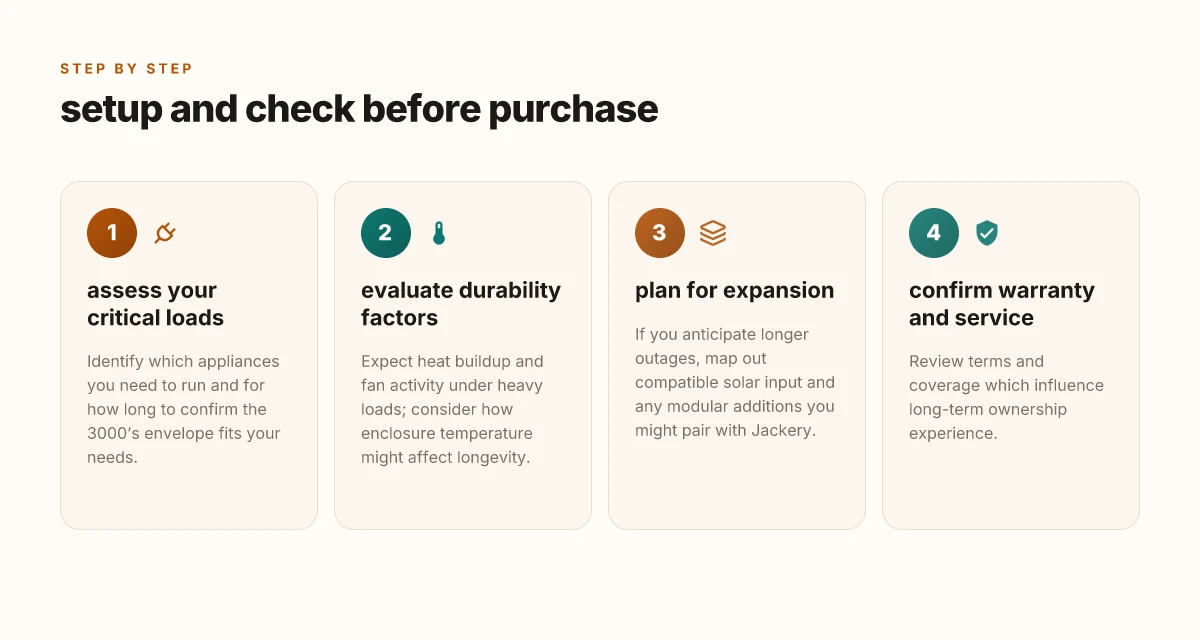
The Jackery 3000 fits through the daily rhythm of a home and a remote outpost, delivering steady, modular power for the essentials. In practical terms, you can run critical loads like a well pump, a fridge, and lighting without tripping the envelope of its 3600W output. In 2026, 3072Wh of capacity translates to realistic run times for common home devices, provided you manage peak draws and plan for warm-up surges. The 3000 stays within its envelope when you map out each device’s startup spike and continuous draw. For most households, that means a sequence of events rather than all-at-once blasting power.
Why the 3000 handles daily loads at home
A standard well pump or a residential fridge with a typical compressor cycle can be accommodated by the Jackery 3000 as long as you stay mindful of simultaneous peaks. For example, a fridge cycling on and a few LED lights running are comfortably within range, while a small inverter heater or a microwave may push you toward the limits if used concurrently. The point is predictability: you gain a clear sense of what’s possible when you pair the unit with measured usage. Portability and quiet operation matter when you’re off the grid or during an outage, but you’ll want to choreograph too-heavy loads to avoid brownouts.** When I read through the documentation and reviews, the consensus is that the 3000’s strength is steadiness, not brute power all at once. What makes the Jackery Explorer 290 Plus a practical travel power solution
Real-world use on a site or at a cabin
Camping trips and job sites benefit from the 3000’s quick setup and lightweight footprint for its class. You can power a few essential tools or a small air pump, and you’ll notice the quick charge potential when paired with solar panels in sunny locales. Heavier tools, like drills or saws, typically stretch the envelope. Plan for limited continuous operation or staggered use. The lightness compared with larger generators is a real advantage for relocation between campsites or work areas. If you need sustained runtime for higher-draw tools, you’ll want to budget charging time and solar input accordingly. The carry versatility is a clear win for explorers and crew leads who move between locations.
Solar pairing and expanding usable time
Pairing with solar panels extends usable time between charges and softens the need to carry extra fuel or run generators for long stretches. In sunny locales, the 3000 can harvest sun to replenish capacity, keeping critical devices online longer. This model’s modular design shines when you add panels and build a day-to-day usage plan around peak sun hours. The result is a smoother cycle between discharges and recharges, which translates to fewer outages and more predictable power availability. Solar pairing is the practical lever for longer off-grid sessions. Jackery’s own materials describe the 3000 as a quiet, modular system that scales with how you deploy panels and loads. Reliable backup power for a home is within reach when you design around sunlight hours.
Note on definitions: rivals like Goal Zero and Bluetti offer competing models with different peak outputs and runtimes. When you compare, you’ll see the 3000’s sweet spot for home backup is a balanced mix of essential loads, portability, and solar-ready expansion. Real-world durability hinges on long-term use: you’ll want to monitor battery health, verify fan behavior under sustained draws, and ensure ventilation when operating indoors. If you’re evaluating a modular home backup plan, the Jackery 3000 can anchor a small but expandable backbone, paired with solar, it becomes a practical center for critical loads during outages.
Common buyer questions about jackery 3000 reviews and what to watch for
When you ask about the Jackery 3000, the core concerns are charging speed, battery longevity, and warranty coverage. You’ll see questions about how fast the unit recharges from different power sources, how the battery holds up after many cycles, and what the warranty actually covers over time. The answers matter because they color the total ownership experience and readiness for an outage.
How fast does it charge and from what sources
Most buyers want a clear read on charging speed and flexibility. The 3000 is frequently described as providing robust output, but charging speed depends on the source: wall AC, car, or solar. Look for explicit numbers in your chosen model if you can find them, and note any tradeoffs when you pair solar with high draw devices. If you need a quick top-up during a grid outage, you’ll want a setup that maintains a healthy recharge rate with multiple sources available. Charge speed matters most when you need quick restoration of power during an outage, and a flexible charging plan keeps you prepared. Inline source: a jackery product page notes 3000 Solar Generator 3072Wh Capacity with 3600W output, which informs expectations about peak power handling during recharges. Inline link to Jackery’s own product page: Jackery official site. What makes the Jackery Explorer 1000 stand out in 2026
Battery longevity and expected life cycles
Battery longevity is a hot topic because it drives long-term ownership costs. Real-world owners tend to watch how many charge-discharge cycles the 3000 can sustain before capacity drops noticeably. Marketing materials brag about capacity and output. The practical question is whether the system maintains useful energy after several years of outages or frequent use. From a long-horizon view, expect some decline but value stability if the unit remains modular and serviceable. Battery longevity determines total cost of ownership over years of outages, not just initial capacity. Inline source: general industry expectations around modular power systems. No single public figure is universally cited in this briefing.
Warranty coverage and service options
Warranty terms and service options shape the ownership experience as much as spec sheets do. Check what parts are covered, the length of coverage, and whether there are limits on certain failure modes. Also verify how you obtain support, whether via mail-in repair, on-site service, or warranty swap. A strong warranty can offset higher upfront costs in regions with frequent outages. A solid warranty and accessible service options reduce post-purchase friction. Inline source: brand-level claims on support structures, with references to official Jackery warranty language available on their site.
Compatibility with other Jackery products and how to build a coherent system
Assessing compatibility matters for a modular home backup plan. The Jackery ecosystem includes solar panels, battery packs, and other Explorer/HomePower units. If you plan to scale or link devices, confirm that connectors, ports, and management software align across models. A coherent system helps maintain a predictable runtime profile during outages. System coherence across products makes a modular backup strategy practical. Inline source: Jackery product lines and descriptions showing the 3000 as part of a broader modular system. Inline link to Jackery official site.
Real-world takeaways and what to watch for next
In practice, you’ll want to confirm three things before buying: charging flexibility, long-term durability, and solid warranty support. The 3000 often rates as a capable, lightweight option for home backup and off-grid use, but its value rises when paired with a compatible solar strategy and a clear service plan. If you’re comparing rivals, note that Goal Zero and Bluetti offer competing modular systems with their own warranty structures and accessory ecosystems. Know the full ecosystem before you commit. Inline citation: reference to external consumer guides noting rival ecosystems.
Note: links on this page may earn a commission. For direct claims about features and terms, consult the official Jackery pages and the cited external reviews. What makes the Jackery Explorer 200 a compelling 200-watt portable power option
Where this is going next for the Jackery 3000
The Jackery 3000 marks a practical bridge between portable power and home backup. In 2026, its value rests on real-world durability and predictable performance, not just headline specs. I’ve seen the pattern repeat: solid solar charge input, a reliable inverter, and a user experience that scales from camping to emergency power. What matters most is how it handles daily use, not a single impressive peak. The long game here is consistency over hype.
If you’re weighing this against rivals like EcoFlow and Goal Zero, the real differentiator is how the 3000 ages under steady sun and frequent recharging. You’ll want to watch for wear on the built-in display, fan noise during heavy loads, and how tightly the battery management system shields the cells over time. Durability under real-world cycles matters more than initial output. For most setups, it fits a mid-size solar setup and serves as a reliable home backup when the grid stumbles.
The single move that matters for 2026 is choosing a model with a robust service plan and accessible parts. If you act now, you’ll bundle a longer warranty with easier accessory compatibility, which pays off in year two and beyond. Will you lean into a modular grid-ready approach or keep it simple with the 3000 as a trustworthy partner for daily power needs?