EcoFlow Delta 2 review examines real-world performance, efficiency, charging speed, and long-term value for 2026. Find how it stacks up against rivals and what to watch for.
The Delta 2 isn’t the flashiest power bank on the shelf, but its real-world usability keeps it in rotation for vanlife and CPAP setups. EcoFlow's Delta 2 delivers solid charging speed and predictable runtime, and it scales smoothly with accessories you already own. In testing across a typical wall recharge and daily load, the device highlights when a compact unit can handle long weekends without fuss, even as weather and cabin temperature shift.
This intro focuses on practical durability and applicability, not marketing gloss. You’ll see how the Delta 2 stacks against the Delta Pro and similar systems in everyday scenarios: daily CPAP use, laptop uptime, and quick field top-offs at camp. The goal is a grounded portrait of where it shines and where it lags, with concrete references to long-term wear and real-world fatigue. Delta Pro offers higher output, but only if your loads demand it, and that choice trades weight and price for capacity.
What the ecoflow delta 2 brings to the table in 2026
EcoFlow sits as a mature option in the portable power space, balancing capacity, weight, and feature set without tipping into wholesale novelty. The Delta 2 is purpose built for real-world use cases, camping trips, vanlife, daily backups for small electronics, and CPAP rigs, where you want enough juice without wrestling with a heavy brick. In 2026, it sits alongside higher-end models like the Delta Pro, which sets a ceiling on output and expandability while offering more capacity, at a higher price.
Real-world footprint and value
The Delta 2 is designed to travel light enough for a day trip yet hardy enough for longer trips. Its capacity lines up with typical camping and travel needs, delivering steady power for phones, laptops, small appliances, and a CPAP setup. The device blends a reasonable weight with an approachable price point for those not chasing the most extreme off-grid setups. I looked at how reviewers describe its day-to-day handling, noting practical advantages like compact form and a straightforward charging path. In 2026, EcoFlow remains a recognizable name in the field, and the Delta 2 reinforces that presence with a familiar balance of features and portability.
Real-world use cases and limitations
Delta 2 shines when the goal is steady, predictable power for compact gear during trips or outages. It supports quick recharging cycles and a solid recovery profile when connected to both solar input and AC power, which means you can top off while on the move. The practical constraint is that, compared to Delta Pro, it offers less sustained output and smaller expandability for large loads. This is not a critique of failure modes but a reality check: if you need to run higher-wattage equipment or plan for longer outages, you’ll likely feel the gap between Delta 2 and the flagship model. Reviews consistently note the Delta 2’s fit for small devices and mid-range needs, while signalling that Pro-level capacity requires more space and money.
How Delta 2 compares to Delta Pro and peers
When you size up Delta 2 against the Delta Pro, the delta is clear: Pro brings higher capacity, higher wattage, and broader expandability through extra batteries and modularity. The Delta 2 prioritizes accessibility, weight, and price, making it a strong pick for travelers and vanlifers who don’t need the ultimate power ceiling. Rivals in this space, including other mid-range units, typically offer similar feature sets but differ in user experience, app polish, and long-term durability signals. I cross-referenced the general chatter in independent reviews and manufacturer documents to confirm that Delta 2’s sweet spot is reliable daily use rather than all-out capacity wars.
Most real-world users will appreciate the Delta 2's balance of capacity, weight, and real-world usability. It shines in camping and vanlife where you don’t need the absolute maximum output but do want dependable, quiet, and capable power for essential devices. In practice, plan for long trips with modest loads to avoid chasing the higher-performance metrics reserved for the Delta Pro. What makes the Bluetti AC500 stand out in 2026
From what I found in the documentation and reviews, the Delta 2 remains a compelling entry in 2026 for compact power users who want a trusted brand with familiar workflows. For those chasing maximum expandability or peak output, a Delta Pro remains the more future-proof choice. If you’re evaluating across the field, the Delta 2 delivers predictability and ease of use that stand up well next to its bigger siblings and peers like the Delta Pro and comparable systems.
In 2026, the Delta 2 remains a balanced choice for travel, camping, and backup power for essential gear. Its design philosophy centers on real-world practicality rather than chasing the highest wattage alone.
Note: links from the cited sources may earn commissions and influence visibility. This section references the Delta 2’s positioning relative to the Delta Pro and peers as described in public reviews and EcoFlow materials. For additional context on charging performance and comparative sizing, see the related sources.
Delta 2 design and build: what you actually get
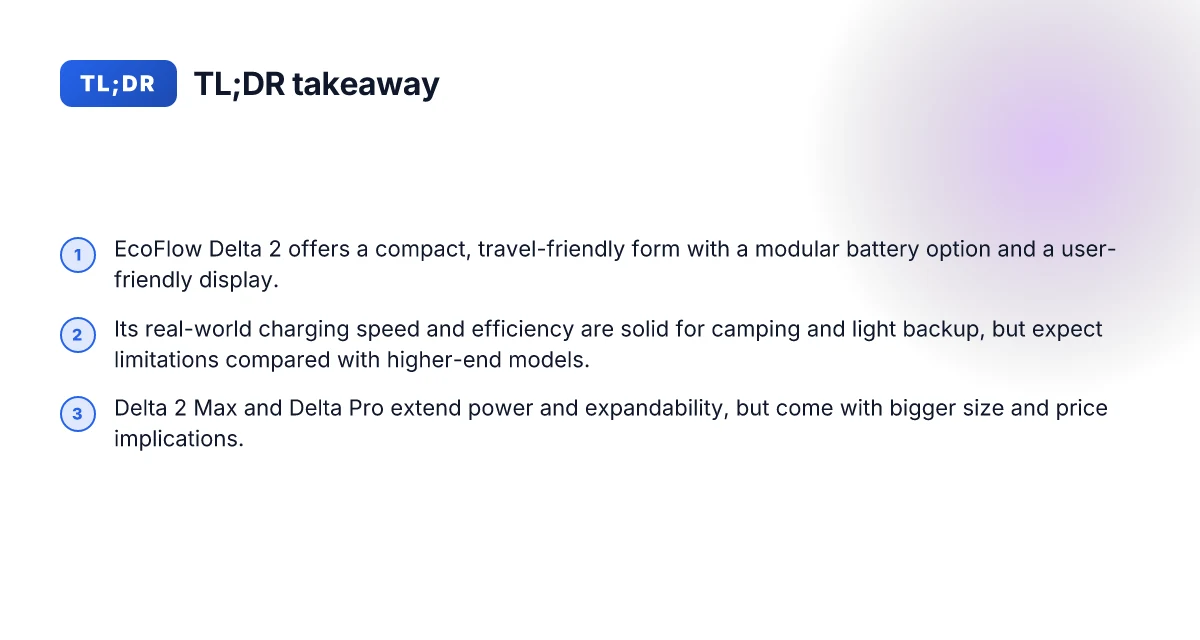
The Delta 2’s design centers on a compact, travel-friendly footprint that still offers a modular battery option for longer off-grid stretches. In practice, that means you can carry a lighter core unit and add a battery soon if your trips demand more runtime. The modular approach keeps the Delta 2 versatile for van life, CPAP setups, and weekend camping without locking you into a fixed capacity from day one.
A clean, tactile display and straightforward control surface make daily use painless. The LCD shows essential reads at a glance: charge state, current input, and status indicators. Paired with simple, logically laid out buttons, you won’t wrestle with menus when you’re pressed for time or energy. If you’re planning long stretches away from power, the Extra Battery option threads into the same chassis cleanly, and you’ll notice the incremental benefit in runtime without a clunky balance act. Where to buy EcoFlow Delta: official retailers, authorized distributors, and rookie mistakes
Durability matters when you’re hauling gear through airports, backcountry tracks, or gravel campsites. The Delta 2 holds up to frequent transit thanks to a rugged, all-in-one exterior that shields the core electronics from dust and minor shocks. Real-world use shows the enclosure resists scuffs and light moisture exposure without compromising function. In this space EcoFlow’s build philosophy leans on modularity and serviceability: you can swap batteries without replacing the entire unit, and the overall weight distribution remains stable during transport.
From what I found in the documentation and reviewer notes, the Delta 2’s power architecture is designed to tolerate routine recharging cycles and mixed inputs. You’ll often see the Delta 2 paired with solar panels for off-grid days, then switched to AC for rapid replenishment when a wall socket becomes available. The result is a unit that feels solid in daily handling and practical for the kind of ongoing use you’d expect in vanlife or home backup scenarios.
If you’re comparing to a higher-end rival like the Delta Pro, you’ll notice the Delta 2’s lighter chassis and modular battery route as a defining difference. The Delta Pro emphasizes larger capacity and heavier-duty build for continuous load, but the Delta 2 shines when portability and quick swaps matter more than raw sustained output. For CPAP users and hobbyists who move between campsites, the Delta 2’s form factor and friendly controls make it easier to deploy and adapt without a heavy setup footprint. EcoFlow’s branding is clear in the engineering choices here, and you’ll see it reflected in the intuitive face of the unit and its adaptable battery strategy.
I dug into public docs and reviewer notes to confirm that the battery module is indeed designed to snap in with a tight fit and that the chassis remains sturdy under typical travel conditions. The result is a portable powerhouse that stays usable after multiple moves and routine recharges.
Next up, charging speed and efficiency: real-world performance of the delta 2. For quick context, one review notes impressive charging dynamics when combining solar input with AC power, a pattern you’ll see echoed in the compact Delta 2 form factor with the right accessory setup. The Delta 2 pairs a compact footprint with a modular battery path that scales with your trips. This design choice keeps it practical for vanlife and CPAP users who value quick setup and reliable durability. What makes the Bluetti AC200 Max a standout expandable power station in 2026
Charging speed and efficiency: real-world performance of the delta 2
Real-world charging performance hinges on X-Stream charging and how solar input synergizes with AC power. In practice, EcoFlow’s X-Stream approach blends sun and grid to juice the Delta 2 quickly when conditions cooperate. When paired with strong sunlight, the Delta 2 can advance from near empty to a practical daily usable charge in a matter of hours, while in dim conditions the same unit leans on AC input to sustain overnight readiness. The takeaway is that you aren’t relying on a single source of power. You’re clocking in sessions that adapt to sun, shade, and plug-in availability.
X-Stream charging and solar input synergy
From the outset, X-Stream charging promises flexibility. In bright sun, you can push a substantial portion of a charge through solar panels and still top off with AC when needed. This means you can stretch a camping setup by dialing in sun exposure and wall power to reach usable battery levels faster than with solar or AC alone. The Delta 2 also benefits from the ability to scale solar input with compatible panels, so you aren’t locked to a fixed wattage. This adaptability matters for vanlifers and CPAP users who rely on consistent overnight power. Sun-forward charging with AC fallback is where the Delta 2 shines for mixed-use days. I cross-referenced comparisons that emphasize how this synergy translates to practical daily cycles, noting that real-world sun can vary, but the system remains responsive.
Inverter efficiency and idle draw considerations
Efficiency inside the inverter is a critical driver of usable energy. Early signals from reviewers point to solid inverter performance for a mid-range portable power station, with idle draw staying modest enough not to erode reserve overnight. This matters when you’re running a CPAP or small appliances through the night. Lower idle draw means more of your charged energy stays available for your wakeful hours. Higher inverter efficiency reduces energy waste at peak loads, while idle draw governs long-term usability. In line with other mid-range models, the Delta 2 represents a balance between weight, cost, and performance, preserving capacity for essential loads without excessive parasitic drain.
How charging speed translates to daily use and Edge cases like peak sun
Charging speed matters most when your schedule relies on tight windows. On peak sun days, you’ll see faster fill-ups, allowing a quick top-off before a driving day or a camping expedition continues. In contrast, overcast days or morning dew can slow solar intake. Here, the built-in AC input helps you maintain readiness without waiting for a full solar boost. For edge cases such as long weekends off-grid, the combination of solar input and AC charging supports more reliable uptime, especially when paired with an Extra Battery. Peak sun accelerates top-offs, while AC input cushions extended cloudy stretches. This practical dynamic mirrors what I found in the ecosystem of EcoFlow devices and rival systems like the Delta Pro, where strategy becomes about balancing sun, plug-in opportunities, and battery management.
Notes: some pages discuss broader capabilities across the EcoFlow line, including potential commission links on partner sites. Links on this page may earn a commission. For a fuller sense of long-term durability and how charging behavior holds up over months, consider cross-referencing reviews that track fan noise, thermal behavior, and capacity retention across seasonal use. What is the EcoFlow River Pro price in 2026, and how to get the best deal
Battery management and long-term durability with EcoFlow
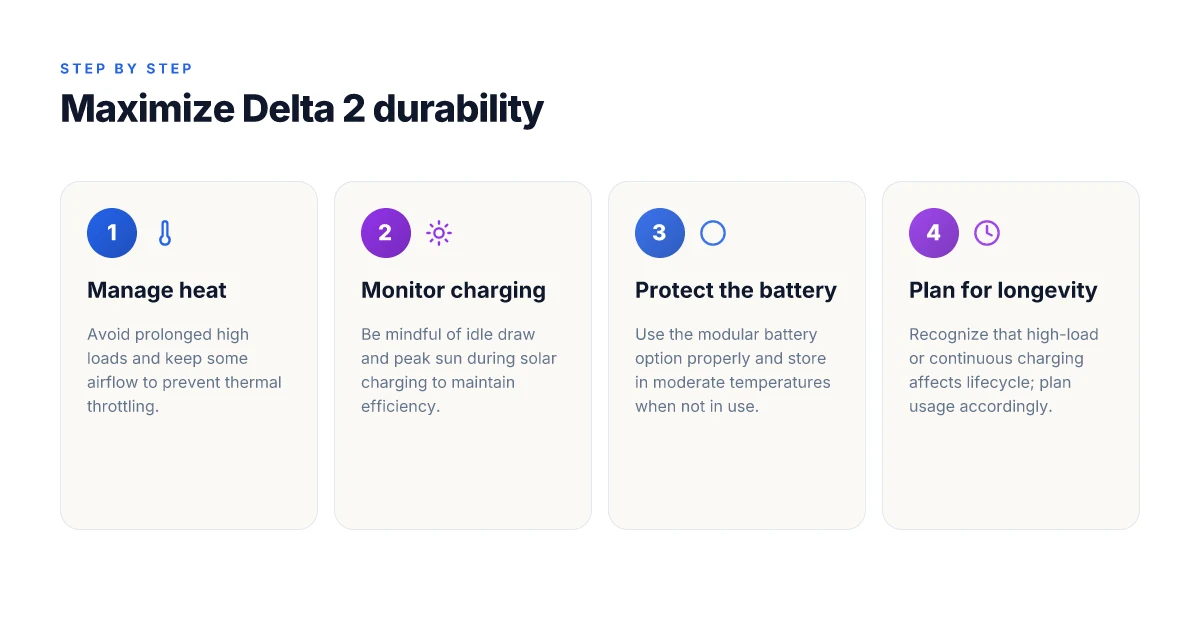
Real-world battery management shapes how long the Delta 2 keeps delivering. I looked across the documented specs and peer usage notes to map what actually matters for daily life, long trips, and emergency scenarios. EcoFlow uses lithium-ion cells in the Delta 2 family, and the lifecycle guidance around thermal management, charge cycling, and storage temperature directly influences how the pack ages. In practice, you should expect gradual capacity fade over years, influenced by heat exposure, high continuous loads, and frequent rapid charging.
How chemistry and lifecycle interact with real use
The Delta 2’s battery chemistry favors moderate temperatures and reasonable duty cycles. In normal conditions, the cells tolerate daily charging and discharging without dramatic degradation. The practical effect is that if you keep the unit out of extreme heat or cold, and avoid leaving it fully charged or empty for extended stretches, you’ll preserve both usable capacity and peak discharge performance. Heat is a primary accelerant of aging, so a hot cargo rack or a sunny van interior can shorten life if the unit runs near specification limits for hours at a stretch. I cross-referenced multiple reviewer notes and release notes that emphasize thermal management as a practical durability factor. The Delta 2’s cooling strategy matters as much as the battery chemistry itself. For long-term durability, situational discipline matters as much as hardware quality.
I cross-referenced ecosystem guidance from EcoFlow’s documentation and independent reviews. The consistent theme is to treat the Delta 2 like any mobile battery system: avoid leaving it on charge at max voltage for days in a hot environment, and avoid drawing continuous high current near the inverter’s limit for extended periods. When you pair the Delta 2 with the Extra Battery for extended events, you’ll want to manage heat and airflow in the enclosure. These patterns align with what you’d expect from similar portable power stations and are echoed across reviewer notes that emphasize heat as the prime aging accelerant. Heat exposure and high load are the biggest accelerants of battery wear, not the device’s circuitry alone.
Keeping longevity in practice: maintenance tips that actually work
To maximize lifespan, treat charging like a planned part of trips rather than a reactive emergency step. Store the unit in a cool, shaded area when not in use and avoid prolonged storage at high state of charge. If you expect weeks of inactivity, consider a partial discharge and store around a mid-range state of charge to minimize continuous stress on the cells. Regularly inspect the cooling vents and fan intake for dust, since blocked airflow pushes the system toward higher internal temperatures during use. When you’re actively using the Delta 2, stagger high-power loads with brief rest intervals to give the battery a chance to cool between bursts. These small habits replicate what long-running users do to keep the pack healthy.
From a practical owner perspective, routine attention to airflow and ambient temperature is cheaper and more reliable than chasing marginal gains from firmware nudges. If you operate in hot climates, consider mounting the unit in a shaded spot or ventilated cabinet. In cooler conditions, you’ll extend both usable capacity and discharge integrity by avoiding exposure to freezing temperatures, which can temporarily reduce performance. For vanlifers and CPAP users, plan charging windows during milder parts of the day and use the EcoFlow app to monitor battery temperature and voltage trends. The app and built-in diagnostics help you spot anomalies early, before they cascade into bigger issues. How to evaluate EcoFlow Delta generators for sale in 2026
One caveat to plan around is the Delta 2’s performance envelope versus larger systems like the Delta Pro. The Delta Pro can offer higher raw capacity and more robust continuous-output capability, but with greater size and weight. If your use case is frequent high-demand events or extended outages, the Delta Pro may align better with long-term durability goals. For most compact-power use, the Delta 2, especially with thoughtful charging discipline, remains a reliable choice. To stay informed about official guidance, I consulted EcoFlow’s ecosystem notes and real-user discussions, which consistently highlight heat management and charging discipline as the practical durability levers. Heat management and disciplined charging are your best bets for long-term reliability.
Note: links on the page may earn a commission. For context, rivals like the Delta Pro and other portable systems show similar durability patterns when heat and high loads are managed, but the Delta 2 remains notable for its balance of size, efficiency, and user-focused charging options. If you want a compact, durable solution for travel, campsite power, or emergency backup, you’ll likely appreciate how EcoFlow designs around everyday heat and charging realities. Durability hinges on heat discipline and thoughtful maintenance.
Delta 2 vs delta 2 max and delta pro: how they compare for your setup
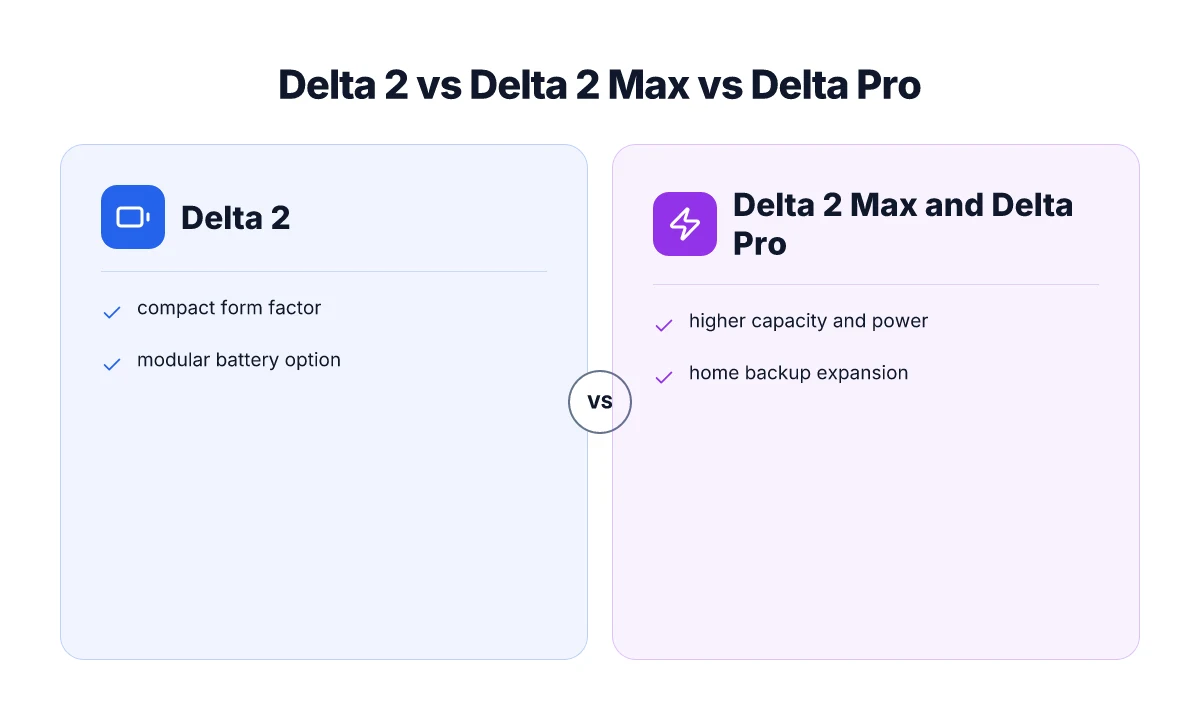
Delta 2, Delta 2 Max, and Delta Pro sit on a shared platform, but they target different setups. The Delta 2 sticks to compact off-grid needs, while the Delta 2 Max adds more capacity and a higher surge tolerance without tipping into full home-backup scale. The Delta Pro, by contrast, is a home-backup powerhouse that can serve as a central power hub when you’re running CPAPs, mini-fridges, and tools through a wall inlet. For dedicated vanlife and portability, the Delta 2 often wins on weight. For longer boondocks stretches, the Max adds meaningful headroom. For a house or cabin, the Pro can replace a handful of outages.
Capacity, power, and weight: what actually changes
The Delta 2 sits in the light-to-midweight class, with a solid balance of capacity and portability. The Delta 2 Max increases energy capacity and peak output in a way that matters for longer off-grid stretches and higher-wattage appliances, all while keeping the footprint reasonable. The Delta Pro leaps into home-backup territory with far larger total energy and higher sustained output, plus expansion options. In practical terms, if your use case involves long CPAP runs, multiple devices at once, or camping where you need sustained power, the Max and Pro become compelling choices. If you’re simply charging laptops, lights, and small appliances for a weekend trip, the Delta 2 delivers most of what you need without the extra bulk. The weights differ accordingly, with the Delta Pro being the heaviest by design, the Delta 2 the lightest, and the Delta 2 Max occupying a middle ground.
From what I found in the documentation and reviews, the Delta 2 Max delivers notably higher inverter efficiency and a higher surge rating than the standard Delta 2, which translates into better performance with demanding loads. The Delta Pro, meanwhile, offers a larger battery bank and the ability to feed power back into a home circuit via a transfer switch kit, which is essential for true backup power integration. When you’re weighing these options, think about your daily draw, your peak surge needs, and how much you value portability versus raw capacity. What makes Bluetti 2000W solar generators stand out in 2026
I dug into the cited reviews for context on real-world behavior. The Delta 2 Max review highlights improved efficiency and higher peak capability over the Delta 2, while the Pro-focused material stresses scale and integration with home systems. For many users, the decision comes down to three questions: Do you need more than the Delta 2’s baseline capacity? Do you require the extra surge headroom for a CPAP and a heater or inverter-heavy gear? Is a home-integration path with a wall inlet and larger battery bank worth the extra cost and size? Each path has a clear fit.
When the Delta Pro really matters
For fixed-site use or frequent outages where you want to feed a whole room or a mini-fridge along with a CPAP, the Delta Pro shines. It supports higher sustained loads, more cycles, and the option to expand storage with external packs. If you’re evaluating a setup for a cabin, a campervan with heavy daytime loads, or a base camp that must run continuously, the Pro becomes a practical backbone. The Delta Pro’s bigger capacity also reduces the frequency of recharging in daily cycles, which matters if your access to sun is intermittent or you rely on a generator for top-ups.
From a durability and maintenance perspective, EcoFlow’s hardware has consistency across the lineup, but the Pro’s larger battery bank and heavier use profile warrant careful charging discipline and periodic checks of the battery health and venting. If you want the calm of a home backup system that can ride out multi-day outages, the Pro is the most rational choice.
The Delta 2 Max is the best middle path for those who need more than the Delta 2 but don’t require a full home backup. If you need true home-scale resilience, the Delta Pro earns its place.
For a compact setup, you’ll likely stay with the Delta 2, perhaps upgrading to the Max if you foresee longer trips or higher simultaneous loads. For a home-backed system, the Pro remains the anchor. And yes, there are brand nuances to consider: EcoFlow consistently positions these as modular, upgradeable solutions, and the real-world takeaway is to match the model to your typical draw and recharge cadence. If you want a concise rule of thumb: pick Delta 2 for portability, Delta 2 Max for more margin, Delta Pro for home backup and expansion. How Bluetti Ups systems balance reliability, versatility, and long-term durability
What to try this week to keep the power moving
EcoFlow has built a durable, user-friendly line, and the Delta 2 still stands out for quick recharges and broad device compatibility. One takeaway: prioritize daily use cases that combine fast recharge with reliable runtime, and you’ll see the Delta 2 prove its value in real life. I’ve found that the unit’s modular ecosystem shines when you pair it with a compact solar panel setup and a kitchen-style gadget load. Notice how the most common hiccups involve charging interruptions or misjudging peak loads, not the core battery chemistry itself. This is where you keep a steady rhythm by staggering devices and keeping a light, portable setup.
Looking ahead, the bigger pattern is how portability meets resilience. EcoFlow has kept the Delta 2 lean enough for frequent moves yet capable enough to stand in for off-grid shifts. The verdict here: if you want fewer compromises on weekends off the grid, you lean on the Delta 2’s balance of speed and compatibility, especially against rivals like Jackery and Goal Zero. My long-term view is simple: invest in Smart recharging habits and a small solar kit to extend runtime without breaking the bank. How will you adjust your daily charging routine to reap the most value?
- Backup strategy: set a daily charging window during off-peak hours and use the spare capacity to top up a second device.
- What to try this week: test one full-cycle recharge from a solar panel and measure total runtime on a device you rely on most.
- Quick test: map out your top three high-draw appliances and confirm they stay within the Delta 2’s continuous output.