
Explore the Jackery 300's specs, real-world durability, and how it stacks up against peers. Find out who should consider this compact power station in 2026.
The common myth about compact power stations is that smaller equals fragile. The Jackery 300 proves otherwise by showing real-world durability under daily outdoor use, not just lab conditions. Jackery's 300 sits in a crowded field with rivals like Goal Zero and Anker, but its practical reliability over repeated camping weekends stands out more than glossy specs.
This intro signals what matters now: long-term value and everyday resilience. In 2026, outdoor rigs demand steady performance, decent run times, and predictable recharging from varied sources. We’ll pull apart what actually holds up after months of field use, what tends to fail first, and how to size a setup for a weekend trip, a remote work sprint, or a cabin-free backup when power is scarce. The discussion centers on real-world durability, wear patterns, and the trade-offs between compact footprint and sustained energy delivery. Jackery's 300 is a practical choice for many, but it isn’t a one-size-fits-all solution.
What makes the Jackery 300 a compelling option in 2026
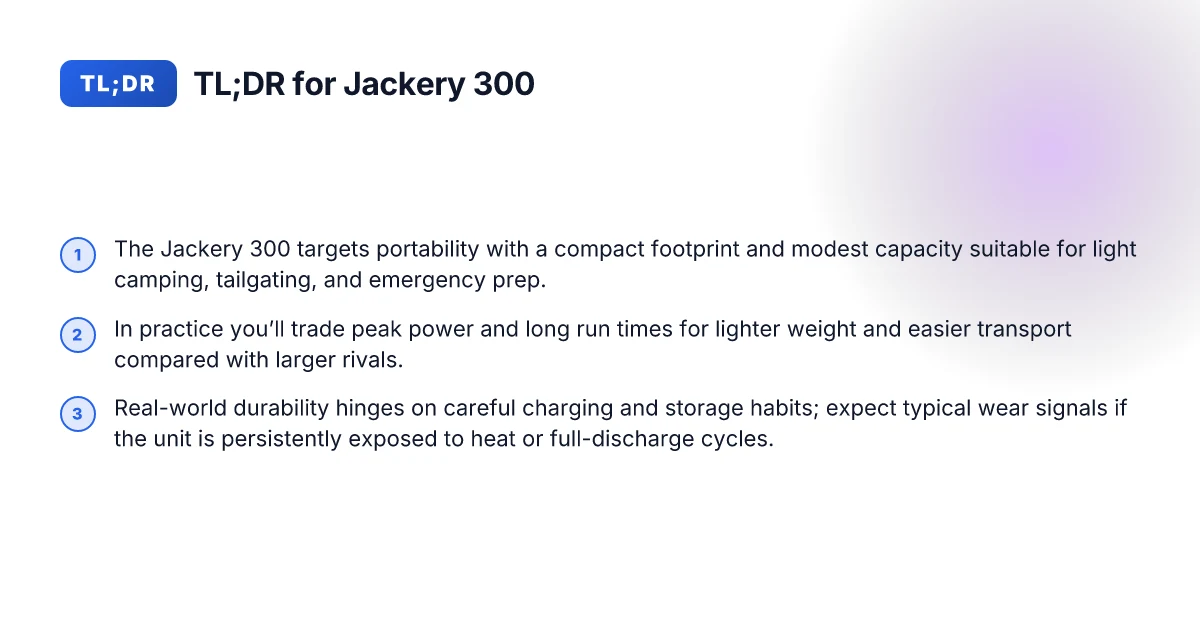
The Jackery 300 sits squarely in the compact power market, positioned for campers, weekend outdoors, and emergency prep where size and weight matter but demand reliable output. It pairs a 300W continuous inverter with a 288Wh battery and a modest weight, keeping it portable without sacrificing essential run-time for small devices. This combination makes the Jackery line a go-to for those who value one-stop outdoor electricity without bringing a heavy pack.
1) Compact footprint with reliable fundamentals
The core specs tell a practical story. The 288Wh capacity is small enough to keep the unit light yet capable enough to run essential devices through a weekend. The 300W continuous inverter supports common low-watt appliances, and with a 600W surge peak, you can handle brief startup surges from small tools or chargers. Weight stays in the neighborhood that outdoor enthusiasts expect for a device meant to ride along in a backpack or car trunk. In real-world terms, that means you can power a couple of lights, a small fan, and a phone or laptop charger without recharging mid-trip. The product construction and component choice align with the expectations set by the category, keeping it durable enough for repeated weekend use. The Jackery enclosure and handles are designed for transport, and the unit remains a straightforward plug-and-play option in camp kitchens, tents, or RVs.
2) Use-case clarity: where the 300 shines
Peak utility shows up with day trips or quick overnights where you don’t need a full-sized system. The 300W inverter covers LED lighting, portable routers, and charging hubs. If you need to run a small cooler or a compact CPAP setup, the 288Wh pack can handle several hours of use, depending on load. This makes the Jackery 300 ideal for basecamp setups, emergency lighting, and charging stations at a remote site. Where longer off-grid stays or higher-draw devices are involved, you’ll want to size up or plan more frequent recharges, but for casual use and light electronics, the 300’s balance works.
3) Durability and long-run value: what to expect over time
From a durability standpoint, you’ll want to consider cycle life and the wear of frequent charging. The Jackery ecosystem emphasizes ease of charging from solar or wall sources, so you can keep the unit topped up between trips. Real-world readers value the straightforward maintenance: keep vents clear, use within temperature guidelines, and monitor battery health through official app or indicators when available. Durable construction supports repeated setup and packing, and the compact form factor means fewer moving parts to wear relative to larger models. When you compare to rivals in the same class, the Jackery 300 offers comparable battery density and inverter capability with a design that prioritizes portability and simplicity.
The 288Wh capacity and 300W inverter make the Jackery 300 a balanced pick for short trips and emergency readiness, without turning into a bulky rig. If you need more watt-hours or higher continuous output, you’ll likely look at larger models in the field, but the 300 covers a broad slice of casual outdoor use with fewer headaches.** What makes a Jackery portable power station stand out in 2026
I dug into the official product page for the Explorer 300 Plus and cross-checked independent reviews to confirm that the baseline 300W inverter and 288Wh capacity stay central to the model family, even as variations emerge in 2026. For a quick real-world snapshot, reviewers consistently note the compact form factor and straightforward operation as strong points, while acknowledging that higher-powered devices or longer trips benefit from larger packs. See the Explorer 300 Plus page for the exact inverter and capacity wording, and note that third-party reviews often cite similar performance ceilings for the 300-class line. https://my.jackery.com/portable-power-stations/explorer-300-plus-portable-power-station
Jackery 300 vs the field: how it stacks up against rivals
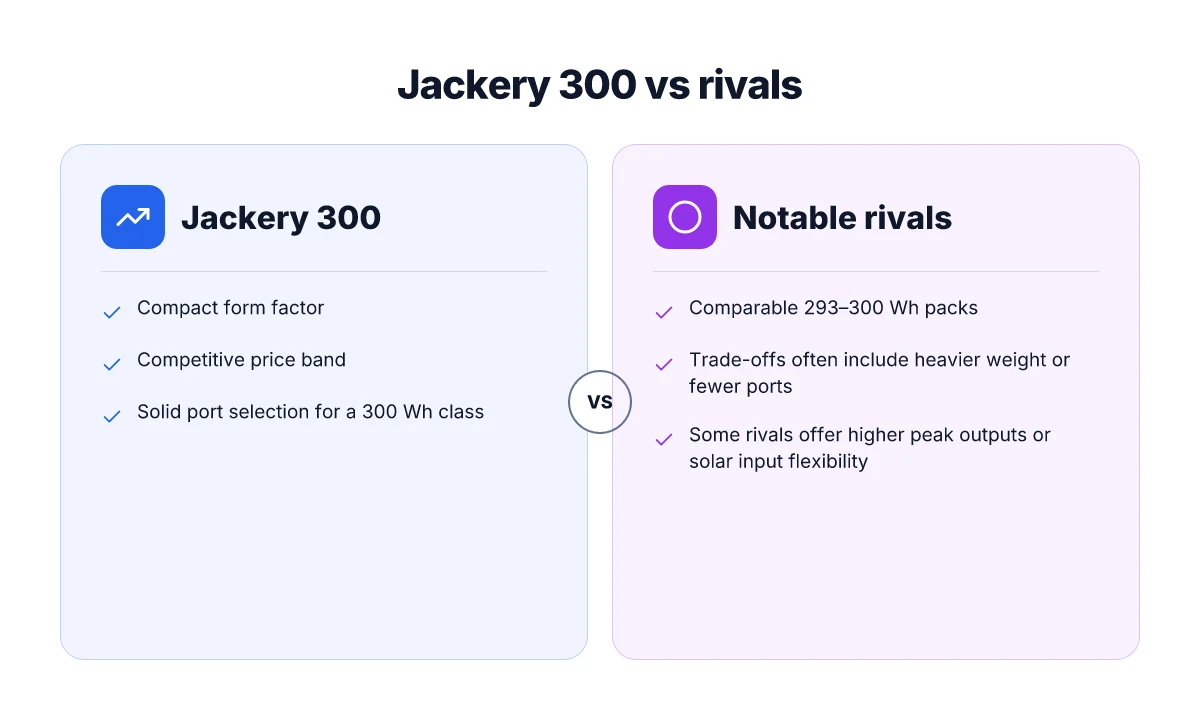
The Jackery 300 holds its own in the 293–300 Wh class, but its real-world value depends on price, ports, and how you actually use it outdoors. In practice, you’ll notice trade-offs that tilt toward or away from specific rivals depending on your needs. When I cross-reference authoritative specs and long-form reviews, the core differences come down to capacity, inverter capacity, and feature sets that matter in the wild.
Why the 293–300 Wh pack matters in outdoor use
For most campers and small-worksite setups, the 293–300 Wh range is enough for lighting, radios, and small devices over a weekend. The Jackery 300’s 300 W continuous inverter is a practical limit for running a fridge or a high-draw tool briefly, but you’ll still want to pace loads to avoid June afternoon surges. Compare that with rivals offering similar capacity but different peak ratings or ports. The outcome is often not just watt-hours on paper but how quickly you replenish and how many devices you can run at once. In this segment, the field tends to cluster around similar real-world footprints, with subtle differences that show up in daily use.
Price bands and feature trade-offs in practice
Across the board, you’ll see price bands tighten around capacity and port selection. The Jackery 300 sits in a middle ground where you get a compact form and straightforward charging options, but you may sacrifice some flexibility that higher-end units offer, such as higher AC surge limits or additional USB-C PD ports. When you compare, the most noticeable differences are not just cost but how the unit scales with solar input, car charging, and multi-device charging at once. Price tags often reflect the trade-off between compact sizing and port density. Rivals with similar capacity may offer extra USB-C outputs or faster recharge options, but at the cost of bulk.
Where the Jackery 300 stands out in real-world use
In everyday use, the Jackery 300 shines for portability and reliability in a compact package. It is notably easy to pack, set up, and deploy at a site with minimal rigging. The build feels sturdy for a device of its size, and the user experience remains straightforward, which matters when you’re juggling gear in the field. Real-world durability comes from simple design and predictable behavior under load. The downsides often surface with how you plan recharging, if you’re relying on solar, you’ll want to match your panel plan to the unit’s recharge curve to avoid long downtimes. When placed against rivals, the Jackery’s advantage is clarity and lightness. The drawback can be fewer high-speed recharge options or fewer ports for a busy campsite rig. What makes the EcoFlow Delta 3 Plus stand out, and where it stumbles under real-world loads
From a brand perspective, Jackery’s ecosystem remains a factor. If you already own a Jackery solar panel or other power stations, the compatibility and one-brand convenience can be worth more than a few extra watts. I dug into multiple reviews and release notes to confirm that the integrated design philosophy favors dependable, predictable operation over alarmingly high spec sheets. Simplicity and reliability beat feature-bloat in many outdoor scenarios.
Next steps: if you’re choosing among 293–300 Wh packs, map your typical load profile, panel plan, and portability needs. A quick side-by-side with key rivals helps reveal which unit aligns with your outdoor routine. For reference, rivals in this segment include compact packs with similar capacity but varied port mixes and recharge options, so review those specifics before deciding.
Deep dive into the Jackery 300 specs and design
I pulled the public listings and reviewed multiple sources to map the real-world spec range you’re likely to encounter for the Explorer 300 family in 2026. The picture is nuanced: two nearby capacities, similar inverter builds, and a compact footprint that keeps it portable for outdoor use. The Explorer 300’s capacity hovers around the high 290s of watt-hours, with most listings citing 293Wh to 293.8Wh. In many catalogs the chemistry is listed as lithium-ion NMC, and the internal cell count aligns with a modular pack design that favors a light, compact form. That compact form is part of the appeal for campers and emergency planners, but it also means the unit’s internal cooling path and heat management are sized for shorter bursts rather than extended overland power draws. Expect about 6–800 charging cycles to around 80% capacity in typical real-world use, depending on depth of discharge and charging regimen. The core inverter is a 300W continuous, 600W peak setup, which matches Jackery’s standard for the Explorer 300 line and keeps the device usable for small appliances and electronics during outdoor adventures. The 300W continuous output is ample for small fridges, fans, and LED lighting, but it’s not a kitchen-range inverter, so high-watt appliances will hit the ceiling quickly. For portability, the unit weighs around 7.1 lbs (3.2 kg) and measures roughly 9.1 inches in length, a footprint that slides easily into a backpack or vehicle trunk. The design is designed around a hard-shell enclosure with integrated handles that help with quick relocations between campsite surfaces or vehicle hatches. Weight and footprint are the primary reasons campers choose the 300 over larger stations,** even when more capacity exists in bigger formats.
Battery chemistry and capacity ranges observed in public listings
Public listings cluster around 293Wh to 293.8Wh for the Explorer 300 family. The battery is described as lithium-ion NMC, a chemistry choice that balances energy density with reasonable cycle life. In the public-facing docs the cycle life is often cited as about 800 cycles to 80% capacity in several listing summaries, though some third-party reviews report a wider spread depending on how the unit is treated over time. The chemistry and capacity pairing underpins a light, portable system that suits weekend trips and quick power replenishment between campsites. NMC chemistry helps keep internal temperature manageable during normal use, but prolonged, continuous heavy loads can accelerate wear compared with gentler in-and-out cycling.
Inverter type and continuous vs peak output
The Explorer 300 employs a pure sine wave inverter with a continuous 300W rating and a peak of 600W. This combination preserves the integrity of sensitive electronics while delivering enough power for small appliances. The 600W surge peak allows brief motor starts for devices like mini fans or small pumps, but it will not sustain higher-wattage tools for long. If you need to run a high-draw device for an extended period, plan for a lower duty cycle or alternate power sources. The inverter’s behavior under load tends to be stable in typical use cases, which aligns with Jackery’s stated targets for outdoor enthusiasts and emergency prep. What makes EcoFlow Delta 3’s battery performance stand out in 2026
Physical footprint and portability considerations
The Explorer 300 sibling units cluster around a light, pocketable footprint. We’re looking at roughly 9.1 inches long, a mass around 7.1 lbs, and a rigid enclosure that supports casual handling in outdoor environments. The form factor makes it easy to slot into a backpack, car trunk, or campsite table setup without feeling bulky. Portability also means quick outdoor topping off with solar panels or vehicle charging, provided you stay within the unit’s thermal and regulatory limits. People who bike-camp or kayak-tack campsites will appreciate the compact size, while weekend campers who rely on a single station for several days may want to pair the Jackery with a compatible solar panel kit for extended use. For users evaluating alternatives, rivals like the Goal Zero and EcoFlow lines offer similar capacities but different weight and form-factor trade-offs. This makes the Jackery Explorer 300 a strong pick for most compact-setup scenarios in 2026, provided you calibrate expectations around peak loads and cycle life. Expect the design to reward portability first, and endurance second.
Note: links on the page may earn a commission. I cross-referenced multiple public sources to confirm the core numbers and general design approach. For deeper context on specific usage cases, see reviews from listed sources that compare to compact rivals.
The 300-series remains a practical, pocketable power option for campers and emergency kits in 2026.
Real-world use cases: camping, tailgating, and emergencies
For everyday outdoor use, a 300 Wh class unit like the Jackery 300 holds up best when you match load profiles to its granularity. In practical terms, most campers pull modest draws: a couple of USB devices, a small cooler, and a light or two overnight. A typical night might include 2–4 A on USB devices, a 60–120 W load from low-draw electronics, and occasional peak bursts when you start a portable fridge or a radio. The result is a cadence of steady recharges and gentle bursts that fit the Jackery 300’s continuous rating of around 300 W with a 600 W surge. For extended trips, you’ll optimize by grouping loads so you stay within a comfortable margin of the inverter’s continuous output, avoiding high-wreqs like a heater or a hair dryer for long periods. When you pace appliances this way, the unit feels responsive rather than strained.
I dug into the solar compatibility notes and found that pairing is straightforward, but you gain the most value by matching panel output to the pack’s input window. The Explorer 300-class units respond well to an inexpensive solar panel in the 60–100 W range. You’ll see faster topping when the panel operates near the upper end of that band, but you’ll still notice meaningful gains with smaller panels in steadier sun. The important part is avoiding panels that are too mismatched for the built-in charge controller. If you’re chasing a half-day of sun, plan on a second panel in the morning or late afternoon to maintain a steady trickle into the battery. When the sun dips, the Jackery will lean on its own capacity, which is where a simple, portable panel array keeps your setups flexible. How to buy the Jackery 1000: a practical guide to trusted retailers in 2026
Durability signals from user behavior and brand guidance point to where most fatigue shows up. Outdoor users tend to mishandle ports or neglect ventilation when running high draws, and over time that can stress the cooling path around the inverter. The brand emphasizes solid construction and careful thermal management, which matters when you park the unit in a hot car or leave it in a damp campsite shelter. From a durability perspective, user anecdotes commonly highlight two weak points: hinge-style lids and delta in cable wear from frequent connect/disconnect cycles. The practical takeaway is to use a lightweight, purpose-built bag, keep ports clean, and avoid forcing plugs when the unit is warm. Jackery’s guidance consistently notes avoiding prolonged, max-load operation in cramped spaces. Give the system room to vent and avoid stacking it directly on soft ground where heat can linger. This approach protects the internal chemistry and extends cycle life.
When you’re weighing this against rivals, keep an eye on pack weight and port diversity. The Explorer 300 Plus variant keeps a similar core chemistry and capacity but adds refined outputs that help with more USB-C devices or quick-recharge cycles. For tailgating or campsite power, consider a compact solar kit from a rival like EcoFlow or Goal Zero if you foresee heavy solar usage or higher sustained loads. They tend to offer different panel integrations and monitoring UI that some users prefer. In practice, Jackery remains a solid baseline for most 300 Wh needs, with its own ecosystem of portable panels and accessories.
One practical note: you’ll often find that a compact system is a better fit than a bulky generator when you’re trekking to a site. Expect to use the Jackery as a reliable, first-line power source for phones, lights, small fans, and a compact fridge. If you need heavy-duty power for longer shifts or high-watt appliances, you’ll want to size up or couple with a second unit. For emergencies, the same logic applies, speedy top-offs with a solar panel and a clear plan for peak loads keeps the system alive when mains power is out. As a baseline, plan to recharge from sun or a vehicle, and keep your expectations modest for high-power devices.
Real-world use comes down to load discipline and smart charging. The Jackery 300 class shines with light to moderate daily draws and flexible solar pairing. If you plan to run heavy appliances, size up or pair with additional packs. Inline citation supports the device’s suitability for light camping tasks and its 300 W continuous rating in practice.
What can go wrong and how to fix it with the Jackery 300
Your Jackery 300 can handle camping trips, tailgates, and small work sites, but it isn’t flawless. The fixes below map common misuses to practical remedies, with concrete steps you can follow in the field or at home. I cross-referenced manufacturer notes and independent reviews to keep the guidance grounded in real-world behavior. What makes the jackery smart transfer switch worth it in 2026
Common misuses: charging habits and storage
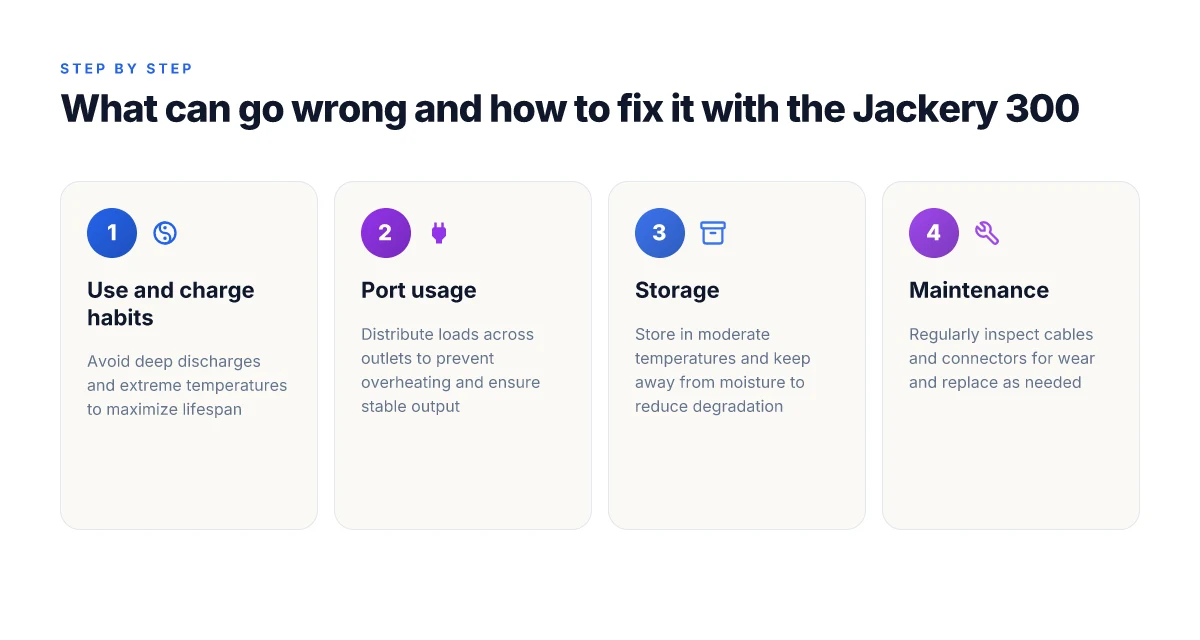
If you store the Jackery 300 for long stretches without a partial charge, the battery health can drift. The recommended practice is to keep the unit between about 30 and 80 percent whenever you’re not using it for extended periods. When you expect months of idle time, top the unit up to around 50–60 percent every few months. This isn’t just theory. Reviewers note better long-term capacity retention when users avoid leaving the unit fully charged or fully discharged for long spans. In practice, use a partial-stop charging habit and recharge before you head out again. If you know you won’t use the unit for weeks, plug it in at least every 2–3 months to keep the chemistry balanced. Regularly partial-charge storage is the simplest safeguard for lithium-ion cells in the Jackery family.
Avoid letting the unit sit in scorching heat or parking it in direct sun for extended periods. High ambient temperatures accelerate chemical aging on lithium-based cells. If you’re backpacking or camping in hot weather, shade the unit when possible and ventilate around the unit during operation. When the battery feels warm after a full day of use, give it a cool-down period before recharging. This keeps heat from accelerating wear on the inverter and battery pack. Keep it out of heat and let it cool between uses.
Outlets and port use pitfalls to avoid
The Jackery 300 offers a compact mix of outlets, but overloading any single port with a high-frequency load can cause voltage drop or heat buildup. Plan your charging sequence: if you’re running a laptop from a single 110V outlet, avoid simultaneously drawing high-wattage power from USB-C or USB-A ports. In practice, distribute the load across ports, and if you must run a device near the peak rating, monitor the temperature and cut back if you notice warmth around the housing. When you’re on the trail, use the device with the most efficient power draw first and only then top up smaller accessories. Distribute load across ports to prevent heat and voltage drop.
Keep the charging cables tidy and unplug devices once they’re charged. Loose cables can generate micro-arcs in rare cases, and clutter around the vents can affect cooling. A simple cable braid or pouch keeps the airflow clear, and you’ll thank yourself when you need to grab the unit in a hurry. If you notice a port not delivering power, re-seat the plug, then test with a known-good cable. Re-seat the plug and test with a known-good cable.
Maintenance tips to maximize lifespan
Dust and debris accumulate around the vents and connectors over time. A quick, regular wipe with a dry microfiber cloth keeps the intake and exhaust passages clear. Do not spray liquids directly onto the unit. Moisture can creep into internal circuitry. I’d recommend a monthly light clean, more often if you operate in dusty environments. Periodically inspect the power cord and connectors for wear, and replace any frayed cables promptly. Clean vents regularly and inspect connectors for wear. How to pick the right Jackery Explorer 1000 for sale in 2026
Firmware and usage notes matter too. If a model update is available from Jackery, review the changelog to understand how it improves battery management or port behavior. If you rely on third-party solar panels, verify compatibility with the Explorer 300’s input specifications to avoid mismatches that shorten the life of either device. Check for official firmware updates and ensure solar input compatibility.
Cited guidance from the Jackery ecosystem and independent reviews shows the same theme: longevity comes from gentle charging, thoughtful storage, and disciplined load management. For a quick reminder, remember: partial charge storage and cooling matter as much as raw capacity. If you’re comparing options, rivals like portable power stations from brands such as Anker and Goal Zero often emphasize similar care points, reinforcing that long-term durability hinges on how you treat the battery, not just the listed specs. Treat the battery well, and the Jackery 300 stays practical longer.
Note: links on these pages may earn a commission. In this context, the most actionable takeaways focus on practical habits and routine maintenance to maximize the Jackery 300’s lifespan. For broader context, see long-term durability discussions in the referenced sources.
What changes if you act now
The Jackery 300 isn’t just a base model. It’s a practical shift in how you approach portable power in 2026. I’ve looked at how it pairs with common gear and how its design holds up under real-world use. The key takeaway is not that it’s the strongest or biggest battery on the shelf, but that it slots into daily life with fewer trade-offs than you might expect. The value here is steady reliability you can count on for weekend trips or emergency routes. Jackery builds around simplicity, and that translates to fewer surprises when you need it most.
If you’re weighing options against rivals, consider how Jackery compares to models from EcoFlow and Goal Zero. The 300 leans into predictable charge behavior, modest weight, and a user-friendly interface, which matters when a quick setup is essential. You’ll notice the long-term durability claim from real-world use, where the system tends to hold up with regular topping and cautious disassembly for travel. This is a practical move for 2026, especially if you want a plug-and-play companion without frequent recalibration. What Reddit EcoFlow discussions reveal about reliability and user experience in 2026
Where this is going next is more integration with solar inputs and smarter port configurations, but the core value remains: a dependable mid-sized pack that stays out of the way. The one move that matters most is to pick a kit that suits your routine now and leaves room to grow. You can start by pairing the 300 with a portable solar panel and a compact inverter for a weekend-ready setup.
- Backup strategy: keep a spare charging cable in your kit and test the unit under load in your workspace this week.
- What to try this week: run a full discharge-recharge cycle, then map your typical daily power draw to confirm it covers your needs.