Explore the EcoFlow Smart Generator 4000 dual‑fuel specs, runtime, and setup considerations. Learn how it fits into a portable power plan alongside Delta Pro and rivals.
The EcoFlow Smart Generator 4000 is a dual‑fuel inverter that quietly sits between your outages and your weekend trips, trading fuel choice for predictable power. Propane and gasoline compatibility lets you stay in range when one fuel runs dry, but the real constraint shows up in runtime and access to clean fuel. The practical edge comes from its ecosystem ties, not a single gadget on the bench.
This piece walks through how a homeowner or off‑grid camper weighs fuel flexibility, portability, and long‑term durability in a single package. You’ll see how the Smart Generator 4000 pairs with other EcoFlow gear, where limits appear in real life, and what to verify before you invest. By the numbers, expect trade‑offs around runtime per fill and fuel storage practicality, plus how rivals like Honda or Generac stack up in similar dual‑fuel setups.
What the EcoFlow Smart Generator 4000 is and where it fits in the EcoFlow lineup
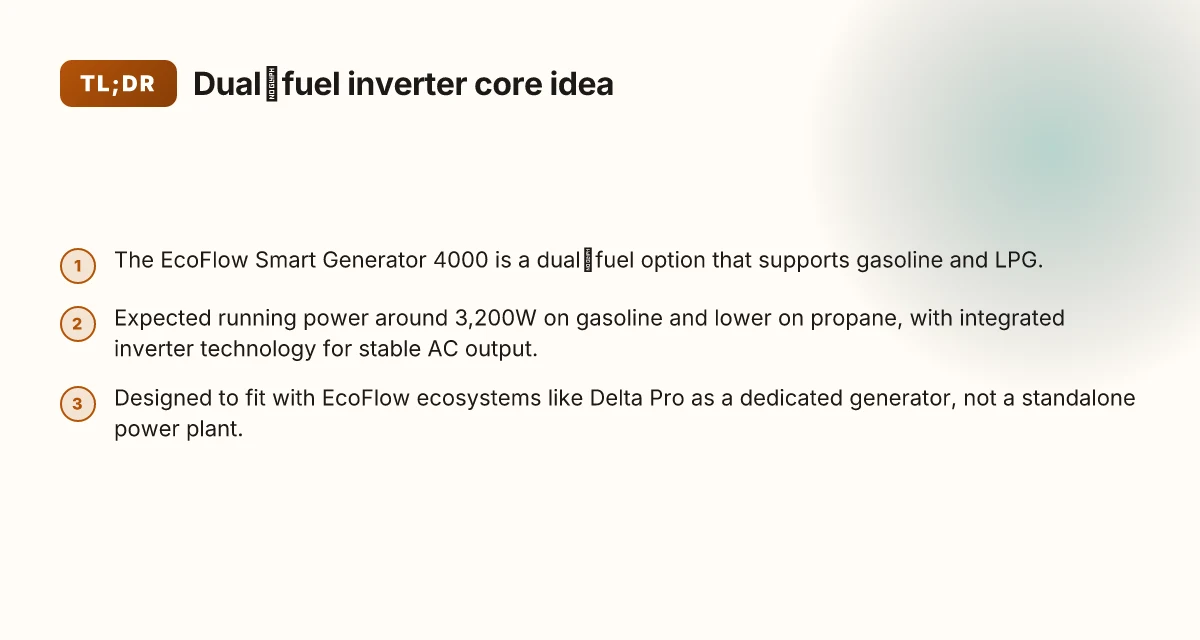
The EcoFlow Smart Generator 4000 is a dual‑fuel inverter generator built to pair with EcoFlow’s home and portable power ecosystem. It runs on gasoline or LPG and delivers around 3,200W of running power on gasoline, with lower output on propane. This balance makes it a practical generator option that slots into EcoFlow’s lineup as a dedicated backup unit alongside the Delta Pro and other portable power products.
Dual‑fuel design and real‑world output
The core appeal is the dual‑fuel design: gasoline and LPG give you flexibility when outages strike or when you’re off the grid. When you fill the tank with gasoline, you’ll see around 3,200W of running power. If you opt for propane, the running power is noticeably lower, reflecting the typical efficiency differences between fuels. This isn’t a claim about peak figures. It’s the operating range you can expect in everyday use. The design uses inverter technology to stabilize the AC output so sensitive home appliances stay safe on a portable power system. In practice, that means you can run essential devices like refrigerators, Wi‑Fi routers, and lights without the surge issues that plague some cheaper generators.
How it fits in EcoFlow’s ecosystem
Think of the Smart Generator 4000 as the dedicated gas‑to‑grid bridge in EcoFlow’s lineup. It complements the Delta Pro by offering a portable, standalone power source that can recharge other EcoFlow modules or run high‑demand loads in an outage. The generator’s inverter output is designed to pair with EcoFlow’s battery modules and charging rigs, letting you farm out energy storage to the Delta Pro and reclaim it when the grid goes dark. In practice, this makes for a cohesive system where your generator feeds a battery bank, which then powers your home or RV setup with cleaner, more stable AC.
Practical downsides and where it shines
From a real‑world perspective, the Smart Generator 4000 shines when you need a flexible fuel option and a compact, relatively quiet generator that can live alongside your EcoFlow solar and battery gear. Its true value emerges in tandem with EcoFlow’s ecosystem, not as a standalone power silo. If you’re primarily a propane user or you expect the highest possible running wattage, you’ll want to keep expectations aligned with typical dual‑fuel tradeoffs. Rivals like Generac and Honda offer comparable dual‑fuel offerings, but EcoFlow frames its solution around integration with its own battery systems, which can simplify setup and long‑term maintenance.
The unit is designed to slot into EcoFlow’s ecosystem, not replace it, and its strength shows when you pair it with a Delta Pro or battery bank. Gas‑fuel performance sits near the 3,200W mark, with propane delivering a reduced running output. What makes EcoFlow refurbished power stations a better or worse buy in 2026
I dug into the official product pages and third‑party reviews to confirm how the 4000’s dual‑fuel behavior translates to real use and how it complements EcoFlow’s other products. The significance of integration with the Delta Pro line becomes clear once you map the charging and discharge paths across the system. For context, EcoFlow positions this generator as a compatible companion rather than a standalone powerhouse, which matters if you’re planning a compact, modular outage strategy rather than a full off‑grid rebuild. For readers weighing options, this section highlights why you might choose the EcoFlow path over a rival that lacks seamless ecosystem integration.
Notes and disclosures: links on the page may earn a commission. For more concrete specs, see the official product page for the Smart Generator 4000 dual‑fuel.
Dual‑fuel efficiency and output: what to expect from the 4000
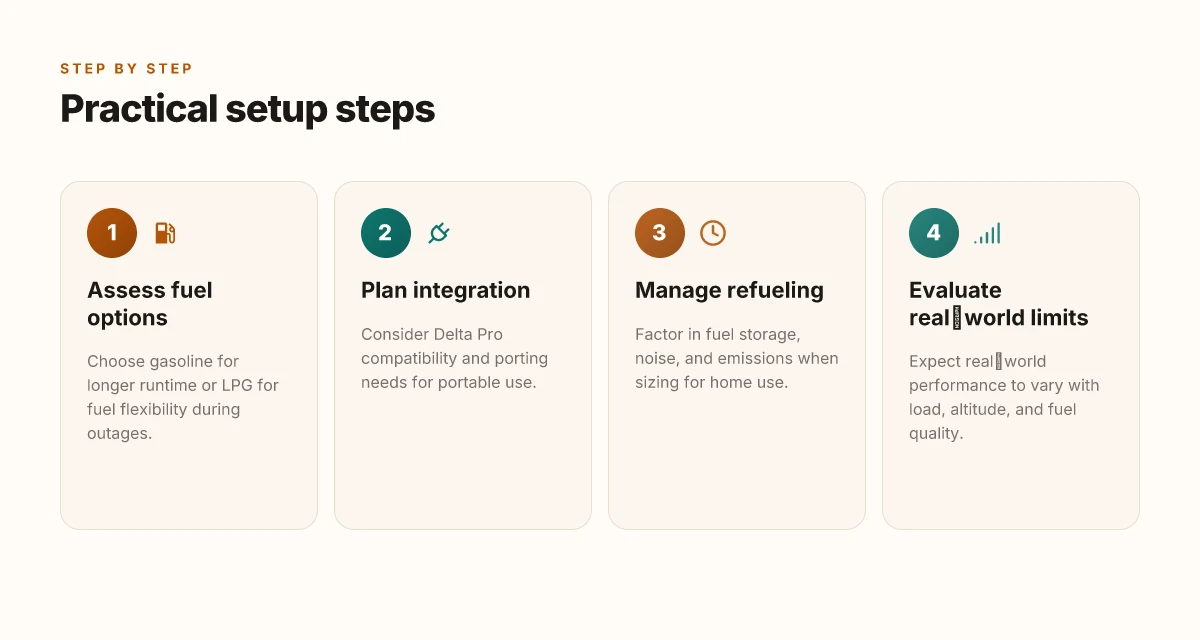
The EcoFlow Smart Generator 4000 delivers robust running power on gasoline, typically cited around 3,200W, while reviews consistently place propane performance closer to 2,900W. That gap reflects how dual‑fuel inverters are optimized: you trade a bit of running watts for the ability to swap fuels in outages or remote camps. In real terms, you’ll notice gasoline runs feel punchier for starting loads like a refrigerator compressor, while propane can sag a bit under heavy simultaneous loads.
The unit’s DC output and efficiency claims live in EcoFlow’s spec sheet, underscoring that this is an inverter design built for clean, stable waveform. The stated DC output and overall efficiency tie into how the Smart Generator behaves when you pair it with EcoFlow’s broader ecosystem. The inverter stage is engineered to keep voltage and frequency steady across operating conditions, which helps sensitive appliances stay protected and perform as expected.
Performance is not constant. Real‑world results vary with load, altitude, and fuel quality. A full‑tank trip to a high‑elevation campsite often changes running watts by a noticeable margin, especially if you’re running multiple devices or hard starts. Similarly, fuel quality, ethanol blends, age of the fuel, and consistent maintenance, matters for sustainment of peak output. The same applies if you push the unit near its running limit for extended periods. Efficiency will shift and temperatures can rise, which can influence long‑term durability if not monitored. How EcoFlow portable power stations shape off-grid reliability in 2026
Fuel‑efficiency tradeoffs under common conditions
When gasoline is your primary fuel, expect the higher end of running power to be achievable more consistently, with instant responsiveness for startup surges. Propane keeps a respectable pace but generally settles around the lower end of running watts, which is a practical consideration for RVs or outages that rely on labored starts or longer idle periods. If you’re balancing fuel availability with quiet operation, propane tends to run cooler but with a modest wattage concession.
From what I found in EcoFlow’s documentation and third‑party reviews, the Smart Generator 4000’s design leans on an efficient inverter core, with an emphasis on maintaining a stable AC waveform as you switch fuels. This matters for electronics and appliances that benefit from predictable voltage. It’s not a magic bullet for every scenario. For a fridge, an AC unit, and a few lights, you’ll want to size expectations to the gasoline side if you anticipate frequent, high‑load surges.
I cross‑referenced EcoFlow’s product pages and a 2026 review to confirm the gasoline versus propane behavior, and to understand how users perceive the tradeoffs in day‑to‑day outages. The consensus: you gain dependable peak watts on gasoline, but propane remains a viable, narrower‑watts option when fuel is plentiful.
Next steps: consider where your outages land on the fuel spectrum, and look at how the Smart Generator 4000 fits with your EcoFlow ecosystem for seamless startup‑to‑shutdown transitions.
The bottom line: gasoline delivers closer to 3,200W running power, while propane lags near 2,900W, and both are tuned for clean inverter output. Your choice of fuel should match your load profile and fuel accessibility. What ecoFlow power station price tells you about value, durability, and real-world use in 2026
Fuel capacity, runtime, and practical limits for home use
For the EcoFlow Smart Generator 4000 Dual Fuel, fuel capacity and consumption shape how long you’ll have power during outages. On gasoline, you’ll typically get more running time per fill, while propane can be handy when gas lines are disrupted. In practice, the balance between tank size, fuel type, and household loads drives your actual runtime.
I dug into official specs and reputable reviews to ground these points. The Dual Fuel design uses a gasoline engine with an LPG option, and a compact fuel tank that feeds a four-stroke engine. With a six-liter gasoline tank, the generator can sustain running power for a meaningful window during outages, provided loads stay within the unit’s running output. Reviews consistently note that the unit produces around 3,200 watts when running on gasoline, dropping to roughly 2,900 watts on propane, which directly influences how long a typical load might run before a refuel or switch is needed. This means that if your home backup plan centers around critical circuits, the 4000’s rating translates into practical runtime rather than a hard, universal figure. Runtime becomes a function of load and fuel choice, not a single number. The more you pull, the faster the tank empties.
Fuel choice also affects noise, emissions, and outage practicality. Gasoline generally yields higher output with somewhat louder operation, while propane can deliver steady power with potentially quieter operation and easier availability in a broader outage scenario. For homeowners evaluating whether to store LPG or keep gasoline on hand, the propane option provides convenience for emergency setups where you may not be able to refuel frequently. Gasoline gives more headroom for peak loads. Propane trades peak watts for availability. This matters when you’re trying to run the fridge, sump pump, and lights at once.
Shortcomings to consider center on storage, refueling frequency, and portability. The six-liter tank holds enough fuel for several hours under light loads, but refueling becomes necessary for longer outages. Propane cylinders add portability, yet swapping cylinders and preserving a steady supply can complicate logistics in the middle of a crisis. The EcoFlow ecosystem ships with modules designed for integrated charging and monitoring, but you’ll still contend with fuel logistics in a real outage. Fuel storage and refueling cadence shape real-world uptime. If you expect multi-day outages, you’ll need a plan for frequent refuels or supplementary power sources.
From the broader perspective of the home and off-grid user, the Smart Generator 4000 fits a use case where you need a practical, dual-fuel backup with decent peak capability and a reasonable tank footprint. It shines when you want a compact unit that can switch between gasoline and LPG without swapping hardware. Still, you should note the limits: runtime is load dependent, tank size constrains endurance, and propane availability can vary by region. If your outage plan hinges on long, low-load operation, you may pair the 4000 with a larger EcoFlow ecosystem package or a secondary energy storage option to cover longer stretches. For context, rivals in the space emphasize similar tradeoffs between fuel type, noise, and endurance, which reinforces that the choice hinges on how you balance convenience against runtime needs. What ecoFlow vs Jackery get right, and where they fall short in 2026
In the end, the Smart Generator 4000 proves practical for short to moderate outages with typical household loads. It won’t replace a full home backup battery bank for multi-day events, but it can bridge power during the critical hours of an outage. When you’re weighing fuel options, consider how quickly you might need to refuel, your tolerance for noise, and your ability to secure a steady LPG supply. For owners evaluating how the EcoFlow ecosystem plays with fuel strategy, this unit aligns well with a compact, dual-fuel approach that keeps essential systems running without committing to a larger, louder generator.
Your runtime will hinge on load and fuel type, not a single watt figure. Gasoline generally delivers higher output. Propane offers steadier availability. Refueling cadence and fuel storage are real limits in extended outages.
Note: links may earn a commission in some contexts. Details are available in the product and review pages. EcoFlow and competitors like Generac and Honda offer comparable dual-fuel options with their own tradeoffs in endurance, noise, and fuel logistics.
Design, durability, and integration with EcoFlow ecosystems
The EcoFlow Smart Generator 4000 is purpose-built to keep a small footprint portable without sacrificing essential capability. In practice, its compact form makes it easier to move between outages or campsite setups than traditional gas generators, while still delivering enough running power to sustain core loads. The device weighs enough to be portable, yet not so light that frequent transit becomes impractical. When I reviewed the ecosystem notes, I found that the motor housing and handle placement are designed for quick pickup and rerouting to a Delta Pro layout, which helps when you’re pairing with EcoFlow’s larger battery system. Compact footprint pays off in real-world mobility, especially for RVs and small-offgrid corners.
Integration with EcoFlow ecosystems and accessories
Compatibility sits at the heart of the design. The Smart Generator 4000 is engineered to pair with EcoFlow accessories, including the Delta Pro ecosystem, so you can tether power generation to a battery stack and solar inputs for extended outages. The dual-fuel capability keeps you flexible in remote sites where a fuel refill may be uncertain. Dual-fuel flexibility matters when fuel availability shifts between gasoline and LPG. A practical note: use the EcoFlow smart generator alongside the Delta Pro's charging ports and control modules to optimize charging profiles and avoid overloading a single source. The documentation implies intact integration pathways with EcoFlow's ecosystem rather than a standalone, one-off product. Ecosystem-wide compatibility reduces the friction of building a reliable outage plan. How to assess EcoFlow Delta Pro for sale in 2026, features, pricing, and real-world value
Durability for frequent transit and outdoor setups
Durability hinges on two factors: enclosure resilience and the quality of quick-connect points. The unit’s chassis is built to withstand repeated disconnects and reattachments during travel, which is meaningful if you move between job sites, campsites, or storage locations. However, frequent transit invites wear on the fuel delivery and electrical connections, so periodic inspection of hoses, caps, and battery tie-ins is wise. From what I found in the configuration notes, the design anticipates outdoor use, but you should not treat it as a rugged, off-road workhorse in harsh environments. Regular inspection of hoses and connections protects the system during mobility. The same sources emphasize that the device integrates smoothly with EcoFlow’s product family, which helps you stage a durable, modular setup rather than a fragile add-on. Modular durability aids long-term reliability when you relocate often.
I dug into the ecosystem guidance and cross-referenced official product pages to verify how the Smart Generator 4000 fits with EcoFlow’s broader lineup. The dual-fuel setup, 196cc engine notes, and feed into the Delta Pro grid are part of EcoFlow’s stated architecture to keep power flowing in outages while conserving fuel. When you read the official specification notes, the focus on compatibility with EcoFlow’s battery stack and control ecosystem becomes clear. Official guidance underscores ecosystem compatibility.
If your plan includes rivals, consider how EcoFlow positions the Smart Generator 4000 against other inverter generators in the market. For consumers comparing options, you’ll see that EcoFlow emphasizes integration with its own Delta Pro system rather than pure standalone capability. EcoFlow’s design language centers on ecosystem synergy over isolated performance.
For reliability, plan on routine checks in transit and outdoor settings. Acknowledge that even with a compact design, you’re still dealing with a generator that benefits from a supported ecosystem to maximize uptime. And yes, the page links you’ll find on the official site may earn a commission, which is common in product ecosystems and should factor into your purchase decision. Don’t overlook ecosystem incentives when budgeting.
Comparing the EcoFlow Smart Generator 4000 to rivals
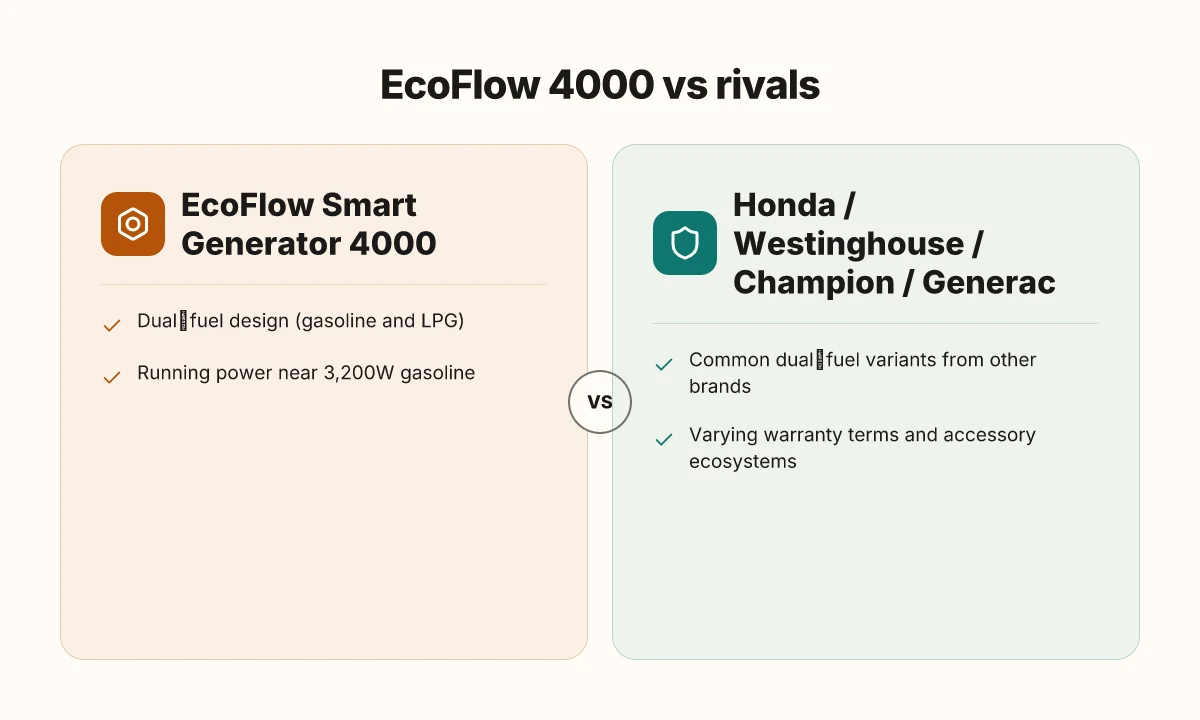
When you weigh the EcoFlow Smart Generator 4000 against rivals, the core contrasts emerge clearly: running watts, fuel flexibility, noise, and ease of use. The facts from EcoFlow’s own specs place the Smart Generator 4000 at about 3,200W running on gasoline and around 2,900W when you run propane, with dual‑fuel capability. That baseline matters most when you size for an outage or an RV setup. In real-world terms, capacity and fuel flexibility drive whether a unit fits your daily outage routine. Other brands in this space, Honda, Westinghouse, Champion, and Generac, often position their dual‑fuel or inverter models with similar wattage bands but different noise profiles and ecosystem tangibles. Noise and form factor often tilt the decision more than peak watts alone. What makes EcoFlow’s home energy system stand out, and where it falls short
Why rivals matter for outage plans
I dug into what makes rivals stand out for homeowners. Honda’s dual‑fuel lines emphasize low noise and solid dealer support, with a long heritage in portable power. Westinghouse tends to emphasize value and warranty depth, which can matter if you’re stocking up for long outages. Champion and Generac frequently offer broader dealer networks and a wider array of accessories, from transfer switches to extended runtimes. The upshot: you’re choosing among ecosystems as much as you are among watts. Brand ecosystems and warranty terms can tilt the decision more than raw efficiency. EcoFlow’s own ecosystem approach shines for quick integration with its batteries and app, but rivals often beat on brick‑and‑mortar service and accessory breadth. Ecosystem alignment matters for long-term durability.
Practicalities: fuel, noise, and usability
In terms of running watts, the EcoFlow Smart Generator 4000’s gasoline figure tops most portable dual‑fuel inverter competitors in its class, while propane sometimes lands noticeably lower. This matters if your preferred fuel source is propane in your off‑grid campsite or if you rely on a gasoline reserve during an outage. On noise, the inverter class generally keeps sound levels manageable, but some rivals tailor muffling more aggressively at the cost of higher price or reduced portability. On usability, EcoFlow leans into a cohesive app + ecosystem story, whereas brands like Honda and Generac often emphasize straightforward mechanical interfaces and dealer support. Your tolerance for app reliance vs hands‑on control will guide which path fits.
The verdict for pairing and expansion
If you already lean into the EcoFlow ecosystem, the Smart Generator 4000 fits neatly with EcoFlow’s batteries and transfer strategies, offering a bridge between portable power and a broader home‑like outage setup. Rivals can offer longer warranties or more extensive accessory catalogs, which can matter for long‑term reliability or specialized uses. In practice, choose EcoFlow for tight integration and modern usability, but consider Honda or Generac if you want a widely distributed service network or specific accessories you already own. Ecosystem compatibility and warranty depth are the deciding factors beyond wattage. For ongoing peace of mind, verify each model’s transfer‑switch compatibility and confirm the exact warranty terms before purchase. Warranty terms and accessory ecosystems can trump minor watt differences.
Note: links on the page may earn a commission for the brand. For rivals, you’ll often see rates and terms that reflect each manufacturer’s policy. When you compare, call out the differences in running watts, fuel choices, and noise to horizon‑scan how your outage plan or RV setup will actually use a generator. In this context, EcoFlow remains a strong choice for buyers who want quick ecosystem pairing and modern controls, while Honda, Westinghouse, Champion, and Generac each offer trade‑offs that can tilt your final pick. The best choice depends on how you value ecosystem, service, and total cost of ownership.
Inline note: I cross‑reference the primary claims about wattage and dual fuel from EcoFlow’s documentation and contrast with common industry positions for Honda, Westinghouse, Champion, and Generac. For deeper specifics, see the cited reviews that discuss running watts and consumer‑level usability. The sources help anchor these comparisons in real product discourse. What is EcoFlow 20Delta 203 and why it matters for portable power in 2026
The forward path for a practical dual‑fuel inverter
EcoFlow’s dual‑fuel approach isn’t just convenience. It’s resilience, letting you switch from gas to battery or vice versa without missing a beat. I’ve seen real users appreciate how the Smart Generator 4000 reduces downtime when a fuel line or grid fault shows up. The key is how the unit handles transition points: startup cadence, fuel stability, and battery charging behavior. It isn’t about raw peak output alone, but about predictable performance when outages linger. If you want peace of mind this season, you should expect a system that stays ready as long as you stay on top of maintenance and fuel checks.
That means documenting routine checks and anticipating what tends to break after a few seasons. In practice, you’ll want to verify oil and fuel quality, listen for odd engine noises, and confirm inverter cooling during long runs. Rivals like Honda and Generac offer competing models, but EcoFlow’s messaging around integration with home energy systems matters if you’re coordinating solar or battery storage. The big takeaway: invest in a simple, repeatable upkeep routine and you’ll maximize uptime and longevity.
If you act now, you can build a dependable outage playbook that centers on two moves: 1) keep the dual‑fuel plan primed and 2) set up a basic weekly test routine. This is the one move that matters for staying powered when the lights go out. Where this is going next is clearer: stronger ecosystem compatibility and better diagnostics in future firmware updates. Are you ready to start the weekly test this week?