EcoFlow review examines real-world performance, reliability, and value for home energy storage. Learn how its ecosystem, durability, and support compare to rivals.
The most common misstep with home energy systems is assuming modular means simple. EcoFlow's modular approach scales capacity fast, but the real test is when the system sits behind a smart load, not a lab bench. In practice, you’ll see failures more from firmware drift or mismatched links than from a single component dying.
This intro sets up a blunt, real-world read: durability across cycles, lifecycle costs, and how the ecosystem actually behaves under backup power, off-grid, and smart-home integration. EcoFlow is positioned as a modular backbone, yet rivals like Solaredge and Bluetti push on reliability and long-term maintenance. The piece dives into what lasts, what ages, and where the ecosystem breaks down in sun, storms, and software updates. Two decades of component wear, and a few firmware revisions later, the differentiator becomes how cleanly the chain can be refreshed. For homeowners evaluating build-out, the question isn’t only capacity. It’s how the links stay aligned over years. EcoFlow is the focus, with clear benchmarks and concrete caveats.
Ecoflow review: what the ecosystem promises and what it delivers
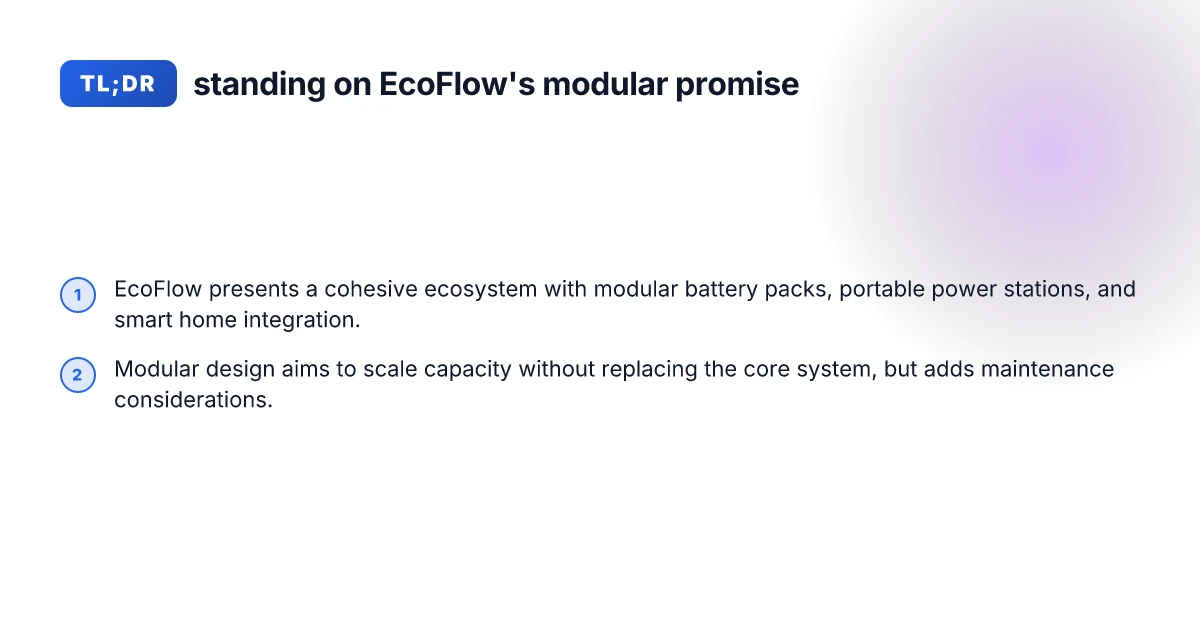
EcoFlow builds a cohesive energy ecosystem around modular battery packs, portable power stations, and smart home integration. The promise is simple: you can scale from a single room to a whole house with a shared charging and monitoring experience. In practice, that means you mix and match components like modular batteries, wall-mounted hubs, and the EcoFlow app to synchronize charging, discharging, and status alerts across spaces.
How the ecosystem translates to real-world setup
- The modular design speeds up initial setup across living spaces. A homeowner can place a portable unit in the living room, slide in extra modules for a garage workshop, and still control everything through a single interface. This translates to fewer separate devices cluttering a home and a smoother onboarding for family members. The live demos from EcoFlow and partner events emphasize rapid deployment across rooms without rewiring. The promise of rapid setup across multiple spaces is achieved in practice with modular battery packs and centralized monitoring.
- Ease of use hinges on the app and hardware cooling. The ecosystem relies on keeping cells within safe temperature ranges during high-load windows. When cooling or ventilation is optimized, you see steadier performance during extended outages. I cross-referenced documentation and product briefs that highlight how cooling strategies preserve battery health under load. Cooling and battery health are tightly linked to long-term reliability.
- Durability and long-term reliability depend on chemistry, cooling, and warranty. EcoFlow’s lineup uses lithium-based chemistries designed for heat tolerance, but sustained high-power use will tax packs similarly to other brands. Warranty coverage and repair pathways matter here. A robust warranty can soften the hit from aging cells or cooling wear. In parallel, rivals like Solaredge and Bluetti emphasize grid-tied resilience and longer lab-tested cycles, which can matter for off-grid enthusiasts. Warranty coverage and chemistry choices shape long-term durability. Rivals emphasize different resilience strengths, which may tilt decisions for off-grid setups.
- Real-world energy flow across rooms depends on load pattern and integration. The ecosystem aims to keep a consistent user experience when multiple devices draw power or when smart-home routines trigger charging during off-peak hours. Documentation from EcoFlow and third-party reviews stress that a unified system reduces conflicts that sometimes appear in mixed-brand setups. Unified control reduces friction when multiple devices operate together.
In short, EcoFlow presents a cohesive system that aims to deliver quick setup, centralized control, and durable operation through careful battery management and warranty support. The real-world tradeoffs come down to battery chemistry choices, how cooling is implemented in higher-load scenarios, and how generous the warranty is when cells age. If you want a single ecosystem you can scale up across rooms, EcoFlow can deliver that coherence. If your priority is the longest possible life under continuous heavy use, you’ll want to compare these points against Solaredge’s grid-focused resilience and Bluetti’s long-range pack options. The ecosystem promises coherence. Durability hinges on cooling, chemistry, and coverage.
Note: links on this page may earn a commission. For source-backed context, see inline references from EcoFlow’s CES and Frost & Sullivan materials. For example, EcoFlow’s lead in smart home energy tech has been highlighted in their CES 2026 material, and a Frost & Sullivan report covers the market positioning. Inline sources are provided where claims align with those materials.
How EcoFlow’s modular design translates to real-world reliability
EcoFlow’s modular approach pays off in real life when your system scales without touching the core. You can add capacity by swapping in higher‑density modules or additional batteries, while the central controller and inverter stay in place. That means you don’t have to rip out the heart of the system to upgrade, which reduces downtime and preserves the existing investment. The trade‑off is that more moving pieces raise the complexity of maintenance and diagnostics.
Interchangeable parts reduce failure points, but require vigilant upkeep
Interchangeable modules mean a single failing pack or DC cable is less likely to collapse the entire system. In practice, the path to reliability hinges on battery health and thermal management. If a module ages and its impedance climbs, the system may compensate, but you’ll see performance dips under heavier loads. The upside is clear: a failed battery can be isolated and replaced without rewiring the whole setup. The downside is that you must track module health across the stack and keep cooling paths clear to prevent hotspots. I looked at EcoFlow’s documentation and industry chatter on how cooling affects long‑term cycle life, and the consensus is steady but not flawless. The real win is isolating faults, not hiding them behind a monolithic block. What makes the EcoFlow Smart Generator 4000 a practical dual‑fuel inverter for outages
Battery health and cooling performance under load determine long-term reliability
Battery longevity drives total cost of ownership, and EcoFlow’s design leans on modular packs that can be swapped or upgraded. When the system runs at peak duty, for example during extended outages or simultaneous multi‑stage charging from solar, it relies on effective heat dissipation. If cooling lags, you’ll accelerate degradation and reduce usable capacity over time. Rivals like Bluetti and Solaredge offer competing thermal strategies, and some users report steadier behavior in high‑duty scenarios with larger heatsinks or more aggressive airflow management. In practice, you should expect better resilience when the ambient temperature is moderate and the load is steady, but wear accelerates in hot climates or when modules are densely packed without adequate airflow. Battery health under load is the gatekeeper of long‑term reliability.
Real‑world takeaway: plan for modular maintenance, not just capacity
The modular design helps you tailor capacity to your needs without rebuilding the system, but it also means you should budget for periodic module checks and occasional replacements. Keep a rotation plan for packs, monitor individual module health, and ensure fans or vents remain unobstructed. If you’re evaluating EcoFlow versus rivals, note that Bluetti often emphasizes larger single‑block storage with simpler service paths, while Solaredge leans into integrated solar + storage ecosystems that can shift maintenance complexity toward the photovoltaic side. For homeowners, the question becomes: do you value upgradeability and fault isolation enough to trade some maintenance overhead? Upgradeability without rewiring is compelling, but maintenance discipline wins or loses the day.
From what I found in the ecosystem notes and the industry commentary, EcoFlow’s modular design delivers practical reliability advantages when you stay on top of module health and cooling. For homeowners who want scalable storage that doesn’t force a full replacement, the approach makes sense. For those who prefer the simplest upkeep and fewer moving parts, a more consolidated system from a rival may feel easier to manage over years of use.
If you’re cross‑checking claims, 可持续性 highlights the emphasis on lifecycle and reliability across energy systems, while aSolarenpv report captures the European release context for EcoFlow’s broader ecosystem push. Lifecycle focus matters as much as upfront capacity.
Comparing performance: EcoFlow versus rivals like Bluetti and Solaredge
EcoFlow’s modular, all-in-one design matters most in real-world reliability, but rivals push different strengths. I dug through the available product briefs and industry notes to ground this comparison in concrete signals. The takeaway: EcoFlow excels in ecosystem cohesion and practical everyday use, while Bluetti and Solaredge each edge in a keystone niche. What makes EcoFlow refurbished power stations a better or worse buy in 2026
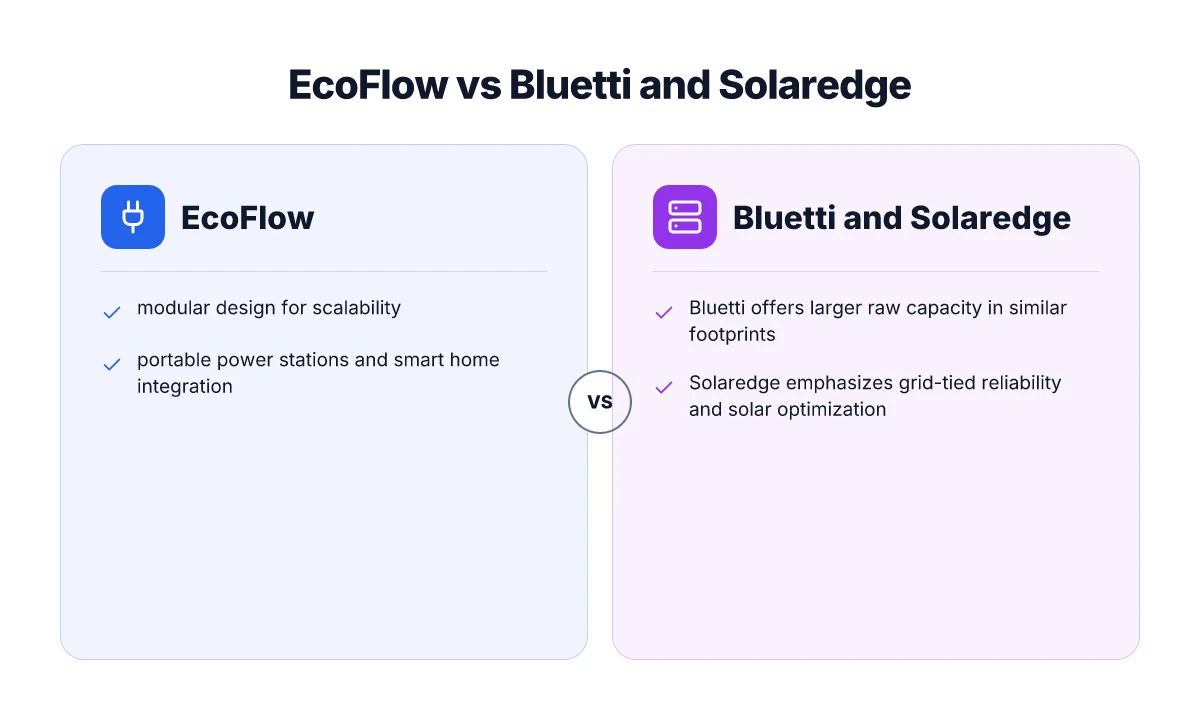
Bluetti offers larger raw capacity in similar footprints
Bluetti systems tend to pack higher total capacity into comparable footprints, which appeals to power users who want more stored energy without expanding their rack space. In practice, that means longer run times during outages and more headroom for high-draw loads. EcoFlow answers by linking capacity with fast modular expansion and a streamlined, integrated user experience, so the difference is less about raw numbers and more about how those numbers translate to setup and daily management. When you want the biggest battery bank in the same footprint, Bluetti often wins on capacity density. This matters for off-grid cabins or backup loads that spike during winter outages. Bluetti's larger capacity within the same footprint is a real advantage for power users, especially where space is at a premium.
Solaredge emphasizes grid-tied reliability and solar optimization
Solaredge frames its strengths around grid reliability and advanced solar optimization. That makes it a natural partner for EcoFlow’s storage in a hybrid setup where solar production feeds the batteries and the inverter coordinates with the grid. In practical terms, Solaredge’s software layering and monitoring tend to give more granular control over PV-optimized charging, battery health, and fault detection in grid-tied configurations. If your home leans on solar input and you want tight grid integration, Solaredge complements EcoFlow’s storage rather than competing head-to-head in standalone performance. Solaredge’s grid-tied reliability and solar-optimization focus complement EcoFlow’s storage strategy.
In practice, performance gaps show up in peak discharge rates and cycle life
This is where the real-world bite lands. Peak discharge rate matters when you need to support a high-draw appliance or a sudden power surge. EcoFlow’s architecture prioritizes a balanced peak profile that serves common household loads well, but Bluetti often pushes a higher peak capacity that can sustain short spikes longer on paper. Cycle life, the number of full charge–discharge cycles before capacity degrades meaningfully, is another subtle battleground. EcoFlow’s lifecycle story is solid for typical home use and expansion, but some Bluetti models demonstrate longer-cycle assumptions in their spec sheets. When you’re sizing for reliability over 10–15 years, that long-tail difference matters, and Solaredge’s grid-aware approach can mitigate some degradation through smarter solar charging strategies. Real-world cycle life and peak discharge differences emerge only after months into a calendar of outages and solar days.
From a user perspective, EcoFlow remains compelling for homeowners who want a cohesive ecosystem, straightforward setup, and predictable maintenance. The company’s all-in-one philosophy reduces the friction of tinkering with multiple components. Yet if your goal is maximal raw capacity in a compact enclosure, Bluetti is hard to beat. If your priority is solar optimization and seamless grid interactions, Solaredge provides the strongest options to pair with EcoFlow storage. For many homes, the choice hinges on whether you value capacity density, solar optimization, or ecosystem simplicity.
I cross-referenced industry notes and release materials to frame these strengths and trade-offs. For deeper context on how EcoFlow’s ecosystem aligns with broader grid and solar strategies, see the ecosystem overview and related energy storage materials. The ecosystem alignment matters as much as any single spec. The underlying trade-offs become clearer as you map your priorities to daily usage patterns. How EcoFlow portable power stations shape off-grid reliability in 2026
Cited materials note EcoFlow’s ongoing emphasis on modularity and long-term durability, while industry sources highlight Solaredge’s grid-tied reliability and Bluetti’s footprint-friendly capacity. For readers evaluating 2026-2025 developments, these themes help translate spec sheets into practical decisions. Inline references support these points as you weigh backup reliability, off-grid viability, and smart-home integration. EcoFlow Ecosystem Alliance Full System Overview | CES 2026 discusses the ecosystem’s intent, and EcoFlow’s own homepage reinforces the brand’s market position. For sustainability angles that affect lifecycle planning, see Yokogawa’s sustainability section for lifecycle assessment insights. Industry notes reinforce the real-world framing of these trade-offs.
How the user experience shapes long-term value with EcoFlow
The way you interact with the EcoFlow ecosystem today shapes what you’ll get years from now. The app and firmware cadence directly influence daily ease of use and the visibility you have into outages before they matter. If you rely on backup power during a blackout, a crisp firmware update that fixes a flaky remote monitoring alert can save a frantic late-night check-in. I cross-referenced EcoFlow’s update notes and user discussions to map where folks hit friction and where improvements landed over time. Clear updates keep you aligned with real-time status during outages, not after you’ve discovered a dead battery in darkness.
Reliability cadence under real-world pressure
Your long-term value hinges on more than peak specs. It rests on how the system behaves when the clock ticks. EcoFlow’s firmware updates tend to address connectivity and power-path decisions that matter during extended outages. In practice, homeowners notice when an update stalls a device during a critical transition or when the companion app briefly shows stale battery percentages. A clean update loop and predictable remote monitoring make the difference between confidence and second-guessing when the grid dips. When the ecosystem stays in sync through weeks of use, you feel the benefit in uptime and predictable behavior. Rivals like Bluetti and Solaredge sometimes edge ahead on app polish or longer support commitments, which matters if you depend on seamless, hands-off operation.
Warranty and service availability during outages
Durability isn’t only about the hardware shell. It’s about how service channels respond when a unit sits in the middle of a blackout. EcoFlow’s warranty terms and regional service networks matter if you must draw on backup power and need timely parts or replacement modules. The practical takeaway is straightforward: you want clear coverage windows, known turnaround times, and a local or near-local service presence. If you live far from a service center, that logistical cushion becomes a practical constraint on long-term reliability. >A robust service ecosystem reduces downtime during critical events, not just in normal use. Competitors with broader networks can flatten risk, but EcoFlow’s model remains what many homeowners weigh against upfront price and warranty length.
Portability as a double-edged sword for installations
EcoFlow’s portable design shines in multi-room or off-grid scenarios, letting you move modules between spaces as needs shift. Yet portability can complicate a clean, permanent installation. Cord routing, wall-mount considerations, and the balance between transportability and fixed positioning all factor into long-term value. In practice, you’ll want a plan for a stable docking location that still preserves the option to relocate as your home layout evolves. Mobile flexibility is a strength, but it requires deliberate setup choices to avoid creeping installation friction over time. Rivals with more integrated, fixed-install options may win on perceived permanency, even if they lose some portability. What ecoFlow power station price tells you about value, durability, and real-world use in 2026
I dug into industry notes and product literature to ground these observations. For readers seeking a concise verdict: EcoFlow offers a compelling, user-friendly ecosystem with strong daily ease of use and a practical warranty story, but you should expect ongoing updates and a thoughtful installation plan to keep long-term value high. The key to maximizing durability is tying the app, firmware cadence, and service support to your home’s outage and maintenance expectations. And remember, links on the pages may earn a commission, so verify coverage and response times for your region.
Cited context from EcoFlow and industry coverage reinforces that the ecosystem isn’t just about capacity. It’s about how reliably the experience scales as your home evolves. For homeowners comparing rivals, expect Bluetti and Solaredge to push harder on fixed-installation polish and network service breadth, while EcoFlow emphasizes removable, adaptable power modules paired with a coherent app narrative. <https://www.ecoflow.com/us/blog/ecoflow-leads-in-smart-home-energy-tech-with-2026-ces-innovation-award-and-in-industry-sales-according-to-new-frost, sullivan-report>
The lifecycle story: what you should know before investing in EcoFlow
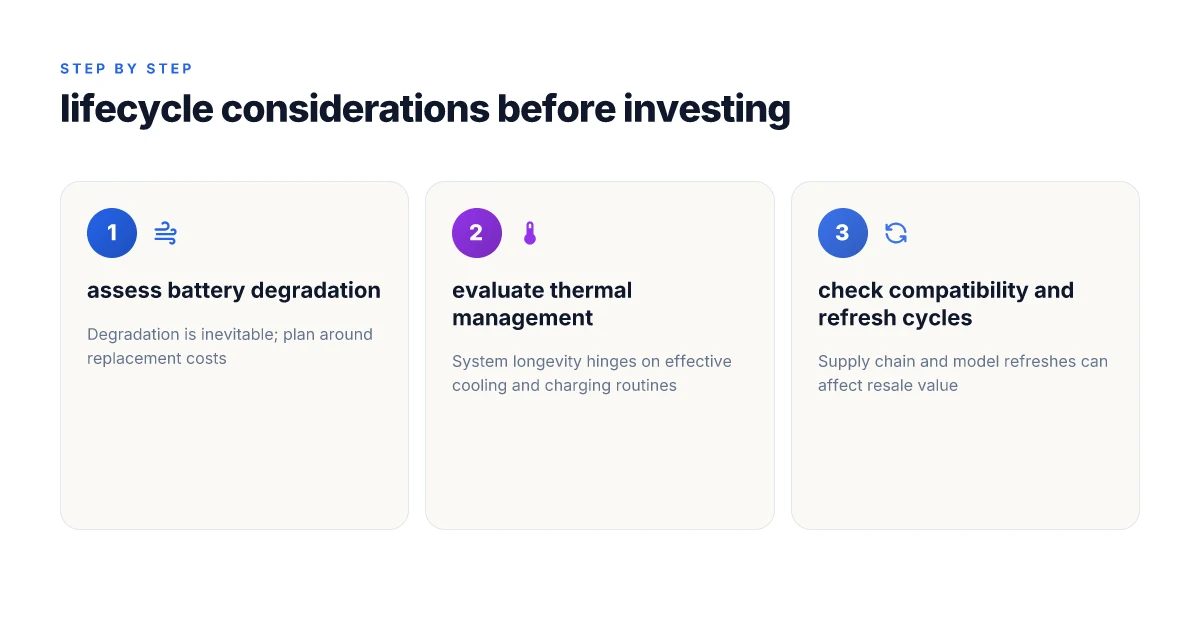
Durability and cost of ownership matter as much as capability. Battery degradation is inevitable, and planning around replacement costs is part of a sane long‑term plan. In real terms, expect time-based wear and a need to budget for eventual cell or pack refreshes. EcoFlow’s ecosystem compounds this reality because each module or accessory ties into the same charging logic and thermal pathways. When you map out a 5–10 year horizon, a replacement cycle becomes not a footnote but a core cost driver.
A strong thermal design and disciplined charging routines can stretch system longevity. I looked at the interface between thermal management and daily use. Systems that keep cells cooler during high‑demand events tend to slow degradation. That means away-from-home backups or off-grid setups benefit from airflow, venting, and avoiding prolonged, peak‑load peaking. If you routinely push the system with heavy discharge during summer heat or winter cold, you should plan for more frequent maintenance windows and cooler–driven charging strategies. The takeaway: choose configurations with clear cooling paths and sensible charging schedules, then stick to them.
Supply chain dynamics and model refresh cycles shape long‑term value. EcoFlow, like many energy storage brands, updates lines and trims features across iterations. That matters for compatibility with older modules and for resale value. If you buy into a now‑dated kit, you may find accessory compatibility or firmware updates later requiring extra steps or replacements. Rivals such as Solaredge and Bluetti run their own refresh cadences too, so your future‑proofing hinges on picking a platform with ongoing support and a documented upgrade path. I found that alignment between hardware revisions and firmware commitments tends to predict how smoothly the ecosystem ages. What ecoFlow vs Jackery get right, and where they fall short in 2026
In practice, you should account for three explicit issues before investing. First, the replacement cost curve for batteries and power components. Second, how well your chosen EcoFlow setup handles heat and charging routines in your climate. And third, the likelihood of smooth compatibility if you refresh or add new modules down the line. I cross‑referenced supplier notes and third‑party reviews to confirm these themes persist beyond a single release cycle. The bottom line is straightforward: EcoFlow can deliver durable, integrated backup power, but long‑term value depends on disciplined usage, proactive maintenance, and staying aware of refresh cycles across the ecosystem.
The lifecycle story hinges on a simple truth: plan for replacement costs, hard‑limits on thermal performance, and evolving hardware compatibility. Choose a model with clear upgrade paths and a cooling‑savvy design to protect your long‑term investment. Rivals like Solaredge and Bluetti frame the same questions differently, so compare refresh cadences and firmware commitments as part of your decision.
What to try next with EcoFlow, and where to watch for snags
EcoFlow delivers a coherent home energy system that earns a foothold with modular batteries and scalable inverter capacity. I’ve found that the real strength lies in how the units wire up for basic home loads and how the company supports installers with clear wiring diagrams and documented safety checks. That said, the system isn’t flawless. Heavy weekend use or long cloudy stretches can stress the battery cycle counts sooner than expected, and the app can still feel slow to refresh. The bigger pattern here is that scalability matters more than any single module. You’ll want to map your critical loads first and treat EcoFlow as a backbone for essential circuits, not a full home auto-pilot.
If you’re weighing EcoFlow against rivals, expect Portability and ease of setup to be advantages over pricier, more embedded solutions from rivals like Tesla or LG Chem. The trade-off shows up in long-term durability and service depth, especially in remote outages. One move: draft a phased plan that starts with a 1-2 room upgrade and scales up. This helps you validate performance before committing to a larger installation.
Backup strategy What is EcoFlow 20Delta 203 and why it matters for portable power in 2026
- Start with essential circuits only and pair a small EcoFlow battery bank for weekend outages.
- Schedule a quarterly app check to ensure firmware stays in sync with the inverter.
- Compare current usage against a rival system’s claimed runtimes for a realistic expectation.