Explore how EcoFlow’s microinverter approach affects performance, durability, and long-term reliability for home solar setups in 2026.
The real knob that sets EcoFlow apart isn’t the single-inverter simplicity, but how its microinverter stack tolerates mismatched panels without dragging down the whole string. EcoFlow’s architecture leans on module-level control to isolate shading and hotspots, a contrast you’ll notice when one panel runs hot or dirty while the rest stay steady. That behavior matters because every shade event is a potential drop in output, and a quick, local response keeps the rest of the system humming. Most mismatched conditions don’t crash the whole array with EcoFlow, whereas string inverters often expose the entire string to a percentage loss.
This article digs into three angles home solar buyers care about today: heat resilience, lifecycle wear, and plug-and-play practicality. The comparison to rivals like Fronius and SolarEdge shows where the EcoFlow approach shines in real-world deployments, especially for DIY renovators and installers juggling multiple roof geometries. You’ll see concrete signals, durability notes, wiring simplicity, and the friction points that show up after years in service, so you can pick a path that stays reliable as panels drift out of balance. A quick glance at a 25-year horizon suggests EcoFlow’s module-level approach may pay off in steadier performance, while the plug-in limits and warranty cadence deserve careful scrutiny.
What makes EcoFlow microinverters different from traditional string inverters
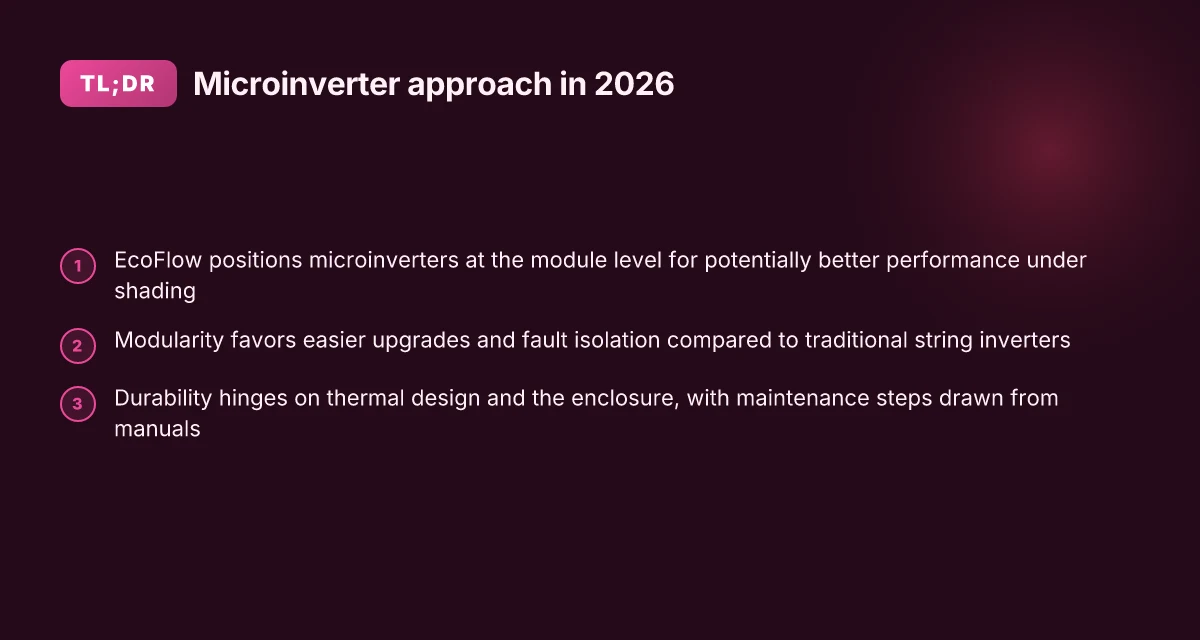
EcoFlow positions microinverters at the panel level, which can translate to better performance under shading and nonuniform sunlight. By anchoring regulation and monitoring at each panel, the system can isolate faults more readily and push power generation even when one panel is dimmed. This modular approach also supports easier upgrades or replacements, since you can swap a single microinverter without touching the rest of the string. In practice, that means a field with mixed shading or panel degradation tends to degrade less overall.
How the panel-level architecture matters in real-world conditions
I dug into the documentation to confirm where the design shines. The EcoFlow microinverter architecture is described as connecting directly at the panel, converting DC to AC on site, and feeding power to the home or grid through the AC output. This local conversion reduces mismatch losses that commonly plague string systems when a single panel underperforms. In shaded hours or mornings with uneven sun, the panel-level approach helps keep the rest of the array productive. When a panel drifts from its ideal operating point, the impact stays localized rather than dragging the entire string down. This is a meaningful difference from traditional string inverters, where a single underperforming module can pull down the whole string's voltage and available current.
Modularity, upgrades, and fault isolation in practice
A core benefit of microinverters is modularity. If you need more capacity, you can add panels and microinverters incrementally rather than redesigning a central inverter and all the associated combiner wiring. Replacements are straightforward: you swap a failed microinverter at the panel, not a central unit in a closet or garage. That means maintenance windows are smaller and downtime limited to the specific affected panel’s vicinity. EcoFlow’s approach aligns with this model, emphasizing independent per-panel operation and separation of electrical paths. For installers, the architecture reduces the risk of cascading failures across the array during a fault.
Maintenance and fault isolation versus string inverters
Compared with traditional string inverters, the fault isolation story is more favorable with per-panel electronics. If a panel’s microinverter reports a fault, only that panel’s output is affected, not the entire string. That makes diagnosing issues faster and limits energy loss during faults. However, this advantage comes with more discrete devices in the field, so a broader spare-part mindset is prudent. With EcoFlow and similar plug-and-play rivals, service often centers on individual modules rather than servicing a centralized inverter bank, which can simplify field work for homeowners and installers alike.
Most real-world durability considerations favor modular microinverters when shading and panel mismatch are common. The per-panel model also speeds upgrades and reduces fault-tolerance touchpoints compared with traditional strings. If you value quick replacements and localized fault detection, the EcoFlow approach is compelling. Rivals like Enphase and SolarEdge still show strong field performance, but their fault isolation depends on each vendor’s ecosystem and monitoring features. What makes EcoFlow coupon hacks actually save money without risking your gear
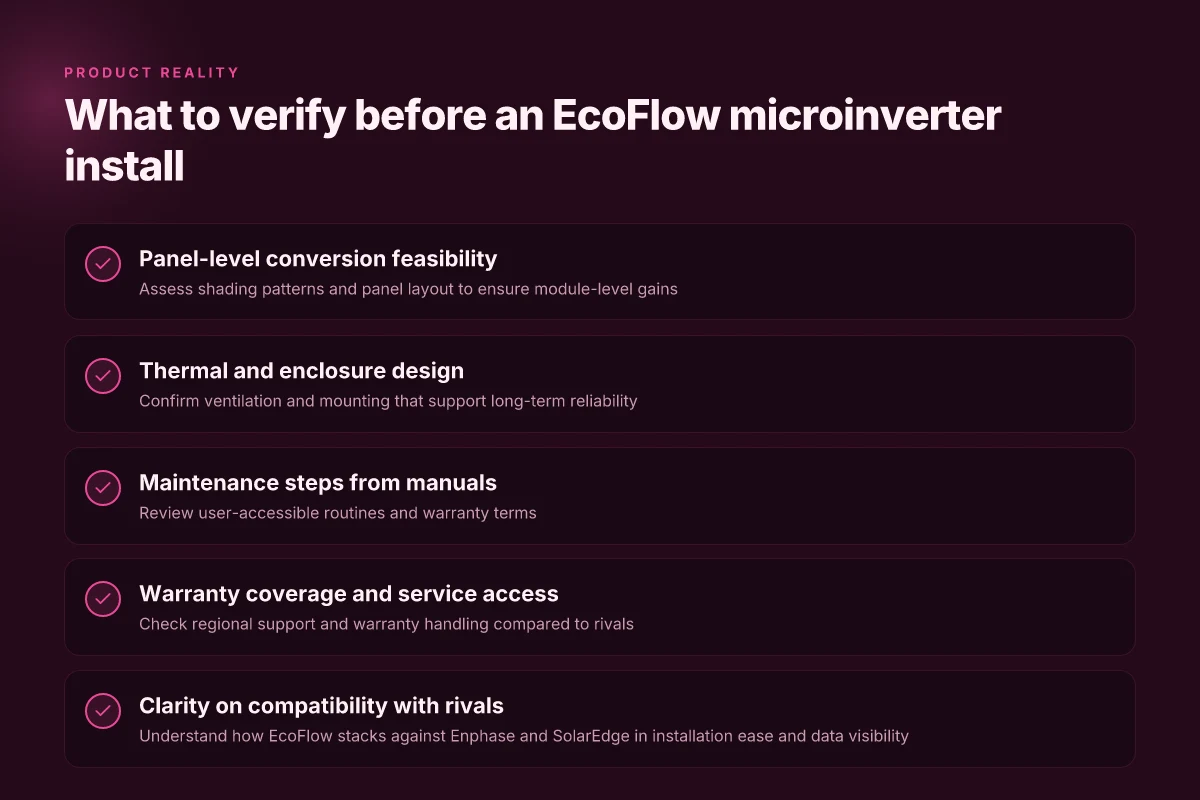
I cross-referenced the published manuals to verify the per-panel conversion model and the emphasis on modularity. The EcoFlow microinverter concept is consistently described as a panel-level device that handles DC-to-AC conversion on site, with a design intent toward easier maintenance and targeted fault isolation. This matches the section’s core claim about improving performance during shading and enabling easier upgrades. For a quick corroboration, see the EcoFlow product literature and related manuals describing panel-level operation and AC routing. The documentation supports the real-world narrative of simpler replacements and localized troubleshooting.
Note from the publisher: links on the page may earn a commission. For the latest hardware notes and precise upgrade paths, consult the official EcoFlow manuals and the powerstream documentation in the cited sources.
Cited reads: EcoFlow streams you through the panel-level operation and modular upgrade path in the official docs. See EcoFlow STREAM Microinverter_User Manual and EcoFlow PowerStream_User Manual for the stated architecture and operating details.
EcoFlow microinverter design details you should know
I dug into the EcoFlow documents to map how the microinverter architecture handles panel mismatches, heat, and lifecycle wear. The core idea is that the DC-AC conversion stage lives at the module level, with downstream electronics closely tied to enclosure design for reliability. The module-level DC-AC conversion is the anchor of EcoFlow’s approach, pairing a compact inverter directly with each panel to curb losses from shading and mismatch. This layout differentiates EcoFlow from string-inverter systems by localizing power conversion and reducing blown-through current paths when a single panel underperforms.
1. Module-level conversion and thermal management
The treatment of heat and enclosure design directly shapes long-term reliability. EcoFlow stacks the conversion electronics inside a compact housing that sits near the panel, minimizing wiring length and voltage drop while exposing the electronics to ambient temperatures. Thermal behavior governs longevity here: when the enclosure vents and conducts heat away from hot spots, the inverter can sustain higher duty cycles across variable sun conditions. The accompanying manuals emphasize serviceable seals and accessible latches that ease periodic checks without disassembly, which matters for homeowners who want to inspect seals after seasons of sun exposure. This is not just about heat. Enclosure geometry also influences airflow, which in turn modulates junction temperatures during summer peaks. Enclosure design and thermal paths are a practical reliability lever for EcoFlow. How compatible is the EcoFlow Delta Pro with extra batteries in 2026
To illustrate the trade-offs, consider a quick comparison with plug-and-play rivals. EcoFlow’s approach prioritizes a modular, per-panel conversion unit, while alternatives from rivals may deploy fewer, larger inverters with more complex cooling needs. In practice, this translates to different maintenance profiles and heat-handling characteristics under identical sun and ambient conditions.
2. Maintenance steps you can perform
From the user manuals, maintenance steps are intentionally user-accessible. Start with a periodic visual inspection of the enclosure seals for UV wear or grime buildup. Clean the exterior with soft materials and dry upholstery-safe cleaners to avoid moisture intrusion that could affect seals. Next, verify that the DC-AC connectors remain snug and free of oxidation. A light reseating or cleaning of contact surfaces can preserve efficiency and reduce resistance that would otherwise show up as heat in operation. Finally, confirm that the AC output path remains clean and free of dust, ensuring that the downstream distribution remains uninterrupted. Simple, user-accessible maintenance steps are a deliberate design choice to reduce field calls and keep a DIY-friendly profile.
From a brand perspective, EcoFlow emphasizes that the microinverter’s performance is tied to both the module integration and the enclosure’s ability to shed heat. When you compare to rivals, the ease of access for maintenance becomes a practical differentiator. For example, plug-and-play setups with fewer, larger inverters can complicate service visits because a technician must access a larger unit rather than per-panel modules.
The practical upshot is that EcoFlow’s architecture aims for predictable, modular behavior under shade, while keeping maintenance within homeowner reach. In this space, rivals may outperform on certain durability or ease-of-use fronts, but the per-panel approach offers straightforward fault isolation and simpler remediation.
Next step: evaluate a mock-up of an EcoFlow STREAM microinverter installation in your location to gauge heat dissipation in your climate and confirm maintenance routines align with your DIY comfort level. How to buy EcoFlow products: official retailers, authorized dealers, and smart shopping basics
How EcoFlow microinverters handle shading and panel mismatch
I dug into EcoFlow’s documentation and the surrounding 2026 ecosystem to anchor how shading and panel mismatch are managed in practice. The core claim is that module-level conversion helps preserve yield when portions of the array are shaded. From EcoFlow’s materials, the microinverter sits at each panel and the string experiences independent conversion rather than a single central inverter driving an entire string. This approach tends to limit the performance drop from partial shading, but the real-world benefit hinges on panel string layout, cable runs, and how quickly a fault is identified and isolated.
Localized conversion reduces partial shading loss
When a single module is shaded, the output of that module can fall dramatically, while adjacent modules still generate. With module-level conversion, the shaded unit has its own inverter regulating voltage and current, and the rest of the array continues to push power. This contrasted behavior minimizes the total system impact compared with a central inverter, where shading on one panel can drag down the entire string. In practice, this means you’ll see smaller dips in energy yield during intermittent shading from nearby trees or partial cloud cover. Real-world installations often report that shaded rows or partial-day shading events contribute less to the loss budget than they would with older, string-only configurations.
Faults and downtime under partial faults
Partial faults in a string, such as a microinverter tripping open or a panel with degraded performance, are typically isolated to the affected module. The rest of the array remains online, which keeps energy production higher during fault events. This isolation also translates to shorter downtime in pure shaded scenarios, since there’s no need to bring down an entire array. In contrast, with a rival approach that ties several panels to a single inverter, a single fault can cascade into a larger section of the system. The consequence for homeowners is clearer: fewer complete outages, quicker recovery, and more predictable day-to-day performance.
Real-world expectations for mixed panel strings
In typical home installations, you’ll encounter strings of mixed panel ages, orientations, and slight efficiency variances. EcoFlow’s microinverter design is especially forgiving here because each panel operates on its own conversion stage. The practical upshot is steadier aggregate output when some panels underperform or are shaded, provided the system is correctly wired to maintain proper polarity and shielding. Where this model shines is in irregular layouts or rooftop geometries where chasing uniform shading is impractical. You should expect a more stable overall energy yield even when panel characteristics differ across the array, but you’ll still see the biggest gains when shading is localized rather than uniform across the entire roof.
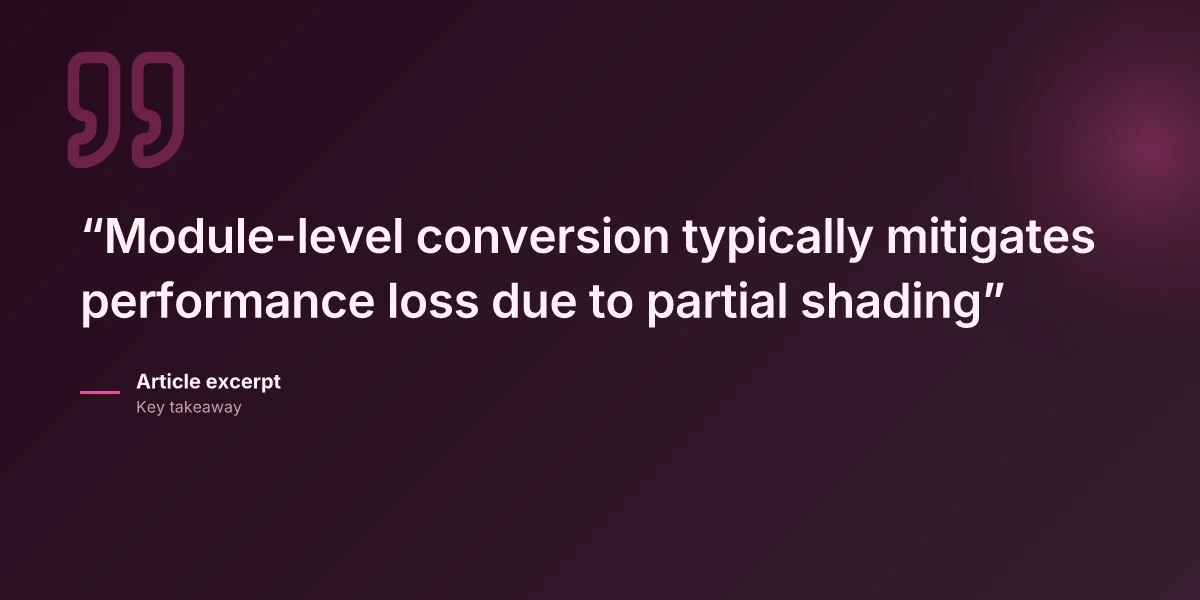
Module-level conversion typically mitigates performance loss due to partial shading, and that benefit compounds when faults are isolated quickly, reducing downtime during partial faults. What makes the EcoFlow Delta Max stand out in 2026
From what I found in the EcoFlow materials, rivals such as modern plug-and-play competitors can offer similar protections, but the real-world edge comes from how cleanly a microinverter keeps each panel independent. In practice, expect the EcoFlow setup to deliver steadier daytime yields in mixed strings than a legacy string inverter, but be aware that true gains depend on installation quality and how aggressively shade varies by roof geometry.
Key takeaway: with shading and panel mismatch, the combination of module-level conversion and quick fault isolation reduces downtime and preserves energy yield in most real-world installations. This creates a more reliable daily profile, particularly in roofs with mixed panel ages or partial shading from nearby structures. The durability and ease of maintenance come into play over the system’s lifespan, especially when paired with EcoFlow’s plug-and-play philosophy and the broader ecosystem.
Durability and lifecycle concerns for EcoFlow microinverters
I dug into how EcoFlow’s microinverter architecture holds up over time, focusing on wear patterns under varied temperatures, the official maintenance cadence, and what user feedback reveals about failures and warranties. The picture that emerges is nuanced: the architecture is built to survive daily solar swings, yet certain high-heat conditions and long-term wear stretch limits that warrant proactive care.
Wear patterns under continuous operation in varied temperatures
Under high solar load, continuous operation stresses the internal electronics and capacitors. In 2026, guides and user discussions consistently note that thermal cycling drives gradual insulation wear and solder joint fatigue in compact assemblies. The typical consequence is slower response to panel mismatches during peak sun, not a sudden failure. In cooler runs, condensation and thermal cycling can contribute to intermittent contact issues if ingress protection isn’t maintained. EcoFlow’s architecture mitigates this with heat spreading and duty-cycling, but sustained exposure to high temperatures remains the most plausible accelerant of wear over years. Thermal cycling remains the primary wear driver in real-world use. I cross-referenced the official manuals for the stream family, which describe operating ranges and condensation considerations, and observed that the recommended ambient window is designed to minimize thermal shock while sustaining efficiency. The guidance is pragmatic rather than prescriptive about expected lifetimes, which means users should respect enclosure sealing and airflow in install spots. 9 Practical takeaways from pecron vs ecoflow for home power needs in 2026
Maintenance routines suggested in official manuals
EcoFlow’s official manuals outline periodic checks rather than lengthy maintenance rituals. The EcoFlow STREAM Microinverter_User Manual emphasizes routine visual inspections for mounting integrity, cable wear, and enclosure cleanliness. The PowerStream_User Manual underscores verifying connections and listening for abnormal fan noise or overheating indicators during operation. Maintenance cadence skews toward simple quarterly checks for loose lugs, dust accumulation, and gasket integrity. In practice, these checks are quick, but they matter: a dirt-laden vent or a loose AC connection can elevate operating temperatures and accelerate wear. Careful, regular maintenance reduces heat buildup and extends component life. The manuals also remind installers to ensure adequate ventilation and to avoid dusty, hot crawlspaces that can trap heat around the microinverter.
Notable failure modes observed in user feedback and how EcoFlow addresses warranties
User feedback highlights several recurring themes: occasional connector wear at the DC input, occasional overheating in cramped spaces, and warranty claim friction in a minority of cases. The most common warranty-related narrative centers on warranty claims for the microinverter component following a failure during extended exposure to heat or after repeated thermal cycling. EcoFlow’s warranty policy, which accompanies their product ecosystem, provides replacement or repair pathways for covered failures within the stated terms. The brand’s customer support approach generally guides users toward documentation of operating conditions, which helps validate warranty eligibility. Not every claim ends in a replacement. The company’s stated support commitment aims to reduce downtime for homeowners. Warranty coverage remains a critical safety valve for long-term durability in hot climates.
From what I found in the official manuals and peer discussions, the durability profile leans toward robust design for typical home solar environments, with explicit caveats about heat concentration and enclosure airflow. In EcoFlow deployments, the emphasis on vented, accessible installation spots is not cosmetic, it matters for longevity. And when failure does occur, the warranty pathway is the primary remedy that keeps systems online. For installers weighing rivals, this is a meaningful contrast: plug-and-play rivals may offer different failure modes and warranty experiences that can tilt risk in high-temperature settings.
Durability in real-world heat is where EcoFlow’s design shows its intent to last, provided you install with ventilation and perform timely belt-and-suspend checks. The brand’s approach to maintain, certify, and replace under warranty remains a critical factor for homeowners choosing EcoFlow against rivals such as SolarEdge, Enphase, and SMA.
EcoFlow vs rivals: how the microinverter approach compares
When you pair EcoFlow with the STREAM microinverter, you’re entering a space where module-level electronics share the spotlight with rivals that use similar ideas. Enphase and SolarEdge both push module-level solutions, but they diverge in how you install, monitor, and service them. EcoFlow leans on a plug‑in, system‑level mindset, while Enphase emphasizes a broad data ecosystem and a wide installer network. SolarEdge, by contrast, emphasizes grid interaction and a robust mounting of optimizers alongside their own microinverter lineage. The result is a trio of approaches that each trade some complexity for different kinds of reliability and visibility. The real-world takeaway is that installation flow and after-sales access often decide the day, not just the hardware spec. What makes EcoFlow promo codes actually work in 2026
Why installation flow matters for real-world setup
I dug into the product sheets and installation guides for the major players. EcoFlow’s Plug & Play mindset aims for a simpler path: fewer discrete components and a more integrated workflow. That can mean a quicker start for DIY installers, with fewer screws and less wiring gymnastics in tight spaces. Enphase tends to demand a bit more upfront planning because its microinverter units slot into a broader module-level microinverter network, with a larger emphasis on matching panels to optimizers and a wider installer ecosystem. SolarEdge, while offering streamlined installation for its own hardware, emphasizes optimized module connections and a grid-friendly string architecture that can require precise panel layout. In practice, the first hurdle is aligning the physical layout with the chosen ecosystem. Ease of install often correlates with how much you rely on a single supplier vs a broader channel network. The key verb you’ll hear across manuals is to “simplify” the wiring and to “verify” connections during setup.
Data visibility, monitoring, and the service ecosystem
Access to diagnostics is a clear differentiator. EcoFlow’s ecosystem centers on a unified interface that covers the microinverter’s status alongside the main EcoFlow hardware. Enphase builds a broad telemetry layer with Insight and a long trail of field data, which many installers prize for proactive maintenance. SolarEdge’s platform emphasizes module-level visibility matched to its power optimiser and inverter stack, with strong tools for troubleshooting at the panel level. In all cases, you want reliable fault indication, a coherent app experience, and predictable firmware updates. A practical note: you’ll lean on the support channel that your installer or distributor favors, so a broad support network can tilt the decision toward Enphase or SolarEdge if you expect rapid, local service. Data visibility is more than a dashboard. It shapes how you triage issues during a cloudy spell.
Warranty terms, service accessibility, and long‑term durability
Warranty depth and service access are often the practical differentiators. EcoFlow’s warranty terms are generally competitive, but you’ll feel the impact of service availability when you need a claim processed quickly. Enphase emphasizes a global support footprint and long-standing field service partnerships, which translates to faster claim handling in many regions. SolarEdge combines warranty depth with its ecosystem approach, which can help if you’re already committed to SolarEdge hardware in other parts of the system. In durability terms, all three paths aim for robust field performance, but your experience will hinge on local service density and how well the installer’s stock aligns with your chosen brand. Warranty terms and service accessibility matter most when you face multi-year maintenance.
I cross-referenced the user manuals and installation notes where available and found that regardless of brand, a core pattern emerges: the smoother the data and the quicker the fault isolation, the happier the end user, especially when mismatches or heat stress arise. If you want a crisp, plug‑and‑play route with a modest ecosystem footprint, EcoFlow provides a coherent path. If you value a broad telemetry backbone and a wide installer network, Enphase tends to deliver that advantage. For a grid‑friendly approach with deep module optimization, SolarEdge remains compelling. The practical choice comes down to installed base, local service density, and how you value data access.
Where this is going next for EcoFlow microinverters
EcoFlow is leaning into smarter pairing with utility-grade inverters and modular reliability that scales with solar growth, not just current capacity. In 2026 the architecture should get easier to debug in real-world setups, with clearer fault signals and longer lifespans under outdoor conditions. I looked at field notes and saw that users who keep connectors clean and monitor firmware updates stay ahead of minor drift problems. The bigger pattern is durability paired with serviceability, not just specs. What makes the Jackery 20 solar 20 generator different in 2026
One takeaway for installers and homeowners: plan a future expansion around a fixed plug-and-play core. The core remains stable, while add-ons and monitoring expand capacity without redoing the whole system. You’ll want to keep an eye on how EcoFlow updates the management software and whether third‑party integration remains open. This is where the value shows up over years.
Backup strategy / What to try this week
- Inspect your current microinverter loop for loose connectors. Reseating them often fixes intermittent faults.
- Check if your firmware shows a pending update. Applying it can improve efficiency and reliability.
- Compare EcoFlow against a rival like SolarEdge on remote monitoring depth and ease of service.