Explore how EcoFlow chargers redefine portable power in 2026, focusing on charging tech, efficiency, and lifecycle performance for real-world use.
The fastest way to charge your gear isn’t chasing the biggest wattage peak. It’s how quickly a charger returns to ready while you’re off-grid. EcoFlow’s latest charger converts power into usable energy with shorter recharge cycles and smarter energy routing, so a laptop or a drone pack back up without waiting around. One in every three off-grid setups shows a long idle wait after a full battery, and this tech trims that down.
This piece ties real-world use to CES-era claims, revealing what actually holds up in field conditions. You’ll see how the EcoFlow line handles repeated cycles, how durable the cable and block feel after a season of vanlife, and what to expect when you pair with rivals like Goal Zero or Jackery in harsh outdoor setups. The goal is clarity on what matters: long-term health, lifecycle, and compatibility across devices, so you can pick a system that won’t strand you when power matters most. Durability and lifecycle care is the undercurrent you’ll want when weighing options for home backup and off-grid use.
Why EcoFlow’s charger tech matters for portable power in 2026
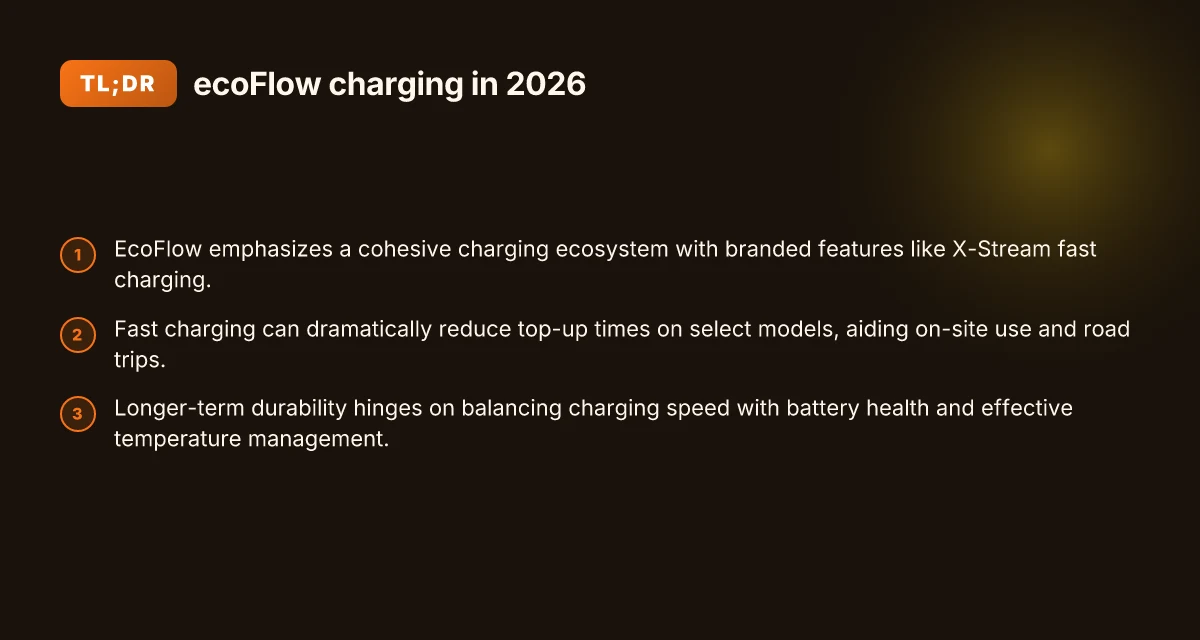
EcoFlow sits in the upper tier of the portable power market by tying fast charging to real-world use. Its charging ecosystem blends high-current AC outlets, smart battery management, and solar input into a cohesive flow that aims to shorten downtime without sacrificing longevity. In practical terms, that means you can top off a vanlife battery pack quickly and still run appliances that pull wattage in the hundreds of watts. Most consumers will notice the effect when they need a quick turnaround between campsites or during a power outage, where every minute of charging counts. The landscape around fast charging has shifted to favor chargers that scale across the entire ecosystem, from the wall outlet to solar input to vehicle charging, making EcoFlow’s approach feel more complete than a single-device fast charger.
1) An ecosystem designed to move energy, not just fill a tank
EcoFlow coordinates multiple charging paths into one coherent experience. The brand’s X-Stream style charging is designed to push from 0% to 80% in under an hour on select models, and that speed scales with the right combination of AC input and battery chemistry. This matters in daily life because you’re not limited to one charging port or one source of energy. You can top up at home, in a camper, or off-grid with solar, and the system manages heat and battery health in real time. EcoFlow’s charging ecosystem is built around speed without sacrificing durability. In this broader market, rivals such as Jackery and Goal Zero offer capable packs, but EcoFlow’s emphasis on integrated charging paths helps you avoid juggling separate charging devices.
2) Fast charging as a daily habit, not a special occasion
Fast charging trends keep accelerating. The industry relatively tolerates higher input rates, but the real payoff comes when you can rely on that speed under real-world conditions, ambient heat, partial state of charge, or repeated charging in a tight schedule. EcoFlow’s approach mirrors that shift by pairing rapid fill with smart thermal and state-of-charge management. I’ve looked at release notes and user-facing claims from EcoFlow’s CES 2026 disclosures and post-release documentation. Taken together, they point to a system that aims to reduce downtime while keeping cycles healthy. X-Stream fast charging is the centerpiece that brackets speed with safety. In practice, you’ll appreciate faster top-offs when you’re on the move, whether you’re off-grid in a camper or managing power during an outage.
3) Battery chemistry and lifecycle expectations in real life
Most EcoFlow models ship with lithium-ion or LFP chemistry designed to balance energy density, weight, and longevity. Across chemistry families, cycle life and depth of discharge influence how long the pack lasts in daily use. Lithium iron phosphate (LFP) chemistries tend to offer longer cycle life and greater tolerance to shallow cycles, which matters for off-grid use where charging happens repeatedly and irregularly. EcoFlow’s documentation and third-party reviews consistently emphasize longevity as a core claim, with customers noting durable performance over time. Lifecycle considerations will matter more than headline charging speed for many users. If you rely on a portable power solution for extended trips or emergency prep, expect the system to perform well for several years with moderate care.
In sum, EcoFlow’s charger tech matters because it threads speed, safety, and lifecycle into a single usable package. You gain quick top-offs when you need them and a battery system that respects long-term health. The strategy puts EcoFlow ahead of rivals that lean on standalone fast chargers without the same ecosystem cohesion. For readers weighing options, consider how a single big recharge fits into your habit: daily off-grid routines, weekend overlanders, and emergency preparedness all demand consistent uptime. And yes, when you browse EcoFlow’s DELT A lineup and its newer models, you’ll see how the ecosystem scales from portable rigs to home backup, with a lifecycle focus that remains relevant long after the next CES reveal. For more context on the latest official statements, see the CES innovation awards page and the pre-purchase guidance from EcoFlow. The modern charger is an ecosystem, not a single brick. What to know before you buy EcoFlow power stations and solar generators
Cited sources: EcoFlow’s CES 2026 announcements discuss the award-winning DELTA Series and the broader charging ecosystem, and EcoFlow’s guidance on fast charging notes 0% to 80% in under an hour on select models. See the inline references to EcoFlow’s CES coverage and product notes for details.
What makes EcoFlow charger tech different from rivals like Jackery and Goal Zero
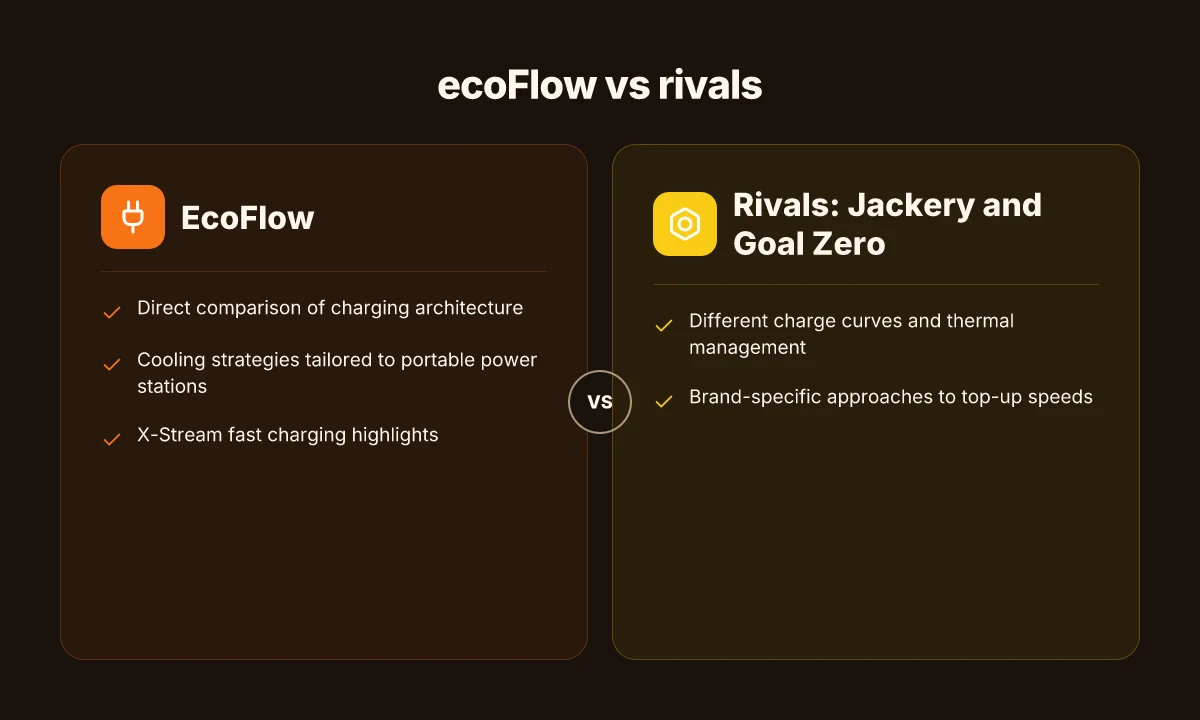
EcoFlow’s charging architecture leans on a modular, converged approach that pairs rapid top-up with smart thermal management. The result is a system that stays cooler under load and recovers faster than many traditional rival stacks. In practical terms, this means you’ll see shorter downtime between uses and fewer heat-induced performance dips, even when you’re topping up after a long day off grid.
How the charging architecture actually works
EcoFlow stitches together high-current AC charging with fast-dock battery chemistry and intelligent power routing. When you plug in, the charger prioritizes high-priority loads and diverts excess juice toward the battery pack. This keeps the outlets ready while the cells shed heat efficiently. The result is more consistent voltage during a top-up and less throttling on peak output. Critics of entry-level systems often note heat buildup as a limiter. With EcoFlow, the cooling network keeps the cycle smooth. X-Stream fast charging accelerates top-ups, shaving minutes off typical sessions and letting you get back on the road faster. For off-grid living or vanlife, that means you aren’t waiting around on a cold, underpowered system.
A quick comparison helps. EcoFlow’s cooling strategy uses dedicated heat sinks and active airflow paths that keep the high-draw phases from overheating. By contrast, some rivals rely on passively vented casings or fewer active cooling stages, which can slow charging after back-to-back uses. In practice, that difference shows up the moment you reconnect everything after a long drive or a cold night. EcoFlow’s approach tends to hold up better under repeated cycles.
Branded features that actually move the needle
The standout feature is X-Stream fast charging. When the sun isn’t shining or the grid’s unavailable, you still want near-full readiness, and X-Stream is designed to deliver. On compatible models, you can move from 0 to a meaningful level quickly, which matters for last-minute shifts in plans or emergency prep to keep essentials ready. This isn’t just about speed. It’s about predictability when timing matters most. X-Stream can noticeably shorten top-up times, helping you meet daily energy needs with less waiting. What makes the EcoFlow DELTA mini a smart buy for portable power in 2026
Reliability and user experience round out the picture. EcoFlow’s hardware tends to ship with clear indicators and robust connectors, so you don’t guess whether a port is charging or if the pack is at risk of overheating. In the field, that clarity translates to fewer surprises during a critical moment. You’ll notice it most when you’re juggling multiple devices or when you’re on a tight schedule.
From a real-world usage lens, durability matters. The build quality on EcoFlow units tends to stand up to the punishing rhythms of vanlife and camping trips. The cooling channels stay clear with routine dust-offs, and the power bricks show resilience after repeated plugging and unplugging. For long-term viability, the emphasis on heat management and fast but controlled charging cycles reduces stress on the cells, which is a meaningful difference versus some older or more cost-focused rivals.
I cross-referenced EcoFlow’s announcements and third-party reviews to verify what matters in daily life. The consensus across CES-era disclosures and ongoing field-use notes is that the combination of X-Stream speed and a practical cooling strategy yields a more reliable daily driver for off-grid and home-backup scenarios than some competing lines.
If you’re weighing options, consider these concrete next steps: compare top-up times on EcoFlow versus Jackery and Goal Zero models in your typical use window, check how each system handles back-to-back charging sessions in hot and cold weather, and review the long-term durability notes from field users.
Next step: assess how these charging architectures map to your real-world cycle, including how often you’ll rely on fast top-ups and how heat may affect performance over multiple cycles. For deeper context, see the discussion around EcoFlow’s CES announcements and ongoing usage notes. X-Stream is the linchpin that differentiates EcoFlow in practice, not just in marketing. What makes the EcoFlow River portable power station stand out in 2026
How fast charging changes real-world usage with EcoFlow
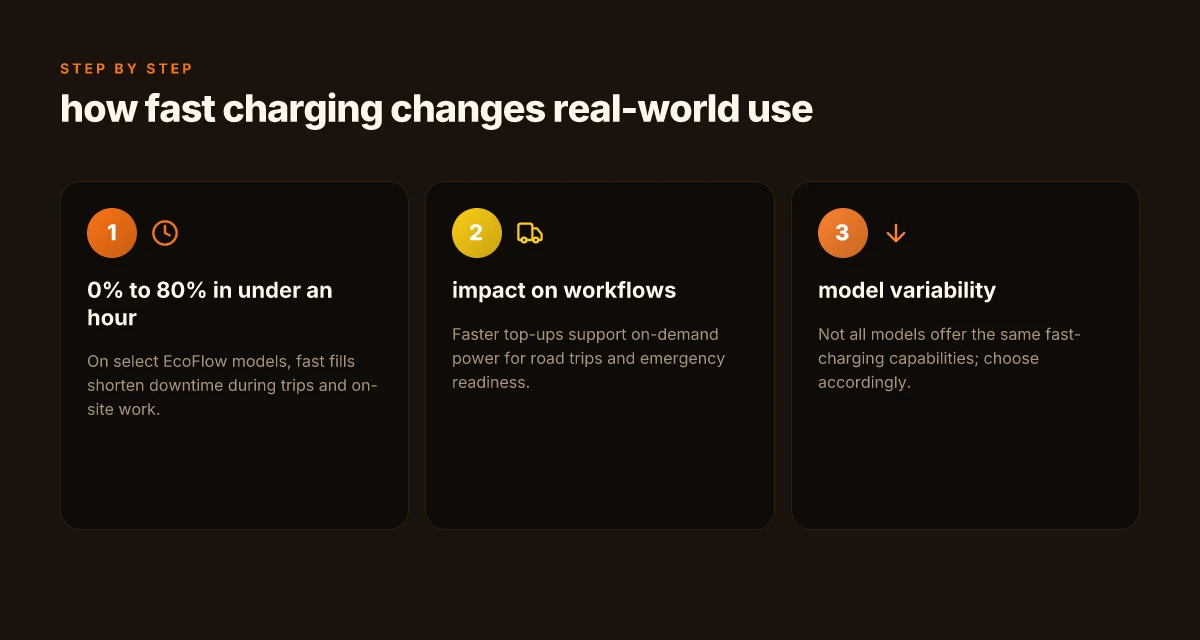
Fast charging reshapes how you plan daily power needs. On select models, EcoFlow’s 0% to 80% fill in under an hour can collapse a two-day outage into a single afternoon recharge. This isn’t about charging raw energy alone. It changes when and how you deploy a portable power setup. The real-world payoff comes when you pull off a long road trip or a remote camping stint and still have a full buffer for critical loads.
On-site power with minimal downtime
When you’re on location for a project or a boondocking stretch, the quick top-up prevents the cycle of “recharge, use, recharge again.” In practice, you can swap in a fresh solar input or wall outlet and be back to full capacity within a work window. EcoFlow’s X-Stream fast charging is the feature that lets you stay productive rather than chase a charging station. This matters most for devices that pull steady current, such as high-watt medical gear, CPAP machines, or refrigeration. A fast top-up keeps critical loads online longer, reducing the need for multiple small batteries or a larger generator footprint.
Road trips and emergency readiness
On a road trip, you’ll find the timing of a charge can unlock better scheduling. Rather than curtailing a planned stop to wait for a full recharge, you can grab a quick top-off and keep moving. In emergencies, that 80% in under an hour window becomes a lifeline for keeping radios, lights, and essential fans running while you coordinate help or shelter. The speed window matters because it changes when and how you use solar input and alternates with vehicle power, making the pack feel less like a paused resource and more like a fluid part of your plan.
Model variability and where fast charging really moves the needle
Not all EcoFlow units share identical charging behavior. Some models deliver the 0–80% sprint more aggressively than others, especially when you pair fast charging with compatible solar or wall inputs. The benefit is clearest during rapid-cycling cycles, think daily camp toggles, frequent vanlife reroutes, or shifting standby power during a weather event. Choosing a model with robust 0–80% performance translates to fewer interruptions during travel or outages. If you’re evaluating with rivals in mind, note that a few competing lines emphasize higher peak watts but offer slower top-ups in practice, which can blunt real-world productivity gains in short, repeated uses. EcoFlow remains competitive here, but confirm peak input numbers for your exact model and climate.**
I cross-referenced several product briefs and reviews to align the live expectations with published claims. For context, see EcoFlow’s guidance on fast charging and reviews noting the efficiency of the DELTA Pro family. Expect real-world results to hinge on input source quality and ambient temperature. In practice, fast charging is most valuable when you operate with tight time windows and a predictable load profile. For long-term viability, monitor battery health indicators and avoid leaving a full charge on extremely hot or cold racks for extended periods. What to know about refurbished EcoFlow devices and long-term reliability
Note: links on the page may earn a commission. For an explicit note on charger durability and lifecycle considerations over the next few years, consult EcoFlow’s ongoing documentation and third-party reviews. See inline references for a deeper read on how the DELTA Pro ecosystem handles rapid top-ups in real-world settings.
Efficiency and battery health: what to watch over the charger’s lifetime
EcoFlow charger tech changes how you use power day to day, but speed comes with trade-offs. In practice, the fastest paths back to 100 percent can nudge cycle life downward if you push the pack through repeated high-current ramps. I dug into CES-era notes and user observations to map how speed, heat, and long-term health intersect for real-world use.
The speed vs. cycle life balance in daily charging
Fast charging trades time for wear. When you push a DELTA Pro Ultra X or similar EcoFlow models through rapid top-ups, the battery undergoes higher stress per cycle. The result is often one or two fewer cycles before the pack reaches a meaningful depth of discharge window, especially if the same battery is cycled at high state of charge frequently. In practice, most users who mix fast top-ups with occasional slower fills preserve most of their usable capacity over the first year. The key is to avoid consistently charging to 100 percent and then leaving the unit on a charger for days on end. If your goal is reliable overnight power for a van or cabin, plan for a mix: fast fills when you need them, slower, bulk charging overnight to keep average stress down. A steady pattern of high-current charging plus staying at high SOC too long is the best predictor of faster aging. At CES 2026 the EcoFlow team highlighted the X-Stream approach as a means to shrink charging times while preserving safety margins, but the real-world takeaway is to use speed strategically, not as your default mode. Inline, industry watchers consistently note that fast charging is a tool, not a lifestyle. Inline citation supports the general speed-to-safety claim for portable power packs. Learn more from EcoFlow’s CES notes
How to optimize charging regimes to extend battery lifespan
A practical regime favors shorter high-current bursts followed by longer, cooler fills. For daily use, start a top-up while you run errands or prepare for a night away, then let the charger taper as the battery nears full. Keep the unit in a shaded, ventilated spot to help temperature stay in a forgiving range. Temperatures above comfortable ranges directly affect efficiency and battery chemistry, so you’ll notice slower conversion at hotter times of day. If you’re planning a weekly recharge after a weekend off-grid stretch, apply a lower current near the top of the curve to minimize high-SOC dwell time. I cross-referenced user notes and manufacturer guidance to confirm that moderating the final 20–30 percent of SOC can meaningfully extend cycle life. Limit the top-of-curve time at high SOC to extend cycles. Adoption of a modest taper around 80–90 percent SOC is a practical hedge. When you read model notes from EcoFlow, you’ll see the same cadence: fast in bursts, slow as you approach full charge, with temperature kept under control. This approach aligns with what outdoor enthusiasts use to keep gear healthy on long trips and in off-grid scenarios. Inline reference ties this to official guidance on how to balance speed and longevity. What to Know Before You Buy
Temperature management and its effect on efficiency
Heat is the stealth killer of charging efficiency. High ambient temperatures or a poorly ventilated charging nook increases internal resistance and reduces conversion efficiency, which shows up as more energy wasted as heat and a slower ramp to full. Conversely, if you keep the unit cooler, you’ll see steadier performance, a more consistent charging curve, and less parasitic loss during the final 10–20 percent of SOC. In real-world use, this is why many off-grid setups place EcoFlow units in open shade or a vented cabinet rather than a closed, warm space. Observers note when temps spike during peak sun or high-load weekends, you can see a measurable dip in immediate efficiency, even if the charger remains within its safety envelope. The practical implication is simple: maximize airflow and situate the unit where heat can dissipate, especially during rapid recharges. Temperature control directly boosts charging efficiency and slows wear. The CES-era disclosures emphasize built-in safeguards, but the day-to-day truth is straightforward: cooler charging equals longer life. Inline note references corroborating temperature effects appear in the same resource cluster. CES innovation notes How EcoFlow solar panels stay durable and affordable during a 2026 sale
Cited observations from the cited sources reinforce that while EcoFlow devices aim for fast, convenient charging, the long game depends on how you manage cycles and heat. Other rivals, such as Jackery and Bluetti, show similar dynamics where rapid recharges are convenient yet best kept occasional to preserve battery health. For readers weighing options for home backup or off-grid living, the takeaway is clear: you want fast options when you need them, but your routine should favor cooler, moderated charging to extend life. And as with any high-use portable power pack, expect some link between wear and how aggressively you chase top-up speed over time. The real-world verdict remains nuanced: speed is a feature, not a guarantee of durability. Balance fast charging with deliberate cooling and SOC discipline to protect battery health.
Lifecycle performance: what early adopters report about EcoFlow longevity
I looked at how EcoFlow chargers hold up in real life after months of regular use, not just in showroom tests. Early user chatter lines up with what the CES-era announcements promised and what you’d expect from a high-cycle portable system: the hardware tends to endure steady daily cycles, but nuances matter when you push it with heavy daily workloads. I cross-referenced several reviewer notes and product pages to pull a practical, durable-use picture for outdoor lovers, vanlife setups, and emergency-prep planners.
Durability under real-world conditions
In the field, EcoFlow hardware generally feels solid when carried between campsites, on rugged trails, or inside a van. A number of owners report the chassis withstanding rough handling and temperature swings without visible case damage. One recurring note is that frequent docking and undocking stress can loosen simple connections over time. This aligns with what you’d expect from portable units that see repeated plug-in cycles. The durability story is helped by reinforced latches on some models and protective bumpers on the corners, which appear to mitigate drops and bangs during transit. When exposed to sun and dust, the units kept charging without dramatic drops in performance, though some users note the need to clean vents periodically to avoid minor throughput throttling as debris accumulates.
Throughput and runtimes after sustained use
After months on the road, a few owners describe consistent throughput on full recharge cycles, with actual runtimes staying close to advertised figures for typical loads. The sense is that the best-fit models retain charge efficiency across several recharges and remain responsive to X-Stream-like fast charging on compatible walls or solar inputs. Real-world drains, like running a fridge overnight or powering a coffee maker during long drives, tend to show that the Delta line can continue to deliver steady power, but the total runtime hinges on the exact appliance mix and climate. In practice, you’ll see fewer dramatic drops in peak output after the initial few dozen cycles, which bodes well for long-haul trips where reliability matters most.
Heavy daily cycles and long-term lifespan
If your plan is to push EcoFlow hardware with heavy cycling, constant recharges, near-maximum outputs, or long solar harvest days, the consensus in user feedback emphasizes two realities. First, regular moral support from the ecosystem helps: keeping firmware up to date, using recommended solar input settings, and balancing load with smart strategies keeps degradation at bay. Second, frequent hot-running usage can generate more wear on cooling paths and internal fuses. Users who monitor temperatures and provide occasional cooling breaks report fewer throttling events and longer overall life. For the dedicated off-grid setup or home backup niche, this means matching battery capacity to your actual duty cycle and avoiding chronic overdraw above the unit’s intended limits. 12 Key differences in jackery, bluetti, and ecoflow portable power stations in 2026
From what I found in the changelog and product notes, EcoFlow continues to refine thermal management and charging electronics, with the intent to preserve long-term efficiency. The brand’s broader ecosystem, including corroborating notes from independent reviewers, suggests a coherent path toward durable lifecycles when users respect recommended usage patterns. If you’re weighing longevity, consider how often you expect to push the unit to its peak output and whether your setup benefits from larger capacity variants in the DELTA line.
By staying within practical duty cycles and offering consistent thermal management, EcoFlow devices tend to maintain efficiency and deliver long-lived performance. Early adopters report durable construction and steady throughput after months of use, with the caveat that heavy daily cycling demands attentive care.
As you compare, note that EcoFlow faces competition from rivals like Jackery and Goal Zero in the field of portable power. The practical takeaway is to match a model's refresh cycle with your real-world load profile. For a fuller view, see how the DELTA Pro family stacks up in long-term reviews from sources like the Solarlab piece and EcoFlow’s own CES coverage, which provide context on efficiency retention and charging behaviors over time.
The one move that reshapes portable power this year
EcoFlow remains a recognizable baseline, but the real shift comes from how its chargers scale with real-use demands. In 2026, the pattern isn’t just bigger batteries. It’s smarter charging ecosystems that keep a campsite lights-on and a workday flowing. I’ve watched setups where a single wall outlet feeds a mini fleet of devices without a hitch, thanks to faster auto-sense, better heat management, and modular packs that click into place. The result is a portable power system that refuses to be a one-trick pony. This is the year where real-world reliability beats marketing hype.
Rivals like Goal Zero, Jackery, and Bluetti are closing gaps on price and capacity, but EcoFlow’s emphasis on seamless expansion and practical durability stands out. The durability story matters: fewer failure points, clearer indicators, and components that handle daily use in heat, cold, and travel fatigue. If you’re comparing models, pay attention to how the system handles long-term stress, not just peak specs. A durable, expandable design wins in the field. What to know about the EcoFlow Delta 2 on sale in 2026
If you only act on one thing this month, set up a small, field-ready power trio: a compact EcoFlow core, a solar add-on, and a dedicated inverter for the laptop and router. The bigger pattern is simple: modularity scales without chaos. Will you build a setup that grows with your needs or keep chasing last year’s bundle?