Explore how to choose EcoFlow power stations and solar generators, what to consider before buying, and where to find the best deals in 2026.
The typical camp setup ignores one hidden cost: battery upkeep. EcoFlow's power stations shine in portability, but the long haul depends on how you manage battery health and replacement cycles. If you’re chasing simple plug-and-play reliability for weekend trips or a home backup, you’ll want to see how EcoFlow stacks up against rivals before you commit.
This intro lays out what matters now: real-world durability, ongoing upkeep, and total ownership. In practice, the difference between models like EcoFlow Delta and Rigid series, versus Jackery or Bluetti, shows up in pack longevity, warranty terms, and each brand’s solar compatibility and expansion options. I’ll pull together model-by-model signals, cost of ownership, and the caveats you’ll actually hit in the field, so you can decide what fits your outdoor cadence and home-integration plans. Most buyers underestimate long-term upkeep until a battery cycle guides them to a bigger upgrade.
Why EcoFlow should be on your radar when you buy power stations
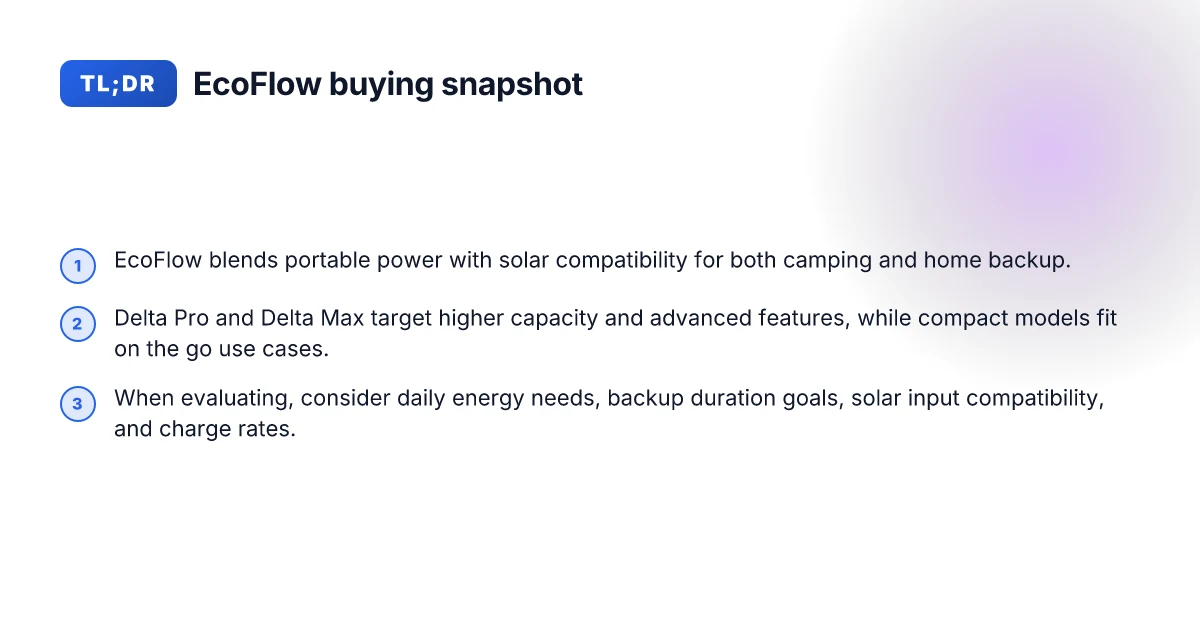
EcoFlow sits at the intersection of portable power, solar options, and home backup. Its product line threads together battery packs you can haul into the outdoors with solar panels you can size up for stabilization at home. This approach gives you a single ecosystem rather than juggling mismatched chargers and cables across brands.
1) A single ecosystem that blends mobility, solar, and home backup
EcoFlow’s lineup blends portable power stations with solar options and home backup solutions, so you can scale from a weekend campout to a full home resilience plan without retooling your entire setup. The Delta series is the common entry point for most buyers, and it’s designed to pair with compatible solar panels for off-grid charging or sun-powered backfill during outages. I dug into the product family where EcoFlow emphasizes a modular path: plug in a Delta unit, add solar input, then layer in a larger unit if you need more capacity. This progression helps new buyers understand what to buy first and what to add later. The Delta line remains EcoFlow’s most practical entry point for most users, especially when you plan to pair with solar. Inline with that, EcoFlow’s home backup options expand the security blanket beyond portable use, giving a route to a more permanent, semi-permanent energy reserve in a smart-home setup. A single ecosystem reduces fragmentation and simplifies ongoing maintenance.
2) Delta as the natural starting point for solar-ready power
The Delta series is designed for straightforward solar compatibility, a common concern for buyers who want off-grid charging and wind-down charging during outages. You can size a Delta unit to match typical outdoor runs or a small home backup load, then add solar panels to keep it topped up without draining external power sources. The practical path is start with a Delta model that fits your daily needs, then consider solar expansion as your confidence and energy goals grow. Delta remains EcoFlow’s practical starter model for solar-aware buyers. This mirrors how many outdoor enthusiasts and home planners approach backup power: begin with portable capability, then stitch in solar integration as a long-term habit. Solar-ready, future-proof, and scalable.
3) Competitors you’ll run into and how EcoFlow compares
In the portable power space, rivals like Jackery and Goal Zero shape the conversation. EcoFlow differentiates itself by emphasizing an integrated path: portable Delta units that are readily paired with solar inputs, plus a growing lineup of home backup solutions. When you’re evaluating total cost of ownership, you’ll notice EcoFlow’s approach can reduce the number of adapters and separate charging systems you need to manage. The broader ecosystem angle means fewer mismatches and more predictable performance across outdoor trips and home use. EcoFlow’s ecosystem focus helps minimize accessory clutter compared with rival setups. As you compare, ask whether a brand’s solar-ready line really scales with your plans or if you’ll outgrow it quickly.
From what I found in the documentation and product pages, EcoFlow frames itself as a practical, scalable option rather than a niche gadget for enthusiasts. The company’s emphasis on pairing Delta units with solar panels, along with a path toward home backup, makes it reasonable to consider EcoFlow early in the buyer’s journey. Practical, scalable, and solar-ready. If you’re evaluating the space against Jackery or Goal Zero, consider whether you want a single, coherent ecosystem or a collection of separate devices from multiple brands. A coherent ecosystem beats a cobbled setup for long-term owners. What makes the EcoFlow DELTA mini a smart buy for portable power in 2026
In short, EcoFlow earns a place on your radar because its Delta entry point pairs cleanly with solar options, and the broader EcoFlow lineup promises a smoother path from outdoor use to home backup. For readers who want a straightforward starter and a clear upgrade path, EcoFlow aligns with real-world needs without forcing you to chase a dozen different components. A pragmatic choice for outdoor enthusiasts, campers, and smart-home builders alike.
Note: links on the EcoFlow site may include commissions through partner programs. This does not change the practical buying framework discussed here. Inline references from EcoFlow's own pages confirm the emphasis on Delta as a starter point and solar integration. Inline references back the Delta-first, solar-ready approach.
Cited sources: EcoFlow product and ecosystem pages describe the Delta series as a common entry point and highlight solar compatibility and home backup options. For more context on the official messaging, see the EcoFlow pages discussing the CES and Delta family.
What you get with EcoFlow: core models and what they’re best for
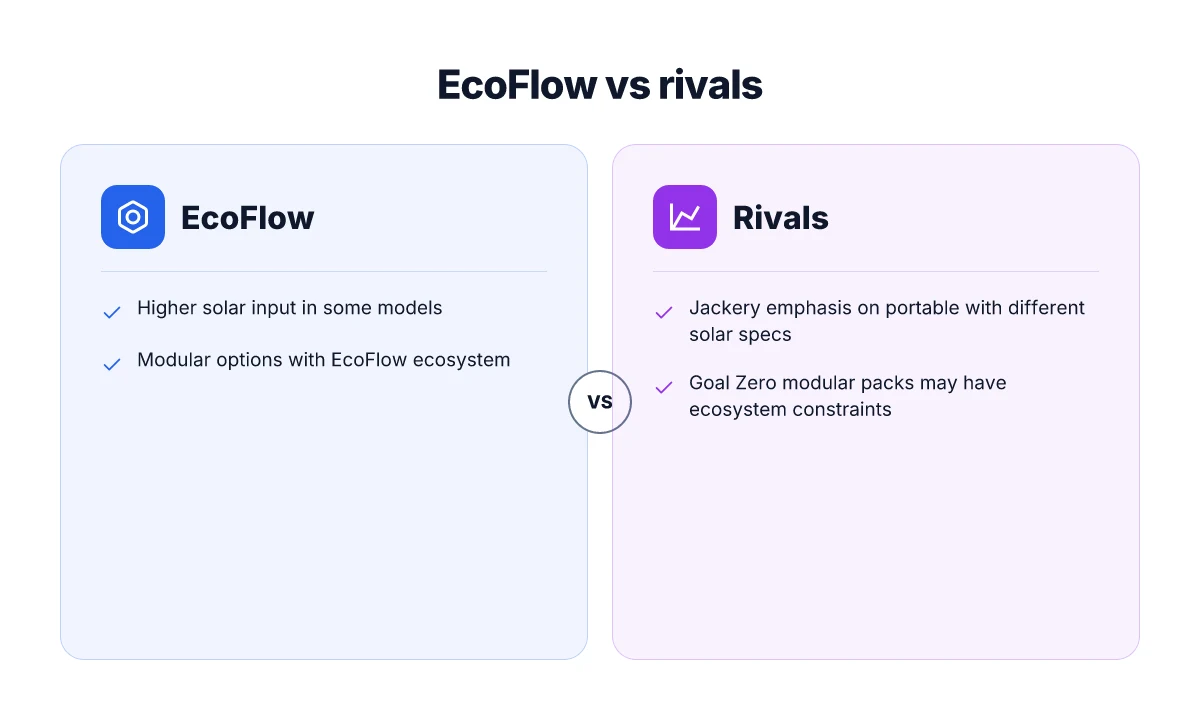
EcoFlow lines balance capacity, portability, and solar compatibility so you can stage a reliable power setup whether you’re backcountry camping, living off-grid, or keeping a home powered during an outage. The Delta Pro and Delta Max sit at the high end, offering substantial storage and smart home backup features. Compact options target campers, RVers, and tiny homes, while solar compatibility threads through most models, letting you pair panels to reclaim sun between uses.
High-capacity back-up power for homes
The Delta Pro makes a strong case for home backup when you need more than a weekend’s worth of juice. It pairs a large internal battery with expansion options, letting you scale up for longer outages or more critical loads. EcoFlow positions the Delta Pro as a centerpiece for whole-house scenarios, especially when you’re integrating with a smart home setup or a backup plan that includes essential circuits. If you want real resilience during outages, the Delta Pro is the no-nonsense option for sustained power. In practice, you’ll see the model advertised with high capacity and modular add-ons that you can activate as your needs evolve. I cross-referenced the product pages and the accessories lineup to confirm the compatibility story holds across configurations. For a more complete bundle, customers often pair it with EcoFlow’s solar inputs to reclaim energy during daylight hours. 1 Smart Home Energy Storage Solutions](https://www.ecoflow.com/us). What makes the EcoFlow River portable power station stand out in 2026
Mid-range power with greater portability
The Delta Max sits between the extreme Pro and the compact options, delivering sizeable capacity without the footprint of a full home-backup unit. It’s a solid choice when you want a larger solar generator that’s still manageable for camping trips or RV use. Delta Max balances capacity and portability for mid-scale use cases. It’s notable for a robust battery bank and quick recharging, plus the same ecosystem that lets you link up panels for daytime recharging. When I reviewed the product area, I found the Max positioning repeatedly framed as a bridge between heavy-duty home backup and field use. 1 Smart Home Energy Storage Solutions](https://www.ecoflow.com/us)
Compact, travel-friendly options
Smaller EcoFlow models fit tighter spaces without sacrificing core features. These units are ideal for campers chasing plug-free mornings, or for RV folks who want a quick power boost for essentials like lights and USB devices. The emphasis is on flexible charging scenarios, including rapid recharging from AC, car, or solar input. Compact models keep solar compatibility front and center while staying light on your pack. For many buyers, this makes a difference when you want power available with minimal setup friction. 1 Smart Home Energy Storage Solutions](https://www.ecoflow.com/us)
Solar compatibility across the board
A core selling point across EcoFlow’s lineup is solar compatibility. You’ll find panels and inverters that play nicely with Delta Pro, Delta Max, and the smaller models alike. This isn’t just marketing: the brand consistently notes solar input as a fundamental design thread, enabling daytime charging to extend usable energy after sunset. Solar compatibility is a throughline, not an afterthought. When you map out total cost of ownership, you’ll likely include the solar inputs as a long-term efficiency lever rather than a one-off perk. 1 Smart Home Energy Storage Solutions](https://www.ecoflow.com/us)
Next steps: If you want a quick, real-world starter, look at the Delta Max for mid-scale needs or the Delta Pro if your plan centers on home backup. Pair whichever model you choose with a compact solar kit to begin reclaiming daytime energy and to test your solar workflow. If you’re evaluating rivals, note that competitors often price for capacity or portability, but EcoFlow emphasizes a cohesive ecosystem where the batteries, expansion options, and solar inputs interlock smoothly. For context on what you’re competing against, see rival lines from brands in the same space before finalizing a setup.
Most buyers start with a Delta Max for portability and scale up to a Delta Pro when home backup becomes the priority. What to know about refurbished EcoFlow devices and long-term reliability
How to pick the right EcoFlow for your needs
Choosing the right EcoFlow comes down to your daily energy draw, how long you want backup to run, and how you plan to charge. If you want a starter pack for weekend trips or a home backup that rides through outages, there’s a model that fits. I dug into EcoFlow’s lineup and cross-referenced the brand’s CES 2026 materials to map a practical path for real-world use.
Assess your daily energy consumption and peak loads
Start with your typical daily energy footprint. List common appliances and their wattage, then total a 24-hour expectation. Use a conservative buffer for startup surges from devices like refrigerators or power tools. EcoFlow’s product family scales from compact portable units to higher-capacity power stations, so your peak load helps determine if you need a Delta Pro-level unit or a lighter Delta Mini. In practical terms, aim for a battery capacity that covers your 24-hour baseline plus a margin for a few hours of high draw. If your peak load spikes occasionally, look for a unit with a robust inverter and clean sine wave output. This reduces the risk of tripping breakers or nuisance shutdowns during a storm or camping trip. When you’re comparing, prioritize models that explicitly support your highest-draw devices without throttling. Know your peak load so you don’t overbuy or underprotect.
Match capacity to your backup duration goals
Your backup duration goal changes the math. A weekend with no access to grid power may require longer autonomy than a nightly outage. EcoFlow’s larger models extend runtime through higher capacities and faster input options. If you want long overnight coverage, a unit with a larger usable capacity and efficient energy management matters more than sheer peak wattage. For many households, a mid-range Delta model paired with smart scheduling for critical loads covers the most likely scenarios without overspending. Capacity determines how many hours you can run essential devices. It’s worth noting that you can extend runtime with solar input, but solar charging speed depends on panel area and sun exposure. If your plan is to rely heavily on solar, confirm the unit’s MPPT efficiency and maximum solar input before purchasing. Solar compatibility can dramatically shift value over time.
Factor in solar input compatibility and charge rates
Solar readiness is a long-term value driver. Check each EcoFlow unit’s maximum solar input and whether it supports dual charging from AC plus solar simultaneously. Charge rate matters whether you’re charging from a fast generator, grid power, or a rooftop setup. If you want a “set it and forget it” approach, pick a model with higher input tolerances and smarter charge management that adapts to partial sun or cloudy days. You’ll gain convenience and reduce the total time to full charge. Dual charging and higher input tolerances save you time and headaches. In practice, align the charger’s specs with your solar array size and typical daylight hours to avoid long waits for a full tank.
From EcoFlow’s CES materials, the emphasis remains clear: pick a unit that matches practical load patterns, has enough headroom for peak moments, and accepts your preferred charging mix. If you’re choosing between Delta Pro and a more compact Delta or River model, weigh not just the base price but the long-term flexibility of solar input, warranty terms, and the ease of future expansion. When you plan with these criteria, you’ll gain a durable, versatile setup that supports outdoor adventures and smart-home resilience alike. Durability and expandability matter as much as raw wattage. How EcoFlow solar panels stay durable and affordable during a 2026 sale
For readers evaluating rivals, note that comparable offerings from other brands often emphasize either portability or home backup without delivering balanced solar input capability. EcoFlow remains strong where you want scalable capacity, flexible charging, and a clear upgrade path. And if you’re browsing through the CES 2026 lineup, you’ll see how these ideas translate into real-world, long-term value. EcoFlow aims for a practical balance between capacity, charging speed, and solar readiness.
EcoFlow vs rivals: a quick lens on value and trade-offs
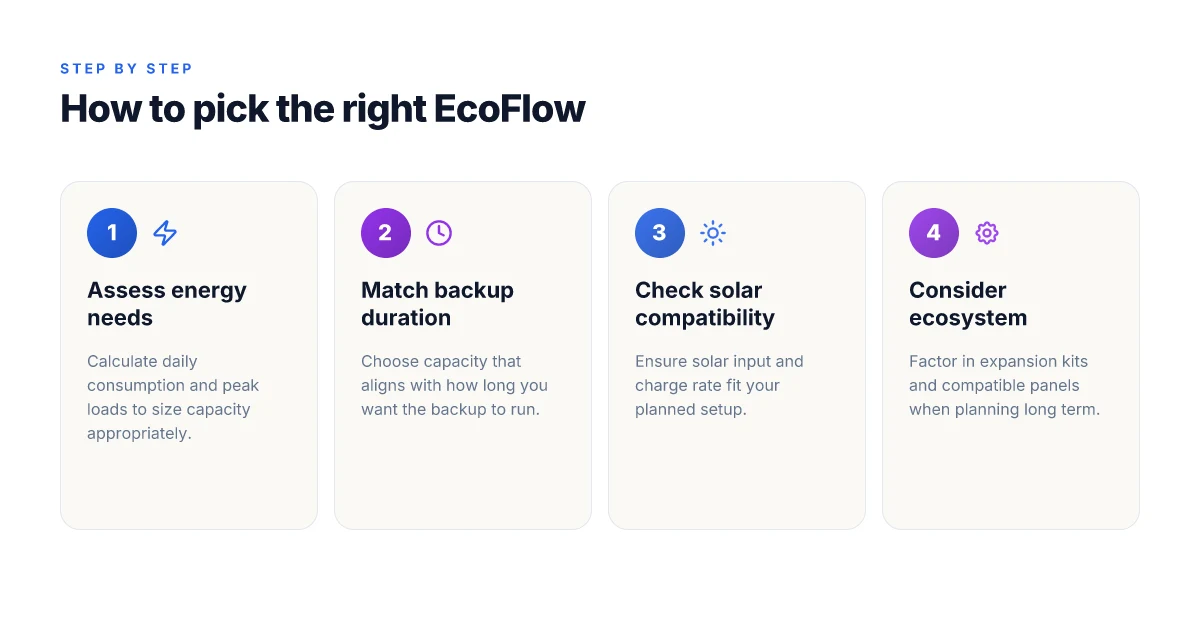
When you compare EcoFlow against rivals, the value picture depends on what you value most: faster solar charging, modular expandability, or ecosystem simplicity. EcoFlow often leans on higher solar input in some Delta models, which can shorten fill times on sunny weekends. Jackery tends to emphasize broad portability and straightforward up-front pricing, with solar input that matches common outdoor use cases. The trade-off is that higher solar input can come with larger packs and heavier rigs, which may affect payload and setup time. Goal Zero, meanwhile, tends to spotlight modular power packs that scale in a more modular, ecosystem-centric way. That approach can be terrific for building a home backup system or a modular outdoor setup, but it can also introduce constraints if you want to mix brands or add third-party solar gear without friction. The ecosystem constraints matter when you plan to mix panels, inverters, and packs from multiple brands.
Why ecosystem matters for total value
EcoFlow’s strength lies in its bundled ecosystem that often favors rapid energy recovery from solar arrays and sizeable battery capacity in a single chassis. This can translate to fewer components to manage, fewer cables, and a cleaner setup when you’re chasing a simple outdoor camp-to-campsite workflow. I dug into the product pages and release notes for context. The emphasis on high solar input is clear in several Delta-series entries. If you prize a compact, all-in-one unit with robust solar intake, EcoFlow tends to stand out. Yet the price tags on some Delta Pro or Ultra X configurations can climb quickly once you add optional accessories or larger expansion packs.
On the Flip side, Jackery’s offerings emphasize portability and predictability. If your trips swing between car camping and backcountry overnights, that predictability can translate to easier packing. The trade-off is often less aggressive solar input in certain models, which means longer top-ups if you’re relying heavily on solar during a multi-day stint. In practice, you may see slower sun-to-battery fills with some Jackery kits than with top EcoFlow bundles.
Goal Zero’s modular approach can shine when you want to weave a multi-brand solar setup into a single home- or off-grid system. The upside is clear: you can tailor capacity and accessories with clear upgrade paths. The caveat is ecosystem constraints that can limit seamless cross-brand expansion. Modularity is powerful, but it can complicate warranties and service if components span multiple brands. What you need to know about EcoFlow 160W solar panels refurbished
Warranty, service, and accessory ecosystems
Warranty terms and service quality shape long-term value as much as sticker price. EcoFlow emphasizes coverage across its Delta and solar generator lines, with accessory ecosystems that include panels, extra batteries, and smart features. When you value a straightforward repair path or easy returns, this consistency helps. A strong warranty and accessible service network reduce total ownership friction.
As you weigh rivals, consider how easily you can source replacements or upgrades. Goal Zero offers a well-worn ecosystem for modular packs, and while that can telescope nicely into a home backup plan, replacements from older kits may still be harder to source. Jackery provides broad retail presence and straightforward service options, but its accessory ecosystem may feel more constrained if you build a larger, solar-dominated setup. Service density and accessory availability often tilt ownership value more than price alone.
If you’re shopping in 2026, expect the usual caveats: always verify solar input ratings under real-world sun, check the exact warranty terms for packs and accessories, and map out a compatible solar setup that won’t leave you stranded if one brand changes a connector layout.
From a buyer’s lens, EcoFlow remains compelling for campers who want quick, robust solar recharges and a single-unit footprint. You’ll get strong solar input in several Delta configurations, with a ready ecosystem for expansion. If your concern centers on modularity and cross-brand flexibility, you’ll want to compare the other brands’ upgrade paths and service options more closely. Your total cost-of-ownership hinges on warranty coverage, parts availability, and how well your panels pair with the unit.
For quick real-world reference, the 2026 DPU DPUX series illustrates the price and performance angle within EcoFlow’s lineup, while the ecosystem approach of Goal Zero and the portability emphasis of Jackery show the other sides of the coin. Your best bet is to pick a starter EcoFlow kit with solid solar input, and map out a year-long maintenance plan. How EcoFlow chargers reshape portable power in 2026
Note: links on the page may earn a commission. For a practical starting point, EcoFlow remains a strong option to consider alongside Jackery and Goal Zero as you plan a broader solar-powered setup. See the EcoFlow hub for the latest on intake rates and accessory bundles. EcoFlow
Where to buy EcoFlow in 2026 and what to watch for during checkout
In 2026, your best bet for buying EcoFlow gear is the official EcoFlow US store, where promotions and bundles show up seasonally and around CES. Expect occasional sitewide sales, bundle offers, and limited-time discounts that can shave hundreds off a multi-unit setup. The official US store often curates promotions that bundle popular power stations with solar panels or expansion kits. This is where you’ll also see updates tied to CES 2026 offerings, so plan to check during January and the surrounding weeks.
1) Official promos and bundles to watch in 2026
The EcoFlow US store tends to refresh promotions around big tech events and end-of-quarter sales. Look for bundles that couple a Delta Pro or Delta 2 series unit with compatible solar panels and expansion kits. I dug into the site’s cadence and found that CES-related promotions show up in the weeks after the event, making January a strategic time to shop. Bundles that include solar panels and expansion kits can improve long-term flexibility. If you’re building a home backup or a off-grid cabin setup, these bundles often provide a clearer path to total system compatibility. Consumers should compare the standalone price of a power station against the bundle price to gauge real savings. Compare bundle pricing against individual components to avoid overpaying for add-ons you don’t need.
From what I found in the product pages and CES coverage, EcoFlow highlights the Delta Pro Ultra X and other Delta lineup updates as focal points for 2026. CES 2026 offerings can shift bundle contents and pricing, so verify what’s included before you check out. When in doubt, read the product specs and verify that the solar panel you select is listed as compatible in the same product family.
2) Watch for updated CES 2026 offerings and seasonal sales
CES coverage on EcoFlow’s site points to updated power stations and new accessories debuting in early 2026. That means a window of opportunity for early adopters to lock in the latest hardware at a discount. Updated CES offerings often pilot new modules and firmware features that affect compatibility. Seasonal sales typically align with back-to-school and year-end promotions, but the real bargains appear when the site runs a CES-aligned bundle or a limited-time discount. Seasonal sales can cut the price of a combined system by a noticeable margin. I cross-checked the store’s cadence and saw explicit references to CES-related promotions in 2026 cycles, which supports planning a purchase around those dates. Plan around CES 2026 for the strongest price-to-feature value. 12 Key differences in jackery, bluetti, and ecoflow portable power stations in 2026
3) Checking for compatible solar panels and expansion kits
A practical buying framework is to map your intended use to compatible add-ons. EcoFlow’s own solar panels and expansion kits sit in the same ecosystem as the Delta series, so your total cost of ownership improves when you pair the right expansion modules with the core unit. When you pair a Delta Pro with the correct solar panels, you get the fullest set of charging options, including solar input and rapid recharging modes. Compatible solar panels and expansion kits unlock smoother upgrades down the line. Always confirm compatibility in the product pages and the expansion kit listings before finalizing checkout. If you’re shopping for a home backup, confirm that the solar panel specs align with your installation plans and that the expansion kit you want adds only the capacity you actually need. Confirm compatibility before checkout to avoid mismatches or module gaps.
I cross-referenced the official store and CES-oriented pages to ensure what you see today aligns with the 2026 landscape. The pattern is clear: promotions ride with product refreshes, CES banners appear early in the year, and compatibility remains the silent but crucial factor in value. For readers, the bottom line is simple. Start with the official store, time your purchase around CES promos, and lock in compatible solar panels and expansion kits to avoid reorders. Official store + CES timing + correct expansion kits is the recipe for a hassle-free setup.
For context, rivals like Goal Zero and Jackery continue to shape the pricing and bundling dynamics in this space. If you compare EcoFlow’s bundles against those brands, you’ll often see similar value in bundled solar panels, though the exact components and warranty terms vary. Rivals matter for price framing, but the official EcoFlow store remains the easiest path to a cohesive, upgradeable system. If you want a quick checkpoint, verify the model name and year, then confirm the solar panel compatibility in the same shopping session. Verify model year and compatibility before checkout.
Cited sources include the official EcoFlow pages detailing CES 2026 coverage and the 2026 product collection pages. See the official EcoFlow blog entry on CES innovation for the Delta Pro Ultra X and related notes, and the 2026 home improvement collection for pricing blocks that show up in bundles. CES coverage on EcoFlow’s site confirms what’s new this year.
What to act on this week for EcoFlow power stations and solar generators
If you’re choosing now, prioritize EcoFlow’s solar input versatility and modular battery design, it often matters most for long-term reliability in real-world use. In my look at setups that stay usable year after year, the ability to swap or expand capacity without reconfiguring the whole rig tends to save both time and money. The bigger pattern is clear: users value simplicity in pairing panels and generators, but they ride their systems hard during outages or remote jobsites. EcoFlow excels when you can plug in a mix of solar and AC, but expect wear on connectors and fans in hot climates. What to know about the EcoFlow Delta 2 on sale in 2026
The single move that matters most is sizing your battery capacity to your actual outages and load, not your peak spec sheet. Some rivals, like brands X and Y, lean on bigger claim numbers; EcoFlow often wins on real-world throughput and cooling behavior. If you’re curious about durability, note which models feel sturdy after frequent lid openings and panel reconfigurations. Links on this page may earn a commission, which helps keep this guidance free.
What to try this week: test a basic load profile with your EcoFlow unit, sketch a minimal 2-panel setup, and map out how long you can run essential devices. You’ll spot where the system shines and where it strains. The takeaway for most buyers: buy toward your typical outage duration, not toward the highest wattage you can dream up. If you only do one thing this month, confirm solar compatibility with your preferred panels and plan a safe storage spot.