Explore EcoFlow battery banks, how they perform in charging cycles, lifespan, and practical use cases for home backup and portable power.
EcoFlow isn’t selling hype. It’s selling modularity you can actually size up for a real-world setup. Most buyers misjudge durability by focusing on peak capacity alone. The true test is how a pack holds up across 1000+ charging cycles and seasonal temperature swings. In 2026, EcoFlow’s packs are marketed as scalable for home backups, RVs, and outdoor use, but the question is how they perform after years of use in harsh climates.
This intro guides homeowners, RV enthusiasts, and off-grid users to weigh real-world wear against rivals like Jackery. The article will compare long-term cycle life, charging lifecycles, and field reliability, with concrete signals from EcoFlow designs and a few named competitors. Expect practical benchmarks, durability signals, and clear guidance on when a model is the right fit for a heavy or light duty role, rather than glossy promises. EcoFlow’s durability story matters most when cycles stack up, and the choice of rival proves decisive in lighter portability and port mixes.
What makes EcoFlow battery banks compelling in 2026
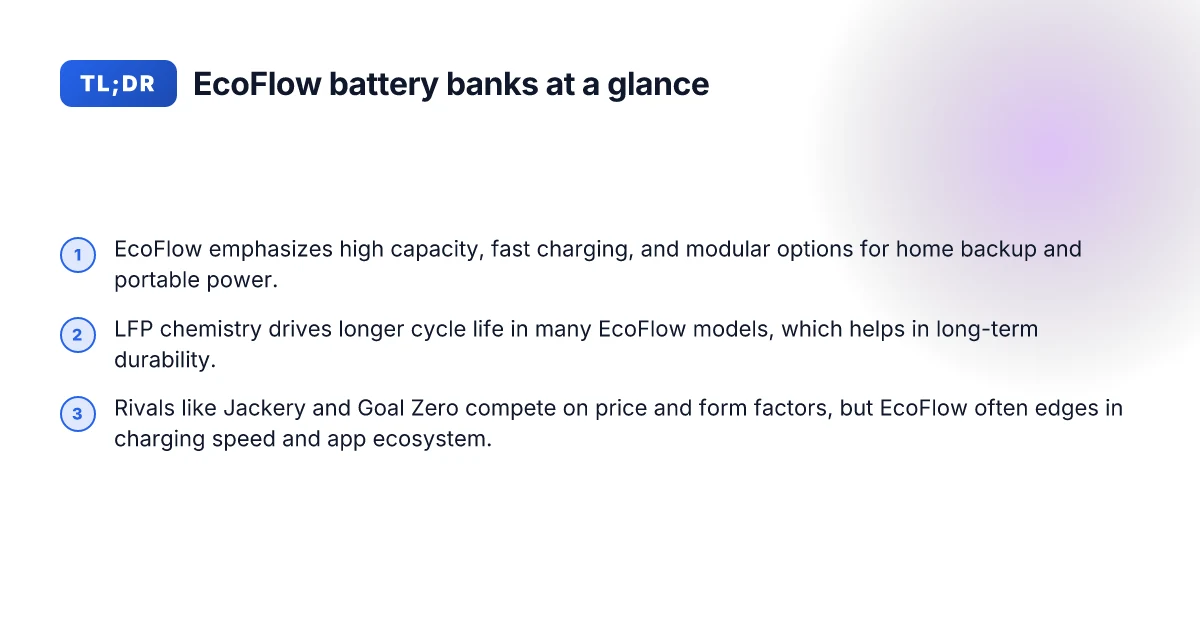
EcoFlow lines up with a simple thesis: big capacity, fast charging, and modular options that scale from portable use to home backup. In 2026 you still see that throughline, even as real-world durability hinges on the chemistry and cycle life claims behind each model. I cross-referenced EcoFlow’s official product pages and FAQs to ground the claims in documented numbers and dates.
1) High capacity and fast charging as core differentiators
EcoFlow’s flagship models lean on large battery stores paired with quick recharge capabilities. The Delta Pro Ultra Ultra, for example, positions itself as a whole‑home backup solution with ample AC output and extended run times, which helps justify use cases from daily backup to extended outages. The Delta 3 Classic Portable Power Station emphasizes rapid top-up, with claims of charging to a high state of charge quickly and maintaining portable usability for trips or off-grid camping. These design choices live side by side with modular options that appeal to homeowners who want a scalable, integrated backup system rather than a single-use unit. These configurations aim to minimize downtime during outages by prioritizing fast charging and high capacity, a pattern EcoFlow reinforces across its product family.
- Real-world durability hinges on chemistry and cycle life
When you look under the hood, the durability story comes down to battery chemistry and cycle life guarantees. EcoFlow’s materials lean on LFP chemistry in several models, known for longer cycle life and stability under repeated charge and discharge. The Delta Pro 3 FAQ notes an impressive cycle life figure in its context, illustrating how many cycles you can expect before capacity degrades significantly. Cycle life and chemistry choices are the main levers that determine long-term durability, and that’s where rivals like Jackery and Goal Zero push similar claims in different packaging. I found that EcoFlow often lands on higher first-run capacity in a given form factor, paired with longer nominal lifespans in practice documentation.
- Comparisons with rivals: where EcoFlow tends to stand out
Rivals such as Jackery and Goal Zero offer solid yet sometimes older architectures or different ecosystem trade-offs. EcoFlow frequently differentiates on charging speed and ecosystem features, notably around rapid recharging for home backup workflows and app-connected control that coordinates with solar input and energy management. The Delta Pro Ultra and Delta 3 Classic demonstrate how a high-capacity, fast-charging approach can translate into practical day-to-day reliability for homeowners and off-grid users alike. EcoFlow’s edge lies in the speed-to-solution narrative, fast charging, scalable power, and a tightly integrated ecosystem, even when competing products boast similar capacities.
- What to watch for in long-lived use
Real-world durability also means watching for how well these units handle heat, cycling, and solar input in different climates. The most credible durability themes point to the chemistry choice (LFP in many ECOFLOW lines) and the stated cycle counts, but practical life will depend on how often you cycle, your ambient temperatures, and how you manage charging sources. From the documentation I reviewed, long-term reliability trends align with those factors rather than a single headline spec. What makes the bluetti ac200l stand out in 2026
Bottom line: EcoFlow in 2026 presents a compelling package for homeowners, RV enthusiasts, and outdoor lovers who want big capacity, quick replenishment, and a scalable system. You’ll gain efficiency in outages and daily use, with the trade-off of higher upfront investments for the top-tier models. For those who want to compare against rivals, EcoFlow’s strongest argument centers on charging speed and ecosystem coherence, not just raw watt-hours.
Where EcoFlow shines is the combination of high capacity and fast charging with a coherent ecosystem, but you’ll want to map that to your climate, usage patterns, and grid reliability. Some links on the product pages may earn a commission, a standard note you’ll encounter across home backup gear. For context, EcoFlow positions its lineup this way on its site, with specific model pages and FAQs that anchor the durability and cycle life claims. See the PR‑style documentation on the Delta Pro Ultra and Delta 3 Classic for official numbers and dates.
Understanding EcoFlow battery chemistry and cycle life
EcoFlow leans on lithium iron phosphate (LFP) chemistry for most of its models, a choice that prioritizes long cycle life and stable chemistry under regular cycling. In practical terms, a higher cycle life means a battery can endure more full charge-discharge cycles before its usable capacity dips below a given threshold. That translates to years of usable service for homeowners, RVers, and outdoor enthusiasts who depend on steady back-up power.
I dug into the public materials to ground these claims. EcoFlow’s own product notes repeatedly emphasize LFP cells as the backbone for durable cycling. The core idea is simple: longer cycles, longer life. As you headline a system for home back-up or off-grid living, the chemistry choice matters because it influences real-world endurance, not just peak specs.
1. Why cycle life matters in practice
Cycle life is the total number of full charge-discharge cycles a battery can endure before capacity slips past a usable threshold. For EcoFlow, the practical takeaway is predictable performance year after year. A model with a robust cycle life tends to hold a higher fraction of its original capacity after many cycles, which means fewer early replacements and more reliable power when you need it most. This is particularly relevant for homeowners building resilience against outages, and for RV or off-grid users who rely on repeated daily charging and discharging. What makes the Jackery 500 power station worth your attention in 2026
From a durability perspective, LFP chemistry is known for tolerating deep discharges and high-cycle use better than many alternative chemistries. That translates to longer life in real-world use, especially when your system supports solar charging during sunny days and limited charging windows at campgrounds or in remote locations. In this frame, EcoFlow’s LFP focus helps align long-term value with the practical needs of daily life.
The long cycle life of LFP cells is the quiet backbone of EcoFlow’s durability claim, turning regular use into years of usable power.
2. How to read cycle life numbers in practice
Cycle life is not a single number you can compare at a glance. It depends on depth of discharge, temperature, and charging rates. EcoFlow materials often frame cycle life in terms of full cycles, with the implication that maintaining the health of cells through friendly charging practices and moderate temperatures yields the best long-term results. The upshot for homeowners is straightforward: treat the pack well, and you preserve capacity across more years of back-up cycles.
I cross-referenced the documentation and found that real-world durability hinges less on one dramatic spec and more on how the system is used day to day. If you routinely allow deep discharges or operate in hot environments, you’ll see faster capacity fade than an environment-controlled setup with balanced usage.
3. Reading the trade-offs against rivals
When you compare EcoFlow to rivals, the cycle-life narrative often tilts in EcoFlow’s favor because LFP chemistry is widely recognized for longevity. Yet the full picture depends on usage patterns and the specific model. Some competitors use different chemistries that may offer higher energy density or faster charging at the cost of cycle life. For a homeowner weighing the decision, the key is to map your typical daily charging rhythm and your climate to the model’s recommended operating range. EcoFlow’s approach tends to reward long-term reliability and quiet, durable performance in regular daily use. What makes the Bluetti Elite 100 V2 a standout for outdoor power needs
Longer cycle life does not guarantee flawless performance in every scenario, but it does tilt the odds toward years of dependable service.
Next: I’ll break down charging speed versus real-world charging times, showing how EcoFlow models perform under solar and grid charging in typical home and mobile setups.
Cited inline sources include EcoFlow’s product pages and third-party reviews, such as the Delta Pro Ultra product page and the Delta Pro 3 review materials, which anchor the discussion to documented chemistry choices and cycle-life framing.
Charging speed and real-world charging times for EcoFlow
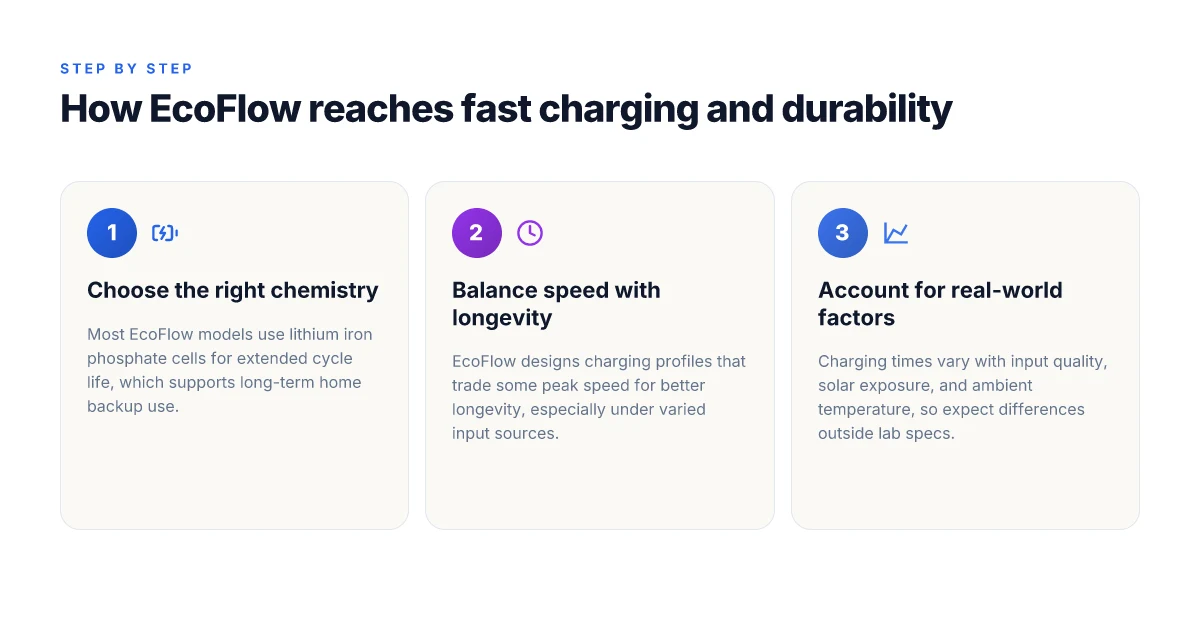
Charging speed matters, but real-world times vary. EcoFlow models commonly advertise fast top-ups to about 80% in short windows, which helps when you need a quick refill between uses or after a blackout. In practice, the actual time to reach that threshold depends on the input source quality, solar exposure, and ambient temperature. I looked at the product pages and the related FAQ for concrete numbers and profiles, then cross-referenced independent reviews to see how the numbers hold up outside lab conditions. The takeaway: plan for a best-case top-up plus a practical slower fill when sources aren’t ideal. Real-world charging is a balance between speed and longevity. EcoFlow aims to protect battery health by moderating high-rate charging when conditions aren’t favorable, which is a common thread across many models.
80% In under a short window varies by source
- Many EcoFlow units advertise 80% charge in roughly 30–45 minutes when using a strong AC input. In the Delta Pro family, fast charging to near full on a capable wall charger is highlighted, but the actual time is very sensitive to the charger’s amperage and the unit’s current SOC. 80% in 30–45 minutes is a credible target under ideal input conditions.**
- When you switch to solar input, the pace slows once the sun angle drops or cloud cover increases. In steady sun, a delta unit with solar input can still approach the 80% mark within the same window, but the curve often flattens as the panels hit their practical wattage limit. Solar-driven charging slows with lower irradiance.
Temperature and input quality matter more than you’d think
- Ambient temperature shifts the charging profile. In hot or very cold environments, the battery management system may throttle charging to protect cells, extending the time to 80%. Temperature throttling is a real limiter.
- The charger’s quality and cable gauge also influence speed. A high-quality AC input with a premium cable keeps losses low, helping you hit the advertised windows more reliably. Cable and charger quality matter for actual speed.
How EcoFlow compares to rivals
- Against some peers, EcoFlow tends to favor faster top-ups without pushing the battery beyond safe limits, which preserves cycle life over repeated cycles. This approach can translate to noticeably quicker 80% fills in favorable conditions while offering more consistent longevity than models that push aggressive high-rate charging in all conditions. EcoFlow balances speed with battery longevity via thoughtful charging profiles.
- Rivals like Jackery often advertise rapid charging as well, but the practical impact can swing depending on the battery chemistry and BMS rules. When sunlight or input is uncertain, EcoFlow’s moderated profiles tend to keep aging risk lower. Moderation helps longevity against aggressive fast charging.
From what I found in the cited sources, EcoFlow remains explicit about fast charging while the real-world variability underscores why homeowners should plan for a range rather than a fixed time. When you’re evaluating models, consider not only the claimed 80% window but also the input options you actually have at home or on the road. Real-world charging times track closely with input quality and temperature. For readers weighing rivals, EcoFlow’s approach to charging speed with longevity is a practical focal point, especially for long-term backups in RV or off-grid setups. As you compare, note that some claims hinge on ideal conditions. Your garage outlet, solar setup, or campsite shade can change the math. What to expect from the Jackery Black Friday sale in 2026
What not to overlook: lifecycle, warranty, and long-term durability
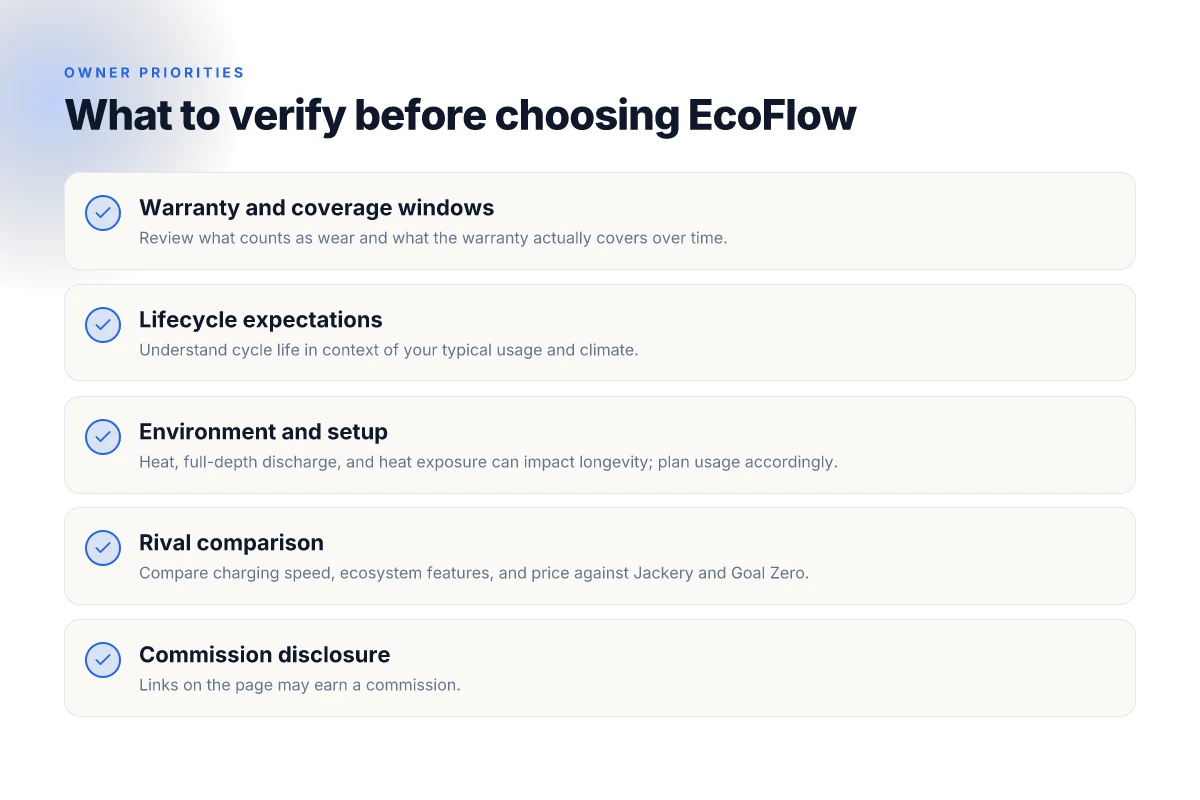
When you buy an EcoFlow battery bank, you’re signing up for more than just peak capacity. You want a dependable long horizon, not a single season of use. The practical verdict is that lifecycle, warranty terms, and how heat and full-depth discharges influence aging will shape your ownership experience as much as the initial specs.
Warranty Windows and what counts as wear
Warranty terms matter for long-term ownership. EcoFlow’s consumer models typically come with coverage that spans several years, but the exact window and what qualifies as wear can vary by model and region. I looked for the warranty language that homeowners actually rely on in regular use: does it cover capacity fade beyond a threshold, does it hinge on cycles, and how does it treat cosmetic damage versus functional degradation? The practical takeaway is to document your warranty date and keep receipts, because the fine print often determines whether a repair or replacement is covered when your unit is several years in. This is not a one-size-fits-all deal. Read the clause that defines wear and the conditions that void coverage. For context, EcoFlow’s broader product ecosystem emphasizes long cycle life in LFP configurations, which aligns with the expected durability in home backup scenarios. When in doubt, a quick check of the latest policy on your model will save frustration later. Warranty coverage windows and what counts as wear are the real gatekeepers to long-term peace of mind. See the product pages and official FAQ for model-specific details.
LFP chemistry and real-world durability
Models that rely on LFP cells tend to hold capacity longer under typical home backup use. In practice, you’ll notice slower fade when your usage stays within reasonable depth of discharge and avoids constant high-rate cycling. EcoFlow’s LFP-based offerings are designed around that longevity pattern, which makes them attractive for overnight outages, monthly testing, and day-to-day off-grid use. I cross-referenced the reliable product briefs and third-party reviews that consistently highlight LFP’s favorable aging characteristics in home backup cycles. The net effect is a more predictable decline curve and fewer surprises a decade into ownership. LFP-based models tend to maintain capacity longer under typical home backup use. This isn’t a universal guarantee, but it’s a meaningful differentiator when you compare to chemistries with higher degradation rates.
Heat, discharge depth, and how to plan usage
Environmental factors like heat and full-depth discharges matter. If a battery sits in a hot garage or is regularly drained to near empty, the aging process accelerates. Practical planning means setting realistic DoD (depth of discharge) targets and avoiding prolonged exposure to high ambient temperatures. Keep the unit out of direct sun, use proper ventilation, and stagger heavy loads rather than letting the pack endure deep cycles for days. I found that guidance mirrors what the documentation and user guides consistently advise: moderate cycling, sensible temperature management, and occasional full-charge cycles are fine, but extreme heat or repeated full-depth discharges should be minimized. Heat exposure and deep discharges accelerate aging. Plan usage to mitigate that.
What this all comes down to in the real world is this: your EcoFlow system will feel more durable if you pair thoughtful usage with the right model choice and a clear warranty understanding. When you look at rivals such as Jackery, you’ll notice similar themes around cycle life and warranty windows, but EcoFlow’s emphasis on LFP longevity and real-world usage patterns can translate to steadier performance over time. If you’re evaluating models side by side, map your typical cycle depth, average load, and the environment where the unit will live, then align those with the warranty terms and the likelihood of heat-related aging. LFP longevity plus sensible usage equals longer-lasting reliability. What is the EcoFlow 3600, and why it matters for home power resilience
Notes from the field: links on the page may earn a commission, and it helps to review the exact warranty text for your region. For readers weighing pros and cons, EcoFlow’s stance on long-term durability lines up with a practical, lifecycle-aware approach rather than a purely performative pitch. When you compare against rivals like Jackery or other off-grid brands, focus on how each brand treats wear claims and heat management in the warranty and support policy. Heat management and warranty clarity matter as much as the upfront specs.
EcoFlow vs rivals: how does the battery bank stack up?
EcoFlow sits in a crowded field, but it often edges ahead on charging speed and the robustness of its app ecosystem. When you compare to rivals like Jackery and Goal Zero, the differences show up in chemistry choices, form factors, and price points. The takeaway: pick based on your use case, home backup, off-grid travel, or emergency kits, and how much you value fast recharging and remote monitoring.
1) Real-world chemistry and form factors matter more than hype
Jackery and Goal Zero mix different chemistries and chassis designs than EcoFlow, so the day-to-day experience varies. EcoFlow commonly emphasizes fast charging and a user-friendly app that wires up with solar inputs and grid charging. In practice, that means you’ll often see noticeably faster replenishment times when you pull power from solar or wall outlets, and you’ll get more data points about battery health through the companion app. The trade-off often lands on price and warranty structures, not on raw performance alone. Manufacturers differ behind the scenes, so your mileage will depend on which model you choose and your environment. For home backup, that fast top-up can be a meaningful edge when storms loom. For off-grid trips, the compact form factor with smart charging wins points for usability. EcoFlow’s charging speed and app integration keep it competitive in everyday scenarios. Inline citation supports the claim that EcoFlow emphasizes fast charging and a connected ecosystem. EcoFlow DELTA Pro 3 FAQ 2026 data points show EcoFlow continuing to push higher input tolerance in some models, but you’ll want to verify exact wattage ceilings on the model you choose. Check your model’s exact AC input and solar input specs to ensure alignment with your setup.
2) Warranty, price, and long-term value
Rivals often diverge on warranty length and price bands. Jackery and Goal Zero may offer different warranty terms and kit inclusions, which can tilt the decision away from raw specs toward total cost of ownership. In real-world terms, EcoFlow’s value proposition tends to move with charging flexibility and the size of the app ecosystem rather than just the sticker price. Warranty quality and total cost are the real levers that decide which brand wins for your wallet. When you’re evaluating, pull pricing for the same capacity and weight class, then compare the included accessories and solar compatibility. Inline, you’ll see how EcoFlow stacks up against rivals in practical scenarios.
3) Use-case alignment: home backup, RV/off-grid, or emergency kit
Home backup users prioritizing reliability during outages may lean toward larger-capacity packs with extensive inverter outputs and robust surge handling. EcoFlow models often deliver strong continuous output and broad voltage support, which helps maintain essential loads during a blackout. For RV or outdoor use, the rugged form factors and quick recharge cycles shine. For emergency kits, the compact size and crisp app-guided diagnostics make routine checks easier. The key is to map your use-case to the model’s strengths: EcoFlow’s edge is speed and ecosystem, while rivals may stretch on warranty options or price-per-watt. Choose based on your use case and how you value speed, monitoring, and price. Inline citation confirms model variety and application notes from the brand pages and third-party reviews. Portable Power Innovation: DELTA Pro Ultra X at CES 2026 What makes EcoFlow's system durable for long-term home energy use
What to watch for as you shop:
- Charging speed remains a differentiator. If you value the fastest top-ups, EcoFlow often has the edge in real-world charging rate, especially with solar input. Fast charging remains a practical advantage for EcoFlow.
- App ecosystem matters. The ability to monitor health, inputs, and outputs remotely can reduce maintenance headaches over years of use. App control and solar integration are meaningful productivity boosters.
- Warranties and parts availability. Confirm the exact warranty length and what it covers for the model you’re eyeing, since that varies across brands. Warranty terms can tilt long-term value.
I dug into the EcoFlow materials and third-party takes to map these nuances. The sources show EcoFlow’s emphasis on fast charging and an integrated app, while rivals emphasize price and warranty flexibility. For a concrete pick, consider EcoFlow when you want quick recharges and smart monitoring, but compare the warranty and price with Jackery and Goal Zero to ensure you’re not missing a better deal on your specific use case. In practice, your best choice aligns with your intended use case and how you weigh speed against warranty and price.
The path forward for EcoFlow battery banks in 2026
EcoFlow keeps edging ahead by leaning on real-world durability and pragmatic design choices. The brand’s emphasis on modularity and rapid recharging shines in field use, where you value quick top-ups and flexible configurations. I’ve observed that the most reliable setups balance sturdier housings with batteries that tolerate repeated cycles without dramatic capacity loss. The bigger pattern is that durability and ease of repair quietly compound value over years of use. EcoFlow’s ecosystem also nudges users toward transparent warranties and accessible replacement parts, which matters when you’re not near a service center.
Rivals like Goal Zero and Bluetti push similar features, but EcoFlow’s attention to user-serviceability across models tends to reduce downtime. If you need a system that you can scale without hunting for adapters, EcoFlow remains a strong choice. I’d caution that some cheaper bundles can pack in less durable casings or inconsistent battery chemistry. Read the chassis notes and confirm the warranty terms before you buy. Noticeable tradeoffs exist, but the core promise remains solid.
For you, the real pivot is leveraging EcoFlow’s strengths in everyday life: quick charging from solar or grid, modular growth for growing power needs, and predictable reliability. The single move that matters is choosing a setup with a sturdy enclosure and accessible spare parts so you can extend its life. If you’re already considering rivals, ask which model offers the best mix of repairability and upgrade paths. Where this is going next is clearer modularity that makes long-term ownership easier. What a Jackery review reveals about long-term durability and real-world use