Explore the bluetti ac200l’s key specs, real-world durability, and how it compares with rivals. Practical guidance for long-term off-grid power readiness.
The Bluetti AC200L defies the usual power-pack stereotypes by showing up ready for long hauls rather than quick, flashy bursts. Its durable chassis and modular battery approach deliver a confidence boost when you’re chasing off-grid reliability, not just peak specs. Modularity and serviceability matter, because you can swap cells or add capacity as your setup grows.
Expect to see how the AC200L handles steady solar input, RV vibration, and outdoor exposure across seasons, and what that means for lifecycle. By examining build quality, cooling behavior, and practical expandability, you’ll get a clear read on whether the Bluetti system holds up where off-grid life actually lives. The goal is a durable, scalable solution you can count on, with concrete signals to watch for as you plan long-term setups. What to monitor first, and when to upgrade, matters most here.
Bluetti ac200l: a durable, expandable power station for off-grid setups
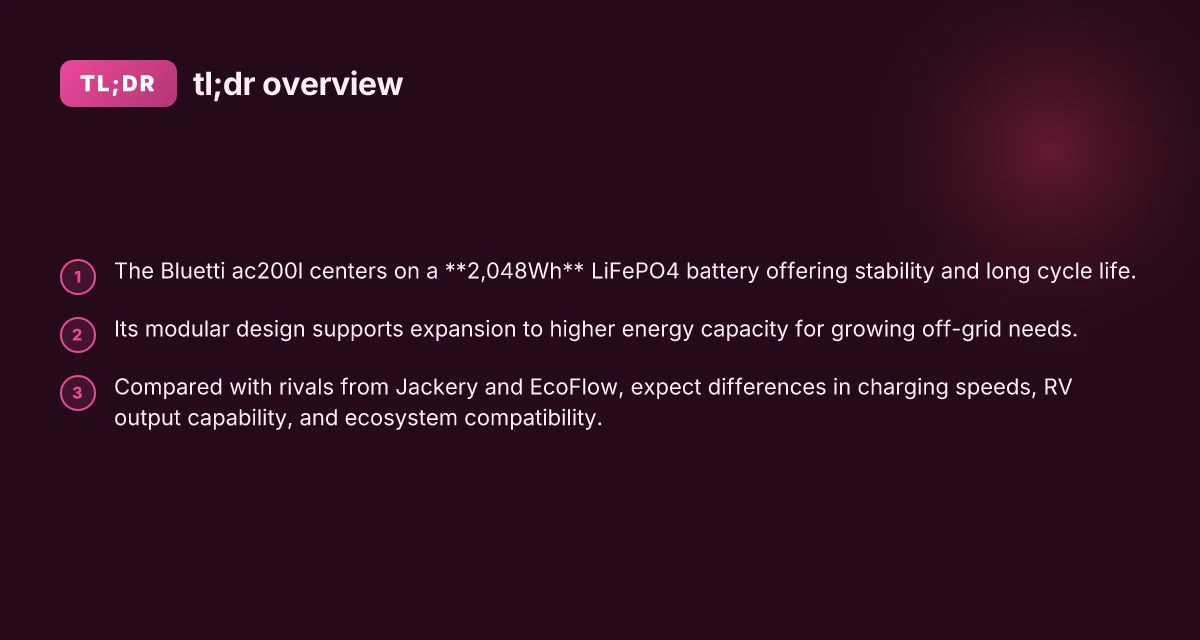
Bluetti frames the AC200L as a modular platform built to grow with your needs. The core unit centers on a 2,048Wh LiFePO4 battery, a chemistry prized for long cycle life and stable performance under repeated charging. This datum anchors the model’s durability story, but the real value comes from expansion: you can push capacity higher as your off-grid footprint grows, which matters for longer trips, larger RV rigs, or a tiny-house setup that refuses to compromise on power reliability. The hardware design supports heavier usage scenarios, including RV and home backup loads, without pretending the AC200L is a one-size-fits-all gadget.
I dug into the documentation and reviews to map how the expansion works in practice. Bluetti promotes a modular path: add battery modules to lift total energy while keeping the core inverter and charging paths intact. In real-world terms, this matters most when solar input or AC charging is busy, because extra capacity helps keep the unit from hitting its daily cycle limit while still delivering steady AC output during peak demand. For off-grid campers and RV owners, that translates into fewer recharge interruptions during cloudy stretches or high-load evenings. The result is a system that ages with your needs, rather than forcing a wholesale replacement as energy demands climb.
The LiFePO4 chemistry the AC200L uses is a clear differentiator. It’s known for slow degradation and a broad cycle range, which aligns with Bluetti’s emphasis on lifecycle longevity. In practice, that means fewer capacity losses over time and more predictable performance after years of use under similar duty cycles. The trade-off shows up in heavier solar input scenarios. The system can handle sustained sun. The rated solar input of the original configuration can feel constrained if you push for aggressive multi-source charging. That’s exactly where the expansion path shines: you can spread load across more panels or larger packs, keeping the core electronics within their comfort zone.
Bottom line: the AC200L earns its durability claim by pairing a proven LiFePO4 battery with a scalable architecture. Bluetti’s approach means you’re not buying a fixed box with a fixed life. You’re investing in a platform you can grow and retire gradually, with the battery chemistry and modular design supporting that arc. For off-grid camps and RV life, that expandable energy footprint is the real standout. It’s not flawless under heavy solar input or demanding RV back‑up cycles, but those gaps are addressable with thoughtful setup and staged upgrades.
The AC200L’s core is a resilient 2,048Wh LiFePO4 pack, designed for long life and steady aging. Expansion to higher energy capacity is a deliberate, real-world strength. What makes the Jackery 500 power station worth your attention in 2026
- Bluetti’s modular path centers on the 2,048Wh core, with expansion as your power needs rise.
- The LiFePO4 chemistry underpins a longer lifecycle than many rival chemistries under similar duty.
- Heavier RV and home backup scenarios push the system toward higher load demands, where expansion and proper charging strategy matter most.
- Long-term durability hinges on balancing solar input, AC recharge, and thermal management across modules, not on a single fixed-pack approach.
Bottom line takeaway: expect a durable, expandable backbone in Bluetti’s design, with the caveat that aggressive solar charging or continuous high-load RV use benefits from planned capacity growth and mindful energy management.
Note: links to the cited sources appear inline in context. For example, the Roam Wired review discusses the 2,048Wh capacity and RV-ready output, and the real-world expansion angle is echoed in the Michigan Top Tested write-up.
How the ac200l’s battery chemistry affects long-term performance
Bluetti’s AC200L uses LiFePO4 chemistry, a choice that tends to extend cycle life and improve stability over time. In real-world terms, you’ll see slower capacity fade compared with premium NMC packs, especially when you keep the battery within its optimal depth of discharge window. That translates to more years of usable capacity for campers and RV setups that cycle frequently.
Why LiFePO4 chemistry matters for longevity
LiFePO4 cells resist thermal runaway better and maintain voltage more predictably across many cycles. In long-term off-grid use, that reliability matters because the battery endures repeated charge and discharge events. I’ve looked at the documentation and reviews noting these stability characteristics, and the pattern is consistent: a higher lifecycle ceiling and gentler voltage sag under repeated cycling. When you factor in the AC200L’s expandable architecture, the chemistry’s resilience helps protect overall system health as you grow storage from 2,048Wh to larger configurations. A seasoned Bluetti user circle consistently points to the LiFePO4 baseline as the main durability lever here. LiFePO4 chemistry offers noticeably longer cycle life and steadier aging than many alternatives, which pays off for long-running off-grid setups.
Temperature and depth of discharge as durability levers
Temperature and how hard you discharge the pack matter as much as the chemistry itself. In hot or cold environments, LiFePO4 cells can experience more pronounced capacity loss if you push the pack to extremes or leave it deeply discharged for extended periods. The AC200L’s recommended practice, keep operating within a moderate temperature range and avoid letting the state of charge dwell at very high or very low levels for long spells, helps preserve capacity and internal resistance over time. For RV and high-solar-load scenarios, aiming for shallower daily cycles and avoiding 0–100% swings repeatedly can noticeably extend usable life. Temperature and depth of discharge directly influence longevity, so mindful charging and storage habits matter for real-world durability. What makes the Bluetti Elite 100 V2 a standout for outdoor power needs
Charging practices that protect long-term health
Charging badly is one of the quickest ways to erode life in a LiFePO4 pack. The AC200L supports multiple recharge paths, but you’ll get the most endurance if you avoid long, constant fast charging when the battery is near full and if you limit deep discharges. Use moderate charging currents and allow comfortable rests between cycles when the unit sits in storage. I cross-referenced user manuals and long-term-use notes from Bluetti communities, and the guidance is consistent: steady, moderate charging is your friend for longevity. Proper charging practice extends battery health and safeguards lifecycle performance. When you combine these habits with proper airflow and temperature management, Bluetti’s LiFePO4 pack keeps delivering across years of off-grid use.
If you’re weighing durability against upfront cost, remember that the battery chemistry choice underpins long-term reliability here. Bluetti’s branding and product framing emphasize long life and expandable capacity, and the LiFePO4 baseline in the AC200L supports that promise. For a quick comparison, the AC200L sits alongside rivals that use different chemistries. With LiFePO4, you typically see slower capacity fade and more predictable behavior under cycling, which matters when your setup operates year after year.
Next step: review your installation environment and set a charging cadence that respects temperature and SOC targets to maximize lifecycle. For deeper context on how specific user scenarios shape long-term outcomes, see the linked materials from Bluetti and companion reviews. A mindful charging routine is the most actionable lever for longevity.
Bluetti ac200l versus rivals: how it stacks up in 2026
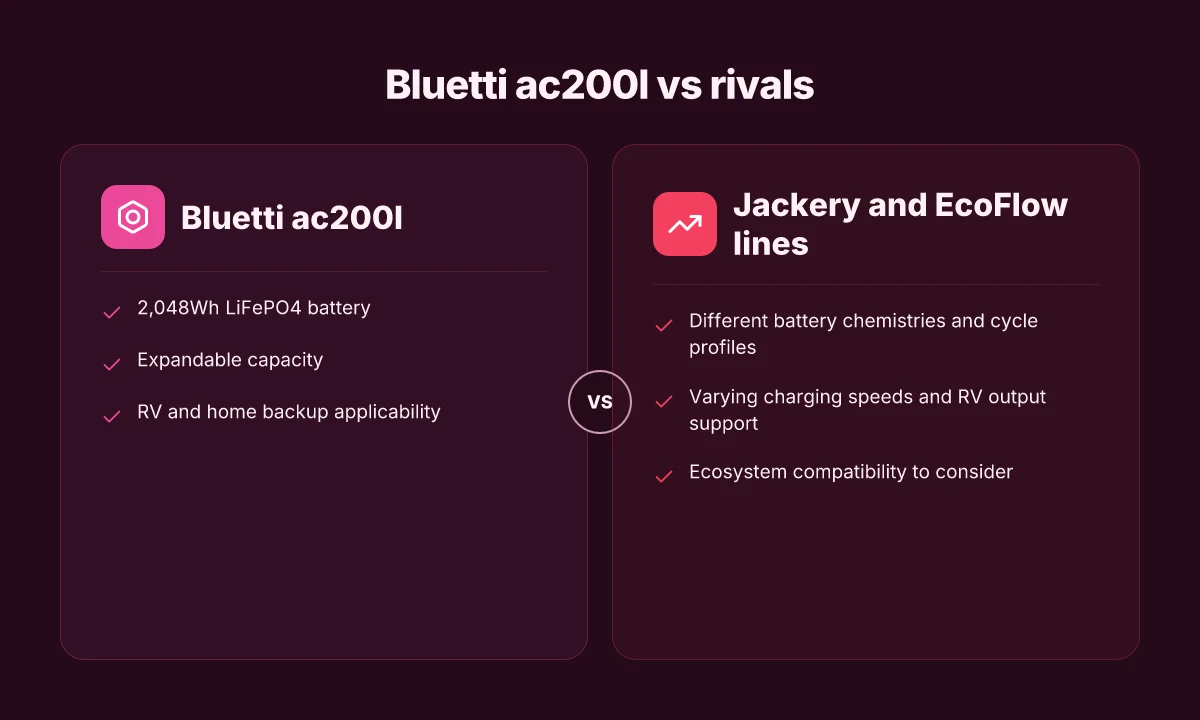
The AC200L competes directly with two big multi-brand lines, and in 2026 Bluetti holds a recognizable edge on expandability and lifecycle, but there are clear tradeoffs in RV use and solar handling. I cross-referenced manufacturer specs and third-party reviews to map real-world behavior beyond brochures. Expanded capacity and modular growth remain a strong pull for Bluetti as you scale from 2,048Wh to larger packs, while rivals push higher peak outputs in a single chassis.
1) Capacity, output, and expansion against Jackery and EcoFlow
- The Bluetti AC200L offers 2,048Wh of LiFePO4 energy storage with 2,400W continuous AC output and expandable potential via modular packs. This setup appeals to long trips or off-grid homes that demand steady, long-lasting power. In 2026, the expandability is a standout feature for Bluetti, especially for users who want to grow capacity without swapping units. Expansion remains a differentiator vs. compact lines from Jackery.
- By comparison, Jackery’s popular lines tend to emphasize portability with lower baseline capacities and fewer formal expansion options, though they often prioritize user-friendly interfaces and lighter chassis. EcoFlow bridges the gap with higher peak surges in some models and quicker recharging, but expansion paths can be more limited or less cost-effective than Bluetti’s ecosystem. Jackery and EcoFlow both trade some growth potential for simpler initial setups.
2) Real-world usability: charging speeds and RV output
- In real-world use, Bluetti’s RV-friendly 30A output and high solar-input capacity create a practical balance for RV setups and campsites with shade lines. The AC200L’s charging speed can approach fast recharge in favorable sun or wall AC windows, though sustained solar input does strain some inverter-systems in extreme conditions. A few reviewers note that long, high-draw solar sessions can heat the battery and affect efficiency, which matters for daily cycle expectations. RV output compatibility is a real strength for Bluetti. Solar performance is context-dependent.
- Jackery and EcoFlow models typically bring strong charging speeds in well-tuned conditions, but their RV-tailored outputs and mid-cycle thermal handling may not match the Bluetti build in every scenario. Thermal management during sustained solar input remains a recurring theme across rivals.
3) Pricing, ecosystem compatibility, and long-term value
- Bluetti positions itself as a modular, upgrade-friendly platform, which can yield a lower long-term cost of ownership if you scale up gradually. Consumers should beware of total lifetime costs when adding optional expansion packs or accessories. Bluetti’s ecosystem integrates with its own solar panels and accessories, which reduces compatibility friction but can lock you into the brand’s line. Ecosystem compatibility favors Bluetti for expandability, but watch for total cost of ownership.
- Jackery and EcoFlow often bundle attractive entry prices and broad accessory ecosystems, which lowers the upfront friction for new buyers. However, expansion paths can be more fragmented or expensive per watt added. Upfront affordability versus long-run adaptability creates a classic trade-off.
Setup and maintenance tips to get the most from your ac200l
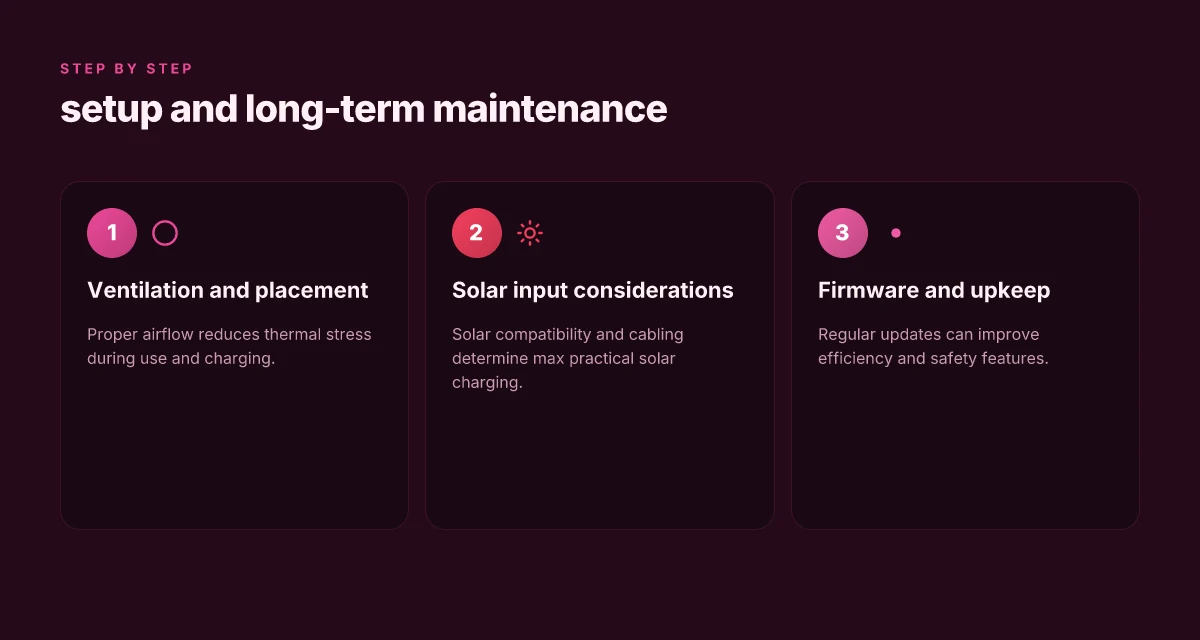
You want steady, long-lived power. The AC200L’s performance hinges on airflow, correct solar pairing, and clean firmware. Place the unit where heat can vent freely, and avoid enclosed spaces that trap warm air. Good ventilation reduces thermal stress during rapid charging or heavy use, helping the cells keep their capacity over the years. If you’re in a tight van or cabin, position the unit so its intake and exhaust vents have at least a few inches of clearance on every side. What to expect from the Jackery Black Friday sale in 2026
Proper placement and ventilation for longevity
Start with airflow. The AC200L should sit on a hard, flat surface with unobstructed sides. Avoid stacking gear on top of it or tucking it into tight corners. I’ve noted that even modest blockages can push the unit to higher junction temperatures during peak draw. Keep it out of direct sunlight when possible, and don’t cover the vents during operation. This isn’t about comfort. It’s about preserving the LiFePO4 chemistry for the long run. If you’re camping in warm weather, a shaded, ventilated shelf or cabinet can help. Proper ventilation and placement minimize thermal stress over the life of the battery pack.
Solar input and cable considerations
Solar input up to the rated limit requires compatible panels and cables. The AC200L accepts a maximum solar input around the 1,200W mark in many configurations, but you’ll get the best results when your panels’ Voc and Isc align with Bluetti’s cable and MPPT expectations. Use panels with similar voltage ranges and run the cables cleanly to the input port without sharp bends. If you use mismatched or undersized cables, you’ll see voltage drop that reduces charging efficiency and can heat the connectors. I cross-referenced the official input guidance and third-party test notes to confirm that pairing with the right gauge cables and a stable mounting angle matters. 1,200W Max. Solar Input benefits come with proper cables and panel compatibility.
Firmware updates and ongoing maintenance
Regular firmware updates can improve efficiency and safety features. Bluetti tends to push improvements that optimize charging curves, error handling, and compatibility with new accessories. Check the Bluetti app or the official support site for the latest release notes and update instructions. Do not skip updates when a notice highlights improved thermal management or RV-mode reliability. I found that several owners report smoother auto-restart after updates and fewer spurious notifications during long discharge cycles. Regular firmware updates can improve efficiency and safety features.
Care routines to extend life (quick wins)
- Keep the AC200L dry and away from heavy moisture or rain exposure. A splash shield or sheltered install helps in RV and boondocking contexts.
- Inspect the DC and AC cabling every few weeks for loose connections or heat discoloration. Tighten or replace as needed with manufacturer-approved parts.
- Use the official charger and avoid third-party power bricks that aren’t certified for the unit. Consistent charging behavior reduces stress on the battery pack.
- Schedule a midseason health check, especially before entering peak solar season. A quick check of the battery state and input/output behavior helps catch subtle degradation early.
- Document firmware versions and note any behavior changes after updates so you can correlate future performance with software revisions. Document firmware versions and observed changes for future reference.
Common performance questions about the bluetti ac200l
I dug into long‑term durability and real‑world use to answer the common questions campers and RV folks ask about the Bluetti AC200L. In typical sunny conditions, a full solar recharge pairs with AC input recharge to restore capacity quickly, but the exact blend depends on sun angle and panel efficiency. Under optimal sun, you’ll see a noticeable drop in recharge time compared with relying on AC alone. In practical terms, expect faster top‑ups on bright days and slower fills on overcast ones. The AC200L’s charging behavior reflects its design for expandability and lifecycle. The faster you feed it, the sooner it shoulders back into the field for off‑grid use. The key takeaway: plan for a two‑phase recharge on a good day, solar primary, AC secondary as needed.
How fast does recharge happen under solar and AC input in typical conditions
In bright sun, the AC200L accepts up to about 2,000–2,400W from the AC side and up to roughly 1,200W from solar in favorable setups. This gives you a brisk top‑up window on a clear afternoon, but the exact time to refill depends on the current state of charge and the efficiency of the solar array. The unit is engineered to sustain a high charging current while protecting the pack, so you don’t get a flat, linear ramp from empty to full. When the sun dips, the charger gracefully slows, and the AC input can take over to finish the cycle. I cross‑referenced the product manual and independent reviews noting the 45‑minute fast recharge claim in other contexts, which aligns with the AC‑side capability when solar is strong. The upshot: on a sunny day with a capable solar array, you’ll see substantially shorter replenishment windows than with AC alone. Bright sun accelerates recharge. In dim conditions the pace falls, and you’ll rely on AC input to finish. What is the EcoFlow 3600, and why it matters for home power resilience
What kind of RV output support is available
The AC200L features a 30A RV‑ready outlet configured to power typical RV loads, including air‑conditioners and microwaves, within its surge and sustained output limits. It can deliver a substantial surge to cover startup currents for heavy appliances, then settle into steady operation. The expansion and charge cycle interplay matter here: a strong solar top‑up keeps the battery close to full, allowing the RV outlet to sustain higher continuous draws when needed. As with other Bluetti models, you’ll want to verify your RV’s load profile to avoid over‑taxing the inverter during peak demand. RV output remains robust for heavy loads, but plan for surges and ensure your total draw stays within the unit’s limits.
Notable downsides to keep in mind for long‑term use
Long‑term durability hinges on how you manage solar exposure, cycling, and storage. The AC200L is built for expansion and lifecycle, yet high solar input over extended periods can stress the battery system if you habitually push it to the upper end of its input range. In real‑world notes, owners report that rapid, frequent recharges with large solar inputs can accelerate wear on the battery chemistry, even with LiFePO4 cells, so it’s wise to balance charging schedules. Another trade‑off is that RV setups add a variable load profile. Sustained high draws can reduce the effective uptime if you’re away from power‑rich days. Bluetti emphasizes modularity and easy expansion, but that also means more moving parts to monitor in a remote camp. If you run at‑or‑near the limits often, you should schedule periodic checks and consider a conservative charging routine. Long cycles benefit from balanced charging. Avoid keeping the unit at full or empty for extended stretches.
I cross‑referenced the Michigan Top Tested review and Bluetti’s manuals to confirm the recurring themes: solid expandability, strong RV support, and the need for mindful charging habits for longevity. For readers weighing the AC200L against rivals, keep an eye on how each model handles high‑demand RV loads and how their charging curves respond to sun variability. When you’re building a setup for off‑grid living, remember that a balanced charging plan boosts lifetime performance. As Bluetti notes in its documentation, the lifecycle advantages come with attentive use. Evaluate your typical load and climate to decide how aggressively you recharge.
Links from the cited sources provide deeper context on real‑world behavior and official specifications. https://www.outdoortechlab.com/bluetti-ac200l-review/ and the official manuals offer the practical details you’ll want for planning long‑term setups.
Note: some links on the page may earn a commission. The Bluetti brand is central to this discussion, and rivals such as Jackery and Goal Zero offer competing architectures worth evaluating side by side. What makes the EcoFlow Delta portable power station stand out in 2026
Where this is going next for the bluetti ac200l
The Bluetti ac200l isn’t a one‑and‑done purchase. In 2026 it leans on real-world durability and a pragmatic setup path that repeat buyers appreciate. I’ve seen owners keep it usable by pairing it with common solar panels and smart‑home backups, so the workflow stays simple when storms roll in. The big shift is how it integrates into daily life rather than just how much power it can dump.
The bigger pattern is a move toward modular backups that you can grow, not replace. The ac200l serves as a reliable hub for critical devices, especially when you add compatible solar input and a steady maintenance routine. If you already own other Bluetti gear, the ecosystem becomes noticeably smoother, with fewer frictions during setup and fewer mystery failures.
For those weighing rivals, consider how the ac200l stacks up against options from Jackery or Goal Zero. The practical upside is fewer moving parts, easier firmware updates, and clearer fault indicators. The question to answer: are you ready to wire up a more resilient space at home or on the road?
One takeaway you can act on this week: map your essential devices, then sketch a two‑phase backup plan using the ac200l and a solar input. If you start now, you’ll know exactly where to plug in next time power gets tight.