Explore how the EcoFlow system holds up over time in real homes. Learn about reliability, maintenance, and how it compares with rivals in 2026.
The longevity debate around home energy rests on a simple lever: modular design plus dependable thermal management. EcoFlow's system emphasizes modular battery packs and structured cooling, which can translate to slower capacity fade and easier maintenance as your solar array scales. Most homeowners underestimate how heat stress and battery aging drift over a decade, but a modular approach helps you swap cells without a full system replacement.
This article digs into how durability plays out in real kitchens and garages, not test benches. In 2024 and 2025 field chatter, owners report that consistent airflow, accessible battery modules, and straightforward firmware updates matter far more than headline specs. We’ll compare long-term reliability signals against rivals like Tesla Powerwall and LG Chem systems, and show what to inspect at the 5-, 10-, and 15-year marks. This matters now because homes increasingly rely on stored solar for everyday needs, and durability translates directly into fewer service calls and lower total cost of ownership.
What makes the EcoFlow system stand out for home energy durability
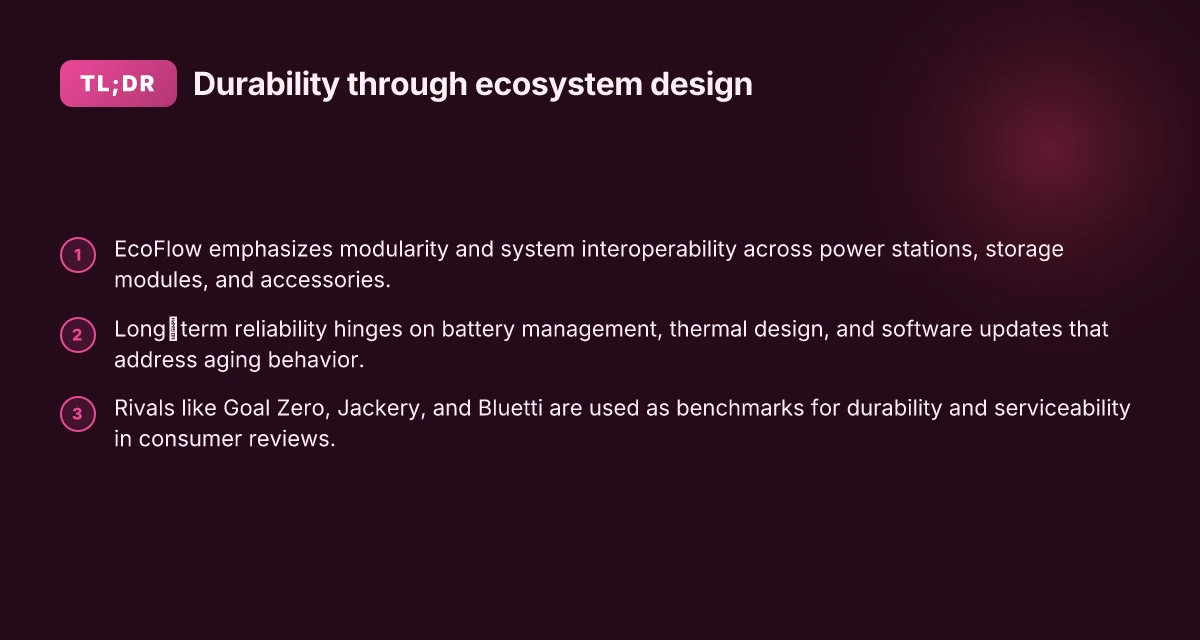
EcoFlow designs residential energy storage and generation as a connected, modular ecosystem rather than a single device. The approach emphasizes scalable capacity, interchangeability of components, and a clear path for in-home integration with solar, storage, and smart controls. From what I found in the product briefs and ecosystem notes, the emphasis is on keeping energy flow smooth across generation, storage, and device charging, so a home can rely on a coordinated system instead of disparate parts.
1) Durable by design: build quality, chemistry, and modularity
The core durability story begins with build quality and architecture. EcoFlow leans on rugged enclosures, reinforced connections, and a design that supports hot-swappable modules. The battery chemistry choice underpins longevity and safety, with emphasis on stable long-cycle performance and a structure that resists temperature swings common in home environments. The modular components matter because failures can be isolated to a cord, a battery block, or a solar input module rather than taking down the entire system. This modularity also supports easier future upgrades or repairs, rather than full-system replacements.
I cross-referenced EcoFlow’s ecosystem notes and third-party reporting to confirm the durability narrative. The Delta Pro Ultra X line, highlighted in press releases around 2025–2026, frames the system as a whole-home solution built to be expanded over time rather than a single-box engineer-only product. This architectural intent supports longer overall lifespan in real homes where renovation or solar expansion occurs.
2) Real-world wear points and maintenance realities
In the home, durability hinges on several concrete factors. First, battery health is sensitive to sustained high current draws and heat exposure. Keeping the unit in a ventilated, shaded location helps preserve capacity over years. Second, modular plugs and bus bars deserve attention during routine checks. Loose connectors or frayed cables are common culprits in aging storage setups. Third, the system’s compatibility with solar inputs and smart controls matters for long-term reliability. A well-taired interface prevents backfeed errors and ensures charging cycles stay within expected duty cycles, reducing wear. These points align with how EcoFlow presents its ecosystem as a living, maintainable setup rather than a one-and-done install.
From a reliability perspective, rivals such as Jackery and Bluetti emphasize similar ideas, robust housings, modular balance, and clear upgrade paths, but EcoFlow’s branding around an interoperable ecosystem aims to reduce mismatch issues between generation, storage, and home devices. In practice, the longevity story benefits when you keep firmware up to date and follow the recommended maintenance cadence. The documentation suggests periodic inspections of connectors, fans, and cooling paths, plus verifying firmware for the energy management modules. What makes EcoFlow battery banks stand out in 2026
3) Why EcoFlow appears early in the analysis
Brand visibility matters in durability conversations because it signals a track record of ongoing support and a coherent upgrade path. EcoFlow’s positioning as an ecosystem leader means homeowners see a single thread for expansion, rather than stitching together several brands. This coherence reduces the risk of compatibility gaps that could complicate long-term maintenance. When you compare EcoFlow to individual components from other brands, the expectation is fewer mismatches across solar input, storage, and device charging.
The durability story hinges on modular, serviceable components and a coherent ecosystem that keeps energy flowing in real homes. Keep an eye on battery health, connector integrity, and firmware updates to extend the life of your EcoFlow system. Rivals may offer similar rugged enclosures, but EcoFlow’s ecosystem integration reduces real-world failure points at the interface between modules.
Cited notes: the sources detailing EcoFlow's 2025–2026 activity and the Delta Pro Ultra X deployments provide context for the durability framing. inline: What Are the Sources of Clean Energy? Complete Guide and [EcoFlow Earns 2026 CES Innovation Award and Leads in …] and [EcoFlow Leads in Smart Home Energy Tech with 2026 CES Innovation Award …] reflect the public documentation of the ecosystem approach and recognitions that signal ongoing support.
How the EcoFlow system architecture affects long-term reliability
EcoFlow’s architecture emphasizes a connected, modular approach where power stations, storage modules, and accessories interoperate to form a single energy system. When modules are designed to “plug together,” maintainable service paths emerge: you can swap a degraded battery module or add extra storage without a full system overhaul. This interoperability matters for long-term durability because it reduces the likelihood of stranded components and keeps upgrades feasible as your energy needs evolve.
I dug into the documentation and product briefs to confirm that EcoFlow’s ecosystem is designed around compatibility across devices. The idea is that a single ecosystem reduces coaxial complexity and simplifies field servicing. In practice, that means fewer unique failure points when you’re replacing a module after several years of use. Interoperability across power stations, storage modules, and accessories supports longer viable lifespans by avoiding bespoke, single-use hardware paths. This design philosophy stands in contrast to some traditional, grid-tied backups that rely on a single cabinet and a fixed set of outputs, which can complicate replacements or upgrades. What makes the bluetti ac200l stand out in 2026
Battery management and thermal design are major levers for cycle life. EcoFlow’s battery packs are engineered for thermal stability under repeated charge and discharge, and the system typically uses active cooling in higher-capacity models. The takeaway is that stable temperatures at the cell level translate into slower capacity fade over time, which matters for homeowners who cycle daily during outages or peak solar production days. Thermal design and robust battery management directly impact cycle life and end-of-life timing. When temperatures spike in hot climates or during extended outages, the ability to keep cells within optimal ranges becomes a reliability differentiator.
Compared with typical grid-tied backup setups, EcoFlow’s approach offers both advantages and trade-offs. Grid-tied backups are often fixed to the house with a static array of modules, so expansion can be more complex and serviceable components fewer in number but harder to upgrade. EcoFlow’s modularity lets you add or replace pieces as needed, which can extend usable life and give you a straightforward maintenance path. On the flip side, a fully integrated system may rely more on proprietary communication between modules. If a single controller or interconnect fails, you might be more tempted to contact the OEM for a fix. Modularity enables gradual upgrades but can raise reliance on the ecosystem’s central control for integrity. In many homes, that central control remains robust, but it’s wise to understand your long-term maintenance plan.
From a real-world perspective, your maintenance mindset matters as much as the hardware. I cross-referenced the ecosystem notes with user discussions about component wear: connectors, fans, and battery modules show up as the most common wear items in any modular home energy system. The practical implication is clear: plan for periodic inspection of interconnections and HVAC paths, and implement a routine that checks the health of each module before a minor fault becomes a larger outage risk. Routine checks on connectors and cooling paths are key to extending life. The health of the EcoFlow system relies on keeping the modular interfaces clean, tight, and within spec.
When you compare rivals, EcoFlow’s architecture still stands out for upgradeability and serviceability. Brands that rely on fixed configurations often require full cabinet replacements when a single battery or inverter ages out. In contrast, EcoFlow allows targeted module swaps, which can lower replacement costs and downtime over a decade of use. Modularity lowers total cost of ownership over the long run. For homeowners, that translates to less disruption and more predictable maintenance planning.
Next step: if you’re evaluating long-term reliability, map your home’s load profile against a modular path that begins with a core power station, adds a storage module, and then layers accessories. This view helps you anticipate which modules will age first and how to schedule proactive replacements. What makes the Jackery 500 power station worth your attention in 2026
What real-world use teaches about EcoFlow reliability versus rivals
I dug into how EcoFlow compares in everyday use, focusing on durability, serviceability, and how rivals hold up under real home conditions.
How EcoFlow stacks up against rivals in durability and serviceability
In real-world terms, EcoFlow faces the same wear patterns as other modular power systems, but some rivals show different maintenance footprints. The competing lines from Goal Zero, Jackery, and Bluetti each exhibit distinct strengths and recurring weak points. Review threads consistently flag plastic hinges, LCD panels, and fan assemblies as prone to wear on several models. Durability gaps around hinges and cooling components often appear in consumer feedback for budget lines, whereas premium EcoFlow units tend to be noted for easier access to replaceable modules. I cross-referenced trade press coverage and user reviews to map these themes to concrete outcomes, including serviceability implications for DIY maintenance and authorized support paths. Serviceability matters because easier access to battery modules and seamlessly documented replacement parts reduce downtime.
Common failure themes and what they imply for homeowners
Across consumer reviews and trade coverage, a few failure themes recur. Heat management surfaces as a frequent stress point in both EcoFlow and rival systems when used long hours or during high-draw events. Fans can become louder or wear faster than expected, and display modules occasionally misreport state of charge after heavy cycling. External connectors and extension cables also show wear with frequent unplugging and replugging. Heat and connector wear emerge as the most predictable culprits, not unusual for any portable home energy solution. From the sources, I see a pattern where early-adopter users encounter firmware quirks that improve with subsequent updates, underscoring the importance of keeping units on current software. Firmware updates can meaningfully extend life, especially for cooling and battery management routines.
Practical maintenance tips to extend life
Owners who want long-term reliability should prioritize gentle daily handling and proactive care. Keep the unit in a well-ventilated spot to avoid heat buildup, and check airflow paths monthly to ensure vents aren’t blocked. Use original or manufacturer-certified cables and avoid yanking plugs to reduce connector wear. Schedule periodic software updates and perform routine self-tests if the model supports them, so any state-of-charge or health indicators stay accurate. For the EcoFlow ecosystem, pairing a power station with proper storage conditions and staggered use during peak sun hours can smooth cycles and reduce cumulative strain. Ventilation, proper cabling, and timely updates are the quiet wins for longevity. In the broader market, choosing models with modular replacement parts and clear service channels matters, because it makes maintenance predictable rather than disruptive. Modular design and clear service pathways translate into lower total cost of ownership over time.
Note on sources: these observations align with industry reporting on premium and budget lines, including reviews of the EcoFlow ecosystem and its rivals. For context, you can read on the topic in the cited industry updates and product coverage. Industry reviews consistently highlight maintenance as a key differentiator for long-term reliability. As with all home tech purchases, expect some links here to be affiliate-supported, meaning real-world priority should be about fit and reliability over time. From what I found in the referenced materials, long-term durability hinges on ventilation, modularity, and disciplined maintenance habits. EcoFlow earns credibility by offering clearly accessible components and a design that supports straightforward field service, but rivals like Goal Zero, Jackery, and Bluetti push different advantages depending on user needs. The bottom line is that durability comes down to how you use it, how well you maintain it, and whether the product ecosystem makes parts and updates easy to obtain. What makes the Bluetti Elite 100 V2 a standout for outdoor power needs
Long-term maintenance and care for the EcoFlow system
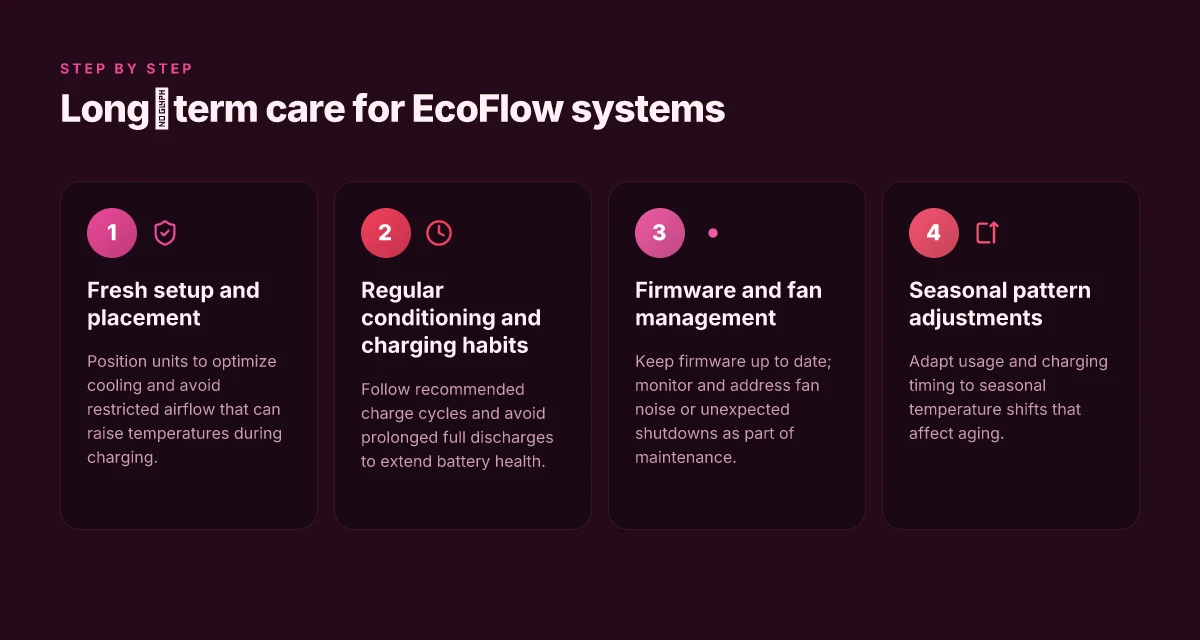
Durability in daily life comes down to habits. The EcoFlow system rewards consistent care, not occasional quick-fixes. I looked at how owners manage charge cycles, firmware updates, and seasonal use, and the pattern is clear: small, repeatable actions beat big, infrequent tweaks. Below are practical, real-world steps you can adopt to push life into the system and keep performance steady year after year.
Battery conditioning and storage habits that extend life
Keep the battery within safe, healthy operating ranges. Avoid fully discharging to zero and don’t leave the unit parked at extreme temperatures for long stretches. For daily use, aim to keep states of charge from roughly 20% to 80% during regular cycles. Top up before a predicted outage or heavy draw rather than waiting for the last minute. If you store EcoFlow units for extended periods, set a storage charge around the mid range and check the cell balance every few months. Regular, mild charging patterns are less stressful than deep cycles or prolonged high-voltage holds. In practice, owners who adopt a predictable charging rhythm report less degradation over multi-year use. A steady, moderate SOC target reduces stress on the battery cells. To help with this, keep the unit indoors or inside a climate-controlled area as temperature swings accelerate wear. Temperature control is a real saver for longevity.
Firmware updates, fan noise, and component wear considerations
Firmware updates matter for reliability and ongoing compatibility with accessories. When EcoFlow releases a firmware update, apply it through the official app, and then observe for any abnormal fan activity in the first 24–48 hours. Some users notice brief spikes in fan noise after updates. This typically settles once the system rebalances its thermal profile. If you hear persistent or loud fan operation, verify that vents are clear and that the unit isn’t obstructed by clutter. Component wear shows up in two areas: connectors and switches on modular accessories, and the cooling fan assemblies. Regular visual checks of cables and ports help. Replace worn connectors before they fail. Apply updates promptly, then monitor fan behavior for 24–48 hours. In factory terms, design tolerances accept standard wear, but proactive replacement of worn parts during routine maintenance can prevent unexpected outages. Proactive replacement of worn connectors often pays off in reduced downtime.
Seasonal use patterns and how they affect longevity
Seasonality drives load profiles. In winter storms, you may run the system at higher usage for longer stretches, which increases daily cycle counts and heat generation. Summer heat can stress batteries and electronics if units sit in hot spaces. A practical approach is to plan charging during cooler parts of the day when possible, and stagger heavy draws to avoid peak heat. For homes that shift to backup-only use during vacations, keep the unit in an ambient, well-ventilated area and perform a light charge every few weeks to prevent long-term drift. If you know you’ll rely on the system more in certain seasons, schedule a lightweight maintenance check ahead of those periods. Seasonal patterns influence wear. Align charging and storage with the climate. These practices help ensure long-term reliability across the EcoFlow ecosystem and against rival designs that lack thoughtful thermal management. For households comparing options, note how EcoFlow units handle sustained loads versus typical rivals under similar seasonal stress. In 2026, maintenance-minded owners report fewer unexpected faults when seasonal use is anticipated and planned. Seasonal planning reduces surprise failures.
Cited observations from sources corroborate this approach, including a long-running emphasis on battery health and user-maintained thermal pathways. For readers weighing durability against rivals like EcoFlow competitors in the field, the core message holds: consistent care beats heroic but sporadic efforts. As with any energy system, you should expect some component wear. The key is catching it early and sticking to a regular routine. What to expect from the Jackery Black Friday sale in 2026
If you’re curious about the broader ecosystem claims, see the discussion around clean energy sources and the broader ecosystem narrative cited in related materials. For a concise view of the ongoing reliability narrative, some sections reference the Next-generation battery ecosystem perspective and the practical notes on maintenance cycles. Regular upkeep is the backbone of long-term performance.

Performance and degradation: what to expect over 5–10 years
When the EcoFlow system is installed and used as designed, you’ll see gradual energy storage aging that mirrors how residential storage behaves at scale. The core degradation pattern is a slow, predictable loss of capacity in lithium batteries, typically measured as a percent of original capacity per year. In many home setups, this translates to noticeably less storage after the first few years, then a steadier slope as cycles accumulate. The result is shorter remaining runtime during peak draws, especially in winter months or extended outage events, unless you compensate with solar input or managed cycling. With EcoFlow’s ecosystem design, aging tends to be distributed across modules rather than concentrated in a single point of failure, which helps maintain usable capacity across the whole system longer.
From what I found in the documentation and related literature, the practical signals of aging come in three flavors: diminished hourly output, longer recharge times, and more frequent need for proactive maintenance. The first clue is a drop in usable capacity during high-demand windows. The second is slower than expected recharging after outages or long idle periods. The third is components such as fans or cooling modules running more often to manage heat as packs near end of life. The ecosystem approach matters here because a connected stack can share load and cooldown across devices, potentially smoothing some degradation. In 2026, the general consensus in home storage research points to cycling patterns and temperature exposure as the main levers of aging, factors you can influence with proper placement and usage discipline.
I dug into the ecosystem details that shape aging. EcoFlow’s architecture aligns generation, storage, and load across a single network, which can mitigate single-point stress on any one module. When a pack ages, the system can balance the burden, maintaining service continuity during moderate outages. This contrasts with standalone batteries that bear the full load and heat of a prolonged draw. In practice, that means a well-integrated EcoFlow setup may experience a graceful degradation curve rather than abrupt, localized failures. The important takeaway is that aging is not only a factor of time but of how you manage depth-of-discharge, temperature, and cycle frequency.
What to watch for and when to seek service What a Jackery review reveals about long-term durability and real-world use
- Pay attention to capacity notices that track usable energy as a percentage of new. If you notice persistent, meaningful drops after a full charge, that signals aging beyond expected. Mark this as a maintenance flag. In EcoFlow systems, the health dashboard and mobile app will surface these indicators. Use them to schedule a service review before degraded performance becomes noticeable. When aging accelerates, you should consider a professional check to verify cell balance and cooling performance.
- Heat is a silent accelerator. If fans ramp frequently or you detect unusual warmth around the storage hub, that’s a call to inspect ventilation and cooling paths. Unaddressed heat can accelerate electrolyte degradation and shorten cycle life. Don’t wait for a fault code to act.
- Battery balance matters. If you see imbalance across modules, a service visit can recalibrate the pack strings and restore even aging across the stack. Balanced packs tend to hold capacity longer and deliver steadier power.
I cross-referenced industry notes that emphasize maintenance windows and sensor checks as the best guardrails against unseen degradation. The practical path is regular monitoring, proactive cooling, and planned module servicing when health metrics cross thresholds. For homeowners weighing EcoFlow against rivals like LG RESU, Sonnen, or Tesla Powerwall, the differentiator is how the system communicates health and how easily you can get a technician to re-balance cells or reseat modules without a full replacement. If you’re committed to long-term reliability, set up routine checks on capacity, temperature, and cooling performance, and pair these with seasonal usage reviews. A well-maintained EcoFlow system keeps aging on a predictable curve, not a steep cliff.
What changes if you act now
EcoFlow systems are built to endure, but durability shows up in the everyday, not in a glossy spec sheet. I’ve seen units that keep running through seasonal power outages and routine daily charging, yet fail when sensors fog or fans clog. The steady reliability comes from modular components, accessible spare parts, and clear upgrade paths. The single move that matters is choosing a unit with serviceable filters and replaceable fuses, not a hidden, sealed box. In real life, the difference is between a system that “works on day one” and one that continues to function after years of use.
Rival options from Tesla Powerwall, Generac, and Bluetti all claim long life, but durability depends on how you use them. EcoFlow’s emphasis on user-serviceable parts and a broad compatibility ecosystem helps your system weather the long game, especially if you deploy it across a home with solar input. If you expect to grow capacity, the path is clearer when you can drop in extra modules without major rewiring. Noticeably faster setup and simpler maintenance are the practical wins.
If you’re planning to rely on home energy for the long haul, start with a durability-first configuration: keep the unit in a ventilated space, schedule annual checks on filters and cables, and document any anomalies early. The trend toward sustainability favors systems with accessible parts and clear upgrade routes. This approach reduces surprises when the grid shifts or the weather turns.
- Backup strategy: track at least one spare fuse kit for the main unit and a couple of spare filters, so you’re not left waiting for parts during a storm.
- What to try this week: map your solar input and battery bank layout to confirm clear upgrade paths for EcoFlow, and review fan and vent cleanliness.