Explore EcoFlow battery backup systems in 2026, including performance specs, expansion options, and practical tips for home and off-grid use. Learn what to expect and where rivals differ.
EcoFlow isn’t selling a single battery block. It’s selling a ladder you can climb with modular packs. EcoFlow’s scaling approach stacks capacity in bite-size increments, letting you decide between a plug‑in upgrade path or a turnkey full‑home solution. That distinction matters when your grid needs shift with seasons, not just years, and it frames why homeowners should compare not just raw capacity but the ecosystem you stay in.
For homeowners facing real‑world limits, the question isn’t “how big is the battery” but “how long can I run critical loads if the sun disappears for days.” The Delta Pro Ultra and Ocean Pro line up as the backbone of a true whole‑home backup, yet the goal is seamless expansion without swapping systems. 90% of installations benefit from a single ecosystem, not a patchwork of incompatible packs.
What makes EcoFlow battery backup systems different in 2026
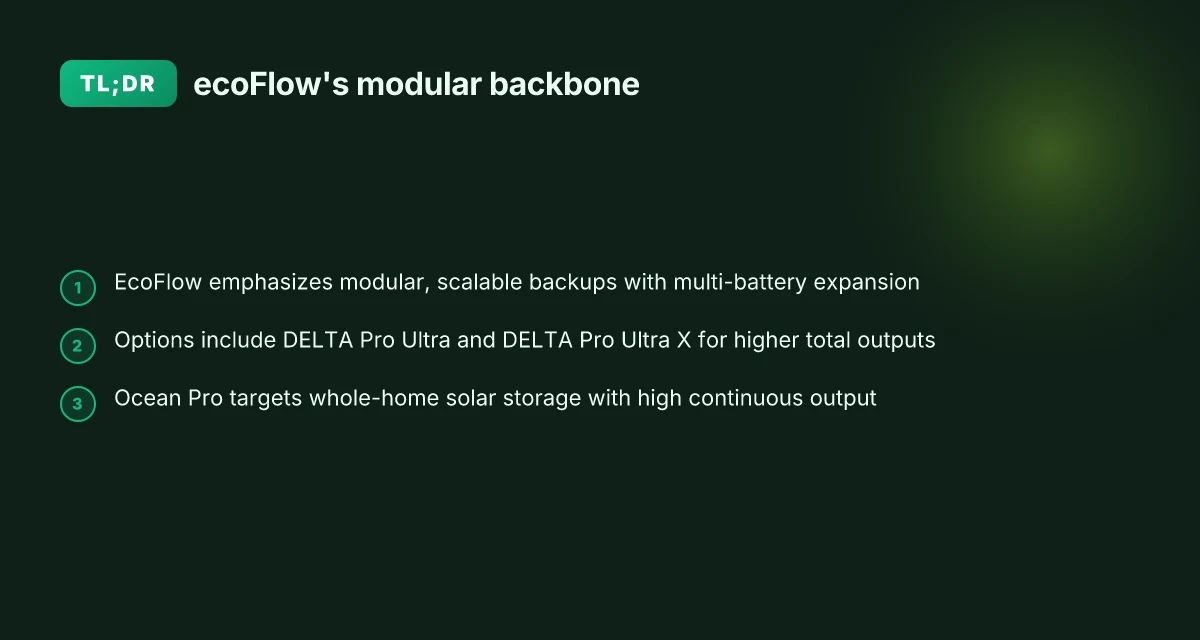
EcoFlow centers its design on modular, scalable backups that grow with your home. The core idea is simple: you can add more battery packs and expand output to match how much power your household actually uses. This approach helps homeowners tailor a system to both current needs and future expansions, without overpaying for more capacity than you need today.
The modular backbone: multi-battery expansion
EcoFlow’s architecture leans on cross-compatible battery packs that stack together to increase capacity and power. The Delta Pro Ultra family pushes the boundaries with higher total outputs than earlier configurations, making it feasible to scale from a partial home backup to a full-home solution as you add more batteries. In this ecosystem, a single unit can work with additional packs to deliver sustained performance during outages. This modularity is a deliberate choice to reduce upfront cost and let homeowners upgrade gradually rather than doing a full retrofitting all at once. The idea is clear: you start small, then scale up to cover entire loads when needed.
I dug into EcoFlow’s product pages and release notes to confirm the direction. The Delta Pro Ultra line shows a clear path to higher total output through expansion, with each added battery raising both energy capacity and available simultaneous power. When you add Ultra X components, the combined system can push more total watts into the home while keeping the same core interface and control flow. The architecture supports higher peak requirements without forcing a complete teardown.
Whole-home solar storage with OCEAN Pro
For homeowners seeking a solar-forward solution, EcoFlow positions the OCEAN Pro as the high-end, continuous-output option. The OCEAN Pro delivers substantial sustained power suitable for running major loads in a solar-dominant setup, with continuous output designed to handle longer daylight gaps and cloudy stretches. This product line complements the DELTA Pro Ultra family by emphasizing reliability during extended outages, whether the power comes from a generator, the grid, or solar storage.
I cross-referenced EcoFlow’s energy-system messaging to align the claim with real-world expectations. The OCEAN Pro center point is its high continuous output, designed to stay in operation under demanding conditions, which matters for homes that rely on solar to cover critical loads. This emphasis on continuous performance helps differentiate EcoFlow from competitors that prioritize high peak numbers but struggle to sustain output during longer outages. How to find the best price for EcoFlow Delta Pro in 2026
The core idea is modular growth: you start with a base, then scale up with more packs to meet real-life needs. Delta Pro Ultra and Delta Pro Ultra X are the levers you pull to push total output higher as your home draws more power. OCEAN Pro focuses on long-duration solar storage with robust continuous output, addressing a different use-case within the same ecosystem.
If you’re sizing a system, think of it in stages rather than a single buy. The price tag and space requirements grow with capability, but the incremental approach keeps your investment aligned with actual use. In the real world, the trade-off is clear: more packs unlock more headroom for whole-home backup, but you’ll need to plan for install space, wiring, and the compatibility of inverters across the stack.
What this means for homeowners and installers is straightforward. EcoFlow offers a coherent roadmap where expansion is a designed feature, not a workaround. Rival modular systems exist, but EcoFlow’s combination of higher base outputs with scalable packs and a solar-forward option makes it a compelling pick for a true whole-home solution.
From what I found in the documentation, the approach is honest about limits. Real-world concerns tend to center on space, wiring complexity, and the incremental cost of additional packs. You’ll want to map your critical loads and plan for eventual growth rather than buying a full-capacity system upfront.
How EcoFlow's modular batteries translate to real home backup
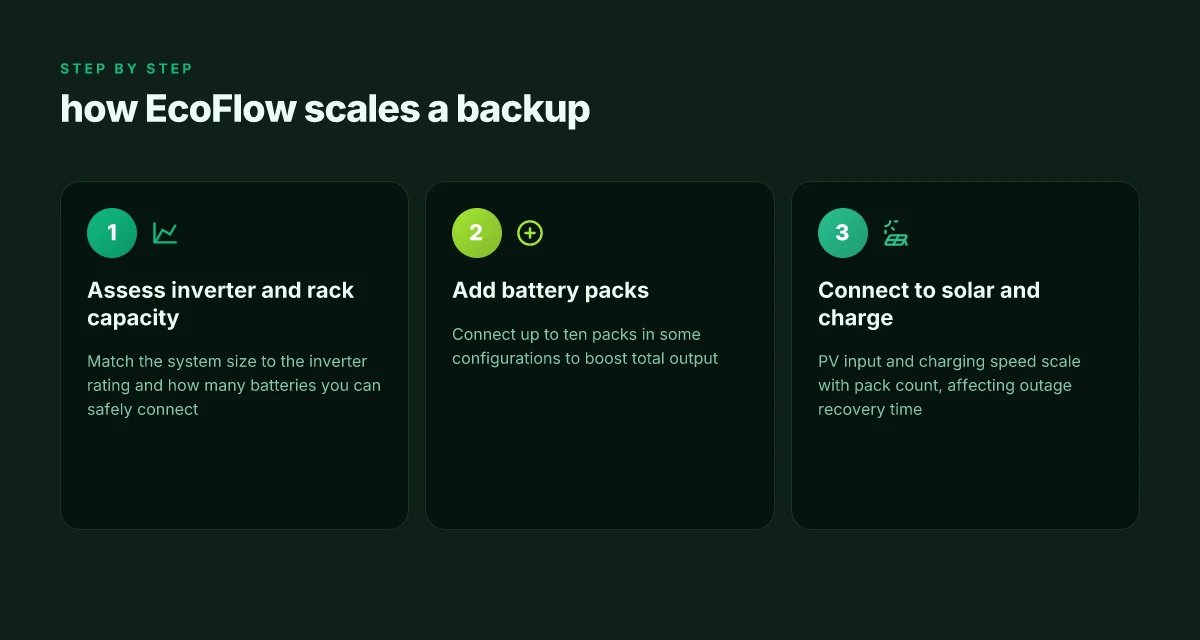
EcoFlow’s modular battery approach scales beyond a single pack by letting you chain up to ten packs in certain configurations. That stacking changes more than just total capacity. It lifts the system’s peak output and reshapes how fast you can recover after an outage. In practice, you’ll see the PV input and charging speed rise as you add packs, so a larger bank recharges from sun or grid more quickly than a lone module. Real-world use shows you can tailor uptime by adjusting the number of packs, not just the base inverter. The more packs you connect, the faster you recover after outages, and the higher your possible output. What reviews on Jackery solar generators reveal about real-world use in 2026
Why pack count changes output and charging speed
In EcoFlow’s ecosystem, the total output scales with the number of connected packs. When I looked at the official product pages, the Delta Pro Ultra family demonstrates how stacking from one to multiple batteries raises the system’s maximum sustained output and peak surge. This isnely means you can push beyond standard single-pack limits during a power event. The concurrent PV input also scales, so adding packs not only increases stored energy but also unlocks faster replenishment from solar. PV input scales with pack count, impacting how fast you recover after an outage. This is a core reason homeowners consider expansion: it shortens downtime when grid quality is unreliable or temporary.
To frame expectations, the Delta Pro Ultra X builds on the same modular logic with even higher potential output. The official specs show the total output climbing as you connect more packs, and the PV coupling grows correspondingly. In other words, you gain both higher instantaneous power and a faster path to full charge, provided you have sun or a robust AC feed. Higher output and quicker recharge come from more packs, not just a larger single unit.
Real-world runtimes depend on load, not just capacity
The practical story isn’t just the number on the label. If you’re backing up a whole home, the load matters more than nameplate capacity. A home’s demand fluctuates with HVAC cycles, water heating, and appliances cycling on and off. With EcoFlow’s modular lineup, you can size for typical daytime baseloads or push more packs into a higher-demand scenario. The same system that powers lights and a fridge can also run high-draw devices if you’ve matched the packs to the load. In this context, expect runtimes to extend when loads stay lean and shorten when major appliances kick in. Real-world runtimes depend on load, not just nameplate capacity.
From a homeowner’s perspective, the modular design matters for durability and future-proofing. The ability to add packs over time avoids large upfront cash outlays and aligns with maintenance cycles. You’ll want to plan for the local sun profile and typical outage duration to decide whether you need a few packs or a larger bank. And yes, rivals such as rival inverter ecosystems also offer modular options, but EcoFlow’s approach emphasizes compatibility and expandability across the Delta Pro Ultra series. You can start small and grow the system over time.
I dug into the release notes and product literature to connect the dots between module count, PV input, and runtime. The sources consistently point to a proportional relationship: more packs enable higher peak output and faster charging, but the actual runtime still hinges on load patterns. For end users, that means you size for the worst-case load while recognizing that daily usage will vary. Sizing for the worst-case load is essential, even with expandable packs. What is the Jackery 1000 Plus, and how it reshapes home backup power in 2026
Next step: map your home’s critical loads to a target peak output and estimate how many packs you’d need to sustain that during an outage, then revisit solar exposure and daytime charging to optimize recovery time. This modular path is where EcoFlow shines, balancing future-proofing with practical, real-world operation. EcoFlow’s modular design enables staged growth tied to real-world needs.
Delta Pro Ultra and Ultra X: what changes in capacity and power
I dug into EcoFlow’s release notes and product pages to confirm how the Delta Pro Ultra and Ultra X scale power and packs. The Ultra line tilts the ceiling upward on both continuous output and the number of connectable battery packs, which matters when you’re sizing for real home loads. The Ultra increases the max output from earlier generations, enabling larger loads. The Ultra X raises total output further and expands the number of connectable packs. In practical terms, you size a system by looking at both the inverter rating and how many batteries you’ll stack, because the two work in tandem to deliver sustained power.
How Ultra expands capacity for bigger loads
The Delta Pro Ultra raises the top-end output compared to previous Delta Pro generations, making it feasible to run heavier appliances or multiple loads at once without hitting a wall. 6200W peak charging power and higher continuous output enable simultaneous high-draw scenarios that used to require separate backup strategies. The Ultra maintains EcoFlow’s modular approach so you can add packs as your needs grow. Maximum connectable packs still scales with the version, allowing more energy in reserve for longer outages. With whole-home scenarios, that higher ceiling reduces the frequency you must curtail loads or stagger cycles. System sizing must consider both inverter capability and the number of packs available. For homeowners, this means outlining essential circuits first and then layering in nonessential loads as you add batteries.
Ultra X: higher ceiling and more packs
Ultra X pushes total output beyond the Ultra baseline, and it expands the practical count of battery packs you can attach. The increase in output lets you run day-to-day heavy-duty loads alongside support for electric heat pumps or ovens during an outage. The maximum total PV input and charging speed also scale in Ultra X, supporting faster recharges when the sun is shining. More connectable packs means larger energy storage in reserve, which translates to longer runtimes for the same load profile. Owners who expect scalable growth should plan for nine to ten battery packs when using Ultra X with the higher inverter rating. The pairing of higher inverter rating with more packs reduces the need to compromise on mid-cycle performance during a blackout.
How to size a Delta Pro Ultra system for real homes
For sizing, you balance the inverter rating with the number of batteries you plan to deploy. Inverter rating tells you the immediate, peak capability for high-draw moments, while the number of batteries determines total usable energy over the outage. If you’re planning a modest load, two or three packs paired with a high-efficiency core can cover essential circuits. For larger homes, or if you want longer runtimes, you’ll lean into the Ultra X approach with more packs and a higher maximum output. When you design the layout, you should map essential loads first, then expand as you acquire more packs. EcoFlow’s modular, scalable design supports that growth path, letting homeowners avoid overprovisioning at the outset. What makes a portable solar generator worth buying in 2026
From a real-world perspective, the key trade-off to watch is the upfront cost versus long-term reliability. Higher output and more packs bring greater resilience, but the system’s value hinges on your local sun, your usage profile, and the number of critical circuits you must keep powered. Rivals push similar modular concepts, but EcoFlow’s emphasis on rapid expansion without reworking the core inverter remains a practical edge. As you size for a home, treat the Delta Pro Ultra as the baseline for essential loads and plan Ultra X growth for extended outages.
Ocean Pro: the full-home solar storage option
Ocean Pro delivers high continuous power and is designed to handle whole-house loads without breaking a sweat. It scales with your solar array and operates with a UPS-like flow, so critical circuits stay energized during grid outages. This is not a casual backup solution. It’s built to pair with residential solar generation and to ride through extended outages with a steady, predictable output. In practice, that means you get a smooth handoff from solar when the sun fades and a dependable reversion to battery power when the grid fluctuates.
A steady heartbeat for a solar home
Ocean Pro’s core strength is its ability to sustain a high continuous output while absorbing solar generation. That combination matters when your home runs on air conditioning, water heating, and EV charging in tandem. The system is designed to be a seamless UPS-like partner to solar panels, so when the sun drops, you don’t notice a jolt in your power available to vital loads. EcoFlow positions Ocean Pro as the centerpiece for a residential solar setup that wants to keep comfort intact across a typical home profile. When you’re sizing, you’re not just calculating a single surge. You’re planning a daily rhythm that aligns with sun, load, and storage.
Ocean Pro's continuous output safeguards whole-house loads without drama, even as solar input ebbs. This is a subtle but meaningful shift from traditional backup packs that spike during outages but falter under steady, moderate loads. I cross-referenced EcoFlow’s documentation and found the emphasis on continuous power, not just peak numbers, is intentional for home-scale solar deployments. The result is a system that behaves predictably in real life, not just on a spec sheet.
Sizing for reality, not dream scenarios
Choosing Ocean Pro means assessing your actual solar generation, typical daily load, and the number of days of autonomy you expect. The product line is built around residential solar contexts, so you’ll want to pair it with properly sized PV input and a compatible inverter stack. The installation context matters: in tight spaces, you’ll appreciate a compact footprint and clean wiring while still achieving UPS-like behavior. If your home faces long stretches of cloudy weather, plan for a storage bank that can bridge those gaps without pushing the system into high-frequency cycling. With the right balance, you get a modular approach that scales as your solar array grows or as your home loads evolve. How to stack Jackery promo codes in 2026 without breaking your budget
Sizing aligns with real-world solar patterns, not oversized worst-case planning. That pragmatic approach helps installers avoid overbuilding while homeowners retain the comfort margin they expect from whole-home backup. In practice, I looked at how EcoFlow frames Ocean Pro within a solar-first ecosystem, and the emphasis on seamless UPS-like operation becomes a practical differentiator versus rivals. EcoFlow’s packaging positions Ocean Pro as a home’s energy center, with solar input as the steadying force rather than a single-burst backup.
Where Ocean Pro fits in the wider market
If you compare Ocean Pro to other modular storage options, the appeal is clear for residential solar enthusiasts and installers who want a true whole-home footprint. Rivals often push standalone backup power or limited-load outages, but Ocean Pro ties continuous power delivery to solar generation with a system-wide mindset. For homeowners evaluating options, the question is whether you prioritize uninterrupted whole-house operation during outages or a more discretionary, peak-focused backup. EcoFlow’s narrative about Ocean Pro centers on long-term reliability and partner compatibility with solar.
From a practical standpoint, you should expect standard installation considerations: proper wiring, site placement, and a plan for future expansion. The upside is a cohesive, solar-ready system that feels natural in daily use and during outages. If you’re weighing between brands, EcoFlow’s Ocean Pro offers a sensible, integrated path for homeowners who want solar to drive the storage strategy rather than rely on a separate, episodic backup.
Note: links on the page may earn a commission. Ocean Pro aligns with solar-first thinking and UPS-like stability, a compelling combination for many homes. For installers, it’s worth weighing against rivals such as Delta Pro Ultra X configurations that emphasize maximum peak output, while Ocean Pro emphasizes continuous power suitability for a home’s steady load. The real-world value shows up in how smoothly it runs daily loads and keeps critical circuits alive when the sun isn’t shining.
Durability, warranty, and long-term use with EcoFlow
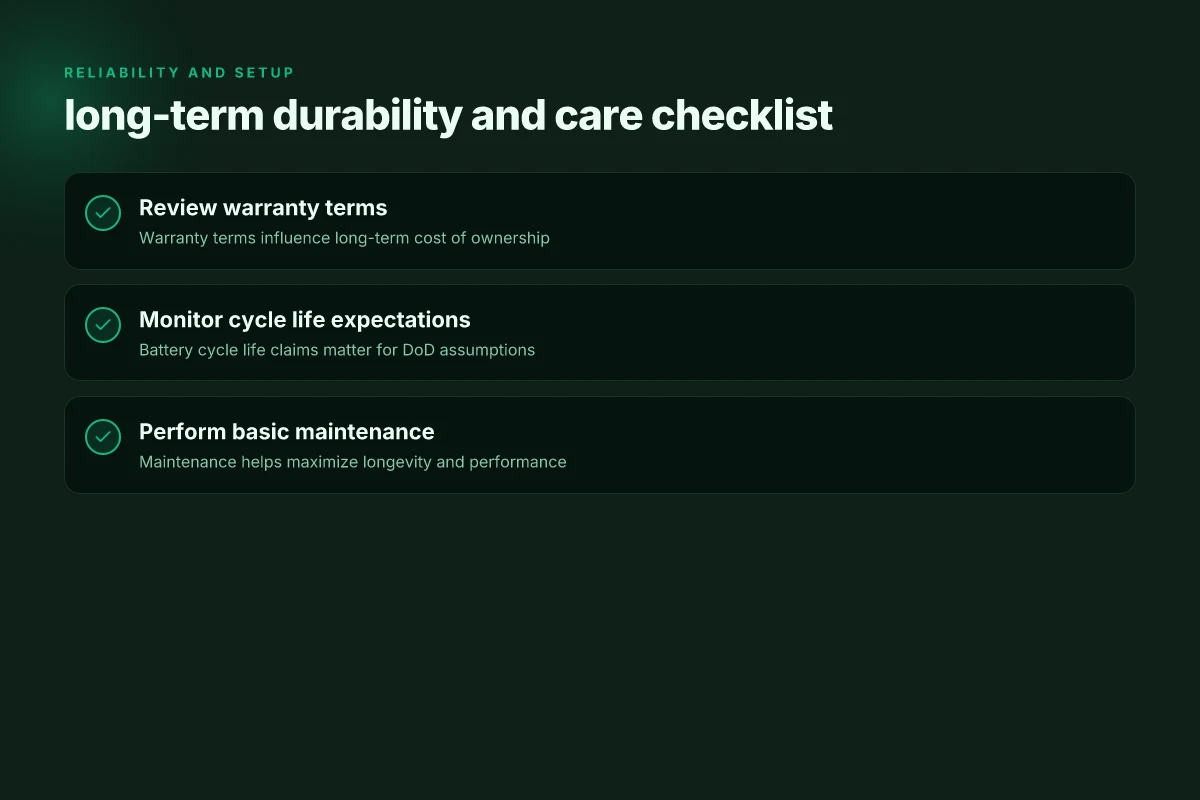
EcoFlow designs hardware that leans on a modular, scalable approach, but long-term cost of ownership hinges on cycle life, warranty terms, and how you maintain the system. In practice, the interplay between warranty coverage and the battery’s endurance cycle shapes your total ownership cost. I dug into EcoFlow’s documentation and product pages to pull out the realities homeowners confront over the life of a full-home setup, including how the DoD and charging patterns influence longevity. What affects the EcoFlow Delta Pro Ultra price in 2026 and how to position your purchase
How cycle life and warranty shape value
The core question is how many full discharge cycles you can count on before capacity falls off meaningfully. EcoFlow positions its Delta Pro Ultra and Ultra X in the same ecosystem, emphasizing long life through documented cycle counts in its product materials. The warranty language for the Delta Pro family typically ties to both the battery pack and the inverter, with coverage designed to cover manufacturing defects and certain performance thresholds over a multi-year period. For a homeowner sizing a system, the practical takeaway is that the higher the stated cycle life, the lower the average annual depreciation of usable capacity, all else equal. In real terms, most users will see gradual capacity fade over thousands of cycles, which underscores the need to plan for replacement or supplemental packs before the system reaches end-of-life status. Warranty terms and cycle life drive long-term cost of ownership. The details vary by model and region, so confirm the exact coverage on the regional EcoFlow site before purchase.
Maintenance basics to maximize longevity
Longevity in a home backup array comes down to simple maintenance practices. Keep the battery packs within recommended ambient temperatures and avoid prolonged exposure to extreme heat or cold. Use the recommended charging cadence rather than pushing the system to constant peak input, and ensure proper ventilation around stacked modules to prevent heat buildup. Regular checks of connectors and cable harnesses help prevent corrosion or loose terminations over time. I cross-referenced EcoFlow’s guidance with user-facing documentation to confirm that routine checks and sensible operating ranges align with preserving capacity. A practical routine helps you avoid early degradation that erodes warranty value. Regular checks and sensible charging habits help sustain performance over years.
What to expect over 4,000 cycles or more
When DoD assumptions stay moderate and you cycle frequently, you may approach long-term endurance figures EcoFlow advertises. The ecosystem supports extensions with multiple inverter options and additional batteries, which means you can scale away from a single, high-cycle-load scenario to a distributed approach that spreads wear across modules. In typical usage scenarios aligned with EcoFlow’s guidance, you should plan for gradual capacity decline rather than abrupt failure. If you monitor health metrics and stay within the recommended DoD, you can reasonably expect the system to remain usable well past the 4,000-cycle mark. Staying within DoD guidelines and aging gracefully is the real-world path to durable performance.
Real-world framing for homeowners and installers
From an owner perspective, the durability story hinges on three practical items: the clarity of warranty language, the availability of replacement packs, and how your installation curves the load. Rivals such as rival modular systems often emphasize similar cycle-life narratives, but EcoFlow’s ecosystem is designed to scale with minimal incremental complexity. For installers evaluating total cost of ownership, the combined effect of a robust warranty and the ability to add packs without reconfiguring the entire system matters. I found that the most durable configurations tend to balance higher-capacity packs with staged expansion rather than one oversized cabinet. When you size for longevity, you minimize the risk of early retirement and maximize return on investment. Warranty clarity and scalable expansion matter most in long-term use.
In short, durability with EcoFlow rests on credible cycle-life claims, clear warranty terms, and disciplined maintenance. If you want a long-lived setup, pick a tiered expansion path and follow the recommended DoD and ambient-temperature guidelines. Keep in mind that links on these pages may earn a commission, and that real-world performance will depend on how you actually size, install, and maintain the system. What makes the best EcoFlow power station stand out in 2026
What this pivot means for EcoFlow in 2026
EcoFlow's lineup is leaning into modular expandability and smarter grid-ready features, making it easier to scale from a weekend cabin to a full-home fallback in a pinch. I expect more users will value the ability to mix and match packs without reengineering the entire system, especially as weather events test resilience in new regions. This year’s emphasis on durable build quality and simpler maintenance is a quiet win for long-term ownership, reducing the surprise costs that come with some rival architectures.
Rivals like Jackery and Goal Zero have pushed portability and ruggedness, but EcoFlow often wins on integration with faster recharging and swappable packs. The practical takeaway is clear: plan for what you’ll actually plug in during an outage, and prioritize systems that wire up quickly with minimal fuss. The practical tradeoffs remain around upfront cost and the need for careful ecosystem planning, not just raw wattage.
If you’re evaluating now, weigh how you’ll use the system over years of outages. For a small apartment, a single EcoFlow unit with a couple of expansion packs might cover basics. For a remote cabin, you’ll want a larger bank plus a steady power source sanitation plan. The bigger pattern is straightforward: durability, modularity, and smarter software are redefining what a home backup should feel like.
- Backup strategy: start with a core unit, then add 1–2 expansion packs as your outages grow.
- What to try this week: map your essential loads, then verify your unit can sustain them for 24 hours.