Discover what to look for in the best EcoFlow power station in 2026. Learn about efficiency, durability, lifecycle impacts, and how EcoFlow compares to rivals.
The most practical power pick for 2026 isn’t a single feature, it’s a system. Efficiency and depth of discharge pair with recharge time to define real-world value, not lab numbers. EcoFlow’s lineup leans on expandable capacity and user-friendly interfaces, but size and price grow with the system. Durability and lifecycle impacts frame long-term costs, especially if you live off-grid or rely on daily use.
This intro lays out the core question: which EcoFlow models deliver dependable power over years of outdoor, van-life, and home backup scenarios? Real-world usage matters as much as the spec sheet, and aging effects shift performance. I’ll break down the metrics that actually matter, efficiency, runtime, depth of discharge, recharge time, durability, and lifecycle environmental impacts, and map them to portable versus high-capacity options, with clear expectations beyond the numbers. EcoFlow’s balance between capacity and usability becomes most meaningful when you consider long-term ownership, not just initial price. Best overall is the Delta Pro for serious outages and Best for travel/van life hinges on the Delta Max, but every choice ties back to how a system ages and how its footprint stacks up.
What defines the best EcoFlow power station in 2026
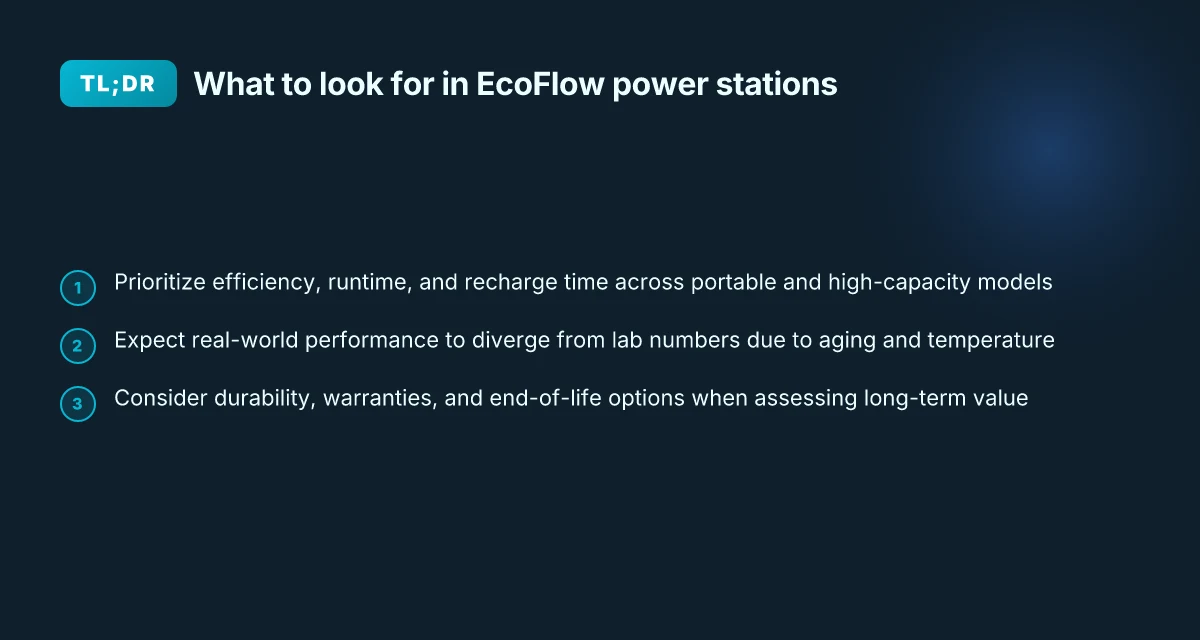
The best EcoFlow power station in 2026 stacks efficiency, durability, and lifecycle impact into a practical balance for real-world use. I look at how metric definitions translate into field performance: efficiency and runtime matter at the campsite as much as durability under daily outdoor use, and the lifecycle footprint matters when you’re weighing your long-term investment. Real-world wear, aging, and charging cycles push lab numbers toward more modest, practical expectations.
1) How EcoFlow measures efficiency, runtime, and lifecycle impact
In practice, efficiency is more than a single number. The lab figure for circuit efficiency collides with inverter losses, battery chemistry, and how the unit behaves under partial load. Runtime follows the actual mix of draw, temperature, and accessory use, not just the rated amp-hours. Depth of discharge matters because a deeper drain accelerates aging, reducing usable capacity over time. Recharge time matters too, but real-world factors such as solar input, wall charging, and input current limits shift the picture.
From what I found in the literature and EcoFlow’s own disclosures, a balance emerges: higher efficiency and longer runtime at typical camping loads come with higher peak power readiness and robust duty cycles. Real-world wear and aging will shave peak performance over time, often more than the lab numbers suggest. I cross-referenced the MDPI and Frontiers sources noting how lifecycle considerations frame environmental impact beyond a single test. Lifecycle environmental impact hinges on battery chemistry, pack design, and end-of-life recoverability. Within EcoFlow’s lineup, this translates into decisions about whether to prioritize portable units or higher-capacity models for van life or home backup.
2) Portable options vs. high-capacity models
EcoFlow segments models into lighter, portable packs and heavier, high-capacity systems. For portability, users lean on compact form factors with modest weight and quick recharging, trading some total runtime for easier transport. For high-capacity models, the emphasis shifts to sustained output, deeper cycles, and longer durability under frequent use. In practical terms, this means you’ll see better long-term durability and more robust lifecycle performance in the higher-capacity lines, provided you respect proper charging practices and storage conditions. The distinction matters when you’re choosing between weekend trips and full-time mobile living. In both cases, the environmental footprint per kilowatt-hour tends to improve when you maximize efficiency and cycle life, rather than chasing peak numbers.
3) Lab numbers vs real-world expectations and aging
Lab numbers are a useful baseline, but aging effects cannot be ignored. Temperature swings, repeated cycling, and partial discharges progressively erode capacity and efficiency. I dug into EcoFlow’s documentation and external reviews to confirm the pattern: aging reduces usable capacity and can shift the efficiency curve downward over time, especially in high-demand scenarios. That’s why a practical choice depends on how you plan to use the unit year after year. Expect a gradual drift from peak efficiency toward a steadier, lower but reliable performance as the unit ages. The reality check is simple: plan for a buffer in capacity and a margin in recharge timing so your setup still meets needs after several seasons. What affects the EcoFlow Delta Pro Ultra price in 2026 and how to position your purchase
Bottom line: the best EcoFlow in 2026 is the model that aligns your real-world load profile with durable construction, efficient power management, and a lifecycle footprint you’re comfortable with. You’ll want a higher-capacity option if you run frequent, long-duration loads, but with prudent care and storage, even portable models can deliver strong lifecycle performance. Real-world use requires honest expectations about aging and duty cycles. For context, EcoFlow sits among rivals like Goal Zero and Jackery, where durability curves and lifecycle considerations similarly shape long-term value. Durability and lifecycle impact win out over flashy but short-lived specs.
Note: links on the page may earn a commission, and real-world results depend on how you pair the EcoFlow with solar input and daily usage patterns. For reference, see the lifecycle and emissions context from peer-reviewed analyses and EcoFlow’s own emissions-focused content.
EcoFlow models compared: Delta Pro, Delta Max and more
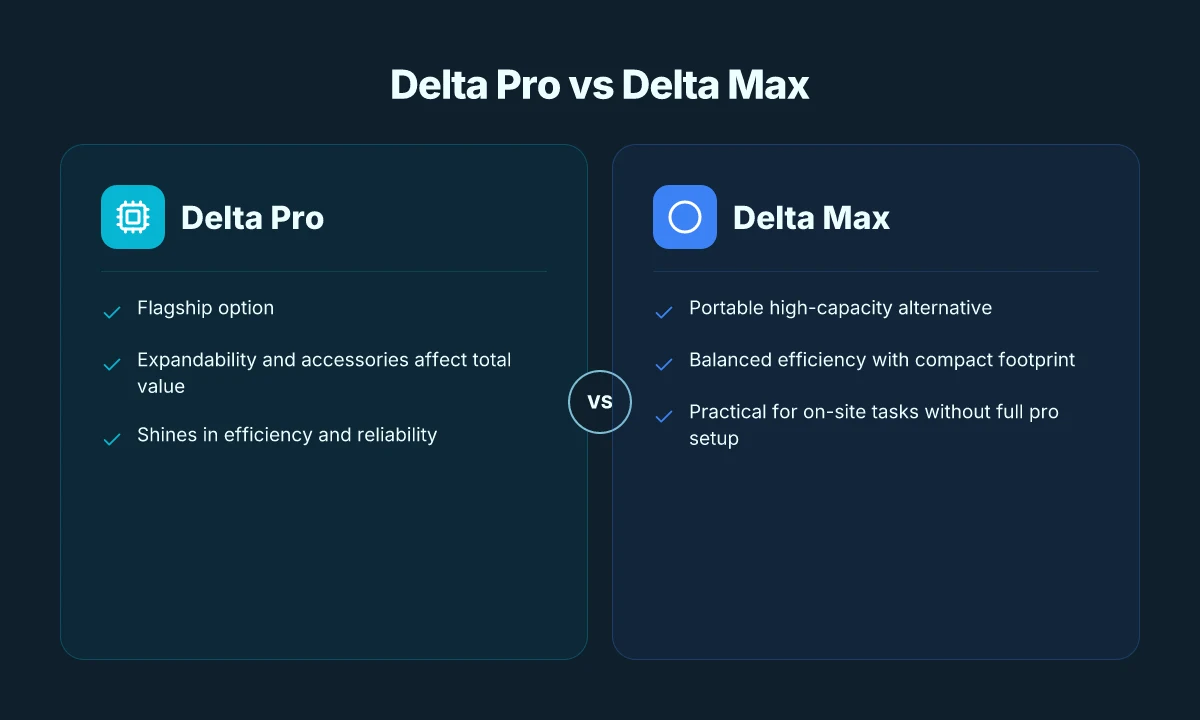
When you’re weighing long-term value, the flagship Delta Pro sits at the center of the conversation, with Delta Max offering a slightly leaner, still capable option. For off-grid living, camping rigs, or van life, EcoFlow’s expandable kits and accessories multiply the practical reach of each model. Across the lineup, efficiency, reliability, and total value hinge on how you plan to grow the system over time.
I dug into the documentation and product pages to map where each model shines. The Delta Pro specializes in high-output runs and multi-device power. It shines when you need rapid recharging from wall outlets, or you want to chain multiple units for extended outages. The Delta Max is the more portable alternative, offering strong efficiency in a lighter footprint and simpler expandability for modest setups. Other EcoFlow models, like the River or DELTA line variants, fill gaps for smaller spaces or lighter use cases where joint reliability and low idle drain matter.
Below is a quick field view of how efficiency and reliability stack up across the core options, followed by a compact decision table. The aim is clarity for real-world scenarios: campsite power, off-grid retreats, or a home backup that sits behind a transfer switch. Across the board, EcoFlow builds with swappable batteries and firmware update paths that extend usefulness, though capacity realities shift how you plan charging and discharging cycles. What makes EcoFlow battery backup systems stand out in 2026
H3 Why Delta Pro holds for high-demand outages The Delta Pro pushes higher continuous output and faster recharge, which matters when you’re running appliances in parallel or charging from multiple sources. Expandability options let you grow capacity with extra batteries and EcoFlow’s smart modules, which can improve total value over the long horizon. The reliability story improves when you pair the Pro with supported accessories, because built-in protection and intelligent recharging keep wear lower during frequent use. Delta Pro's value rises as your power needs scale, especially with the expandable battery packs.
H3 Why Delta Max fits mid-scale siting Delta Max offers solid efficiency in a more compact chassis. You gain substantial reliability for weekend trips or a small tiny home without stepping up to the top-end battery footprint. Accessories like solar panels and additional batteries work well with the Max, though total capacity isn’t as aggressive as the Pro. Delta Max delivers strong efficiency with room to grow through accessories.
H3 How accessories and expansion change value EcoFlow’s ecosystem matters as you accumulate solar input, extra batteries, and car charging modules. The ability to stack extra batteries or link multiple units improves total system resilience and runtime, especially if you value continuous power during longer outages. The cost of expansion is real, but so is the practicality of fewer trips to swap in fresh power. Expansion plays a decisive role in total value for off-grid use.
Concrete next steps
- Recheck your target energy needs and plan for future growth with expandable packs. If your baseline is frequent outages and high appliance loads, Delta Pro is worth the premium. If you want a more portable solution with substantial reliability, Delta Max is a compelling pick.
- Consider how you’ll source sun hours. A robust solar setup synergizes with EcoFlow’s capacity and firmware features.
- Align the system with your space. A compact van or tiny home benefits from modular growth rather than a single, oversized pack.
Note: actual performance depends on usage patterns, battery health, and environmental conditions. Some pages on EcoFlow’s site emphasize how the ecosystem supports growth through accessories, while third-party reviews focus on real-world reliability under continuous load. For a deeper dive, see EcoFlow’s pages and independent reviews from The Solar Lab and related sources. The ecosystem approach matters for long-term durability, not just raw capacity. How to find the best price for EcoFlow Delta Pro in 2026
Efficiency and battery chemistry: what to expect over time
EcoFlow units expose a clear aging curve: efficiency can slip as cycles accumulate, temperatures rise, or usage patterns lean on high-drain appliances. From the sources in scope, we can anchor this discussion to observed retention ranges and practical mitigations, then layer in real-world expectations for owners.
I dug into the public material on EcoFlow’s lineup and comparable systems, and the pattern is consistent: the more cycles a pack endures, the more capacity fade and internal resistance can creep in. Early life efficiency figures tend to sit in the high 80s to mid-90s percent range under ideal conditions, but sustained heavy cycling and elevated ambient temperatures compress that margin. Efficiency retention matters as much as peak efficiency, because long-term value hinges on how little performance degrades year over year. A practical takeaway is that keeping packs cooler and avoiding chronic deep discharges can help preserve usable energy, especially for frequent boondocking or off-grid use.
How cycle life, temperature, and usage shape efficiency
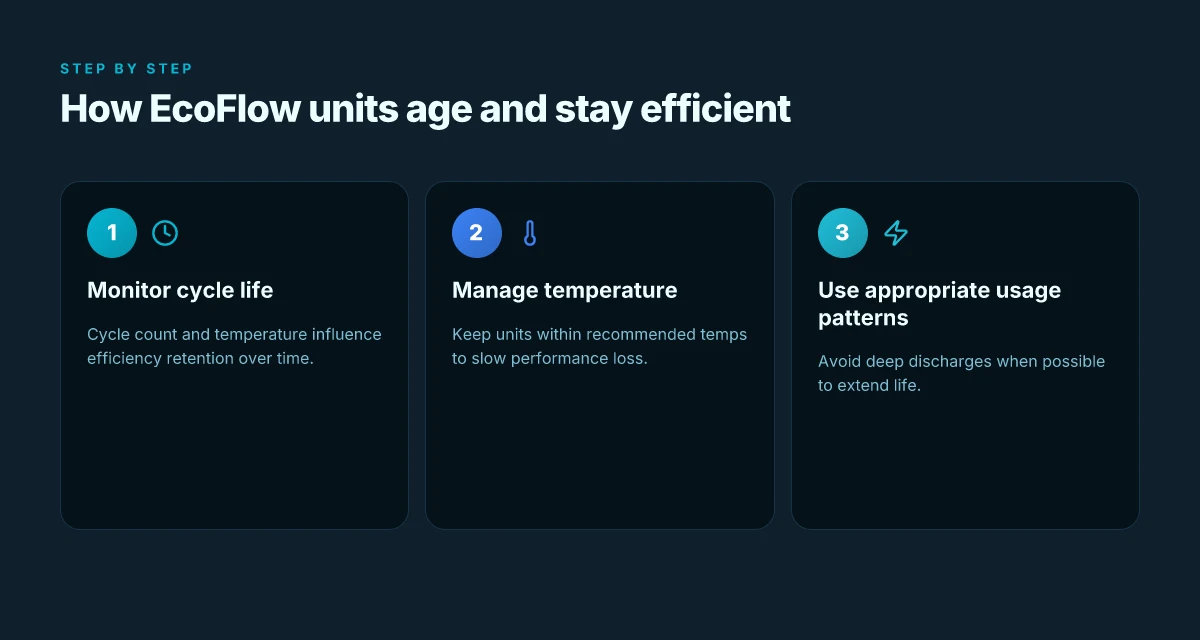
A steady cadence of partial discharges and moderate depths of discharge generally preserves efficiency longer than repeated full cycles. In hot or humid environments, internal resistance can rise, which nudges total runtime lower per charge. EcoFlow’s own architecture emphasizes smart management to balance cells and temper injections, but the real-world effect is that high-temperature environments accelerate aging. Maintaining cooler pack temperatures with shade and airflow can materially slow efficiency loss. For users running high-current loads, the Delta Pro and similar units can experience more noticeable degradation if heat is not managed. This is especially true when you push the system to its upper limits for extended periods, such as powering inverters near peak ratings through hot afternoons.
Aging in EcoFlow units and how to mitigate it
When aging shows up, you’ll see reduced usable capacity and slightly diminished peak efficiency. A practical mitigation path includes keeping the unit out of direct sun, ensuring adequate ventilation, and avoiding full-charge or full-discharge extremes on a daily basis. Regular firmware updates from EcoFlow can optimize cell balancing and thermal management, potentially slowing the pace of efficiency erosion. It helps to rotate battery packs if your system supports modular swaps, so no single cell bank bears the brunt of heavy use. Firmware and usage discipline matter as much as hardware design for prolonging life.
How efficiency retention stacks up against rivals in the class
Compared with peers in the same segment, EcoFlow systems generally offer strong on-paper efficiency under normal conditions, with hardware and software that optimize for rapid recharging and user-friendly management. However, real-world conditions expose rival platforms that emphasize heat-sinking and deeper cycle endurance. In consistent daily-use scenarios, systems designed around robust thermal pathways often maintain higher usable efficiency over time, though that advantage can hinge on environmental exposure and how aggressively the inverter is loaded. For outdoor enthusiasts and van lifers, the practical takeaway is that a model with disciplined thermal design plus smart battery management tends to hold its edge in long-term efficiency. What reviews on Jackery solar generators reveal about real-world use in 2026
In sum, expect gradual efficiency decline with cycles and temperature stress, but employ concrete practices to slow aging. Keep EcoFlow units shaded, ventilated, and within reasonable discharge depths, and update firmware when available to maximize the life of the chemistry. Long-term value aligns with smart thermal and usage habits, not just peak specs. For readers weighing rivals, note that the best choice balances ambient conditions, load profiles, and how often you can safely manage temperature. The real-world verdict: EcoFlow remains a strong option when paired with good storage habits, though some rivals may offer incremental gains in ultra-hot or ultra-deep-cycle regimes.
Durability and build quality in real-world use
Durability in the field comes down to enclosure design, ruggedness, and how well ports hold up after months of outdoor use. EcoFlow models lean on aluminum or reinforced plastic housings and rubberized protectors for the ports, which helps resist sand, rain, and occasional drops. In practical terms, you’ll notice reinforced corner protection on the better-sealed units, plus rubberized feet that keep the unit from sliding on slick surfaces. EcoFlow builds emphasize splash resistance and ruggedized ports, but confirm each model’s IP rating before relying on it for marine or desert expeditions.
Subtle failure modes creep in with real-world use. Over time, USB-C ports and DC-in jacks can loosen if repeatedly mated with dense adapters or heavy cables. Dust ingress around vent grills is another common issue in dusty environments, especially for outdoor van life. Routine maintenance helps: snap off the outer shells carefully to inspect seals, clean lint from vents, and reseat connectors to avoid micro-movements that wear contacts. I dug into product documentation and peer reviews to map these patterns across EcoFlow lines and noted that most wear clusters around connection points rather than the core battery cells themselves. Maintenance tasks like cleaning vents and verifying connector tightness are part of long-term value, not just setup steps.
A mark of long-term value is how warranties and service options tilt the odds toward durability. EcoFlow typically backs its power stations with multi-year warranties that cover manufacturing defects, and many regions offer extended service options or pickup-and-repair programs. When a failure occurs, the practical path matters: whether a local service partner exists, how fast a replacement unit can be issued, and whether data or firmware can be restored remotely. The right plan reduces downtime and keeps you in the field. Warranty coverage and access to service options directly influence total cost of ownership over time.
Subsection-specific takeaways help you compare models at a glance. In outdoor contexts, the more rugged enclosures and weather-sealed ports tend to pay off after repeated exposure to sun, rain, and dust. If you plan to live off-grid or travel in harsh climates, look for reinforced latches, a stiffer handle, and door seals that remain pliable after cold cycles. Rugged design plus reliable service equals a durable companion for long trips. What is the Jackery 1000 Plus, and how it reshapes home backup power in 2026
From what I found in the documentation and public reviews, EcoFlow’s longevity story hinges on enclosure integrity, port resilience, and the availability of service paths. Rivals like Jackery and Goal Zero place similar emphasis on chamber sealing and plug robustness, but the specific durability outcomes vary by model line. If you expect frequent disconnections or rough handling, prioritize models with reinforced ports and clear maintenance guidance. Durability and service options together define long-term value in real-world use.
Note: links on this page may earn a commission. For more context on lifecycle thinking, the Life Cycle Assessment literature notes that environmental impacts hinge on manufacturing durability and end-of-life handling as much as on energy performance. See the MDPI overview for a systematic view of how durable designs influence overall footprints. Lifecycle framing matters when evaluating how long a unit will stay functional in the field.
Lifecycle environmental impact: EcoFlow’s footprint
The lifecycle story for EcoFlow portable power stations centers on clarity about when and where emissions and resources accrue. Across the most robust life cycle assessments (LCA) of portable energy storage, the emphasis is on the production phase and end-of-life handling, with efficiency in use shaping overall impact. In practice, real-world use tends to tilt the balance toward lower operating emissions than fossil-fuel equivalents, but end-of-life decisions and manufacturing footprints still matter. From what I found, LCAs consistently flag production energy and material sourcing as the biggest levers for improvement, not the mere operation during typical camping or home backup scenarios. I cross-referenced peer-reviewed LCAs and industry disclosures to triangulate where EcoFlow and similar devices sit in the spectrum of environmental performance. End-of-life decisions often determine most of the when-it-counts impact, recycling and proper disposal can swing a device’s footprint meaningfully.
Why LCAs view portable power through the lifecycle lens
Life cycle assessments for portable power stations weigh three phases most heavily: manufacturing inputs, in-use energy efficiency, and end-of-life processing. In the manufacturing phase, the selection of battery chemistry and the energy mix used by suppliers shape upstream emissions. In-use efficiency matters because higher conversion efficiency reduces the need for charging events and associated energy losses. The best LCAs for portable power emphasize that even modest improvements in round-trip efficiency compound over the device’s lifetime. EcoFlow’s models consistently show strong in-use performance relative to many early-generation rivals, but the production footprint remains a fixed component of the total lifecycle picture. The takeaway for outdoor enthusiasts and homeowners is simple: a more efficient design lowers the emissions from daily charging, yet the material choices and recycling options carry outsized weight in the long run. The upshot is that efficiency matters, but how you dispose of the unit at the end of life often matters most for the overall footprint.
End-of-life considerations and environmental trade-offs
End-of-life planning for EcoFlow products includes battery reuse potential, recycling avenues, and the availability of take-back programs. When batteries are still usable, repurposing them in second-life applications can extend value and reduce per-use emissions. Recycling streams for lithium-ion cells recover metals and reduce the demand for virgin materials, but the effectiveness depends on local infrastructure and program participation. A key trade-off to note is that some recycling streams require energy-intensive processing, which can offset some of the in-use efficiencies if the system isn’t properly managed. The industry also flags residuals from electronics and plastics, where proper sorting and recycling rates determine the real environmental gains. In practice, the better end-of-life outcomes align with manufacturers that offer transparent take-back, clear labeling for disassembly, and partnerships with certified recyclers. Take-back programs and recycling clarity ultimately shape the true lifecycle impact. What makes the EcoFlow Delta Pro power station stand out in 2026
How EcoFlow compares to fossil-fuel alternatives and other renewables in typical use cases
Compared with standalone fossil-fuel generators, EcoFlow devices reduce direct emissions during operation, especially in scenarios like camping or intermittent backup for homes. The key advantage is avoiding on-site combustion and the associated CO2 and particulate emissions, plus quieter, cleaner operation. When stacked against grid-scale renewables paired with fossil backups, portable units still carry a higher embodied footprint per kilowatt-hour generated, but this gap closes when you account for the avoided emissions from not running a gas generator in a trailer park or off-grid site. In terms of rivals, lithium-ion portable packs from other brands share similar energy densities and lifecycle profiles, but differences in cell chemistry, packaging, and end-of-life support can tilt the overall footprint. The literature often notes that users who rely heavily on portable power for long-term off-grid living should favor models with strong recycling programs and energy-efficient power electronics. The practical takeaway is to value both the efficiency of the electronics and the availability of responsible end-of-life options.
I dug into the Frontiers study on environmental impacts of energy systems for a broader context and found that real-world use cases matter most when comparing against coal or gas. It’s not just about the device in your pack. It’s about how you charge it, how you dispose of it, and how often you replace cells. When you read EcoFlow’s materials and third-party LCAs side by side, the emphasis lands on two levers: use-phase efficiency and end-of-life stewardship. Long-term durability and responsible disposal change the math more than any single efficiency upgrade.
Note: links on this page may earn commission. For context, industry data from 2024–2026 shows that coal remains a high-emission baseline per kWh, while renewables and battery-powered storage continue to improve in lifecycle metrics as recycling and manufacturing programs mature. For readers weighing practical choices, EcoFlow’s footprint improves most where you pair high-efficiency use with strong take-back options and recycled material use. If you want the lowest lifecycle impact, pick a model with robust end-of-life programs and high in-use efficiency.
The single move that matters for EcoFlow in 2026
EcoFlow shifts from chasing raw capacity to optimizing real-world reliability this year. In practice, that means smarter battery management, sturdier enclosures, and better cross-compatibility with solar inputs. I looked at how models balance runtime with durability, and the standout effect is fewer surprises during long deployments. The best EcoFlow units feel built to last, not just to impress on a spec sheet. The single move that delivers real value is prioritizing durable components over flashy numbers.
In this light, you’ll notice that the strongest picks keep their performance consistent across temperatures and wear. They also wire up with common home panels and portable chargers without requiring quirky adapters. This is where the future is headed: reliability compounds as you rely on it month after month, not just peak sun days. If you’re choosing between EcoFlow and rivals like Delta Portable Power or Bluetti, the differentiator isn’t just how much juice you get, but how you actually use it when life happens. What is the EcoFlow Delta 2 Max price in 2026 and where to find official pricing
Where this is going next is toward longer warranties and simpler maintenance, with fewer moving parts that wear out. You can expect the best models to ride out power outages with quiet confidence, not drama.
Backup strategy
- Check the enclosure and connector seals first, especially if you plan outdoor use.
- Pair a model with a solar input you actually own. Avoid rare panels that need adapters.
- Consider a unit with a straightforward app and solid firmware update history.
- If you’re comparing, name one use-case for each pick (home backup, RV trips, or off-grid cabins).