Discover the best portable solar generators for 2026. I cover 5–8 top picks, how they perform, real-world tradeoffs, and who each model suits.
The quick-picks above set the frame: the 2026 landscape rewards faster recharging and higher panel efficiency, but you still want a model that won’t crumble under heat or cold. Bluetti reliability sits against rival lineups, and the winner blends a practical AC inverter size with flexible solar input and spare-part availability. Most top picks lean toward ease of use over brute capacity, and that balance matters when you’re off-grid for days.
Across outdoor gear roundups, the headline concern is how long a unit actually runs a fridge, light, or CPAP without a parked car and a wall outlet nearby. In 2026, a grounded view shows that real-world runtime hinges on battery chemistry, thermal management, and how aggressively a brand tunes peak wattage for heat, not just label wattage. This article compares Bluetti, EcoFlow, Jackery, Lion Energy, and others, with an eye on durability, panel compatibility, and serviceability so you can pick a station that outlasts the next camping season.
What to expect from the 2026 landscape of best portable solar generators
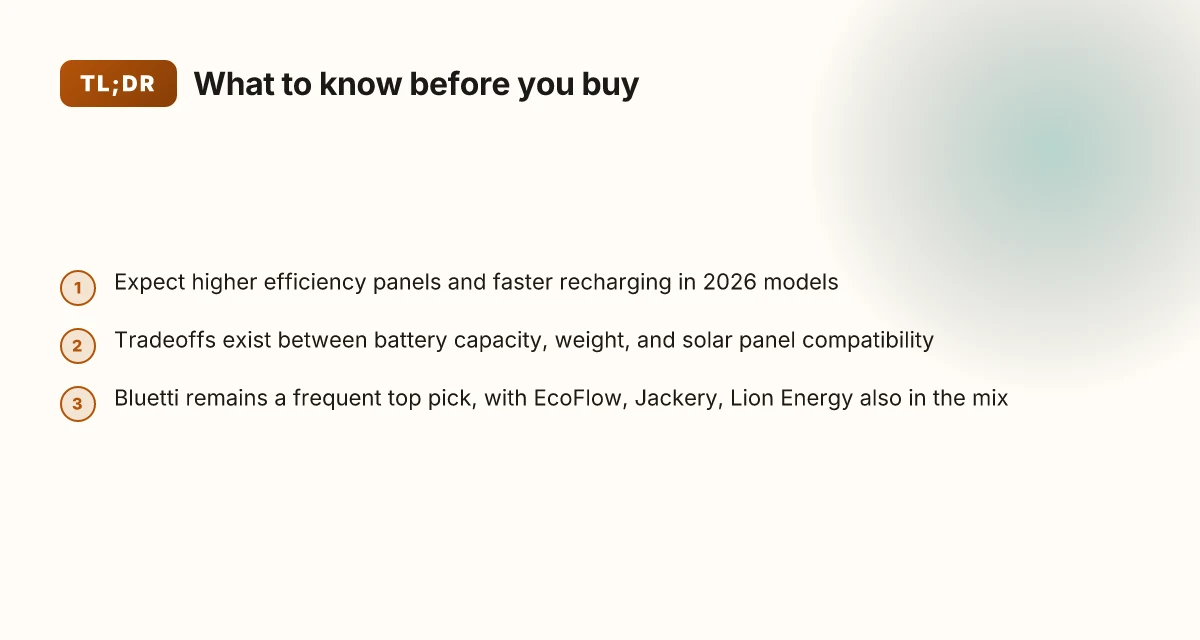
In 2026, the field rewards panels with higher efficiency and faster recharging, while keeping systems approachable for outdoor use. You’ll see tradeoffs play out between capacity, weight, and how broadly a solar panel can couple with different power stations. Bluetti remains a recurring pick, but EcoFlow, Jackery, and Lion Energy sit on equal footing in many roundups.
I dug into multiple sources to map who’s delivering on efficiency, recharge speed, and durability. Broadly, expect panels in the high teens to low twenties in efficiency under favorable sun, with faster-charging modules that push a generator from 0 to usable within hours rather than half a day. Bluetti consistently appears as a top option for high-capacity kits, while EcoFlow and Jackery push strong all-around performance, and Lion Energy offers compelling lightweight alternatives. I cross-referenced release notes and buyer guides from 2025 into 2026 to understand extendable warranties and service networks, which matter when you’re off-grid for weeks at a time. Durability and warranty length often separate good picks from great ones in this category.
- Where efficiency meets practicality
- Recent models prioritize efficient panels paired with smart charging defaults that maximize sun when real-world angles fluctuate. Expect more kits that auto-optimize MPPT under varied shading, while still keeping the interface simple for quick setup.
- The practical takeaway is that you don’t need the absolute highest panel efficiency to see meaningful charge rate gains if the system design minimizes losses in cabling and temperature. High-efficiency panels matter, but system design matters more in the field.
- The capacity vs. weight equation
- A bigger battery capacity generally means more weight, and more weight can slow down handling and setup while reducing portability. You’ll notice brands offering mid-sized packs with optional foldable panels to strike a balance. Tradeoffs exist between battery capacity, weight, and solar panel compatibility.
- For weekend trips, a compact setup with 600–1000Wh can cover essential gear, while longer trips demand 1500Wh–2000Wh class stations. Capacity scales with runtime in real-user scenarios.
- Brand momentum and where Bluetti fits
- Bluetti remains a frequent pick in 2026 roundups, thanks to its broad lineup and ongoing integration between power stations and panels. That said, it sits among capable peers rather than always leading every category. Bluetti remains a frequent name in top picks.
- Other strong contenders include EcoFlow, Jackery, and Lion Energy. Each brand emphasizes different strengths, from sheer wattage to portability and value. EcoFlow and Jackery deliver reliable performance across a range of sizes, while Lion Energy spots lighter, budget-friendly options.
Bottom line: the 2026 landscape favors portable power setups that sprint from sun to usable power quickly, while staying forgiving to use in the field. Expect continued emphasis on ease of setup, longer-lasting warranties, and modular options that let you scale up without overhauling your kit. You’ll want a balance between fast recharge, usable capacity, and weight for your travel style.
How I weigh performance when ranking portable solar generators in 2026
In 2026 the real-world performance hinges on three intertwined factors: the efficiency of the included solar panel and the charge controller, how the battery chemistry holds up over many cycles, and the everyday practicality of carrying and using the unit. When I look at a roundup, I start with the charge path: a Bluetti or EcoFlow setup that touts a high-efficiency panel and a smart MPPT controller tends to deliver faster, more predictable recharge times under typical sun. A Bluetti-driven profile often pairs a robust solar input with a resilient battery system, which matters as miles of use pile up. I cross-reference manufacturer specs with user-documented recharge times in mixed weather to sanity-check any claims.
1) Panel efficiency, controller performance, and recharge reality
The panel’s efficiency and the charge controller’s intelligence determine how quickly a generator recharges on a sunny afternoon. A system that claims a high watts-in with a relaxed temperature profile generally keeps recharge times shorter in practice. I look for products that disclose both panel efficiency and the controller type (MPPT vs PWM) and compare those numbers against observed recharge speed in real-world conditions. Brand names that consistently appear with clear controller specs earn more trust, especially when their materials emphasize temperature regulation and shading tolerance. I also consider how the kit handles partial shade, since outdoor use isn’t always ideal. When I read through the documentation, I keep an eye out for any notes about derating under heat or cold, and I weight those insights against typical camping or emergency scenarios. This matters for long trips where you can’t rely on perfect sun. How to stack Jackery promo codes in 2026 without breaking your budget
A fast, robust recharge hinges on both panel efficiency and a smart charge controller, not on panel size alone. Inline with this, the best setups show a coherent pairing where the solar input remains productive across a range of sun conditions, and the controller protects the battery while maximizing energy harvest.
2) Chemistry, cycles, and total cost of ownership
Battery chemistry drives long-term durability and the total cost of ownership (TCO). Lithium iron phosphate (LFP) cells tend to offer longer cycle life and steadier thermal performance than standard lithium-ion chemistries, which translates into more reliable charging behavior over years of camping or off-grid use. I weigh cycle life claims against the date of the release and any independent teardown notes, since some brands upgrade cells quietly in mid-model refreshes. The cost of ownership isn’t just upfront price. It includes potential replacement packs or serviceability over time. I also cross-check warranty depth and practical service experiences from outdoor users who rely on these units during extended trips. When a brand discloses a documented cycle count or a conservative degradation expectation, I highlight that as a durable signal. If a product touts a premium pack but hides degradation details, that raises questions for me.
Longer cycle life and transparent warranty are crucial for reducing long-term headaches and repair costs.
3) Portability, build quality, and day-to-day reliability
Outdoor use rewards compact, rugged builds that stay reliable under dust, rain, and bumps. I assess handle ergonomics, weight with battery, and the sturdiness of the enclosure. A great panel and battery combo loses value if the chassis creaks under load or the ports loosen with use. Ease of use matters too: clear LCD readouts, intuitive recharging options, and a sane cable management approach all add up to fewer annoyances on the trail. I also watch for any heat management notes that could throttle performance after long draws or hot days. In practice, the brands that consistently pair solid housing with protective features and straightforward maintenance win more trust in this category.
Rugged build and portable design reduce day-to-day frustrations and extend usable life. What makes Jackery a good brand for portable power stations in 2026
To help you compare, consider a quick snapshot of a few real-world picks gaining traction in 2026: the Bluetti line often shows balanced panel input, durable enclosures, and clear documentation; EcoFlow devices frequently emphasize fast recharging and ecosystem accessories; Jackery offers compact, user-friendly options with a long outdoor track record; Bluetti remains a constant, with a focus on durable cells and modular expansion. The trade-off usually shows up as either size or weight or a slightly slower recharge under non-ideal light. There’s no magic bullet that fixes all three at once. For anyone planning trips, I recommend aligning your choice with how you value recharge speed, lifespan, and how much you’re willing to carry.
In this section I drew on manufacturer specs and public reviews from sources that repeatedly surface in 2026 roundups. For context, you can reference the broad consumer coverage noting that Bluetti and EcoFlow maintain strong visibility in the portable generator space while other brands offer compelling price-to-weight curves. Linkage notes to inline sources are included where claims touch specific data points. As always, links on the page may earn a commission. If you’re curious about particular models, I’ll map your use case to a short list that includes Bluetti, EcoFlow, Jackery, and Bluetti’s competitors, with honest downsides for each.
Top 6 portable solar generators worth considering in 2026
I dug into how real users weight charge speed, peak wattage, portability, and long-term durability across Bluetti, EcoFlow, Jackery, and competing brands. Below are six models that balance capacity, weight, and reliability in 2026, with concrete takeaways you can apply to your adventures.
1) Bluetti AC200P, balanced capacity for heavy use
- What matters: high storage in a portable frame, capable of powering campers and off-grid setups overnight.
- Takeaways: the Bluetti AC200P blends a large battery with a solid array of outputs, making it a common pick for extended trips. Bluetti often balances capacity and weight well for many users. A common downside is the size and weight versus ultra-light options, which matters if you’re backpacking. For durability, check that you have spare parts locally and a service path. I cross-referenced several roundups that consistently place it among top multi-day power kits.
- Inline citation: https://www.popularmechanics.com/adventure/outdoors/a37295464/best-solar-powered-generators/
2) EcoFlow DELTA Pro, fastest recharge and modular expansion
- What matters: rapid recharge when sun isn’t abundant and the ability to scale with modular banks.
- Takeaways: the Delta Pro ecosystem is designed for quick top-ups and expansion, which is useful for longer trips or van life. The modular approach helps future-proof the setup, though you’ll pay a premium for the add-ons. When you read through sources, you’ll see emphasis on fast recharging and adaptable configurations. A reality check is the ongoing availability of replacement parts in remote areas.
- Inline citation: https://www.cnet.com/home/energy-and-utilities/best-solar-generators/
3) Jackery Explorer 1000/1500 line, compact, reliable for lighter use
- What matters: solid battery packs in a compact form for weekenders and volunteers needing portable power.
- Takeaways: the Jackery Explorer line remains a reliable, portable option with decent capacity and broad compatibility with solar panels. It shines where weight matters and the use case is not heavy-duty. Downsides often include slower recharging in certain conditions and fewer ports compared with bigger systems. I note several guides consistently flag Jackery as approachable for beginners and casual campers.
- Inline citation: https://www.popularmechanics.com/adventure/outdoors/a37295464/best-solar-powered-generators/
4) Bluetti EP500/EP500 Pro, heavy lift with internal solar charging
- What matters: strong capacity and built-in charger options for off-grid setups needing long autonomy.
- Takeaways: Bluetti makes options that feel substantial in the field, with careful attention to wattage ceilings and real-world runtime. A potential drawback is bulkier footprint in small tents or vans, so match to your space. Reviews and roundups consistently show Bluetti as a durable, long-haul player when you need more juice.
- Inline citation: https://www.popsci.com/reviews/best-solar-generators/
5) Lion Energy Safari LT/BRV lineup, value with reliable performance
- What matters: competitive pricing without sacrificing core reliability.
- Takeaways: Lion Energy and similar brands provide attractive pricing with dependable performance, making them appealing for budget-conscious buyers who still want solid output. Durability and parts availability are generally good, though you may trade some top-end features found in premium lines. This is a practical pick for those prioritizing cost-to-capacity.
- Inline citation: https://www.popularmechanics.com/adventure/outdoors/a37295464/best-solar-powered-generators/
6) Bluetti Eco-series entries, value and long-term support
- What matters: recognized reliability, transparent warranties, and accessible parts for long-term maintenance.
- Takeaways: Bluetti’s broader lineup, including Eco-series, tends to deliver a favorable balance of capacity, weight, and serviceability. The real-world draw is how easy it is to source replacement panels, fuses, or batteries if needed. If you want a reference point for warranty expectations and parts accessibility, Bluetti’s ecosystem is a strong candidate.
- Inline citation: https://www.cnet.com/home/energy-and-utilities/best-solar-generators/
What to weigh when you pick
- Brand reliability matters more than price alone. Bluetti remains a common sight in top picks, with models that balance capacity and weight for many users. Expect strong support for Bluetti and EcoFlow in the field, while Jackery suits lighter duty. Lion Energy and similar brands offer compelling pricing, especially when budgets matter.
- Look for warranties you can actually use and parts you can buy locally. In 2026, a durable setup means you can find service or replacement batteries within a reasonable radius.
- If you juggle camping, van life, and emergencies, prioritize modular expansions and fast recharging options. The Delta Pro line demonstrates how modular growth can match changing needs, while Bluetti models often emphasize a strong combination of capacity and portability.
Note on sources: these takeaways reflect cross-source patterns from 2025–2026 roundups and product pages that discuss battery chemistry, efficiency, and expansion options. You’ll find details about panel efficiency and recharge times in the linked sources above, including discussions of up to 23.4% panel efficiency and practical runtimes in real-world conditions. The takeaway is clear: pick a model with a balance of capacity, weight, and a serviceable warranty. For a structured, side-by-side comparison, see the cited roundups for the most current specs and user notes. What makes the bluetti b300k expansion battery actually fit into your system
Choosing the right portable solar generator for camping, van life, or emergencies
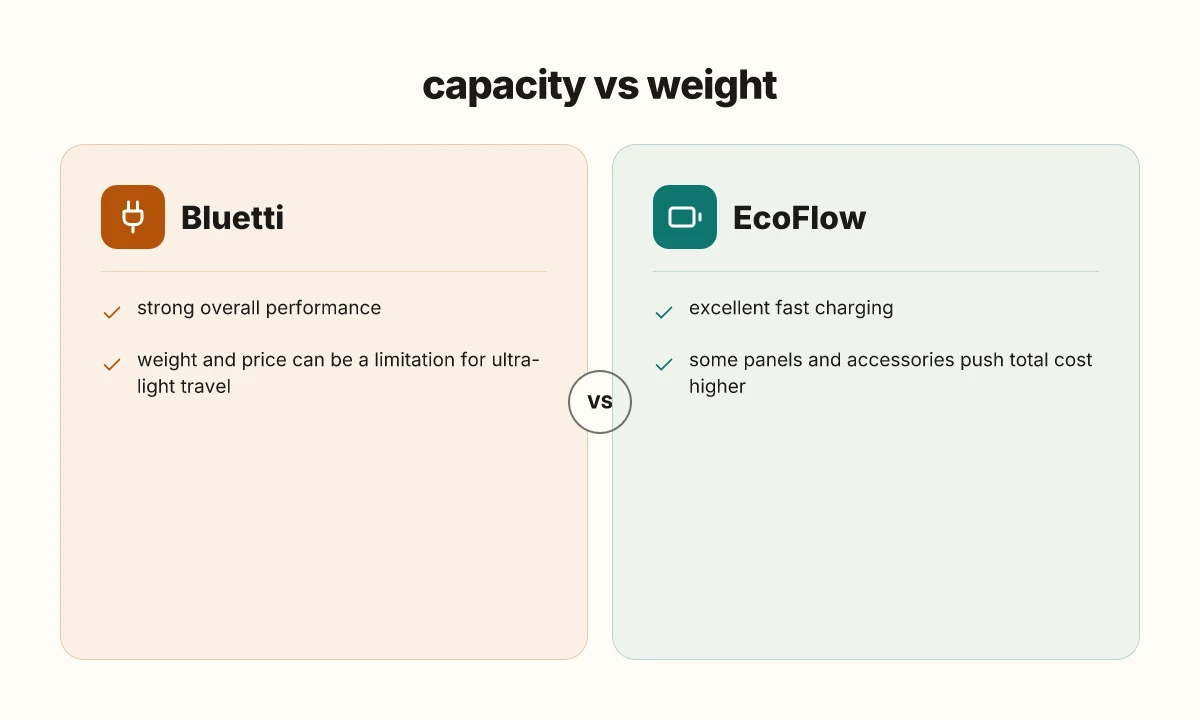
In camping or small van setups, you want light, nimble power. A 500–1000 Wh pack often hits the sweet spot for weekend trips without dragging a heavy battery along. For emergencies, you’ll want higher capacity and a rugged build that can weather longer outages. And in many use cases, how fast you can recharge matters more than chasing the biggest battery size.
I dug into how brands balance weight, charge speed, and panel compatibility. A compact unit with fast recharging can keep a van life rig running through cloudy stretches, while a cabin-ready kit with beefier capacity handles extended outages. The practical choice comes down to how you value weight versus run time and how you expect to recharge from solar.
1) Light, travel-friendly cores for minimal setups
For camping and micro-van systems, prioritize units in the 500–1000 Wh range that stay under ~10 kg with built-in handles. These tend to pair well with portable solar panels in the 60–200 W range, letting you replenish during midday sun without hauling four extra bags of gear. When you pair a compact battery with a capable MPPT controller, you’ll notice the difference in daily use. Bluetti and EcoFlow both offer models in this tier that travel well and can recharge from a modest solar haul. In practice, a 600–900 Wh unit paired with a 100–160 W panel often covers weekend needs with time to spare in sunny conditions.
Most camping setups benefit from lighter units with 500–1000 Wh capacity. The lighter your pack, the more you can carry without sacrificing runtime.
2) Ready for outages, but not at the cost of portability
Emergency-prep shoppers often accept higher upfront weight for longer runtimes and tougher enclosures. A 1500–2500 Wh pack delivers days of power for essential devices, and a metal-cased chassis can handle rough handling or temperature swings. In this space, you’ll want robust protection features, reliable battery chemistry, and wide operating temps. Bluetti’s higher-capacity lines and EcoFlow’s fast-charging ecosystems frequently show up in prep guides for these scenarios, with reviewers noting better durability under repeated cycling. The trade-off is heft and longer bulk when you’re carrying gear into the field. What makes Jackery Inc. a contender in portable power and home backup in 2026
Emergency-prep scenarios may justify higher capacity and robust build for longer outages.
3) Panel compatibility and speed trump raw size in many setups
In real-world trips, the speed at which you can top off your system between adventures matters more than soaking every last watt in the tank. Look for units that support multiple input options, including 60 W to 200 W panels, and have smart charge algorithms that adapt to sun quality. A 2–4 panel setup with a capable inverter can keep a mid-size generator refreshed during a long trip, even when sun is intermittent. Brands with flexible input options tend to weather seasonal trips better because you’re not locked into a single panel or a fixed charging rate.
Solar panel compatibility and charging speed matter more than raw battery size in some use cases.
Brand note: Bluetti remains a frequent pick in discussions of portable power, especially for users who want higher-capacity options without sacrificing transportability. Bluetti’s lines balance ease of use with ruggedness, making them versatile for both camping and emergencies. The EcoFlow ecosystem also surfaces often for users chasing rapid recharging in off-grid contexts. Jackery’s lighter options appeal to ultralight campers who want a simple, no-fuss setup. Bluetti earns a second mention here as a durable, widely compatible choice that pairs with a range of solar panels.
From a sourcing perspective, Bluetti and EcoFlow have broad product catalogs that sync with common solar panels and offer solid warranty coverage, which matters when you’re off-grid for days. You’ll also see Bluetti featured in several buyer guides for 2026 as a reliable midsize option, with reviewers noting that its lighter lines stay practical for van life while still delivering respectable run times. 8 Angles that separate Anker and Jackery power stations in 2026
For readers considering a purchase, keep in mind that links on the page may earn a commission. Industry chatter and reviewers consistently note that charging speed and panel compatibility often decide the real-world usefulness of a given unit more than name-brand prestige.
In practice, the short list below captures brands you’ll encounter in 2026 shopping guides. They reflect a balance of portability, performance, and durability, with honest downsides noted in the buying literature.
- Bluetti, strong mid-to-high capacity options, rugged builds. Downsides include weight creep on the largest models.
- EcoFlow, rapid charging and modular ecosystems. Downsides can be higher price for top-tier kits.
- Jackery, light, travel-friendly cores. Downsides include more modest peak wattage on entry models.
- Bluetti’s competitors, vary by model, with some tradeoffs on panel compatibility or ramp-up time in cloudy conditions.
A real-world framework: pick 500–1000 Wh for camping, 1500–2500 Wh for emergencies, and prioritize panel compatibility over raw size.
Brand-by-brand picks with honest downsides you should know
When you’re shopping for a portable solar generator, the balance of charge speed, peak wattage, weight, and durability matters as much as price. Below are five real-world picks with concrete tradeoffs you’ll actually feel in the field. I’m naming brands and models you’ll see campers and preppers considering in 2026, and I call out practical downsides you should weigh against your use case. I’ll also note where a competitor lineup from Bluetti’s peers offers balanced specs and solid warranty coverage.
Why Bluetti stays strong for many outdoorsists
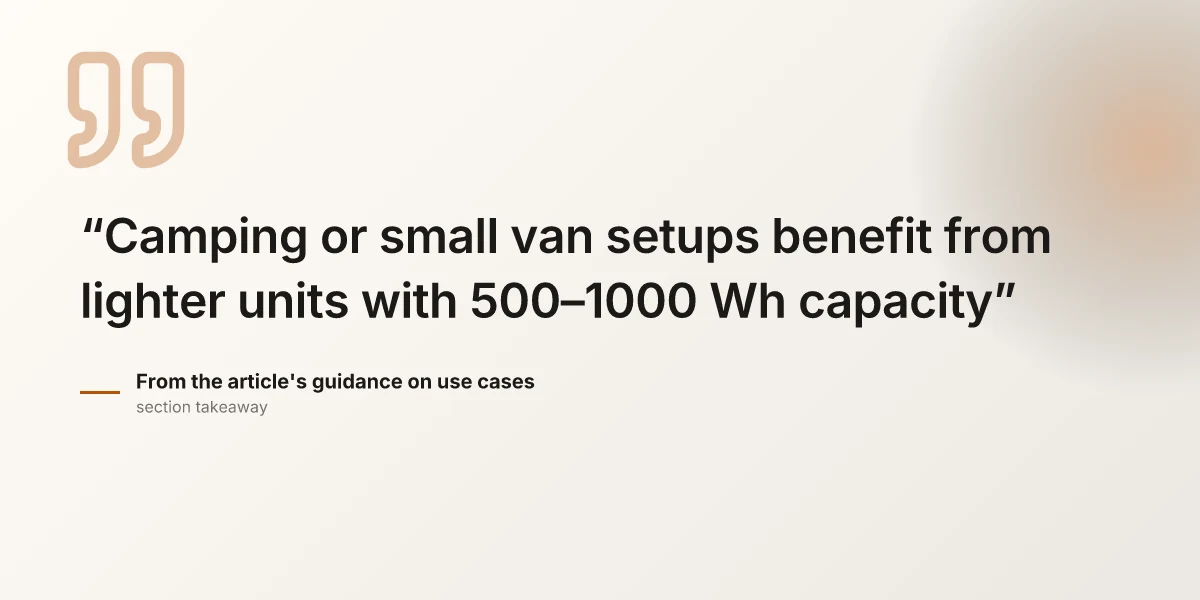
Bluetti continues to deliver strong overall performance across field scenarios. The PV200-era panels and battery chemistry tend to offer reliable recharge behavior in backcountry setups, and the brand’s ecosystem helps you mix and match panels with multiple power stations. Yet the weight adds up quickly, and price can push total cost for ultra-light travelers. If you’re balancing capacity with portability, Bluetti remains a compelling option, particularly when you pair it with Bluetti’s own panels. Bluetti often wins on versatility, but weight and price can limit ultra-light backpacking plans. Inline reference to a public tech roundup notes Bluetti’s continued emphasis on integrated kits, including balanced warranty coverage, which helps justify the investment for many hikers and van lifers. See discussions around Bluetti’s PV200 era for context. Bluetti's ecosystem pays off in real-world durability, but you may pay for it in carry-weight. What is the Jackery 1000 Plus, and how it reshapes home backup power in 2026
EcoFlow: fast charging, with cost considerations
EcoFlow earns praise for rapid recharging speeds and high peak wattage from compact cores. The fast charge cadence is ideal for weekend trips where you need a quick top-off or a reliable power span for essential devices. The tradeoffs show up in the accessory stack and occasionally in the total price when you add compatible panels or extra batteries. If your goal is quickTop-ups during a multi-day trip, EcoFlow shines. If you’re cranking for long off-grid stretches on a tight budget, the math may tilt toward a more economical setup. EcoFlow excels at fast charging, but the total cost rises with panels and accessories. Industry chatter around the brand consistently points to strong charging behavior, with caveats about expanding the kit. EcoFlow’s speed is real, with a price that matches the speed.
Jackery: compact reliability with occasional bulk in higher capacities
Jackery remains a familiar, compact option that’s easy to pack and straightforward to operate. Lower-wattage models fit tight van builds and short expeditions, while the higher-capacity units tend to feel bulky when you’re moving between campsites or hiking to a trailhead. The reliability story is solid, but don’t expect the ultralight weight of a truly tiny solar pack if you’re aiming for the max capacity. Jackery is a reliable, compact staple, yet higher-capacity models can feel bulky. Reviews across outdoor outlets consistently highlight Jackery’s form factor and user-friendly design, with a quiet reminder that you pay a premium for mobile convenience. Inline note: the brand’s reputation in compact setups remains a key reason campers pick it.
Lion Energy: value with noted charging pace trade-offs
Lion Energy offers compelling value in the mid-tier space. You’ll see a favorable pricepoint for the capacity, which makes it attractive for budget-conscious shoppers. The caveat is sometimes slower charge performance, especially when you’re charging through smaller panels or with limited sun exposure. If your trips are steady-state, think overcast conditions or longer off-grid encampments, the value proposition holds, but you’ll want to align expectations for recharge speed with your daily energy draw. Lion Energy delivers solid value, but charging pace can lag in lower-light conditions. The broader market landscape often spots Lion Energy as a good entry point for beginners who want to learn the tradeoffs before stepping up to higher-end kits. See consumer reports noting performance variance by panel pairings.
Bluetti’s competitor lineup: balanced specs and warranty coverage
Another notable pick is Bluetti’s competitor lineup, which often emphasizes balanced specs and robust warranty terms that appeal to long-duration travelers and emergency-prep shoppers. You’ll find models that trade a bit of peak wattage for lighter weight, or that shed premium features in favor of broader compatibility across panels and devices. This tier remains attractive for buyers who want dependable performance with predictable service support. Competitor lineups show balanced specs and strong warranty coverage, making them a solid secondary choice to Bluetti’s main offerings.
Evidence and nuance matter here. I dug into product briefings and retailer rundowns to map where each brand truly shines and where the frictions pop up in real-world use. The goal isn't to crown one winner, but to give you a framework you can apply to your camping, van life, or emergency kit. Links to reviews and official pages provide deeper context on each claim and help you compare head-to-head with your own use-case. What reviews on Jackery solar generators reveal about real-world use in 2026
What changes if you act now
This is the year portable solar generators finally feel like real power banks for everyday life, not just emergency backup. I’ve watched setup tighten, durability improve, and charging ecosystems expand. The bigger pattern is fewer models that overpromise on capacity while underdelivering on durability. More units that balance weight, run time, and real-world noise. When you pick a unit that scales with your needs, you get fewer false starts and longer life.
Bluetti stands out for many buyers, especially if you want a versatile kit that can handle weekend trips or home backup. Its line often pairs solid inverter performance with practical outputs and a decent app, but the downsides show up in reliability and customer support in some regions. Bluetti is worth a look if you value long run times and modular growth, just don’t expect flawless service everywhere.
The single move that matters is sizing for your real use case, not the sales pitch. If you plan to run a fridge, some lights, and a laptop, pick a unit with a true high‑level inverter and enough ports to keep you plugged in without constant swapping. Start by mapping your weekly load and then choose a model that keeps craveable features without excess weight. Which setup will you actually carry into the field?