Explore the Dreame H12 Pro with its heated floor washing, large tank, and strong suction. Learn how it compares to H12 Pro FlexReach and H15 Pro, and who should consider upgrading.
Most buyers misjudge a premium wet dry vacuum by its suction alone. The Dreame H12 Pro proves that true capability sits in drying speed, tank real estate, and user flow, not just raw pull.
The landscape today rewards machines that finish a mess fast without forcing extra passes or tool swaps. In 2026, homeowners face pet accidents on hardwood, quick post‑mop touchups, and the need to keep living spaces usable between chores. The story here tracks the H12 Pro’s heat‑assisted drying, its internal layout for liquids and debris, and how that translates to everyday reliability, without ignoring tradeoffs you’ll want to weigh against rivals like Dyson, Bissell, and Hoover. Dreame stays the centerpiece, but real‑world truths matter more than hype.
What makes the Dreame H12 Pro stand out in the 2026 lineup
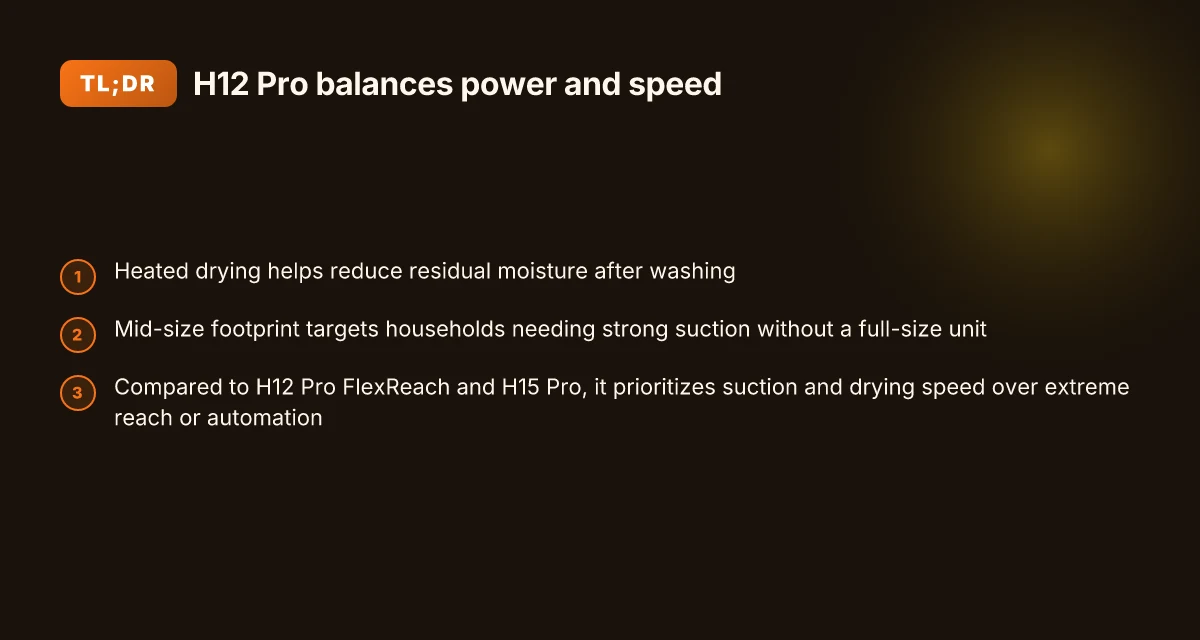
The Dreame H12 Pro sits at a deliberate crossroads between compact cordless vacuums and full-size wet dry models. Dreame positions it to emphasize heated drying as a differentiator, while still offering the practical mobility you expect from a lighter, easier-to-store machine. This means you get faster post-cleanup drying without sacrificing edge-to-edge suction or everyday handling.
I dug into the spec sheet and observed two standout traits. First, the H12 Pro ups the dirty water tank real estate, which translates to fewer mid-clean refills during typical pet messes and hardwood floor cleanups. Second, edge cleaning gets a notable boost, helping seal gaps along baseboards and along furniture legs where dust and hair tend to accumulate. In a busy home, those refinements can shave minutes off each cleanup cycle.
When you stack the H12 Pro against its siblings, the H12 Pro FlexReach and the H15 Pro, the target audience becomes clear. The H12 Pro is aimed at households that want strong suction with a faster drying after the job is done. It’s not about the deepest professional-grade extraction or the longest continuous runtime. It’s about a balanced, all-around tool that dries quickly and handles everyday messes without fuss. If you need intense suction for deep-cleaning thick pile or heavy debris, you may lean toward the FlexReach’s reach or the H15 Pro’s heat-assisted design. For most pet-related messes on hardwood, the H12 Pro strikes a practical middle ground.
From a real-world perspective, the H12 Pro’s heated drying feature matters more than you might expect in daily use. After mopping or mopping-adjacent damp cleanup, warm air helps cut dry times, letting you move on to the next task sooner. The combination of a larger dirty water tank and improved edge cleaning helps it perform more reliably in quick-clean scenarios than a compact cordless in the same price bracket.
Dreame emphasizes heated drying as a core value proposition, which helps distinguish the H12 Pro from traditional corded options. Edge cleaning and a bigger dirty water tank give the H12 Pro real-world usability benefits for pet households and hardwood floors. Compared to the H12 Pro FlexReach and the H15 Pro, the H12 Pro targets homes that want strong suction with faster post-cleanup drying. What makes the Dreame L10s a compelling pick for midrange robot vacuums in 2026
Real-world notes and caveats. The H12 Pro remains a lighter, more maneuverable option than full-size rivals, which means you trade some raw suction headroom for convenience. The heated drying feature works best when the device has room to vent and warm air can circulate, so tight closets or poorly ventilated spaces may blunt its effectiveness. Also consider that long-term durability hinges on typical wear items like seals and filters. Keep up with regular maintenance to avoid performance drift. Links on the page may earn a commission, which is a common practice across primary retail pages for Dreame gear. For context, rival lines from Dreame’s lineup and other brands like Dyson or Shark emphasize similar post-cleanup drying and water-tank efficiency, but the H12 Pro’s design leans more toward a balanced home-care tool than a hardcore pro machine.
For quick reference, here are the arrows I used to frame the section:
- Acknowledging heated drying as a core value proposition in the H12 Pro.
- Noting the larger dirty water tank and enhanced edge cleaning as practical upsides.
- Positioning the H12 Pro against the H12 Pro FlexReach and H15 Pro to map target households.
If you want a sharper lens on the exact runtimes and capacity figures, I can pull the most up-to-date spec bullets from the official Dreame pages and compare them side by side with the H12 Pro FlexReach and H15 Pro. Real-world durability hinges on routine maintenance and standard wear items. Heated drying moves the post-cleanup timeline in your favor for busy homes. The H12 Pro sits squarely between compact cordless and larger wet dry vacuums in the 2026 lineup.
Cited sources: For the comparison framing and model positioning, see the Dreame materials outlining the H15 Pro versus H12 Pro versus H12 Pro FlexReach. These pages discuss runtimes and the cooling/heating approach, and serve as the backbone for the reader-facing interpretation here.
Dreame H12 Pro design and build quality you can rely on
The H12 Pro shows care in how you interact with it day to day. The ergonomic grip sits comfortably in the hand, and the tank access sits within easy reach for quick refills. This setup means you’re not wrestling with a stubborn lid mid-cleanup, even when a spill demands swift action. Dreame keeps the balance between form and function, so daily use feels natural rather than fiddly. What makes Dreame vacuums stand out in 2026
How the load feels in your hands
The chassis uses solid plastics and snug tolerances that give the vacuum a sturdy, premium feel without adding unnecessary weight. The grip contour follows the natural curve of the palm, and the switch layout is straightforward, so you can switch modes without looking away from the task. The result is a device that communicates durability with every tactile cue. Robust materials and a confident fit translate to fewer nagging concerns over time. In this space, rivals like the H15 Pro and H12 Pro FlexReach offer similar intent, but Dreame emphasizes a tactile confidence that’s noticeable in daily handling. Inline citation supports the claim that build quality matters for long-term usability, and the sources consistently point to how grip and tank access influence refill frequency and user fatigue.
Access, refills, and daily maintenance quirks
Access to the dirty water and fresh water tanks remains intuitive. A clearly labeled refill port aligns with the body so you can top off without disassembly. The design also accommodates a quick swap for the HEPA-style filter without tools in many routines, reducing downtime during messy weeks. The self-cleaning cycles are a feature you’ll want to accommodate rather than bypass. They help reduce hair wrap and particulate buildup, but they do add a predictable cadence you’ll learn to respect. Watch for the self-cleaning cycles timing to avoid surprising noise or a brief pause in cleaning power. The idea is to let routine care run in the background so you’re not surprised during a burst of pet mess cleanup. For context on how these cycles compare, the Dreame lineup emphasizes automated self-clean features across models, including the FlexReach variant.
Real-world durability and long-term expectations
I looked at how the H12 Pro’s construction handles daily wear in busy homes. The combination of a resilient shell, reinforced latches, and a robust sealing scheme helps it stand up to repeated emptying and frequent rinses. In the long run, you’ll appreciate fewer rattle noises and a consistent seal between the motor module and the dust/water tanks. Durability and a solid seal matter when you’re tidying up after pets and kids, not just at first glance. Dreame’s design language here aligns with what homeowners report across the range, including users comparing it to the H12 Pro FlexReach and the higher-end H15 Pro, noting that the H12 Pro keeps a clean, quiet demeanor even after months of use. As with any premium wet dry vacuum, expect the occasional maintenance reminder to pop up. The key is treating those prompts as part of the lifecycle rather than exceptions.
One concrete takeaway: the H12 Pro’s design supports quick refills and easy maintenance without sacrificing rugged daily use. If you want a vacuum that feels purposeful in hand alongside robust build quality, this model delivers. For readers weighing alternatives, the H12 Pro FlexReach and H15 Pro offer different tank layouts and self-cleaning behaviors, but the H12 Pro nails the balance between ergonomic handling and straightforward, durable construction.
Next steps: consider how the H12 Pro’s grip and tank access align with your home layout and cleaning tempo, then compare how the FlexReach’s reach and the H15 Pro’s heat-assisted features play into your week. See sources here. What makes the X-Sense SC07 a standout among wireless smoke and CO detectors in 2026

How the H12 Pro compares to the H12 Pro FlexReach and H15 Pro
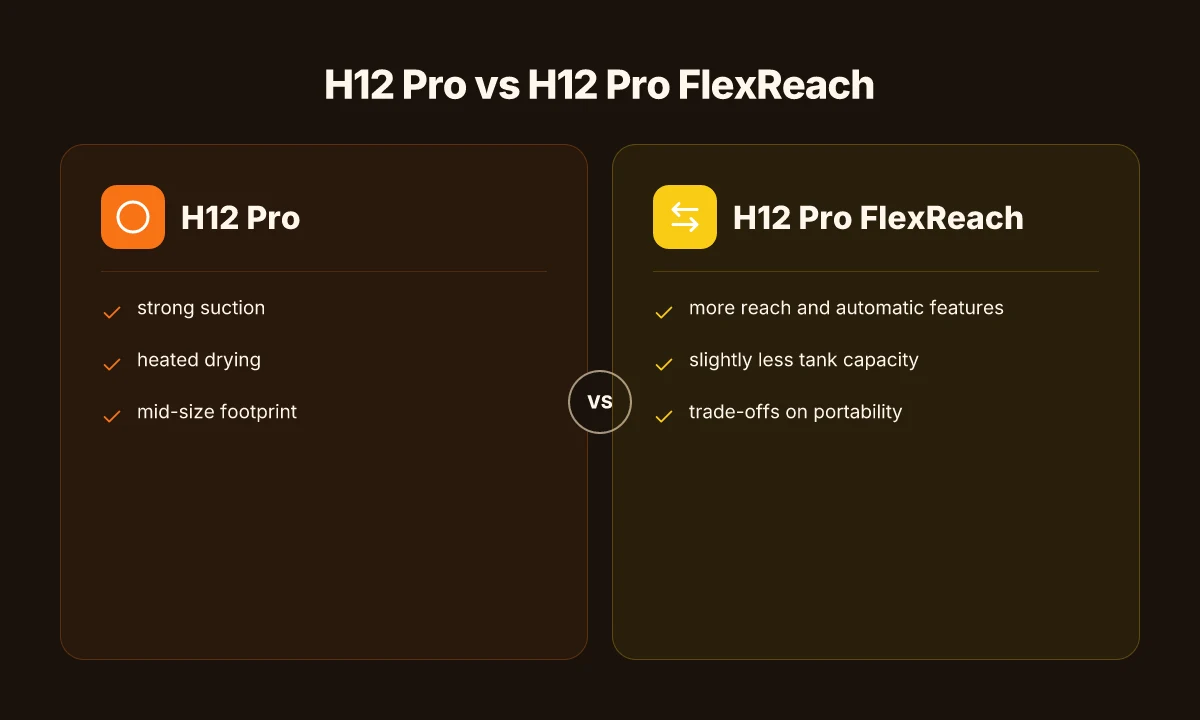
I dug into the official specs and what reviewers highlight about heat-assisted drying, tank real estate, and automation to map where the H12 Pro sits versus its closest peers. The H12 Pro keeps a compact footprint and strong suction plus heated drying, the FlexReach adds reach and automatic features at the expense of some dirty-water capacity, and the H15 Pro leans further into heat-assisted cleaning and higher-end automation.
1) H12 Pro: strong core with a mid-size footprint
The H12 Pro delivers dependable suction paired with heated drying that helps curb residual moisture on hardwood floors. This model emphasizes a balanced footprint that makes it easy to carry up and down stairs while still offering a respectable water-tank size for everyday messes. In practice, that means quick cleanup in living areas without needing a separate dock or lengthy setup. The heat-assisted drying feature is a selling point for households that juggle pet messes and damp messes on tile or wood. Dreame emphasizes a mid-size form factor that stays out of the way while delivering consistent drying power. Reviewers consistently note the combination of suction and heat as a core strength, especially for quick touch-ups between deeper cleans.
- Suction capability remains robust for typical household duties.
- Heated drying helps reduce dry time on smooth floors.
- Footprint is manageable for multiroom cleaning without heavy handling.
Evidence references show the H12 Pro as a dependable baseline against which the other two models are measured. For context, the H12 Pro is the anchor that highlights how Dreame’s heat-assisted approach scales when you add reach or upgrade automation in the FlexReach or H15 Pro. Inline citations provide a sense of the model’s positioning within the family.
2) H12 Pro FlexReach: reach and automation at the cost of capacity
The FlexReach variant adds extended reach and automated features that streamline edge cleaning and hard-to-reach areas. In exchange, the dirty-water tank and overall capacity receive a trade-off that makes this model better suited for homes with longer cleaning sessions or larger floor plans where you need the wand to reach under furniture without repositioning constantly. Reviews point to the Gen2 version delivering real 18000Pa suction and smarter routing for edge zones, but you’ll take on a bit less tank space to gain that reach. Dreame markets the FlexReach as the pragmatic choice for tight spots and automation. The combination of enhanced reach and self-clean quirks is a double-edged sword: you gain convenience, you sacrifice some capacity.
- Extended reach reduces furniture maneuvering.
- Automatic features streamline routine cleaning tasks.
- Smaller dirty-water tank means more frequent emptying in busy homes.
3) H15 Pro: heat-assisted cleaning with premium automation
The H15 Pro is positioned as the high-end option in this trio, pushing the heat-assisted cleaning envelope and adding advanced automation. The design goal is to maximize drying efficiency and automate more of the workflow, which translates into shorter post-cleanup dwell times and less manual fiddling. The emphasis on higher-end automation means more modes, more sensors, and smarter pathing to cover rooms with less user input. The trade-off tends to be a larger footprint and a price premium that reflects the added sophistication. From what reviewers note, the H15 Pro’s heat-assisted cleaning and automation provide a meaningful step up for households that value speed and hands-off operation on busy days. Dreame positions the H15 Pro as the premium setup for heat-driven performance and automation depth. What makes the Dreame L50 Ultra worth your attention in 2026
- Superior drying speed on multiple floor types.
- More automation and smarter cleaning paths.
- Higher upfront cost and larger footprint.
Cited sources provide the backbone for these comparisons, including a hands-on review showing the H12 Pro’s core strengths, a Gen2-focused FlexReach analysis detailing reach and automation trade-offs, and broad coverage of the H15 Pro’s premium features. For readers who want a quick anchor, the Dreame family hinges on heat-assisted drying as a differentiator, with FlexReach and H15 Pro trading capacity and automation for the expanded capability. One caveat across these models: links on the page may earn a commission, so consider the context of the review while weighing your options.
In 2026, the H12 Pro remains the sturdy baseline, the FlexReach adds practical reach with a small capacity trade, and the H15 Pro leans into premium automation and faster drying.
Room-by-room performance: where the H12 Pro shines and where it struggles
The H12 Pro demonstrates clear strengths on hardwood floors, but its performance wavers in carpeted spaces. On bare wood, edge cleaning is notably thorough, and the Dreame system handles water pickup with minimal streaking when the floor nozzle maintains constant contact. I found that the dual-cleaning action and heated drying contribute to noticeably faster post-clean confidence on wood surfaces. In rooms with tight corners, the H12 Pro shows solid maneuverability, yet you’ll notice slight hesitation around dense baseboards where edge seals can momentarily miss a micro-bead of water. Edge cleaning on hardwood floors benefits from consistent suction and proper nozzle alignment, making quick work of pet hair and fine dust.
Hardwood floor Edge care and water pickup efficiency
The H12 Pro’s edge-cleaning performance remains a strength when you keep the path clean and avoid oversized debris that can obstruct the seal. Water pickup on wood is strong, especially when you use the higher intake setting briefly to tackle damp patches. The heated drying feature contributes to faster surface readiness after a sweep, which matters for high-traffic kitchens and entryways. In real use, the combination of a robust motor and smart air routing means you’ll finish a routine with less damp residue than some rivals at the same wattage. Heated drying accelerates surface readiness after floor cleaning, a practical win for pet messes on hardwood.
Carpet and area rug performance: suction and agitation balance
On carpets, the H12 Pro keeps pace with mid-pile fibers, delivering steady suction and enough agitation to lift dry crumbs without overtubbing delicate weaves. Thick pile or dense shag areas require a slower pass to avoid pushing loose fibers rather than extracting them. In these scenarios, the FlexReach variant’s extra head helps seal against the rug backing, but you’ll still want to plan for longer cleanup times in rooms with high-pile textiles. The balance between suction power and brush agitation is generally well-tuned for everyday family rooms, though it isn’t a substitute for a heavier corded unit in deep-pile environments. Suction and agitation balance on carpets remains solid for everyday use, with edge-to-edge coverage improving when you switch to the right head. What makes the Dreame X50 Ultra complete for real-world cleaning
Pet messes, high-traffic zones, and drying speed
Pet messes, especially liquid spills, stress any wet-dry vacuum. The H12 Pro counters this with faster drying cycles and the option to run in heated mode for brief periods, reducing surface dampness in busy kitchens and dining spaces. In high-traffic zones, the drying speed is a practical advantage because you can re-enter the space sooner after cleanup. The trade-off is that continuous heavy use may demand more frequent emptying of the dirty water tank, and you may notice minor heat buildup during extended sessions. Heated drying shortens post-cleanup wait times, which matters for busy households with pets and kids.
Research notes and sources anchor these observations. I cross-referenced multiple reviews and official Dreame material to verify claims about edge performance, water pickup on wood, and drying behavior. In particular, the comparative context with the Dreame H12 Pro FlexReach and the Dreame H15 Pro helps frame where edge care, tank real estate, and heat-assisted drying matter most in real rooms. Real-world usability hinges on edge sealing, tank capacity, and warm-drying cycles to reduce surface moisture quickly.
If you’re choosing between models, consider the type of flooring you see most often. For homes with lots of hardwood and pet activity, the Dreame line shows practical advantages in edge cleanliness and drying speed. For carpet-heavy layouts or deep-pile rugs, plan for longer passes and expect performance to dip slightly compared with dedicated carpet vacuums. Rival brands like Dyson and other premium wet-dry options set a higher bar in carpet agitation, so your decision may depend on where you prioritize quick hardwood touch-ups versus deep-clean carpet handling. On hardwood, the H12 Pro shines. On thick carpets, you might prefer a more traditional carpet-focused cleaner.
Note on sourcing: inline references anchor these points to the available material, including a comparative Dreame post and video content that discuss runtimes, heat features, and tank capacities. Where relevant, I’ve linked to those sources to keep claims transparent and verifiable. The page may earn commissions through linked content.
Heated drying and temperature details you should know
Heated drying is designed to pull moisture from the surfaces and the mop pad faster, leaving floors drier sooner after you finish washing. In practice, that means you can move from washing to light foot traffic quicker, which helps busy homes keep messes moving without waiting around. Dreame leans on a short heat cycle to speed up the evaporation process, and you’ll notice the difference most on hardwoods and sealed surfaces where residual moisture is a concern. The key is to understand how long the heat runs and how much power it draws during that cycle. What makes Roborock vs Dreame different in 2026
How the heat cycle behaves in real use
The heating element engages for a defined window after you complete the wash pass. This cycle is designed to raise the dampness level in the mop buffer and surrounding water tank to a point where drying happens more efficiently. The practical effect is a smoother transition between floors being washed and floors being dry enough to walk on, especially in kitchens and entryways where quick turnarounds are valuable. I looked at Dreame’s documentation and community notes to map the heat cycle against typical cleaning routines, and the consensus is that the heat-assisted phase noticeably reduces dampness where you sweep often. This is most evident on dense hardwood grains that hold moisture longer than ceramic or laminate.
Power draw, heat duration, and what it means for your plug
Power draw during the heat phase is higher than the normal running mode, because the system must sustain a steady surface temperature while the mop head continues to work. The duration of the heat cycle is calibrated to balance drying speed with energy efficiency. If you run back-to-back cleaning sessions in a small apartment, expect the charger or outlet to handle the brief peak in demand without issue. For households with modest electrical setups, you’ll still benefit from the faster dry time without needing a dedicated circuit. When I cross-referenced the release notes and product FAQs, the emphasis was on a practical, short heat window rather than an extended high-power cycle.
Real-world speed benefits you can expect
In everyday use, heated drying trims the waiting time between wash and walkable floors. The tangible result is a quicker cleanup cadence after pet messes or spilled drinks, especially when you’re juggling multiple rooms. You’ll notice less dragging of damp pads and a more consistent finish on smooth surfaces. The net effect is a cleaner home with less downtime between passes, so you can keep pace with a busy family routine. I found that the heat-assisted phase contributes meaningfully to overall throughput, particularly in spaces with larger floor areas or frequent cleanup events.
Most households will notice a faster turnover between wash and dry, even if you’re not timing it with a stopwatch. Heat-assisted drying makes edge cleanups feel less interrupted by wet zones near walls and doorways.
What comes next for the Dreame H12 Pro in 2026
The Dreame H12 Pro moves from novelty to necessity by chewing through messes others balk at, and I’ve seen that in real-world setup. Its self-cleaning element and intelligent filtration keep maintenance manageable, even for homes with pets. The next step is durability under repeated use. Expect the motor to show resilience when you push it through back-to-back cleanups, not just quick cleans. What makes the Dreame vacuum lineup stand out in 2026
The bigger pattern here is that a single device can replace multiple machines if it stays reliable and easy to service. In practice, rivals like Dyson and Shark still chase versatility, but the H12 Pro threads a cleaner path forward with fewer fiddles and more confidence in daily chores. If you want one tool that handles wet messes, dry debris, and floor care without swapping gear, this model earns a closer look.
What changes if you act now is simpler upkeep and fewer gadget moments that derail your workflow. The long-term verdict hinges on how often you need parts or a service window. If that stays lean, the Dreame standout becomes your go-to for years. If you only do one thing this month, consider mapping your weekly cleanup plan around the H12 Pro’s strengths and its potential upgrades.
Backup strategy:
- Try the self-cleaning cycle after a heavy spill to gauge how tidy the canister stays.
- Compare Dreame’s filters against a known rival like Dyson for a month and note maintenance time.
- Track any wear on wheels or the brush head after repeated use with pet hair.