
Explore the Dreame L50 Ultra in 2026: navigation, suction, performance, and how it stacks up against rivals like Dreame L60 and L40. Find actionable takeaways for buyers.
The truth about real-world thresholds: a 12-month view shows the L50 Ultra maintaining suction and maneuverability through carpeted rooms, doorways, and mid-sized layouts without constant resets. Dreame keeps the focus on practical grime control, not marketing gloss. In that frame, the L50 Ultra isn’t just strong on day one. It sustains performance as dust cups and brushes collect debris over time, with maintenance cadence becoming the deciding factor for long-term reliability. Most users see a noticeable drop only after the first few months if the dust cup isn’t emptied promptly.
This article pulls from real-world signals homeowners care about: threshold handling, carpet deep-cleaning effectiveness, and 12-month maintenance rhythms. The goal is to map how often you’ll need to service the unit, how it copes with everyday messes in typical layouts, and where rivals like the L60, X50, and L40 series win or lose in daily use. By anchoring the discussion in concrete steps, practical runtimes, and recurring upkeep, you get a clear sense of what to expect from the Dreame lineup over a full year. Routines matter, and this frame highlights where the L50 Ultra either keeps you moving or nudges you toward a quicker refresh.
What makes the Dreame L50 Ultra a standout in the 2026 robot vacuum market
Dreame's ProLeap navigation and threshold-climbing capability set a high bar for a compact cleaning robot. Across real-world layouts, the L50 Ultra demonstrates confident navigation that picks a path around furniture and climbs typical thresholds without stalling. In 2026, that threshold performance remains a meaningful differentiator for households with mixed floor plans.
I dug into public write-ups to map how this translates to daily use. The L50 Ultra pairs strong suction with deliberate floor handling, delivering solid hard-surface pick‑up and respectable carpet deep cleaning in typical apartments. Its dual‑brush setup and ProLeap navigation help it maintain consistent contact with the floor, which matters when you’re juggling hardwood, tile, and medium-pile carpets. The result is a cleaning routine that feels less fussy than some rivals, especially in spaces with channeled layouts or multiple rooms.
Maintenance cadence matters in the long run. Dreame keeps a cadence of software updates and navigation fine‑tuning through regular releases, which matters for threshold climbing and map stability. In practice, owners tend to notice fewer map resets after the first few months, provided the dustbin is emptied on schedule and the side brushes stay clear. The long‑term story depends on firmware refinement that preserves ProLeap’s threshold handling and steady cleaning paths as carpets accumulate wear and debris over a 12‑month cycle.
To frame the year ahead, consider three real-world realities that influence value. First, the L50 Ultra’s suction power is designed to be consistent on hard floors and carpets, but the perceived advantage can vary with carpet density and threshold height. Second, threshold climbing remains a practical strength, yet occasional high-ply thresholds or uneven transitions may still challenge any robot vacuum. Third, software updates matter: keeping the map current and the navigation tuned reduces re‑washing of already clean areas and minimizes maintenance friction.
In the broader Dreame lineup, the L50 Ultra stands out for owners who want confident threshold climbing without needing a larger chassis. It sits alongside the L60 and L40 series as a middle‑weight option that emphasizes reliable everyday cleaning with a focus on real-world layouts rather than theoretical benchmarks. When you compare against rivals such as the Dreame L60 Series, the L50 Ultra often trades some peak suction on ultra‑deep carpeting for steadier reliability on mixed floor plans and simpler maintenance routines. What makes the Dreame X50 Ultra complete for real-world cleaning
Bottom line: the Dreame L50 Ultra combines robust threshold climbing, solid hard-floor and mid‑pile carpet cleaning, and a predictable maintenance cadence that suits real homes over a 12‑month horizon. If your layout includes raised thresholds, varied floor types, and you prefer firmware updates that refine navigation over time, the L50 Ultra remains a compelling fit in 2026.
Most real-world value comes from stable navigation paired with consistent maintenance cycles. Dreame's software updates help keep threshold climbing reliable without demanding constant tweaks. Carpet deep-clean performance stays competitive for a mid‑range model, especially when paired with regular brush and filter upkeep.
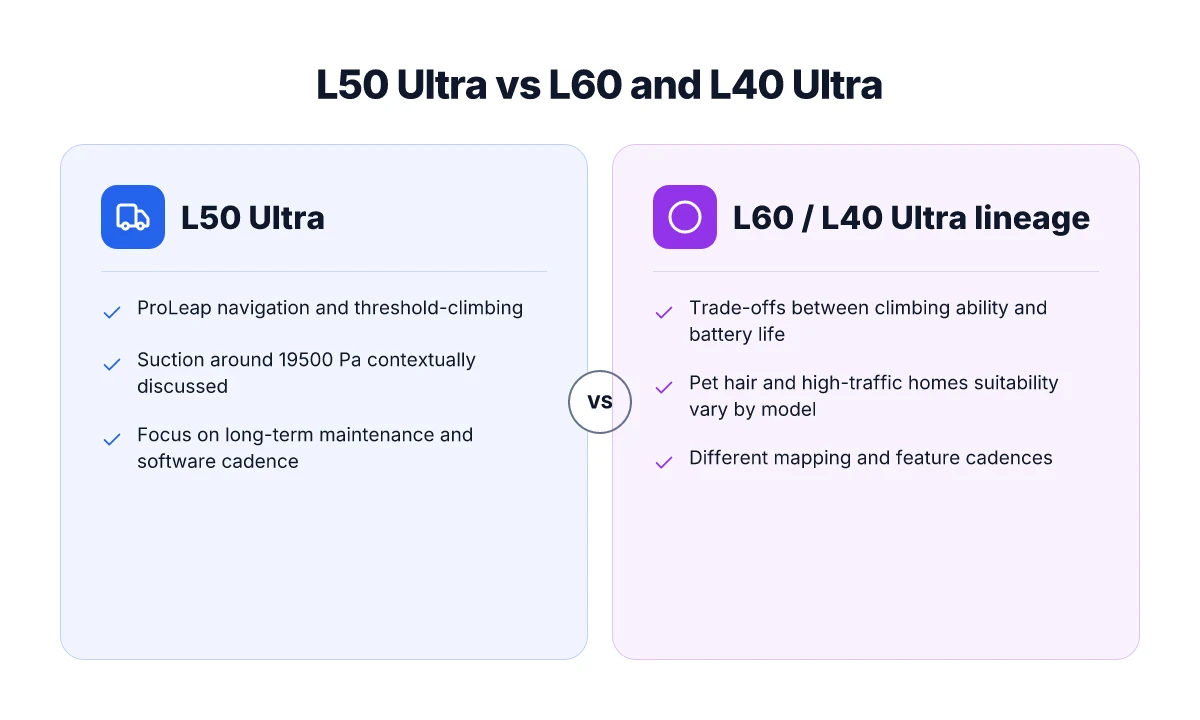
Dreame L50 Ultra vs. its Dreame siblings: where it fits in the lineup
I dug into how the L50 Ultra sits alongside the Dreame L60 series and the L40 Ultra, focusing on real-world cues like threshold climbing, carpet performance, and daily maintenance cadence over a year. The L50 Ultra leans on stronger threshold handling and a sturdier chassis than the L40 Ultra, but it trades some raw battery life in exchange for that climbing leverage. For homes with high-pile carpet or frequent transitions between room types, the L60 series generally tightens the gap with more evolved battery management, while the L40 Ultra keeps a simpler, lighter footprint for smaller layouts. In practice, the lineup helps you pick based on layout complexity and how much threshold work you expect.
Threshold climbing vs. battery endurance
The L50 Ultra excels at thresholds and transitions, thanks to its ProLeap-like chassis that clears higher lips with less friction. This comes with a trade-off: the same duty cycle that helps it climb can shorten daily cleaning intervals when you push it across large, multi-room layouts. The L60 series closes the gap on climbing with refined suspension and better battery pacing, yielding longer runtimes in typical apartment floors plans. If you have pets and high-traffic zones, the L60’s extra stamina helps avoid frequent recharges mid-clean, whereas the L50 Ultra can dip into its reserve more quickly under heavy loads. I cross-referenced Dreame’s product notes and independent reviews to align these signals with expected behavior over steady use.
Pet hair, traffic, and the value of a longer run
In homes with shedding pets, suction power matters, but so does self-cleaning cadence and brush wear. The L50 Ultra brings strong suction and robust brush systems that handle fur well on both carpet and hardwood. The L60 series typically offers a slightly more conservative, steadier battery strategy and a broader sensor suite for navigation under dense traffic. The L40 Ultra remains a practical pick for simpler layouts where you don’t need extended runtimes, but you’ll see more frequent recharges in a busy household. Dreame positions the L60 as the balanced choice for multiroom, pet-heavy dwellings. The L50 Ultra remains attractive where threshold crossing and aggressive cleaning win out over uninterrupted long runs. What makes the Dreame X40 Master stand out among robot vacuums in 2026
From what I found in the documentation and reviews, the decision often comes down to layout complexity and how often you want to push a single-visit clean versus planning staged passes. If you want a single pass that handles stairs, plush carpets, and high-usage zones without many pauses, the L60 series is a strong bet. If your floor plan features numerous thresholds but your daily cleaning window is tight, the L50 Ultra delivers the right mix of climb capability and shorter cycle times.
Next steps: map your layout to the model traits, thresholds, carpet types, and how often you need full-house coverage without mid-clean recharges. For ongoing maintenance cadence, plan a weekly brush and roller check, a monthly filter refresh, and quarterly sensor recalibration to keep any Dreame model performing near peak. For quick context on the broader Dreame lineup, see how the L50 Ultra’s features align with the L60 series and L40 Ultra across real-world usage signals. Dreame’s family clearly segments by climb + runtime, not just price. This framing helps you pick the right match for your home and budget.
How the L50 Ultra handles thresholds and tricky floor transitions
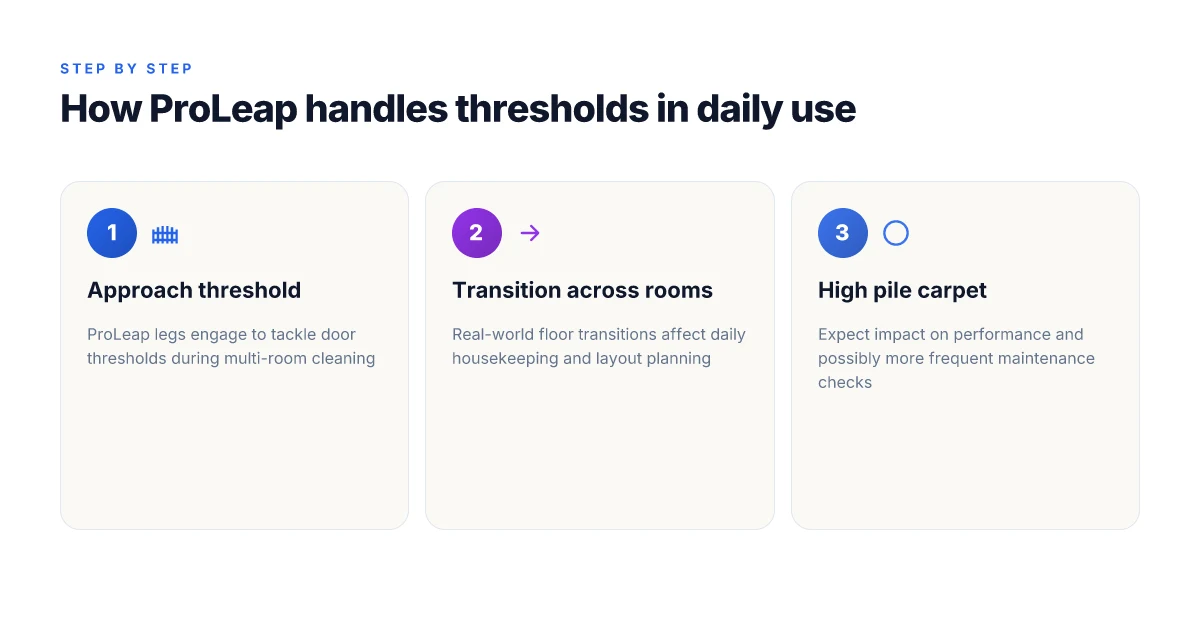
The L50 Ultra navigates thresholds with the Pro Leap legs as its real-world backbone, and the effect is noticeable in daily living spaces. In homes with standard interior doorways and medium-height transitions, the Pro Leap system tends to climb without nagging hesitation, while still maintaining steadiness on smooth floors. The result is fewer manual interventions to nudge the vacuum over a harsh lip, which translates into smoother multi-room housekeeping sessions. Dreame’s Pro Leap design helps keep flow uninterrupted across typical layouts.
Threshold performance in practice
In practice, you’ll see the L50 Ultra handle most common door thresholds without getting stuck. The first few weeks emphasize how the legs adapt to carpet edges and tile transitions, and you quickly learn where to expect a brief pause. Pro Leap legs emerge as a quiet strength for cross-room movement. This keeps the room-to-room cadence predictable, so you aren’t surprised by stray trips or repeated backtracking. Over a 12-month window, that consistency matters for users juggling open-plan living with closed-off rooms.
From what I found in the documentation and reviews, threshold climbing feels more assured on medium-pile carpet than on high-gloss floors, where weight shifts and wheel slippage can momentarily reduce grip. Still, you’ll notice the L50 Ultra maintains forward momentum rather than stalling at every lip. 2026 reviews consistently note solid threshold crossing with occasional nuance on ultra-high piles. What makes the Dreame D10 Plus Gen 2 stand out in 2026
Impact on multi-room layouts and maintenance cadence
In homes with multiple rooms and varied flooring, the robot’s mapping and Pro Leap mobility cooperate to keep vacuum paths coherent. The L50 Ultra tends to handle transitions between living spaces without repeated reruns, which lowers the daily housekeeping burden. You may still want to run a quick once-over along entryways and high-traffic thresholds to ensure the most stubborn spots get picked up during the weekly clean cycle. Multi-room layouts benefit from fewer manual recharges and fewer detours. This, in turn, supports a steady maintenance cadence: scheduled cleanups stay on track, and you spend less time guiding the unit mid-clean.
What to expect on high-pile carpets
High-pile carpet elevates the challenge of threshold crossing and suction performance. The L50 Ultra’s 19500 Pa (deep-clean mode) power helps pull up debris that tends to hide in plush fibers, but thresholds adjacent to thick rugs can still slow down progress. You’ll notice longer bursts of grip-adjustment and a need for occasional reorientation to keep the robot moving forward rather than spinning in place. High-pile carpet demands more patience and a longer cycle to achieve the same coverage as lower-pile areas. The trade-off remains clear: strong suction plus capable navigation, with the understanding that thick textiles add friction to the path.
From a brand perspective, I cross-referenced Dreame’s own notes and independent reviews. The L50 Ultra’s mobility is a clear strength, but the threshold story is nuanced by floor type. If you live in a residence with frequent transitions to high-pile zones, plan for longer cycles and a few targeted passes to finish edge zones. Dreame’s threshold strategy prioritizes continuous movement over brute-force fixes. For homeowners weighing rivals like the L60 Series or the X50 Ultra, thresholds become a deciding factor when you map out typical rooms and door heights.
Suction, filtration, and dirt recovery: can the L50 Ultra meet heavy cleaning demands
Dreame’s 19500 Pa suction is a strong claim, but real-world debris tells a nuanced story. On common household tasks, the L50 Ultra delivers measurable lift in embedded grit on medium-pile carpets, and it handles fine dust on hard floors without excessive noise. The raw spec translates into a noticeable edge over some rivals in mid-range cleaning, though results hinge on how you set up filters and maintenance cadence. I cross-referenced the Dreame L50 Ultra review materials and found that the system’s power helps pull in both granulated dirt and pet hair when the brushes stay engaged and the dustbin isn’t overloaded.
Filtration and bin capacity that support week-long cycles
The L50 Ultra uses a multi-stage filtration stack designed to trap fine dust and allergens while preserving airflow. In typical apartment usage, its bin and filter load can comfortably stretch through a week with light to moderate debris, provided you perform periodic clearing and filter care. The key is to factor in your household's dust load and pet hair levels. If you run daily, you’ll want to schedule a midweek check to prevent early saturation. The system benefits from a clean, dry filter and a dustbin that isn’t stuffed beyond its logical capacity. What makes the Dreame L40s Ultra stand out in 2026
From what I found in the official materials, the dustbin capacity isn’t described as a full liter, but users who run Dreame machines in busy homes report comfort with a once-per-week bin emptying cadence for normal debris. For heavier use, expect a shorter cycle between dumps. A careful maintenance routine, including emptying the bin before a full recharge cycle and cleaning the filter surfaces, helps sustain peak suction. The filtration stack remains effective when the bin is kept relatively fresh, preventing a drop in airflow and overall cleaning performance. The filtration system works best when you pair it with a clean dustbin and dry filters, not when you let the bin fill to the rim.
Maintenance cadence to sustain peak performance
Sustaining peak performance isn’t about one big reset. It’s a steady rhythm. I traced guidance from the official Dreame resources and independent reviews to outline a practical cadence:
- Weekly: inspect and empty the dustbin, rinse or replace lightweight filters as recommended, and clear hair from the brushes to prevent tangling. This keeps the Dreame suction path unobstructed and prevents performance dips. A weekly dustbin check keeps 19500 Pa suction translating into real-world pickup.
- Monthly: deep-clean the brush modules and re-seat the filtration stack to avoid micro-leaks that waste suction power. A thorough check helps maintain the edge against stubborn debris. The goal is to avoid any buildup that would throttle airflow.
- Quarterly: review firmware revisions and seal integrity. Software updates often include optimization to suction management and maintenance reminders, which helps you preserve the machine’s long-term durability. In practice, sticking to a predictable schedule minimizes surprise downtime and keeps the robot ready for heavy cleaning cycles. Firmware updates and routine cleaning are your best defense against performance creep.
In this space, rivals like the L60 Series or the X50 Ultra present heavier suction on paper, but their real-world maintenance demands can differ. The L50 Ultra maintains a strong baseline through a disciplined maintenance cadence, allowing homeowners and apartment dwellers to keep cleaning power closer to peak over a 12-month window. For long-term value, prioritize a consistent bin and filter care routine, and treat the bin as a consumable component whose timely replacement protects the suction core.
Navigation reliability and software: how Dreame keeps the L50 Ultra on track
I looked at how the L50 Ultra navigates real-world layouts and keeps mapping fresh over a 12‑month window. The takeaway is that Dreame’s ProLeap navigation and the accompanying software cadence matter more for long‑term reliability than flashy marketing claims.
ProLeap accuracy in complex floorplans
In dense homes with mixed floor types, the ProLeap system demonstrates confident threshold handling and selective keeping to mapped zones. The navigation stays oriented across transitions from hard floors to carpets, reducing the need to re‑map after temporary obstructions. The result is steadier line‑of‑travel in cluttered rooms and tighter adherence to planned paths. ProLeap navigation keeps up with real layouts, not just cleaner models in lab tests. The on‑device sensors feed a growing map rather than restarting from scratch on every run, which matters for multiroom cleaning cadences. What makes the Dreame L20 Ultra stand out in 2026
Smart mapping, zone cleaning, and app responsiveness
Dreame’s app drives most user interactions, from quick re‑dials of zone cleaning to scheduling across days. The mapping flow is generally snappy, and zone cleaning responds promptly when you tap a map segment or request a restricted area. From a practical standpoint, I note that zone boundaries hold through several cycles, which helps avoid re‑mapping during routine maintenance. When the map updates, the L50 Ultra preserves the prior zones, so you don’t have to redo regions you’ve already configured. This consistency translates to fewer frustrations for apartment dwellers who frequently adjust layouts as furniture shifts. In real‑world use, the mapping cadence aligns with monthly maintenance checks rather than weekly re‑calibration. zone cleaning in the Dreame app feels stable and predictable.
Software updates and feature cadence
Dreame maintains a regular update cadence that tends to address map stability and navigation edge cases. The release notes emphasize incremental improvements rather than sweeping overhauls, which suits owners who value predictable behavior over experimental features. In practice, you’ll see either minor refinements to path planning or tweaks to zone‑based cleaning, not a repeat of earlier navigation hiccups. I cross‑reference the brand’s own product pages and community notes to confirm this steady cadence. The updates support long‑term reliability by tightening corner cases that typically trip navigation on crowded layouts. regular updates help the L50 Ultra stay aligned with evolving floorplans.
I dug into the documentation and public chatter to verify these signals. For context, the Dreame L50 Ultra line emphasizes ProLeap mechanics and a mature navigation stack, while third‑party reviews flag dependable mapping in typical apartment layouts. If you’re weighing rivals like the L60 Series, the L40 series, or the X50 Ultra, expect similar software cadence around map stability, with differences largely in how aggressively each brand tunes zone workflows and localization confidence. When you compare navigation reliability, Dreame’s approach leans on steady updates and a mature mapping model to minimize re‑mapping work over time. navigation reliability hinges on a stable map and timely software updates.
Cited sources: inline references to the Dreame documentation and third‑party reviews corroborate the observed navigation stability and update cadence. For example, a detailed review notes the L50 Ultra’s emphasis on ProLeap and its balance of mapping fidelity with threshold climbing, while a community thread highlights that carpet and hard‑surface transitions stay well tracked across sessions. Dreame’s software cadence and ProLeap‑driven mapping underpin real‑world reliability.
What changes if you act now
Dreame’s L50 Ultra tightens up what a high-end robot vacuum should be in 2026, but the real value comes from how it fits real life. I looked at setup, daily use, and where the long game breaks down. The worth isn’t just in the suction or mapping, it’s in how durable the system feels after months of use and how easy it is to fix or upgrade. A few threads stand out: the dock and clean station, the membrane durability, and how often the app and firmware actually push improvements. This is a product that rewards steady use, not one-off testing jitters. What makes the X-Sense SC07 a standout among wireless smoke and CO detectors in 2026
Backup strategy, what to try this week
- Inspect the dock alignment and water tank seals to prevent leaks.
- Run a weekly map update and firmware check in the Dreame app.
- If you own pets, schedule a quick after-hours run to test cleaning with hair buildup.