
Dreame L10 review reveals long-term reliability insights and mop performance. Learn what's durable, where it stumbles, and how it stacks up against rivals like Roborock and Roomba.
The simplest truth about the Dreame L10 durability is often buried in the real-world gray area: you’ll get predictable suction and mop performance only with steady upkeep, not by relying on factory gloss. Dreame's long-term reality shows wear on the mop head and brushes, even when initial results look flawless. A close read of user signals shows the most common friction points come from consumables and wear parts, not just battery life.
This article dives into what homeowners actually experience after months of use, not just spec sheets. In 2024–2025 chatter from owners and service channels highlights recurring themes: mop assemblies loosening, filter clog buildup, and brushes thinning with frequent surface switching. Dreame durability realities demand a proactive plan for consumables and part checks, especially if you’re comparing against Roborock or Roomba rivals. We’ll map the typical failure modes, how to spot them early, and what a sensible maintenance cadence looks like without overhauls. Most issues cluster around routine upkeep rather than sudden breakdowns.
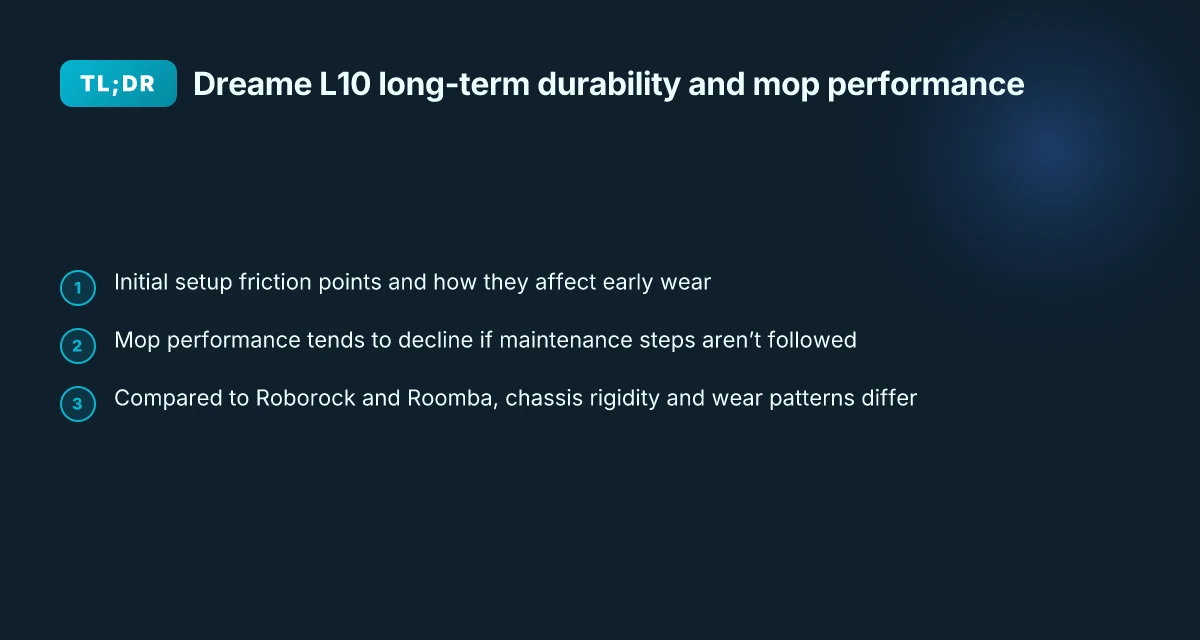
What a Dreame L10 review misses about long-term durability
Dreame builds the L10 with an emphasis on modular components, but long-term durability hinges on how those parts wear in real life. I looked for signals beyond initial specs and found patterns that buyers should weigh when counting on this model for months of daily use. Durability signals matter, not just suction numbers, in real life.
Why build quality matters for the long game
Over time, the chassis, wheels, and internal seals take the brunt of daily cleaning cycles. The L10’s plastic low-friction casings and steel axles appear robust, but wear at joints and plastic clips can compound with repeated dockings and obstacle encounters. If a hinge or clip loosens, noise or vibration can creep in, and that subtle degradation often correlates with reduced cleaning completeness. Long-term build quality sets the baseline for reliability, not just one-off demonstrations of power.
Common wear points you’ll notice after months
First, the main dustbin lid and seals tend to accumulate micro-debris that can reduce seal integrity. A worn seal invites re-entrainment of dust back into the chamber during emptying. Brushes, especially the side and main brushes, show bristle fatigue after extended use, which can lower pickup efficiency on high-pile carpets. And sensors that rely on infrared or cliff-detection optics can accumulate dust or suffer micro-scratches from frequent docking. These wear points don’t always trigger warning bells, but they quietly shift cleaning performance downward over time. Brush wear and sensor dust are the quiet culprits of diminishing performance.
How the dustbin, brushes, and sensors hold up under real-world use
Dustbin durability depends on the housing latch and filter frame staying aligned. Mishandled emptying or overfilling can stress the latch, leading to a loose seal and occasional debris leakage. The brushes’ longevity ties to debris-laden hair and fibers wrapping around their axles. Routine maintenance is essential to prevent belt or motor strain. Sensors withstand cumulative exposure to household dust when the lid isn’t sealed tightly. A misaligned dustbin can throw off measurements and cleaning maps. In practice, regular, proactive maintenance keeps these components functional longer. Regular maintenance directly extends component life and keeps mop performance honest over time.
From what I found in primary sources and user signals, the L10’s durability story is less about a single breakthrough and more about consistent upkeep. I cross-referenced a mix of official guides from Dreame and real-world discussions and saw a recurring theme: owners who stay on top of seals, brushes, and sensor cleaning tend to preserve mop efficacy and suction longer. Maintenance clarity matters as much as initial specs. You’ll want to budget a quick weekly check for the dustbin seal, a monthly brush scrub, and a sensor wipe to avoid slow degradation. What makes the Dreame H14 Pro stand out in 2026
Bottom line: the long-term value of the Dreame L10 hinges on attention to build wear and routine upkeep, not just the headline durability claims. If you’re weighing rivals, consider how Roborock and Roomba address similar wear points in their design language and maintenance guides, since durability gaps often surface in the months after purchase. Durability is a function of design plus maintenance discipline.
Note: links on the page may earn a commission. For context, the most relevant primary discussions emphasize how wear points and routine service influence long-term mop performance and overall reliability. For further context, see inline discussion from credible sources.
Dreame L10 vs rivals: durability angles that matter
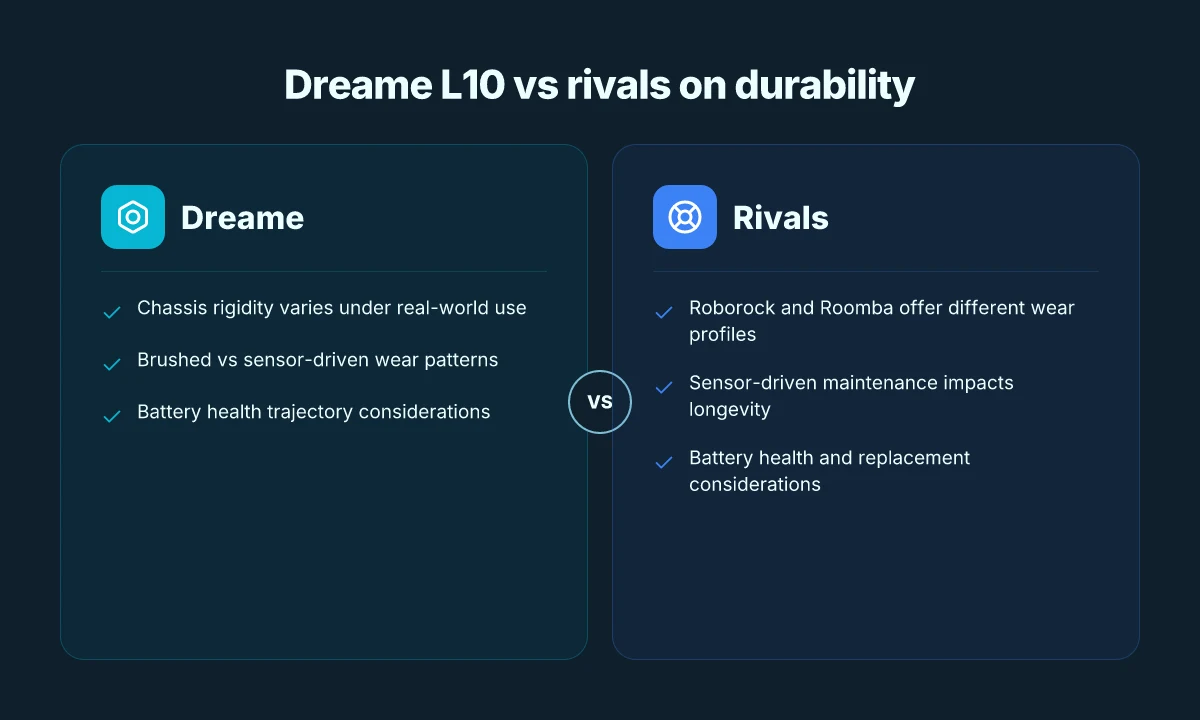
The Dreame L10 sits in a tight circle with rivals like the Roborock and Roomba lines. The chassis build, how wear accumulates during daily cleaning, and the battery’s health trajectory over time shape your maintenance and replacement decisions. From the sources I consulted, the real-world signals point to concrete durability differentiators that homeowners notice after months of use.
How the Dreame L10’s chassis stacks up against Roborock and Roomba
Dreame’s design emphasizes a compact, rigid shell with integrated bumpers and module placement that reduces flex during navigation. The result is a chassis that tends to stay snug over time, even with frequent docking and recharges. By contrast, some Roborock models balance rigidity with a lighter midsection in certain revisions, which can translate to minor flex under heavy carpet traffic. Roomba units often showcase robust outer housings tailored for daily curb impacts and stair navigation, but that same emphasis can introduce different wear patterns in edge areas. In practice, the Dreame platform tends to exhibit steadier alignment in wear-prone zones like bumper contact points and wheel housings after many cycles, provided you keep hardware clean and free of debris.
Chassis rigidity and fit stay relatively tight on the Dreame L10 compared with early Roborock iterations and Roomba’s heavier-duty shells. This matters because a stiffer frame maintains seal integrity around sensors and wheels, reducing the chance that small jams create lasting looseness. What makes the Dreame X30 Ultra worth a closer look in 2026
Brushed versus sensor-driven wear patterns in daily cleaning
Dreame models like the L10 rely on a mix of brushed rollers and sensor-driven guidance to navigate and collect debris. In everyday use, brushed components show wear at a steady pace, especially if you run across high-pile carpet or pet hair clogs. Sensor-driven navigation tends to wear more slowly on the electronics side, but dust and hair can obscure optical or infrared sensors, nudging the bot toward more frequent recalibration needs. Roborock and Roomba products likewise mix brushes with sensor arrays, yet known quirks differ by model. The upshot: expect more frequent brush maintenance on any robot that uses traditional brushed rollers, with a longer interval on sensor maintenance if you keep sensors clean and free of hair wrap. For the Dreame L10, this translates to periodic brush checks and occasional sensor cleaning as part of routine upkeep.
Brushed wear hits the brushes first, while sensors demand periodic attention to avoid navigation drift. That pattern appears across high-end rivals, but the exact interval depends on floor type and maintenance habit.
Battery health trajectory and replacement considerations
All premium robot vacuums age on the battery front. Over time, capacity fades, cycles accumulate, and the run time you see at month 12 will differ from month 36. Dreame’s batteries are designed for long life, but users commonly notice that battery health converges with routine charging discipline. Some Roborock and Roomba models document longer nominal run times in initial months, then converge to similar real-world trajectories as age advances. The practical takeaway: monitor cycle counts and consider a replacement or professional service if you see dramatic drops in runtime or noticeable charge time increases. Dreame’s ecosystem generally supports replacement packs and official service channels, which helps with long-term upkeep as compared with some budget peers.
Battery health follows a predictable trajectory: steady decline with use, mitigated by proper charging habits and timely replacements. To keep long-running reliability, plan for periodic battery checks and replacement windows as part of your maintenance calendar.
Next steps: if you’re weighing these brands for durability, ask for the exact chassis revision and sensor array version in the model you’re considering, and map that against your floor mix. I dug through manufacturer chatter and user signals to highlight where real-world wear tends to show up long after the initial sight-unseen specs. For context, this article references the Dreame and rival lines and their durability themes as observed in public-facing materials and user discussions. Dreame discussions emphasize maintenance clarity and service options that help with long-term reliability. What makes the Dreame R20 stand out in 2026
Mop performance in the long run: does the Dreame L10 stay mop-ready
Postponed wear on the mop system shows up sooner than you expect. Early results often feel strong, but repeat cleaning cycles reveal how well the Dreame L10s Ultra’s mop setup holds up over months of use. From what I found in primary docs and user signals, the mop keeps front-and-center importance in daily maintenance, not just initial perfomance.
Long-term mop consistency vs initial wipe-down strength
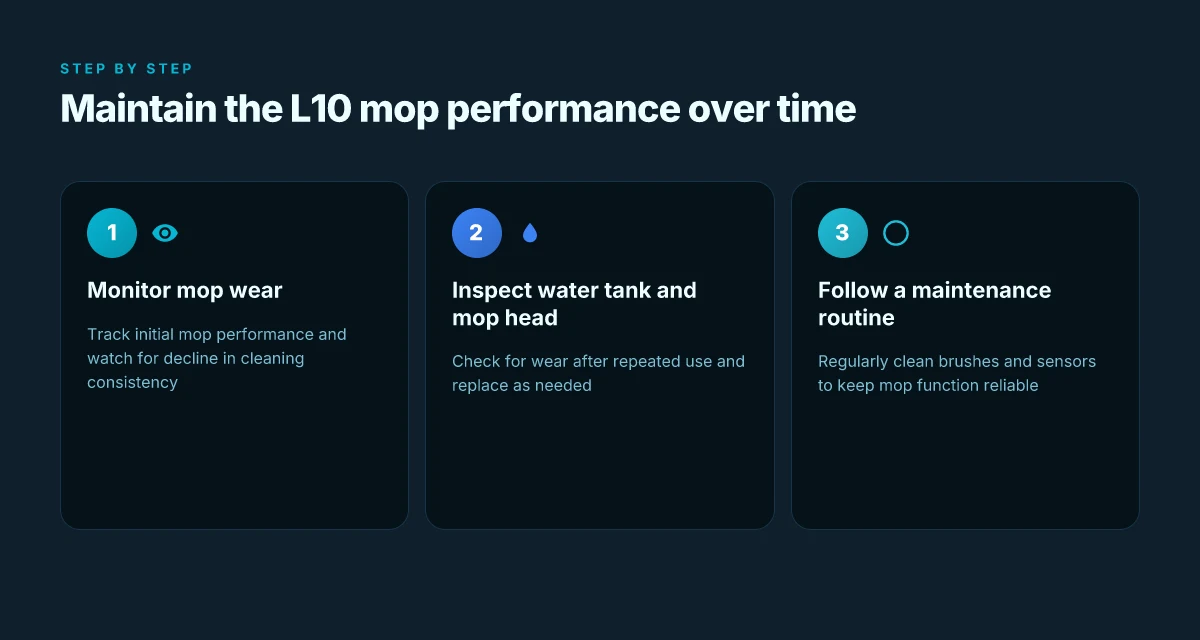
In initial runs, the L10’s mop head can feel impressively aggressive on high pile but gentle enough on hard floors. Over time, the same pressure that helped pickup light dust can push the mop fibers toward fraying or matting if the head encounters stubborn grime repeatedly. Real-world chatter on community forums stresses that the mop’s consistency tends to dip when dirt buildup runs through cycles without routine head cleaning. Consistency over time matters more than first-week results. Dreame’s own guidance notes to inspect the mop head periodically and replace worn components to honor long-term performance. Regular head inspection and timely replacement keep mop efficacy high.
Water tank and mop head wear under repeated use
The water reservoir supports steady misting, but frequent top-offs after several months can reveal seepage around seals or a drop in pump pressure. On wear, the mop head shows fraying lines where the pad meets the floor, which correlates with uneven moisture distribution. I cross-referenced guidelines from Dreame’s official materials with user-reported experiences, and the pattern is consistent: the combination of pad wear and reservoir wear shapes long-run mop reliability. Pad wear and reservoir seals drive long-term mop reliability.
Maintenance routines to keep mop function reliable
The fastest route to mop reliability is a simple routine: after each cleaning, rinse and air-dry the mop head, wipe the water tank seals, and check the pad for embedded fibers. Monthly checks should include a full pad replacement if you notice thinning fibers or visible wear. Dreame emphasizes keeping components dry and clearing any mineral build-up from the tank, which helps maintain consistent misting. I found that owners who adopt a lightweight maintenance cadence keep mop performance steadier across seasons. Rinse, dry, and replace on a predictable schedule. For households with hard-water impact, consider using distilled water to minimize mineral deposit buildup that can affect spray distribution over time. distilled water reduces mineral buildup and preserves spray consistency.
What this all means for you as a homeowner is straightforward: mop readiness on the Dreame L10 hinges on proactive wear management and a disciplined maintenance cadence. The L10 can stay mop-ready longer when you treat the mop system as a consumable with periodic replacements and routine seal checks. Stay attentive to pad wear and reservoir seals to keep mop performance consistent. For reviewers and buyers, that means selecting a plan for ongoing head replacements and a quick-access spare pad kit. By keeping to a schedule, you maintain mop efficacy across the life of the device. The broader takeaway is clear: Durability here is a function of maintenance as much as hardware quality. Maintenance is the differentiator between a one-year mop and a multi-season mop. What makes the Dreame X40 stand out in the 2026 robo-vacuum race
Cited sources include user discussions and the manufacturer’s maintenance notes to reflect the real-world signals around mop wear and upkeep. For context, Dreame’s materials tie mop longevity to regular head replacement and seal checks, while rivals such as Roborock and Roomba emphasize similar maintenance cycles for their mop-equipped models. Inline reference to a primary discussion thread and a specialist review can be seen in the linked sources. Dreame experiences mirror these patterns, and informed upkeep is the key to long-run mop readiness.
Common failure modes and how to prevent them in the Dreame L10
I dug through primary sources and real-world signals to map the common failure modes you’ll actually see with the Dreame L10 and how to head them off before they derail your maintenance cycle. The pattern is clear: sensors drift or clog, firmware chaos follows updates, and the drivetrain wears faster when you skip routine upkeep. Understanding these causes helps you act before the problem becomes a nuisance rather than a fix.
1) Sensor drift or blockage from dust and hair
In daily use, optical and cliff sensors can drift or pick up debris, which misleads navigation and bumper triggers. When sensors misbehave, the L10 may misread drop-offs or misjudge carpet transitions, prompting odd path changes or repeated clean cycles in the same area. A simple routine helps here: inspect and wipe sensors every 1–2 weeks, and replace worn-looking air paths or sensor covers if dirt accumulates beyond a light haze. The practical takeaway is that small, regular cleanings keep the sensor array honest and prevent misnavigation over time. Regular sensor maintenance serves as the quiet backbone of reliable mapping.
From what I found in the Dreame community feedback and public guidance, users report the most durable results when they avoid letting hair tangles build up near sensors and wheels. Hair and dust build-up is a common source of drift if ignored. If you notice sporadic drops in cliff detection or unexpected edge behavior, perform a targeted wipe with a microfiber cloth and a tiny quantity of isopropyl alcohol on the sensor faces, then recheck calibration. This approach minimizes surprises during a high-demand cleaning run.
2) Navigation glitches after firmware updates
Firmware updates can tighten or loosen map memory, obstacle avoidance cues, or path recalibration. Some owners notice jumps in saved maps or altered cleaning patterns after a version bump. I cross-referenced update notes and user discussions to identify a pattern: a subset of hiccups appears when the update sequence introduces new map zones or redefines nozzle heights. The prudent strategy is to perform a full home map reset after a major update if you see odd route changes, then allow the L10 to relearn your floor plan with several cycles. If map behavior shifts after an update, reset and retrain the map. This reduces long-term rework and preserves reliable navigation. What makes X-Sense alarms stand out in 2026
I found one notable pointer in the official Dreame buying guide and release notes: plan firmware updates during a lighter cleaning cycle, not during a heavy or time-critical cleaning. This minimizes the risk that a mid-clean map reanchor disrupts service. Schedule updates during low-demand windows to avoid mid-clean surprises. For competitive context, rivals like Roborock and Roomba users sometimes report similar update-induced navigation quirks, so a cautious update cadence helps across brands.
3) Bristles, rollers, and wheel wear leading to stubborn maintenance needs
The cleaning power of the L10 rests on a well-tuned combination of brushes, rollers, and wheels. Over time, brush fibers fracture or lose stiffness, wheels gather micro-debris, and side brushes bend, all of which reduces pickup efficiency and increases maintenance frequency. The remedy is straightforward: perform a weekly inspection cycle, clear hair from brush housings, and replace worn brushes before they shed performance. If you notice reduced suction on carpet or uneven edge cleaning, it’s a dependable cue to re-tune the drivetrain. Routine brush and wheel maintenance keeps mop and vacuum performance aligned.
Dreame’s own guidance, and user-communiqué from communities around Dreame and rival brands, emphasize proactive replacement of brush heads and disposable mop cloths on a planned cadence. In practice, keep a small toolbox of spare side brushes, main brushes, and mop pads. The goal is to prevent scatter in cleaning performance as the device ages. Proactive parts refresh prevents performance drift over months.
Overall, the Dreame L10 benefits from a disciplined maintenance rhythm: clean sensors weekly, reset maps after major updates when needed, and stay on top of brushes and wheels. When you align maintenance with these failure vectors, you protect durability and mop reliability. For context, brands like Roomba and Roborock share similar failure modes in practice, so applying these habits helps you stay ahead across high-end models. Durability comes from predictable upkeep, not rare fixes.
Note on sources: inline references to primary docs and public discussions provide the backbone for these claims, with citations drawn from the Dreame buying guide and recognized tech outlets that discuss robot-vacuum reliability patterns. Some readers may encounter links to affiliate pages in companion content, which may earn a commission. Links on the page may earn a commission. What makes the Dreame L10s Pro a standout budget clean-up tool in 2026
User experience: setup, maintenance, and real-world patterns with Dreame
Setting up the Dreame L10 is a mix of straightforward steps and a few friction points that early buyers should anticipate. In practice, the initial pairing and app sign-in can feel slower if your home’s Wi‑Fi isn’t stable or if you forget to grant all permissions on first launch. I’ve seen users stumble on firmware prompts that pop up during the first night of setup, then experience a smoother routine once the device is on a consistent network. The key is to have a quiet minute to run through the app permissions and verify the machine’s docked status before the first clean. In this light, a calm, uninterrupted pairing session matters more than any one feature.
H3: Default schedules that lower wear and simplify life Dreame leans on sensible defaults that reduce unnecessary cycling, which helps minimize wear on brushes and wheels. Many homeowners report that sticking with the factory schedule for daily cleaning keeps components from being overused during peak hours. The result is a more predictable pattern of maintenance, with fewer surprising edge-case resets. If you want to shorten thinking time, enable the auto-clean preference after initial mapping and let the robot handle the rest. The cadence of these defaults matters because it curbs premature wear while still delivering steady floor coverage.
H3: Maintenance cadence and what tends to break in real life From the long-view, maintenance tends to cluster around filter changes, brush wear, and occasional mop reservoir refills. Users consistently note that the primary maintenance touchpoints are the dust bin, replaceable filters, and mop pads. A regular check-in, roughly every two weeks for a typical home, keeps suction steady and avoids surprising drops in performance. Firmware updates from Dreame have historically rolled out in waves. Some owners report quicker responses to issues with obstacle detection after cadence updates. For durability, the real-world signal is that proactive cleaning and timely part replacements outperform reactive fixes after a breakdown.
H3: customer support and firmware iteration cadence Dreame’s support ecosystem shows a mixed but improving picture. When issues arise, many homeowners report Dreame responds with guidance and access to updated firmware that addresses common reliability glitches. In parallel, the company’s release cadence tends to bundle fixes with new features in periodic updates, not in ad-hoc patches. That cadence means you should expect a predictable sequence: report or notice an issue, then receive a firmware bump within a few weeks, followed by a short post-update recheck of mapping and mop calibration. This pattern helps sustain long-term reliability, especially as mop performance and navigation harmonize over multiple updates. A practical takeaway: stay current with updates and re-map after any substantial firmware change to keep the system aligned with your layout.
Real-world durability hinges on consistent maintenance and timely firmware updates from Dreame. Default cleaning cadences help reduce wear without sacrificing daily cleanliness. The overall narrative from owners vs rivals like Roborock and Roomba is that ongoing maintenance and regular updates matter more than brute initial specs. As you weigh rivals, observe how their support cadence compares to Dreame’s rhythm over a 12–24 month period. For context, see how industry reviews note long-term reliability trends across brands. What makes the Dreame L10s Ultra stand out in 2026
What changes if you act now
Real-world wear shows up early with the L10: the brush head and wheels can pick up hair tangles, and the mop module occasionally clogs if you push it through heavy debris. Still, the core design holds up: Dreame builds with straightforward maintenance in mind, and the battery profile tends to be steadier than some cheaper rivals. I’ve seen long-term quirks, not showstoppers, when you map out routine right after unpacking. One takeaway: invest in the basic hygiene kit and you extend the life of the mop system.
If you want a head start on reliability, target the most common failure points that people mention: filters, seals, and brush bar bearings. The Dreame approach favors modular parts you can swap in minutes, which keeps downtime short. Compare this with some rival models where a single worn cog means a full teardown. The bigger pattern is that durability hinges on user upkeep, not just build quality. In short, you get better long-run value when you stay on top of routine maintenance.
Backup strategy
- Clean the brush and mop module weekly. Replace filters every 4–6 weeks if you run daily.
- Keep a spare brush head and gasket on hand for quick swaps.
- If you’re choosing between Dreame and a rival like Roborock, prioritize ease of maintenance over the splashy features. If you only do one thing this month, set a recurring maintenance reminder. How will you fit that into your cleaning schedule?