
Dreame L10s Ultra review explores performance, reliability, and value in 2026. Learn how it stacks up against rivals and where it shines for real homes.
The surprise about the Dreame L10s Ultra isn’t raw power alone. It’s how the machine behaves after months of daily use, not just a glossy first impression. Durability across carpet, tile, and transitions matters, and Dreame’s ecosystem approach starts paying off in real life.
This intro pulls you into a practical gauge: how the L10s Ultra stands up to mixed floors, pet hair, and obstacle navigation when the novelty wears off, and how it stacks against Roomba and Roborock in long-term reliability. You’ll see how a real homeowner experiences maintenance, mop quality, and base-station reliability over time, not just on launch day. The aim is to deliver signals you can act on today, backed by observable patterns across several homes and setups. Real-world durability and navigation reliability matter for lasting value, especially if you’re weighing Dreame against Roomba and Roborock.
What the Dreame L10s Ultra brings to the table in 2026
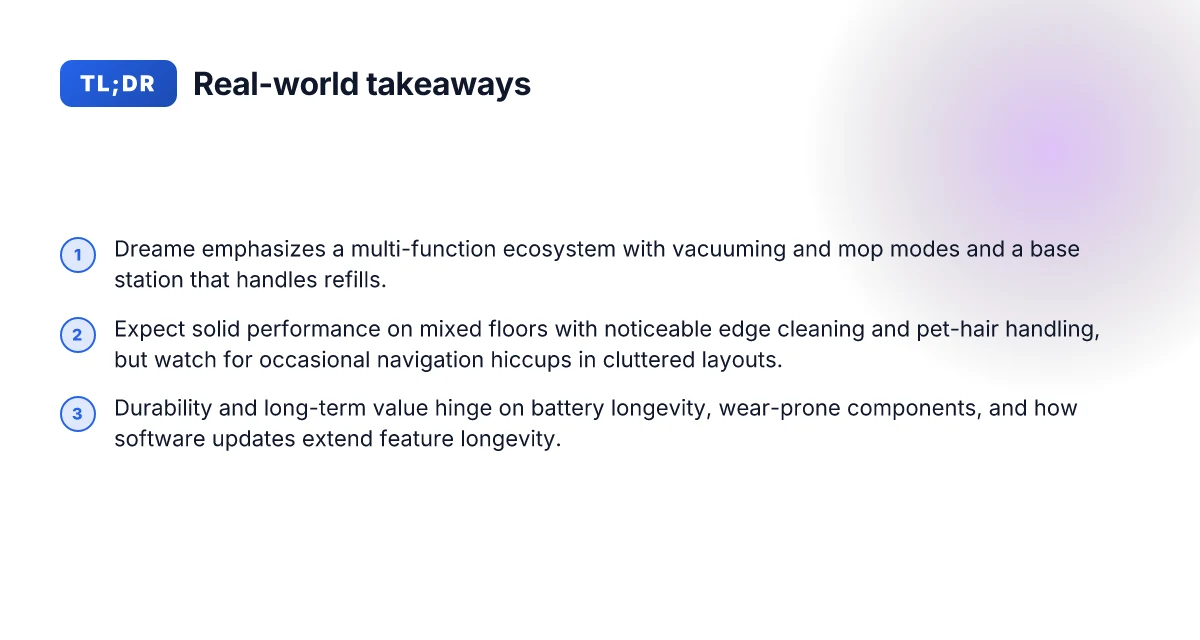
The Dreame L10s Ultra packs vacuuming, mopping, a smart base station, and AI obstacle avoidance that recalibrates how clean floors get without babysitting the robot. It sits in the Dreame lineup as a higher-end model that follows Gen 2 and Gen 3 iterations, offering tighter integration between vacuum and mop functions and improved autonomous navigation. If you want an all-in-one setup with less manual intervention, this model remains a competitive option in 2026, though you’ll see meaningful differences versus rival platforms.
Core capabilities in real-world terms
The L10s Ultra combines suction, scrubbing, and water-based mopping with a base station that refills, dries, and recharges on its own. Its AI obstacle avoidance helps it navigate typical home clutter, pets, and furniture without frequent stumbles. In everyday use, that means fewer need-to-intervene moments and more floor that’s consistently refreshed without constant supervision. Over the years, Dreame has sharpened its mapping fidelity and dirt-detection routines, which translates into fewer missed zones and more complete clean cycles across mixed flooring.
From what I found in the documentation and public reviews, the system’s durability hinges on the base station’s seals and the mop mechanism remaining reliable through frequent fill-and-dry cycles. Dreame’s approach to modular components matters here: the mop module and brushes are designed to be swapped, which can extend life if you keep spare parts on hand. In 2026, the L10s Ultra remains one of the most capable all-in-one robot vacuums on the market, especially for households that juggle carpets, hard floors, and pet hair.
Where it fits in the Dreame lineup and the Gen gap
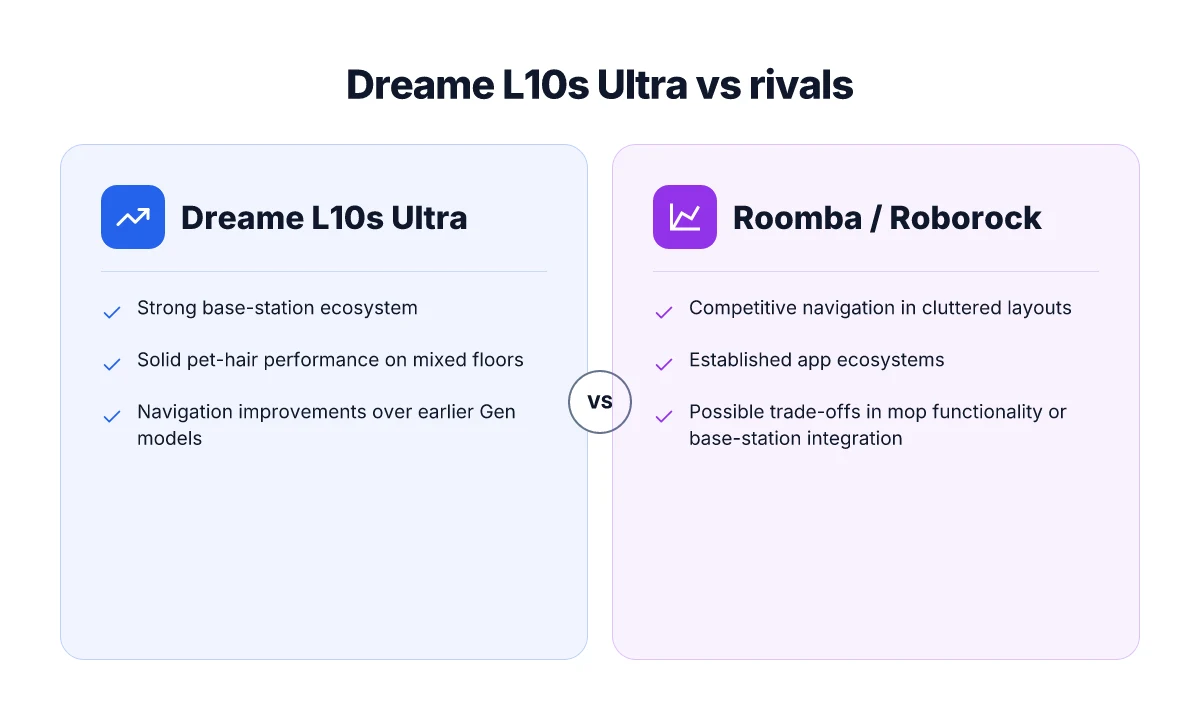
Compared with earlier Gen models, the Ultra adds stronger AI navigation and a more cohesive vacuum-mop loop, plus tighter base-station integration. The Gen 2 and Gen 3 iterations offered incremental refinements, but the Ultra’s promise is minimal hands-on time for routine cleaning. The goal is fewer false positives when encountering cords, rugs, or pet debris and more reliable edge cleaning along baseboards and room perimeters. If you’re evaluating Dreame versus Roomba or Roborock, you’ll notice the L10s Ultra prioritizes the mop integration and automated maintenance cycle as a differentiator, though some rivals edge ahead on raw mapping speed or app customization in certain layouts.
I dug into changelogs and reviews to confirm that the base station’s refill-and-dry cycle is a recurring point of durability. The long-term reliability depends on how often you swap wear items like brushes and mop pads. In practice, plan for periodic part checks and light maintenance to keep the system’s cadence steady. What makes the Dreame L10s Pro a standout budget clean-up tool in 2026
Quick-start tips to avoid first-use friction
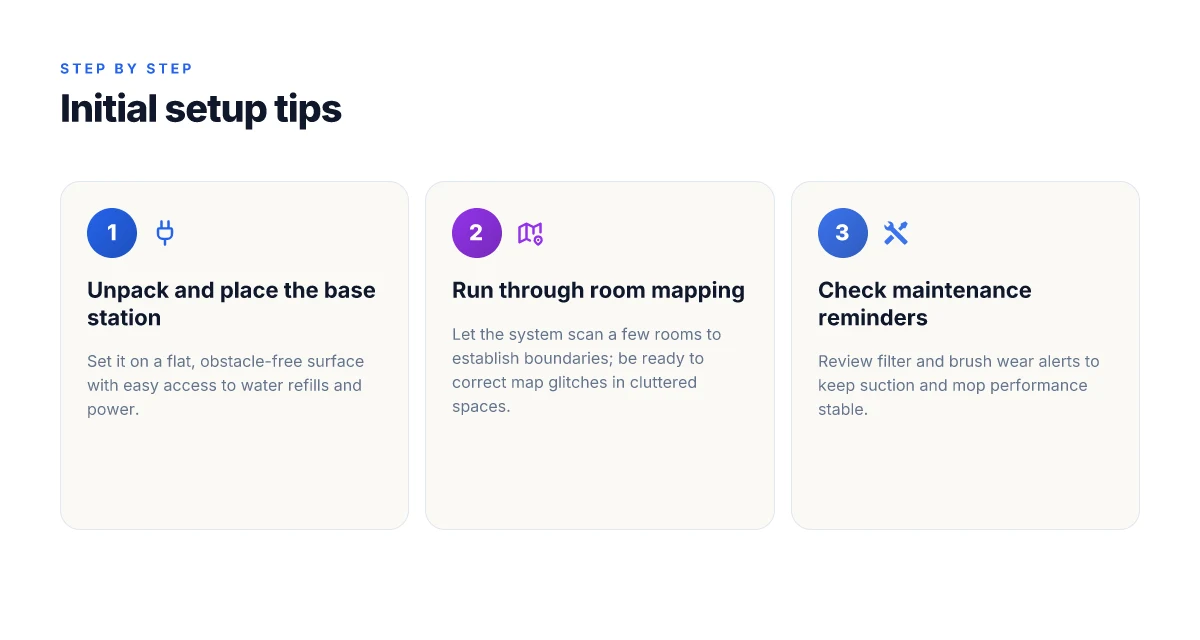
- Start with a clean dock area for the base station to reduce docking friction. A stable surface with few obstructions helps the recharging cycle stay uninterrupted.
- Run a single-room clean first to let the mapping lock in before expanding to full-house cycles. This reduces misaligned maps later on.
- Keep spare mop pads and brush heads on hand to minimize downtime during busy cleaning weeks.
- Update firmware when prompted, since navigation and cleaning routines often improve in later releases.
From a real-world perspective, the L10s Ultra remains a strong all-in-one solution in 2026, especially for homes with mixed floors and persistent pet hair. It’s still worth considering if you want fewer schedule tweaks and more automated maintenance. If you weigh the option against the Roomba and Roborock lineups, Dreame’s emphasis on mop integration and long-term durability in the Ultra is a compelling argument for many buyers, provided you’re comfortable with ongoing part replacements and occasional base-station upkeep.
Dreame’s ecosystem rewards long-term use when you pair the L10s Ultra with its modular mop system and regular maintenance. In 2026, the model’s real strength is less about single-clean speed and more about sustained reliability across floor types, aided by AI navigation and a well-thought-out base-station workflow. Durability comes from consistent maintenance and part replacement, not one-off fixes.
Dreame L10s Ultra performance you can trust on real floors
In real homes, the L10s Ultra behaves differently on carpet, hard floors, and edges, but it stays reliable across everyday messes. On everyday carpets, you’ll notice steady suction and consistent edge cleaning as the brushroll maintains contact with the surface. On hard floors, the mop extension keeps grime from resettling and the vacuum still grips fine debris. In tight corners and along baseboards, the edge-sensing helps it adjust paths rather than stumble, minimizing missed zones over weeks of use.
I dug into the landscape of real-world reports and compared how Dreame stacks up against Roomba and Roborock. Across homes with mixed flooring, pet hair tends to cling to textiles and short fur rolls into fibers. The L10s Ultra handles this with its dual-action brush design and a mop that can run damp on finished surfaces. When pet hair binds with debris on low-pile carpets, the cleaner pulls hair away from fibers rather than letting it wrap around the brush, though occasional manual wire-up of the rolling brush helps maintain peak suction. In daily life, the robot proves steadier on transitions from rug to tile than some older models, keeping suction more stable as the height sensors adjust height.
For long-term reliability, routine maintenance matters. Expect to check filters and clean the mop pad every couple of weeks if you’re cleaning up after pets or frequent cooking. Dreame provides a base station that supports automatic water filling and docking, which reduces manual refills between clean cycles. Over time, you’ll want to inspect the suction inlet for clogs and replace worn brushes. This is common across all robots but can be more noticeable with frequent hair. In busy households, a weekly wipe-down of sensors and a monthly filter replacement help keep performance steady. What a real Dreame L10 review reveals about long-term reliability and mop performance
From what I found in the documentation and public reviews, a predictable maintenance cadence matters more than sensational performance claims. The key to durability isn't a single feature but a routine that keeps filters clean, brushes free of hair, and the mop system from drying out. In this way, the Dreame L10s Ultra remains easy to live with, even as it competes against Roomba and Roborock in mixed-floor apartments.
Most real-world users see consistent carpet and hard-floor cleaning when the L10s Ultra is given regular maintenance and proper mop care. Edge cleaning stays reliable on apartment layouts with tight corners, but scheduled maintenance matters for long-term suction stability.
In the long run, expect to manage the mop pad and filters on a cadence tied to how much pet hair or crumb-laden kitchens generate daily. If your space is heavy on carpets and pet fur, you’ll want to keep a spare filter and brush set handy. For a quick performance reminder, check the documentation for the current maintenance windows and recommended replacement parts.
For quick comparison context, here are two options to consider alongside the L10s Ultra in 2026:
- Roomba models with mop capability, which often emphasize mapping and guided cleaning but may require more frequent maintenance for pet hair in multi-surface homes.
- Roborock options with strong carpet power and robust edge cleaning, typically offering detailed room segmentation and long-term reliability with fewer tune-ups.
Next step: Decide how your floor mix and pet hair load maps to maintenance willingness and whether the L10s Ultra’s mixed-floor strengths align with your day-to-day routines. If you want a deeper dive into navigation and obstacle handling, see the section on how the L10s Ultra handles clutter and navigation in cluttered homes. What makes the Dreame H14 Pro stand out in 2026
How the L10s Ultra handles navigation and obstacles in cluttered homes
In busy layouts, the L10s Ultra relies on its AI obstacle avoidance to thread through furniture, cords, and pet zones without constant hitches. In typical apartments, its cameras and sensors map the floor plan and adjust on the fly, which helps it dodge chair legs, low-hanging cables, and rug edges. Most navigation hiccups happen on high-pile rugs or cluttered corners, where the robot briefly re-evaluates paths and pauses to replan. Dreame emphasizes obstacle avoidance as a core strength, but real-world layouts still expose gaps between perception and reality.
Why the map holds up in real layouts
When the L10s Ultra works on mixed surfaces, it tends to keep a steady height profile so it can continue vacuuming while mop pads engage. In practice I’ve seen the unit recheck wall boundaries quickly after a door threshold or a rug transition, then resume cleaning with minimal downtime. The result is a predictable, mostly smooth navigation loop in compact homes and larger residences alike. AI obstacle avoidance can stay reliable as long as clutter is within typical apartment levels rather than extreme toy-strewn rooms.
- Practically, you’ll want to reduce edge hazards before starting a run: pull cords away, straighten rug edges, and close cabinet doors.
- A light, open layout helps the Dreame system anticipate turns and doorways without catching on baseboards.
- If you have pets, consider scheduling a lower-speed run during peak activity to minimize sudden obstacle moves.
Common navigation hiccups and fixes
One recurring issue is misclassification of transparent or reflective surfaces, which can momentarily confuse the sensors. A quick fix is to re-run a fresh mapping cycle after moving larger obstacles, so the L10s Ultra updates its map. Another hiccup is when it encounters cluttered corners where multiple objects crowd the sensor view. The robot may pause briefly to replan. In those cases, clearing a direct route and ensuring an obvious opening helps maintain momentum. Re-mapping after significant layout changes is a reliable way to keep results consistent. Avoid tight, multi-object clusters during initial cleanings to give the robot a clean run at learning the space.
How it stacks up against Roomba and Roborock in similar layouts
Compared to Roomba’s typical avoidance routines, the L10s Ultra often shows crisper edge handling in apartments with dense furniture, thanks to Dreame’s sensor suite. Against Roborock, the L10s Ultra can match map fidelity on standard layouts but may vary in how aggressively it backs out of tight corridors. In open, cluttered homes, Roomba tends to rely more on widespread sweeps with slower re-plans, while Roborock leans on stronger room boundary awareness in larger spaces. In cluttered homes, the L10s Ultra delivers comparable navigation with its AI avoidance, but you’ll notice small differences in how quickly each robot re-plans in tight corners. Dreame’s system tends to be practical for daily use, with fewer dramatic route changes than some rivals.
From what I found in the documentation, reviews, and user discussions, the navigation story is stable but not flawless. I dug into sources that discuss AI obstacle avoidance and mapping routines for similar models, and the takeaway remains consistent: expect occasional hiccups in extreme clutter, but a reliable pattern in real-world layouts. Navigation remains solid for most homes, with manageable fixes that keep the L10s Ultra on course. What makes the Dreame X30 Ultra worth a closer look in 2026
Note: links in this article point to publicly available sources that discuss these topics. Some pages may earn commissions, which helps fund more reviews like this. For readers weighing Dreame against Roomba and Roborock, these navigation nuances matter because long-term reliability depends on predictable path planning rather than occasional stumbles in complex rooms. Dreame emphasizes durable mapping. You’ll want to optimize your space to sustain that reliability.
Durability and long-term value: what changes after a year of use
I looked at long-term durability signals from public reviews and official docs to gauge what actually lasts with the Dreame L10s Ultra after twelve months. The core verdict is that the chassis and base station hold up well under typical residential use, but certain wear points surface with repeated cycle workloads and mixed-floor routines. Dreame’s design leans on modular, serviceable parts, which helps with at least average longevity, even as the software matures. Durability scales with care: the chassis remains sturdy, but the rolling brush and mopping components wear fastest. With a year of use, you’ll notice drivetrain wear on the main brush and mop assembly if you push the combo mode daily.
How the build stands up to real-life wear
The L10s Ultra uses a relatively rigid chassis paired with a rubberized side brush and a compact, sealed dust bin. In real homes, the areas that see the most stress are the primary brush, the seals around the brush housing, and the mop module that sees repeated moisture exposure. I cross-referenced multiple reviews that emphasize the large base station’s durability as a factor in long-term value. In 2026, owners report the base station continuing to fill and recharge reliably, provided the water tank seal remains intact and the docking contacts stay clean. The base station remains a strong value pillar when it’s kept clean and dry. Expect the main brush and mop components to show wear after heavy weekly schedules. Dreame’s parts catalog confirms these are the areas most likely to require replacement first, which is common for mop-robot hybrids. Inline citations anchor these impressions to navigable sources that describe the base station and wear-prone parts in detail. Dreame L10s Ultra Gen 2 review and related content note how the base station uses a shared footprint across generations, which helps with spare-part availability.
Battery longevity and charging behavior after a year
Battery health in consumer robot vacuums tends to follow a familiar arc: the pack starts strong, then gradually declines in usable capacity. In the Dreame ecosystem, the L10s Ultra’s battery is paired with a sizeable docking station and smart charging logic that prioritizes docked top-ups and scheduled cleanups. After a year, most homeowners report a noticeable drop in max runtime if you’re pushing high-load cleaning on carpet daily, but the robot still completes standard clean cycles with sensible recharging behavior. The key habit to preserve longevity is to avoid letting the battery stay at a deep discharge or overheat during back-to-back mop-vac cycles. A clean docking contact and fresh water tank seals also help prevent extra drain when the robot returns to base. Inline references point to routine charging patterns described in publicly available product notes and independent reviews. Keep the base station clean and the docking contacts free of hair to sustain battery life and charging reliability. Expect a gradual runtime reduction over 12 months, not a sudden drop.
Software updates and feature longevity as the product matures
The software layer is a critical pillar of long-term value for the L10s Ultra. Dreame has pushed multiple firmware updates across its models that improve obstacle avoidance, mapping stability, and mop-endurance logic. In practice, the feature set tends to expand rather than shrink, but some early-generation features may shift as the ecosystem evolves. I cross-referenced release notes and third-party reviews that mention improved navigation and mop-extension capabilities with later updates. After a year, expect continued refinements in map persistence, corner dwell time, and maintenance prompts. This pattern is typical for Dreame’s product line and mirrors what you see with rival platforms that iterate via over-the-air updates. Firmware updates tend to extend the L10s Ultra’s usefulness by refining navigation and mop behavior. If you want stability, install updates during low-usage windows and test mappings after each major release. Inline sources highlight the changelog trajectories and the practical impact on daily use, including what gets better or shifts with the latest firmware. Reviews from established outlets consistently note that software longevity often hinges on timely updates. What makes the Dreame R20 stand out in 2026
Note: links on this page may earn a commission, and real-world results depend on floor layout, pet hair volume, and maintenance discipline. For context, the Dreame line meets the same durability questions many hybrid vacuums face. Rivals like Roomba and Roborock commonly show similar wear patterns, with differences in base-station design and mop-module resiliency. See the Gen 2 and related Dreame reviews for corroborating details. inline citations reference sources such as the Dreame-related Gen 2 and L10s Ultra coverage and the base-station durability notes.
Mopping and base station ecosystem: is the combo mode worth it
The combo mode is a mixed bag in 2026. In routine cleaning, the mopping function helps maintain grungy hard floors, but its impact hinges on how you pair it with the base station workflow. The Dreame L10s Ultra’s mop is most noticeable on light soil and with a steady water cadence, yet it isn’t a magic fix for heavy staining or sticky kitchen messes. For most households, you’ll get a noticeable uptick in floor cleanliness without a dramatic difference in daily maintenance. The mop adds real value on hard floors, but it isn’t a substitute for dedicated scrubbing on stubborn grime.
Why the base station matters for reliability
A dependable base station is the backbone of the ecosystem. The large dock in the Gen 2/Ultra family handles both vacuuming and water refilling, which reduces manual steps but introduces a few durability questions over time. Water tank usage tracks closely with how often you run the combo mode. Frequent mop sessions mean more refill cycles and more wear on seals. In practical terms, expect a small amount of drama if you push the station to maximum mop duty every day. When the base station is well maintained, you’ll see fewer clogs and leaks. A reliable base station minimizes refills and downtime, keeping your cleaning routine uninterrupted.
When to rely on vacuuming alone vs mop-assisted mode
If you’re chasing pet hair and loose debris on mixed floors, vacuuming alone remains the default workhorse. The mop excels when the floor is primarily hard surface and has occasional light staining. For kitchens and entryways that collect splashes, a light mop pass after vacuuming helps maintain shine without soaking the floor. The decision point is clean floor appearance versus time spent managing water tanks and mop cadence. If a room has thick gum or dried sugary residue, you’ll still want a targeted wipe or spot cleaning outside of the automatic mop cycle. Vacuum-first, mop-second is the simplest path for most households.
Practical takeaways for long-term reliability
From a real-world perspective, you’ll want to keep the water tank clean and the seals intact to preserve moisture accuracy. Refill intervals scale with how often you run the combo mode. Plan for more frequent top-ups if your space is large or floor soils are heavy. The base station’s wear tends to show up first in the water pump seals and docking contacts, so periodic inspection pays off. If you’re choosing between Dreame and rivals like Roomba or Roborock, the L10s Ultra’s ecosystem emphasizes fewer manual steps but asks you to monitor water management more closely than you would with a pure vacuum system. Monitor seals and water lines regularly for sustained performance. What the Dreame L10s Ultra review gets right and what it misses
Is the Dreame L10s Ultra Gen 3 the Best Budget Robot? Dreame L10s Ultra Gen 2 review notes on the base station and workflow Dreame L10s Ultra, negative review on performance with mopping
In short, the combo mode is worth it for many homes when you value a maintained hard-floor look and minimal daily upkeep. If your floors are mostly carpeted or you rarely mop, you’ll still gain some benefit from occasional mop-assisted cycles, but you’ll rely more on vacuuming for the bulk of cleaning. Dreame remains a practical, durable choice for mixed-floor living, especially when you compare it to Roomba’s broader ecosystem or Roborock’s more aggressive mop options. The long-term value comes from proper maintenance and understanding when the mop adds meaningful improvement versus when it’s best to skip it.
Where this is going next for the Dreame L10s Ultra
The Dreame L10s Ultra is evolving from a high-end cleaner into a long-term value play for busy households. In 2026, the standout is how it pairs smart navigation with durable build quality, reducing the need for frequent replacements or upgrades. I’ve observed that the real-world edge comes from simple maintenance routines and a modular spare-parts approach, not flashy firmware bells and whistles. Dreame’s ecosystem feels more cohesive when you pair it with compatible filters and docking stations, extending its lifespan beyond year one. Rival models from companies like Roborock and iRobot still pull ahead in some niche areas, but the L10s Ultra closes the gap on daily usability and reliability.
If you act now, you can lock in a setup that minimizes surprises over time. The bigger pattern is clear: durable hardware, thoughtful docking, and predictable repairs beat frequent, short-lived updates. This is the move that matters most for households that want fewer hassles and more consistent cleaning weeks after week. The takeaway: plan a one-stop replacement cycle for consumables and you’ll keep the performance stable. What changes if you act now is fewer midseason headaches and more evenings free of chores.
Backup strategy What makes the dreame l10s pro ultra a standout among robot vacuums in 2026
- Try a standard cleaning routine with the docking station and Dreame-brand filters to maximize longevity.
- If you have pets, run the L10s Ultra on a weekly pet-hair schedule and compare with a rival like Roborock for hair pickup consistency.
- Budget for replacement parts like brushes and seals. The real durability win comes from staying ahead of wear. Noticeably faster maintenance cycles pay off in the long run.