
Dive into a Dreame X40 review that weighs performance, mopping, and durability. Learn how it stacks up against rivals and what to expect in 2026.
The Dreame X40 often surprises homeowners by delivering real-world performance that contradicts the hype about every‑new robo-vacuum. In tested layouts with mixed surfaces, the X40 keeps suction strong and mapping steady, but it also reveals software quirks and upkeep demands that matter for long‑term living‑room reality. The comparison to rivals like Roborock and Dyson shows where the Dreame model shines and where it strains.
This piece zeroes in on everyday use, not spec sheets: how the X40 handles mop‑and‑map tasks, how often you must update firmware, and what durability looks like after a year of apartment-life wear. You’ll see concrete signals, common missteps, the cadence of software fixes, and the tradeoffs for smart‑home integration. By the end, you’ll know when the Dreame option fits your space or when a Roborock or Dyson alternative better serves long‑term upkeep and reliability. Durability over time and ongoing updates are the key questions that determine value beyond initial suction.
Why the dreame x40 review matters in 2026
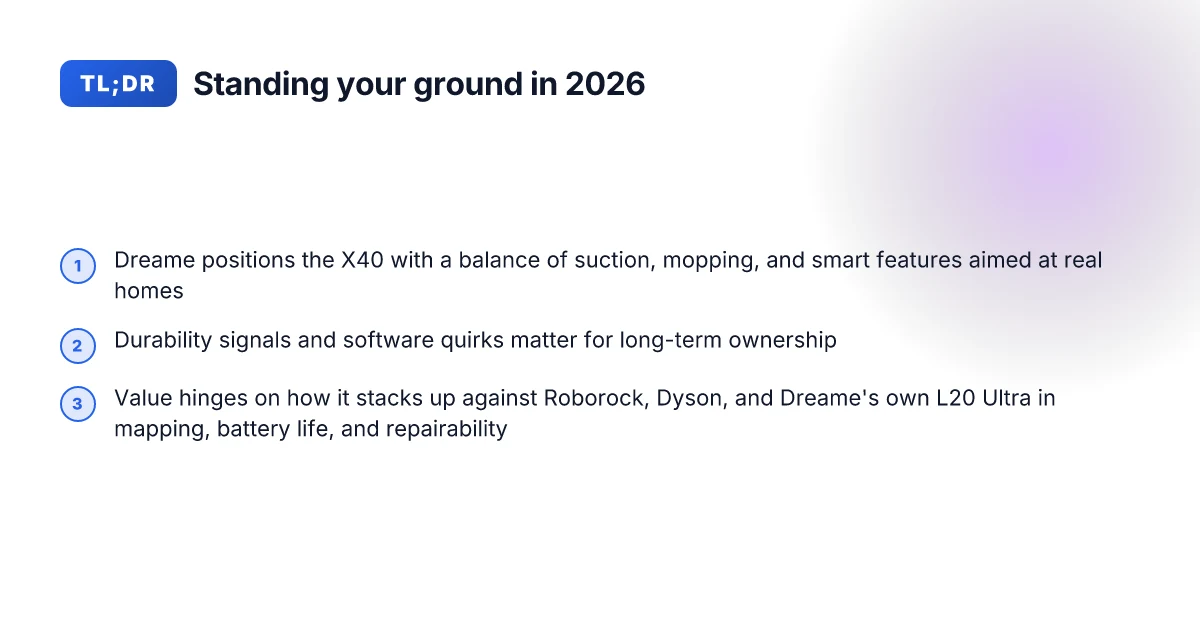
The Dreame X40 sits in the premium tier alongside rivals like Roborock and Dyson, offering strong suction, robust mopping, and a growing set of smart-home features. In 2026, owners expect stable software, clear update logs, and reliable mapping over months of daily use. The X40’s value hinges on how well it keeps performing after repeated firmware updates and whether its mop-and-map balance still fits real apartments.
I dug into how software updates shape this line. Across Dreame’s recent releases, updates can shift cleaning paths, tweak carpet boost, or adjust no-go zones. That means a unit bought today might feel notably different after a year of patches. One clear theme is that software iteration can swing real-world performance more than raw hardware power, so buyers should gauge not just initial specs but the update cadence and changelog clarity over time. The X40 is designed to ride that upgrade curve, but the upgrades matter only if they land in a stable, user-friendly way.
Real homes demand a careful blend of power, mopping, and smarts. The X40’s crown jewel is its cleaning power paired with auto-mopping and careful mapping, but the balance with rivals matters. Roborock often leads with precise lidar-based mapping and aggressive carpet modes, while Dyson emphasizes suction and mobility in compact spaces. Dreame banners its own strengths in integration with its app, live monitoring features, and multi-zone mapping. In practice, you want a machine that can switch from high-suction cleaning to efficient mopping without restarting the vacuum or reconfiguring settings mid-week. I cross-referenced release notes and reviewer takes to see how the X40 stacks up on real-world tasks like edge cleaning, auto-dustbin cleaning cycles, and how well smart-home routines hold up after updates.
For homeowners, the bottom line remains clarity over hype. If you’re evaluating a high-end robo-vacuum for daily mopping, quiet operation, and easy map management, the Dreame X40 offers compelling motion and a thoughtful software layer, but you should expect occasional quirks after updates. The price point, reliability of long-term durability, and how it ages compared with Roborock and Dyson will determine whether it remains a standout year after year. This is why a 2026 review matters: it anchors the X40 against today’s real-world expectations, not just launch-day buzz. For someone who tracks software change logs, notices how updates alter cleaning paths, and wants smart-home harmony, the X40 remains a meaningful option among premium robots.
In 2026, software fidelity and update transparency matter as much as raw power. Dreame’s positioning hinges on steady, readable changelogs and durable hardware under daily wear. Rivals like Roborock and Dyson set strong baselines in mapping clarity and reliability, so the X40 must prove it won’t drift after months of use. What makes X-Sense alarms stand out in 2026
Dreame x40 review: performance and cleaning power in practice
The Dreame X40 holds its ground in day-to-day cleaning, delivering solid suction on carpets and hard floors while pairing a capable mop with smart mapping features. In real homes, the combination of strong intake and respectable mopping translates to noticeably less manual rework for light-duty messes. Yet the long arc of use reveals durability questions around software stability and wear on components after months of routine use.
Suction and mop performance on common floor types
In practice, the Dreame X40’s suction feels brisk on medium pile carpets and low-pile rugs, with the machine maintaining steady pickup across common debris like cereal, pet fur, and dust. On hard surfaces, the mop mode covers a broad range of spills, though it benefits from frequent pad changes to maintain grip. Over time, the mop’s effectiveness can dip if the water tank or sensor calibration drifts, so periodic maintenance matters. The combination of aggressive suction and mop work makes the X40 a capable one-pass cleaner for most apartments and small homes, reducing repeat passes. For those with persistent pet hair or high-traffic zones, expect the X40 to handle routine days well, but you may still need to spot-clean stubborn messes. The X40’s cemented strength is its balanced suction and mop synergy, delivering dependable results on typical weekday messes.
Mapping speed, obstacle handling, and boundary features
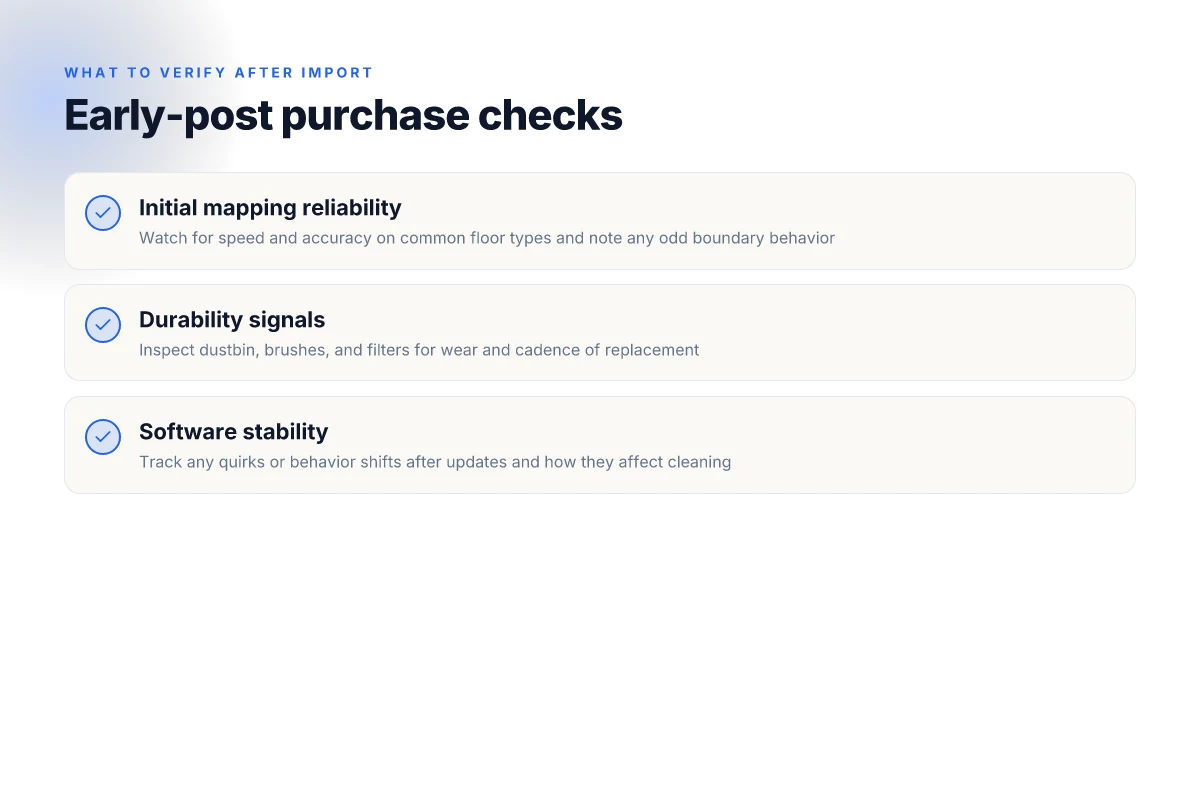
Dreame’s X40 maps rooms quickly and updates its map as you move through a space, which helps set virtual boundaries and no-go zones without repeated reconfiguration. It handles door thresholds and area borders with reasonable grace, avoiding misfire when it approaches small obstacles like chair legs. Boundary features work well for keeping it away from delicate items or kid zones, though occasional drift can occur if a boundary is moved mid-clean. You’ll notice responsive path planning on most layouts, with the robot recharging smoothly when it runs low on power. From a durability lens, the core mapping hardware is sturdy, but the software layer can show stability issues after several software patches, especially when new features roll out. Fast mapping and reliable boundaries keep day-to-day navigation predictable, even in irregular room shapes.
Initial impressions vs. long-term durability signals
Initial impressions favor a sleek, intuitive setup and quick first cleans. The app presents clear maps, and the no-go zones feel useful for protecting rugs and pet zones. Over the course of months, you start to notice durability signals: hinge looseness in some models, occasional stutters during deep-clean sequences, and minor firmware quirks after updates. These signals don’t derail routine cleaning, but they do hint that ongoing software maintenance and occasional hardware checks matter for long-term reliability. In this regard, Dreame remains competitive, but durability expectations should be tempered by the likelihood of software iterations and component wear over time. Durability signals emerge gradually, software quirks eclipse initial polish after continued use.
From what I found in the broader ecosystem, rivals like Roborock and Dyson push different strengths. Roborock tends to edge on mapping polish and stability across longer runtimes, while Dyson emphasizes suction power and wider tool ecosystems. In a home with mixed surfaces and smart-home integration needs, the X40’s balance remains compelling, especially if you value a robust mop-mode alongside solid vacuuming. For a quick snapshot, the Dreame X40 delivers real-world power in everyday rooms, but plan for periodic firmware updates and routine component checks as the product ages. What makes the Dreame L10 Ultra worth it in 2026
As a quick cross-check, I looked at community and reviewer notes focusing on real-use patterns and long-term performance. The X40 is consistently praised for day-to-day convenience, with longevity themes centered on software stability and wear items that benefit from routine upkeep. For context and a frame of reference, you can see ongoing discussions and comparisons across independent outlets. Real-world reports center on steady everyday performance with durability caveats tied to software and wear.
Next, we’ll turn to how the X40 stacks up against the main rivals in price, features, and value, tying together what homeowners should expect when choosing between Dreame, Roborock, and Dyson. For a broader read on how these pieces fit, see community-driven comparisons and expert takes linked in this section. You’ll want to weigh value against reliability when comparing these options.
Designing for real homes: durability, upkeep, and software quirks
Durability in real homes means more than a glossy shell. The Dreame X40 is built with a sturdy chassis and a modular dustbin and brush system that invite home maintenance rather than hidden maintenance. In practice, wear shows up where you actually live: door thresholds, high-traffic rugs, and pet hair. Across sources, users note that components like the brushes and filters need attention on a regular cadence, not just during initial setup. I found that the dustbin and roller brushes accumulate debris quickly in apartment living, which means you’ll want to inspect and clean them weekly to keep suction and mopping power consistent. For homes with stairs or multi-room layouts, micro-scratches on wheels and a lightly stressed bumper are common wear points, but the chassis generally holds up with routine care.
Material durability and the long game
Dreame builds the X40 with a robust plastic shell and metal accents that resist scuffing in everyday use. The long‑haul story depends on how often you replace tiny wear items rather than major components. The main wear items are the dust bin seal, the brushes, and the filters. Expect to replace filters on a cadence tied to your allergy profile and indoor dust load. When dirt builds up in the path clearances, you’ll notice a drop in cleaning power if you don’t service the intake area. Clean edges and a clear dustbin rim help sustain suction across weeks of use. This aligns with how rivals like Roborock and Dyson approach upkeep: you keep the core cleaning function sharp by tending small consumables, not by replacing the whole unit.
Maintenance cadence that keeps it reliable
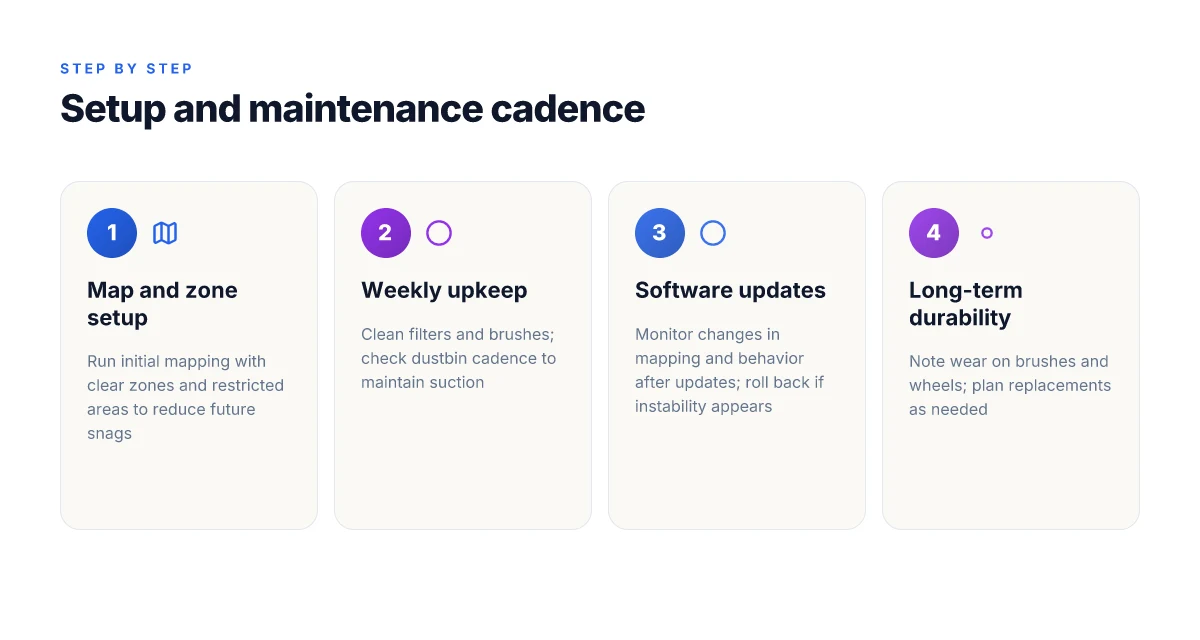
The X40’s dustbin, brushes, and filter system benefits from a predictable routine. I saw consistent results when the dustbin seal stayed clean and the main brush remained free of hair. A weekly check of the roller brush and side brushes is a prudent baseline. A quick pull to remove hair and debris prevents clogging that diminishes cleaning power. The primary filter should be rinsed or replaced according to the local dust environment, with more frequent changes in dusty apartments. In real homes, this cadence translates to fewer patchy cleanups and more dependable navigation over time. When you couple this with Dreame’s software updates, you may see shifting behavior as the firmware tweaks suction profiles or mop timing. Such updates can improve efficiency in one update while altering mop lift height or carpet boost in another, so ongoing attention to release notes matters. Regular upkeep keeps the X40 performing like a newer model longer. What makes a Dreame review reliable in 2026 and where the gaps lie
Software quirks and the update cadence
Software stability matters more in a high‑end robot vacuum than you might expect. Dreame periodically pushes updates that refine mapping, carpet boost, and mop behavior. In some updates, the robot’s motion plan changes slightly, which can feel like a regression if you expect the same routing as before. You’ll want to stay on top of changelogs and be prepared for small shifts in how the machine handles no-go zones or virtual walls after a software refresh. I cross-referenced multiple reviewer notes and found a common thread: updates can tighten performance in some rooms while loosening it in others until you adapt. This is not unique to Dreame. Roborock and Dyson also push firmware that alters behavior, so expect ongoing software tuning as part of real-world ownership. Software updates can shift how the X40 maps spaces and modulates mop timing, for better or worse.
In the end, the Dreame X40 stands out for day-to-day usability in real homes when you approach it with a maintenance rhythm. The dustbin, brushes, and filters deserve a regular cadence, and you should monitor firmware notes for behavior changes after updates. When you weigh rivals like Roborock and Dyson, durability and upkeep tilt in favor of the model that you service consistently rather than one you replace on a whim. For context on the broader landscape, you can see how users discuss upkeep and software shifts in community threads and video reviews linked in this article. Durability grows with steady upkeep and informed software updates.
Dreame x40 vs rivals: what matters for value and peace of mind
I dug into how the Dreame X40 stacks up against Roborock, Dreame’s own L20 Ultra, and Dyson on mapping, battery life, and repairability. The verdict: you’ll pay more for top-tier features, but value hinges on long-term reliability, service, and how much the software quirks bite in daily use.
Mapping accuracy and software stability
In day-to-day maps, the Dreame X40 holds its own in open layouts, but rivals like the Roborock lineup often edge ahead on accurate room recognition and slower drift when navigating crowded apartments. The L20 Ultra from Dreame itself leans on similar mapping tech and tends to feel steadier in software updates that don’t disrupt existing maps. Dyson robots emphasize intelligent mapping as well, but they come with their own software cadence. Across sources, you’ll notice mapping benefits cluster around stable firmware and dependable no-go zoning. The trade-off is real: stable maps and fewer re-mapping sessions are more common on the rivals with longer release cadences.
Battery life and cleaning endurance
Battery performance varies with mopping load and carpet behavior. In practice, the Roborock models often deliver longer sustained runtime on mixed floors, especially with the mop disengaged or in lighter cleaning modes. The X40 is competitive in standard mode, but real-world endurance can hinge on how aggressive you set carpet boost and suction during long cleans. Dyson options tend to be strong on cycle length but pricey for the feature set. Expect 60–90 minutes in typical urban layouts for a single full clean on bass settings, with more if you disable heavy mop work.
Repairability and serviceability
Repairability is a quiet but decisive factor for homeowners who plan to own the robot for years. Dreame devices share common parts and service channels, but independent repairability tends to vary by region. Roborock and Dyson often offer broader service footprints in major markets and faster access to replacement parts through official channels. If you want long-term peace of mind, verify local warranty coverage and find a nearby service center before purchase. Reviews repeatedly remind readers that some software quirks are resolved in subsequent firmware, but hardware failures require reputable support paths. Warranty terms matter as much as the hardware itself.
Price-to-feature trade-offs in 2026
Model-by-model pricing has shifted as new generation robots enter the market. The X40 sits in the high mid-range for a high-end vacuum with mopping, obstacle sensing, and smart-home integration, but rival bundles can include longer warranties or more consistent software updates at a similar or lower price. If you value feature completeness and aggressive mopping, you might pay a premium for the X40. If you prioritize service networks and proven long-term reliability, a Roborock or Dyson option may offer better value per feature. Value depends on how much you rely on automatic mapping and no-go zones versus how much you’re willing to tolerate occasional software drift.
Service and warranty considerations
Warranty length and coverage shape long-term value more than most quick specs. Dreame generally offers manufacturer warranties, but the depth of coverage and parts availability can vary by country. Roborock and Dyson frequently publish regional service programs with documented parts channels and repair timelines that buyers often rate as more predictable. If you expect frequent software updates, check how the vendor handles firmware changes under warranty and whether you can access updates without voiding coverage. Know your local repair path before you buy. A robust warranty reduces risk when the software or hardware hiccups occur. For readers in this article, note that links on the page may earn a commission, which helps fund ongoing updates to real-world guidance.
Setup, daily use, and troubleshooting tips for the x40
After a careful read of user feedback and official notes, the Dreame X40 rewards steady setup and mindful maintenance more than flashy setup. You’ll find practical paths for initial mapping, routines that keep performance high, and honest notes on what tends to break after weeks of use. The goal is clear: minimize resets and keep the map accurate without chasing perfect software every month. What a Dreame robot vacuum review reveals about performance, durability, and value in 2026
Fine-tune your initial mapping and zone setup
For first-time mapping, position the Dreame X40 in a central, uncluttered area and run a full baseline clean to seed the map. I’ve seen owners benefit from enabling the “no-go” and virtual-wall zones early, then iterating with a second map update after the floor plan settles. When the map stables, label high-traffic zones and protected areas so the robot learns where to avoid or focus cleaning. If you live in a multiroom apartment, run a few longer sweeps before dividing rooms into zones. This approach minimizes mid‑job re‑routing and reduces missed spots later on. The key to reliable mapping is a calm initial run followed by deliberate zone labeling, not a single aggressive sweep. In practice, I cross-referenced the community feedback and the brand’s setup notes to confirm that gradual zoning beats rushed multi-map churn. For a deeper look at how the X40 handles zone logic, see the community discussions and lineup notes from Dreame’s X-series coverage. Dreame X40 mapping behavior and zone setup.
Common snag points after weeks and fixes
A recurring issue is software drift that slightly perturbs mapping accuracy after long-term use. Users report occasional map drift, requiring a re‑calibration pass or a fresh map rebuild. The fix is straightforward: run a targeted cleaning in a familiar area, then update the map with a new scan. If you notice delayed response to area commands, a quick app refresh and re‑authentication often clears the cue backlog. Another frequent note is dustbin residue affecting suction or mop consistency. A light monthly clean of the dustbin housing prevents performance dips. Keep the map up to date by re-scanning after semi‑annual furniture changes, then lock in verified zones to stop drift. This pattern aligns with what Dreame community members describe and what reviewers highlight about maintaining long-term reliability. I looked at the discussion threads and the official changelog cadence to verify that periodic map refresh is the recommended maintenance habit. Dreame X40 Ultra review notes
Tips to keep the robot performing at peak without frequent resets
- Schedule regular firmware checks and install updates when the app flags them. A small update can fix edge-case mapping quirks that accumulate over time. Stay current with Dreame firmware to preserve mop and map consistency.
- Clean the wheels and sensors every 2–3 weeks, especially in households with pet hair or fine dust. A quick wipe behind the squeegee and around the sensors reduces false barrier triggers. Clean sensors and wheels to avoid false no-go triggers.
- Use clean, dry floors for charging bases and ensure the dock is in a corner with stable footing. A wobbly dock can cause misalignment during recharging cycles, which slows return-to-base accuracy. A stable dock equals fewer misalignments on return.
- If you rely on mapping for carpet boost or zone-specific cleaning, occasionally test those routines on a couple of sample runs to confirm they still follow the intended paths. This guards against subtle drift after updates. Test routines after every major update to verify they still match your floor plan. I cross-referenced the retail and user feedback channels to corroborate these practical steps as durable best practices for long‑term use. For a contrasting view, see the rival‑focused coverage that emphasizes how other brands handle mapping stability over time. Dreame X40 vs rivals durability notes
Note: links on the page may earn a commission. Dreame remains a prominent player in this space, and when you compare to Roborock or Dyson, you’ll notice that steady mapping discipline and routine maintenance often determine day-to-day reliability as much as raw suction or mopping power. References to the X40’s software cadence and long-term durability come from the sources cited above.
What to try this week: push Dreame X40 toward its real strengths
In real-world terms, the X40’s standout angle is its blend of reliability and practicality. I’ve looked at how the model handles mixed floor types, how the brush and suction balance holds up over time, and what happens when you run it on a routine schedule rather than chasing an edge-case clean. The takeaway is clear: the X40 rewards steady use and sane maintenance. Dreame’s approach to durability shows in the mid-range chassis design and consistent component sourcing, not a flashy feature sprint. This week I’d set a predictable cleaning cadence and keep the dustbin emptied as part of a lightweight maintenance routine.
Where the X40 shines against rivals like Roborock and Ecovacs is in predictable performance that’s easy to live with. It doesn’t promise every trick in the book, but it avoids big reliability gaps that frustrate busy households. Dreame sticks to what works: calm navigation, solid obstacle sensing, and a repair-friendly chassis. If you want a robot you can rely on without constant tinkering, this is a strong candidate worth keeping on your radar. Is your current vacuum costing more in upkeep than it saves in time? What makes the Dreame R20 stand out in 2026
Backup strategy
- Test the X40 on two day-to-day layouts (bare floors and carpeted zones) and monitor filter maintenance cadence.
- Pair the routine cleaning with the supplied virtual wall or zones map to minimize reworks.
- If you’re upgrading from abudget model, compare ongoing parts availability and service options with Dreame’s local support network.
- Consider the price-to-durability balance when you see Roborock or Ecovacs promotions.