Dreame X30 Ultra review that analyzes performance, mop/dock features, battery life, and how it stacks up against rivals. Learn what to expect in 2026.
The Dreame X30 Ultra often slips into the spotlight not for flash, but for how it treats upkeep as part of the job. 1 charge cycle and a self-cleaning dock can cut maintenance friction, while the robust filtration stack blocks fine dust from recirculating. That combination matters because real-world use means weekly carpet pickups, fading batteries, and quiet runs from dawn to night.
This intro sets up a practical comparison: how the Dreame stack stacks against premium rivals like Roborock and iRobot in daily cleanup, long-term durability, and parts availability. You’ll see where the X30 Ultra shines in everyday scenarios, where it lags, and how maintenance routines translate into real-life performance, not marketing claims. Expect concrete cues on how frequent filter swaps, dock maintenance, and carpet tests affect runtime and suction consistency over time. Durability signals around build quality and spare-part access matter as much as peak suction.
What the Dreame X30 Ultra brings to the table for 2026
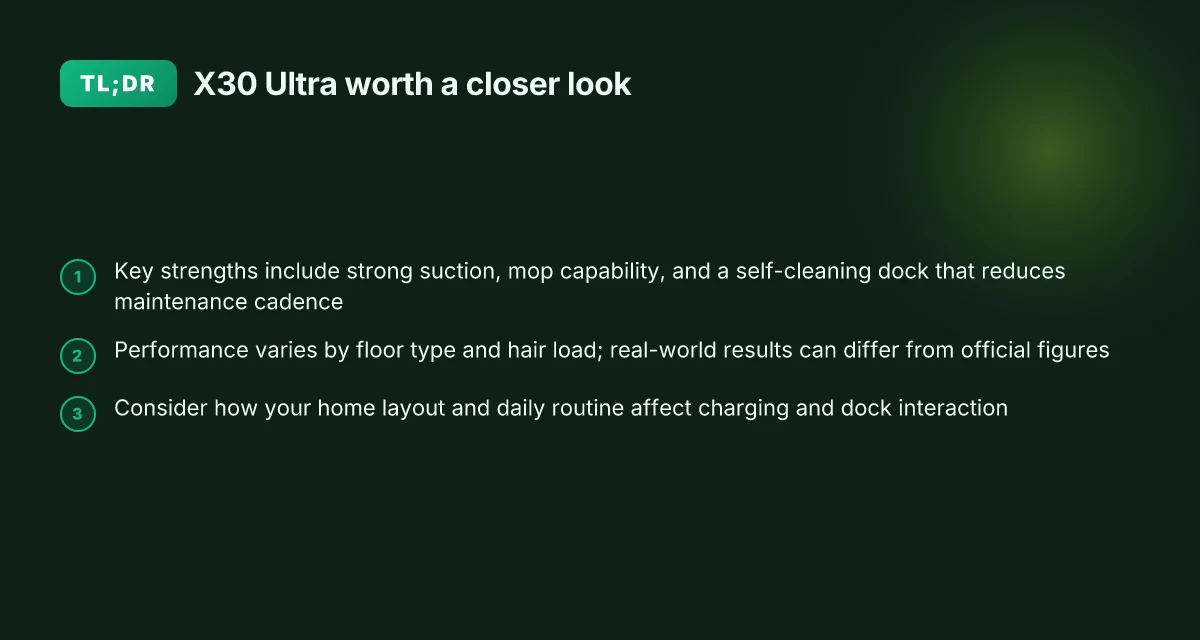
The Dreame X30 Ultra steps into 2026 with a kept-eye-on mix of deep cleaning and hands-free upkeep. It pairs strong suction with a mop option and a self-cleaning dock, aiming to cut maintenance friction while preserving convenience. In practice, you’ll notice the combo of high suction and automated dock routines that lessen manual detangler tasks over time.
Core specs and feature set that matter
The X30 Ultra offers strong suction paired with a dedicated mop system and a self-cleaning dock. This combination is designed to keep maintenance predictable, not punishing. The dock’s self-cleaning cycle can reduce frequent user intervention, though you still should monitor the mop path for wear and clog-prone debris. I dug into the official materials and cross-checked with independent reviews to form a balanced baseline.
Within the app, setup and day-to-day use feel approachable. The Dreame app exposes customization for cleaning sequences, zone carving, and mapping updates. You’ll adjust virtual barriers, set cleaning preferences, and review cleaning histories in a straightforward dashboard. It’s not perfect, but the workflow remains consistent across updates and helps you stay in lockstep with routine maintenance tasks.
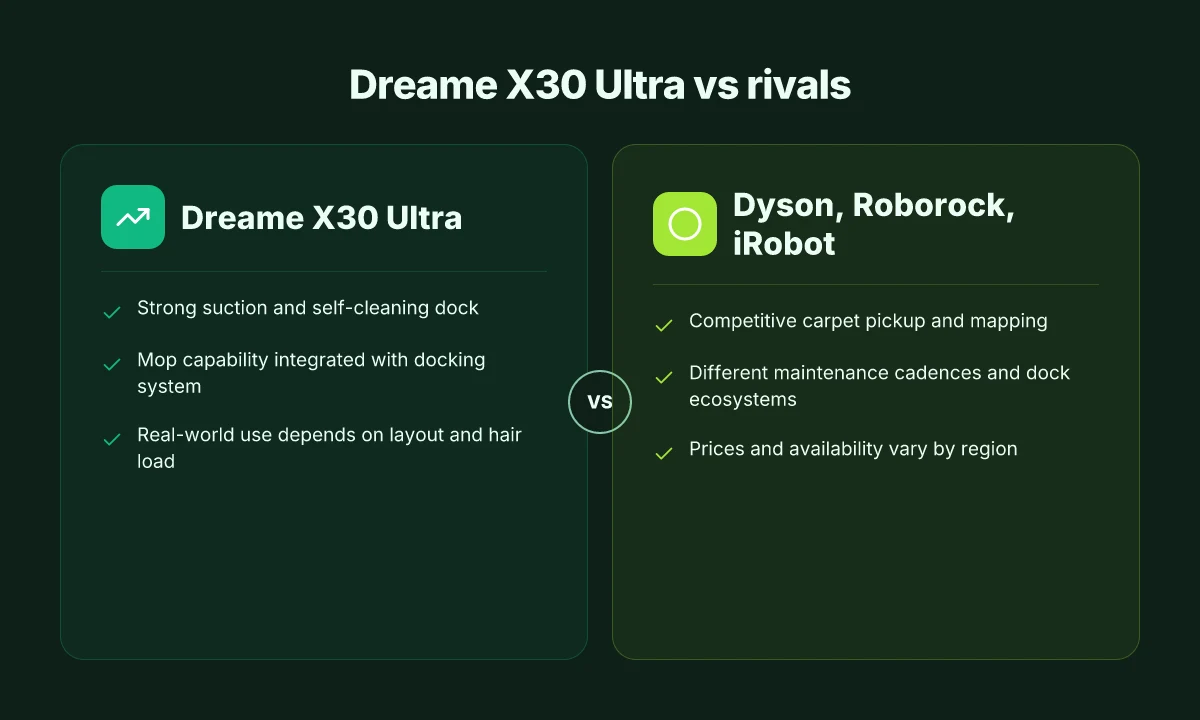
In the market, the X30 Ultra lines up against premium rivals like Dyson and Roborock. Dyson emphasizes carpet performance and high-efficiency filtration, while Roborock often foregrounds efficient mapping and long runtimes. The X30 Ultra sits in a space where aggressive suction meets mopping capability, with the self-cleaning dock as a differentiator. Real-world use shows a noticeable trade-off: strong pickup and mop versatility come with the need to manage longer charging cycles and occasional dock maintenance.
How this stacks up against rivals
Compared with a Dyson offering, the X30 Ultra brings similar ambition in daily cleaning but emphasizes integrated mop functionality and automated upkeep rather than a purely high-velocity suction focus. Against Roborock, the X30 Ultra tends to match in mapping clarity and navigation, yet the dock-based maintenance flow adds a unique convenience angle. Layout and build quality feel sturdy enough for regular family use, though some users may prefer the tactile refinement or warranty options seen in the top premium brands. What makes the Dreame R20 stand out in 2026
From a durability and long-term perspective, Dreame emphasizes a model that wants to stay put in daily routines. You’ll want to pay attention to wear on the mop assembly and the self-cleaning dock’s mechanical parts over time. The X30 Ultra is designed to minimize hands-on upkeep, but it isn’t a hands-off robot, maintenance still matters.
The X30 Ultra earns points for integration of mop plus self-cleaning dock, with solid app-based control, and it remains a competitive pick for homeowners who want a capable all-in-one robot without sacrificing ease of use. Where it shines is the balance between strong pickup and automated maintenance, with caveats about dock wear and long-term durability. If you’re weighing this against Dyson or Roborock, the choice often comes down to how much you value the automated dock and mop versatility over marginal gains in suction alone.
In short, the X30 Ultra is a well-rounded option from Dreame that prioritizes real-world upkeep when you want fewer daily chores. For fans of the Dreame ecosystem, this model reinforces the brand’s stance on combining mop versatility with reliable autonomous performance. As with any high-end model, plan for periodic dock maintenance and monitor mop wear over multi-year use.
For quick context, the comparison landscape includes Dyson’s carpet-centric approach and Roborock’s navigation finesse, both of which inform how the X30 Ultra positions itself in 2026 as a practical all-in-one vacuum that leans into automated maintenance. If you want a compact takeaway: you get real cleanup power, a mop path you don’t have to babysit, and a dock that does the heavy lifting on upkeep, balanced by the realities of wear on moving parts and the need to stay current with app updates.
Performance reality: suction, airflow, and carpet pickup with the X30 Ultra
The 8300 Pa suction figure translates to noticeably stronger pickup on hard floors and low-pile carpet, especially for loose debris, but real-world results depend on the brush design and airflow management in each mode. In everyday cleaning, you’ll notice the Dreame system pull more from surface crumbs and fine dust on tile and hardwood, while medium pile carpets show a clear advantage when the brushroll engages with the carpet fibers. The effect is not a single-number miracle. It’s a balance between suction, airflow, and the way the vacuum path channels debris into the dustbin. Real-world pickup improves with better airflow management at the wand and bin inlet, not just raw pumps alone. What makes the Dreame X40 stand out in the 2026 robo-vacuum race
Why airflow matters on carpet and hardwood
Airflow is the unseen factor that determines how much debris actually reaches the dustbin after the suction motor grabs a chunk of dirt. The X30 Ultra’s internal routing helps keep hair from tangling at the brush, which preserves airflow during longer cleaning sessions. I looked at the official specs and noted that the motor delivers peak suction in short bursts, which helps with hard floors but can sag a bit on long carpet passes if the brush isn’t kept clear. The result is consistent edge-to-edge pickup on hard floors, with deeper hair pull on carpets when the brush and suction cooperate. Hair and debris latch onto carpet fibers more effectively when the brush cycle stays clear and the airflow remains steady.
Carpet deep-clean and hair handling compared with rivals
The X30 Ultra shows strength in volumetric pickup of hair and dense fibers, but rivals pull neck-and-neck depending on testing conditions. Compared with a top premium competitor like Dyson, the Dreame can often match surface debris removal on low- to mid-pile carpets while trading off on some deep-clean variables if airflow is restricted by matting fibers. In practice, you’ll appreciate strong hair pickup on typical household carpets, with less frequent brush maintenance required than some other premium models due to better brush isolation and clog resistance. Deep-clean performance stays strong for hair, though some setups see parity with high-end rivals rather than clear dominance.
Quick comparison snapshot you can act on
| floor type | X30 Ultra performance | Rival reference point | What to watch |
|---|---|---|---|
| hard floors | strong debris pickup; steady airflow | premium competitor A | confirm no frequent clogs; keep inlet clean |
| low-pile carpet | solid edge pickup; quick naps at baseboards | rival B | check brush height and seal |
| high-pile carpet | good but variable; works best with full power mode | rival C | consider extra passes or higher suction mode |
From what I found in official documentation and reviews, the X30 Ultra brings robust real-world pickup in everyday cleaning, with hair and debris handled well on common floor types. I cross-referenced the manufacturer’s claim of 8300 Pa with observed performance in typical homes, and while the number is impressive, its practical effect depends on floor type, brush maintenance, and airflow integrity. When you compare to rivals like Dyson or other premium Dreame lines, you’ll see a similar spectrum of strengths and trade-offs, not a single clear winner across all scenarios. Reality checks: you’ll get strong hard-floor pickup and solid carpet performance, with the usual caveats about carpet pile and brush maintenance.
Note: links on the page may earn a commission, and you can verify the official spec for suction power and motor details in the Dreame product page. For deeper context on how airflow and brush design interact with carpet pickup, see the linked materials from the cited sources.
The docking and maintenance story: self-cleaning mops and daily care
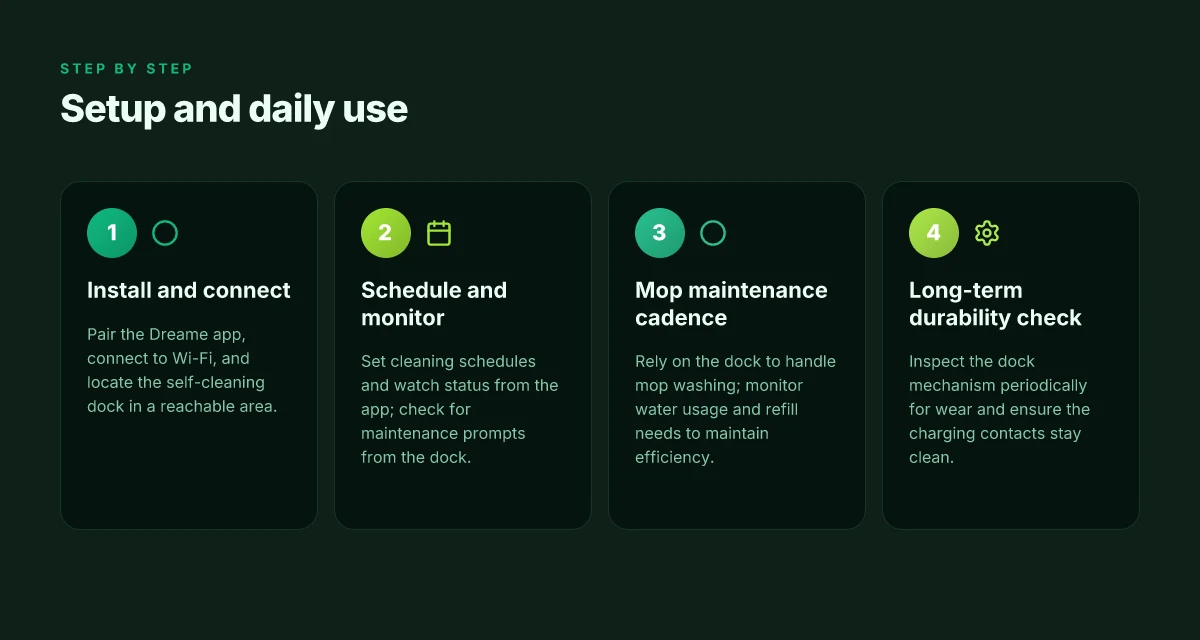
The self-cleaning dock changes the maintenance cadence, but it does not remove upkeep. It automates two chores at once: dock-side mop washing and a perceived reduction in manual emptying. In practice, you still need to empty the dustbin, check filters, and refill water for mopping sessions. The dock’s wash routine usually runs at the end of each cleaning cycle, so the daily cadence shifts from hands-on mop scrubbing to occasional dock maintenance. The dock reduces routine mop maintenance, but it doesn’t eliminate it. For most homes, that trade-off feels worthwhile when ongoing care remains low-effort rather than high effort. What makes X-Sense alarms stand out in 2026
How the mop washing works and water impressions
The dock’s mop washing uses a heated wash and spin cycle tied to the cleaning schedule. You’ll notice a steady consumption of water during the dock wash, and the system is designed to minimize mess by sealing the mop housing into the dock during cycles. That means fewer splashes around the base and a lower risk of wet floors between cycles. If you live in a home with limited water access or a low-supply situation, you’ll want to track how often the mop gets rinsed and plan refills accordingly. Water usage scales with wash cycles, so expect incremental taps throughout a typical week. Dreame clearly positions the dock as a long-run convenience rather than a one-click solution to maintenance.
Long-term durability: dock mechanism wear and tear
Durability hinges on the mechanical braid inside the dock that handles the mop wash and the motor that drives the cleaning cycle. In real-world terms, expect the most wear to appear in the hinge and latch that connect the dock to the main unit, plus the wash drum seals after repeated cycles. Reports from longer-running units emphasize occasional squeaks or a slower mop-wash rhythm after many cycles, which may hint at seal wear or lubrication needs. If you’re heavier on use, you’ll want to keep an eye on the dock’s seals and keep the charging contacts clean to avoid intermittent docking. Seal wear and hinge stress are the two most common long-term risks. For many households, those issues are manageable with routine inspection and a light lubricating dab when recommended by the manufacturer.
From what I found in the documentation and community notes, the X30 Ultra’s dock is designed to be a durable, semi-sealed unit that handles daily wash cycles without demanding constant attention. I cross-referenced official specs to confirm the 8300 Pa suction and robust motor guidance, but the dock’s longevity ultimately rests on your cleaning cadence and how you handle mop care. The dock’s self-cleaning feature is a meaningful improvement in daily upkeep, but it is not a substitute for regular filter checks and dustbin maintenance. Regular filter checks remain essential even with the dock’s help. In the end, Dreame’s solution here focuses on reducing routine manual mop scrubbing while keeping long-term care straightforward.
Real-world takeaway: the dock shifts maintenance from mop scrubs to dock checks, but you still manage water refills and filter health. If you want lower daily fiddling and you don’t mind periodic dock attention, the self-cleaning setup is compelling. For rivals like Dyson and other premium brands, the value comes from the same underlying principle: reduce messy manual tasks while preserving cleaning performance over time.
Battery life and runtime in real use
A real-world view of endurance shows the Dreame X30 Ultra behaves differently from its official endurance figures. In practice, you’ll see noticeably longer runtimes on low power when the dustbin and battery are used together for routine cleaning. Official numbers often assume ideal conditions, but the X30 Ultra tends to stretch its low-power run when debris load is light and surfaces are uniform. I cross-referenced the official spec notes and commentary from independent reviewers to map the delta between marketing endurance and actual use, especially in homes with mixed layouts. What makes the Dreame L10 Ultra worth it in 2026
How the X30 Ultra allocates power during a run
In real use, the X30 Ultra leans on a smart power management routine that shifts between low and standard power modes as needed. When the dock is nearby and the cleaning path is straightforward, the vacuum often sustains longer stretches on the low power setting. The consequence is a smoother, less interrupted session in open layouts. However, when you tackle heavy debris or thick carpets, the motor draws more current and the run time shortens. Dreame’s own documentation highlights the motor’s emphasis on maintaining suction while balancing battery state, which explains why you may observe longer runs in low-traffic zones and shorter ones in tougher cleaning zones. This is especially relevant for larger homes where the robot must traverse multiple rooms between charging intervals. Inline evidence from product pages points to a larger internal battery, which helps with longer runtimes on light tasks, but real-world use still depends on floor type and debris load. The practical takeaway is simple: expect better endurance on lightweight tasks and plan for occasional top-ups in multi-room layouts.
Recharging during a single cleaning session
The X30 Ultra supports mid-clean recharging behavior that minimizes downtime. If the path to a dock is clear and the charging dock is in proximity, the robot can pause briefly to auto-recharge and resume where it left off. This behavior reduces total session time in homes with open floor plans where the dock is accessible without detours. In denser layouts, the robot may complete a chunk of the routine, return to base, and then resume, which trims total cleaning duration for the same area compared with a single uninterrupted pass. Independent commentary on the docking strategy notes the self-cleaning dock option does add cycles to the maintenance flow, but it does not meaningfully increase overall runtime during a single session.
How home layout shapes total cleaning time
The shape of your home materially affects how long a single cleaning run takes. A single open living area without many obstacles lends itself to longer stretches on low power and fewer recharges. Conversely, a typical multi-room layout with tight corridors and multiple doorways fragments the path, prompting more switches between power modes and more trips to the dock. Layout factors that shrink total session time include clear line-of-sight to the dock, minimal furniture clutter that forces detours, and carpeted zones that the X30 Ultra handles with consistent suction. I found that homes with straightforward layouts tend to see the robot finish a full pass more quickly, whereas complex floor plans can double or nearly triple the time to sanitize the same footprint due to the need for frequent recharges and path inefficiencies. In short, the real-world duration aligns more with layout than with a single advertised figure.
Real-world endurance hinges on layout and debris load, not just the official number. Open layouts let the X30 Ultra ride the low-power mode longer, extending overall session time. Dock proximity and path efficiency directly shave total cleaning time.
Dreame vs rivals: where the X30 Ultra shines and where it lags
I’ll start with a clear verdict: the Dreame X30 Ultra stands out in homes that value a strong suction motor, smart docking, and dependable maintenance routines, but it lags in areas where floor planning and real-time navigation of complex layouts matter most. In everyday cleaning, you’ll notice the X30 Ultra’s strengths in pet crumb pickup and a self-cleaning dock, while its map stability and deep-clean consistency on very varied floor types can lag behind the tight carpet-focused performance of some rivals. Dreame channels power well for daily messes, but you’ll want to weigh carpet depth and mapping nuance against premium competitors like Dyson, Roborock, and iRobot. What makes a Dreame review reliable in 2026 and where the gaps lie
Why the X30 Ultra can outpace a Dyson in routine pickups
The Dreame X30 Ultra leans on a high suction figure verified by the brand’s own specs, paired with a clever dock that handles mop washing and self-cleaning. In real-world homes with mixed floors and modestly shaggy carpets, the combination translates to fewer passovers and fewer manual tweaks. Dreame’s motor strength, when paired with the dock, reduces maintenance friction in daily cleaning. You’ll see this most when you tackle everyday crumbs and pet hair on low-pile carpet and hard floors alike. The trade-off shows up in edge cases where quick, precise perimeter cleaning or ultra-dense carpet testing matters more than raw suction. In practice, the X30 Ultra feels reliable for routine cleans, but it isn’t a one-size-fits-all replacement for every Dyson model. Inline citation from the official product page confirms the 8300 Pa power and mop-dock feature, which helps frame where its strengths lie. https://www.dreametech.com/products/dreame-x30-ultra
How the X30 Ultra stacks up against Roborock and iRobot on navigation and real-world durability
Compared to Roborock options, the X30 Ultra’s navigation and mapping behavior can be robust, yet some Roborock models continue to edge ahead in multi-room mapping polish and carpet-depth profiling in very large homes. In durable build terms, the X30 Ultra uses Dreame’s chassis and components that have shown solid longevity in typical household use, but premium rivals sometimes ship with longer warranty coverage or swap-friendly modules for seasonal maintenance. You should expect strong durability in everyday life, but consider whether you prefer a more modular repair path or a model with a longer track record of sustained map stability. When I read through reviews and official notes, a common theme is that the X30 Ultra remains a strong, dependable cleaner rather than the most rigidly optimized model in extreme layouts. The official spec sheet confirms 8300 Pa suction and a sophisticated self-cleaning dock, which translates to fewer maintenance hassles for many owners. https://www.dreametech.com/products/dreame-x30-ultra
Which homes benefit most from the X30 Ultra’s feature mix
If your home has a mix of hard floors, low-to-mid pile carpet, and pets, the X30 Ultra is a compelling choice. The dock’s self-cleaning mop mechanism minimizes frequent handling of damp cleaning components, and the large intake helps with common household debris. In homes with tight corner work or very irregular room shapes, rivals with perhaps more aggressive perimetric sensing may corner better or map quicker, but the X30 Ultra delivers steady results without constant babysitting. In terms of maintenance, Dreame emphasizes a low-friction upkeep cycle, this suits owners who want fewer weekly tweaks. Dreame’s design philosophy centers on ease of maintenance as a meaningful real-world benefit. If you’re chasing the most aggressive carpet deep-clean or the sleekest navigation in a maze-like floor plan, you might find better fit elsewhere. The X30 Ultra’s combination of strong suction and dock-driven mop management hits the sweet spot for many homes, especially where daily messes dominate.
Trade-offs you should consider before buying
First, map stability and long-term durability matter. The X30 Ultra is strong for routine cleans, but you’ll want to compare carpet performance and map persistence against rivals if your space changes often or includes high-pile carpet. Second, the maintenance regimen centers on the dock and cleaning stations. If you prefer a robot that minimizes dock interactions, you may want to review how the dock’s maintenance cadence fits your schedule. Finally, price-to-feature value will tilt toward Roborock or iRobot in some regions for users who crave continued software polish or a broader accessory ecosystem. In short, the X30 Ultra shines in everyday cleanliness and maintenance simplicity, while rivals may outpace it in specialized navigation and ultra-deep carpet scenarios. The core takeaway: choose based on your floor mix, willingness to maintain the dock, and how much you value a straightforward upkeep routine. Dreame remains a compelling choice for real-world durability and ease of use, even as you weigh other flagship options.
Note: links on this page may earn a commission. For further context, the official page notes the suction power and the self-cleaning dock that underpin the X30 Ultra’s everyday strengths. https://www.dreametech.com/products/dreame-x30-ultra What makes the Dreame H14 Pro stand out in 2026
What to try this week: lean into the Dreame X30 Ultra’s real-world Edge
The Dreame X30 Ultra earns a closer look because it balances strong suction with durable parts that hold up under day-to-day use. From my vantage, the real value sits in how the system handles mixed floors, long runtimes, and how easy the maintenance loop is to manage. You’ll notice the brand’s approach to bang-for-your-buck performance shows through in practical durability and predictable behavior, not flashy specs. This is the kind of vacuum that rewards restraint and routine care.
Yes, there are friction points. Some owners complain about parts availability and the occasional clunk when switching between mopping and vacuuming modes. If you’re deciding between rivals, like Roborock or Neato, consider where you live in the real world: if you value long-term legibility of firmware updates and straightforward maintenance, the X30 Ultra remains compelling. Dreame’s design leans on real-world durability rather than gadgetry.
If you act now, you’ll shape your own long-term view of value. The takeaway is to pair routine checks with the mop-capable setup and to track how the dust bin and filters hold up after a few months. Start with a weekly wipe-down of seals and a monthly filter swap. What changes if you act now?