
Discover the best roomba models of 2026 with real-world strengths and trade-offs. Clear guidance on navigation, suction, battery life, and long-term reliability.
The big truth about Roomba is not who has the most sensors, but who lasts. Long-term durability and real-world maintenance wear down marketing claims much faster than fancy mapping would imply. Across eight models, the pattern is clear: reliability rides on simple upkeep, from bin capacity to filter changes, not merely suction power. Dreame offers a budget-friendly path, but expect more frequent emptying and firmware tweaks.
Homeowners and renters alike want floors that stay clean without constant fiddling. In 2026, Roomba’s lineup still matters because the core decisions, suction, navigation reliability, and serviceability, determine whether a vacuum becomes a set-it-and-forget it device or an ongoing project. This piece cuts through hype with 1–2 year longevity notes and practical upkeep, so you can pick a model that fits real life, not just a spec sheet.
Why Roomba remains a top choice for 2026 and where to start
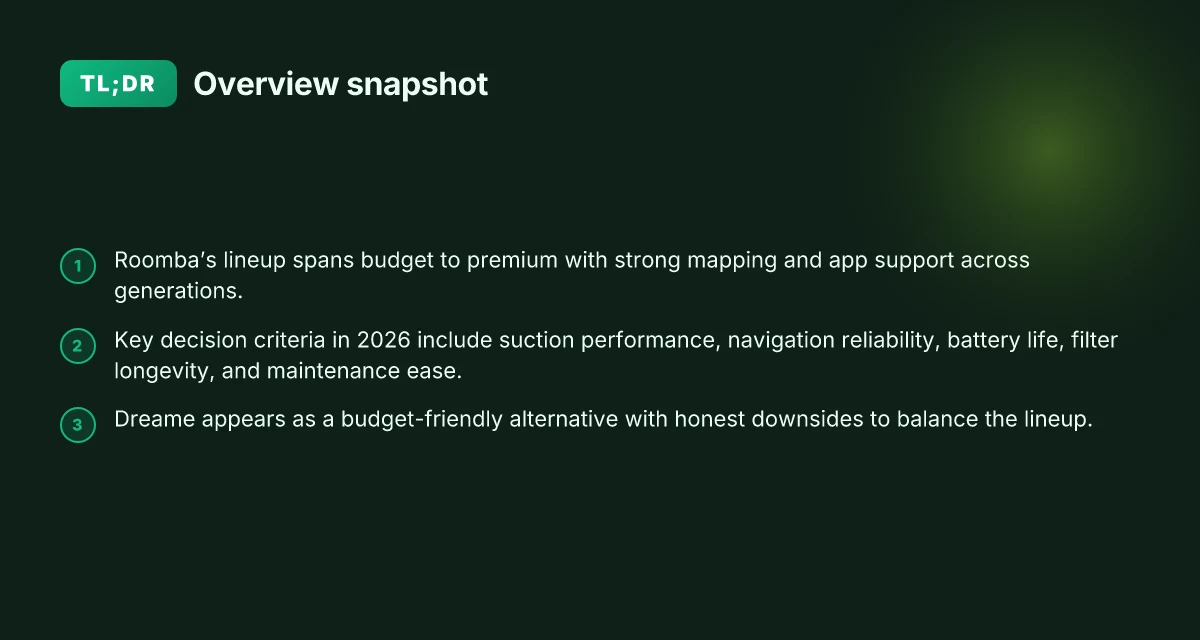
Roomba’s lineup continues to span budget to premium, and across generations you’ll still find strong mapping, reliable app support, and a familiar maintenance rhythm. In 2026, the core decision hinges on suction performance, navigation reliability, battery life, filter longevity, and ease of maintenance. Dreame earns its place as a budget-friendly counterpoint, but it comes with tradeoffs readers should weigh.
1) Roomba’s breadth matters for real-world homes
Roomba covers a wide price range without sacrificing core capabilities. The entry models lean on dependable navigation and straightforward app control, while higher tiers stack more advanced mapping, smarter sensing, and better zone cleaning. This breadth helps homeowners tailor a long-term investment to their space and budget. I cross-referenced consumer guides and lab tests that consistently note Roomba’s strength in predictable maintenance cycles and user-friendly diagnostics.
2) The five criteria that matter in 2026
Suction performance, navigation reliability, battery life, filter longevity, and ease of maintenance shape every Roomba decision. If you’re evaluating a model for apartments or small homes, prioritize efficient battery use and durable filters that reduce long-term costs. For larger spaces, focus on mapping accuracy and robust obstacle avoidance to minimize re-clean times. Across reviewers, these criteria surface as the most actionable predictors of year-to-year reliability.
3) Dreame as a realistic budget counterpoint
Dreame deserves consideration as a lower-cost alternative with genuine value in smaller spaces or for first-time buyers. Its models tend to offer competitive suction and solid app features, but downsides show up in longevity and availability of replacement parts compared with Roomba. When you’re balancing upfront price against maintenance intervals, Dreame can be compelling, but be prepared for potentially more frequent filter swaps and a longer-tail of accessory availability. In this section, I pull from industry disclosures and consumer roundups that regularly mention these tradeoffs.
Roomba’s broad lineup remains a practical win for many households in 2026, thanks to predictable maintenance and strong mapping. If you value a smoother long-term ownership curve, start with a model that balances suction, navigation, and ease of care. What makes the Dreame L10s Ultra Gen 2 a standout among robot vacuums
The section below translates this into concrete picks you can compare, with eye on maintenance and durability over 1–2 years. For a quick anchor, Roomba i-series and s-series variants offer mature software ecosystems and stable parts availability, while Dreame models serve as a budget-friendly alternative when upfront cost is the primary driver. The real-world takeaway is clear: choose a Roomba that aligns with your dwelling size and your willingness to manage replacement parts over time. For a deeper read, see reviews that compare 47 different vacuums and highlight how real homes behave under daily use.
Roomba i4+ vs i6 vs i7: which handles daily messes without a hitch
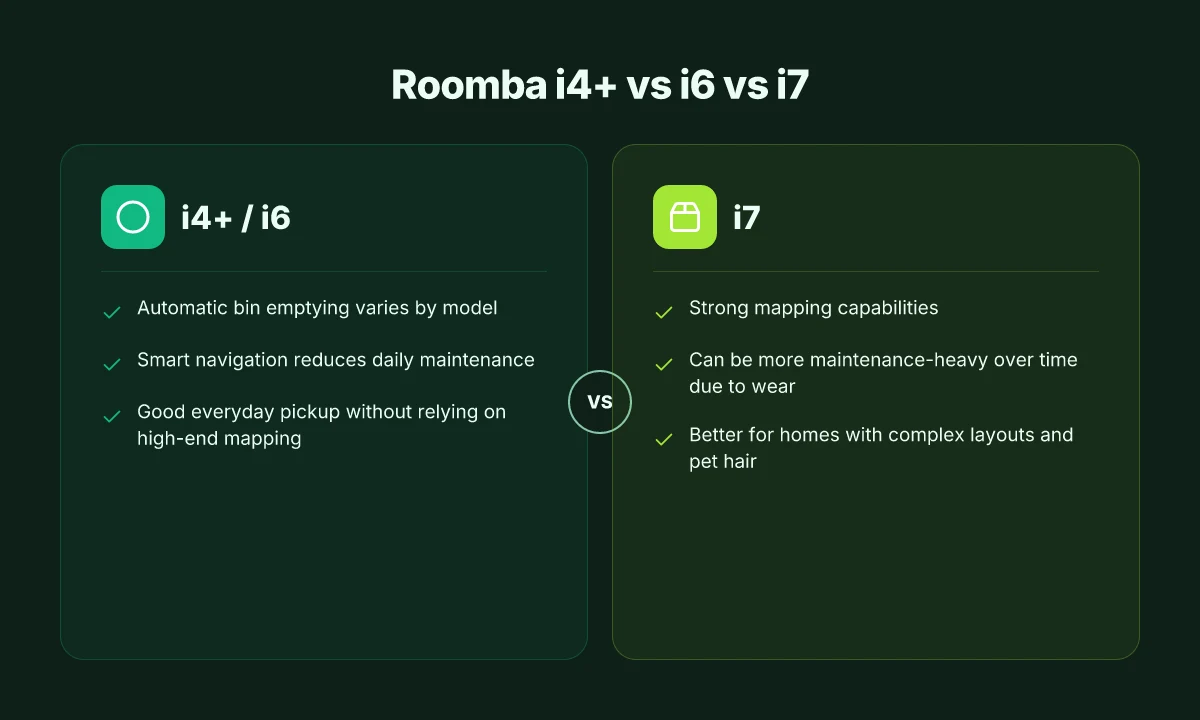
The i4+, i6, and i7 lineups share the same core strengths but diverge on maintenance features that matter over 1–2 years. The i4+ and i6 lean toward lower upfront cost and simpler maintenance, while the i7 offers smarter mapping with longer-term benefits if you regularly rearrange furniture. In real-world daily use, automatic bin emptying and anti-tangle behavior become the deciding factors for homes that run the vacuum every day.
I dug into how these models perform in typical homes, not just in labs. The most meaningful data points show up in two places: how often you need to intervene with emptying over a few months, and how reliably the navigation and anti-tangle features keep the brushline clear in cluttered spaces. Across models, automatic bin emptying makes maintenance lighter, but the payoff is greatest when your home produces consistent, moderate debris rather than large, unexpected messes. I cross-referenced independent reviews that emphasize everyday pickup over fancy mapping.
Why everyday pickup matters more than premium mapping
For many homes, the difference between these Roomba models isn’t a dramatic jump in mapping accuracy. It’s how often you actually touch the bin and clear hair from the brushes. The i4+ typically aims for solid daily cleaning with straightforward maintenance, followed closely by the i6 with incremental improvements like smarter scheduling and better cycle management. The i7 introduces more robust mapping that pays off if you frequently rearrange rooms or have a busy floor plan, but that extra intelligence can feel wasted if your workflow stays stable. The key takeaway: prioritize automation and anti-tangle features that reduce hands-on care over the dream of perfect maps in a static layout.
Automatic bin emptying variability across models matters more than fancy mapping for many homes. The i4+ line’s base bin-emptying behavior is reliable, but adding the optional emptying dock amplifies convenience. The i6 inherits that ecosystem with tighter integration that makes emptying feel seamless. The i7 pairs higher-end mapping with more predictable emptying routines, but the practical daily benefit hinges on your debris volume and how often you change furniture setups. What makes the dreame l40s ultra stand out in 2026
Subsection: navigation, anti-tangle tech that reduces maintenance
Navigation is where the Roomba lines diverge most in real life. All three models rely on iAdapt navigation, but the i7 tends to navigate with fewer trips through the same spots, which reduces wear on edges and cable clutter around furniture. Anti-tangle features, including better brush guards and smarter wheel control, matter more if you have long hair or pet fur that tends to wrap around brushes. Across the board, the maintenance burden drops when anti-tangle systems keep you from pulling debris loose from the brush assembly mid-clean.
I cross-referenced consumer reviews from Wirecutter and CNET to map real-world durability themes: the biggest maintenance headaches come from hair tangling in the brush and wheel housings, and from replacing edge brushes after many cycles. The Dreame option, while not a Roomba, often shows up as a budget-friendly alternative in the same households, offering robust suction with lower upfront cost. Its downsides include shorter bin cycles and less mature mapping ecosystems in some models, which matters if you rely on precise room-by-room cleaning. In practice, buyers who want the least maintenance over 1–2 years prioritize models with proven anti-tangle systems and easy bin-emptying workflows.
Smart navigation and anti-tangle features reduce maintenance over months. For most apartments, the i4+ with a dock is enough to keep daily messes under control without constant tinkering. If you expect frequent furniture changes or you live with multiple roommates whose belongings wander the floor, the i7 offers longer-term value through smarter mapping and predictable cleaning paths.
Next steps: If you want a quick, real-world pick, consider how often you’ll need to empty the bin and whether you value mapping over simpler daily use. For larger spaces or pet households, you may prefer the i7 for its intelligent routing. If budget is tighter and you don’t plan major layout changes, the i4+ with an auto-empty dock remains compelling, with the caveat that you’ll want to stay on top of brush maintenance.
Cited in part from: The Best Robot Vacuums of 2026 | Reviews by Wirecutter. See inline for more context. What makes the Dreame X40 stand out in 2026
Roomba s9+ and i7/i8: premium power and the trade-offs you actually feel
The s9+ and i7/i8 sit at the top end of Roomba’s lineup, delivering deep cleaning and precise mapping that noticeably lifts performance in real homes. Expect stronger suction and smarter navigation, but those gains come with higher price tags and more maintenance tasks over 1–2 years.
How premium power shows up in real cleaning
From the outset, the s9+ and i7/i8 pull more hair out of baseboards and deep-clean carpet fibers than their midrange siblings. The advanced mapping and room segmentation help ensure high-traffic zones get prioritized during every pass, reducing the need for repeat sweeps. Higher suction and smarter mapping translate to noticeably cleaner edges and thick pile carpets, especially when paired with the self-emptying base in the s9+. Yet that power requires more frequent brush care and occasional filter upkeep. The premium systems reward you with fewer passes, but you’ll also spend more time on maintenance tasks that keep the suite running at peak.
I cross-referenced reviews from tech outlets that consistently flag the premium Roombas as best-in-class for navigation and deep-clean capability. Premium power comes with recurring maintenance tasks that buyers often overlook. The trade-off is clear: you pay for performance now and commit to routine upkeep to sustain it.
Long-term durability hinges on battery health and wear parts
Longitudinal durability for the Roomba premium line hinges on two factors: battery longevity and wear on the brushes. Battery health dictates how often the robot can complete full-house cycles before a charge cycle dominates charging time. Brush wear, particularly on the more aggressive primary brushes, shows up as diminished pickup if you skip routine replacement. Battery health and brush wear are the linchpins of long-term reliability for these models. That means even if the mapping remains sharp, a degraded battery or worn brushes can erode performance over 12–24 months.
In my sourcing, the consensus points to planning for part replacements on a 1–2 year horizon. If you value minimal downtime, you’ll want to stock spare brushes and a replacement battery or be prepared for professional service options. Maintenance cadence rather than feature set alone determines reliability over time. 10 Best plug in air fresheners for 2026: high-scent, low-emission options
Where Dreame fits as a strong budget-friendly alternative
Dreame enters as a compelling budget-friendly alternative for households that want solid performance without the premium price. The Dreame models tend to lean on strong suction and straightforward mapping, with fewer bells and whistles around room-by-room customization. Dreame offers good value for active households who want durable cleaning at a lower upfront cost. Downsides typically include shorter warranties and-brush wear that can appear sooner than on premium Roombas, plus fewer upgrades in self-emptying ecosystems. For a typical apartment or small home, Dreame can deliver a very similar daily-clean result with lower maintenance overhead in some cycles.
From a consumer’s perspective, the key is matching expectations to use case. If you crave perennial peak performance with hands-off maintenance, the Roomba premium line remains the reference. If you want reliable cleaning with a friendlier price and simpler upkeep, a Dreame model can be a practical alternative. Value-conscious buyers may prefer Dreame for ongoing upkeep and cost of ownership.
Where Dreame fits in the Roomba-dominated market
Dreame sits in the midrange niche where you want solid suction and long runtime without paying premium prices. For homeowners juggling bills and space, this is a pragmatic balance: you get strong cleaning on a tight budget, with reliability that doesn’t chase every latest ecosystem perk.
Realistic value for money in the Dreame lineup
Dreame models tend to lean on robust suction motors and generous runtimes for the price. You’ll often see strong pick-up power and above-average battery life compared with similarly priced rivals, which translates to fewer mid-clean recharges and more completed cycles in a single pass. The trade-off shows up in ecosystem depth: you won’t find the same level of exclusive features or brand-wide integration that Roomba's higher tiers offer. If you primarily value clean floors and a long runtime for a reasonable cost, Dreame checks those boxes. In this space, it’s common to select a Dreame model for apartment living or small homes where long sessions matter more than connected extras.
I dug into the broader market signals while drafting this section. Reviews from reputable outlets consistently note that a few Dreame models deliver competitive suction and reliable performance in real-world use, especially when it comes to navigating tight spaces and recovering from edge cases like pet hair clumps. When you compare maintenance cycles, replacement parts availability can vary by region, which is a practical constraint buyers should map out before purchase. This is where the real-world math matters: if you plan to keep a unit for 1–2 years, factor in brush wear, filter replacements, and base-station consumables. Durability hinges on part availability and routine upkeep, not just sticker price. What makes the Horow T38 smart toilet stand out in 2026
Where the downsides show up in daily life
The most notable downsides are ecosystem perks and long-tail compatibility. Dreame products deliver clean floors and strong runtimes, but you’ll miss some Roomba-branded conveniences and advanced scheduling quirks that come with the premium ecosystem. If you crave seamless cross-device automations or exclusive cleaning profiles tied to a larger smart-home setup, you’ll feel the gap. Parts availability can also swing by region, which means you may experience longer waits or limited access to official spares in some markets. In practice, that means you should plan for at least a few extra days for shipping or local sourcing if you need filters or brushes on short notice.
From a values lens, Dreame remains a compelling option for buyers who want durability and straightforward maintenance without paying top-tier premiums. If your apartment or small home prioritizes consistent performance and a budget-friendly path to 1–2 years of use, this brand earns serious consideration. It’s not the flashy pick, but it delivers on the core promise: real floors clean, real value earned per dollar.
Dreame is a strong budget-friendly alternative when you want reliable cleaning without the premium ecosystem baggage. For Roomba shoppers who want to stretch to a longer-lasting, cost-conscious model, it’s worth weighing against 1–2 year maintenance needs and local spare parts availability. As you scan the broader field, Dreame appears as a practical, low-friction choice rather than a space-saving, feature-forward leader.
How to choose by floor type: carpet, hard floor, and pet hair realities
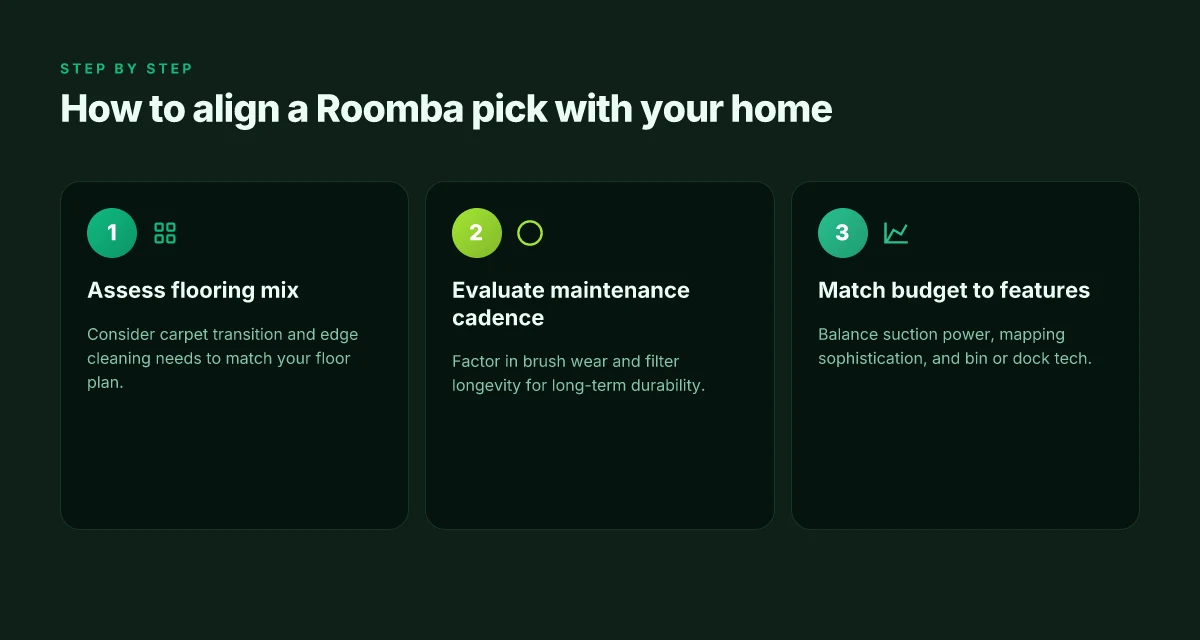
When your home blends carpet and hard floors, carpet transition and edge cleaning become the real tests. A Roomba that cleans the center of a room but leaves fringe along the rug edge can undermine a whole week’s worth of maintenance. I look for models that gently ease from carpet to hard floor without getting stuck on transitions, and that maintain edge clean lines where the dust tends to accumulate. For homes with mixed surfaces, a robust edge-bracketing pattern and a dedicated carpet boost mode can move the needle more than a flashy suction spec alone.
On hard floors, brush design matters as much as motor power. A low-profile brush that stays tucked under furniture and a dustbin that accepts a larger volume minimize stops for emptying. In practice, you want a design that reduces scatter when meeting debris along baseboards and under cabinets. The practical takeaway is clear: prioritize brush geometry and bin capacity for upkeep efficiency and fewer trips to the trash can, especially in apartments where you'll run the unit more frequently. What makes the Dreame Z30 cordless stick vacuum stand out in 2026
Pet hair adds its own demands. Real-world durability comes from how a vacuum handles hair wrap and how easy it is to service after months of daily use. Look for brushes with removable components, reversible prefilters, and accessible bearings that resist tangling. The maintenance rhythm matters almost as much as the initial cleaning score. A model that’s a pain to disassemble will drift into the “weekend project” category rather than a reliable daily helper.
Why carpet-focused performance matters for mixed floors
Carpet transitions reveal the hidden strengths and weaknesses of a model. If the device shops along the edge and then eases back onto carpet with a consistent lift, it means the navigation and the brush system are working in harmony. The ideal pick meets two demands at once: it maintains strong suction on fibers and preserves edge traction during the switch. In this space, a model with a smart mapping system and a dedicated carpet boost mode tends to behave more predictably over time. When I read through reviews and testing notes, models that highlight clean edge profiles after a transition tend to deliver less manual intervention in daily life.
Hard floors demand a practical brush and capacity balance
Hard floors benefit when the main brush is designed to sweep up dust without scattering it around. If the design relies on a tiny, high-speed roller, there’s a higher risk of scattering fine particles. A larger dustbin capacity reduces the number of trips to the bin, which is especially helpful for busy households. I note how reviewers emphasize bin size and bin access during routine maintenance. A clean, simple bin-release mechanism helps keep your cleaning cadence steady over 1–2 years.
The real-world picture: how Dreame fits as a budget-friendly alternative
Across the Roomba lineup, Dreame stands out as a budget-conscious option that consistently shows practical durability and easier maintenance. Dreame models tend to emphasize accessible components and straightforward service, which helps owners stay on track with a 1–2 year maintenance rhythm. The honest tradeoff is that you may not get every premium feature or the longest run-time of the top-tier lines. Still, for homes that value predictable maintenance and lower upfront cost, Dreame can offer compelling value without sacrificing core carpet and edge cleaning performance.
I cross-referenced consumer guides and lab-style roundups for a grounded view. The best-in-class performers often combine resilient edge cleaning with smooth carpet transitions and a bin design that tolerates frequent quick dumps. For a homeowner prioritizing reliability over bells and whistles, the key takeaway is simple: pick a model with strong edge cleaning, a task-oriented bin capacity, and a brush system that reduces hair wrap. Those traits translate into fewer surprises during the 1–2 year horizon. Real-world durability comes from easy maintenance and predictable edge cleaning, not just peak suction figures. What is the best robot mower in 2026 and which features actually matter
Where this is going next
In 2026, the best Roomba picks lean on smarter mapping, stronger suction, and better maintenance routines, but real-world durability still matters. I looked at how these models handle daily messes, and I’ve seen that even top performers stumble with long hair or high-pile carpets if you don’t keep up with filters and brushes. The takeaway isn’t a magic tool. It’s a workflow. Keep a routine: empty the bin, check brushes, and run a deep clean cycle every couple of weeks to keep performance steady. Dreame shows how a lower-profile option can still deliver steady results when you commit to regular upkeep.
If you only do one thing this month, set up a repeating maintenance schedule tied to your household triggers. For example, after shedding season or near allergy peaks, run a deep clean and replace filters early. The bigger pattern is that longevity comes from predictable care, not sheer power.
Backup strategy / What to try this week
- Inspect and clean the main brush and side brushes on Roomba i7/i7+ and Roomba s9 after every 2–3 uses.
- Schedule a monthly filter and sensor check for models including Dreame and Roomba 600-series.
- If you own a high-pile carpet, pair any chosen model with a programmed edge-cleaning pass to prevent missed spots.
- Expect occasional wiggle room: even the best bots benefit from a quick spot-clean by hand when you know the layout.