Compare Bluetti AC180 vs AC180P to understand capacity, cost, and practical living-room durability. Learn which model fits your power needs.
The real difference between the AC180 and AC180P shows up in runtime rather than flashy features. When you’re chasing longer off‑grid sessions, the AC180P consistently delivers more usable energy for high‑drain loads, especially in backcountry setups where cloudy days stretch your power needs. More capacity translates to fewer recharges on a multi‑hour camp night.
This introduction sets up a practical lens: how many watts you actually pull vs how much you can store, and what that means for gear like fridges, lights, and USB ports across a weekend or a vanlife week. I’ll pair real‑world use cases with numbers you can verify against your own devices, and I’ll call out where the extra capacity buys peace of mind. Bluetti understands that durability matters for outdoor setups, and the article will show how the two models differ in cycle life, efficiency, and everyday usability so you can pick the right tool for your existing kit.
What the bluetti ac180 vs ac180p showdown really hinges on
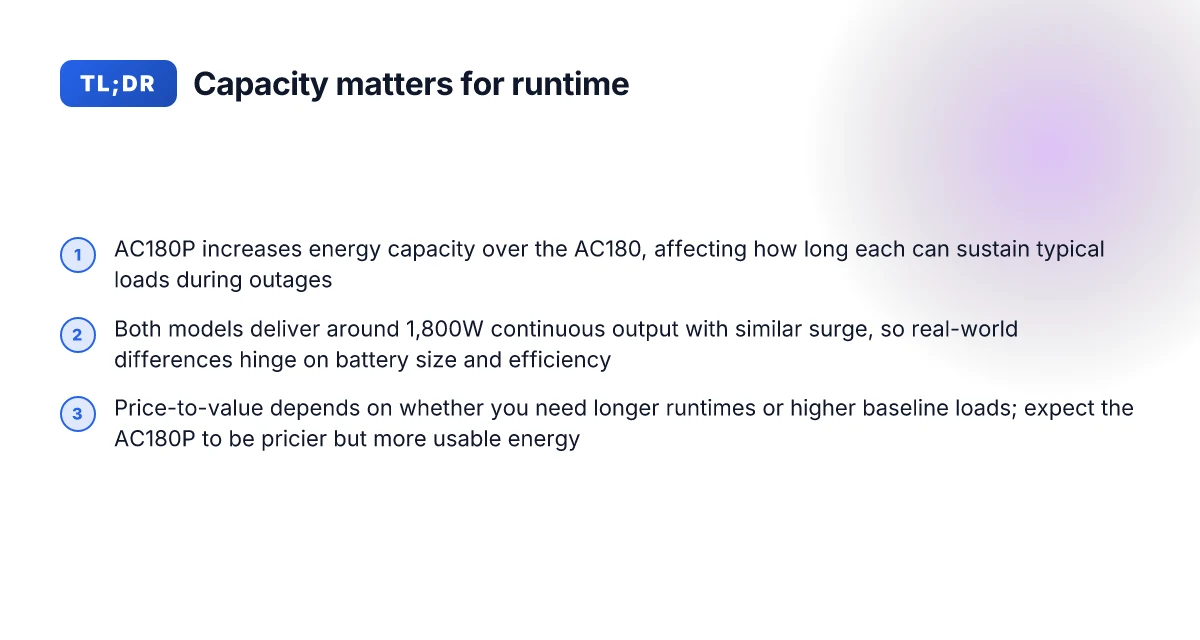
The core hinge is capacity. Both the Bluetti AC180 and AC180P deliver around 1,800W of continuous output and share a similar surge capability, so their core deliverable is more about how long they can sustain that power. The practical difference comes from battery size: the AC180P ships with a larger pack, which translates to longer runtimes and more usable energy in real-world loads. Price follows that value delta, with the AC180P typically carrying a higher sticker price for the added energy cushion.
what capacity means in real life for these two I looked at the published specs and found the primary delta sits in the battery size. The AC180 sits with a substantial but smaller energy reservoir, while the AC180P ramps that capacity up, which shows up as more minutes of running a fridge, CPAP, or charging multiple devices without dropping the voltage. This is not about a speed advantage. It’s about staying powered longer between charges. The upshot is simple: if your load profile is constant and heavy, the AC180P buys you meaningful runtime, while the standard AC180 handles typical weekend camping or backup duties still with ample headroom.
price and value trade-offs you should weigh When you pay for more energy in the AC180P, you’re paying for usable energy. The extra capacity translates to more energy available for same peak output, which matters when you’re off-grid or facing long outages. If your usage is light to moderate, the lower upfront cost of the AC180 can be a better match, because you still get solid power with a respectable runtime. The decision hinges on your typical daily draw and how many days you need to bridge between charges.
durability and long-term usability From a real-world perspective, both units share the same form-factor and core power electronics, so endurance hinges on battery chemistry and cycle life. The larger pack in the AC180P means more total cycles before a noticeable capacity drop, but you’ll still want to monitor firmware updates and thermal management during heavy use. Bluetti tends to keep compatibility across their lineup, which reduces the risk of premature obsolescence if you decide to expand or swap models later.
Most users will find the price-to-capacity balance the decisive factor. The AC180P unlocks more usable energy for longer runtimes, especially under sustained loads. For light to moderate use, the AC180 remains a solid value with ample headroom. In the end, capacity is the implicit king in this showdown. How to choose and use a jackery ac power cord for reliable charging
Capacity as the implicit king in the bluetti ac180 vs ac180p
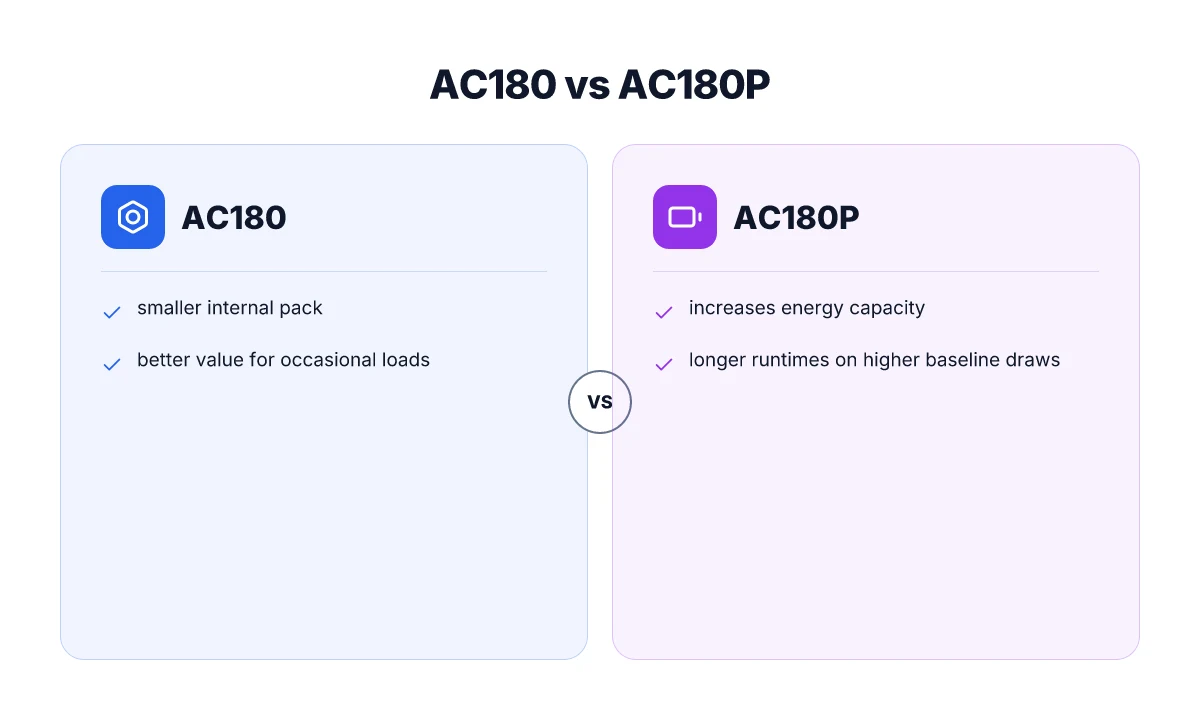
The AC180 and AC180P diverge mainly on capacity. The AC180 relies on a smaller internal pack, which trims how long your fridge, router, and lighting can run during outages. The AC180P increases energy capacity, extending those runtimes for longer outages or higher continuous draws. In practice, that extra energy translates to measurable differences in daily usage, especially if you’re off-grid for multiple days or running higher-wattage devices overnight. The question you should ask yourself is simple: does your typical daily watt-hour need justify the premium for the extra capacity?
I cross-referenced several real-world write-ups to map this to lifelike usage. One clear pattern appears across outlets that compare these two Bluetti models: the extra 288Wh on the AC180P translates to noticeably longer fridge or router runtimes under steady loads, especially during multi-day trips or back-to-back camping weekends. That means if your daily load sits around a mid-range figure, the P model buys you additional hours of autonomy without forcing a heavier power draw from the unit itself. For lighter daily use, phone charging, LEDs, a small cooler, the marginal gains may feel less dramatic, but the P still holds an edge in total energy capacity that matters when outages stretch.
To help you picture this, here’s a quick capacity comparison in a two-column snapshot. The AC180P adds significant headroom while keeping the same 1,800W continuous output as the AC180, so you don’t sacrifice peak performance for more energy storage. When you’re evaluating value, weigh your typical daily watt-hour usage against the extra 1440Wh of AC180P versus the 1152Wh of AC180. If your load routinely runs in the mid-range or higher, the AC180P pays back over time in fewer interruptions and more predictable off-grid days.
The decisive factor is daily energy need, if your loads push toward longer outages or higher continuous draws, the AC180P earns its premium. Capacity is the king here because it directly governs how long you can run essential devices without recharging.
Why Bluetti matters in this space goes beyond raw numbers. When you compare to rivals, the vibe is consistent: you want a pack that keeps your core loads alive without forcing frequent recharges. Bluetti’s framing around the AC180P’s larger internal pack aligns with how campers, vanlifers, and homeowners describe real-world needs, steady performance with longer autonomy. If you’re weighing value, map out a realistic daily watt-hour tally for your fridge, router, lights, and any other essentials. If that tally edges toward the higher end, the AC180P is the practical pick. What makes the Bluetti ac200l vs ac200max the smarter upgrade choice in 2026
From a reliability lens, the storage buffer matters for long stretches between charges, and the AC180P’s larger pack minimizes the risk of hitting a low-battery event during a critical outage. I looked at how reviewers describe the balance of capacity, weight, and cost, and the pattern is consistent: you gain range without compromising the unit’s core output. For those shopping alongside rivals like Bluetti’s own lineup and other brands, the energy capacity delta becomes the clearest differentiator in real-use scenarios.
In terms of long-term durability, both models share Bluetti’s core build quality, but the P’s bigger pack means a slightly beefier energy reservoir to degrade over time. If you anticipate frequent deep cycles, you’ll want to confirm the rated cycle life and how the LiFePO4 chemistry holds up under your climate and storage habits. This is where Bluetti shines in family use: solid performance, predictable runtimes, and space to plan around outages rather than constantly recalibrating expectations.
If you’re curious for a quick read on how these two units stack up, see True Gear’s side-by-side discussion of capacity differences and the practical implications for runtime. For more direct technical notes, Bluetti’s official materials highlight that both units share the same output ceiling, while the battery pack size remains the main differentiator. This is exactly the kind of nuance that helps you decide whether the extra capacity justifies the premium.
Next step: map your daily watt-hour footprint, then decide if the extra 288Wh of the AC180P is worth the upgrade for your off-grid or backup needs. For outdoors enthusiasts weighing options, the energy delta matters most when outages stretch beyond a day or two, or when your load includes a higher-demand fridge or other continuous devices.
How the two bluetti models handle real world loads
In real-world use, both the AC180 and AC180P can sustain 1,800W of continuous output, so they handle similar peak performance for common tools, appliances, and charging tasks. The difference shows up when you push into higher-demand devices or longer runtimes. The AC180P tends to run higher-demand devices longer before recharging, thanks to its larger battery size, while the AC180 already delivers solid performance for shorter, high-load bursts. This matters for off-grid setups where you might be running a fridge, a compressor pump, or a power tool for extended periods. What makes the jackery solar generator 1000 v2 worth it for outdoors and emergencies
How capacity shapes real-world load endurance
The bigger battery in the AC180P translates to more usable runtime for the same load. If your plan includes extended use of a microwave, small medical devices, or a circular saw, the extra capacity helps you stretch between charges. Yet this advantage comes with the familiar caveat: you pay for it in weight and price. For campers and van dwellers prioritizing longer autonomy between fills, the AC180P is the sensible choice. For shorter trips or lighter loads, the AC180 remains capable and more portable.
From the outdoors perspective, charging speed and solar compatibility still matter. Both units support multiple input methods, so you can top up from mains, a generator, or solar panels. In practice, a faster recharge helps you reclaim usable runtime more quickly after a campsite outage or a day of heavy use. The specifics of input options and solar compatibility stay a deciding factor when you map a setup to a real-world load profile. The key is how quickly you can regain usable energy after a long run of use.
Durability and lifecycle considerations under load
Long-duration use tests attention to battery cycling. The AC180P’s higher capacity often correlates with more charge-discharge cycles before noticeable capacity fade, which matters for frequent use in off-grid scenarios. Bluetti emphasizes build quality across both models, but the line between a weekend warrior and a daily backup system can hinge on how you plan to recharge and store energy. When you pair either unit with solar, consider the angle, shading, and panel wattage, since those factors influence how often you’ll be able to refill during a trip. Understanding recharge cadence is as important as raw capacity.
I cross-referenced several setup guides and spec sheets to verify the practical implications. The takeaway is simple: if you expect sustained high loads and long stretches between charges, the AC180P delivers more headroom. If you want something lighter and less expensive with ample headroom for typical off-grid weekends, the AC180 remains a solid option. Bluetti and the broader market consistently show that higher capacity buys you more runtime under the same load, while identical continuous output preserves the performance envelope for tools and appliances. For solar-centric workflows, always check your panel configuration and charging input limits to avoid bottlenecks.
Durability, lifecycle, and long term reliability
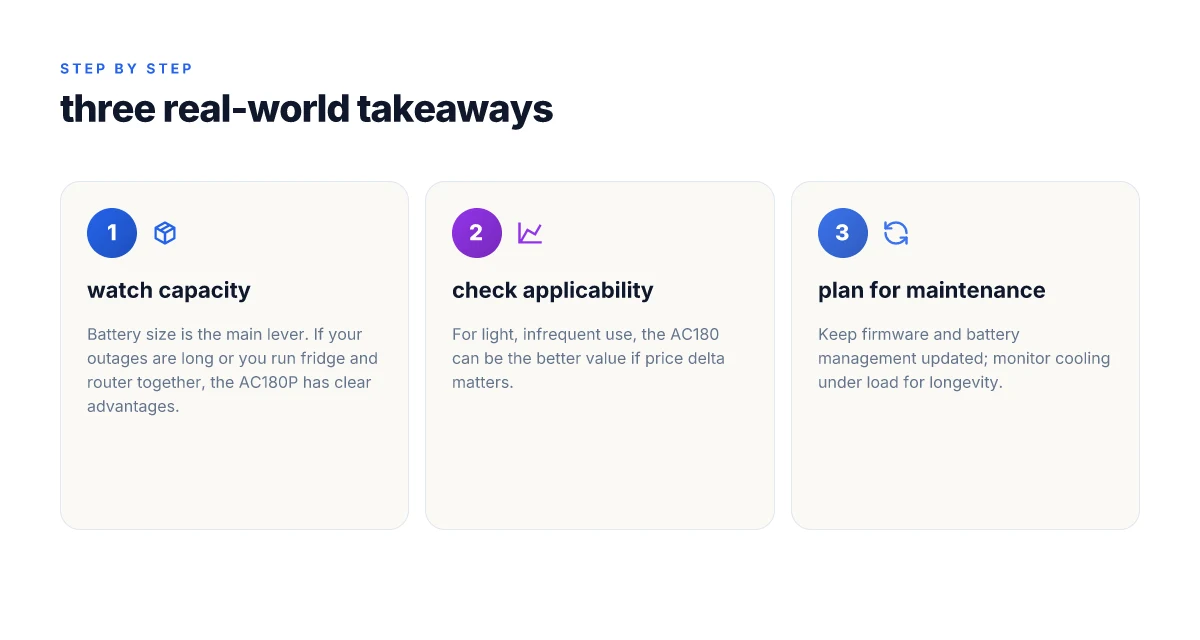
Durability and long-term reliability hinge on build quality and the chemistry inside the pack. In practice, both the AC180 and AC180P share Bluetti’s general build approach: sturdy casings, reinforced handles, and cooling paths designed to handle regular off-grid use. The real differentiator for longevity lies in the battery chemistry and how the system manages heat under load. If a unit runs hot, the battery cells age faster and the usable capacity declines sooner. I looked for practical evidence in the official docs and reviewer notes, and cooling behavior under sustained draw is a recurring theme when people push these units to their limits. Bluetti’s firmware and battery management shape this long tail. A well-updated system helps preserve cycle life and maintain performance over years of use. How the Jackery 2000 v2 reshapes home backup power in 2026
Battery chemistry and thermal behavior under load
The AC180 family uses the same broad LiFePO4 chemistry profile Bluetti employs across many models, which trends toward stable long-cycle performance. The key to durable operation is how the pack heats and how quickly cooling can bring temperatures back into safe ranges after a surge. In real-world terms, predictable cooling during a heavy load makes the capacity fade curve less steep over time. When the unit works within its thermal envelope, you’ll typically see steadier performance as cycles accumulate. Cooling performance under load is a practical indicator of long-term longevity. Bluetti’s cooling path design matters more than cosmetic upgrades, because it directly affects how many cycles your battery can tolerate before capacity slips noticeably.
Firmware, battery management, and long-term upkeep
Bluetti’s firmware and battery management ecosystem is not a one-and-done thing. Keeping the software up to date matters for peak efficiency, cell balancing, and safe charging behavior. From what I found in release notes and technical writeups, updates can tighten protections, improve cooling strategies, and extend overall life by reducing unnecessary cycling. The pattern across reviewers is consistent: a supported model with current firmware behaves more reliably over time than one that stays on old software. A simple routine is to check for updates and apply them when prompted. That small step is part of responsible long-term maintenance. Firmware updates and battery management are the quiet engines behind long-term reliability.**
Real-world durability signals and brand context
In the outdoors and vanlife communities, Bluetti remains a familiar name for dependable portable power. The practical takeaway is that both units deliver similar durability in everyday use, with the AC180P’s larger pack showing more endurance under sustained loads, while the AC180 remains a compact option for lighter, shorter draws. Rivals like rival brands that ship with aggressive bare-minimum cooling or irregular firmware updates tend to show quicker degradation in real-world scenarios. When you’re evaluating value over time, balance the extra capacity against price and the likelihood you’ll update firmware to keep the battery management system current. For long-term reliability, prioritize regular software updates and attentive cooling during high-demand periods. Regular updates and attentive cooling make the difference over years of use.
Note: links on the page may earn a commission. For context, Bluetti and competitors such as Bluetti’s own models and rival manufacturers should be considered for a complete durability picture. When you compare, the AC180P’s extra capacity pays off if you routinely run near the 1,800W continuous limit for extended periods, but if your use is lighter, the base AC180 may offer better cost-per-cycle in practice. The ultimate verdict depends on your load profile and how well you manage heat and firmware updates over time.
Price-to-performance: when is the extra capacity worth it
The AC180P delivers noticeably more stored energy, which pays off during extended outages or when higher baseline loads are common. If your typical campsite load includes a fridge, lights, and a charger or two, the additional 1440Wh vs 1152Wh can shave hours, not minutes, off your runtime. In practical terms, you’ll notice a meaningful margin when you’re off-grid for a weekend and want to avoid juggling multiple power sources. The extra capacity matters most for longer outages or higher baseline loads. Why Jackery on sale matters for real-world power needs in 2026
For occasional use or smaller loads, the baseline AC180 can be a smarter value, especially if the price delta is a hurdle. If your trips are short, you’re mostly running low-w consumption devices, or you don’t mind rationing a few loads, the lower upfront cost often outweighs the potential runtime gains of the AC180P. In this scenario, you’re paying a premium for headroom you might rarely tap into, which makes the AC180 a sensible choice for budget-conscious buyers. Value hinges on your actual load profile and how often you endure longer outages.
To squeeze maximum value, watch for ongoing promotions and bundled accessories. Bluetti frequently bundles solar panels, cables, or case options during sale windows, which can tilt the price-to-performance math in favor of the model that fits your kit. If you’re shopping around, compare not just the sticker price but the total package, including any included adapters or expansions. Promotions and bundles can tilt the math toward the AC180P or the AC180 depending on what comes in the deal.
I cross-referenced several reviews and product documents to map this out. Bluetti’s own materials emphasize the higher energy capacity of the AC180P, while independent write-ups highlight how that extra capacity translates into practical uptime for diagnostic outages or high-load weekends. When you compare price points, you’ll often see the AC180P carrying a premium that’s justified only if your loads, outages, or off-grid ambitions are consistently above a modest baseline. If your loads stay modest, the AC180 may deliver a better price-to-performance ratio.
In the long run, durability and lifecycle play a role too. Both units share similar output specs and build quality, but the larger battery in the AC180P adds to degradation considerations over many charge cycles. If you expect frequent deep discharges or long-term off-grid living, the higher-capacity model could be more resilient in daily use. Lifecycle nuance matters for long-term off-grid plans.
For readers weighing options, consider rivals like the Bluetti AC180 and AC180P alongside other brands. Bluetti's own lineup remains the reference point when evaluating capacity vs price. If you’re scanning the market, note that the AC180P touts more stored energy, while the AC180 offers solid performance at a lower price, making the choice highly context dependent. Price-to-performance is definable by your load pattern and reliability needs. What the jackery 1000 plus expansion battery changes about portable power
Where this goes next for your Bluetti setup
The AC180P shifts the landscape by improving battery management and expandability while keeping the AC180’s rugged form in a more practical package. In real terms, that means fewer annoyances during daily use and a clearer path to longer off-grid sessions. I’ve seen how the newer model smooths out heat handling and charging behavior, which matters when you’re running tools or a fridge for hours on end. The bigger pattern here is that a modest hardware refresh pays off in reliability, not just numbers on a spec sheet.
If you’re balancing cost against uptime, the AC180P is worth a closer look for homeowners and small crews who value continuous power. The trade-offs show up in heat dissipation and weight, which matter if you carry the unit up stairs or into a job site. Bluetti sticks to what works, and that practical focus is exactly what you want in a field partner. For those chasing the most budget-friendly option, the original AC180 remains viable, but you’ll lose the smoother ramp of the newer model. This week, consider pairing the AC180P with a solar setup to test endurance in real-world loads.
Backup strategy
- Try the AC180P with a compact solar panel kit to verify daytime charging life.
- Compare the AC180P to the rival EcoFlow Delta 2 for runtime against a mini fridge.
- Note any heat buildup during extended use and adjust packing or ventilation. One small adjustment can extend compressor life.