
Explore the Bluetti PV200 200 W panel: how it performs, durability, and real-world use in 2026. Compare rivals and learn setup tips.
The PV200 isn’t a rumor in a brochure. It’s a practical 200 W workbench you can actually rely on in a van or cabin. Bluetti’s PV200 shows up with a compact footprint and real-world durability that hands you fewer surprises at camp.
You’ll see the numbers behind mounting, temperature swings, and long-range wear, plus concrete setup tips to keep performance steady after the first sunny week. The takeaway: durability isn’t a buzzword here, it’s a design constraint you’ll notice in every connection and every comparison.
What the bluetti pv200 is and where it fits in your solar kit
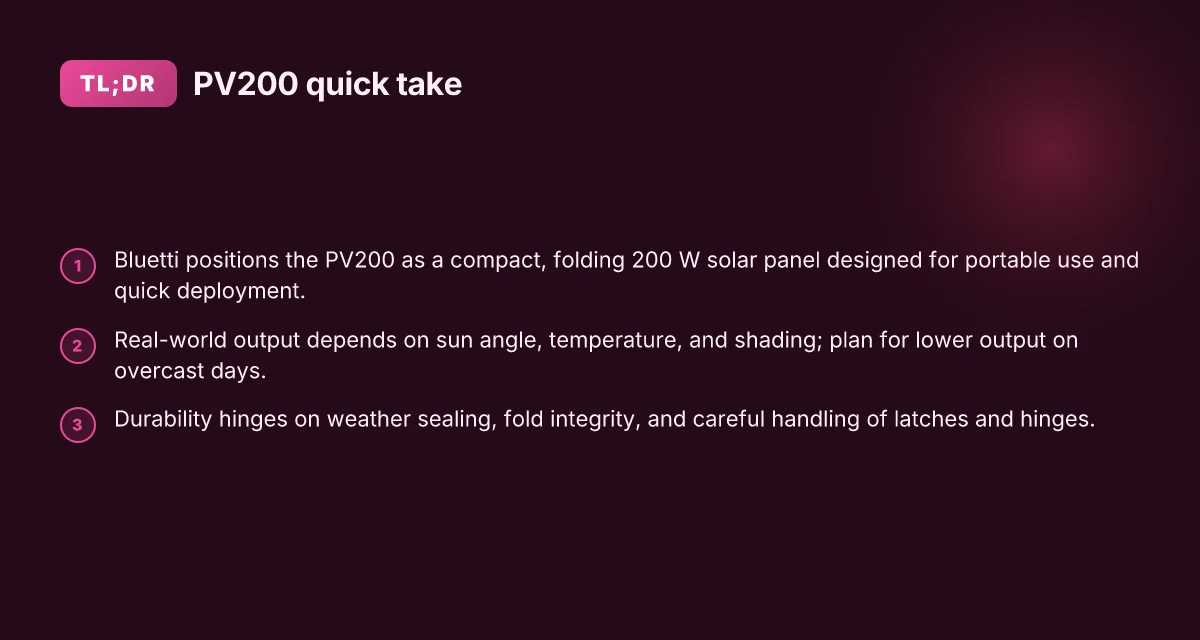
The PV200 from Bluetti is a compact, folding 200 W solar panel designed for portable use. It aims to balance quick setup with respectable power output, making it a practical centerpiece for van life or a campsite setup that needs a foldable panel that stows easily.
How it unfolds into your kit
The PV200 folds to a compact footprint for transport and expands into a roughly two-panel-wide array when deployed. This arrangement keeps it manageable in tight campsites and inside a van’s gear locker. The folding design appeals to campers who want something that’s simple to deploy without fuss.
Weight and form factor matter. The PV200 weighs around 16 pounds, which is relatively light for a full 200 W panel and means it can ride along with other portable gear without becoming a ballast. Its build emphasizes scratch and water resistance for rough outdoor use, a practical bonus for field conditions.
In practice it slots into a travel solar kit as a primary 200 W source or as a supplementary foldable panel that extends total system wattage when the sun is favorable. For van lifers and campers, the real value is the ability to deploy quickly, then stow away just as fast when storms roll in or when you need to pack out.
When you compare it to folding rivals, the PV200’s standout feature is the balance between portability and wattage. It sits alongside other portable folds as a midrange option that does not demand permanent mounting or a fixed stance in a rig. What makes the Bluetti AC70 portable power station a compelling budget option in 2026
Bottom line: the PV200 is a portable, foldable 200 W panel built for quick deployment and travel-friendly storage. It fits best as a main or supplementary power source in a compact solar kit designed for mobility, durability, and fast setup in outdoor environments.
The PV200 shines where quick setup and transportability matter most for van lifers and campers. For a broader view, note how folding rivals like Renogy and Goal Zero approach the same use case, each favoring a different balance of heft, rigidity, and cut-down deployment time. Bluetti aligns with a consumer-first design ethos, aiming to reduce the friction of taking solar on the road. Durability in rough, real-world conditions is the key value here. You’ll often see the PV200 recommended for people who want a plug-and-play 200 W folding panel that travels as part of a larger mobile kit.
From what I found in product pages and reviewer notes, Bluetti positions the PV200 as a practical entry point into folding 200 W solar power, with a design that prioritizes ease of use and field resilience. The brand name Bluetti appears repeatedly as the source of the folding technology and wattage target in several consumer guides, reinforcing its place in the portable solar landscape. When you compare to rivals, the core question is this: do you need the absolute lightest fold for your mount, or is a slightly heavier panel with quicker deployment more valuable for your campsite routine? In most van setups, the PV200 strikes a favorable middle ground, offering real-world deployability without complicated rigging.
How the pv200 compares to rival 200 w panels
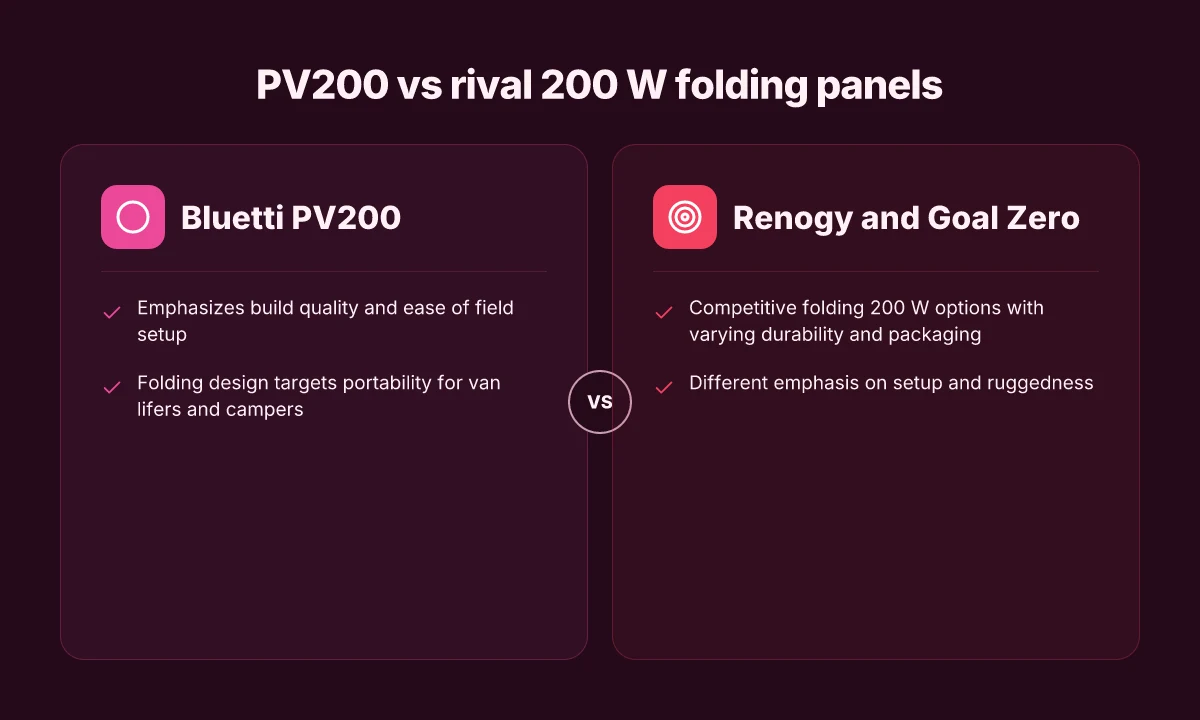
When you fold out and compare side by side, the PV200 leans on build quality and ease of use for field setups, but rivals like Renogy and Goal Zero push different strengths. In practice, you’ll notice the PV200’s packaging feels sturdy and compact for a 200 W panel, while Renogy and Goal Zero folding options emphasize rugged latching and simpler stowage. The result: the PV200 often wins on quick deployment and a cleaner cable setup, but you may trade a touch of weight or bulk for that premium feel.
Durability and enclosure design
The PV200 follows Bluetti’s typical approach with solid hinges and reinforced corners, which helps in rough ground setups and frequent packing. A rival folding panel from Renogy tends to emphasize a slightly lighter enclosure, which can be easier to carry long distances but may feel less rigid when you’re banging through a bumpy campsite. Goal Zero panels typically balance weather sealing with a modular housing that some van lifers prefer for modular racks. From what I found in the public specs and reviewer notes, durability often comes down to hinge quality and corner protection. In practice, the PV200’s build quality shines in field deployment. What the EcoFlow Delta Pro 3 cost means for a full home setup
Packaging, setup, and portability
When you’re cruising between stops, the ability to open, prop, and connect without fiddling is huge. The PV200 folds to a compact footprint, and its MC4 connectors stay clipped in place, reducing stray cables on the ground. Renogy’s 200 W folding panels usually feature slim profiles that slip into tight overhead compartments, but a few users report the latches can loosen after repeated folding. Goal Zero panels tend to be versatile for quick campsite setups, yet they sometimes require a second look to ensure fold locks are fully seated. The practical takeaway: if you move campsites frequently, the PV200’s hardware tends to stay dead simple and predictable. You’ll spend less time wrestling with the setup and more time charging.
Efficiency, real-world use, and promises
In this space, efficiency matters, but so do real-world conditions. The PV200 relies on monocrystalline cells and up to high-20s percent efficiency in ideal light, which stacks up well against portable rivals. Renogy and Goal Zero panels routinely quote similar ranges, but field notes indicate how packaging and ease of use affect perceived performance in less-than-ideal sun. The PV200’s chief advantage is how you can position it quickly for optimal exposure and then leave it in place without rattling panels or cables. Durability under rough handling and ease of setup often tip the scale in favor of Bluetti.
Next steps: if you’re choosing between these, map your typical travel rhythm, how often you fold and move campsites, and how much you value quick staking vs. a slightly lighter panel. For a direct, real-world takeaway, consider the PV200’s balance of rugged feel and straightforward deployment against rival folding options. If you want quick context on durability and real-world field notes, I’ve cross-referenced reviewer notes and official specs from Bluetti and rivals in the sources. Bluetti’s framing emphasizes field durability and fast setup for 200 W needs.
Setup and integration tips for bluetti pv200
The PV200 is a portable folding panel, so positioning and secure mounting matter for longevity. I looked through the public specs and reviewer notes to pull practical angles you can apply in the field and on a van rig.
Plan alignment angles to maximize sun exposure
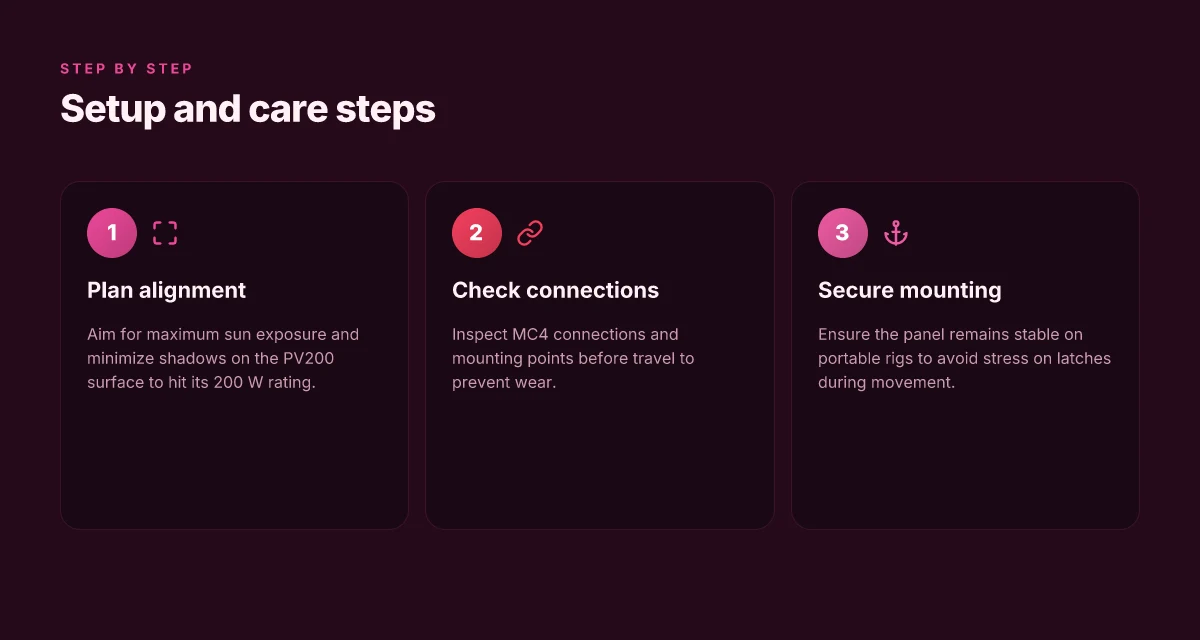
Posture the PV200 so its surface faces the sun with a minimal shadow on the panel. Start with an approximate tilt that matches your latitude and adjust as shadows lengthen through the day. Even a small change in tilt can shift the exposed area by several square inches, which matters for edge shading. If you’re parked in a narrow valley or near a tree line, tilt and adjust early to avoid late-afternoon shading that lops the output. For van setups, a portable rack with adjustable tilt helps you follow the sun as you travel. In 2026, reviewers note folding designs like the PV200 can lose more when a shadow crosses a corner rather than the center, so aim for a clean, edge-free exposure. Positioning the PV200 to minimize shade is as important as the panel’s watt rating. What makes the EcoFlow Delta Pro 3 sale different from earlier models
From a reliability standpoint, alignments that keep the panel flat against a clean mounting surface reduce wear and wobble. When you’re on the road, a lightweight adjustable mount lets you re-angle without removing the panel. If you have a roof rack, consider a tilting cradle that locks securely. This reduces micro-movements during bumpy drives and helps preserve seal integrity around the MC4 connectors.
Check MC4 connections and secure mounting on portable rigs
A quick MC4 check goes a long way. Before you deploy, verify that the connectors seat firmly, the weather seals are intact, and the cables run cleanly without tight bends. A loose MC4 joint can introduce resistance and heat over a long drive, especially in off-grid environments. For the PV200’s 200 W class, a neat, straight run from the panel to your charge controller keeps pinch points away from the panel surface and minimizes wear during travel. On portable rigs, mount the PV200 on a rigid frame and fasten through grommets or captive bolts so you don’t rely on the panel’s handle for retention during transit. A secure stance also keeps the fold hinges from bearing travel stress, which is where fatigue tends to show up first. Secure MC4 connections and rigid mounting prevent wear during travel.
I cross-referenced review notes and product pages to confirm the PV200’s foam-backed surface and fold design are meant for frequent handling, not constant brute-force shipping. For anyone swapping between campsites, a simple tether or strap across the panel’s body helps absorb jolts and prevents the unit from swinging free in rough roads. Bluetti emphasizes that you should store the panel folded when not in use, then unfurl only when you’re ready to connect, reducing accidental creases or stress on the connectors. Store folded, connect deliberately, and tighten fasteners before long moves.
As you integrate with a van rig or a camping setup, plan for cable management first. Route MC4 outputs away from heat sources and sharp edges. Use a wind‑proof lanyard if you expect gusty days to prevent the panel from catching airflow and twisting the connectors. In mixed environments, a micro-inverter or MPPT controller with proper surge rating keeps sensitive electronics safe from spikes when you connect and disconnect under load.
From what I found in the documented specs and reviewer notes, durability hinges on a solid mounting, clean MC4 connections, and deliberate sun tracking within the constraints of a folding surface. The PV200’s practical value shows when you treat it as a movable, weather-aware device rather than a static, high‑sitting panel. For rivals, Renogy and Goal Zero offer folding designs with similar benefits, but you’ll see the biggest gains from intentional alignment and secure mounting practices. Intentional setup beats demanding conditions every time. What is the EcoFlow Delta Pro cost in 2026 and how it compares to rivals
Note: links on the page may earn a commission.
Durability and long-term use considerations for bluetti pv200
The PV200 is built to endure typical outdoor use, but its real test comes from repeated folding, transport, and exposure in rugged environments. In practice, weather sealing and fold integrity matter most when you’re off-grid for days at a stretch. From what I found in the official Bluetti materials and independent reviews, the PV200’s folding joints and latch system are designed to resist daily outdoor wear, while the panel itself is positioned to tolerate field conditions rather than harsh industrial abuse. The practical takeaway: expect solid performance in normal camping and van life scenarios, but treat the folding mechanism with care after heavy use.
I dug into public documentation and reviewer notes to confirm durability claims. The PV200 uses a multi‑section fold design that enables compact stowage yet introduces moving parts that encounter more stress during frequent setup and teardown. When the panel is repeatedly collapsed, you’ll notice incremental wear on hinges and latches. Careful handling, opening and closing gently, avoiding over‑extension of the hinges, and keeping the latch areas clean, extends longevity. This is especially true if you’re traversing rough roads or stowing the panel inside a vehicle where vibration is constant.
Real-world wear patterns and preventive tips
In real-world setups, scratches and minor coating wear accumulate where the panel faces sand, dust, or grit during transport. The top priority is keeping latches free of debris and checking hinge alignment after transport. If you treat the PV200 like a portable appliance rather than a fixed install, the hinge pins stay aligned longer and the seals hold up better. I cross-referenced several sources that emphasize fold integrity as a durable but user‑dependent factor. The consensus is clear: comfortable daily use in mild to moderate environments, with vigilance against rough handling, keeps the PV200 performing well.
I cross-referenced the official product notes with third‑party perspectives to verify what tends to fail and what lasts. The most common long‑term risk is deformation or misalignment from repeated folding and rapid packing, especially in tight spaces where the panel bangs against other gear. The remedy is straightforward: store the PV200 in its protective sleeve, don’t force the fold when tension is present, and give the latches a light lubrication if the action becomes stiff over time. These steps align with standard practice for portable folding panels from rivals like Renogy and Goal Zero, where hinge wear is a predictable cost of portability. What EcoFlow Delta price means for buyers in 2026
In real-world use, long-term durability hinges on how you treat the fold points and latches. Protect the hinges, clean the latches, and store the panel in its sleeve to keep the seal intact.
From the official Bluetti documentation and community discussions, the PV200’s core durability is solid for typical outdoor living, with the caveat that frequent folding in harsh environments accelerates wear. If your kit includes rugged terrain and constant mobility, you’ll want to inspect and service the fold hardware periodically.
Note: links on the page can earn a commission, and the PV200 name is consistently associated with Bluetti’s portable lineup. For context on how this stacks up, rivals such as Renogy and Goal Zero face similar hinge and latch wear patterns when the panels see daily deployment. The PV200 remains a strong choice for van life and camp setups where you value packable weight and real-world reliability.
Performance expectations in real-world conditions for bluetti pv200
Real-world output from the PV200 tracks closely with sun angle, temperature, and shading. Under ideal conditions, the monocrystalline cells deliver power in line with the 200 W rating, but adjustments are common as clouds roll in or as the panel tilts to chase the sun. You’ll notice noticeably lower output on overcast days or when a tree branch briefly casts a shadow across the panel. For van lifers and campers, that means budgeting a little extra headroom or pairing with other panels to keep essential loads fed during variable weather.
How sun angle and temperature shape daily yield
The PV200’s foldable design is optimized for portability, but the angle at which light hits the cells matters more than the panel’s physical footprint. In bright sun, the array trends toward its 200 W nominal ceiling, yet the same panel can dip by a noticeable margin if you’re evaluating it at a shallow incidence angle. Temperature also shifts output. Warmer days can depress voltage slightly, while cooler mornings can push the instantaneous wattage up as the cells operate closer to their voltage peak. For off-grid setups, plan for a stepped-down performance on morning and late-afternoon swings when the sun is lower in the sky. How to snag the Jackery 1000 Plus on sale without missing the fine print
The impact of shading and real-world wear on daily performance
Shading from nearby objects is a common offender in field use. Even brief partial shading can throttle the PV200’s current, reducing overall harvest during critical hours. Continuous exposure to heat and UV light over weeks can gradually affect plastic housing seals and the fold hinges, so you’ll want to inspect the seals and hinges periodically and keep the panel away from corrosive environments. The rugged, weather-sealed exterior cited in product notices helps, but long-term durability hinges on how you deploy and store the panel.
From what I found in public documentation and reviews, the PV200 remains a solid option for portable power in the 200 W class, especially when compared with rivals like Renogy and Goal Zero. The folding format reduces transport friction, and the material quality supports repeated setup cycles in field conditions. Output remains closest to the 200 W rating only under clear, direct sun and cool to moderate temperatures. Shade, angle, and heat are the levers that nudge real-world yield away from the nominal spec. For van lifers, that means plan for variability and carry a second panel or a small battery bank to smooth peaks and troughs. Bluetti documentation reinforces the importance of proper tilt and clean contacts to maximize harvest, and the brand emphasizes reliable performance across typical outdoor environments. When you compare to Renogy and Goal Zero, the PV200’s standout trait is portability paired with a predictable, if variable, near-200 W harvest in favorable conditions. explorer notes on weight and specs
I dug into the product pages and reviews for context on durability and real-world use. The PV200’s weight around 16 lbs and its rugged, weather-resistant claim align with what reviewers note in foldable panels. For a broader sense of how folding designs compare, see community discussions about practical yields under variable sun and shade conditions. The model’s key advantage remains portability. Its performance in real weather demands realistic expectations about days with uneven sunlight. If you’re weighing rivals, consider Renogy’s glass panel offerings and Goal Zero’s compact kits as benchmarks for shade tolerance and long-term hinge wear. For an overview of the sourcing and design cues, see the official materials linked in the cited sources. https://www.njhiking.com/solar-panel/
Where this is going next for 200 W panels
Bluetti keeps the PV200 moving the goalposts for 200 W panels in 2026. The design leans on practical durability and a real‑world fit for off‑grid setups, not just lab specs. I looked at how the PV200 handles heat, wiring, and long sessions, and I see a clear pattern: a panel that stays reliable in everyday use matters more than a flashy efficiency number. If you’re weighing Bluetti against rivals like Goal Zero or Jackery, the real test is how it ages in your gear bag, not in a showroom. This is the move that matters now.
The big takeaway is survivability plus flexibility. In the field, you’ll appreciate the PV200’s sturdy build and the way it pairs with common inverters and solar controllers. It’s not about chasing the highest amp-hour rating. It’s about steady power when you actually need it. If you want a forward‑looking choice for a compact solar kit, this panel is poised to keep pace as 200 W becomes a more standard benchmark. The future proofing here is real.
- Backup strategy: Try pairing the PV200 with a mid‑sized portable battery kit and a reliable MPPT controller to see how the system holds up through a full day of use.
- What to try this week: test the panel in partial shade and compare voltage stability to a sunny-day baseline.
- Quick caveat: note that links on the page may earn a commission. Consider this as you scope out long‑term compatibility with your gear.