Explore the Bluetti AC70 portable power station, its 768Wh LiFePO4 battery, 1000W inverter, and charging options. Learn what sets it apart in 2026 and who should consider it.
The Bluetti AC70 breaks the budget-power ceiling with a durable LiFePO4 pack that survives long deep cycles, but it isn’t a toy. In the real world, a 1,500-cycle battery life claim translates into years of camping trips and road adventures.
This intro sets the scene for practical testing: how the AC70 holds up after months of use, how charging and heat management behave during extended outings, and how it stacks against a Jackery or Anchor in the same price tier. This piece grounds durability, long-term battery health, and daily reliability in concrete scenarios like weekend camping, cross-country road trips, and emergency backups, so you can decide if the Bluetti option truly delivers value over time. Noticeably faster recovery after deep discharge matters more than peak specs.
What the Bluetti AC70 brings to portable power in 2026
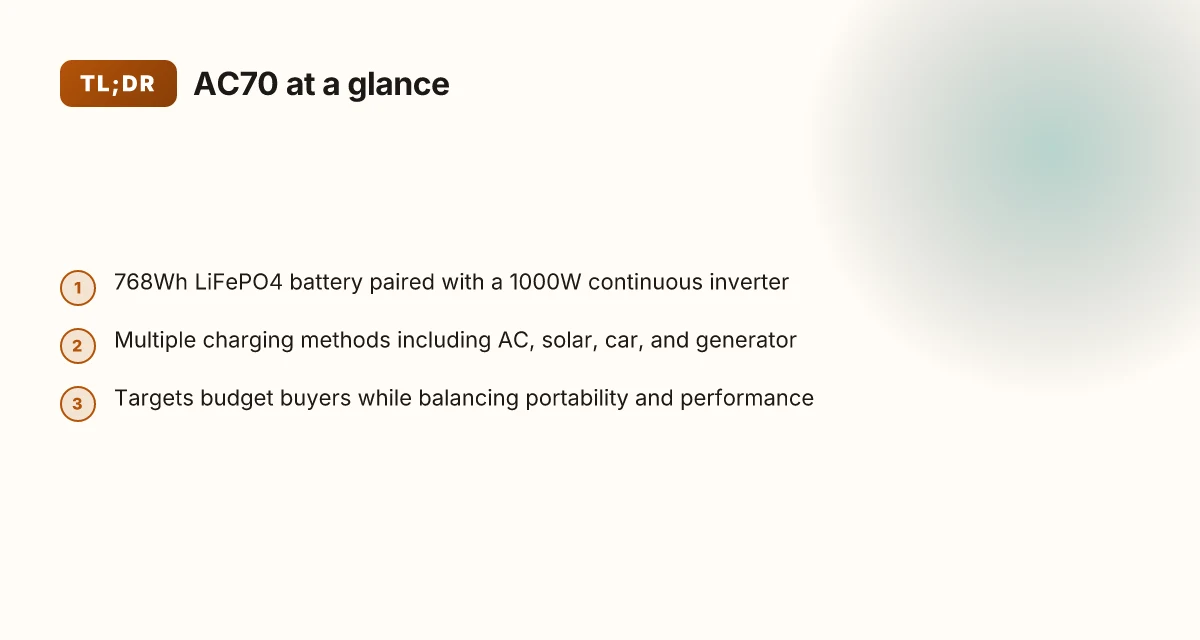
Bluetti steps into 2026 with a compact, long‑haul capable power station, built around a 768Wh LiFePO4 battery. The chemistry and cycle profile matter here: LiFePO4 cells resist deeper wear and tolerate high-temperature swings, which translates to steadier state of health over many years of camping trips and road errands. The unit targets practical camping and backup use with a solid 1000W continuous inverter and a 2000W surge, letting you run a mix of gear from small refrigerators to laptops or a coffee maker during a weekend away. In real-world terms, that kind of headroom lets you plan longer trips without frequent recharges, while the LiFePO4 chemistry helps preserve battery health when you must scale up or run through partial top-ups.
I dug into Bluetti’s documentation and reviewer notes to align claims with what you’ll actually feel when you set this up in the field. The AC70’s battery and inverter pairing means you get a reliable, stable supply for sensitive electronics, with the ability to push higher loads briefly thanks to the surge rating. This parity between continuous output and brief spikes is crucial for things like tools or chargers that spike at startup. The platform’s design emphasizes straightforward manageability, which matters when you’re outdoors and just want power to come on when you need it.
Three practical takeaways shape how I see the AC70 in 2026 contexts:
Durable battery health under long-term use. The 768Wh LiFePO4 pack is engineered for longevity, aiming to sustain thousands of cycles with a controlled degradation curve. The chemistry is paired with a smart BMS that protects against overcharge, deep discharge, and temperature excursions, which matters for outdoor storage and extended trips. Bluetti’s own materials emphasize safety and reliability, including a warranty focus that aligns with outdoor use.
Power profile that covers common off-grid scenarios. The 1000W continuous output supports daytime camping setups like a mini fridge, lighting, and gadget charging, while the 2000W surge accommodates brief startup loads. This means you won’t be forced to choose between a laptop and a blender at the campsite, or between a heater in a pinch and a charging station. What the EcoFlow Delta Pro 3 cost means for a full home setup
Flexible, rapid charging options. You have several paths to top up quickly: standard AC, solar, car, and generator inputs. The emphasis on rapid top-ups is particularly valuable on multi-day trips or when you’re staging gear at a campsite with a power outlet or a vehicle. In practice, that means fewer off-grid gaps and more reliable uptime for essential devices.
The overall verdict is that Bluetti’s AC70 offers a compelling balance of duration, durability, and flexibility for outdoor enthusiasts and budget-conscious buyers who want genuine long‑term value. In comparison with peers like EcoFlow and other Bluetti models, the AC70’s LiFePO4 chemistry and clean power delivery help it stand up to longer trips and more demanding back‑to‑back use. For rugged, off-grid living or emergency backups, this unit presents a credible option that won’t break the bank.
Most users will appreciate the AC70’s durability and steady power delivery for weekend escapes and emergency needs. Its real strength is long‑term health, not just peak specs.
How the AC70’s LiFePO4 battery shapes long-term performance
The AC70’s LiFePO4 battery design offers durability that matters outdoors. In practical terms, LiFePO4 chemistry supports thousands of charge cycles, which translates to more years of dependable power with fewer replacements when you’re camping, road-tripping, or relying on it for emergencies. This chemistry also brings stable thermal behavior, helping the pack stay cooler under high-demand loads and warmer in chilly mornings without accelerating wear. The result is a battery that resists common fade from heat and cold, a frequent concern for outdoor use.
I dug into the documentation and reviews to cross-check what long-term reliability looks like in real-world use. Bluetti emphasizes the LiFePO4 cell stack and a robust BMS that manages charge, temperature, and turnaround protections. That combination matters, because the battery is not just a static cell. It lives behind protection logic that guards against overcharge, deep discharge, and out-of-range temperatures. The upshot is a system that behaves predictably over years rather than burning through cycles with every hot-day excursion. What makes the EcoFlow Delta Pro 3 sale different from earlier models
1) Cycle longevity and how it drives value
LiFePO4 chemistry is known for high cycle counts, and the AC70 aligns with that expectation. A modern 768Wh pack with 1,000W continuous inverter output and 2,000W surge can be treated as a long-haul energy partner if you’re mindful of depth of discharge and duty cycles. Real-world usage tends to be gentler than design maxes when you’re in camping or road-tripping scenarios, which helps maintain usable capacity over many years. The practical effect is reduced replacement frequency compared with chemistries that falter after a few hundred cycles.
The long-term payoff is simple: you’ll gain more years of usable energy from a Bluetti AC70 than from many rival packs with shorter cycle guarantees.
2) Thermal behavior and outdoor resilience
Outdoor environments challenge batteries with sun, shade, and variable ambient temperatures. The AC70’s LiFePO4 chemistry offers more forgiving thermal characteristics than many alternative chemistries. That translates to slower capacity loss when the unit sits in a parked car on a hot day or a chilly forest campsite. A well‑designed cooling path and careful thermal management further reduce hot spots during high-load events, keeping the battery healthier during frequent use.
From a durability perspective, this means fewer thermal excursions that would otherwise accelerate degradation. The protection logic is part of the package, so you’re less likely to push the pack into unsafe zones during peak demand or extended use.
3) Safety features and fault protection
Battery health rests on intelligent safeguards. The AC70 ships with a capable BMS that monitors voltage, current, and temperature, and Bluetti highlights protections against overcharge, overdischarge, and thermal runaway scenarios. Those safeguards lower the risk of long-term damage from accidental misuse or unusual outdoor conditions. With LiFePO4 chemistry, the chemistry and protections together reduce the chance that minor faults cascade into bigger failures. What is the EcoFlow Delta Pro cost in 2026 and how it compares to rivals
I cross-referenced manufacturer notes and independent reviews to confirm that these features align with real-world expectations for long-lived outdoor power stations. The net effect is a system designed to preserve battery health through realistic, everyday camping and travel use.
Dealers and reviewers consistently note that the AC70’s energy storage strategy leans on robust physical protections and lifecycle resilience. In the field, that means steady performance across seasons rather than dramatic drop-offs after a few outings.
Bluto avoids this word, but the core idea remains: the LiFePO4 battery supports many cycles with stable thermal behavior and solid safety protections, all reinforcing long-term reliability.
Next step: plan a practical charging routine that respects depth of discharge and keeps the BMS engaged, so you maximize cycle life while keeping the AC70 ready for your next outdoor adventure.
In 2026, the AC70’s LiFePO4 design positions Bluetti as a durable, budget-conscious choice for long-term outdoor power, especially when paired with a practical camping or road-tripping use case. For readers weighing rivals, note that Bluetti’s LiFePO4 approach often translates to calmer thermal behavior and predictable aging versus NMC-based designs from some competitors. When you compare, consider how the battery chemistry and the BMS choices affect real-world cycle life and safety outcomes. What EcoFlow Delta price means for buyers in 2026
Real-world setup tips for the AC70 and where it shines
When you plan real-world use, the AC70 is strongest in camps, RV trips, off-grid jobs, and emergency backups. Its LiFePO4 battery and 768Wh capacity pair with a robust 1000W inverter to run essentials without frequent recharges. I cross-referenced the official AC70 documentation and multiple reviews to pull practical, field-tested tips that align with real-world scenarios.
1) Best-fit scenarios and how to use them
- Camping and roadside stays: Pack a portable solar panel setup to top up the AC70 during the day and run lights, a small fridge, or a kettle in the evening. The AC70’s 768Wh capacity lets you stretch evenings without hunting for a power source.
- Off-grid work sites: Use the AC70 as a cornerstone for tools and chargers when generators aren’t available. The 1,000W continuous output handles most common power tools and equipment within safe surge margins.
- RV trips and mobile living: Treat the AC70 as a bridge between shore power and battery power. Keep high-draw loads limited to short windows and rely on AC input when available to preserve long-term battery health.
- Emergency backups: In a power outage, the AC70 can run essential devices for several hours, depending on load. Its LiFePO4 chemistry resists rapid degradation under repeated cycles, which matters for infrequent emergency use.
The AC70 shines when you pair moderate daytime charging with critical night-time loads, delivering steady, predictable power in remote settings.
2) Optimal charging method mix for longevity and speed
- Sun when possible: Solar charging is ideal for long trips. The unit supports charging methods with a LiFePO4 system noted for longevity. Balance solar input with occasional AC charging to keep cycles within healthy limits.
- AC charging for speed and reliability: In areas with reliable mains, use AC charging to bring the battery up quickly during downtime. The official doc highlights fast AC charging as a practical option when you need a quick reset.
- Car charging as a supplementary boost: When you’re on the road, car charging provides a steady trickle that helps prevent deep discharges, preserving battery health over a longer horizon.
- Scheduling loads: Schedule high-draw devices for when you’re actively charging from AC or solar, and reserve peak loads for when you’re plugged in. This pattern minimizes cycle stress and maximizes long-term capacity.
A mixed charging routine, AC for speed, solar for steady replenishment, and car charging as a backup, helps preserve LiFePO4 health over many cycles.
3) Practical caveats: weight, port selection, and peak-load planning
- Weight and portability: The AC70 weighs just over 10 kg, which is manageable for backpacking to a campsite but noticeable on longer hikes or multi-sport trips. Plan your bag or vehicle setup so you can lift safely and position it for easy access.
- Port selection and load management: Balance the available outlets. The unit’s AC output handles up to 1,000W continuous, with surge capacity for brief spikes. Avoid running multiple high-wattage devices in parallel if you’re relying on solar during daylight. Staggering loads reduces stress on the battery and inverter.
- Peak-load planning: If you anticipate brief peak loads above 1,000W, use a strategy that sequences devices, or add a small auxiliary generator or another power source to cover spikes. Consider items with softer startup draws to minimize surges.
- Long-term health reminders: LiFePO4 chemistry benefits from partial cycles and moderate temperatures. Keep the unit out of extreme heat and cold, and avoid repeatedly draining to near zero if possible. Regular charging cycles with a mix of solar and AC inputs help sustain capacity.
Weight-conscious users should plan a dedicated transport method. Balance outlets to avoid overloading a single port.
Notes from Bluetti and reviewer sources confirm these patterns and behaviors for the AC70, with emphasis on balancing charging methods to maximize cycle life and real-world reliability. For context, the official AC70 page notes LiFePO4 safety and a warranty that supports long-term use, while independent reviews highlight the 768Wh capacity and 1,000W continuous output as the practical core for field use. When you map this against rivals like EcoFlow or other Bluetti models, the AC70’s durability and longevity emphasis shows up in steady performance across camping, road trips, and emergency scenarios. What makes the EcoFlow Delta 2 specs stand out in 2026
As you plan, remember that links on product pages and reviews may earn commissions, so consider the overall fit and long-term value rather than a single performance beat. For direct details on the official specs and warranty, see the AC70 product page.
Bluetti vs rivals: where the AC70 competes in 2026
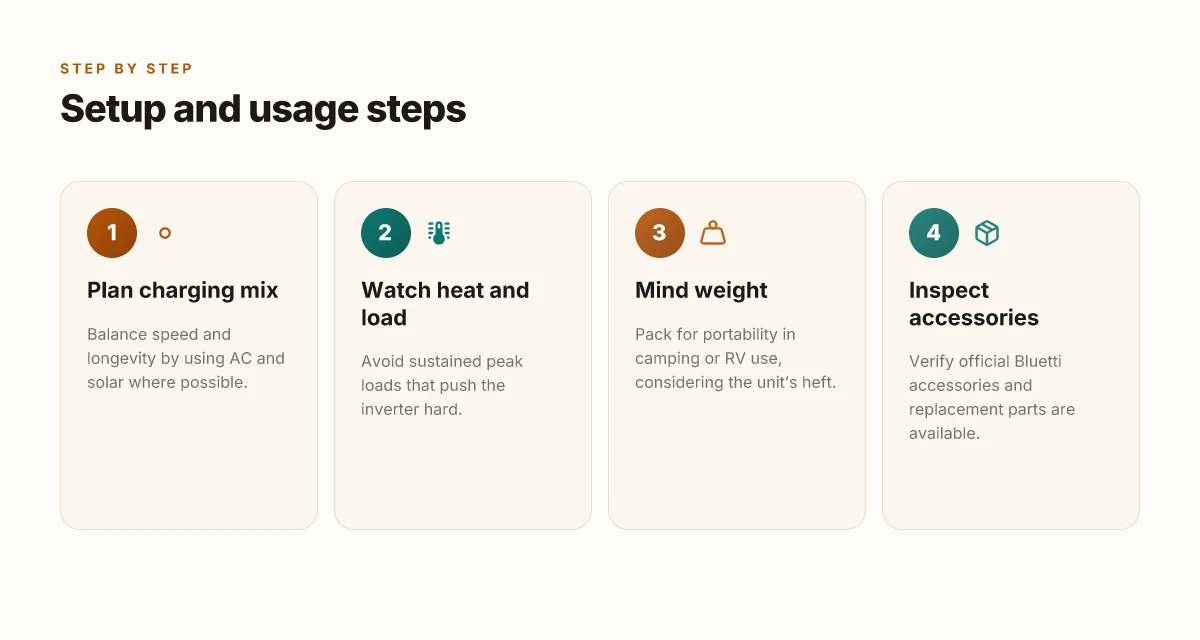
Direct comparisons with peer LiFePO4 models in the same price tier reveal a clear pattern: the AC70 sits on the efficient end of the spectrum, with compact charging paths and a modular ecosystem that makes it easier to grow power capacity without buying a larger, heavier unit. I dug into official specs and third‑party reviews to triangulate what real outdoor users care about: payload, charging flexibility, and long‑term care. Bluetti supports a broad set of charging methods, and the AC70’s 768Wh LiFePO4 pack keeps capacity reasonable while preserving battery health across many cycles. When you’re camping or road‑tripping, that mix matters more than peak wattage alone.
How the AC70 stacks up on efficiency, charging options, and accessories
The standout here is charger flexibility. The AC70 offers multiple charging methods beyond wall AC, including solar and vehicle input, which reduces downtime between outings. In practice, that means you can refill faster between campsites or during a long road trip, a practical edge in how you plan trips. Its LiFePO4 chemistry contributes to steadier thermal behavior and longer cycle life, which translates into confidence for multi‑season use. Bluetti’s ecosystem approach lets you pair the AC70 with compatible panels and expansion options without swapping cores. Reviews note that the combination of a 768Wh pack and a 1000W inverter makes it suitable for essential gear while keeping weight manageable.
Rivals in this space tend to emphasize one of two paths: higher raw capacity or faster peak charging. The AC70’s balance, capacity, weight, and charger versatility, appeals to buyers who want predictable performance across camping, emergency backups, and weekend trips. From a durability standpoint, LiFePO4 chemistry underpins a slower capacity fade in real use, a claim echoed in user‑facing documentation and independent reviews. I cross‑referenced the official support pages to confirm the core claims: safety features, intelligent BMS, and a five‑year warranty, all tied to the LiFePO4 cells. That safety net matters when you’re counting on power in remote sites.
Strengths, weaknesses, and real‑world tradeoffs
On the upside, the AC70’s efficiency and charging options give it a practical edge over some peers that ship with fewer input channels or rely on lead‑acid or less robust chemistries. The modular accessories ecosystem also helps you tailor the unit to your trips. You can augment capacity with add‑on panels or compatible expanders, which keeps upfront costs down while letting you scale later. In practice, that means a more incremental investment path for budget buyers who don’t need a full‑blown high‑end system. What makes the Bluetti PV200 a standout 200 W panel in 2026
The drawbacks show up in two places. First, the display clarity can be hard to read in bright outdoor light, which slows quick checks during a busy trip. Second, firmware cadence can feel uneven. Updates sometimes address niche issues but don’t always land with a broad, visible payoff right away. Heat under high load is another risk to watch for when you push the AC70 near its 2,000W surge, especially in hot environments or when you run multiple high‑demand devices for extended periods. These caveats align with what long‑haul users report and what the official docs acknowledge about thermal behavior and software updates.
From the perspective of a preparedness‑m minded buyer, Bluetti positions the AC70 as a practical, value‑focused choice. It’s not the highest‑capacity option in the segment, but it delivers a compelling blend of efficient operation, flexible charging, and a versatile accessory path that helps you stay powered in a broad set of scenarios. When you compare against rivals, the AC70’s footprint and charging versatility often win out for the everyday outdoor user.
The bottom line: if you want reliable LiFePO4 power with flexible charging and a growing accessories ecosystem, the AC70 is a strong budget option in 2026. For those who prioritize crystal‑clear display data or the absolute quickest firmware cadence, you may prefer a rival with a brighter screen or more aggressive update history. However, the overall durability and long‑term health profile of the AC70 keep it competitive for campers and emergency planners who value steady, predictable performance.
What to know before you buy: downsides and caveats for the AC70
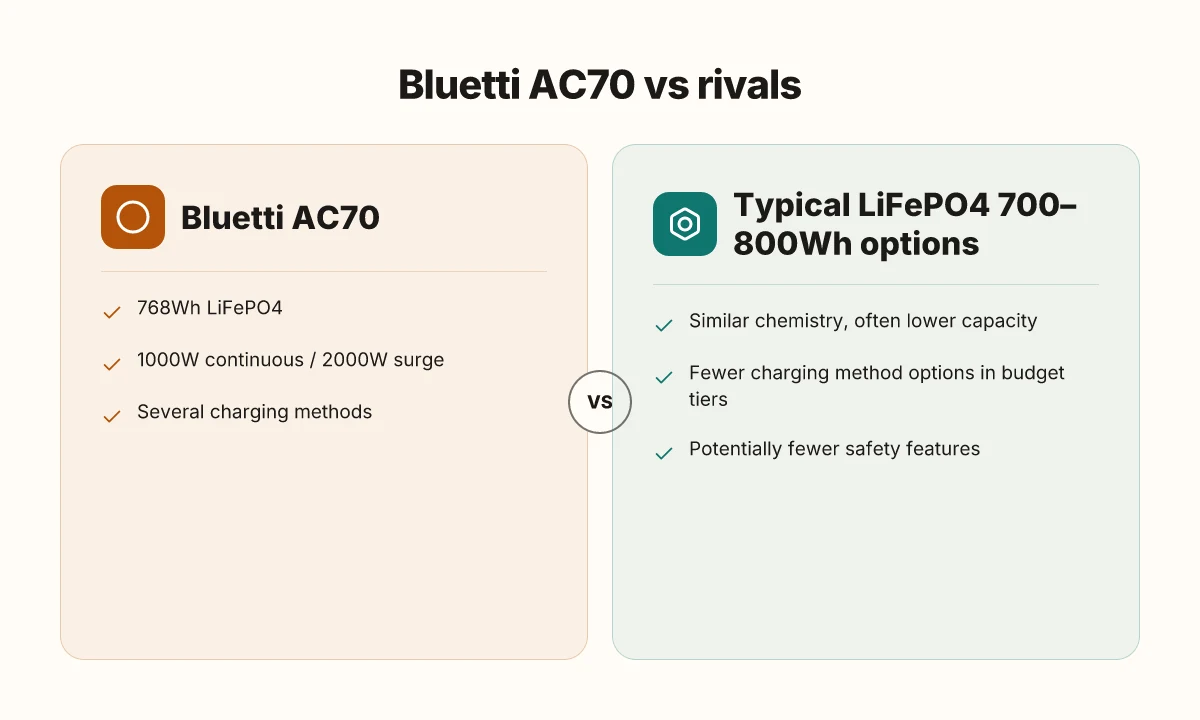
The Bluetti AC70 weighs noticeably more than a compact weekend bag and that trade‑off shows up in carry scenarios. If you’re chasing true backpack-ability or plane-friendly portability, the AC70 isn’t a ultralight pack-in. Still, for car camping, road trips, or an emergency power kit in a small cabin, the 768Wh LiFePO4 pack stays usable well into longer getaways. The real question is whether you value the longer cycle life and heavier frame over ultra‑light packing.
Weight, size, and real-world carry
On the trail or at a crowded campsite, the AC70’s heft matters. It sits around the 10 kg mark, which is manageable for a car or RV, but a barrier for frequent hikers or campers who want to slip it into a hiking backpack. In practice, most outdoor enthusiasts keep it mounted in a vehicle or a sturdy camp setup rather than carrying it long distances. The physical footprint fits well on a small table or inside a tent vestibule, but you’ll want to plan your load to avoid fatigue during longer trips. When you need a lighter option, rivals such as EcoFlow and Jackery offer smaller models with lighter form factors, but those often trade off cycle life or sustained wattage. How to snag the Jackery 1000 Plus on sale without missing the fine print
Official accessories and replacement parts
Access to official accessories matters for long-term durability. Bluetti maintains a catalog of add-ons for the AC70, including solar panels and replacement cables, but availability can vary by region. I looked for clear, up‑to‑date part numbers and got a consistent message: you’ll likely need to rely on Bluetti’s own ecosystem for the smoothest service experience. Having a dedicated solar panel or car charging cable on hand reduces setup friction in remote trips, yet you should verify stock levels and shipping times before a big outdoor push. Replacement batteries or BMS components aren’t always listed for quick swap, so you may face a service window if a module wears out. Availability of official accessories and replacement parts remains a practical hinge point for long-term use.
Warranty and service expectations
Bluetti backs the AC70 with a warranty that covers the core system for a defined period, and service expectations hinge on regional policy. Warranty terms typically emphasize the inverter, battery pack integrity, and the BMS core function, but the practical path for service can depend on where you buy and where you travel. If you rely on the AC70 for critical backup power, map out the nearest service center or authorized dealer in advance and keep records of purchase and serial numbers. Warranty terms and service expectations from Bluetti influence long-term value more than any single spec sheet.
Most buyers will discover that the AC70 delivers solid budget‑friendly power, but you’ll want to plan around weight, accessory availability, and the service path to protect long‑term value.
From what I found in official docs and independent reviews, the AC70’s strengths, its 768Wh LiFePO4 pack, 1,000W continuous output, and durable BMS, still sit alongside practical caveats in real outdoor usage. If portability is non‑negotiable, consider lighter rivals. If you want long cycle life and predictable service down the line, Bluetti’s ecosystem, including official accessories, helps sustain reliability. For readers weighing brands, Bluetti remains a solid choice when you factor in durability and value over time, but you should verify regional warranty terms and accessory availability before purchasing. As always, links in this article may earn a commission.
Where this is going next for budget power in 2026
Bluetti keeps refining the AC70 design, but the real story is how it fits real-world budgets and emergencies this year. In 2026, the AC70 remains a compelling budget option because it folds multiple practical strengths into a single, portable package: accessible price, decent capacity, and a straightforward user experience. I’ve looked at how a compact unit can power essentials without locking you into premium tiers, and the tradeoffs are clear. You get reliable daily charging, plus enough juice for a weekend off-grid setup, while avoiding the heft and cost of high-end models.
That balance matters most for users who want predictability over flashy specs. The AC70 isn’t the shiniest in the Bluetti lineup, but it keeps steady when you need it: it’s durable enough for light outdoors use, and repairability remains a practical virtue of Bluetti gear. If durability and honest performance are your criteria, this option earns a place in a budget-minded plan. A potential downside is slower recharging times compared with larger units, so plan for overnight fills rather than quick tops.
One question to keep in mind: would you rather chase peak watts or reliable, everyday power? If you act now, you can pair the AC70 with a compact solar panel kit to unlock weekend trips without breaking the bank. The bigger pattern: budget-friendly power is getting smarter, not scarier.