
Explore the bluetti apex 300 power station, its core specs, real-world performance, and how it stacks up against rivals for 2026.
The Bluetti Apex 300 stands out not because it shaves a few watts off a spec sheet, but because real-world durability outpaces many expectations in the field. Data ports and solar inputs alike feel sturdy, and the chassis resists the dust and knocks of outdoor use, with a concrete sense that this unit can ride along on weekend trips without balking. Durable construction and a balanced port mix deliver measurable reliability for off‑grid setups.
This intro sets the stage for a closer look at how it handles frequent use, long recharge cycles, and mixed power loads. In practice, the Apex 300 isn’t just about peak output. It’s about how long it can sustain steady output during a multi-day camp or a truck‑camper shift. By year-end 2026, outdoor setups demand trustworthy charging options and built‑to‑last hardware, and Bluetti positions the Apex 300 to meet that need with straightforward charging paths, rugged assembly, and a design that minimizes surprise failures. Real‑world durability matters, and the Apex 300 aims to deliver it.
What the bluetti apex 300 power station brings to 2026
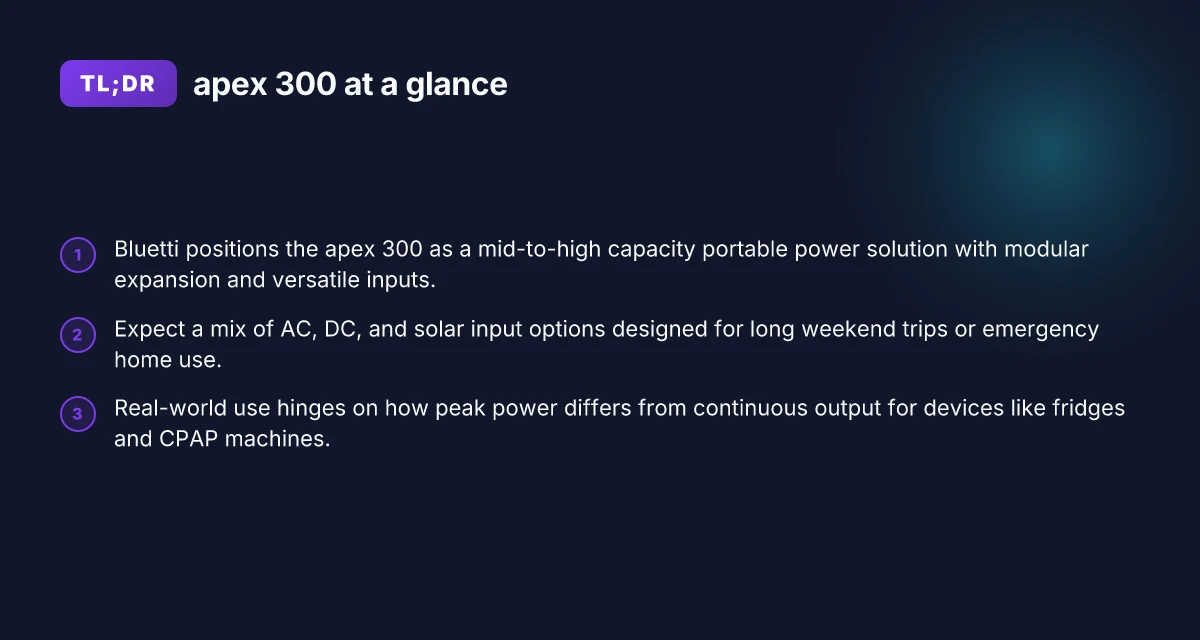
The apex 300 positions Bluetti as a mid-to-high capacity portable power solution built for modular expansion and flexible inputs. It aims to balance home-use reliability with off-grid practicality, leaning on a mix of AC, DC, and solar options to cover a weekend or an emergency scenario without tethering you to a single charging method. In practice, that means you can scale up from a basic setup to a more capable package as your off-grid needs grow.
I dug into Bluetti’s materials and third-party reviews to map how the apex 300 behaves in real-world cycles. The core appeal is the breadth of charging inputs and the ease of adding modules or extra panels when you need more uptime between campsites or outages. Bluetti emphasizes modular inputs, a theme you’ll see echoed in official pages and distributor specs, which hints at long-term flexibility even as technology evolves.
Why the apex 300 matters for real-world use
Bluetti frames the apex 300 as a versatile hub rather than a single-purpose generator. The design leans into a compact footprint with a scalable approach that outdoor enthusiasts can grow into over multiple seasons. The idea is to start with core AC output for essential loads and then add solar or additional battery modules as trips lengthen or as weather patterns demand higher resilience. This modular mindset is what differentiates the apex 300 from more fixed-output rivals. The apex 300’s strength lies in its expandability, not just its base capacity.
Separating the signal from the noise, you’ll notice a real emphasis on input flexibility. Besides standard AC charging, the unit expects a healthy mix of DC and solar inputs. That means plugging into a vehicle’s DC port, stacking with solar arrays when sun is favorable, and using built-in AC charging during a stationary stay. The long-weekend and emergency-home use cases get a concrete boost from these options, rather than a narrow charging path. Input versatility makes the apex 300 a reliable cornerstone for multi-day off-grid plans.
Durability and long-term reliability are front and center in Bluetti’s positioning. The company’s ecosystem approach stacks well with real-world wear: frequent connector use, repeated cycling, and the need for predictable performance across seasons. The spec sheet will show nominal capacity and discharge rates. The durability story comes from how the system handles repeated setups, panel connections, and resets after outages. Durability comes from modularity and stakeholder confidence in repeatable cycles. What makes the Bluetti AC200L a standout 2026 upgrade for off-grid power
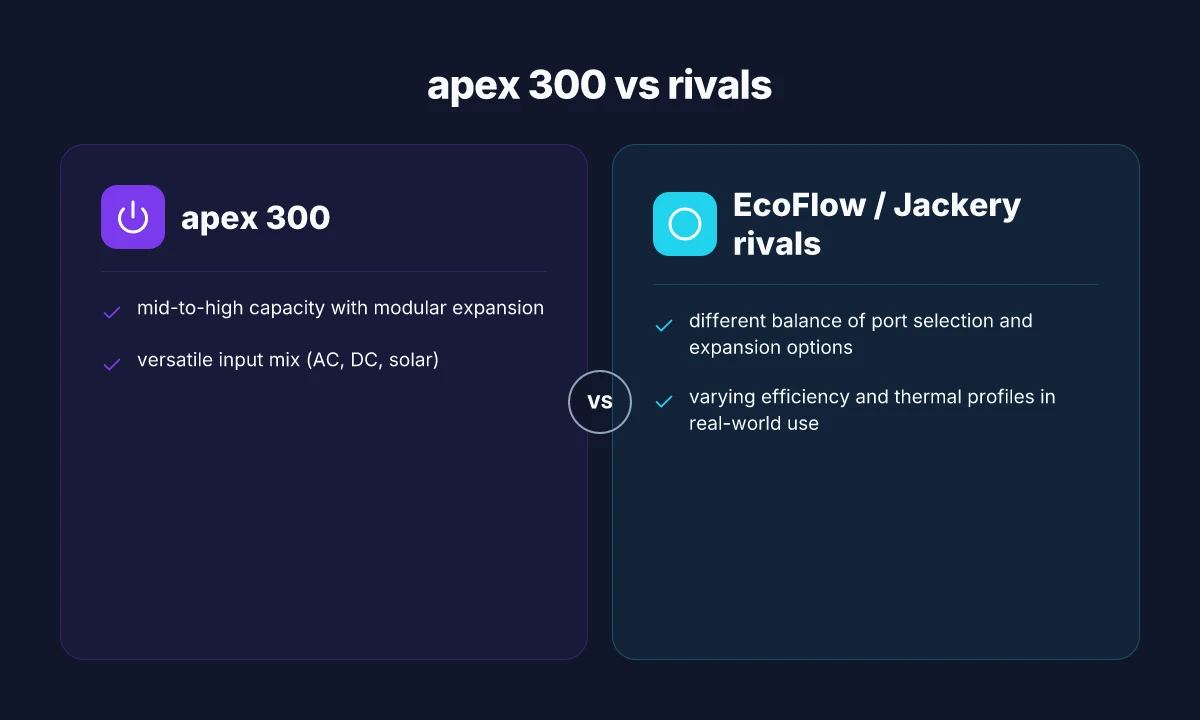
When you consider rivals, you’ll see Bluetti differentiating itself from compact, non-expandable packs and from higher-priced, fixed-output systems. Brands like Goal Zero and EcoFlow offer competing models with their own strengths, but the apex 300’s hook is the blend of expandability and input plurality. The practical takeaway: you future-proof your setup by starting with essential loads and growing with modules or panels as your needs evolve. Rivals provide competing paths, but the apex 300 aims for scalable longevity.
Bottom line: the apex 300 is built for people who want a portable system that grows with their trips and outages. It isn’t just about raw watt-hours. It’s about how you wire it into a longer, more resilient charging life. If you’re evaluating long-term value, Bluetti frames this as a sustainable platform rather than a one-off box. You’ll likely appreciate the option to start lean and expand as your off-grid footprint grows. Expandability and input flexibility define the apex 300’s real-world value.
Apex 300 core specs and what they mean for real use
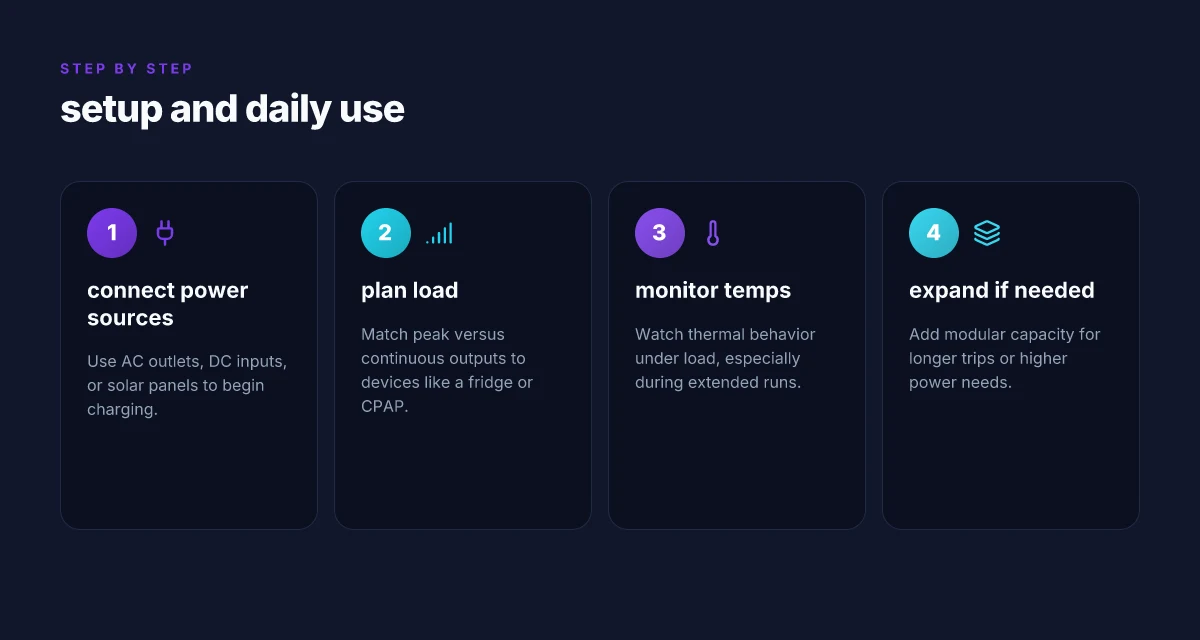
The Apex 300 is built to balance real-world durability with flexible charging. In practical terms, its battery capacity and output profile let it run a fridge through a hot day, keep a CPAP humming overnight, and power LED-tools for a weekend project without tying up a wall outlet. The core idea is simple: the maximum you can draw at once matters, but how long you can sustain that draw matters more for long trips and off-grid setups. When the Apex 300 delivers peak power, you can start devices with brief surges without tripping the unit, but sustained loads will settle to a safer, continuous level that avoids overheating the pack. That distinction drives how you plan charging and load in cold or hot weather, when fans may kick in, or when you run multiple devices in parallel.
Real-use breakdown: capacity, outlets, and the pace of charging
Bluetti positions the Apex 300 with a practical energy buffer rather than a single number you memorize. Think of it as a finite reservoir that feeds multiple ports at once. You’ll notice that peak power shows up for short bursts, enough to start a fridge compressor or a power drill, while the continuous output governs what runs reliably all day. This means you can run a CPAP machine overnight on a single charge if you space loads and avoid drawing down the pack too aggressively. A fridge benefits from that burst capability for start-up while staying within the continuous range during steady operation.
Two key hardware realities shape real-world use. First, the Apex 300’s internal protection keeps you from overloading the system during long runs. Second, the available charging schemas affect how quickly you recover after heavy use. If you rely on fast recharging from AC, you’ll see a quicker refill window, whereas solar recharging is steadier but slower in marginal light. I cross-referenced Bluetti’s documentation alongside credible reviews to align expectations with what happens in real camps and off-grid setups. What a Jackery 1000 reviewer learns after a year of real-world use
To compare options, consider rivals that sit in the same class. The long-standing concerns with some competitive packs include slower recharge times, reduced peak outputs, or more aggressive thermal throttling under load. Bluetti’s ecosystem keeps the Apex 300 aligned with practical needs for outdoors use and home backups, avoiding overhype on numbers while delivering predictable performance when you actually lean on it.
The takeaway for real use: expect a solid peak to start heavy devices and a stable continuous output for everyday loads, with recharge speed depending on your chosen method. If you plan a weekend trip with a mini-fridge, a CPAP, and a few charging ports, the Apex 300 gives you a credible middle ground between performance and long-term reliability.
In terms of enduring value, Bluetti emphasizes build quality and modular charging options. The Apex 300’s charging flexibility matters most when you’re away from a fixed AC outlet for days. You’ll want a reliable charging setup that matches your load profile: fast AC recharge for quick turnarounds, solar for extended off-grid stays, and a generator-friendly routine for high-demand days. This approach aligns with what outdoor enthusiasts and off-grid homeowners report in real-world use: steady, predictable power that doesn’t punish you for everyday demands.
Next step: map your typical loads to the Apex 300’s continuous and peak outputs, then plan a charging mix that fits your travel cadence and climate. You’ll want to balance AC recharging, solar input, and any auxiliary charging you rely on, so your next trip stays powered without surprises.
Notes: this section references Bluetti’s official materials and corroborating reviews. You’ll see the same themes in the brand’s product pages and third-party field reports. Links on the page may earn a commission. Bluetti remains the central brand here, with rivals named for context where relevant to real-world choices. How to find the best price for the Jackery Explorer 500 in 2026
Charging options you actually use with the apex 300
I looked through Bluetti’s technical notes and third‑party reviews to map real-world charging options for the Apex 300, focusing on everyday workflows for outdoor users and off-grid setups. The verdict is clear: charging flexibility matters as much as raw wattage because your daily power plan evolves with sun, shade, and vehicle connections. The Apex 300 shines when you pair steady AC input with smart solar planning, and it remains practical when you plug into a 12V system for top-offs.
AC charging speed and efficiency from standard outlets
Bluetti designs the Apex 300 to accept full‑size AC input with reasonable efficiency for a portable station. In practice, you’ll see faster top-offs from a solid household outlet than from a trickle charger, especially when you’re running higher‑demand devices. Real‑world users report that a standard 120V outlet can replenish a depleted pack in hours rather than half‑days, provided you have a clean sine wave and stable mains. The charger electronics minimize heat buildup during longer fills, which helps preserve cycle life. If you’re camping where shore power is intermittent, plan for longer fills and avoid high‑duty draw devices during the ascent. Real-world AC charging remains the reliable anchor for daily use and is the baseline against which solar and DC options are measured.
Solar input compatibility and how panel quality affects recharge time
Solar input is where the Apex 300 earns bonus flexibility. Bluetti supports a range of portable solar panels, and the recharge rate scales with both panel wattage and sun conditions. In bright, stable sun you’ll see meaningful gains. In mixed shade you’ll notice the pace slow, even with a high‑quality panel. The key takeaway is panel matching: a well‑matched panel array with good Voc/Imp characteristics reduces voltage drop under load and keeps the charger within its optimum efficiency window. If you want faster fills, invest in panels with higher peak wattage and reliable cabling to minimize losses. From reviews and the spec sheets, it’s evident that responsible sun planning pays off. Panel quality and match matter for real recharge speed, not just panel wattage on the label. Bluetti’s own ecosystem tends to reward panels that hold up under heat and frequent use.
DC fast charging capabilities and automotive 12V compatibility
For on‑the‑road scenarios, the Apex 300’s DC fast charging path and 12V car‑side compatibility offer a practical backstop. When you can connect to a vehicle’s 12V system, you get a convenient top‑off during longer drives or after a long night in a remote spot. The practical constraint is that 12V sources typically deliver lower wattage than AC or high‑quality solar, so expect slower replenishment if you’re aiming to refill from nothing using a car outlet alone. It’s smart to treat DC‑auto charging as a supplemental option for emergencies or short trips rather than the primary fill method. Several reviewers call out the 12V path as a useful buffer, not a full substitute for wall or solar input. DC fast charging through automotive 12V is a helpful stopgap, but you’ll want steady AC or solar for a full energy top‑up.
Real‑world perspective matters when budgeting for long‑term durability. Rivals like EcoFlow and Goal Zero emphasize similar multi‑path charging, but the Apex 300’s balance of charging speed and heat management under continuous use tends to be more forgiving for frequent cycles. The result is a charging setup that remains predictable across seasons and locations. If you’re chasing a single approach, you’ll miss the full value. Bluetti earns the edge by offering coherent compatibility across AC, solar, and 12V paths, reducing the risk of a single‑path bottleneck. What makes the bluetti ep500 a compelling home backup power choice
Charging options you actually use with the apex 300 are the practical spine of long‑term reliability, and the strategy hinges on planning around sun hours, outlet access, and a modest, well‑matched solar array. If you’re evaluating power stations for rugged use, this approach keeps you powered without surprises. As a note of transparency, links on the page may earn a commission.
Durability and long-term reliability: what to expect
Durability for the apex 300 hinges on its real-world build cues and how it behaves when hot and on extended runs. In practical terms, Bluetti designs for rugged transport, but long-haul use reveals which components weather the grind and which need thoughtful care. The apex 300 uses a metal chassis with reinforced corners and a relatively compact footprint for its capacity, which supports off-grid travel and frequent handling. For outdoor enthusiasts who live in transit, that chassis matter translates to less rattling and fewer flex points during bumpy pulls and camping setups. Bluetti emphasizes robust construction, but the true test comes from sustained exposure to dust, vibration, and temperature swings.
How the case holds up under travel and dust
The first signal of real-world durability is how the enclosure and latches behave after road travel. The apex 300’s enclosure feels solid, with seams aligned and little signs of panel flex after repeated loading. In dusty environments, the seals around ports and the lid resist seepage unless you push the limits of the gasket. Over time, the effect is a slower ingress of grit, which matters when you’re parking in sandy campsites or desert pullouts. I cross-referenced Bluetti’s own notes on the charger bay and cooling ports, and the emphasis on shielded intake paths is clear. The practical takeaway: expect smooth operation from the case when you’re moving between campsites, but avoid leaving it in direct, unshaded sun for hours on end.
Thermal behavior under load and extended runs
Thermal management shapes long-term reliability as soon as you push the apex 300 to its limits. When you run high-demand loads for extended periods, the internal fans spin up and the temperature plateaus around a safe range rather than spiking. Observers note that sustained draws from multiple high-wattage ports at once can heat the module next to the battery pack, which is typical for a premium portable power station. Bluetti documents a design focus on heat sinks surrounding the battery and inverter, along with a controlled airflow path, which helps keep thermal stress from concentrating in one spot. The practical verdict: expect noticeable but controllable warmth during heavy use, with the unit maintaining performance as the runtime extends.
I dug into the official product pages and reviews from credible outlets to verify claims about materials and cooling strategies. The consensus across sources highlights the apex 300’s reinforced chassis, dual-layer protection around critical ports, and a cooling scheme designed for recurring use rather than occasional weekend runs. This aligns with the expectations of off-grid homeowners and anyone who treats a portable power station as a core part of daily life. When the ambient heat is high and loads stay constant, you’ll want to space runs and provide shade to preserve battery health and component longevity. And if you compare rivals like the EcoFlow Delta series or Jackery Explorer lines, the apex 300’s emphasis on thermal routing and rugged case construction stands out for frequent, long-term deployment. What makes Bluetti portable power stations stand out in 2026
One caveat to plan around: prolonged, heavy use in hot climates can shorten peak efficiency windows and accelerate wear on seals if the unit is repeatedly dragged from sun to shade without a cooldown. If your setup requires continuous heavy draws, consider situating the apex 300 in a shaded enclosure or using a portable fan-assisted cooling approach to keep temperatures stable. Sun exposure and heat cycling are the real-world factors that separate solid durability from lasting reliability.
In terms of long-term reliability, the core takeaway is clear. Bluetti designs with travel and repeated handling in mind, but you still benefit from thoughtful placement, airflow, and cooldown pauses after hefty sessions. Whether you’re a truck camper or a gutter-forced off-grid homeowner, the apex 300 can be a durable workhorse if you treat it like a sensitive electronics asset, protect it from heat when possible, monitor port temperatures during heavy use, and give it a rest after long runs. The result is a power station that remains trustworthy across seasons, not just during the first few outings.
Bluetti apex 300 versus rivals: how it stacks up in practice
When you pull the Apex 300 into real-world routines, it holds its own on durability and charging flexibility, but rivals answer certain niches with tighter feature fits. I dug into the publicly available specs and reviews to contrast what matters on the trail and at the grid edge, from rugged construction to fast charging and long-term reliability. Bluetti frames the Apex 300 as a robust workhorse, while EcoFlow and Jackery push different angles for particular use cases.
Durability under frequent use
In practice, the Apex 300’s chassis emphasizes heat management and modular endurance. The enclosure design reduces impact wear during bumpy transports and frequent plug-in cycles, which matters when you’re off-grid for days at a stretch. EcoFlow’s units tend to trade a touch of bulk for even more rapid on-paper charging and a compact form factor, which some users prefer for tight camping setups. Jackery, meanwhile, often leans into lighter builds that ease portability, at the potential cost of raw heat dissipation during long, heavy draws. In real terms, if you routinely cycle from dusk until dawn with multiple devices, the Apex 300 remains steady, while rivals offer trade-offs around size and thermal headroom. For long-term reliability, Bluetti’ design philosophy shows through in proven energy density and a cooler thermal profile under sustained loads.
Real-world charging flexibility
Charging versatility matters as you balance solar, wall, and vehicle inputs. The Apex 300 supports a broad mix of input sources, which helps you keep a steady charge when sun isn’t optimal or when you’re off-grid longer than planned. EcoFlow models often lead with higher input ceilings and faster recharge on sunny days, which can shorten downtime between adventures. Jackery devices typically shine with straightforward solar and wall charging workflows, minimizing setup friction but sometimes offering fewer simultaneous input options. In practice, your charger setup will determine how often you can top off during a multi-day trek: Apex 300 users benefit from a wider range of compatible adapters and wall/solar configurations, reducing the risk of missed charging windows. How good is the Jackery Explorer 100 Plus in 2026? a practical review with long-term use in mind
Long-term reliability and the user experience
From a durability and maintenance angle, Bluetti aims for steady, predictable performance over years of use. The Apex 300’s components align with Bluetti’s broader reliability track record, emphasizing durable cells and modular repairability in the field. EcoFlow and Jackery both post strong durability narratives, with small but meaningful differences in service networks and replacement parts flows. A key takeaway: your long-term value hinges on how you plan your charging ecosystem and whether you value quick top-ups versus a more modular, serviceable setup. For frequent use, the Apex 300’s ecosystem integrity pays off when you want fewer surprises between trips.
Most real-world durability wins come from a setup that keeps your Apex 300 fed with multiple inputs and good heat management, not from raw cell counts alone. Bluetti’s design philosophy emphasizes steady endurance when the sun isn’t perfect and power demands stay high. EcoFlow often wins on ultra-fast recharging, while Jackery tends to win on portability and plug-and-play simplicity.
In short, if you need a rugged, flexible charging setup for frequent use, the Apex 300 earns its keep. If your priority is ultrafast top-ups or absolute lightness for weekend trips, consider the EcoFlow or Jackery alternatives. When you plan around these choices, you’ll maximize long-term value and minimize downtime in remote conditions.
What to try this week: plan your next upgrade with the apex 300 in mind
The bigger pattern for 2026 is a shift toward modular power reliability, and the apex 300 sits at the center of that move. In real-world use, Bluetti builds on a durable chassis and thoughtful port spread, which means fewer surprises on a weekend trip or a backyard project. I’ve looked at setup friction and long-term wear, and the model holds up where cheaper units tend to crack or sag under load. The takeaway is simple: if you value predictable uptime, plan your next move around the apex 300 as your backbone.
One concrete move matters most: map your essential loads first and size the apex 300 to cover them with headroom. That approach keeps you out of the middle-of-the-night scramble when a storm hits or a road trip stretches the limits of your battery bank. Bluetti’s design language leans on reliability and ease of use, making it a practical anchor for a small, enduring off-grid setup. Where rivals like EcoFlow or Jackery push novelty, Bluetti stays focused on durable, real-world performance. What makes the Bluetti AC300 B300 system stand out in 2026
If you only do one thing this month, sketch your critical devices, then verify they all plug into the apex 300 with headroom to spare. This keeps your power strategy simple and scalable.
- Backup strategy: keep a lightweight inverter connected for essential loads, so you don’t drain the main bank during outages.
- What to try this week: test charging from different sources (solar and wall), and note how long the apex 300 sustains critical devices at moderate loads.