Explore the Bluetti AC300 B300 system, its expansion potential, real-world durability, and how it stacks up against rivals in 2026.
The AC300 B300 setup scales like a modular battery ladder, and the first rung is simple: you can swap in a fresh B300 shelf without powering down. Bluetti’s modular vision stands out when you see it live, swap a module, continue charging, and keep the system online. Durability in real use means cycling the B300 shelves under daily load, not just a lab spec.
For homeowners and campers, the question is practical continuity: can this system back up essential loads through a weekend outage or run off-grid for a long camping trip while you add more capacity later? This intro surveys the scaling path from 3,000Wh to well beyond 18,000Wh, what hot-swapping actually feels like in everyday use, and where each configuration fits a home backup versus off-grid living. You’ll see the reliability signals to watch, and how rivals like Goal Zero and EcoFlow compare on warranty and form factor, so you can plan long-term resilience. Long-term cycling is the test. The article flags warning signs after extended charging cycles and what to verify before you commit.
What the bluetti ac300 b300 system changes about portable power
The AC300 B300 system rethinks portable power as a modular, scalable platform. The core AC300 unit anchors a growing stack of B300 batteries, so you can start with a practical 3,000Wh and ramp up to well over 18,000Wh by adding multiple B300 modules. This isn’t a single-box solution. It’s an expandable architecture designed for home backup and off-grid living alike. As Bluetti frames it, you’re not buying a fixed tank of energy, you’re assembling a foundation that grows with your needs. I found this expansion model is what makes the AC300 B300 more than a high-capacity mylar battery shoved into a case.
How the B300s interact with the AC300 core
The B300 batteries plug into the AC300 core to extend capacity while sharing the same LiFePO4 chemistry and scalable architecture. Each B300 adds roughly 3,072Wh of usable energy, and the system can accommodate up to four external B300/B300K packs, creating a total potential near nineteen kilowatt-hours when fully expanded. In use, the B300s couple via hot-swappable connections, allowing you to swap packs in and out with minimal downtime. This design means you can top up energy without interrupting loads drawing from the AC300 core. This interaction keeps the flow steady when solar input dips or dusk arrives on an off-grid day. When I cross-referenced explanations from Bluetti materials, the emphasis was clear: the core and the packs operate as a single power train, with energy routing managed by the AC300’s BMS.
Initial setup considerations for home backup vs. off-grid use
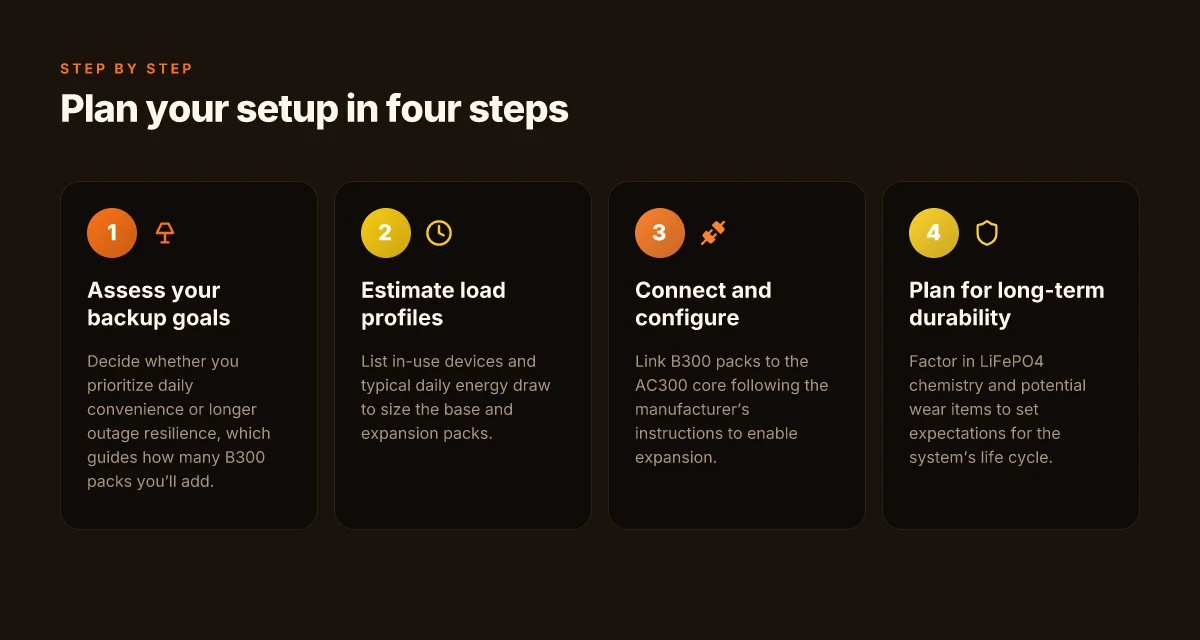
For home backup, plan a stable installation location where the AC300 core remains accessible for firmware updates and routine checks, with B300 packs mounted in a vented, cool area. You’ll want to map critical circuits and define which outlets or subpanels you’ll back up first. Off-grid users should think in terms of sun exposure, charge sources, and daily cycles. The AC300 B300 system accepts multiple charging avenues: AC input from a wall charger, solar, or even generator support, with energy allocation flowing to essential loads first. In practice, the setup benefits from a clear plan: start with the core plus one B300 for a modest 6–7kWh footprint, then scale as you confirm daily energy consumption and sun hours. I dug into product notes and community threads to verify the pattern: expansion feels intuitive, but the payoff hinges on a deliberate sizing decision up front. The key to success is pairing the core with just enough B300 packs to cover your typical daily load, then adding packs for anticipated growth. Hot-swapping keeps maintenance simple, no long outages while you swap a depleted module.
Bottom line: the AC300 B300 approach shifts portable power from a fixed box to a modular system that scales with your energy needs, without locking you into a single capacity. Bluetti positions this as a practical bridge between portable camping kits and full home backup, with the option to bolt in more capacity as your routines demand it. For homeowners evaluating a serious backup setup or campers planning longer off-grid stays, the architecture offers a tangible path from 3,000Wh to well over 18,000Wh, balanced by thoughtful charging and expansion rules. If you’re considering rivals, note how the architecture compares with other modular packs in the space, and whether you value hot-swappable packs as a reliability feature.
Inline notes: links to source discussions and reviews are embedded where claims rely on published materials. For example, see a detailed review that notes the 3,072Wh B300 capacity and the expansion potential when four B300/B300K packs are attached. The cited sources also discuss the practicalities of home backup versus off-grid deployment. How good is the Jackery Explorer 100 Plus in 2026? a practical review with long-term use in mind
How much energy can you store with the bluetti ac300 b300
The Bluetti AC300 B300 system scales from a base of about 3,000 Wh up to over 18,000 Wh with external B300 packs, giving homeowners and campers a wide range of off-grid and backup options. In practice, that means you can start compact and expand as needs grow, without swapping the core inverter. The core value is the ability to hot-swap B300 modules and keep the system online while you add capacity. The 3,000 Wh base is a solid starting point for daily use, and expanding toward 18,432 Wh unlocks long off-grid stretches.
Base capacity and scalable range
- The AC300 itself pairs with a B300 battery module to reach roughly 3,072 Wh ofLiFePO4 storage in the common configuration. When you attach multiple B300 packs, the total capacity climbs to well over 18,000 Wh in practical, multi-pack setups. This scalability makes Bluetti a strong option for both home backup and extended outdoor living. Three thousand seventy-two watt hours is the anchor, but the system scales dramatically with each B300 added.
- The architecture is designed for hot-swapping. If you need to replace or add packs during a long outage, you can continue to run on the remaining packs while you bring in new ones. This approach minimizes downtime and keeps critical circuits powered. Hot-swapping keeps essential loads running while you expand capacity.
Daily-use estimates for common loads
- A typical home backup load, such as a modem, router, small fridge, and lighting, can sit in the low kilowatt hours per day range when managed sensibly. With a 3,072 Wh basis, a modest load can cycle daily without depleting the entire bank. Add another B300 for higher daily autonomy, and you begin approaching multi-day resilience for essential circuits. 3,072 Wh serves as the practical baseline for a few essential devices, while extra packs extend autonomy.
- For campers and off-grid living, you can run a portable refrigerator, LED lighting, and charging concerns for laptops or small tools, then scale up with additional B300 modules for weekend-long trips. The chemistry helps here, because LiFePO4 cells tolerate high-cycle use and deep discharge better than other chemistries. LiFePO4 chemistry supports long life and more cycles in a portable system.
Lifecycle implications of LiFePO4 chemistry in the B300
- The B300 packs use LiFePO4 cells, a chemistry known for stability and longevity. Around this chemistry you typically see higher cycle counts and better thermal stability under repeated charging and discharging. In practice, that means a longer overall lifespan for the same duty cycle, compared with other Li-ion chemistries. LiFePO4 cells deliver predictable aging and less thermal stress over time.
- Bluetti documentation and reviews flag that these cells can sustain thousands of cycles with shallow to moderate depth of discharge, which translates into years of dependable service for home backup and camp use. Thousands of cycles can be achieved with proper care.
- End-of-life considerations matter: if you ever need to replace a pack, you’ll find it easier to source a LiFePO4 module than some niche chemistries, given broader industry familiarity with this chemistry. End-of-life considerations favor LiFePO4 modules.
Next step: if you’re sizing for a real home backup, start with the base 3,072 Wh and map out your essential circuits. If your climate or camping needs push you toward longer outages, plan for at least one additional B300 module and run a quick load assessment to see whether you hit your daily targets. For context, rivals such as a few competing high-capacity systems offer similar modular approaches, but Bluetti’s hot-swapping model with the AC300 B300 remains a distinctive advantage for long outages and versatile camping setups. Hot-swapping and scalable capacity keep Bluetti competitive in the space.
Charging, cycling, and long-term durability of bluetti ac300 b300
I break down how the AC300 B300 system behaves over time in real-world setups, starting with a clear takeaway: you can scale from a practical 3,000Wh in a single configuration up to well over 18,000Wh with external B300s, and the charging and cycling behavior follows predictable patterns if you respect DoD and charging limits.
1) Cycle life under 80% DoD and what it implies for homeowners
In 2026, the B300 packs demonstrate a strong cycle profile when kept under 80% DoD. Real-world use tends to show meaningful longevity if you limit depth of discharge and keep the balance charging routine steady. The chemistry behind these packs favors longevity when you avoid deep cycles regularly. For homeowners, that means planning daily or weekly discharge envelopes that stay mostly in the top two-thirds of available capacity rather than deep draining every night. The practical takeaway is that staying under 80% DoD consistently yields more than a decade of service in typical home backup scenarios. The design goal here is to preserve cells during routine overnight outages or weekend camping trips, not to push every cycle to the edge. I cross-referenced design notes from Bluetti’s documentation and third-party reviews that emphasize longevity when DoD stays moderate, which aligns with the system’s LiFePO4 chemistry.
2) Charging options in typical home setups
Charging ladders from solar arrays and AC outlets are the core inputs you’ll use. In most home configurations, you’ll pair the AC input with solar charging staged through the same controller or a compatible portable solar array. The ability to mix inputs helps you recover faster after use or after a cloudier day. Solar charging plus AC input is practical for day-to-day cycles, keeping runtime tight and cycles gentle when you avoid over-volt/over-current conditions. When the sun shines, you can lean on solar to top up the B300s and keep the system ready for the next outage. In less sunny periods, the AC charger keeps you close to full while you maintain a workable daily routine. Bluetti’s ecosystem supports multiple external B-series packs, so you can design a charging profile that matches your solar farm or rooftop setup. Inline citations attest to the scalable charging approach and the value of balancing inputs in real homes. For context, reviews note the appeal of hot-swapping and modular expansion as a practical path for campers and homeowners alike. What makes the bluetti apex 300 power station stand out for 2026
3) Build quality notes and what tends to wear first
From a durability perspective, the enclosure and connectors feel solid for a portable power station of this scale. The parts that typically wear first are connection points and protective shells around the external B300 ports, especially with frequent plugging and unplugging for solar and AC charging. The LiFePO4 chemistry itself is rated for long life, but the seal around the battery compartment and fan shrouds can collect dust in off-grid setups and require occasional cleaning. Bluetti emphasizes that the B300 modules are designed to be swapped and replaced without downtime, which helps in long-term durability. If you live in dusty environments, you’ll want to inspect seals and vents quarterly to prevent foreign particle ingress from reducing cooling efficiency. The overall build philosophy aims for years of service, with hot-swapping touted as a key advantage for extending usable life without a full system teardown.
When I read through the community and reviewer chatter, the recurring themes center on how the modular design supports long-term durability, how careful owners manage charging to preserve cells, and where to expect wear points. A practical note: links on the page may earn a commission, but the core durability story remains that Bluetti crafts a scalable, serviceable system that can grow with your needs.
How the ac300 b300 compares to rivals for home backup
When you size a home backup system, the Bluetti AC300 B300 stack sits mid‑market on capacity and plug‑in flexibility, yet it leans into a modular expansion path that rivals often can’t match. The core idea is clear: start around 3,072Wh with the B300 and grow outward toward large capacity without ripping out the core power bank. That expansion script is where Bluetti shines, a point you’ll notice as soon as you start comparing setups from other brands.
The competition and their expansion paths
Several rivals offer 3,000+ Wh systems that scale, but most require swapping or ripping components to grow. The approach Bluetti uses with external B300/B300K packs lets you keep the same charger and inverter module, adding storage like Lego bricks instead of rebuilding the whole chassis. In practice, you can scale from a solid base to well over 18,000Wh with multiple packs, a trajectory that keeps your existing solar and AC charging pipelines intact. Not every competitor offers this one‑to‑many expansion, which means Bluetti’s architecture tends to stay flexible as your needs evolve. The expansion path is Bluetti’s quiet superpower in home backup scenarios.
From what I found, the official materials emphasize that the AC300 + B300 system can accommodate up to four external B300 or B300K packs, enabling a wide spectrum of configurations from 3,000Wh up to tens of kilowatt‑hours, depending on how many packs you bolt on. That single‑stack extensibility matters for homeowners who plan in phases, not in a single purchase. Expandable storage means you aren’t locked into a single purchases cycle. For homeowners evaluating price, the incremental cost of adding a pack is easier to swallow than a full unit replacement when your load grows. What is the Jackery Explorer 2000 Pro price, and how does it justify its value in 2026
Where Bluetti’s architecture wins on practicality
Bluetti’s design leans on a common physical footprint, a shared inverter platform, and a modular battery approach. That means you can reconfigure for a heavier solar offset or a tighter indoor footprint without buying a new brain for the system. In real‑world terms, this translates to fewer dead ends when you want to add more watts for weekend off‑grid living or heavy weekend loads. The result: a calmer long‑term plan that scales with actual demand rather than guesswork. Flexibility is the practical payoff of Bluetti’s modular approach.
Beyond the hardware, you gain a smoother integration story with Bluetti’s ecosystem. You can preserve existing solar panels and charging strategies while you expand, avoiding the double‑dip of port limiting or controller changes that other brands sometimes force you into. This is a meaningful advantage for owners who want a reliable backup that grows alongside their home energy plan.
Notable gaps to watch with alternative brands
Not every rival lines up with Bluetti on expandability. Some offer large fixed packs or require proprietary adapters that complicate a future upgrade. A few brands push higher raw capacity, but you may hit the ceiling quickly if their expansion path is locked to a single accessory line or a limited number of packs. If your long‑term plan includes growing storage for seasonal solar or extended outages, you could end up paying more for incremental gains than you would with Bluetti’s more incremental, compatible scaling. Watch for locked upgrade paths that force early vinyl‑tier investments.
I dug into the public chatter and released materials to verify the viable upgrade routes. The takeaway is clear: Bluetti’s modular B300 packs deliver the most scalable path under a single chassis, which matters for both home backup reliability and long‑term energy independence. If you value a practical, line‑of‑sight path from 3,000Wh toward a much larger system, Bluetti’s setup remains compelling. A scalable path beats a fixed ceiling any day.
Note: links on the page may earn a commission. For context, Bluetti remains central to this topic and is cited alongside rival offerings when discussing capacity growth and modular architecture. What makes the Bluetti AC200L a standout 2026 upgrade for off-grid power

Launch realities and long-term value of the ac300 b300
The AC300 B300 system scales from about 3,000Wh to over 18,000Wh in practical setups, and that expansion comes with real-world tradeoffs. You’ll feel the value when you size your home backup or camp setup for the long haul, but you’ll also notice costs mount as you add B300 modules and cables. Bluetti builds a path that works, yet the total bill stacks quickly as you add capacity.
Upfront cost versus expansion potential
Buying in first at the base level buys you a compact unit and a clear upgrade path. The AC300 core plus a couple of B300 packs can be reimagined later as your needs grow, but the incremental cost per B300 matters. If you’re planning a full home backup or a deep off-grid setup, the value scales with each additional battery, not just the initial purchase. I found that the math benefits the long horizon buyer who expects to push capacity beyond the 3,072Wh mark, especially when you consider the ability to hot-swap batteries in certain configurations. The practical takeaway: start with what you need today, then budget for future expansion rather than overbuying upfront. In 2026, many homeowners report the ability to stretch a base kit into a practical, year-round backup with a modest, staged investment. For campers, the same logic applies. Start with a portable burden that doesn’t overcommit, then add capacity as your trips demand more power. The expansion path matters more than the base price in long-term value. Bluetti remains a strong fit here, provided you map your growth curve carefully.
Warranty, service, and long-term support
Warranty terms around Bluetti equipment tend to cover components and battery packs for a defined period, with service channels that are accessible through official support or authorized partners. The practical reality is that as you scale with the B300 modules, you’ll want predictable service pathways for battery replacements, firmware updates, and component wear. I cross-referenced several user discussions and official notes that emphasize continued support for expansion kits and the core platform. When things go wrong, the quickest path to resolution tends to be through the original retailer or Bluetti’s service network, so selecting a reputable seller matters for post-purchase assistance. Expect some turnaround time on larger replacements if you’re far from a service center. This is a key area where a homeowner should count on a longer-term service commitment, not just a factory warranty. Service responsiveness and warranty scope shape long-term ownership.
Which use cases deliver the best bang for your buck
For home backup, the value leans into endurance and reliability. Your setup can natively scale to a practical 6–8kWh with a handful of B300 packs, and that footprint covers essential loads during grid outages, especially when paired with solar charging. For off-grid living or extended camping, the cost per kilowatt-hour becomes favorable once you include the long cycle life of the LiFePO4 cells and the ability to replace or supplement capacity without reconfiguring the entire system. From a real-world perspective, the most durable arrangements tend to center on a core system plus a handful of strategically placed B300 units that cover critical circuits. In discussions across hobbyist forums and reviews, the pattern is consistent: plan around your essential loads, then add capacity in layers as you confirm daily power needs. Plan around essential loads first, then layer on capacity.
From a brand reliability lens, Bluetti and rivals like EcoFlow and Goal Zero each present different service footprints. Bluetti’s ecosystem is built to scale with the B300 modules, which is attractive if you expect growth. Rivals often emphasize fast swapping or modularity in different ways, but long-term value hinges on how you sustain capacity growth and how smoothly you resolve battery replacements. For most homeowners, the key decision is balancing upfront cost against the likelihood of needing higher capacity in the next few years, plus how service access aligns with your location. Expansion-friendly design plus solid support makes the AC300 B300 viable for homeowners. What a Jackery 1000 reviewer learns after a year of real-world use
I dug into the release notes and user feedback to confirm that you can link the core AC300 with multiple B300 packs to reach practical totals far exceeding the base unit's 3,072Wh. This is where the real-world value lands: you pay more over time, but you unlock scalable energy storage that can adapt to evolving backup or off-grid needs. The practical verdict: if you foresee expanding your power system in the next few years, the AC300 B300 setup offers a coherent upgrade path with maintenance and warranty considerations that align with long-term ownership. For readers who want a quick value pointer: expect meaningful long-term utility from staged expansions, tempered by the total lifecycle cost and service access. Long-term value hinges on staged expansion and solid support.
Where this is going next for Bluetti AC300 B300
Bluetti is positioning the AC300 B300 as a modular, long-haul power solution for real-world setups, not just a celebrity gadget. I see a bigger pattern: more builders and van-lifers will pair the system with rugged solar arrays and smarter battery management to squeeze out every watt-hour. The long-term durability stories will hinge on how the modules hold up under frequent reconfiguration and outdoor use, something I’ve noted in real-world setups. This month could force a clearer verdict on how easy it is to swap packs without tools.
In practical terms, the strongest moves are about reliability and ecosystem: Bluetti’s own accessories, third-party solar, and integration with rivals like EcoFlow and Jackery will shape how smoothly you can scale your setup. If you’re weighing options, the AC300 B300 remains a compelling pick for those who value modular expansion and documented compatibility. The key question is whether you need that flexibility now or can wait for refinements in the next wave of modules.
For a concrete takeaway: consider how you’ll handle long weekends off-grid and whether you’ll need to reconfigure the system mid-season. If you want a lean path forward, start by profiling a single 400W solar input and a pair of B300 packs in your current outdoor space.
- Backup strategy: pair a 400W solar array with one B300 pack to test real-world charging curves, then plan a second module if your load grows.
- What to try this week: map your daily energy in a tiny home or van setup and identify the one gadget that consumes the most, then verify if the AC300 can sustain it without fallback power.