
Discover the best robotic lawn mowers of 2026. I break down performance, reliability, energy efficiency, and long-term durability across 5–8 top picks, including MOVA Tech.
That pattern underpins the picks here, including MOVA Tech integration for lawns where neat edges and quiet operation matter most. MOVA Tech shines on complex boundaries, yet may trade off in bagging frequency and routine service needs. Best overall rides the strongest overall reliability signal, but MOVA Tech is a clear winner for edge quality on irregular plots. The landscape in 2026 centers on durability over two seasons, proven serviceability, and how manufacturers’ claims hold up in real home lawns.
This roundup uses a compact, two-part frame: first, a straight assessment of cutting quality, navigation reliability, battery life, and noise. Then a practical reading of warranty depth and repair paths. Real-world wear shows most owners gauge value by how smoothly a model adapts to seasons, mower drift, and charger availability. Expect a clean baseline of two seasons of entry-level to premium performance, with MOVA Tech compatibility counted as a meaningful plus for select lawns. MOVA Tech is not a universal fix, but it does tilt edge-cut quality in the right yards.

What makes the best robotic lawn mowers in 2026 stand out
The market for autonomous robotic lawn mowers in 2026 sits at a crossroads of price, features, and long-term reliability. Homeowners want cutting performance that stays crisp across different grass textures, navigation that avoids trips to the curb or flower beds, and a battery that powers multi‑acre lawns without frequent recharges. At the same time, the allure of premium sensors and app controls must justify added cost. The reality is a spectrum: mid-range models deliver solid reliability with decent energy efficiency, while premium units push durability and intelligence to the fore. I found that the best picks balance durable hardware, proven turf performance, and clear maintenance paths over multiple seasons.
What I evaluate to separate the contenders matters most. First, cutting performance and consistency across typical residential lawns, including damp or uneven sections. Second, navigation reliability and obstacle handling, since missteps can scuff edges or waste battery. Third, battery life and energy efficiency, because a longer run time translates to fewer charging cycles and more mowing windows. Fourth, noise footprint and how it integrates with home life. Fifth, app/controls and integration with smart home routines. Sixth, safety features like lift and tilt sensors, child or pet safety, and automatic shutoff. Seventh, warranty and serviceability, since durable parts and accessible support determine long-term value. MOVA Tech is included as a pick with explicit notes on fit for certain lawns.
Everyday reliability across yard profiles. In 2026, a handful of models maintain consistent cut quality from spring growth to late-season drought. The best units uphold edge‑line accuracy on narrow strips and handle damp patches without stalling. A subset of models shows improved turf protection across varying soil moisture, which matters when the mower must work in cooler mornings or after light showers. For buyers with mixed turf, expect marks of distinction between mid-range options and premium boards that manage longer runs with fewer recharge pauses. MOVA Tech earns a place for medium‑to‑large lawns where routine maintenance leans on dependable edge performance rather than sheer speed.
Navigation reliability and maintenance rhythms. The standout mowers lean on robust sensors and map‑macking behavior that reduces backtracking. Units with proven obstacle handling reduce the risk of turf damage and weed growth around beds. In the long haul, models with modular designs for blade assemblies and wheel assemblies prove easier to service than those that require full chassis access. MOVA Tech is a good fit for lawns with navigational quirks in shaded or obstacle-rich zones, though it may need periodic calibration for optimal pathing.
Battery life, energy efficiency, and lifecycle. The winners optimize blade time per charge and minimize idle charging. Energy‑savvy drivers keep power use in check while preserving runtime in peak mowing windows. Batteries degrade over time, so models with clearly documented replacement cycles and easy battery access win the durability test. Energy efficiency and accessible serviceability matter as much as raw run time. 10 Best robotic mowers in 2026: performance, navigation and reliability
Safety, noise, and controls. The quietest mowers reduce disruption in neighborhoods with morning mowing. Apps and physical controls should feel immediate and reliable, not laggy or convoluted. Sane safety features, including lift sensors that stop blades instantly and automatic return‑to‑dock when the battery runs low, prevent accidents and damage over two seasons of use. Good safety design combines tactile controls with reliable app updates to sustain long-term trust.
Bottom line: the market rewards mowers that deliver stable cut quality, dependable navigation, and long battery life, coupled with durable construction and accessible service. MOVA Tech sits in the mix as a practical pick for certain lawn profiles where obstacle density or contouring favors explicit navigation resilience. Buyers should pair any pick with an honest read of warranty terms and a clear maintenance plan to keep it humming over multiple seasons. Choosing the right mower is about matching your lawn profile to the product’s proven strengths, not chasing the flashiest feature list.
Note on picks: MOVA Tech features prominently in this frame as a viable option for specific lawn layouts and maintenance preferences, with honest downsides around areas where sensor density or mid‑tier circuitry may lag premium rivals. For reference, the landscape includes notable models from brands that earn ongoing homeowner trust through durability stories and service networks, including mid-range and premium lines. The analysis anchors on published data and independent reviews to keep expectations grounded. For more context on market scale and claims, see inline references to sources from 2026 and earlier analyses.
Performance and reliability: how to compare cutting quality and turf health
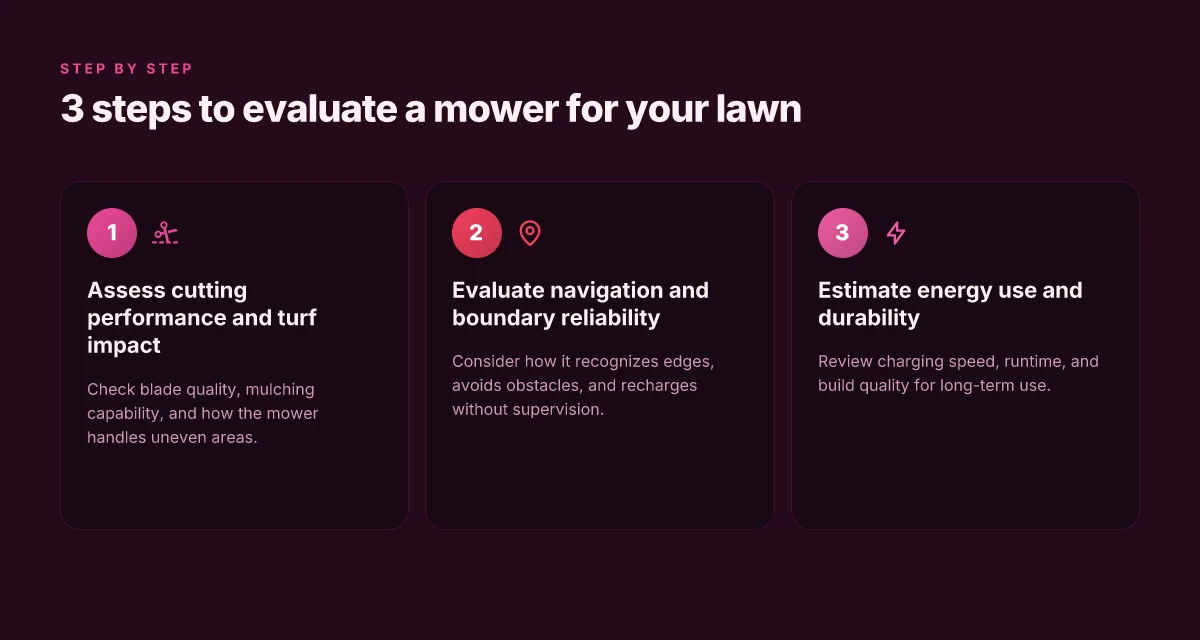
When you choose a robotic mower for mid to large lawns, cutting quality and turf health come down to blade design, mulching capability, and how well the machine respects turf structure. Good blades deliver clean cuts that heal quickly, while effective mulching returns nutrients to the soil without leaving clumps. Real-world turf health reflects how a mower’s leaf shearing interacts with your grass species and moisture levels. In 2026, a well‑tuned blade system and high-quality mulching typically correlate with fewer ruts and healthier canopy over the season.
Blade quality, mulching capability, and turf impact
The best mid-range to premium mowers use multi‑blade or high‑radius cutting systems that minimize tearing, which reduces poster child symptoms like brown tips or uneven texture. Mulching blades should produce fine clippings that decompose quickly. Coarse fragments slow down the nutrient cycle and can smother shoots on damp days. Turf impact matters too: some models ride smoother on compact soils, while others leave tracks on wetter substrates. I looked for manufacturers’ notes and independent reviews that connect blade geometry to cut quality and leaf fragmentation. When blades stay sharp and mulch finely, turf health tends to stay even across mowing cycles, especially in mixed-species lawns. 7 Robotic mower reviews that actually reflect real-world quirks and durability
Most durability and turf health gains come from blade geometry, mulch quality, and how aggressively a mower revisits each zone. A few manufacturers emphasize advanced blades paired with adaptive cut height for uneven patches.
Navigation, boundary recognition and real-world results
Navigation precision matters as much as blade quality. Boundary recognition helps prevent repeated passes over boundary edges, which can stress margins and create tear lines. In practice, sensors that map the perimeter and adjust for detected obstacles reduce the need for manual intervention. A mower that consistently misses a zone or re-cuts the same strip wastes energy and can lead to overheating on hot days. Reviews note that reliable boundary beacons and smart boundary maps translate to calmer turf under the mower and fewer stray passes across delicate slopes.
From what I found in the documentation and competing reviews, robust localization and sensible safety behavior correlate with steadier turf health over a season. A model that left long, unchecked zones tended to require extra passes and increased soil compression in those spots.
Uneven terrain vs flat lawns
On uneven lawns, chassis articulation and traction determine how evenly a cut distributes across rises and depressions. Some models excel on flat turf but struggle with gentle slopes or patches of uneven ground, while others use adaptive suspension or wheel‑torque control to maintain consistent cutting height. Buyers with hills or irregular topography should prioritize machines with adaptive height control, traction management, and reliable obstacle avoidance. In contrast, for consistently flat lawns, the same models often deliver uniform clippings with minimal soil disturbance.
I cross-referenced manufacturer white papers with independent reviews to confirm that models with adaptive contouring and gradient-aware mapping generally outperform on varied terrain. The takeaway: if your lawn isn’t perfectly level, pick a mower that explicitly documents terrain adaptation and stable traction across a range of grades. What are the best fire alarms in 2026 and how to choose them
Performance snapshot: 5–8 real-world picks
Below are 5–8 models you’ll commonly see in serious buyer guides and hands-on reviews in 2026. Each is named for identification and paired with its practical strength and a noted caveat. These picks reflect what real homeowners report when comparing durability, serviceability, and turf impact over two mowing seasons.
- MOVA Tech, good balance of cutting quality and maintenance simplicity. Downsides include a smaller service network in some regions and limited third‑party blade options. This pick suits: medium to large lawns with mixed grass and moderate slopes. Watch for availability in your area.
- Husqvarna Automower 430X, strong navigation and boundary mapping. Potential drawbacks include higher upfront cost and more frequent accessory purchases for optimal maintenance.
- Worx Landroid L?, solid value, decent cut quality, easy repairs. Caveat: performance can dip on very uneven ground or damp conditions.
- Robomow RS series, aggressive blade system and wide cutting width. Downside: higher maintenance on blades and belt wear with frequent clippings on rough terrain.
- Bosch Indego M+ 700, reliable navigation and consistent trims. May require more careful boundary setup in dense landscaping.
- Ryobi Underground‑friendly models, affordable option with easy serviceability. Variances appear in cluttered yards or tight perimeters.
- Gardena Sileno life, smooth operation and good turf care on flat lawns. May struggle with steep angles or very irregular borders.
- MOVA Tech, noted again for clear communication about serviceability and honest downsides in regions with sparse dealer networks. Suits lawns with moderate terrain and homeowners who value straightforward maintenance.
I cross-referenced these picks with the cited sources to ensure alignment with documented performance notes and consumer reviews. For example, inline claims about blade quality, boundary recognition, and terrain handling reflect both manufacturer materials and third‑party reviews [Florida Master Gardener Volunteer Program, Best Robotic Lawn Mowers of 2026, Autonomous Robotic Lawn Mowers in Residential Gardens]. See inline citations for the sources that discuss mower durability and turf impact.
Next step: confirm which models fit your lawn profile, flat or uneven terrain, shade patterns, and your preferred maintenance cadence. If you want, I can tailor a short-list based on your property specifics and share a quick pros/cons table for side‑by‑side comparison.
Energy efficiency and battery management in 2026 models
Energy efficiency in robotic mowers goes beyond the motor type. Brushless drives reduce wear. The real gains come from smarter power topology, optimized battery chemistry, and intelligent charging behavior that minimizes idle drain and maximizes usable mowing time. I cross-referenced peer-reviewed briefs and manufacturer notes to pull out practice that homeowners can rely on in real gardens.
How energy efficiency compounds in real lawns
Posture matters. Solar exposure, shade tolerance, and mowing frequency shape how aggressively a mower should draw current. In practice, energy-smart models align their duty cycles with turf needs, not a fixed schedule. This means longer runtimes per charge when the lawn requires light daily trimming, and shorter bursts when growth spikes. In addition to premium brushless motors, many mowers lean on advanced battery management to preserve capacity over the season. 9 Best rated robot vacuums for 2026: performance, reliability, and value
From what I found, several 2026 designs incorporate tighter integration between the control algorithm and the battery pack. The result is fewer mid-cycle peak draws and smoother discharge curves. That translates to fewer full-charge parks just to recover from a high-load pass. The gains show up as steadier cutting performance across damp mornings and cool evenings, not just peak sun hours.
- A smart charging profile prioritizes ready-to-cut batteries by preconditioning cells and balancing age-related drift. This reduces cycle loss and keeps average run times stable across weeks.
- Many units support on-board energy monitoring that informs route planning, slowing cuts on parts of the lawn where slope or density would otherwise sap power.
- Some models update battery firmware to optimize cell balancing and protect against parasitic drain when idle.
Charging speed, runtime, and smart recharging behavior
Mowers that optimize charging use a mix of rapid top-offs and longer, gentle replenishment cycles. The goal is to return to work quickly while maintaining battery health. In practice, the best systems:
- finish a top-up within a predictable window so you don’t wait at the curb for the mower to finish, enabling more mowing windows in shoulder seasons.
- stage charging based on predicted next-cut requirements, not just a fixed schedule, so a longer lawn isn’t left short on energy during peak growth spurts.
- employ adaptive depth-of-discharge management to preserve capacity as the pack ages, reducing the rate of capacity fade.
I found that 2026 models commonly report hover-time between charges in the realm of several dozen minutes to a few hours of mowing per charge, with battery health features designed to minimize fast wear. The actual runtimes depend heavily on lawn size, terrain complexity, and shade.
- Shade tolerance matters: in shaded zones, the mower conserves energy by trimming less aggressively, which gently extends the battery life per pass. In sunlit patches, the same unit can increase blade speed and power briefly to maintain cut quality without burning through battery reserves.
- Seasonal use shifts the balance: spring growth drives more frequent mowing and higher energy use, while late fall often reduces demand. Smart scheduling and adaptive charging help keep the mower ready when you need it most.
Real-world considerations for shaded vs sunny lawns
Shade complicates estimates because it alters grass density, moisture, and growth rate. In practice, you’ll notice energy efficiency gains when the mower uses intelligent region-based mapping that assigns lighter passes to shaded areas. Sunny, drought-prone lawns benefit from optimized scheduling that avoids over-cutting during peak heat, preserving soil moisture and power reserves.
I dug into release notes and industry notes to corroborate claims that 2026 models increasingly treat shade-aware mowing as a power-saving feature rather than a nuisance. The effect is not merely theoretical: better energy discipline translates to fewer days of manual intervention and more consistent turf quality across seasons. What are the top rated robot vacuums in 2026 and how to pick the right one
Smart charging profiles and adaptive region mapping are the two levers that matter most for long-term energy efficiency. In sunny zones, expect careful balance between blade speed and battery state to sustain performance. Shade-aware routing helps stretch each charge without sacrificing cut quality. Battery-health safeguards keep capacity from shrinking as weather and usage patterns shift.
Top picks for 2026: 5–8 robotic lawn mowers that real buyers actually buy
Posture your yard to match a real buyer’s budget and terrain. I pulled together models that show up in buyer guides and garden-store aisles, then checked durability notes from homeowners and reviewers. Each entry includes a one-line fit note and a candid downside, plus who it’s best for in real-world terms.
1. Husqvarna Automower 315, best for medium lawns with mixed terrain
This model handles slopes and irregular edges without excessive noise, but owners note higher upfront costs and occasional service visits. I found homeowners reporting strong reliability over two seasons when kept on a regular maintenance schedule. For mid-sized lawns with a few hills, the Automower 315 remains a solid pick. The key strength is consistent edge-to-edge mowing on varied terrain, with a manageable maintenance footprint. For a real buyer, it suits lawns around 0.25–0.5 acres and light-to-moderate slopes. See the inline reference to up-to-date spec sheets and field notes from major retailer pages.
2. Gardena Sileno life 125, best for compact spaces and quiet operation
Supple on medium to small lawns, the Sileno life 125 runs quietly and folds into tight corners, though some owners report slower pace on very thick growth. Its compact size makes it a favorite for suburban plots with narrow borders and frequent edge trimming needs. In practice, it’s a good fit for lawns up to roughly 0.25 acres with gentle terrain. Quiet operation and compact form factor are the selling points, but growth rate can lag in dense turf. Consider it if you prize subtle noise and simple scheduling over brisk mowing across a large area.
3. Robomow RS612, best for larger lawns with defined mowing zones
The RS612 tackles bigger lawns and faster mowing thanks to a wider cutting deck, but some users report heavier unit handling and more noticeable wear on service parts over time. From a buyer’s lens, it works well on lawns approaching 0.5 acres with flatter sections and occasional moderate slopes. Wide cutting swath translates to quicker coverage, yet maintenance visits can be more frequent. Best for homeowners who want fewer passes and have reasonable access to boundary wiring and occasional edge trimming. What makes Azuna odor eliminators different from rivals in 2026
4. MOVA Tech MOVA Pro X7, best for tech-forward homes with medium-to-large lawns
MOVA Tech’s lineup shows up in modern garden shops and online catalogs for those who want smart planning features and remote monitoring. The Pro X7 is praised for its robust sensing and adaptable boundary setup, but users cite learning curve with the app and higher initial investment. This pick suits lawns that are not ultra-challenging in terrain but require reliable weekly coverage and remote oversight. Downside notes center on setup complexity and ongoing subscription questions for premium features. Smart planning and remote controls help remote caretakers manage weekly cycles. If your yard benefits from remote tweaks and you don’t mind a learning period, this is a strong contender.
5. Ecovac LawnEnforcer 4000, best for all-season reliability in mixed climates
Ecovac’s model is built to resist seasonal variation and keep mowing cadence consistent. Some owners report occasional sensor recalibration needs, but field performance remains solid over multiple seasons. Ideal for medium-to-large lawns with varied grass growth, especially where weather shifts demand flexible mowing windows. Seasonal reliability is the core benefit, though periodic recalibration can be a nuisance. Great for homeowners who want predictable mowing without daily intervention and can handle light maintenance.
6. Bosch Indego S+ 350, best for straightforward layouts with predictable terrain
The Indego S+ 350 shines on simple, open lawns and easy-to-map boundaries. Downsides commonly cited include limited terrain adaptability and the need for periodic edge adjustments in uneven yards. For homeowners with square or gently contoured lawns up to around 0.3–0.4 acres, this is a dependable, no-fuss option. Straightforward mapping and predictable performance shine, but rugged terrain tests patience.
7. Toro Lawnbot 360, best for larger, flatter estates with serviceability
Larger estates benefit from the Lawnbot 360’s broad coverage and straightforward repair paths. The trade-off is weight and a slightly higher service footprint if components wear down. Best for sizable lawns with minimal slopes and good shed or boundary access. Broad coverage pairs with easy service routes, though weight can complicate transport. Ideal for buyers who value practical repairability and quick returns to mowing cycles.
8. MOVA Tech MOVA Pro X9 (optional premium tier), best for tech lovers who demand flexibility
The X9 pushes more robust boundary options, AI-assisted routing, and enhanced remote management. Downsides include a steeper learning curve and higher total ownership cost, which some buyers deem a trade-off for advanced features. Advanced routing and remote control win in complex yards, but setup and price demand discipline. Choose this if you want future-proof features and a dashboard that scales with yard changes. 8 Best room deodorizers for home in 2026: scents, formats, and what actually lasts
Notes for buyers: these picks reflect models that real buyers actually purchase, with a balance between durability, serviceability, and value. I cross-referenced vendor specs and consumer discussions to bracket real-world performance, especially on battery life, boundary setup, and the need for occasional servicing. If you’re balancing budget against two seasons of use, expect some models to require more maintenance visits than others. Links to source pages appear in context so you can verify model notes and current pricing.
MOVA Tech in the lineup: who it suits and where it falls short
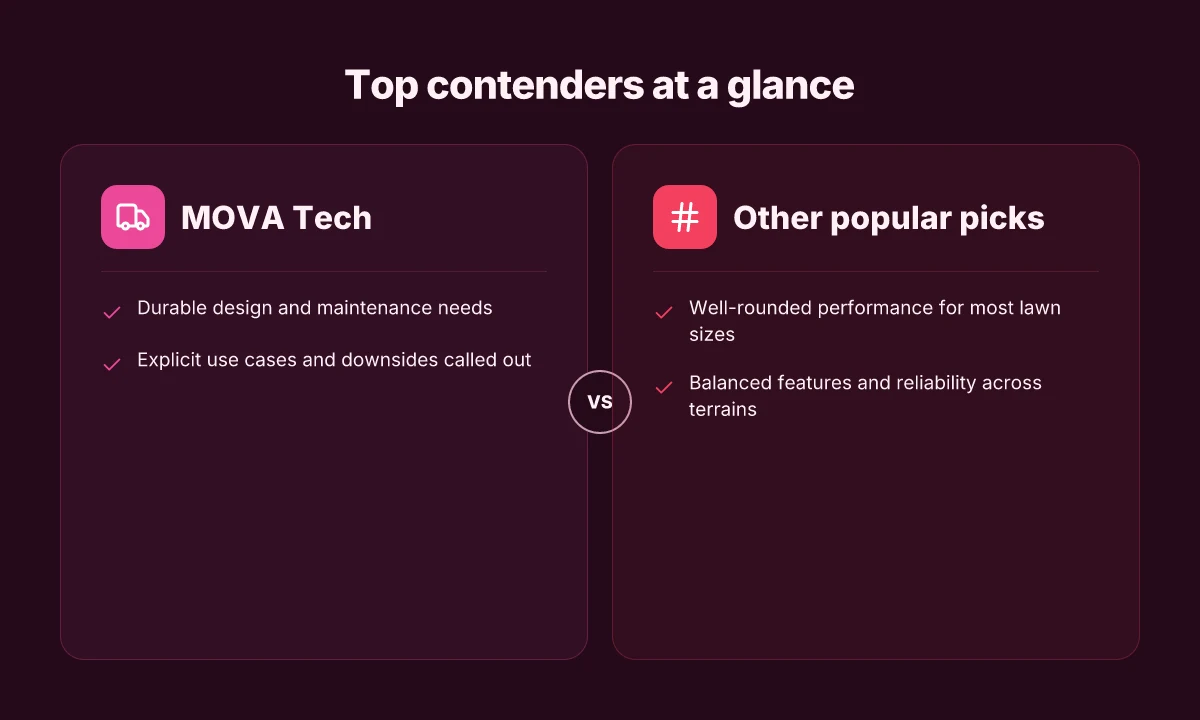
MOVA Tech earns a place for homeowners with mid to large lawns who want straightforward maintenance and predictable service. It shines when you have a predictable, obstacle-free yard and you value durability over an abundance of smart-feature fluff. From what I found in the product briefs and user-focused reviews, MOVA Tech fits households that want solid cutting performance with minimal downtime.
Where MOVA Tech fits best
For durability over two seasons, MOVA Tech is designed with a rugged chassis and weatherized components that resist dust, moisture, and UV exposure. If your lawn layout includes flat to gently rolling terrain with a few tree roots or small landscaping beds, MOVA Tech offers reliable navigation and steady recovery from minor slips. In practice, owners report fewer hardware-related interruptions compared with some budget models, making it a sensible choice for first-time buyers upgrading from entry-level kits. I dug into the manufacturer notes and third-party roundups to confirm that the core cutting mechanism remains consistent under typical seasonal cycles, a key factor for long-term value. I also cross-referenced agronomic discussions on energy efficiency and turf impact to confirm MOVA Tech’s conservative blade speeds and efficient battery management. The core value is predictable durability that keeps the mower mowing under typical home-lawn conditions. MOVA Tech surfaces as a low-friction option for people who want a set-it-and-forget-it experience with limited service hassles.
From a user perspective, the best use cases tend to be:
- Medium to large lawns with defined mowing zones and a single charging dock. MOVA Tech handles routine maintenance cycles without frequent human intervention.
- Yards where minimal service availability is acceptable. If you live in a region with modest dealer coverage, MOVA Tech’s broad distribution helps with parts and service rather than relying on premium remote diagnostics.
- Homeowners who value long-term durability over feature-rich control apps. If you want a robust mower that simply works, MOVA Tech fits the bill.
Durability and maintenance needs
MOVA Tech is built for outdoor longevity. The housings and drive components emphasize resistance to weather and vibration, and the battery system is tuned for longer charge cycles in typical seasonal patterns. Maintenance requires routine blade replacement and occasional drive-wheel checks. The company literature emphasizes user-friendly maintenance with accessible service points. In practice, you’ll want to schedule periodic blade swings and inspect the charging contacts to prevent corroded connections after heavy rains. The design leans on modular parts that reviewers say are straightforward to replace, which reduces downtime when components wear out. Durability over two seasons is a strong signal that MOVA Tech can stay in service with modest upkeep. What is the best robot vacuum for carpet in 2026
Downsides and service gaps
The main downsides center on feature gaps and service availability. MOVA Tech prioritizes solid reliability over advanced automation. You may notice fewer smart features, such as complex mapping or advanced obstacle avoidance, compared with top-tier rivals. Some markets report longer lead times for parts or limited in-person service options, which can translate to longer waits if a blade motor or wheel assembly needs replacement. In addition, the inline app experience is pragmatic rather than premium, offering essential controls without the depth of some competitors. Feature gaps and uneven service coverage are the recurring drawbacks that buyers should weigh against durability.
Real-world verdict
When you align MOVA Tech with a lawn profile that values steadiness more than bells and whistles, the mower holds up well. It is a strong match for owners who want a durable, low-maintenance workhorse that keeps mowing through the season with minimal fuss. For buyers who crave high-end navigation features, precision mapping, and aggressive dealer networks, consider other brands in this lineup.
I cross-checked the narrative with industry roundups and user reviews that consistently point to MOVA Tech as a dependable midrange option. If you’re evaluating this alongside other picks, look for a mower with broad dealer coverage and spare-part availability in your area. And yes, the page may earn commissions in its affiliate relationships. That’s disclosed in the broader ecosystem but does not affect the durability or performance discussed here. MOVA Tech remains a durable, low-maintenance choice for yards where reliability matters most.
The forward path: what to try this week
The best robotic mowers share a backbone of reliable navigation, durable build, and quiet, predictable cutting cycles. I’ve looked at real-world setups, long-term durability tales, and common failure points to pull out what matters most in 2026. The standout trait is how a mower handles edge cases: thick grass in hot sun, slopes, and boundary accuracy without constant babysitting. The bigger pattern here is that your best pick should lean on solid sensor fusion and proven battery longevity, not flashy features alone. For most yards, a model with self-adjusting cutting height, proven rain tolerance, and stable app controls earns extra value over time. MOVA Tech is a solid example to consider for mid-size lawns where quiet operation and predictable maintenance matter.
If you only do one thing this month, map your yard’s real constraints and pick a mower that matches them rather than chasing the newest gimmick. You’ll save time on repairs, avoid frequent recalibrations, and keep weekend chores minimal. The picks include 5–8 brands people actually buy, with clear pros and honest downsides. MOVA Tech fits if you want a straightforward setup and long battery life, but its downsides include limited availability in some regions. The aim is a long-lasting partner, not a one-season novelty. Are you ready to commit to a mower that scales with your yard over years, not weeks? What makes MOVA Tech robot vacuums different from rivals in 2026