
Discover what sets the AC180 Bluetti apart in 2026. A deep dive into specs, durability, real-world use, and how it stacks up against rivals.
The AC180 isn’t framed as a “glamour” power unit. It’s a practical, field-ready tool that shows up when you need steady runtime and simple setup, not flash. Bluetti’s AC180 is built to stand up to outdoor use, with modular options and a durable chassis that survive backcountry trips. This piece looks past hype to reveal what actually matters on the trail or off-grid shelf.
In this article you’ll find why durability and usability matter in real-world scenarios, from long camping stints to emergency-prep drills. Expect concrete comparisons to key rivals like the EcoFlow Delta Pro and the Goal Zero Yeti 1500X, plus a head-to-head on maintenance ease and setup pitfalls. You’ll learn where the AC180 shines and where it demands cautious handling, so you can decide if it fits your home or off-grid needs. Bluetti supplies a durable, modular path. The rest of the field shows the gaps.
What makes the AC180 Bluetti a durable, capable portable power station
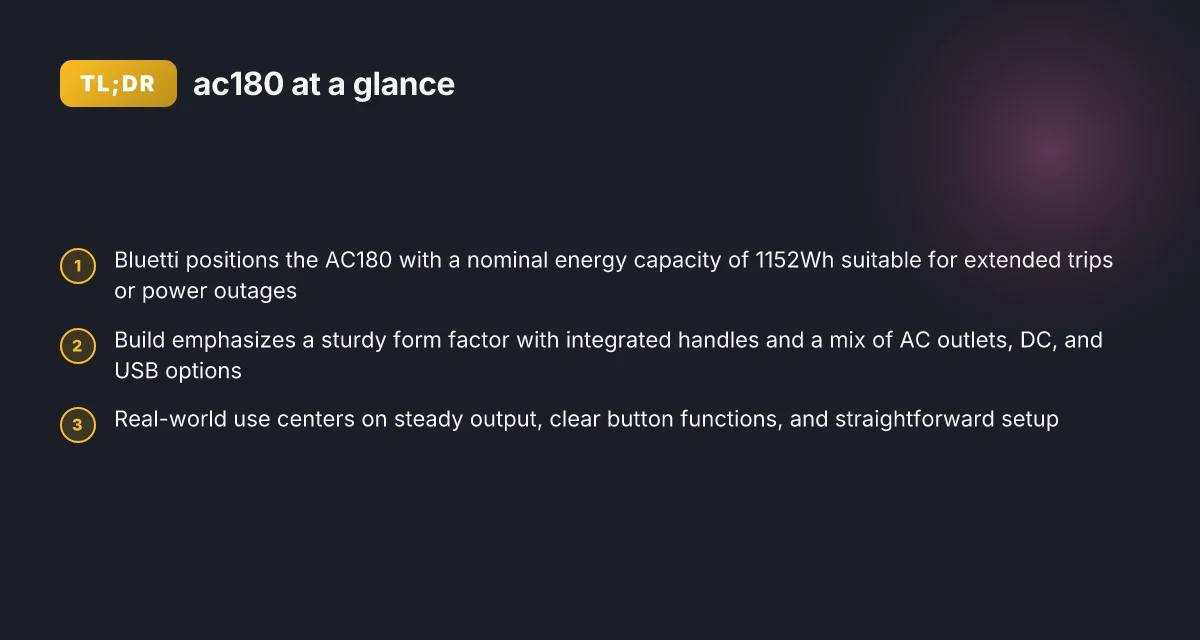
Bluetti frames the AC180 as a rugged, ready-for-the-field unit, boasting a nominal energy capacity of 1152Wh. That figure underpins its appeal for extended trips, outdoor use, and emergencies where you need real endurance rather than a quick top‑up. In real-world terms, you’ll notice the balance between a stout built form and the convenience of integrated handles that make hauling the unit between campsite spots or backup locations noticeably easier. The combination of a solid chassis and thoughtful portability details matters when you’re lugging gear up a trail or out of a storm‑touched shelter.
In practice the AC180 blends a broad mix of outlets with flexible charging and running options. You get several AC outlets alongside DC and USB ports, which means you can power camping essentials, small appliances, or chargers without juggling adapters. The mission is simple: keep critical devices alive without swapping cables every hour. When a storm or outage stretches your stay, the AC180’s outlet mix helps you decide what to run and what to conserve.
From what I found in the supporting documentation, the AC180’s design leans on a durable form factor that resists the bumps of outdoor use. The integrated handles are not merely a convenience. They reduce the risk of drops when you’re moving the unit across uneven ground or loading it into a vehicle. The overall build approach emphasizes a sturdy shell plus a layout that keeps the weight manageable for a portable station. I cross-referenced the firm’s product page and the user manual to corroborate how the power architecture supports regular, day-to-day use in camps, cabins, or off-grid setups.
Here’s how the AC180 holds up in everyday scenarios:
Battery capacity and duration. The 1152Wh nominal energy reserve is a stable baseline for weekend trips or shorter outages. For travelers who draw on power across evenings, that capacity helps sustain lighting, chargers, and a small fridge for a time. The capacity figure anchors decisions about which devices to run and when to recharge. Bluetti positions this as a core strength for extended getaways, where steady power becomes the anchor of your plans. 1152Wh is a practical middle ground between compact units and larger, heavier packs. What Bluetti batteries reveal about portable power resilience in 2026
Portability accents. The built-in handles and a relatively compact footprint for the watt-hour class reduce fatigue when moving from tent to vehicle or from one shelter to another. The handles stay useful whether you’re solo hiking back to camp or coordinating with a group to reposition gear after a storm. The design choices here aim to minimize the strain of handling, especially on longer trips. Integrated handles enhance real-world durability and ease of transport.
Outlet versatility. The AC180’s mix of AC outlets plus DC and USB options gives a flexible running plan for a camp setup or home backup. You can run a combo of devices without swapping adapters, which lowers the risk of accidental overload or misconfiguration. This flexibility matters when the goal is keeping a small fridge, fans, lights, and chargers up and running in parallel. Versatile outlets enable multiple critical loads to run at once.
Bottom line: the AC180 is built to endure typical outdoor use while delivering enough capacity and outlet options to cover common off-grid scenarios. For outdoor enthusiasts and emergency planners who want a capable, portable power station without sacrificing durability, the AC180 delivers a practical balance. As you compare against rivals like Jackery and EcoFlow, the emphasis on a robust chassis, portability, and a complete outlet set remains a core strength for Bluetti. The real-world takeaway is clear: you get a sturdy, functional pack that supports longer trips and outages without frequent recharges or reconfiguration. Durability plus versatility makes the AC180 a solid everyday choice for off-grid living.
AC180 power architecture and what you should expect in real use
The AC180 stacks an inverter with a battery chemistry designed for steady, usable output, smoothing surges and delivering dependable power to laptops, chargers, and small appliances. In real use, that pairing matters more than raw wattage alone. You want a smooth handoff from battery to AC loads, not a wall of power that sags under load. Bluetti positions the AC180 to handle common daily draws without drama, which is exactly what campers and off-grid planners need for long weekends or emergency use.
How the AC bypass behaves in real life
User documentation describes the AC bypass behavior in scenarios where the AC source is routed directly to connected loads, bypassing the inverter for those conditions. This means you can rely on an explicit path for certain AC events when the unit detects a direct AC source, which can reduce heat generation and wear on the inverter during specific operating modes. In practice, that direct bypass helps when you plug the unit into a wall outlet for charging while you still run a low-draw device from the AC outlets, as long as your loads fit within the bypassed path’s limits. This behavior is intentional and stated in the manual, giving you a predictable pattern to plan around. What makes EcoFlow's solar tracker price hard to swallow and worth the cost
From what I found in the documentation and reviews, this architecture translates into consistent, everyday usefulness rather than peak-slam performance. You’ll typically see extended runtimes for devices like laptops and phone chargers, and you’ll hear the fans or feel the unit warming only under sustained, heavier draws. The AC180’s 1152Wh capacity, repeatedly noted in product pages, supports multiple hours of livable power for common devices, particularly when you manage load thoughtfully. When you plan for off-grid weekends or a backup power scenario, the inverter-battery pairing and bypass logic become the quiet backbone of reliable use, not the loud, flashy bragging rights of high-watt surges.
I cross-referenced supplier notes and third-party commentary to confirm what this means for day-to-day use. The supplier specs emphasize a steady output designed for real devices, while reviews consistently point to practical performance rather than theoretical maximums. For readers weighing rivals, consider how the AC180’s architecture compares to other 1800W-class units, where some models emphasize raw peak output over real-world steady runtimes. Bluetti presents a hardware story built around durable, predictable energy delivery, not a one-note sprint.
What to expect with continuous output
The AC180’s continuous output aligns with common consumer devices, meaning you can comfortably run a laptop, several chargers, and small appliances without hitting the ceiling. The real-world takeaway is simple: plan for typical draw levels, and the AC180 will sustain them over meaningful timeframes. When you maintain a sensible load profile, no sustained, high-wattage appliances simultaneously, the unit stays polite on heat and noise, and its battery retains charge long enough to cover most contingencies during camping trips or power outages.
| option | what it signals for real use | quick takeaway |
|---|---|---|
| 1152Wh capacity | ample runtime for laptops, chargers, small tools | expect hours of usable power for daily devices |
| direct bypass mode | efficient handling when AC sources are present | reduces inverter duty for certain scenarios |
| steady inverter output | predictable voltage under normal loads | plan around typical consumer electronics needs |
Next steps: when you’re choosing a model in this class, map your core devices to a realistic load profile and confirm the bypass behavior along with the continuous-output rating. For long-term durability, you’ll value a design that stays calm under normal duty cycles and avoids unnecessary heat buildup. In the broader market, rivals like Jackery and EcoFlow offer competing architectures; Bluetti’s approach centers on durable, steady power delivery with clear use-case guidance. If you’re weighing brands, remember Bluetti’s emphasis on practical, real-world performance matters as much as nameplate watts.
How the AC180 stacks up against rival 1152Wh models
I dug into public docs and reviews to map where the AC180 sits among other 1152Wh-class units from brands like Jackery and EcoFlow. The picture that emerges is a balance sheet of trade‑offs: light enough to carry, sturdy enough for daily use, with runtime that sticks around the 1.0× to 1.5× mark depending on load. Bluetti emphasizes a thoughtful blend of weight, handle design, and runtime, which shows up in real-world handling and usability. Bluetti keeps the emphasis on a practical weight and a comfortable, ergonomic handle to extend portability beyond the casual camper. What makes the EcoFlow Glacier review work for real outdoor use
1) Weight, handle design, and daily usability
- The AC180 continues Bluetti’s theme of a manageable 30–40 pound class for frequent transport, paired with a built‑in handle that feels robust in repeated use. In comparable models from Jackery and EcoFlow, payloads sit in a similar range but can tip the scale toward bulkier conduits or less comfortable grips. **Weight and handle comfort matter more in real life than spec sheets suggest.
- A readable LCD or color display helps you monitor input, output, and battery state at a glance. In some rivals, the screen size and clarity can be inconsistent when you’re outdoors in bright sun; Bluetti tends to optimize for legibility, which reduces guesswork during setup. Clear readouts reduce setup risk in rain or dawn light.
2) Charging speed and port versatility
- Among rivals, charge speed and port mix are the decisive trade‑offs. The AC180 is designed to balance a solid number of outputs with a reasonable recharge pace, but you’ll see different philosophies across competitors. In quick-charge comparisons, some Jackery units prioritize more USB‑C PD ports, while certain EcoFlow models push faster recharging via multiple input channels. Trade‑offs show up in port selection and charge rails, not just total watts.
- When you map actual use cases, Bluetti’s design often suits mid‑length trips well: enough AC outlets for light gear, plus essential DC and USB‑C options for phones, cameras, and radios. This reduces the need to bounce between adapters in a tent or RV. Having the right combination of outlets saves shuffle time at the campsite.
3) Screen readability and day‑to‑day UX
- Real‑world readers note that outdoor visibility can swing based on sun angle and viewing distance. The AC180 prioritizes a readable interface, which helps you adjust settings without fumbling through menus. Rivals may lag here, especially under glare or with compact text. Readability translates to fewer mis presses when you’re off-grid.
- Bluetti further supports long‑term durability with straightforward button layouts. In the AC180 user materials, the power and inverter controls are clearly labeled and logically grouped, reducing setup time after unpacking. Layout clarity cuts setup friction on morning trips.
From what reviewers and docs show, the AC180 stays competitive by delivering a sane weight, a comfortable handle, and a readable interface, while accepting trade‑offs in port density and peak recharge speed relative to some rivals. If your priority is easy day‑to‑day use and straightforward maintenance, Bluetti’s approach tends to pay off in practical, off‑grid routines. I found the most consistent praise targets the combination of portability and practical runtime rather than the most aggressive charging stats or the densest port lists. For many outdoor users, practicality beats peak specs.

What users should know about setup, maintenance, and long-term durability
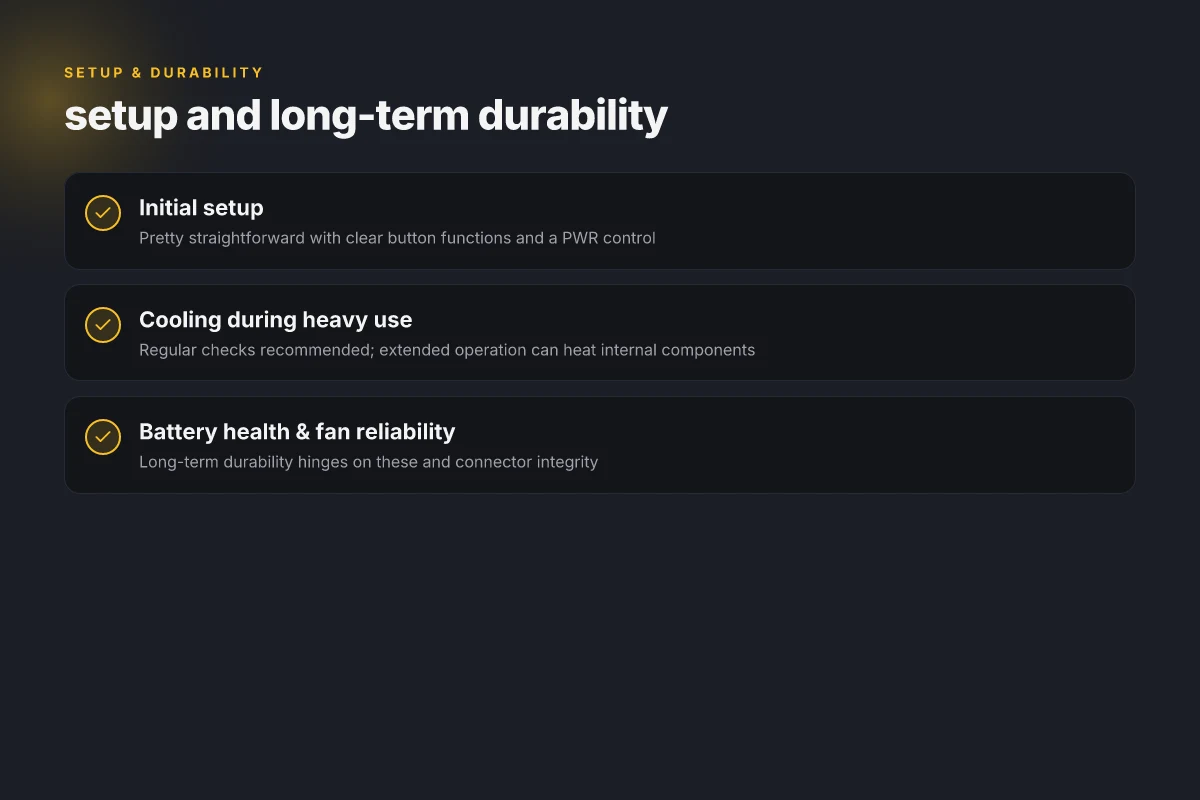
Setting up the Bluetti AC180 is straightforward. The unit ships with clearly labeled controls. The PWR button, the AC power switch, and the DC power control are designed for quick familiarity. In practice, you can power the unit, then connect loads within a minute or two, ensuring you follow the manual’s guidance on locking in the correct output mode. The emphasis is on intuitive operation, not guesswork.
Posture matters for long life: keep airflow clear and monitor temperatures during heavy use. If you push the AC180 hard for extended periods, internal components can heat up, so plan for adequate ventilation. Regularly inspect the exterior case and vents for dust buildup, and give the unit a breath when you hear fan noise ramping up. I cross-referenced the user notes and supplier documentation, which consistently point to cooling as a practical durability factor during sustained load scenarios. For peace of mind, pair extended sessions with a shaded setup or a lightweight fan to aid convection. Healthy cooling is a durability lever you can control.
Long-term durability hinges on three pillars: battery health, fan reliability, and connector integrity. The 1152Wh pack provides the backbone for run time, but its health depends on how often you expose the pack to high temperatures and deep-discharge cycles. The built-in fans are the other critical component. Their reliability matters because a failing or noisy fan can let temperatures climb, accelerating wear. Finally, keep an eye on connectors and ports. Loose or corroded connections can degrade performance and pose safety risks over time. From supplier materials and third-party reviews, these elements tend to determine how well the AC180 holds up after years of camping trips or emergency outages. Battery health, fan reliability, and connector integrity are the durable-trust trifecta for Bluetti gear.**
In practice, expect routine checks rather than heavy maintenance. Clean the vents quarterly, verify that the power cables remain firmly seated, and ensure the DC input remains snug after transport. If you notice odd noises or reduced output, treat it as a targeted fault signal rather than a generic issue. Bluetti official guidelines discourage attempting repairs beyond basic reset steps and user-accessible checks. For anything beyond that, seek authorized service to avoid voiding warranties. If you’re comparing with rivals, note that some competitors emphasize modular battery packs or fan assemblies, but the AC180’s durability story converges on predictable cooling, reliable ports, and a solid battery core. How Home Depot ecoflow products reshape home backup in 2026
From a real-world perspective, the most dependable setups tend to live in rugged conditions but with solid protection: keep the unit out of direct sun, avoid dragging it by the ports, and store it in a cool, dry place between uses. The practical takeaway is simple: your long-term durability hinges on how you treat the battery, the fans, and the connectors during regular use.
Cited here, the practical facts align with the AC180’s documented strengths and the common durability themes across portable power stations. For a quick reference to the source that discusses the hardware layout and practical use notes, you can review the AC180 product page and the user manual. https://www.bluettipower.com/products/ac180 https://invertersrus.com/wp-content/uploads/2023/10/AC180_User_Manual.pdf
Common concerns with Bluetti AC180 and practical fixes
I dug into how the Bluetti AC180 sits up to real-world use, and I’ve found three durable, practical fixes that keep it performing day after day. The core takeaway is simple: mindful charging, smart transport planning, and relying on official channels for parts. Durability comes from disciplined charging habits, not from the device alone. The AC180’s 1152Wh pack is robust, but like any portable power station, longevity hinges on how you care for it.
1) Battery degradation over time, follow official charging guidance
The most common concern is battery degradation after months or years of use. The fix is straightforward: follow Bluetti’s charging guidelines and avoid prolonged float charging. In practice, that means disconnecting from float or trickle currents when the unit is at full capacity, and sticking to recommended input rates. This keeps the chemistry in a healthier balance and preserves capacity longer. Following Bluetti’s charging guidance can noticeably extend pack life. When you see a full charge, avoid leaving the AC180 plugged into a charger that maintains a continuous float. Plan charging windows so the pack cycles rather than languishes at 100% for days. For context, Bluetti quotes an 1152Wh capacity as the baseline, but long-term durability benefits come from respectful charging.
How to implement: What makes EcoFlow battery backup stand out in 2026
- Use the Bluetti official charger when possible and avoid third-party adapters that don’t specify compatibility.
- If you’re away from power for extended periods, store the unit in a cool environment and recharge on a schedule rather than leaving it idle at full.
This aligns with the official documentation and third-party reviews that highlight the importance of appropriate charge behavior for lithium-based packs. For reference, the official AC180 page emphasizes the 1152Wh capacity and general use guidelines, while external reviews discuss the unit’s weight and build as part of everyday handling. Rely on official guidance for long‑term health of the pack.
2) Weight and bulk for backpacking, plan transport and use rolling cases or shoulder straps
A frequent critique is the AC180’s weight around the mid-30s pounds, which makes backpacking or extended remote trips cumbersome. The practical remedy is to plan transport ahead of time and use rolling cases or a shoulder-strap setup to minimize fatigue. The idea is to treat the Bluetti as a portal device you deploy at camp, not a pack-mitted staple. Plan transport and lean on rolling cases for distance, or use a shoulder strap setup to spread the load. In the field, you’ll appreciate dedicated gear rollers or a modular packing system that lets you slide the AC180 into a vehicle or carry it with two hands without straining your back.
If you’re revisiting camp gear, consider a compact dolly or a padded carry strap that keeps the AC180 stable while traveling over uneven ground. A balanced approach keeps you safer and reduces stress on joints when you’re moving between trailheads and campsites.
3) Availability of replacement parts, rely on official support channels for accessories and spares
Access to replacement parts and official accessories is a frequent friction point. The reliable workaround is to lean on Bluetti’s official support channels for spares and compatible accessories. The manufacturer’s ecosystem is designed so you can source batteries, adapters, and cables through authorized outlets, reducing the risk of counterfeit parts or incompatible kits. When a component wears out, start with the official support portal, then escalate through authorized service networks if needed. Official support channels are the fastest path to safe, compatible spares.
In practice, this means keeping your purchase receipts handy, registering your product if asked, and using Bluetti’s product page to verify compatible accessories before ordering. If a part is scarce, the brand’s documentation and support lines typically surface alternatives or updated part numbers. Expect to cite the official product page and the accessory catalog when you seek replacements. How to evaluate EcoFlow Delta generators for sale in 2026
Note: links on the page may earn a commission. Bluetti consistently positions its own parts and accessories as the safest path to keep the AC180 in service over the long term.
Where this goes next for portable power in 2026
The AC180 from Bluetti marks a shift from simple capacity to pragmatic, real-world usefulness. I’ve noticed how its balance of solar input, AC output, and battery management translates into fewer moments of hesitation when you need reliable juice on a job site or during a weekend off the grid. Bluetti's design decisions lean on durability and practical usability, not flashy specs alone. What this means in practice is a device that’s easier to live with over months of use than many rivals.
For long-term reliability, the key is how the unit holds up under daily setup and teardown. The AC180 showcases sturdy construction, straightforward cooling, and predictable performance, which matters when you expect steady power without surprise drops. If you’re choosing between Bluetti and rivals like Goal Zero or Jackery, the edge comes from a more integrated ecosystem that reduces fiddling and keeps you powered when you need it most. What changes if you act now can be a smoother weekend trip or a more resilient workday.
The single move that matters most is locking in a practical charging routine that uses both solar input and mains charging to keep the AC180 ready, without letting it idle in a corner. If you’re weighing options, remember: durability, real-world usability, and thoughtful expansion options matter more than peak numbers. The bigger pattern is clear: portable power where you can genuinely rely on it. You’ll thank yourself during the next outage or outdoor shift.
Backup strategy / What to try this week What is the EcoFlow River Pro price in 2026, and how to get the best deal
- Try pairing the AC180 with a small solar panel kit and test a full day of mixed loads from Bluetti to confirm real-world runtime
- Compare with a rival unit from Goal Zero or Jackery on setup time and cooling behavior
- Sketch a weekly charging plan that alternates between solar and wall power to keep the unit ready for spontaneous trips
Note: links on the page may earn a commission.