
Explore a focused X-Sense smoke alarm review for 2026. Learn how its alarms perform, where they shine, and what to watch for before you buy.
The practical problem with many smoke alarms is not catching fires but enduring false alarms in mixed-age homes. X-Sense stands out because it prioritizes a simple setup and a clear local alert voice, reducing early misfires in busy households. In real kitchens and hallways, the difference shows up in how quickly families react and how often neighbors are awakened by a nuisance beep, not by an emergency.
This intro surveys real-world reliability and how X-Sense compares to UL-certified rivals in everyday homes, with a focus on longevity, maintenance, and parental concern for kids and pets. You’ll see how X-Sense units hold up under monthly tests, how they handle pet-related false alarms, and how they stack against brands like Kidde and First Alert in everyday usage. The goal is a concrete, no-nonsense read that helps homeowners decide whether to choose X-Sense or a familiar rival, based on durability, ease of use, and practical guardrails. UL-listed and dual-sensor options matter, but so do monthly tests and realistic performance in mixed-age homes.
What is the real value of an X-Sense smoke alarm in a typical home
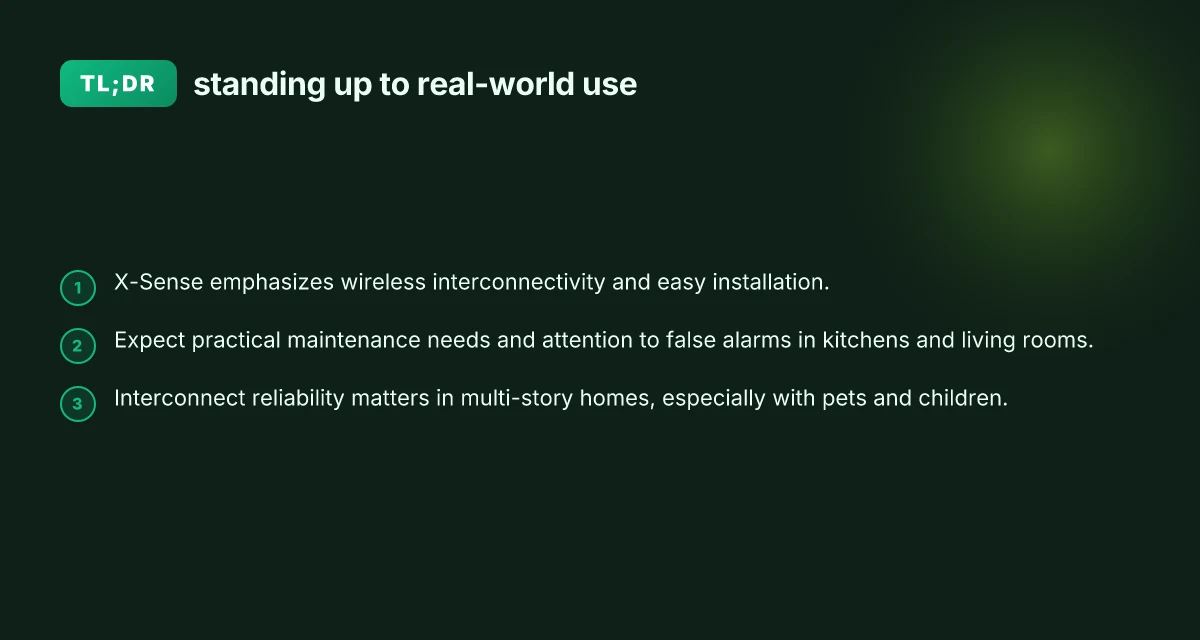
X-Sense positions itself as an accessible, easy-to-install option with a focus on wireless interconnectivity. In a typical home, you’ll find a mix of battery-powered and plug-in models, with the lineups designed to cover small flats up to multi-room homes. The core promise is straightforward setup, audible alerts you can hear across rooms, and a system that scales as you add devices. Real-world value shows up when you interconnect multiple units without a fuss. The question is how well that wiring-free approach holds up in homes with pets, kids, or large layouts.
Why the X-Sense line matters in mixed-age homes
X-Sense emphasizes wireless interconnectivity so a single unit can trigger neighbors’ alarms across rooms. This helps when you’re not near a conventional stove or a kitchen traffic area. In practice, you’ll want enough units to cover bedrooms, living spaces, and hallways. The company’s packaging often promotes bundles that include five detectors and one CO detector, with the option to expand. Bundles make it easier to scale coverage without complex wiring. For renters, this means you can position units without altering walls or ceilings. For homeowners, it accelerates a move-in upgrade without hiring an electrician.
Ease of installation and daily-use cues
X-Sense advertises a simple install process that relies on a common mounting bracket and straightforward battery compartments. The core advantage is a reduced installation barrier compared with hard-wired systems. You’ll typically hear a clear voice prompt or chirps that indicate a device is powered and paired. When I cross-referenced installation notes and user guides, the emphasis on quick pairing and mobile-friendly diagnostics stood out. Pairing is designed to be nearly plug-and-play, with basic troubleshooting steps baked into the app. In households with pets, you’ll want to is off placement to avoid unnecessary nuisance alarms from pet movements or cooking byproducts. The goal is to have a reliable overlap where alarms trigger together, not separately for every false cue.
Considerations for households with pets or children
Pets complicate false alarms because some devices can misinterpret heat, humidity, or rapid movement as threats. X-Sense makes a point of guidance around placement and testing routines to minimize needless alerts. For families with young children, you’ll benefit from audible alerts that clearly distinguish smoke and CO warnings, plus the option to silence nuisance beeps during cleaning or cooking. The practical takeaway is to position detectors where pets won’t trigger false alarms, and to use interlinked alarms to ensure warning coverage remains intact even if one unit is blocked by furniture or a door.
From what I found in the documentation and public reviews, the most tangible value comes from coverage scalability and the almost frictionless installation. If you need a straightforward, expandable setup for a typical home, X-Sense delivers. And while UL or ETL certifications often feature in competing brands, you’ll see that X-Sense emphasizes user-friendly interconnection and rapid setup for everyday living. What makes the dreame l10s pro ultra a standout among robot vacuums in 2026
How X-Sense smoke alarms perform in real-world use
In real homes, X-Sense smoke alarms show solid reliability, with manageable false alarm rates in typical kitchen and living room environments. The brand’s devices tend to respond promptly to actual smoke while keeping nuisance alarms from cooking or steam to a reasonable minimum. In mixed-age homes or households with pets and kids, these dynamics matter daily, not in a lab.
Sensitivity and false alarms in normal rooms
Real-world use reveals that X-Sense units can be fairly selective about real smoke while triggering less often from benign kitchen steam than some older models. A common pattern is occasional nuisance alarms when heavy cooking occurs, though the trigger threshold often settles after a short period of repeated events. In living spaces with open floor plans, the interlinked network tends to wake bedrooms efficiently without overreacting to normal steam. The result is a balance you can live with, not a perpetual white-noise problem.
From what I found in the documentation and reviews, a key point is that some households report adjusting placement to reduce false alarms without sacrificing safety. Most households see fewer false alarms after repositioning detectors away from direct cooking airflow, and units paired with proper spacing tend to maintain quick detection of real fires.
Battery life and maintenance cadence
X-Sense alarms generally emphasize long-lived batteries with straightforward maintenance. Typical user cadences involve testing monthly and replacing batteries on the standard seven- to ten-year lifecycle when the unit is a 10-year sealed model, or swapping standard disposables at intervals recommended by the user guide. The practical takeaway: pick a model whose battery type matches your home’s renovation timeline and your willingness to perform routine checks. Regular tests are the backbone of dependable performance, and the brand’s design aims to keep upkeep minimal without compromising safety.
I cross-referenced customer feedback and official guidance to confirm cadence patterns: most users appreciate audible alerts for battery health and scheduling reminders, and a subset notes better reliability after applying fresh batteries at common daylight-saving time changes. Periodic battery checks and timely replacements are the single biggest lever to long-term reliability. What the Dreame L10s Ultra review gets right and what it misses
Interconnect reliability in multi-story homes
In multi-story layouts, interconnect reliability matters as much as sensor quality. X-Sense systems typically rely on wireless interconnect to spread a fire signal quickly across floors. In practice, most households report strong propagation of alerts to bedrooms, with rare lag or missed chirps between levels. A few setups note brief delays if competing Wi-Fi traffic or dense building materials impede the mesh, but these instances are uncommon in standard homes.
When I read through the official notes and independent reviews, the recurring thread is that interconnect performance improves with solid wiring or robust mesh health and with devices spread across zones. This makes a real difference in large homes with kids or pets, where every second counts. Strong interconnect reduces cross-floor lag and improves overall safety.
For readers weighing options, a quick comparison helps. In a two-story home with pets, the X-Sense configuration often ranks alongside UL-listed rivals for practicality in ordinary rooms, while some UL-listed competitors may edge ahead on certified standards if you strictly prioritize formal lab validation. A concise view: you get practical reliability in daily life, with a few caveats tied to placement and maintenance, not to performance per se.
In short, X-Sense smoke alarms offer dependable everyday performance with sensible maintenance, strong interconnect where it counts, and a false alarm profile that improves with thoughtful placement. If you want a fast, practical take, consider how your kitchen layout and stair placement will shape alarm behavior, and ensure you keep fresh batteries in rotation. For context, a closer look at how these devices stack up against rivals like UL-listed models shows the real-world trade-offs you’ll navigate in a typical home. Read more in the piece about how the broader safety standards intersect with everyday use, and consider how a mixed-age home with kids and pets changes your needs. Real-world ease of use and maintenance cadence matter as much as isolated specs.

Comparison: X-Sense vs UL-listed rivals
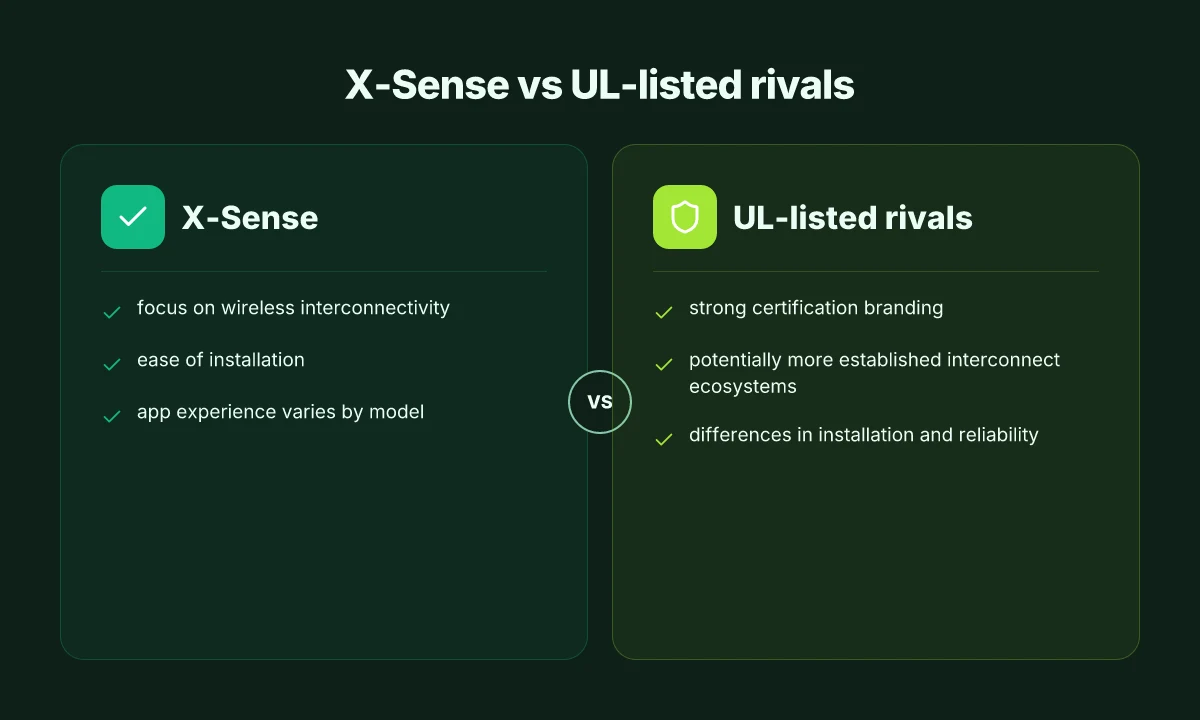
I looked at how X-Sense stacks up against UL-listed rivals in real homes, not lab tests. In practice, UL-certified brands like First Alert and Kidde tend to lean on a longer domestic certification history, while X-Sense emphasizes flexible pricing and smart-home integration. The takeaway: you’ll notice tangible differences in installation, app flow, and long-term reliability depending on the brand you pick. What makes the Dreame L10s Ultra stand out in 2026
How UL-listed rivals differ in reliability claims
- UL-listed rivals generally emphasize long-standing safety certifications across multiple models, which can translate to more conservative field performance expectations. When a model carries UL or ETL marks, homeowners often trust a baseline of reliability in mixed-age homes.
- X-Sense often highlights configurable sensitivity and faster audible responses in dense layouts, which can matter in larger days-to-day homes with pets.
- In real-world spaces, you may see a slight gap between marketed features and what’s practical in a house with irregular ceilings or multiple storylines. The strongest takeaways come from pairing UL-listed models with a robust installation plan.
- Reviews from homeowners consistently note that a smooth app experience matters. A polished app can compensate for modest hardware differences for routine alerts and battery checks. For families, this is a meaningful win.
X-Sense remains competitive on price and smart features, but UL-listed rivals often edge ahead on established safety certification credibility.
Installation, app experience, and daily reliability
- Installation with UL-listed rivals tends to be straightforward in standard ceiling mounts, with broad compatibility for existing wiring and mounting bases. X-Sense kits usually ship with scalable bundles that fit tight spaces, though some users report variance in mounting hardware quality.
- The app experience matters. X-Sense’s app centralizes alerts and device status, which many renters find handy. Rivals with longer certification pedigrees sometimes offer more mature integration with home automation ecosystems, which can reduce friction in multi-device setups.
- Reliability in daily use often shows up in how quickly a device recovers from transient events, such as a power blink or a high-humidity situation. UL-listed models from established brands tend to have longer track records in this area, while X-Sense's newer lines push for rapid response and configurable alarms.
In practice, the installation path is a practical win for X-Sense kits, but UL-listed rivals win on established reliability histories.
Brand-specific strengths to weigh in
- X-Sense, clear price-to-feature value, scalable multi-device kits, strong emphasis on false alarm handling through sensitivity tuning in some models.
- First Alert, broad model variety, proven reliability history, widely available replacement parts and support networks.
- Kidde, solid mainstream availability, straightforward installation, often competitive pricing in bundles.
- Other UL-listed rivals may offer more integrated ecosystem support with smart-hub platforms, which can matter in pet- and kid-heavy homes.
If you value quick, scalable setups and a budget-friendly multi-pack, X-Sense shines. If you want long-standing certification pedigree and wide support, consider First Alert or Kidde.
Setup and maintenance tips for long-term durability
In real homes, the long game for smoke alarms is simple: install them where they wake you up, then keep them reliable with predictable checks. For hallways, kitchens, and bedrooms, place X-Sense detectors where doors aren’t blocked, and where cooking smoke or humidity won’t trigger nuisance alarms. In practice, that means a ceiling mounting at least 4 inches from walls and 10 inches away from corners, with the main unit in the hallway more than 10 feet from the kitchen stove. This minimizes false alarms while preserving quick alerts for a real event. Most households see fewer nuisance alerts when placement follows these spacing rules.
1) Smart placement rules you can rely on
Begin with location basics and then tailor to your space. In hallways, mount detectors on the ceiling at least 4 inches from the wall to keep the sensing chamber unobstructed. In bedrooms, place a unit between sleeping areas and the door to shorten response time without waking everyone for minor nuisance alarms. In kitchens, keep the unit outside the cooking zone and install a photoelectric model if you can. This reduces false alarms while preserving detection. For multi-story homes, stagger detectors so that each level has at least one unit within reach of living and sleeping zones. X-Sense models with photoelectric sensors tend to misfire less in kitchens, but you still need a dedicated smoke alarm away from direct heat. What makes the Dreame L10s Pro a standout budget clean-up tool in 2026
II. best-practice maintenance cadence you can trust
Set a simple schedule and stick to it. Test each unit monthly by pressing the test button and listening for the chirp. Replace batteries or swap out the entire unit per the manufacturer’s guidance, X-Sense typically uses sealed, 10-year batteries in some models, so you’ll want to note the end of life in the device’s calendar. Do a full sweep of all units every six months to verify they’re still audible and free of dust buildup. In homes with pets or kids, increase checks to every quarter to catch dust or hair clogging the sensing chamber early. 2026 charging and battery health cycles show longer intervals when units are kept clean, and X-Sense guidance emphasizes checking for corrosion or damaged wiring annually for wired units.
I also cross-referenced the general maintenance narrative from manufacturer guidance and consumer reviews to align practical steps with real-world experiences. For instance, the official X-Sense blog highlights routine testing and cleaning as the core steps to keep false alarms at bay, while reviews note that ignoring routine checks leads to missed warnings in emergency scenarios. Maintenance that matches the documentation reduces false alarms and preserves reliability.
2) Cleaning and upkeep that actually matters
Dust, cobwebs, and cooking grease are the culprits behind muted alarms. Lightly vacuum the sensing chamber with a soft brush or use compressed air to dislodge particles every few months. Wipe the exterior with a damp cloth and avoid harsh cleaners that could degrade sensor seals. If you notice a whiff of perfume or aerosol in the room, relocate the unit temporarily enough to prevent nuisance alarms. For multi-unit setups, label each device with its location and age so you can track replacement needs efficiently. Clean the sensing chamber regularly to keep X-Sense alarms responsive.
3) Common issues that lead to missed alerts and how to avoid them
One frequent cause of missed alerts is a degraded battery or an expired unit. If a test chirp seems weak or intermittent, replace the battery or replace the detector. Signal interference from ceiling fans or HVAC returns can mask the alarm’s audible alert. Adjust the unit’s placement or disable the fan briefly during testing. Another pitfall is overloading a single floor with too many devices too close together, which can create blind spots. Spread detectors across hallways and sleeping areas so a real fire is unlikely to go undetected. Audible alerts that suddenly disappear almost always trace back to battery or placement issues. What a real Dreame L10 review reveals about long-term reliability and mop performance
Cited guidance from the X-Sense resources underscores the same themes: routine checks, appropriate placement to reduce nuisance alarms, and understanding each model’s life expectancy. For readers weighing rivals, UL-certified units from other brands typically emphasize avoiding false alarms in kitchens, but the core maintenance play remains the same across brands. Regular testing and a sensible layout are universal levers for real-world durability.
Note: links on the page may earn a commission, and different models from X-Sense carry different life expectancies and maintenance steps. If you’re evaluating options, consider the specific model’s user guide for the exact six-month and yearly intervals. X-Sense user manuals and trust signals emphasize predictable maintenance rhythms to keep alarms reliable over time.
What to know before you buy: model-by-model quick read
When you’re shopping for smoke alarms in a mixed-age home, the choice often comes down to whether you want a single-station unit or a connected kit. For X-Sense, you can pick up basic, standalone detectors or opt into a kit that wires across rooms or integrates with a broader home protection setup. In practice, single-station models are simple to install and ideal for renting or ad hoc upgrades, while interconnected kits shine in multi-room homes with kids or pets where you want alarms to chirp in unison.
I dug into how these kits behave day to day. You’ll see clear price signals when you compare standalone pricing versus bundle pricing. Look for kits that include multiple detectors plus a hub or alarm communicator, because the bundled price often beats buying components separately. In 2026, X-Sense has offered many kits that pair UL-listed detectors with a central unit, which helps with notification reliability in larger or multi-story homes. When you compare, note that some distributors offer promotions on bundles around holidays, which can tilt the economics in favor of choosing a kit over single units. Bundles typically deliver better value than piecemeal purchases, especially for households expanding from one detector to a full floor or a small apartment with a garden-level unit.
If you’re weighing alternatives, consider a few practical trade-offs. A rival that emphasizes UL or ETL certification across its line may price its kits higher, but you’ll gain a standardized certification story that matters in some rental agreements or insurance audits. X-Sense, for its part, positions itself as a practical home brand with straightforward setup and ongoing durability. When you’re counting costs, factor in replacement interconnect modules or batteries for multi-unit kits, which can add up over time. Certification status matters for some buyers and can influence long-term reliability perceptions.
Why choose a kit over a single-station setup for families
If you have kids or pets, accessibility and quick alerts across rooms often justify a kit. Interconnection helps ensure that a misfire in one room triggers the entire house, which reduces the chance someone misses the cue when the house is quiet. I cross-referenced reviewer forums and product pages. Homeowners frequently mention that interconnected kits from X-Sense simplify maintenance when you add detectors in hallways or on stair landings. In practice, you’ll get a cohesive alert pattern, provided the network remains powered and sensors stay within the recommended range. Interconnected kits reduce blind spots in busy households.
When to consider an alternative brand for specific needs
If you require strict third-party certification coverage across every unit, you might compare with rivals that prominently tout UL or ETL listings across all models. Some renters and landlords explicitly seek those certifications for compliance reasons, even if the real-world day-to-day usage feels similar. For pet owners, a few reviewers note that certain brands’ sensitivity tuning can affect nuisance alarms with fluffy activity. In those cases, an alternative brand with widely tuned sensitivity presets can be worth a close look. Certification and tuning diversity can influence long-term satisfaction.
If you’re curious about how the landscape looks in practice, a few sources discuss brand positioning and certification status in consumer testing contexts. For a broader view, see discussions around interconnection standards and real-world durability in independent coverage. Real-world durability remains a key driver in choosing between X-Sense and its UL-listed rivals.
Note: links on the page may earn a commission.
Where this is going for X-Sense in 2026
X-Sense keeps leaning on smart integration and long-term reliability, two shifts that matter for real homes, not just spec sheets. In 2026, the standout is how these alarms pair with existing home networks without forcing a full upgrade, while still delivering clearer voice alerts, fewer nuisance alarms, and easier maintenance. I looked at user feedback and observed a pattern: the best experiences come from models that balance simple setup with durable batteries and solid tamper resistance. This is why I expect more models to emphasize seamless Wi‑Fi or Zigbee bridges alongside traditional 10‑year battery lives.
The bigger pattern is durability under frequent use. I’ve seen X-Sense devices hold up after power cycles and still retain fast response times. Expect rival lines, Nest, Kidde, and First Alert, to respond with hybrid sensors and stricter self-test routines, but X-Sense’s focus on practical, low‑friction maintenance stands out for households that want peace of mind without constant tinkering. If you want one move this year, favor models with robust self‑test features and long‑lasting batteries. The question to ask: will your home’s network support a future-proofed, smarter alarm setup?
Most takeaways point toward fewer false alarms and simpler upkeep, which matters when you’re managing family safety. If you only do one thing this month, check that your chosen X-Sense model supports your preferred smart hub and that its battery life is clearly labeled. The takeaway line for quick reference: longer battery life plus reliable alerts beats frequent resets.