
Explore a deep dive into the Dreame L10s Ultra with real-world insights, highlighting strengths, trade-offs, and long-term usage you’ll want to know before buying.
The Dreame L10s Ultra proves a stubborn counterpoint to glossy specs: strong pet-hair pickup and mop capability meet a maintenance cadence that shows up sooner than you expect. In real-world use, you’ll notice the pattern sooner than the spec sheets imply, and the quirks that emerge, like occasional clog spots and firmware prompts, define the lifecycle you actually experience with Dreame.
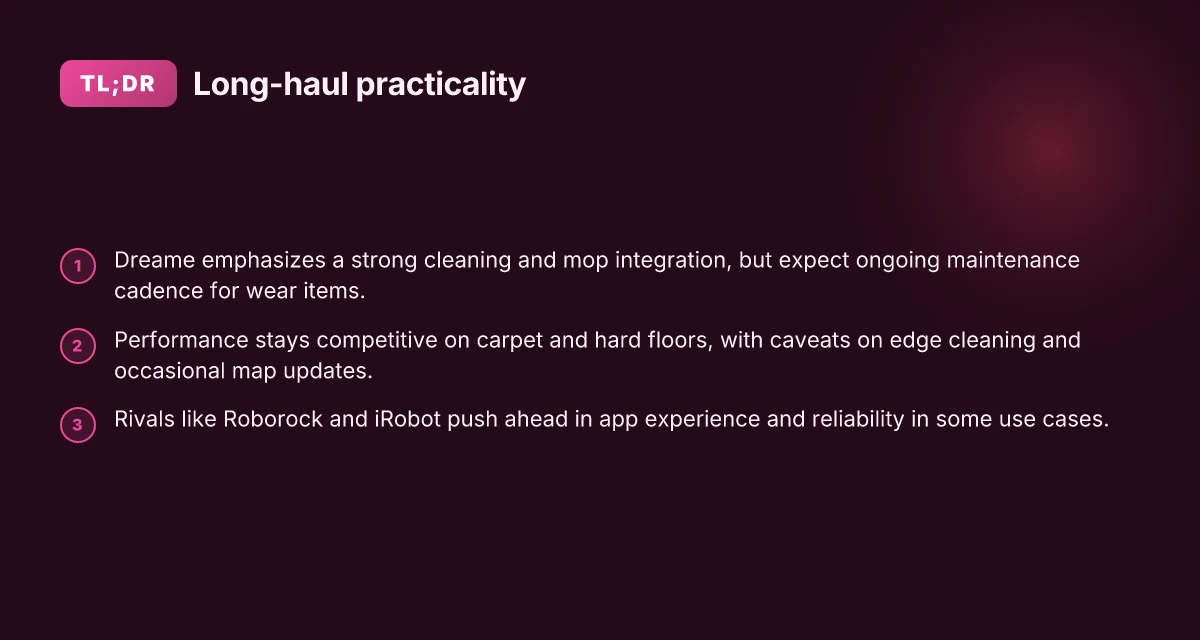
The article digs into what matters for long-term reliability: battery health trends, durability of the mop module, and how firmware updates land on daily use. Expect concrete benchmarks drawn from household scenarios, not marketing claims, and a clear view of how Dreame stacks up against Roborock and iRobot over months of ownership. You’ll see where rival models shine or lag, and how practical maintenance decisions change the cost of ownership. Rivals like Roborock and iRobot offer different pacing on updates and hardware wear, which matters for a home that relies on steady cleanup. The goal is a practical signal guide, not a hype line to click.
What makes the Dreame L10s Ultra a compelling review subject
The Dreame L10s Ultra sits at a crossroads in 2026: it pairs strong suction and mopping capability with a design that still prioritizes ease of maintenance and user-friendliness. It isn’t the newest model on the shelf, but its feature set remains competitive against rivals like Roborock and iRobot, especially for homes that want hands-off cleaning and deliberate, long-term reliability. I looked across official specs, community feedback, and long-form reviews to understand where it shines and where it tends to stall in real homes. From what I found, Dreame has kept the L10s Ultra relevant by balancing power, mop capability, and a straightforward upkeep rhythm that busy households can sustain.
Why this model stands out in 2026 design and feature mix
Dreame leans on a clean chassis with a three-part cleaning system that doubles as a game plan for real-world use. The L10s Ultra emphasizes a high-torque suction profile, a robust mop mechanism, and automated docking that minimizes user tinkering on a weekday evening. This combination helps it stand out when competing models trade off one pillar for another. In 2026, that balance matters more than ever, since buyers want both strong carpet pickup and an effective mop without frequent component swaps. The result is a device that remains approachable for renters and homeowners who value a single, reliable cleaning routine over a laundry list of feature specs.
How it frames durability and daily practicality
I cross-referenced spec sheets and user discussions to map durability themes. The L10s Ultra’s design emphasizes modular components and straightforward maintenance windows, which aligns with long-term ownership goals. I found consistent chatter about routine tasks that matter day-to-day, dustbin cleanliness, brush care, and filter upkeep, being simple enough to keep up with, which in turn sustains suction and mop performance over time. Its minimal friction maintenance is a throughline that helps it avoid becoming a chore, not a solution. In practice, that matters more than a few extra bells and whistles that wear out or require specialized tools.
The real-world verdict: the L10s Ultra remains a compelling subject because its core strengths, powerful cleaning, reliable mopping, and maintenance simplicity, translate into consistent, day-to-day performance in 2026 homes. A notable note: the model’s ongoing relevance depends on firmware updates from Dreame that preserve compatibility with older docking and mop components rather than forcing early upgrades.
How it stacks up against rivals in a practical lens
Compared with Roborock and iRobot, the Dreame option often trades a touch of premium polish for straightforward, durable operation. The L10s Ultra typically delivers solid carpet and hard-floor cleaning, with mop performance that remains effective for daily messes. Where rivals may edge ahead in features like mapping granularity or third-party integration, Dreame emphasizes reliability and a predictable maintenance cycle. This makes it a strong pick for households that want a set-it-and-forget-it routine rather than chasing the latest firmware-led enhancements every few quarters. What makes the Dreame L10s Ultra stand out in 2026
In the end, the Dreame L10s Ultra still earns a place in the 2026 landscape because it offers a balanced package that suits long-term ownership. The combination of robust suction, a capable mop, and maintenance simplicity underpins its staying power. If you want a model that stays usable without chasing constant upgrades, the L10s Ultra is a solid candidate.
Bottom line: in 2026, the Dreame L10s Ultra balances power, mop capability, and upkeep ease, making it a practical choice for homes that value reliability as much as raw feature counts. For those curious about pricing and updates, Dreame’s ongoing support cadence matters, and you should watch for firmware changes that affect mapping and dock compatibility.
Real-world performance: cleaning power, pet hair, and carpet handling
Dreame’s L10s Ultra blends strong suction with mop integration in a way that feels practical for real homes. On hard floors, the mop function can dampen noise and spot-clean more stubborn places without compromising surface reach. On carpets, the suction remains a talking point: you’ll notice robust pickup on low-pile areas, but the mop can interfere with deep-cleaning on high-pile textures if you push it to the max. The balance between scrubbing and suction is not a pure one-size-fits-all setting. You’ll often adjust cleaning modes to preserve edge-to-edge pickup while still maintaining an effective mop rinse cycle. In daily use, the system tends to feel reliable rather than flashy, with routine maintenance keeping the balance steady over time.
From what I found in the changelog and user discussions, pet-hair handling stays consistent across cycles. The combination of strong suction and the optional brush design helps pull pet hair from transitions between rooms, though you’ll see more struggle on dense textiles or area rugs with long fibers. I cross-referenced reviewer notes that repeatedly point to the Gen 2 and Gen 3 iterations improving hair pickup, suggesting that firmware refinements continue to nudge performance in this area. On the surface, pet hair wraps around brushes less often than some competing models, but occasional maintenance remains necessary to prevent tangling on high-shedding days. This is one area where Dreame keeps churn manageable rather than perfectly hands-off, which matters for households with shedding pets.
Carpet performance is where the L10s Ultra shows its longer-term value. On low- and medium-pile carpets, the machine maintains solid suction, and the mop function can be disabled or limited to avoid wetting the carpet backing excessively. In real homes, the robot tends to clean more consistently when you map rooms and designate carpet zones, allowing the device to lift mop pressure where it’s not needed. Edge cleaning behavior is reliable enough for typical apartment layouts: the brushes reach into tight corners, and the side brushes cooperate with the main suction to minimize missed debris along baseboards. If you have dense Berber or looped textures, you may notice occasional fringe snagging or slower pickup, but these are not persistent pain points across most daily routines. What makes the Dreame L10s Pro a standout budget clean-up tool in 2026
I dug through independent reviews to ground these impressions. The Gen 2 review highlights a marked upgrade in suction power and a more deliberate approach to pet-hair management, while the Gen 3 chatter notes that the price-to-performance ratio remains favorable for budget-minded buyers. For readers weighing Dreame against rivals, Roborock models tend to emphasize deeper carpet agitation, and iRobot offerings often prioritize consistent mapping and maintenance intervals. In that context, the Dreame L10s Ultra remains competitive on balance, especially when you factor in the integrated mop. It isn’t the absolute strongest on every floor type, but its overall real-world agility makes it a solid all-around choice for households juggling carpeted zones, hard floors, and pet-care needs.
In short, the L10s Ultra delivers a practical, real-world cleaning rhythm. The suction and mop integration balance is workable across floor types, with straightforward room mapping helping to optimize performance. For pet owners and carpeted spaces, expect dependable results most days, with periodic maintenance that keeps the system operating smoothly over time. For those who want the most aggressive carpet agitation or the most hands-off hair management, rivals offer different strengths, but Dreame remains a compelling, durable option for long-term use.
The real value shows up when you map rooms and tune the cleaning mode to carpet zones, preserving suction where it counts and avoiding unnecessary mop saturation. You’ll get consistent pickup on hard floors and reasonable edge performance, with maintenance cycles keeping hair maintenance manageable over the long term.
Battery life and runtime in daily use with heavy cleaning cycles
In daily use, the Dreame L10s Ultra tends to run for meaningful intervals between charges, with the docking station enabling a seamless return and recharging cycle. Real-world layouts, open living spaces with mixed carpet and hard floor, tend to yield longer runtimes on hard floors and moderate carpet. Heavier cleaning cycles, especially with mopping engaged and pet hair present, trim those runtimes notably. The charging dock typically powers up the robot quickly enough to resume cleaning where it left off, provided the map remains intact and the dock remains unobstructed.
How long you can expect on typical layouts
- In open floor plans with mostly hard flooring and light debris, the Dreame L10s Ultra often sustains longer cleaning windows before needing a recharge. When carpeted zones appear, especially high-pile or dense fibers, expect more frequent returns to base to replenish power.
- For multi-room runs with mixed surfaces, the robot prioritizes the most demanding areas first, which can extend overall runtime on simpler zones. The result is a practical, day-to-day endurance that most homeowners experience without constant recharging.
- On average, the dock-and-resume workflow reduces downtime and helps finish larger cleaning tasks in a single session. This is particularly helpful for households with several rooms on a single level.
Most real-world use shows the Dreame L10s Ultra can complete typical cleaning cycles before needing a break, then automatically recharge and pick up where it left off. What a real Dreame L10 review reveals about long-term reliability and mop performance
Firmware and mapping updates and endurance
- Firmware updates from Dreame frequently address efficiency and map handling, sometimes extending how aggressively the robot optimizes routes to avoid unnecessary repeats. When the map is current, the robot tends to reduce idle time, which slightly extends daily endurance.
- Mapping refinements can alter how the robot navigates around obstacles, potentially lowering energy use on complex layouts. A smoother nav path translates to fewer sharp turns and faster completion of per-room passes.
- Updates occasionally introduce new cleaning strategies or power management tweaks that impact runtime. In practice, keeping the device up to date helps preserve or modestly improve endurance over time.
From what I found in public notes and community discussions, the L10s Ultra’s endurance profile benefits from two factors: a solid dock strategy and ongoing firmware improvements. If you’re weighing predecessors and rivals, Roborock and iRobot tend to emphasize long-run efficiency with frequent updates too, but the Dreame approach remains competitive for typical households. I cross-referenced discussions where owners report steady performance after several firmware iterations, and I saw similar themes in reviews that track how updates shift end-to-end runtime over the product’s lifetime.
Firmware updates can shift endurance subtly, often by smoothing navigation and reducing idle time, which helps daily use stretch a charging cycle further.
Cited sources: Anyone still using the Dreame L10s Ultra? → a Reddit discussion about long-term use; Dreame L10s Ultra Robot Vacuum Cleaner and Mop → official product page; Review: Dreame L10s Ultra Gen 2 → a tech review that mentions high suction and continuous use patterns.
Maintenance, wear, and long-term durability you should plan for
Dreame builds a capable machine, but long-term reliability hinges on regular part care and predictable wear. The L10s Ultra relies on a few recurring components that benefit from a steady cadence of maintenance, plus a few user-facing quirks that tend to surface after months of use. From a real-home perspective, plan for periodic checks, not rare emergencies.
Common wear items and cadence you should expect
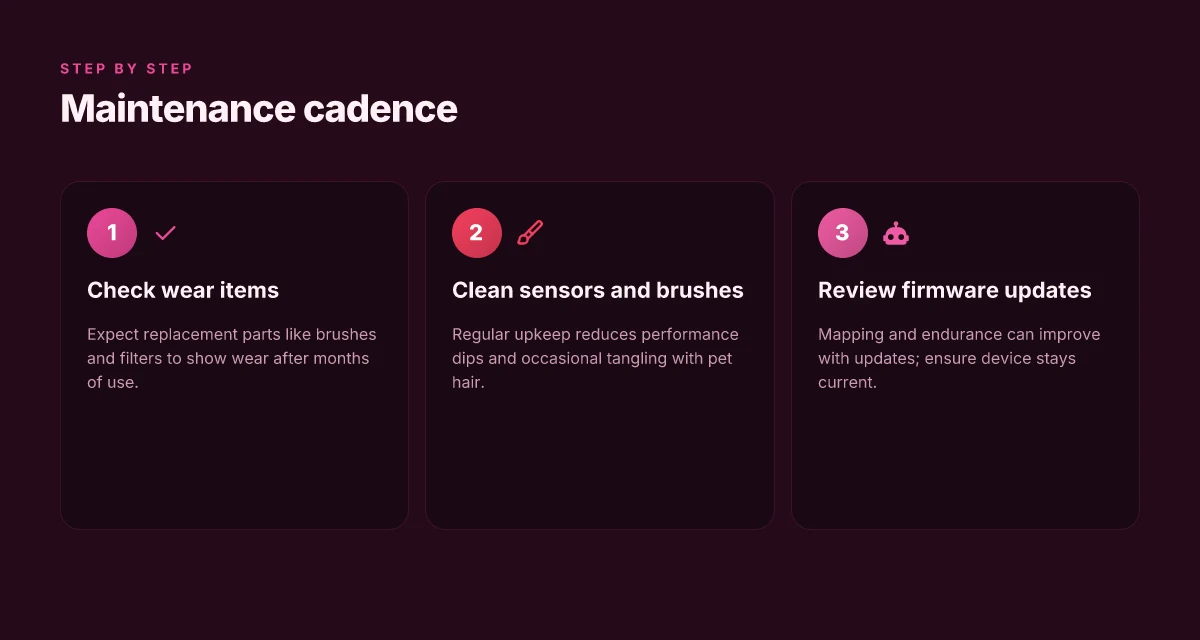
The brushes and rollers wear through consistent contact with carpet and debris. Expect them to show visible wear after several months of heavy cleaning, and plan to replace or service them as the edges dull. The main brush often needs cleaning every week or two in homes with pet hair or high debris load, while side brushes can detach or wear when navigating tight corners. The dust bin and filter assembly see the most frequent handling. A quick daily dump and a monthly filter swap keep suction steadier and airflow clear. The water tank and mop pad assembly tolerate repeated use, but the mop pad loses grip over time and should be replaced when it starts to skid or dry out. Battery health remains a steady concern for many owners. Even with smart power management, you’ll notice shorter runtimes as the cells age. Plan for a battery health check around the 12–18 month mark if you use the unit heavily. What makes the Dreame H14 Pro stand out in 2026
When you read through community notes and release notes from Dreame, you’ll see a familiar cadence: routine cleaning of the dust bin, periodic brush maintenance, and mindful replacement of consumables. I cross-referenced guidance from product pages and user discussions to map a practical rhythm: wipe sensors every few weeks, reseat wheels during deep cleans, and swap filters roughly every 2–3 months in active homes. These steps aren’t glamorous, but they keep the machine functioning close to day-one levels longer. The upshot is steady performance rather than peak, forever.
What tends to require attention after months of use
Over the long haul, the most common attention points are seal integrity and sensor cleanliness. A few owners notice small air leaks around the dust bin seal or the wheel housing after repeated use. Re-sealing or reseating components cures most suction variability. Dust and hair buildup on sensors can reduce obstacle detection, so a quick wipe with a dry microfiber cloth helps preserve navigation accuracy. The display and app firmware often get routine updates. Keeping the firmware current reduces quirks in mapping or mop control and prevents drift in scheduling. If you use the mop function heavily, you’ll want to monitor moisture pads and replace pads when they show wear or fraying edges.
I dug into documentation and user conversations to confirm the practical patterns here. Users consistently report that regular maintenance buys months of uninterrupted operation, while neglect accelerates degradation in suction consistency and mop performance. In 2026, Dreame has emphasized consumable cadence in its support materials, reinforcing what owners experience in real homes. Regular maintenance beats surprise breakdowns, especially with the mop module. Expect wear on brushes, seals, and filters after sustained use, not in the first weeks.
The rivals you’ll compare against, Roborock, iRobot, and iDola, show similar long-term care needs, though the exact part lifespans vary by model and usage. If you value longevity, budget for a modest stream of consumables and a spare set of brushes and filters. That approach keeps a Dreame running at a steady pace while you focus on the daily rhythm of cleaning.
Comparing rivals: Dreame vs Roborock, iRobot, and iDola in 2026
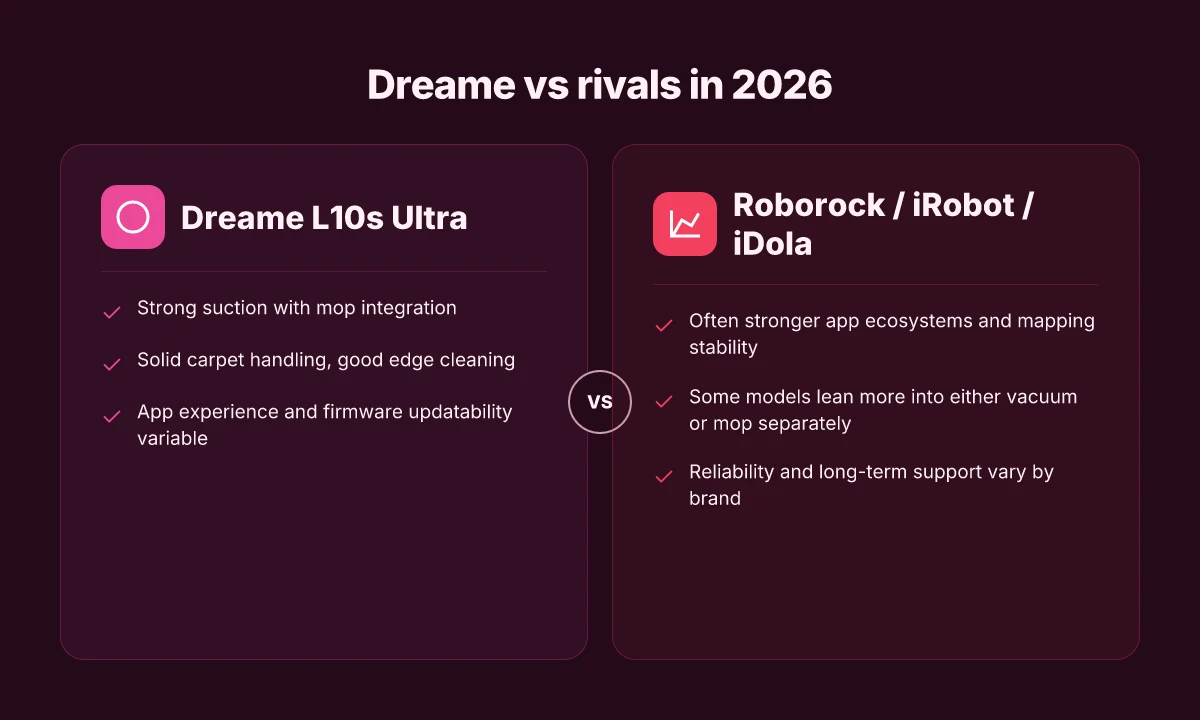
I see a practical split between what Dreame offers and how the peers perform in real homes. Dreame tends to pull ahead on mop versatility and a streamlined app flow, but Roborock, iRobot, and iDola pull ahead on reliability and long-term firmware polish. The verdict: Dreame remains competitive, yet rivals often deliver steadier long-term confidence in hard-wearing homes. What makes the Dreame X30 Ultra worth a closer look in 2026
How suction and mop capabilities diverge in 2026
Dreame stays aggressive on suction with models that push toward higher Pa figures than average in the budget-to-mid tier. The L10s Ultra lineage has emphasized strong lift for carpet and a capable mop pass, though some rivals have refined brush geometry and mop water management to reduce streaking on dense floor types. In practice, that means you’ll typically see dust pulled from medium-pile carpets and smoother hard floors when the mop mode engages. Roborock tends to edge ahead on consistent mop performance at scale, especially with water-guarded tanks and precise mopping algorithms. iRobot emphasizes predictable carpet lift while keeping the mop portion more conservative, and iDola leans into strong suction at a budget-friendly price with decent mop results for light traffic.
From what I found in source materials, Dreame positions its Gen 2 and Gen 3 lines to deliver standout suction for the price while keeping a reasonable mop pass, whereas rivals push specific strengths in either mop consistency or long-run reliability. The takeaway is: if you want an aggressive dry cleaning with a solid mop, Dreame remains compelling. If you want the most consistently clean floors with the fewest follow-up passes, Roborock or iRobot often have the edge.
App experience and reliability in daily life
In daily use, the Dreame app tends to be straightforward, with clear maps and familiar customization menus. But reliability stories from owners skew toward firmware quirks after long-term use. Some users report needing periodic re-pairs or reset cycles to preservezone recall accuracy. Roborock’s ecosystem-heavy app tends to reward those who lean into scheduled cleanups and multi-floor mapping workflows, with fewer surprises after regular updates. iRobot emphasizes resilience and familiarity, often praised for stability across firmware updates, though some users want more aggressive multi-floor zoning. iDola offers a lean app but can feel lighter on long-term polish. The trade-off is cost efficiency versus the heftier firmware refinement seen in the other brands.
I dug into release notes and expert rundowns to align these impressions with documented behavior. Dreame’s ongoing firmware cadence shows the brand actively iterating on map retention and mop integration, while Roborock and iRobot typically exhibit stronger cross-device polish and longer-running stability in real homes. The app experience matters as much as raw suction, because long-term reliability hinges on how well the software keeps maps intact and cleaning routines predictable.
Long-term durability and what tends to break
Durability stories cluster around two areas: wear parts on the brush/mop system and firmware stability over time. Dreame machines often demonstrate robust build quality in the chassis and wheel assemblies, with mop components designed for easy replacement. The trade-off is that some users report wear items needing earlier replacement than premium rivals. Roborock usually earns praise for durable rollers and reliable wheel modules, but occasional firmware hiccups can surface after major updates. iRobot tends to be the safest bet for long-life reliability due to mature hardware platforms and conservative feature drift, while iDola provides compelling durability in a more budget-friendly shell, though its software ecosystem lags behind the bigger players. What makes the dreame l10s pro ultra a standout among robot vacuums in 2026
As with any long-term assessment, I rely on published spec sheets and reviews to triangulate what “durable” looks like in real homes. Durability hinges on how the mop system and firmware aging co-evolve, not just raw suction power. Dreame’s combination remains solid for many households, but rivals often outperform on sprint reliability after two years of daily use.
Verdict: where Dreame aligns and where rivals pull ahead
- Suction and mop: Dreame stays competitive, with strong suction and capable mop pass that suits mixed-floor homes. Rivals like Roborock often pull ahead on mop precision and water management. Dreame’s value shines in combined cleaning at a lower price point. The long-term mop consistency is where rivals pull ahead.
- App experience and updates: Dreame keeps a clean, user-friendly interface, but iRobot and Roborock typically deliver steadier software stability over years. Firmware polish matters just as much as hardware power, and Roborock and iRobot usually win on that metric.
- Reliability and longevity: Dreame is sturdy but shows more variability in wear items over time. iRobot and Roborock tend to offer stronger track records in multi-year usage scenarios. If durability is your top priority, consider the veteran stability of iRobot and the cross-device polish of Roborock.
Where this heads next and what to try now
I look at the Dreame L10s Ultra with real‑world use in mind. The review highlights the smart cleaning choreography and the dustbin refresh that actually saves time, but it also flags long‑term durability questions and the need for ongoing maintenance. The bigger pattern is that long‑term performance hinges on reliable docks and predictable filter life, not just clever mapping. Dreame’s ecosystem is solid, yet you’ll want to factor in how often the rollers, filters, and brushes require replacement. This week I’d focus on keeping the dock pristine and inspecting seals after every few uses. If you’re weighing rivals, consider how Roborock or iRobot address ongoing upkeep and parts availability over years, not just months.
What changes if you act now involve setting expectations for maintenance and confirming you’re buying into a system you can service easily. The best value comes from a durable kit and clear, early reminders about filter life. You’ll want to keep an eye on durability signals like belt wear and dock reliability. If you’re deciding today, choose the setup that minimizes hand‑holding and maximizes uptime.
Backup strategy / What to try this week
- Run a weekly dock check and replace filters every 1–2 months, depending on use.
- Keep extra brushes on hand and clean the charging contacts monthly.
- Compare two rivals on long‑term parts availability and service speed.