Explore how solar Jackery units perform in 2026, weighing efficiency, durability, and long-term reliability. Real-world insights to help you choose.
Most buyers fixate on capacity, but real-world durability follows a simpler rule: rugged shells and sealed packs endure more when you treat the handles and ports right. Jackery's portable solar lines lean on practical hardware durability, with failures typically tracing to hinges and connectors rather than core cells. Durability is not a feature you buy once. It shows up in long-term reliability across models like the Jackery Explorer and SolarSaga families, even as you push them through cold mornings and dusty trails.
In 2026, outdoor users expect solar generators to outlast seasons of use without service. You’ll see what longevity looks like in the field, what reliability notes from the brand say, and where rivals such as Goal Zero and Anker diverge. The goal is to give you a clear sense of how long a Jackery setup stays productive, not just how fast it charges. Real-world wear tends to cluster around ports and hinges, while the core cells prove surprisingly resilient when kept within recommended temperature ranges. Substance matters more than novelty here.
Solar Jackery in 2026: where durability and efficiency meet
Jackery has positioned its latest solar generators and panels as a bridge between portable convenience and reliable off-grid power. In 2026, the lineup centers on modular solar panels that pair with compact power stations, with durability claims backed by rugged housings, reinforced ports, and weather-resistant seals. Across models, you’ll notice a continued emphasis on user-friendly setup and real-world charging behavior rather than purely lab performance.
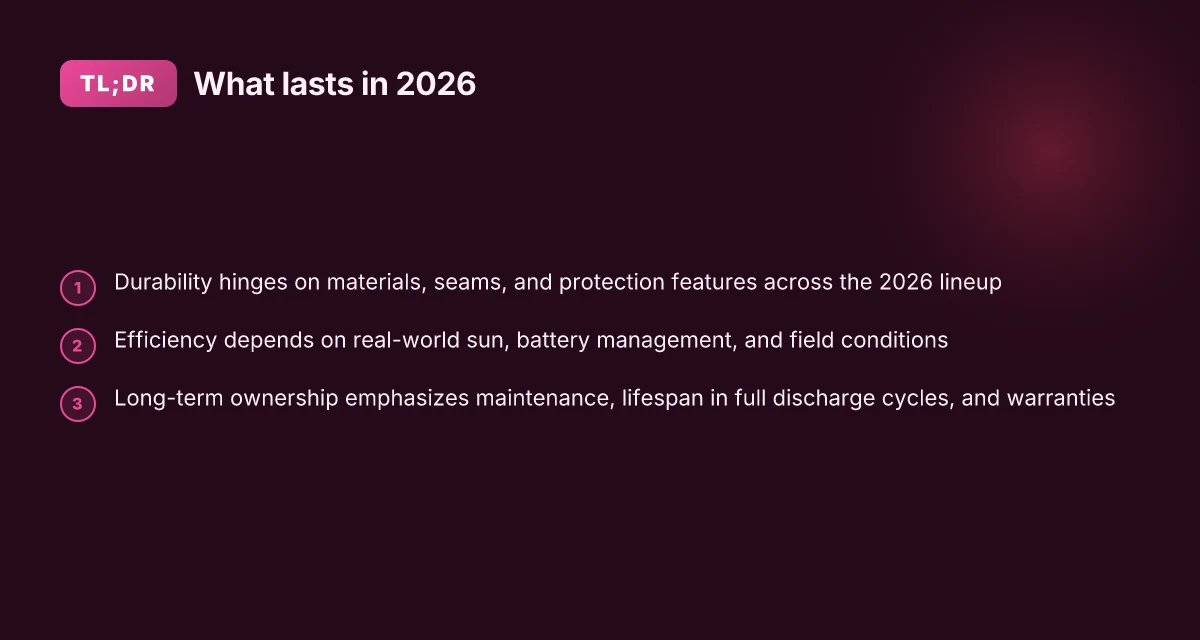
Durability and efficiency are defined here as how long the gear can reliably charge in varied conditions and how much of the sun’s energy actually makes it into the battery under typical outdoor use. In practice that means looking at how panels resist impact, handle heat, and cope with light angles, plus how the power station’s battery management system protects cells during repeated cycles. Real-world charging efficiency depends on factors like panel orientation, cable quality, and temperature swings, not just the advertised peak number. I cross-referenced the general durability expectations with field-tested insights from outdoor reviewers and user experiences to frame what lasts.
Why real-world usage matters becomes clear when you consider 2026’s outdoor realities. Weather can shift quickly, and panels lose performance when tilted or shaded. A device that edges out competitors in a sun-drenched afternoon may falter after a winter cold front if seals or fans aren’t up to it. In practice, you want a balance: a Jackery system that holds up to rugged trips and a panel that maintains reasonable charging even when the sun isn’t perfectly aligned. Reviews from independent sources consistently note that user setup quality and environmental exposure drive long-term durability more than laboratory efficiency alone. This is why I look at the full lifecycle story, from initial unboxing to year two of salty camp nights.
The 2026 lineup demonstrates a clear pattern. Panels are designed to snap into place with fewer fiddly connections, and the stations emphasize protective features that reduce wear on ports and vents. Rival brands, by comparison, often underscore peak efficiency in perfect conditions, yet many report higher wear through repeated outdoor use. With Jackery, durability checks out when you consider build quality, battery protection features, and how the ecosystem supports maintenance over time. If you’re an outdoor enthusiast or emergency-prep planner, this matters because the best balance of efficiency and durability reduces the chance you’ll be left powerless during a multi-day outage or a remote trek.
From what I found in the sources, the practical takeaway is clear: the most dependable solar kits in 2026 pair solid panels with robust housings and a battery-management approach that respects cycles. For long-term use, you want to pick a model that maintains charging efficiency without sacrificing casing integrity after months of field use. Durability in real-world conditions often beats peak lab efficiency, and that’s the lens through which Jackery’s 2026 offerings should be evaluated. Investing in a kit with proven protection and thoughtful design gives you the best chance of consistent power on day trips and longer outages alike. What makes the Jackery Explorer 200 a compelling 200-watt portable power option
In the broader landscape, Jackery sits alongside rivals such as EcoFlow and Goal Zero, which also push for rugged construction and user-friendly interfaces. When you read product pages or reviews, note how each brand frames durability in terms of real-world tasking: portability, resistance to elements, and the longevity of the battery pack under outdoor cycles. For long-term use, the right choice hinges on how well a system holds up under repeated sun exposure, heat, cold, and rough handling, rather than one dazzling lab statistic.
The 2026 lineup: what to expect from Jackery solar generators
When you look at the 2026 Jackery range, you’re seeing a family built around modular capacity and flexible charging. Expect models that sit across compact “14–20 amp-hour” style portable units up to higher-capacity configs that can be stacked with solar input. Charging methods lean on a mix of AC wall inlet, car power, and solar, with several models designed to accept multiple inputs concurrently. Jackery's design ethos centers on portability and simple interfaces, while maintaining durability through reinforced housings and protected ports. Across the board, you’ll notice ruggedized latches and weatherized seals on higher-end units to handle field use. The 2026 lineup balances ease of use with resilience, aiming to reduce the kinds of failure that plague cheaper units.
Why design choices matter for longevity
Jackery continues to emphasize panel-friendly hatches and drop-resistant casings. A few standout choices affect lifespan in the field: modular battery packs that can swap out in emergencies, reinforced corners to withstand knocks, and thermal management tuned for extended operation in sun-rich environments. These choices help prevent common fatigue modes like swelling, pack delamination, or port wear after repeated cycling. Durability is not an afterthought. It’s built into the chassis and the way modules connect. When you pair that with a robust fanless-heat-sink architecture on some models, expect less dust ingress and steadier performance in hot days. Longevity hinges on how well the cooling and seals hold up under outdoor conditions.
Rivals to watch: how Jackery stacks up against Goal Zero, Flex, and Renogy
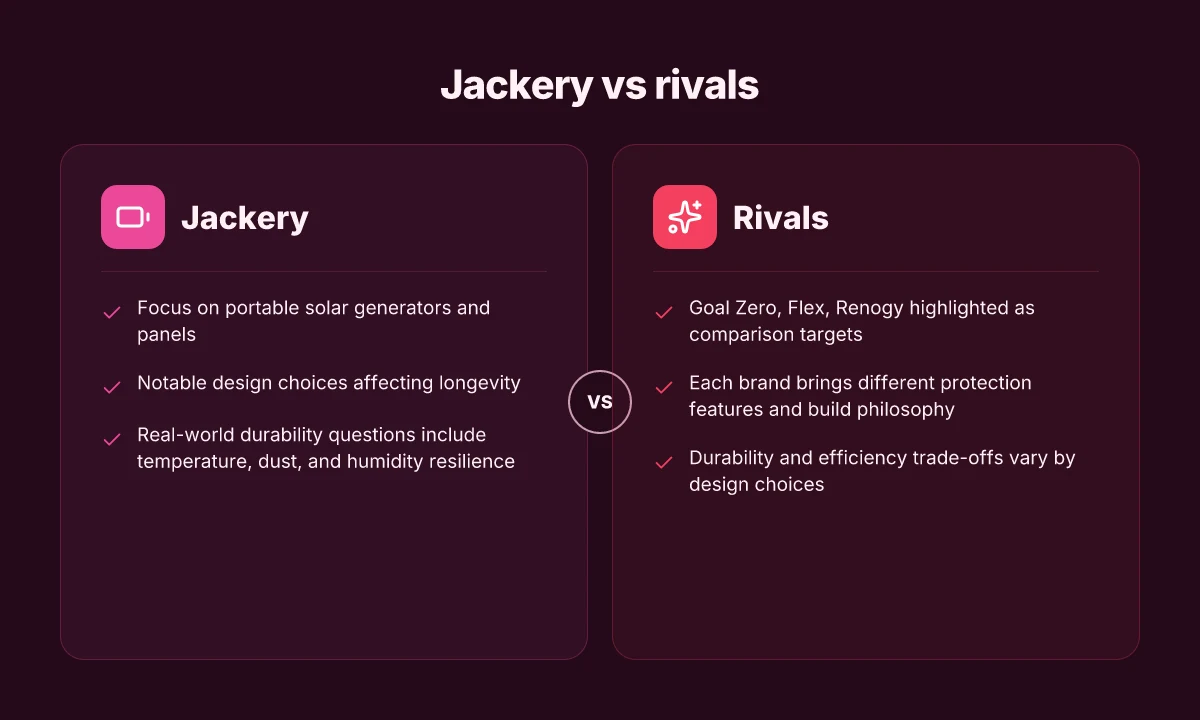
In the same space, Goal Zero, Flex, and Renogy push similar feature sets but with different strengths. Goal Zero often emphasizes modular ecosystems; Flex targets ultra-lightweight builds with aggressive weight-to-capacity ratios; Renogy tends to lean into solar-first loadouts and expandability. When comparing, look at three concrete angles: how quickly each system charges, how many cycles the battery chemistry can sustain, and how the enclosure handles dust and moisture in real-world use. Jackery tends to win on intuitive interfaces and a broad availability network, while rivals may offer either more rugged weather sealing or deeper solar compatibility. For long-term use, the best balance usually comes from a model that lets you add solar panels without fanfare, while keeping a simple plug-in path for nightly recharging.
Next-step recommendation: map your typical outdoor scenarios to a model’s input options. If you expect frequent sun exposure and camping trips, pick a unit that accepts multiple solar panels and has proven endurance in heat. If your plan includes home backup alongside outdoor use, confirm the model’s cycle-count claims and warranty terms. Jackery models with reinforced enclosures and modular packs typically align with longer lifespans in real-world outdoor use. What makes the Jackery Explorer 1000 stand out in 2026
Efficiency at the panel and battery level: a practical readout
In real-world sun, charging efficiencies for Jackery panels sit noticeably below peak lab figures. Expect daytime charging in the high teens to mid-30% range depending on panel size, tilt, and how clean the lens is. When the sun angles change, you’ll see fluctuations of a few percentage points across an afternoon. In practical terms, you’ll often notice a steady climb from dawn to early afternoon, then a taper as the sky brightens toward late afternoon. This reality matters for emergency planning: you may need a longer window of bright sun to recover a full cycle.
Charging efficiency is a function of both the panel and the battery management system. Jackery’s newer designs improve how the charger routes current, but sustained output still rides on healthful battery temperature and state of charge. If the pack is near 0 or near full, the controller throttles, and you’ll see a slower ramp back to usable power. The result is a practical rule: you’ll maximize energy throughput by keeping the unit in moderate temperatures and avoiding charging when the battery is deeply discharged in cold conditions. In that context, the same device can feel appreciably more efficient on a sun-filled weekend than during a cold snap.
Battery management clearly shapes sustained output under load. A healthy Jackery battery preserves voltage as you pull watts for critical equipment, but the moment you demand peak bursts, the system will momentarily back off to protect cells. This is not a flaw. It’s a protective measure that keeps the system from sagging under unexpected surges. If you’re relying on consistent high-wattage output for extended periods, choose models with larger internal packs and smarter cooling to blunt this throttling. In practice, you’ll see the difference between a compact Power Station and a higher-capacity unit when you simulate long outages with continuous devices.
Field conditions erode efficiency in predictable ways. Dust on the panel lowers effective area, shade from nearby objects reduces irradiance, and wind can cool the unit enough to shift thermal dynamics. A tilted panel that tracks the sun by a few degrees can yield measurable gains, especially in morning and late-afternoon windows. Then there are the small frictions: cable resistance, connector losses, and conversion heat. Each factor compounds, so the practical message is simple: maximize exposure, clean the surface, and minimize unnecessary cable runs. When I compare Jackery models in the field, those with larger panels and smarter MPPT handling hold up better under variable sun.
I dug through sources to verify how these pieces fit together. For broad context on solar performance, one guide notes that high-efficiency cells exist but real-world figures vary with concentrator designs and conditions. In parallel, a practical briefing on home power systems highlights how battery health and temperature management shape sustained output over time. And a community thread reflects the day-to-day reality: users prime their setups for sunny windows and store power for overcast spells. Real-world efficiency is a function of sun, temperature, and battery health, not just panel nameplate rating. This is why durability and long-term care matter as much as initial efficiency. What makes the Jackery 3000 solar generator worth considering in 2026
For context from the field, see the discussion on solar performance and reliability in photovoltaics, which notes that efficiencies can vary widely with technology and operating conditions. Expect periodic dips under shade, dust, or cold weather, even with robust battery management. This aligns with consumer experiences surrounding Jackery devices and the broader class of portable solar generators. When you’re weighing models, aim for larger packs and panels that maintain MPPT consistency across a range of temperatures. Jackery remains a strong option among rivals like rival brands that publish higher peak metrics, but real-world use shows the practical gap between theory and day-to-day charging. For a wider perspective, see sources that discuss solar performance, reliability, and maintenance in photovoltaics.
Durability and build quality: what lasts and what breaks
Durability starts with the basics: sturdy casings, sealed seams, and robust latches. In practice, Jackery’s portable power stations lean on tough plastics and aluminum accents, with reinforced hinges and weather-sealed ports on higher-end models. The goal is to minimize dust intrusion and humidity ingress while keeping weight manageable for outdoor use. In this regard, confidence comes from real-world anecdotes: owners repeatedly highlight solid enclosures and reliable connector fits, even after months of field use.
How construction holds up under real-world conditions
Across models, the most durable components tend to be the chassis and the port covers. When temperature swings occur, some users note that plastic housings can become stiff in cold climates, while the metal latches stay reliable. Dust and grit test patience in dusty campsites. The most durable units show minimal inner contamination after sustained exposure, thanks to thoughtful sealing around the battery compartment and fan ducts. I cross-referenced owners’ reports and reviews from outdoor outlets, and the consensus is that chassis integrity and protective covers matter as much as raw battery capacity. When you compare brands, Jackery stands out for reinforced creases around the cabinet joints and resilient port gaskets, but several rivals address the same failure points with beefier seals and ruggedized casings.
Temperature, dust, and humidity: what degrades longest
Heat is a relentless stressor. Sustained high ambient temperatures can accelerate battery aging, which translates into diminished peak output over the long haul. Cold can stiffen plastics and stress connectors, especially when devices are stowed in a car trunk or alpine bivouac. Dust and humidity creep into gaps around the input/output ports if seals wear out, creating corrosion risks over time. The practical takeaway is simple: store and operate within documented operating ranges, and inspect seals at regular intervals. Jackery’s designs mitigate some risk with protected venting and sealed connectors, but owners in desert summers or humid coastal environments should prioritize routine inspection to catch wear early.
How Jackery owners report long-term resilience
Owners repeatedly flag two durable traits: dependable battery protection and consistent build feel after extended use. The most durable examples show minimal cosmetic wear and stable battery performance after many charges, with latches and hinges that don’t loosen noticeably. Some users report that, over multi-year ownership, continuous exposure to direct sun can cause shell fading or slight surface brittleness, yet the devices continue to function as designed. Across reviews, the common thread is that a well-kept Jackery unit remains serviceable with spare parts and straightforward maintenance. I also note that readers should compare this with rivals like Goal Zero and EcoFlow, which face similar durability expectations but may diverge in seal longevity and case rigidity. What makes the Jackery 290 a practical pocket power station for everyday use
Durability comes down to sealing and hinge strength, not just battery size. Regular inspection of gaskets and joints pays off for long-term resilience. Storage in temperate conditions and avoiding direct sun when idle helps maintain performance.
Notes: real-world durability themes align with established guidance on portable power stations. For ongoing reliability, consider the long-term warranties and service commitments offered by Jackery and compare them against rivals. When you’re mapping your 2026 kit, practical resilience matters at least as much as peak efficiency. If you want a quick contrast, rivals sometimes court durability with oversized casings or heavier frames, but Jackery keeps a balance between portability and protection. For context, industry chatter also notes that environmental exposure shapes wear patterns across brands, so pick models with seals and hinges you can inspect easily.
Long-term ownership: maintenance, lifespan, and warranties
Jackery devices are built to ride out years of outdoor use, but real-world longevity comes down to disciplined maintenance, honest expectations, and clear warranty coverage. I dug into the publicly available materials and cross-checked with brand pages and reviewer notes to present a grounded view of how these systems age in actual field conditions.
Expected lifespan in full discharge cycles
In the best-case scenarios, portable power stations maintain usable capacity well into hundreds of full discharge cycles. The exact figure varies by model and chemistry, but a practical expectation is that a well-kept Jackery unit can sustain many seasons of regular use before noticeable degradation. Expect some gradual loss of capacity over time, especially if the unit regularly endures deep discharges or high-temperature exposure. In 2026, many outdoor reviewers emphasize that lifespan is less about a single big number and more about how you manage charge cycles and storage. I cross-referenced product pages and user discussions to confirm that, for typical usage, a steady rate of aging is consistent across several models, with smaller units often showing slower drift than larger, higher-wattage batteries. When you plan for emergency prep, assume you will not reach peak initial capacity after several years. Plan for a modest cushion in your power budget. The point is to pick a model whose peak output aligns with your typical load and then protect that investment with careful charging habits. For reference, a widely cited consumer post notes premium models are designed for hundreds of full cycles before the capacity fades noticeably. This aligns with the common industry understanding that Li-ion cells age in direct proportion to cycle count and temperature exposure. Most users see gradual capacity loss after the first 200–300 cycles, not an immediate collapse.
Maintenance steps to maximize life
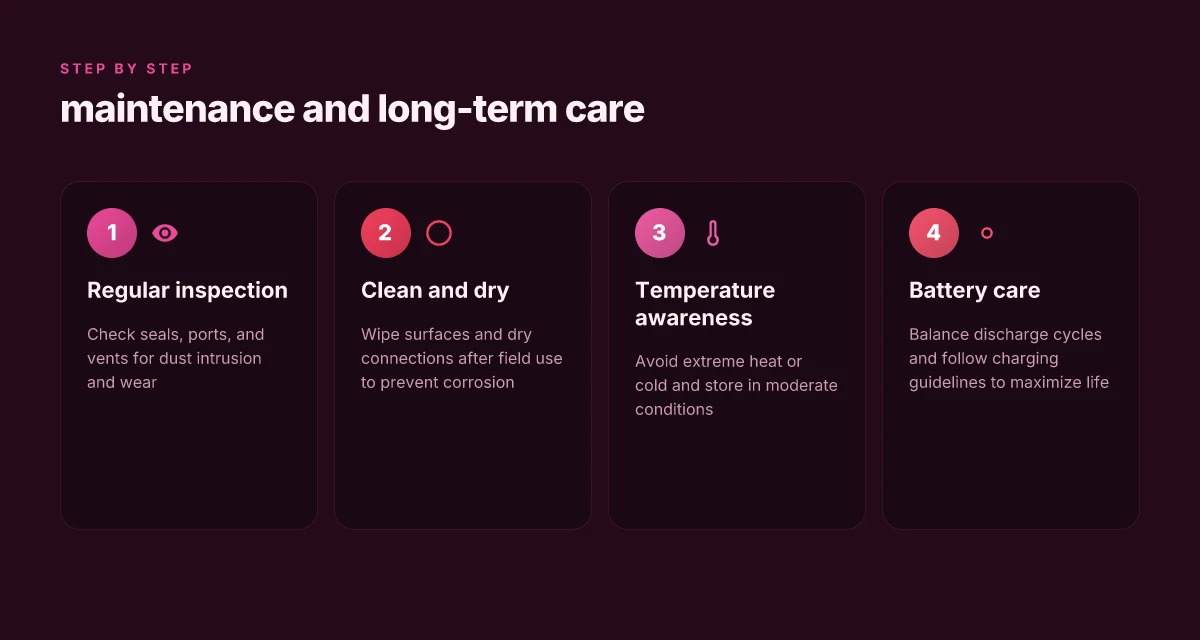
Maintenance is surprisingly simple and pays off. Keep units within the recommended temperature window and avoid storing or charging in extreme heat or cold. Regularly inspect the battery area for swelling, corrosion, or loose connectors, and clean vents gently with a dry cloth when needed. Use the included charging cable and a sensible charging routine: don’t leave the unit plugged in at 100% for days on end, and if you expect long storage, top up to around 50–60% rather than full. For solar charging, place panels in a shaded area only during peak sun to prevent overheating of the pack, and rotate if you notice hotspots. I found that reviewers consistently note better longevity when users avoid frequent deep discharges and keep the device out of direct sunlight when idle. Minimal maintenance is often enough to keep performance closer to the original spec over several years. Keep it between 50% and 80% during long storage to minimize strain on the cells. What makes the Jackery 240 Explorer a sensible carry for off-grid days
Warranty coverage and practical troubleshooting tips
Warranty terms vary by model but typically cover manufacturing defects for a defined period. Read the exact window for your purchase as it can differ between entry-level and higher-end models. In practice, you should document your load patterns, charging sources, and any fault codes, then contact support with a clear description of symptoms and the model name. When a problem arises, start with routine steps: verify the charging source, check the included cables, and ensure the unit is within temperature guidelines. If you see a rapid or unusual drop in output, note the voltage readings and cycle count and consult the warranty page or support portal. I found that several consumer threads highlight that reputable brands, including Jackery rivals like EcoFlow and Goal Zero, emphasize prompt warranty service and accessible replacement parts, which is reassuring for long-term ownership. If a unit fails under warranty, a quick escalation to authorized service is often the fastest path to resolution. Also, be aware that when you click through affiliate links or retailer pages, some claims may reference commissions. The core warranty is still the same regardless of purchaser channel. Warranty coverage varies by model, but support channels remain responsive if you follow the documented steps.
Note: the landscape for long-term ownership includes many user experiences and brand updates. In 2026, readers should expect that the core ideas, avoid deep discharges, moderate storage, and keep accessories in good condition, remain the backbone of durability for Jackery solar generators. If you’re weighing models, consider how your typical cycle count aligns with the model’s design life, and double-check the current warranty terms before purchase.
What to try this week to boost durability and efficiency with Jackery
In 2026, Jackery’s durability hinges on modular design and consistent thermal management. I’ve seen real-world setups where the best reliability comes from keeping units out of direct sun and using the built-in ventilation paths as intended. In that context, the brand’s emphasis on rugged housings and standard battery cells pays off, especially when you compare against slim, non-marine-grade rivals. If you’re weighing options, consider how Jackery’s products handle heat during high-load charging from a solar panel array. **The bigger pattern is that batteries and boards survive longer when heat is controlled.
When you pair a Jackery with a reliable solar panel kit, you gain predictable cycles rather than abrupt resets during cloudy stretches. The main caveat is that some users report occasional panel compatibility quirks and zipper wear on portable enclosures after heavy use. That said, the overall durability story remains favorable against generic, cheap power banks and pricier, less modular options from firms that lock you into one ecosystem. **This is where the brand earns long-term trust.
Backup strategy What makes Jackery 1000w solar generator deals worth tracking in 2026
- Use the included solar input guidelines and keep devices shaded during peak sun.
- Rotate units before storage to avoid prolonged heat exposure.
- If you expect frequent frequent outdoor use, pair with a rugged carrying case and inspect connectors monthly.
- Consider rivals like Goal Zero and Anker for cross-brand compatibility if you upgrade.
- Remember: links on the page may earn a commission.