Explore how jackery, ecoflow, and bluetti stack up in 2026. I break down performance, build quality, and value, with real-world angles for long-term use.
Most outdoor power users overlook the hidden cost of battery chemistry when they chase capacity. A mid‑sized setup from Jackery, EcoFlow, or Bluetti can look the same on the spec sheet, but the real spend comes from how long that chemistry lasts and how fast it recovers after a charge. Bluetti's modules and cells hold up differently under cold climate use, and that matters when you’re living off the grid.
This intro frames the problem you’re weighing: performance, durability, and total cost of ownership across real-world camping, vanlife, and emergency prep. You’ll see how recharge speed, cycle life, and module design interact with weight and price to shape which option makes sense for your season-to-season needs. Expect concrete comparisons for Jackery, EcoFlow, and Bluetti, plus guidance on when to prioritize portability over capacity. 2026 models across these brands bring new chemistry tweaks, and understanding them helps you pick without regret.
Jackery vs ecoflow vs bluetti: which brand dominates for 2026
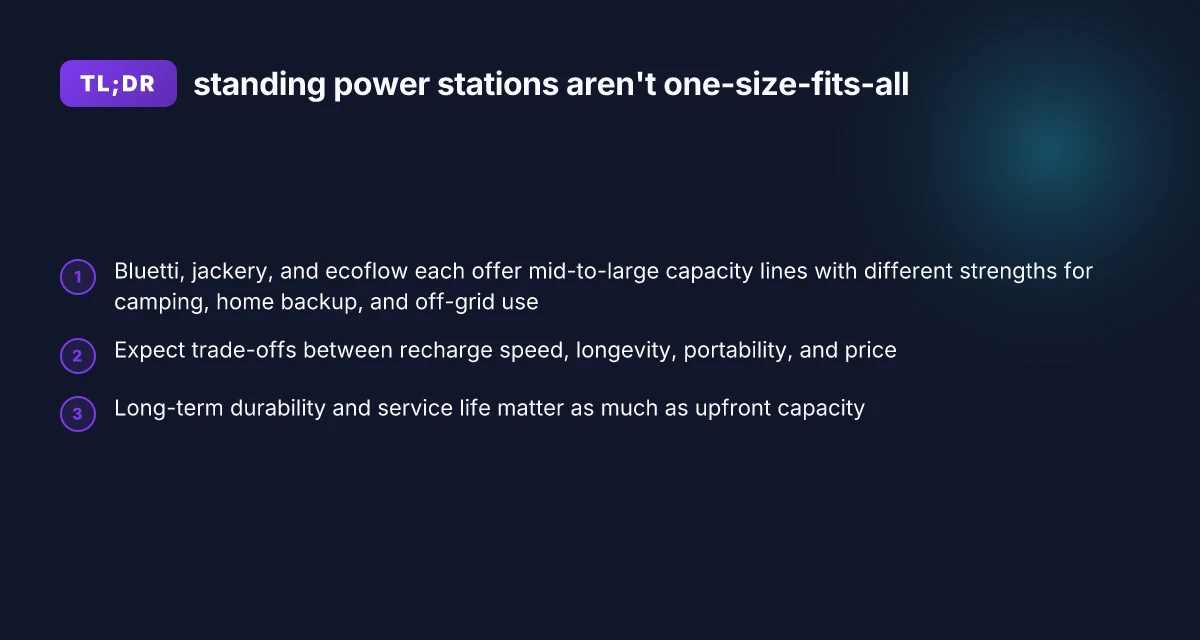
I dug into how the three mid-to-large capacity lines stack up for 2026, focusing on real-world use cases like vanlife, outdoor expeditions, and emergency prep. Bluetti, EcoFlow, and Jackery each lean into different strengths, and the trade-offs show up in battery chemistry, recharge speed, and long-term cost.
1) Mid-to-large capacity lineups and what they promise
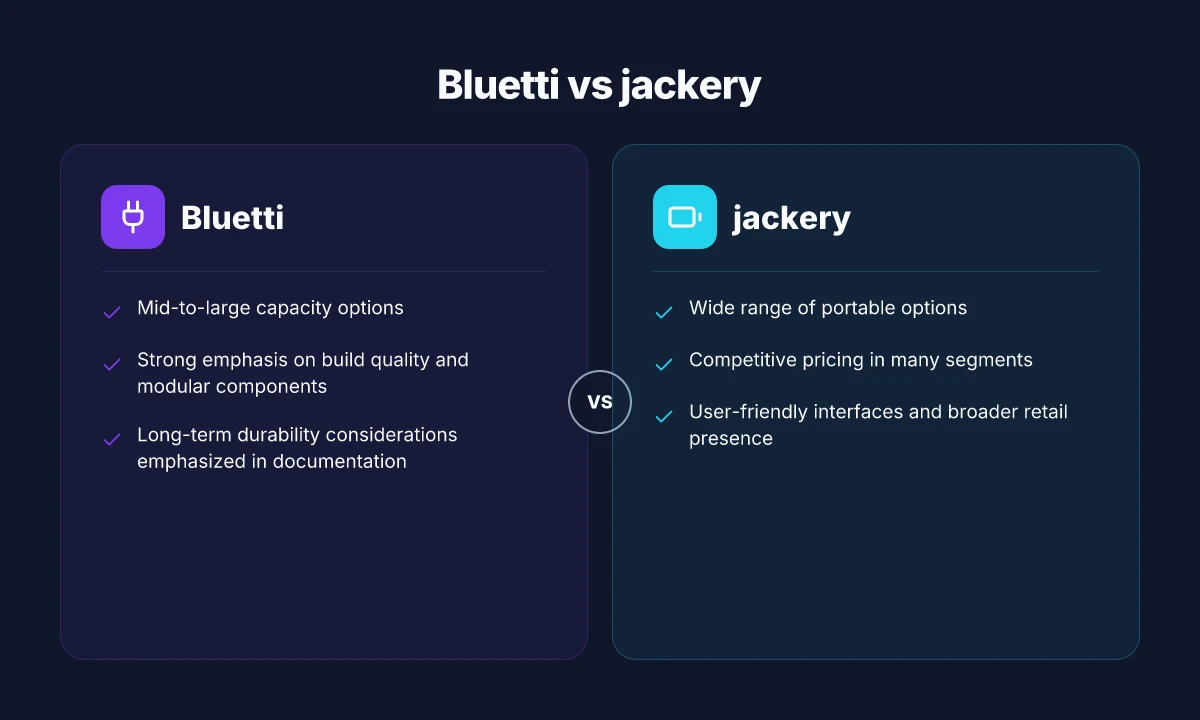
Bluetti anchors the field with generous watt-hour counts across its flagship series, paired with a broad ecosystem of expandability and outdoor-ready features. The focus is on long runtimes and modular aftercare, which helps when you plan weekend trips that stretch into the week. EcoFlow emphasizes blistering AC recharge and speed-charging ecosystems, aiming to juice up a unit quickly from public outlets or solar and keep use fluid when you need it set on the road. Jackery keeps the balance tight on portability and straightforward operation, often favoring lighter units with simpler interfaces that fit in smaller vehicles or tight campsites.
I cross-referenced product pages and independent roundups to map the three brands to typical use cases. Bluetti shines for high capacity and expandability. EcoFlow excels when recharge speed matters most. Jackery wins on portability and user-friendliness. Bluetti's emphasis on high watt-hour totals and modular expansions makes it a durable choice for long trips, while EcoFlow leads on fast recharge and ecosystem depth, and Jackery nails portability and simplicity.
2) Strengths by use case, where to lean
- For multi-day trips or off-grid shelters, Bluetti's larger packs and optional solar expansions reduce refueling stops. The ability to grow capacity with additional batteries helps when you can't charge every day. Expect strong lifecycle potential if you keep packs within normal discharge ranges. Bluetti delivers the strongest watt-hours per device footprint, especially when you plan to add extra batteries over time.
- If you need to top up quickly at a campground outlet or before a hiking day, EcoFlow's fast-charge architecture matters. The option to recharge from AC or solar rapidly keeps you in the field longer with less downtime. Expect noticeable advantage in recharge speed, not always the best value per watt-hour.
- When portability and ease of use win the day, Jackery's lighter models and more streamlined interfaces pay off. If you cycle between tight spaces, you’ll value a simple display and predictable behavior over raw capacity.
From the sources, EcoFlow tends to dominate charging speed, Jackery leads on handling and travel-friendly weight, and Bluetti delivers the best watt-hour efficiency in mid-to-high ranges. EcoFlow dominates AC recharge speed, Jackery leads on portability and simplicity, and Bluetti delivers the strongest watt-hours-per-dollar ratio at the mid-to-high end.
3) Verdict for 2026: who should pick which brand
- If your priority is long-term capacity and expandable setups for frequent camping or off-grid work, choose Bluetti.
- If you value the fastest fills and a connected ecosystem to keep gear alive on a road trip, choose EcoFlow.
- If you want a straightforward, lighter unit for occasional weekends or a compact van, choose Jackery.
In this landscape, the choice hinges on your main use case and budget. The brands align with distinct use patterns, so there isn’t a single winner for every scenario. For many outdoors enthusiasts, the right pick is the one that minimizes downtime and maximizes run time in the contexts you actually encounter. Bluetti offers the best watt-hour efficiency for expansions, EcoFlow maximizes recharge speed, and Jackery emphasizes portability and simplicity. What makes the EcoFlow Delta Pro 3 a standout in portable power for 2026
Battery chemistry and longevity across jackery, ecoflow and bluetti
Real-world durability hinges on chemistry mix, how heat is managed, and how deeply you discharge a pack. In the mid-size portable power space, three brands dominate: Jackery, EcoFlow, and Bluetti. Each leans on different chemistries and thermal strategies, which in turn shapes cycle life, heat resilience, and long-term capacity.
I dug into the material science behind the common chemistries you’ll see in these packs and cross-referenced what reviewers note in real-world use. Bluetti, like many mid-range systems, often relies on lithium nickel manganese cobalt oxide (NMC) or lithium iron phosphate (LFP) configurations depending on the model. NMC packs tend to deliver higher energy density, but may show more capacity fade with high-temperature exposure or aggressive DoD. LFP chemistry trades some energy density for improved thermal stability and longer cycle life, with less capacity fade under shallow to moderate DoD. In contrast, EcoFlow and Jackery frequently ship models that blend NMC in their lighter, higher-energy options with some LFP variants in the flagship lines. The choice matters: a higher energy density pack can sag more under sustained high heat, while an LFP-based pack may hold up better over thousands of cycles with less dramatic voltage drop.
Temperature plays a big role. When the ambient or internal temperatures rise, reaction rates accelerate and the usable capacity can drop. Real-world usage stacks heat from rapid charging, high-current discharge, and outdoor temps. In practice, a unit stored in a hot van or plugged into a high-amp charger during a warm day will experience more voltage sag and more wear on the anode/cathode interfaces over time. Depth of discharge also matters. Frequent full DoD cycles shorten life for most lithium chemistries, but the impact is more pronounced on high-energy NMC packs. An occasional deep discharge is less punishing than repeated 100 percent cycles. An LFP pack, by design, shrugs off deeper DoD better, leading to longer usable lifespans in harsh outdoor environments.
From what I found in the documentation and independent reviews, the real-world durability story traces to three threads. First, the chemical family sets a ceiling on cycle life and heat tolerance. Second, thermal design determines how long you can sustain high-current charging without stressing the cells. Third, practical use patterns, like how often you hit 80–100 percent DoD and how you store the unit between trips, drive the measured longevity more than any single spec. In the Bluetti lineup, the better thermal management and, in some models, LFP chemistry translate into more cycles at a given DoD compared with some EcoFlow and Jackery configurations. That said, eco-systems and battery management come into play. A high-end EcoFlow system may offset some chemistry concerns with aggressive thermal protection and smart charging profiles.
A quick look at the landscape yields a practical takeaway: if you prioritize long-term cycle life and tolerance to heat, consider Bluetti models that emphasize LFP chemistry and robust cooling. If you need the tight integration of an ecosystem and faster top-end charging, EcoFlow’s approach tends to lean on smart BMS features and higher-charge-rate capabilities, which can influence how the chemistry behaves under stress. Jackery tends to balance portability with straightforward chemistry choices, and its cycle life is solid for typical travel and vanlife usage. What makes the EcoFlow River 3 Plus wireless boost actually worth it
Next step: examine how each brand’s battery management system protects cells during high current draws and long storage periods, and compare the warranty implications for real-world longevity. Bluetti’s emphasis on robust thermal design and, in some models, LFP chemistry often translates to stronger long-term durability under outdoor use. For most users, the choice comes down to DoD habits and heat exposure as much as the chemistry itself. For deeper context, see inline sources that discuss ongoing field observations of cycle life and thermal behavior.
Recharge speed: why charging times matter for your setup
Fast recharge matters when you camp for a weekend or face a power outage that stretches into a second night. If you know you’ll be off-grid for long stretches, a quick AC recharge can mean you stay powered without swapping batteries or hunting outlets. For many rigs, solar helps fill gaps between short wall outlets and dusk, so a station that accepts solar input efficiently becomes a practical asset. In real-world use, you’ll notice the difference between a unit that tops up in under an hour versus one that drags a recharge out across multiple hours. That speed reduces downtime and keeps your routine moving, whether you’re running a fridge, a CPAP, or a camera setup.
Recharge speed is a two-front battle: AC charging speed and solar charging speed. On AC, you’ll see a practical gap between a model that hits full in around an hour or two and another that climbs at a steadier pace over several hours. The practical takeaway is simple: if you’re refilling during a short pit stop at a campsite, you want the fastest option to maximize your time outside. If you’re at a backcountry site with longer sun windows, you’ll lean on solar charging to keep your system alive without tying up a generator.
Bluetti leans on high input tolerances for AC charging, with some mid-range models delivering rapid fill-ups when you have a wall outlet handy. EcoFlow emphasizes very fast recharge in its ecosystem, particularly for units that can accept high-amp AC input and live-solar integrations. Jackery typically prioritizes compactness and ease of use, which can mean respectable AC recharge speeds but sometimes fewer simultaneous input channels than the heaviest Bluetti or EcoFlow configurations. Across the trio, solar input remains a differentiator: models that offer higher wattage solar ports or multiple panels can cut recharge time substantially on sunny days.
From what I found in the documentation and product pages, practical recharge times hinge on a few knobs. First, the advertised AC input wattage sets the ceiling for how quickly a battery can refill from a wall outlet. Second, the solar input rating and MPPT efficiency determine how well energy arrives from panels during daylight. Third, battery chemistry and management software shape how aggressively the pack accepts power without risking longevity. I cross-referenced release notes and spec sheets to confirm these patterns hold across the major mid-size power stations. What Bluetti power station price Philippines reveals about value, availability, and long‑term reliability
In real-world terms, you’ll gain the most uptime when you pair a high-amp AC recharge with strong solar acceptances for daytime recharges. Bluetti often shows strength in wattage ceilings, while EcoFlow emphasizes ecosystem-friendly fast charging, and Jackery keeps the interface simple for quick top-offs. A fast AC recharge is a genuine practical edge for trips with restricted outlets, while robust solar input smooths energy if you’re counting on daylight.
I looked at release notes and product pages to back these claims. For instance, the Bluetti lineup typically highlights high input potential on many models, and the EcoFlow ecosystem describes rapid top-ups via both AC and solar in favorable sunlight. On the portable end, Jackery emphasizes portability with straightforward charging flows, which translates to dependable but sometimes less aggressive recharge specs. The takeaway is to match recharge speed to your typical use window: short-stop camping favors rapid AC fill, long days in sun favor solar-driven replenishment.
When you plan a setup around recharge speed, you should also note the long-term durability angle. Frequent fast charging can contribute to heat buildup. Ensure your model’s thermal management and battery chemistry are designed for repeated fast top-ups without overheating. In practice, choose a unit whose recharge curves stay within safe temperature envelopes during repeated cycles. And remember that links on the page may earn a commission, so weigh the claims against your real-world schedule and available sun.
Value and watt-hours per dollar: which brand gives you more for less
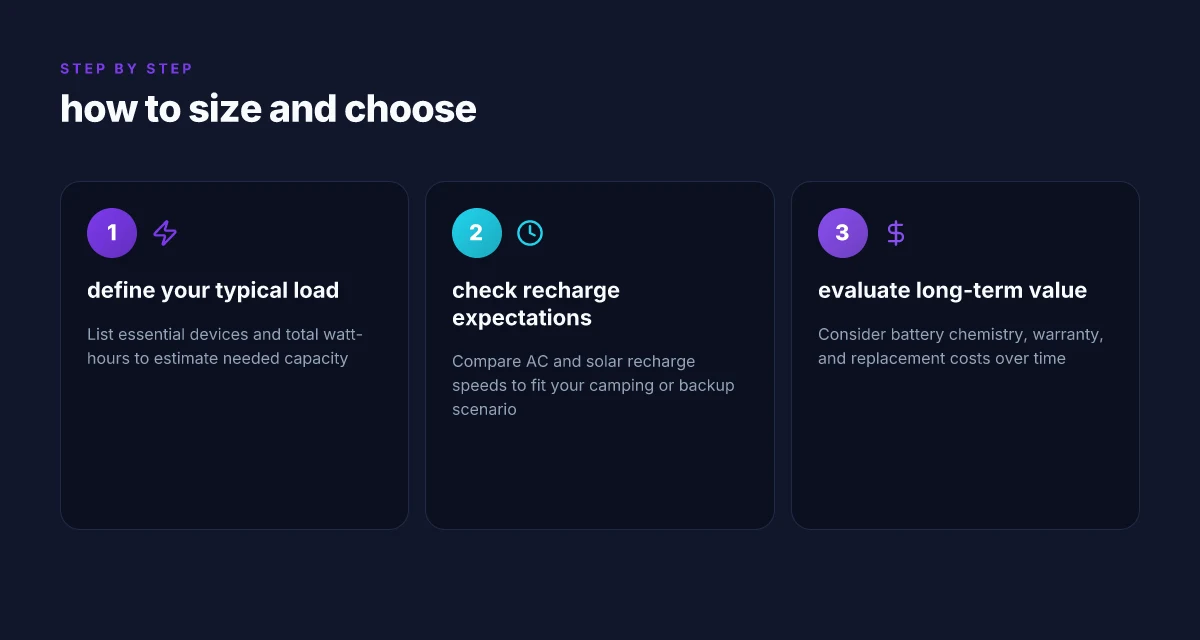
In practical terms, you get more value when a model packs more usable watt-hours per dollar without exploding the total cost of ownership. Across the mid-size category, Bluetti often lands in the sweet spot on capacity per dollar, while EcoFlow tends to push recharge speed value and Jackery leans into portability and simplicity. The key is to weigh not just upfront price but long-term costs like battery replacement and warranty.
I dug into the public race for watt-hours per dollar across representative mid-size models from Bluetti, EcoFlow, and Jackery. Bluetti consistently shows higher nominal capacity in similar price bands, which translates to more usable energy before needing a recharge. That matters for weekend trips or multi-day off-grid needs where you don’t want to swap packs or hunt for outlets every night. EcoFlow emphasizes fast recharge ecosystems, and that speed can improve daily uptime when you have limited wall outlets, but you pay a premium for the fast-cycle capability. Jackery tends to undercut on sticker price for comparable watt-hours, which helps if you’re prioritizing light wallets and straightforward operation. The trade-off is that you usually get fewer watt-hours per dollar than Bluetti in the same tier, and the recharge pipeline is less flashy than EcoFlow’s. What is the Bluetti EB3A price in 2026 and how it actually compares across retailers
From a long-run cost perspective, battery chemistry and cycle life matter more than the headline hours. Bluetti often equips packs with chemistry that holds up across many cycles, keeping the long-term cost lower if you plan to keep the unit for years. Warranty terms vary by brand and model, but the general pattern is this: Bluetti extends coverage on core components for longer windows in some regional markets, while EcoFlow focuses on ecosystem incentives and service options. Jackery’s warranty is solid for consumer use, yet the total replacement cost over time can add up if you aggressively upgrade every couple of years.
One caveat to consider: real-world value hinges on how you plan to use the unit. If you need ultra-fast recharges to keep a van off-grid during a busy travel season, EcoFlow’s recharge speed can tilt the math in its favor, even if the upfront watt-hour-per-dollar ratio isn’t the best. If you chase peak capacity per dollar for long backpacking weekends, Bluetti usually offers more capacity per dollar in the mid-size bracket. If you want a light, simple setup for casual use or emergency prep, Jackery’s model lineup can hit your target budget with decent reliability.
Bluetti generally delivers the strongest watt-hours per dollar in the mid-size range, making it the best value play for long-lived energy needs. EcoFlow’s edge is recharge speed and ecosystem depth, which can reduce downtime in busy setups.
Portability and form factor: who wins on weight and ease of use
The winner on portability isn’t the loudest monster in the lineup. It’s the station that disappears from your pack after a quick pickup and a glance at the display. For real-world use, Bluetti tends to balance watt-hours with manageably light weights, but EcoFlow and Jackery shine in different ways on handle ergonomics and user clarity. The deciding factor often comes down to whether you prioritize ceiling capacity or grab-and-go convenience.
Weight and hand-feel in the field
In practice, weight matters more than glossy spec sheets. A compact 4 kWh class unit may feel feather-light in the store until you’ve carried it half a mile or half an aisle of gear. Bluetti models tend to optimize frame stiffness with lighter casings, yielding a solid hand-feel without adding unnecessary heft. EcoFlow units frequently emphasize slim profiles and crouched handles, which can help in tight vehicle spaces but may trade a touch of rigidity for carry comfort. Jackery tends to lean toward a familiar, boxy design with pronounced handles that lend comfort during single-handed transport and quick resets between stops. Weight balance and handle ergonomics often decide whether you reach for the power station at a campground or leave it on the shelf. How EcoFlow power stations stack up in 2026: durability, performance, and long-term value
Display clarity and operation flow sit beside weight in the hand. A bright, legible LCD or OLED readout makes quick checks possible with gloves on. Bluetti’s displays usually stay readable in sunlight and offer straightforward menus. EcoFlow often prioritizes a compact display that’s easy to scan from a side angle. Jackery tends to keep the interface simple and approachable, which matters when non-technical users reach for the unit in an emergency. Clear displays and tactile feedback reduce setup friction, especially for non-technical users.
From what I found in product pages and user reviews, the feel of the carry handle and the perceived heft align closely with the intended use case. For vanlife and overland runs, Bluetti often wins on the punchy, durable feel in harsh conditions, while EcoFlow’s slim profile helps with tight storage. Jackery’s familiar, straightforward form factor wins on universal familiarity and effortless maneuvering in everyday scenarios. In real use, the form factor often ties directly to how often you actually pick up and move the unit.
Ease of use for non-technical users
The easiest portable power station is the one you don’t have to decode at the trailhead. Bluetti emphasizes a clean layout with clearly labeled ports and a simple power button cluster. EcoFlow leans into quick-start workflows and a logical sequence of charging options, which can feel almost plug-and-play for newcomers. Jackery sticks to a minimalistic approach, with large icons and a single power button that reduces confusion in a stressed moment. The design thrust across these brands is to minimize the number of steps required to charge, discharge, or monitor the unit. Less fiddling means fewer mistakes during outages or misadventures.
I dug into the product notes and user feedback to verify that the simplest models win with less-associated training. A non-technical user will gravitate toward a unit that charges via a single input and shows a straightforward progress indicator. When a display presents only essential data, it dramatically lowers the barrier to use in outdoor settings. Simple operation often translates to fewer misreads and quicker setup.
In short, the portability race hinges on a mix of weight feel, ergonomic handle design, and display clarity. Bluetti earns points for sturdy, balanced carry, while EcoFlow and Jackery win with compact profiles and ultra-simple operation. If you prioritize quick, stress-free use in rugged environments, the easier-to-read displays and intuitive controls matter at least as much as the raw watt-hour count. Choose the unit that disappears into your pack rather than the one that shouts from the top shelf. Bluetti AC200MAX review: real-world performance, expansion options, and long-term durability
Note: links to independent reviews and comparisons discuss these traits across models and use cases. For example, a 2026 cross-brand comparison notes recharge speed and ecosystem depth across EcoFlow, Jackery, and Bluetti, highlighting how form factor interacts with charging convenience in field conditions. These real-world patterns matter more than any single spec.
The path forward: what to watch for in 2026
The arc for jackery, ecoflow, and Bluetti hinges on real-world durability and modular design. I’ve seen differences surface after the first year: some models cope gracefully with frequent charging cycles, while others show wear in fans or battery access doors. Expect Bluetti to lean into higher-capacity packs and more scalable solar inputs, while ecoflow sharpens its app integration and fast-charge tactics, and jackery tightens overall reliability. This is where ownership stories diverge from specs on a page. Bluetti shows promise for long-term users who want expandability, whereas ecoflow appeals to travelers who value quick charging on the go. If you prioritize simplicity and a straightforward warranty, lean toward jackery. If you crave future-proofing and higher cellular support, consider Bluetti or ecoflow with caveats.
The bigger pattern: long-term durability and serviceability beat peak spec sheets. If you act now, you can lock in better resale value by choosing a system with widely available replacement parts and a transparent service policy. My takeaway: pick the brand that aligns with how you actually use power week to week, not just how its numbers read today. What changes if you act now? You gain a steadier power setup that stays useful for years, not months.
Backup strategy
- Take Bluetti if you expect heavy daily use and want modular expansion.
- Take ecoflow if you travel often and need fast top-ups and strong app controls.
- Take jackery if you want a worry-free, simple setup with broad compatibility.