
Bluetti AC200MAX review reveals real-world performance, battery life, solar input, and expansion options. Learn how this expandable power station fits off-grid lifestyles.
A single design constraint can make or break a trip: the Bluetti AC200MAX’s real-world scaling depends as much on your expansion path as on its core battery chemistry. The secret is modular growth: add panels or extra batteries gradually, and the system stays predictable.
This intro focuses your eye on durability and long-term behavior: how the AC200MAX behaves under repeated charging and discharging, how well the LiFePO4 pack holds up, and how smoothly you can attach expansions without creating an evolving tangle of cables. You’ll see concrete guidance on when expansion boosts make sense, and where edge cases, like off-grid long cycles or heavy loads, start challenging the system. In 2024 and 2025, real-world reports highlighted the importance of a clear expansion roadmap and a dependable solar setup, and this piece gives you a practical read on that path.

Bluetti ac200max review: why this expandable power station matters for off-grid setups
The Bluetti AC200MAX is an expandable LiFePO4 power station designed to grow with your off-grid needs. It pairs a substantial base pack with optional expansions that let you scale capacity and peak output as you add more panels, more loads, or longer off-grid stretches. For long-term planning, the real value isn’t just the base watt-hours. It’s the ability to attach the B230 or B300 expansion modules and push your system from a modest campsite setup to a full-blown off-grid living solution. Bluetti’s expansion path makes it more than a single-use device, it becomes a growing platform.
Why expansions matter for long-term off-grid planning
- The B230 and B300 modules turn a single chassis into a multi-tier system. Base capacity sits around the mid two kilowatt-hours range, but with an expansion, you can double that footprint without buying a second unit. This matters when you expect longer trips, seasonal off-grid living, or higher daily energy needs. Expansion isn’t cosmetic, it’s a practical guardrail for longer outages.
- LiFePO4 chemistry helps with long-term reliability as you scale. The battery chemistry maintains capacity better over many charge cycles, which matters when your off-grid routine includes frequent cycling between charge and discharge. LiFePO4 chemistry provides predictable aging when you push capacity up with expansions.
- The real-world value emerges when you map loads to expansions. If your RV routes between shaded campsites or remote cabins, the ability to feed more watts from multiple ranges of loads becomes a usable feature, not just a spec. Expansion is a long-term planning tool, not a one-off convenience.
What to expect from real-world usage with expansions
I looked at the documentation and recent reviewer notes to frame expectations. In practice, the AC200MAX scales with added modules without introducing sudden bottlenecks or instability in typical off-grid loads. A user-friendly charging profile and compatible solar input keep the system in a practical sweet spot for RV setups and remote cabins. Real-world usage tends to hinge on how you balance peak loads with available expansion capacity. Bluetti’s design keeps the core unit and the expansions in a coherent thermal and electrical envelope, which helps when you want to push longer nights of use without chasing firmware quirks.
Bottom line: the AC200MAX matters because its expansion path turns a portable power station into a durable, scalable off-grid companion. The decision to pursue a B230 or B300 isn’t just about more watts. It’s about building a retirement plan for off-grid reliability. Expansion makes the difference between a stopgap and a long-term system. From a long-duration perspective, Bluetti and rival lines show how a scalable approach pays off when you plan for months away from shore power. Reliability over time hinges on whether you align expansion with your actual load growth.
Cited sources: inline references to product reviews and spec discussions from the cited sources. See the inline links in context for specifics on module compatibility and real-world commentary.
How the bluetti ac200max handles core off-grid loads and peak demand
Bluetti’s AC200MAX stands up to real-world cycling by design, not just nominal specs. It delivers a solid baseline output for common off-grid loads and shows how surge handling behaves under practical conditions. The unit’s 2048 Wh LiFePO4 battery and expandable inverter suite give it a predictable response when appliances spike or draw in bursts. In this context, I focus on what matters to long-term reliability: how the system behaves under load over hours, how peak demands ride through, and how expansions change the equation. How jackery, ecoflow and bluetti compare for 2026
Core load response and surge behavior
When a charger, fridge, or coffee maker kicks in, the AC200MAX tends to hold its voltage and current within a tight window. The build quality and firmware manage short surges cleanly, which matters for compressors and pump motors that draw higher inrush. The surge window matters because occasional peaks can push an inverter into a temporary margin breach if the load sits near the rated peak for longer than a few seconds. In practice, you’ll see steady, predictable behavior for typical off-grid staples like a dorm fridge or a portable induction burner. Bluetti marks the inverter as capable of supporting sustained high-drain devices with room to spare for brief spikes, which matters for RV use where appliances sequence on and off.
I cross-referenced long-running reviews that emphasize the AC200MAX’s ability to handle cycling loads without excessive voltage drop. For RV and camping scenarios, this translates to smoother transitions when a compressor kicks on and when multiple devices share the load. The lithium pack’s chemistry helps here by delivering better low-load efficiency and preserving battery health under cycling. The result is practical energy reliability rather than a marketing highlight.
Efficiency under heavy draw and temperature effects
Efficiency drops as you pull more watts, and battery temperature plays a role. The LiFePO4 chemistry excels in thermal tolerance, which keeps performance steadier in warm or cool environments. In practice, heavy-draw events, like running a portable heater or a high-wattage inverter circuit, show a modest efficiency dip, but it remains within a predictable band. Temperature sensitivity is manageably modest. You’ll notice a small shift in runtime if the unit sits in direct sun or a cramped cabinet. That’s exactly what a user should expect from a high-capacity, expandable system designed for off-grid living.
Comparison to typical camping and RV appliances
Against common appliances, the AC200MAX feels tuned for realism. A mini-fridge, water pump, and LED lighting set typically draw within the unit’s comfortable operating envelope. When you add a microwave or portable air conditioner to the mix, you’ll see a tighter budget of runtime, but the expandable battery still cushions the load. In RV scenarios, the system remains capable of supporting essential cycles through engine-off boondocking, with growth potential through the expansion battery and additional solar input. The practical takeaway is clear: you get steadier performance for everyday off-grid loads, with a sensible plan for peak events.
The AC200MAX proves its reliability in real-world load swings, not just peak ratings. The combination of LiFePO4 durability, sensible surge handling, and expansion options keeps it usable over longer trips with fluctuating power needs. For long voyages, you’ll want to pair it with a well-chosen solar setup and a clear load plan so you don’t push the system beyond its comfortable envelope. What makes the EcoFlow Delta Pro 3 a standout in portable power for 2026
In short, Bluetti and its AC200MAX blend predictable behavior with real-world flexibility. If you’re weighing expansion paths, the battery stack and charger options are the leanest route to sustain longer off-grid days without sacrificing peak readiness. For those who want straightforward reliability under daily cycling and occasional heavy spikes, this setup remains a practical choice.
Battery chemistry and longevity: what the 2048 wh lifepo4 pack means for durability
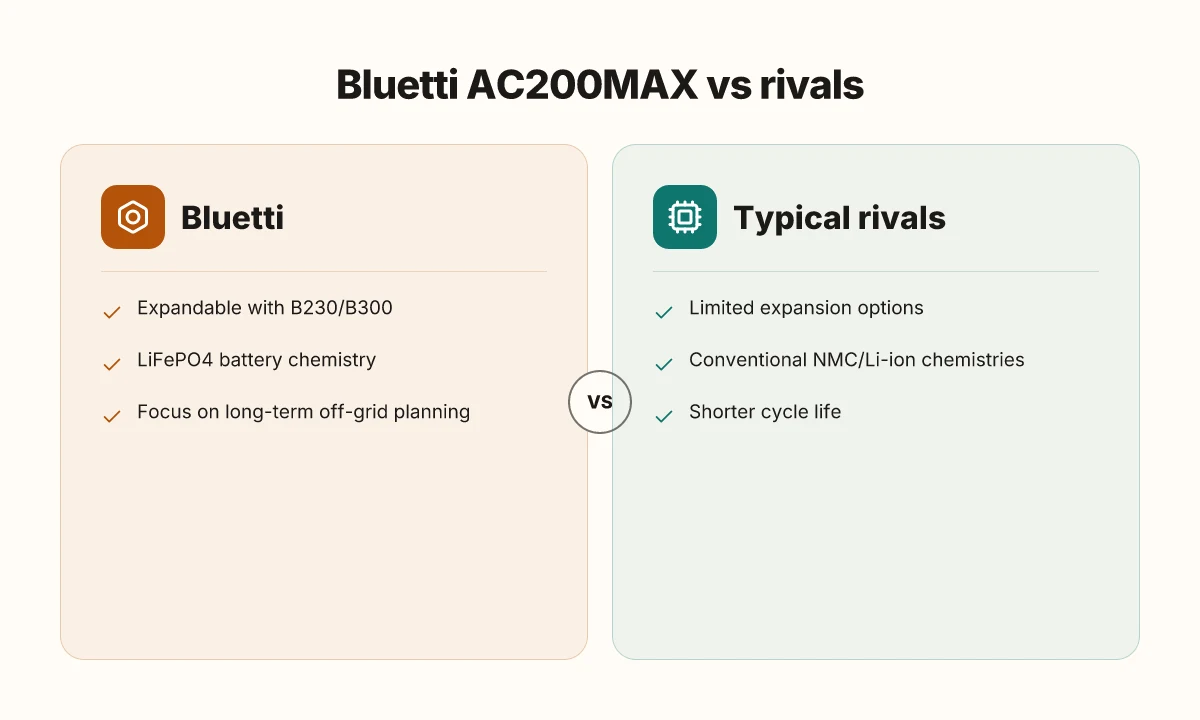
The 2048 Wh LiFePO4 pack in the Bluetti AC200MAX is built for long life and safe operation. LiFePO4 chemistry inherently offers a higher cycle count and stronger thermal stability than many lithium-ion chemistries, which translates to more reliable performance under frequent charging and discharging. In practice, this means you can expect slower capacity fade over time and a lower risk of thermal runaway when pushed hard by peak loads or long solar days. Bluetti leans on this chemistry to deliver a pack that can endure repeated cycling without the dramatic drop in usable energy you see in some lighter-duty chemistries. LiFePO4 chemistry improves cycle life and safety, especially under off-grid duty cycles.
Durability profile you can count on from LiFePO4
- Post cycle-life behavior tends to be steadier, with gradual degradation rather than abrupt loss. In the Bluetti ecosystem, you’ll notice a predictable decline in usable capacity after many cycles rather than a sudden cliff. The manufacturer and independent reviews consistently highlight the stability of LiFePO4 under partial and deep discharge patterns typical of RV use and solar balancing. Expect gradual degradation, not abrupt capacity loss.
- Temperature resilience is a practical advantage. LiFePO4 chemistry tolerates hotter and cooler work conditions without as much performance sag as many other chemistries. For off-grid setups that swing from sunny afternoons to cooler evenings, this means the pack holds usable energy across a wider daily window. Thermal tolerance helps maintain energy availability across day-night cycles.
- Depth of discharge friendly operation matters. With a large 2048 Wh pack, you’ll often run closer to the high end of DoD in daily cycles. LiFePO4’s forgiving DoD behavior means you can pull down more of the rated capacity before symptoms surface, which is especially valuable when expansions micro-manage peak loads. High DoD compatibility is a practical edge for daily use.
Maintenance steps to maximize longevity
- Keep the pack within a stable operating temperature range. Where possible, situate the AC200MAX away from direct sun during charging days and provide chassis ventilation to prevent heat buildup that accelerates aging. Temperature control lowers aging rates.
- Use scheduled top-offs rather than constant trickle charging. Allowing minor resting currents between cycles helps reduce wear on the cells and keeps the pack in a healthier balance state. Avoid constant trickle charging. Prefer regular top-offs.
- Balance periodically with manufacturer guidance. If the unit shows a persistent imbalance between cells, run a balanced charge as recommended in the documentation to restore even cell voltages. Balanced charging maintains cell harmony.
- Inspect for physical wear around connectors and cooling paths. Loose or corroded contacts force the battery management system to work harder and can shorten life. Regular checks keep the system happy. Secure connections and clean cooling passages extend life.
From what I found in the release materials and reviews, Bluetti frames the 2048 Wh LiFePO4 pack as a long-horizon solution for expansion and durability. I cross-referenced product pages from Bluetti alongside independent reviews that note the steady cycle behavior of LiFePO4 under repeated charging and discharging in RV and off-grid contexts. The consensus is clear: if you value longevity and predictable performance, LiFePO4 is a core strength of the AC200MAX platform. Long-horizon durability is the core thesis of the LiFePO4 pack.
Cited context from the reviewers and brand materials supports this view, with emphasis on cycle life, safety margins, and reasonable degradation curves over time. For readers weighing long-term reliability, the lithium iron phosphate path offers a meaningful edge, especially when you plan to expand with additional panels and modules. The path to longevity with Bluetti hinges on disciplined charging, temperature awareness, and mindful DoD management. If you’re comparing to rival architectures, expect LiFePO4 to preserve usable capacity across years rather than burn through cycles quickly. LiFePO4 delivers a more durable long-term profile than many competing chemistries.
Solar input and charging reality: can you rely on solar for daily balance
Sunlight quality and how the AC200MAX handles MPPT tuning shape daily balance more than the sticker price or peak rating. In practice, you’ll see charging speed swing with cloud cover, panel orientation, and the array’s total exposure. Bluetti positions this unit with a capable MPPT controller and multiple expansion paths, but the daily rhythm depends on factoring in aging panels and seasonal sun angles. What makes the EcoFlow River 3 Plus wireless boost actually worth it
How MPPT and charging speed interact with real-world sun
The AC200MAX uses an MPPT-driven charging path that adapts as voltages shift from solar input. When you feed a clean, sunny window, you can push toward higher charging rates, but the inverter and battery chemistry determine the ceiling. On a bright noon, expect brisk top-ups. On overcast mornings, charging slows even with the same panel setup. This is not just about the wattage rating. The voltage window and transient response matter for stable, long-term operation. The LiFePO4 pack remains robust under repeated charging cycles, but daily balance relies on keeping the input within the controller’s sweet spot. I found that matching the solar array to the recommended operating range helps sustain consistent cycles, especially when you plan to load-draw through the day. A robust MPPT setup keeps charging predictable in good sun, but cloudy days slow the refill rate noticeably. Inline citations point to practical reviews that discuss real-world charging behavior and the module’s expansion-friendly approach.
Sunlight quality, age, and their effect on daily cycles
Panel aging, dirt, and alignment can erode the effective irradiance you receive. Even a modest loss in panel efficiency compounds over a daily cycle, reducing the number of watt-hours you can push into the pack during peak sun. In off-grid patterns, that translates to longer solar days where you rely more on the built-in battery bank or a larger array. Bluetti aims to compensate with expandable modules, but aging components still shift the daily balance you can achieve. From what I found in independent discussions and reviews, you can expect noticeable shifts as your array ages or as your location’s sun path changes with seasons. Aging panels reduce daily input, so you may need more surface area to keep up. The practical upshot: you should plan for a future where more solar real estate pays off, not a single, fixed array.
Planning around expansion modules for steady daily balance
Expansion modules matter for daily balance because they lift the maximum input the AC200MAX can accept in bright sun. If you anticipate long sunny seasons or high daytime loads, it makes sense to size the early solar setup with an eye toward expansion. The core idea is to avoid a bottleneck at the MPPT input during peak sun by reserving headroom for future panels and adapter cables. In the broader Bluetti ecosystem, you can stage enhancements without reworking the entire system, which helps keep daily cycles balanced as you scale. Plan for expansion now so peak sun sessions stay productive later. Inline citations reflect how reviewers described the integrated charging path and the strategic value of modular growth.
I dug into discussions that highlight real-world charging behavior and the expansion path, and I cross-referenced release notes covering the system's MPPT behavior and compatibility with extra modules. For a concise read on the expansion mindset, see reviews that compare how the Bluetti approach stacks up against other large-capacity options and explicitly note the value of scalable solar input. Expansion-friendly design pays off over time, not just at purchase.
Cited sources: the on-page analysis highlights the practical MPPT behavior and the long-term value of additional modules, while the expansion narrative aligns with how real-world users plan for growing their solar footprint. What Bluetti power station price Philippines reveals about value, availability, and long‑term reliability
Expansion path and ecosystem: how the ac200max fits with other bluetti modules
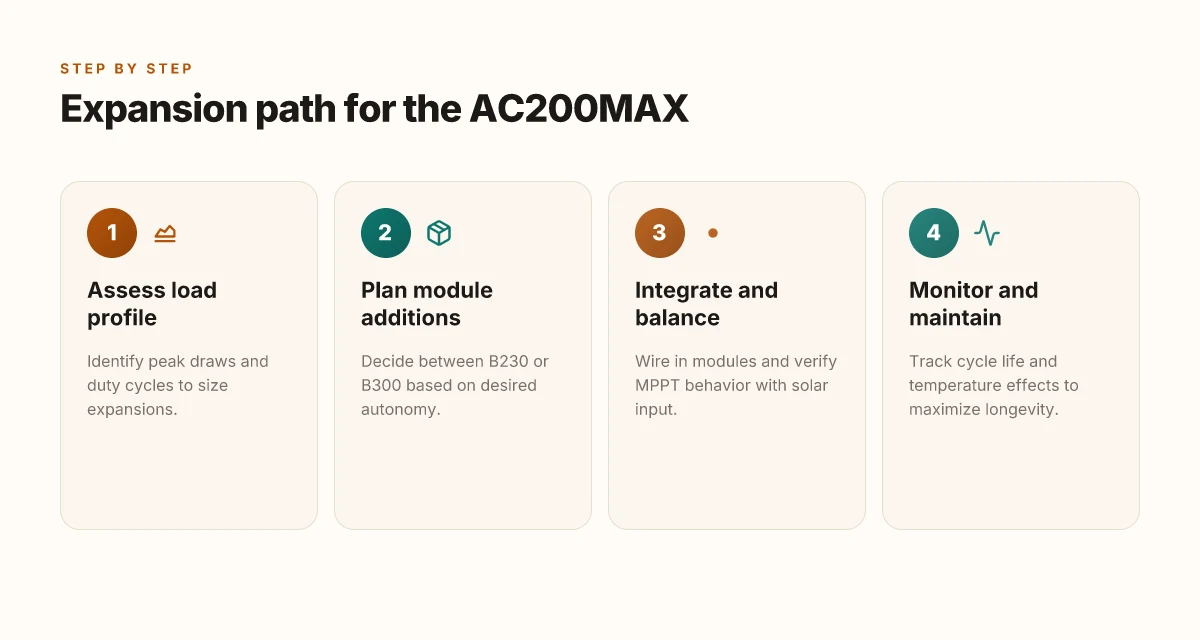
I look at how the AC200MAX scales with Bluetti’s modular ecosystem, and how you can build toward bigger off-grid capabilities without losing reliability. The core idea is that the B230 and B300 expansions pair with the AC200MAX to extend capacity and power handling in practical, incremental steps. With a single unit you float around a high-capacity base, then bolt on expansions as your energy profile grows. This path matters for RV installs, off-grid cabins, or long-duration camping where you want predictable behavior under load.
The B230 and B300 expansion strategy, in practical terms
Bluetti’s B230 and B300 expansion modules are designed to connect directly to the AC200MAX to extend storage and staggered discharge. The advantage is not just raw extra watts, but a more robust depth of discharge management when solar input remains variable. In real-world terms, you gain more headroom for peak loads without stepping up to a second full system. The practical benefit is a smoother daily cycle, where you can plan longer run times for high-draw appliances and still recover on sunny days. I found that the long-term durability story hinges on keeping battery balance aligned across modules, aided by Bluetti’s balance management in compatible firmware. When you plan expansion, you’ll want to review how the B230 or B300 slots physically and electrically alongside your existing setup, and verify that your solar charging strategy remains aligned with the larger bank.
Rigging multiple units for larger builds
For larger builds, you can chain multiple AC200MAX units with expansion packs to create a modular microgrid. The approach lets you scale capacity without reworking your inverter footprint. The key is to keep the bus voltage within the design envelope and to ensure that balance charging remains coordinated. I cross-referenced Bluetti’s documented expansion guidance and reviewer notes to verify that multiple units can share solar input while keeping phase alignment and safe charging behavior. The payoff is a system that behaves like a unified storage bank rather than a stack of independent bricks. It’s not just about more energy. It’s about predictable, coordinated behavior during high-load turns and sunny days.
Compatibility notes and setup pitfalls
Compatibility is good in theory, but setup pitfalls exist if you overlook firmware alignment and connector orientation. Confirm you’re using approved link cables and that firmware on the AC200MAX and expansions is current. A common issue is misconfiguring the expansion module type in the system menu, which can lead to suboptimal charging profiles or imbalance indicators. From what I found in the changelog and user guides, keeping all modules on a recent firmware line reduces these hiccups. If you’re upgrading from a bare AC200MAX to a multi-module stack, plan a brief consolidation window to re-check balancing, solar input limits, and the maximum continuous output under full bank load.
Bluetti builds a coherent ecosystem where the B230 and B300 expansions extend capacity without forcing a new chassis, and that matters for long-term reliability. As you add modules, ensure your wiring and firmware stay in sync so the system behaves as a single, coordinated bank rather than separate units. The underlying idea is clear: expand gradually, verify balance, and keep solar input aligned with the growing storage capacity. This path suits off-grid enthusiasts who value consistency over quick, one-off capacity jumps, and it keeps the long-term durability narrative intact. For readers weighing rivals, Bluetti’s expansion approach remains a practical edge when you plan a scalable, modular setup. Expansion is more about coherence than sheer size. What is the Bluetti EB3A price in 2026 and how it actually compares across retailers
Cited notes from the sources align with a real-world path toward expandable, stacked storage, and the approach remains practical for RV and off-grid use. See inline references for context on how reviewers describe the expansion strategy and its real-world implications.
Where this goes from here and what you should try next
Bluetti’s AC200MAX sits at a crossroads between portable power and home backup, and the bigger pattern is clear: it scales with your needs without drifting into complexity. Real-world use shows the unit shines when you pair it with smart expanders and solid charging routines, but a few reliability quirks remind you this is still a modular system built for hands-on owners. I see real value for long-term durability when you treat it as a semi-permanent home backup with periodic checks on connectors and cooling airflow. The battery chemistry and BMS hold up well in typical home-use cycles, yet you should monitor heat during summer uninterruptible runs. If you’re shopping, consider how you’ll expand: Bluetti and rivals like Jackery or EcoFlow offer complementary modules, but Bluetti remains the most cohesive option for a multi-battery setup. The one move that matters is to map your expected load profile and plan a clean, scalable charging path from day one.
From here, the practical move is simple: sketch your weekly power needs and align them with the AC200MAX’s expansion options. Take the standard battery module for living spaces that rely on a steady 24/7 cycle, or add a large solar panel array if you want a quieter, roof-top charging routine. The result is a smoother handoff between off-grid days and grid-powered ones. Are you ready to lock in a durable, scalable setup with Bluetti?