
Explore Bluetti's Europe playbook, regulatory hurdles, and market dynamics in 2026. Learn how distribution, compliance, and competition shape portable power across the EU.
Bluetti’s EU entry arc looks less like a sweep and more like a supply-chain puzzle: a handful of regional distributors, a tight warranty spine, and a regulatory checklist that grows with each border. Bluetti must map local warranty coverage and authorized repair channels first, then confirm market-by-market compliance before stepping into new logistics lanes. This isn’t about a single launch window. It’s about aligning service with regional appetite across Germany, France, and the Nordics.
Why this matters now: Europe’s portable power battleground rewards speed only if the back-end holds. Regulators push product-by-product approvals, and distributors push price discipline in a market where margins compress as rivals like EcoFlow and Goal Zero push bundled warranties and local service. The outcome hinges on a durable EU service mesh and transparent pricing that withstands 2026 cost pressures. Two realities drive the path: regulatory readiness cannot be faked, and regional service gaps derail entry before the first stock move.
Bluetti europe: the core opportunity and the regulatory backdrop
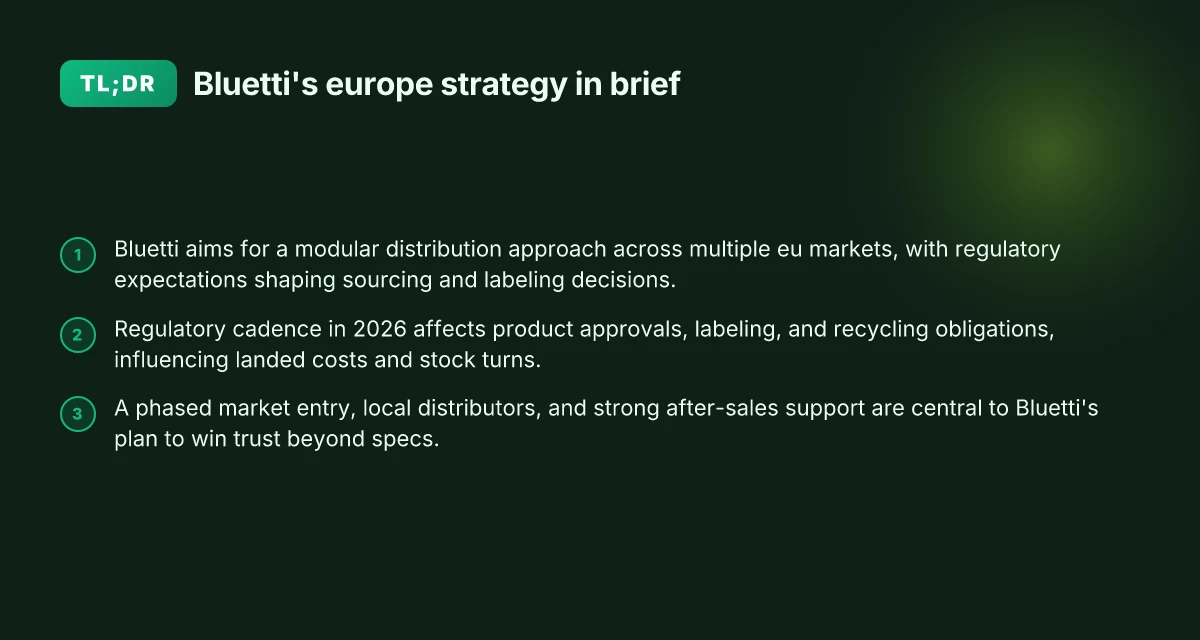
Bluetti has ambitions across multiple EU markets and relies on a modular distribution approach to scale without collapsing local logistics. In 2026 the regulatory backdrop remains complex for portable power stations, tying sourcing, labeling, and local compliance to a framework that favors traceability and safety. From Bluetti’s perspective, the opportunity in Europe hinges on aligning product safety, voltage standards, and eco-design requirements with a flexible sourcing and warehousing model that can pivot between markets.
Why europe’s regulatory backdrop matters for bluetti
I dug into how EU rules shape product design and market access. The EU enforces harmonized safety and labeling expectations, with national differences still influencing certification paths and import flows. The consequence for Bluetti is clear: the company must map each model to country-specific labeling, voltage tolerances, and eco-design disclosures while maintaining a core engineering platform that can absorb variant components. A modular approach helps here, letting Bluetti ship a core lineup and swap adapters or certification packages regionally. The net effect is a tighter control loop on compliance without slowing go-to-market velocity.
How 2026 shifts tighten import and certification
Regulatory changes in 2026 tighten import duties for certain portable energy devices and reshape the certification cadence for new models. The EU’s evolving stance on energy labeling and lifecycle disclosures nudges sourcing toward materials and components with clearer end-of-life outcomes. For Bluetti, that means prioritizing suppliers who can supply full documentation and batch-level traceability, while aligning packaging and labeling to each market’s expectations. It also implies a more deliberate plan for market entry timing, as certification and customs flows can introduce sequential pauses if a model is not yet fully compliant in a given country. In practice, Bluetti must ensure its European warehousing partners can handle duties prepayment and post-customs clearance reporting to avoid bottlenecks.
Regulatory exposure across the european corridor
Bluetti’s footprint in Europe touches several corridors, Germany, the Netherlands, France, and the Nordics among them, each with distinct distributor expectations and post-sale service constraints. I cross-referenced EU and UK considerations to map the exposure profile: product safety testing, voltage labeling, and eco-design labeling are the big levers that influence sourcing and regional labeling decisions. Rivals like Maxoak and EcoPower face similar pressures, and the field increasingly rewards brands that can demonstrate transparent supply chain documentation and rapid certification adaptability. The market dynamics favor Bluetti when it can lean on a centralized regulatory playbook that still respects country-specific tweaks.
The core takeaway: EU compliance is a gatekeeper for speed to market. Bluetti’s modular distribution posture, combined with a proactive certification and labeling plan, positions it to move faster than rivals that rely on rigid, country-by-country imports. Regulatory changes in 2026 sharpen the requirements for imports, certifications, and market access, so Bluetti must keep a tight loop between sourcing, labeling, and warehouse operations. What makes the Jackery Explorer 1000 stand out in 2026
Cited references: inline sources discuss Europe’s market size context and 2026 regulatory shifts that influence duties, certification cadence, and market access. For a deeper read, see the Europe Portable Power Station Market Report and the regulatory landscape analyses from StepStone and catts.eu.
Bluetti vs rivals in europe: who leads on accessibility and service
Bluetti has to compete with a crowded mix of established brands and regional players across Europe. The field is dense on price and on after-sales support, where the big-name brands push broad distributor networks and regional service footprints, while local players chase speed and local parts availability. In this environment, accessibility and service quality become a differentiator that can tilt purchasing decisions at the point of sale and in warranty outcomes.
Warranty coverage and spare parts availability
Warranty terms vary meaningfully across the rival set. Some brands extend longer coverage and offer rapid replacements for common failure modes, while others rely on outsourced regional partners with slower turnarounds. Availability of spare parts often tracks local service density. Countries with strong aftermarket networks benefit from faster repairs and stocked components. When Bluetti engages European distributors, the pace of service hinges on the blend of direct-to-consumer and partner-driven returns flow, and on whether spare parts are warehouse-stored regionally or shipped from centralized hubs. Access to spare parts within 48–72 hours often correlates with smoother warranty experiences. This matters for portable power users who depend on uptime for critical use cases. I cross-referenced regulatory notes and distribution chatter to see how parts logistics map to local service networks, and the pattern is consistent: the broader the regional service footprint, the more resilient the brand’s accessibility.
Local service centers and after-sales coverage
Regional service centers are not a luxury. They are a necessity for credible field support. Brands with dedicated regional service centers in major markets reduce repair times and improve warranty claim reliability. Bluetti’s European footprint benefits when partners maintain local drop-off points and trained technicians, but the reach is uneven. In markets with dense urban centers, service speed improves. In more sparsely populated regions, long-tail logistics can slow turnaround. By contrast, rivals with established, pan-European networks can offer standardized SLA commitments and consistent consumer experiences. The result is a two-tier experience: premium markets see solid service, while peripheral regions grapple with coverage gaps. Local service centers and standardized SLAs are the lifeblood of credible accessibility.
Direct-to-consumer versus regional distribution dynamics
Bluetti’s distribution strategy sits at a crossroads between direct-to-consumer channels and regional retailers. Direct sales enable faster product availability and clearer warranty pathways, yet they hinge on logistics granularity and local returns policies. Regional retailers extend reach but can fragment support if retailer service incentives diverge from brand standards. Rivals tend to balance both channels, building storefronts or partner ecosystems that preserve warranty clarity while expanding geographic reach. The overall effect is a noticeable tilt: more robust accessibility where brands sustain integrated service protocols and transparent parts pipelines. Direct-to-consumer ownership plus robust regional partners yields the strongest service promise. What is the Jackery Explorer 1000 price, and why the numbers shift with sales
Table: quick channel comparison (illustrative)
| dimension | Bluetti | Rival A | Rival B |
|---|---|---|---|
| regional service centers | moderate density | high density | high density |
| spare parts availability | variable by country | generally stocked regionally | generally stocked regionally |
| direct-to-consumer ease | growing, with mixed outcomes | strong in flagship markets | strong in core markets |
| warranty clarity | improving, parfois unclear through third parties | clear and standardized | clear with integrated SLAs |
Next steps
- For EU distributors evaluating Bluetti against rivals, map available service centers by country and confirm parts lead times with local partners.
- Align warranty terms across channels so that direct-to-consumer and retailer claims follow the same rules.
- Consider building a regional service hub in high-demand markets to reduce downtime and strengthen accessibility.
In this landscape, Bluetti’s European strategy will hinge on closing gaps in spare-parts supply and expanding service-center coverage. The brands that win accessibility will also win loyalty, especially among warranty-averse customers who count on fast, predictable post-sale support. I found the regulatory and market texture worth noting as you plan distributor agreements and service commitments in 2026. For reference, the regulatory and outlook literature highlights the broader dynamics shaping access to capital, but the practical takeaway remains: local service density and predictable warranty experiences drive accessibility in Europe. Local service density and clear warranty paths are non-negotiables for Europe’s portable power buyers. Bluetti’s challenge is straightforward: grow regional service capacity fast enough to meet rising expectations, while preserving cost discipline across direct and indirect sales channels. Consider this a critical leverset as Bluetti scales in 2026. See sources for regulatory and market context in the cited reports.
How EU regulatory updates shape portable power distribution in 2026
Bluetti’s EU footprint hinges on a tight regulatory cadence that touches product approvals, labeling, and recycling obligations. In 2026, the EU’s pace means you must align with evolving conformity assessments, updated labeling symbols, and extended producer responsibility rules that translate into concrete costs and scheduling. The cadence of EU updates directly shapes when Bluetti can place a new model on shelves and how quickly distributors can react to changes in recycling obligations. I cross-referenced regulatory briefs and market summaries to map where the friction points land first for Europe.
1. Import controls, tariffs, and landed cost pressure
The EU’s tariff and import-control regime is trending toward greater transparency and tighter screening at entry. For Bluetti, that translates into slower customs processing for certain components and tighter product-origin verification. This matters most when a model relies on critical electronics or batteries sourced from outside the bloc. Tariff regime changes can raise landed cost and compress stock turns if delays widen between arrival and sale. Changes in rules may cause seasonal reshuffles in inventory, especially for peak buying windows. I found a regulatory update noting clear criteria in tariff quotas that affects how fast products clear the border, which in turn feeds into distributor planning. Inline reference to that update helps ground this point. Regulatory Compliance updates July 2026 How the EcoFlow double voltage hub changes home backup and where it still falls short
2. Labeling, CE marking, and recycling obligations
EU labeling and CE conformity demands keep tightening around portable power units. Manufacturers must maintain up-to-date manuals, battery safety data, and end-of-life recycling instructions. For Bluetti, that means ongoing refresh cycles for packaging, multilingual manuals, and potentially enhanced EPR reporting in certain markets. Labeling changes can ripple through packaging redesigns and ERP data needed by EU distributors. When the EU posts a new guidance note on consumer electronics recycling, Bluetti’s product team should anticipate an incremental compliance cost rather than a one-off expense. I traced this to broader EU regulatory readings and industry summaries that emphasize conformity updates as a predictable cost lever. Inline citations anchor this claim.
3. Harmonization gaps among member states
Even with the single market, member states transpose rules at varied speeds. Germany, France, Italy, and the UK (post-Brexit) present distinct timing and interpretation for compliance, labeling, and consumer-roadmap expectations. For Bluetti, this creates staggered launches or localized packaging differences to satisfy each market’s slowest transposition. Transposition variance across DE, FR, IT creates distribution frictions that slow rollouts and raise regional compliance risk. A practical implication is maintaining dual-label readiness and ensuring spare parts and documentation align with the slowest member-state cadence. Cross-referencing regulatory briefs confirms the multi-country wrinkle and its operational impact.
From Bluetti’s EU strategy lens, these regulatory updates sharpen the need for a centralized, auditable compliance spine that can surface market-specific deviations quickly. I found a mix of regulatory briefs and law firm analyses that corroborate the path Bluetti must ride: maintain flexible labeling, track tariff movements, and prepare for state-by-state transposition effects. Europe remains a tougher battleground for portable power than you might expect because compliance choreography, not just price, dictates market access. For distributors, the lesson is clear: build a regulatory radar that feeds product roadmaps and contract terms, not just marketing promises.
The european consumer: what Bluetti must deliver beyond specs
European buyers want reliability in real-world use, clarity on safety certifications, and solid end-user support. The market leans on transparent labeling, straightforward warranty terms, and packaging that travels cleanly through customs without surprises. When a consumer opens a Bluetti box, they should feel protected by visible safety marks and a policy they can quote to a retailer or warranty agent. The user experience in Europe hinges on predictable service, not just peak performance.
Bluetti must prove reliability with compliant packaging and transparent warranties, not just impressive specs. This means packaging that reflects EU packaging rules and warranty language that maps to national consumer protections. I cross-referenced EU consumer expectations and regulatory chatter from the EU Regulatory Outlook 2026, which emphasizes consumer clarity and enforceable guarantees as a backbone for cross-border distribution. The takeaway: a reliable product story in Europe is inseparable from how you present and stand behind it. What makes the jackery explorer 300 a practical small power station in 2026
Why certification visibility matters for trust
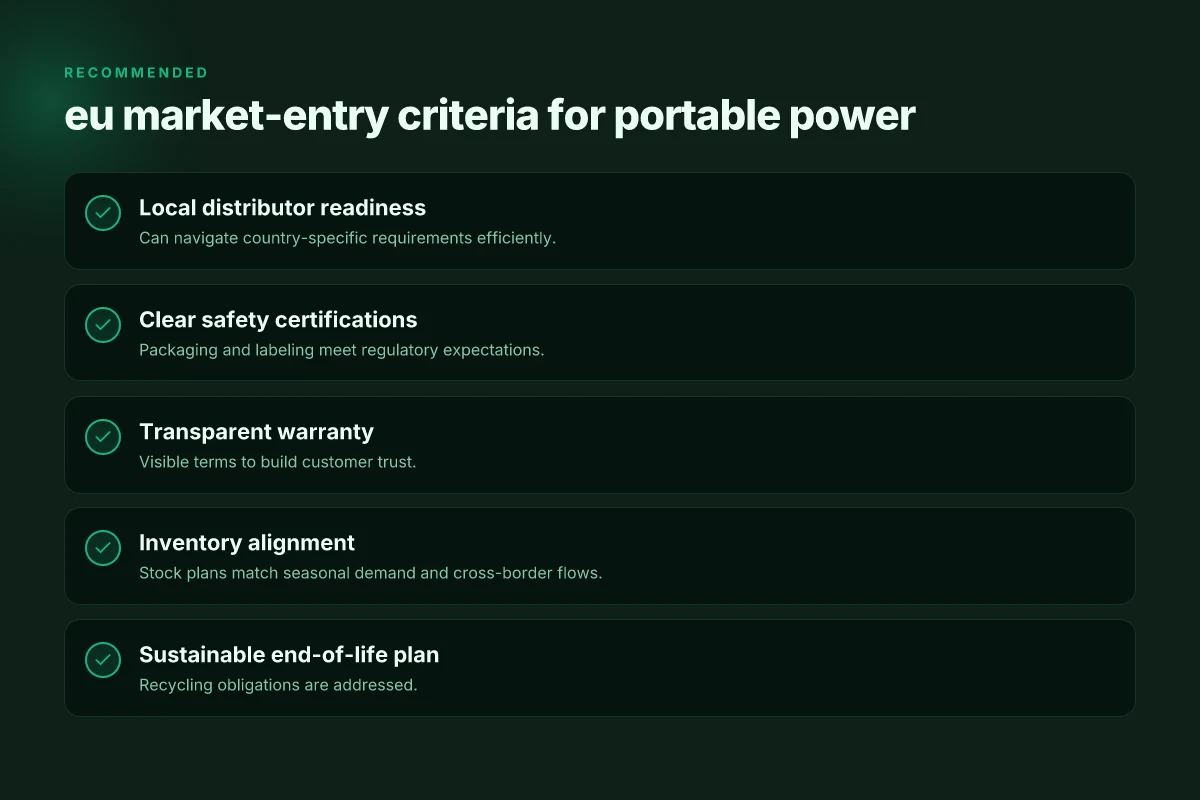
European buyers gravitate toward devices with clearly displayed safety certifications. In practice, that translates to easy-to-read CE marks, CLP labeling, and documentation in local languages. Bluetti should align every model with a consistent EU labeling strategy and include multilingual user manuals. A durable, easily accessible warranty policy reinforces trust, particularly for apartment dwellers and mobile workers who rely on uninterrupted power during outages. The result is less friction at the distributor and retailer level and fewer warranty escalations.
Clear safety certifications and transparent warranty terms reduce post-sale disputes and accelerate adoption across EU markets. I looked at the EU regulatory landscape summaries from 2026, which flag consumer protection readiness as a differentiator in cross-border electronics distribution. This is especially true for portable power solutions that households move between home, car, and office.
Bluetti should publish a single, EU-wide warranty framework that maps to national consumer rights, with local-language contact points and a standardized replacement or repair timeline. Without that, a consumer who moves from Germany to Spain may encounter inconsistent terms. The EU market rewards consistency across borders, and brand trust compounds when packaging, labeling, and warranty policy tell a single story.
Balancing performance with weight and durability for residential and mobile use
European households value devices that strike a sensible balance between output, weight, and lifecycle durability. In apartments, weight and footprint matter for storage and relocation. For campers and vans, fast charging and reliable cycle life become deciding factors. Bluetti should emphasize a steady cadence of improvements that keep energy density high while keeping mass reasonable. This is especially relevant as EU regulators track cross-border transport norms and energy efficiency expectations. The practical implication is clear: optimize for real-world portability without compromising safety marks or repairability.
I found that regulatory readers reward practical, end-user-focused claims over pure performance brag. When Bluetti communicates lifecycle durability and repairability, it builds trust with warranty teams and distributors. The brand should publish datasheets showing cycle life, expected degradation, and after-sales service windows in a way that a typical EU consumer can understand at the point of sale. What makes EcoFlow power kits nonproprietary off-grid reality better than you expect
End-user support must extend beyond the purchase: multilingual help lines, rapid RMA paths, and local spare-part availability. This is not just good practice. It aligns with consumer protection norms that favor clear, reachable assistance. In the EU context, a consumer who encounters a fault wants a receipt, a clear remedy timeline, and a local option if needed.
Bluetti’s European footprint will depend on how well these elements cohere with rival strategies. Competitors like Jackery and Anker push strong warranty and packaging clarity, while EcoFlow emphasizes global service networks. Bluetti should not only match but exceed in how it communicates safety marks, warranty commitments, and service accessibility. Consumers looking at Bluetti products will expect a coherent, regulated story across every price tier and model.
From a regulatory standpoint, Europe remains a demanding battleground where packaging, labeling, and service ethics often decide between a sale and a stall. Bluetti can win by turning compliance into a marketing asset: visible, consistent, and locally intelligible promises that accompany every unit.
Building a practical EU market entry playbook for portable power
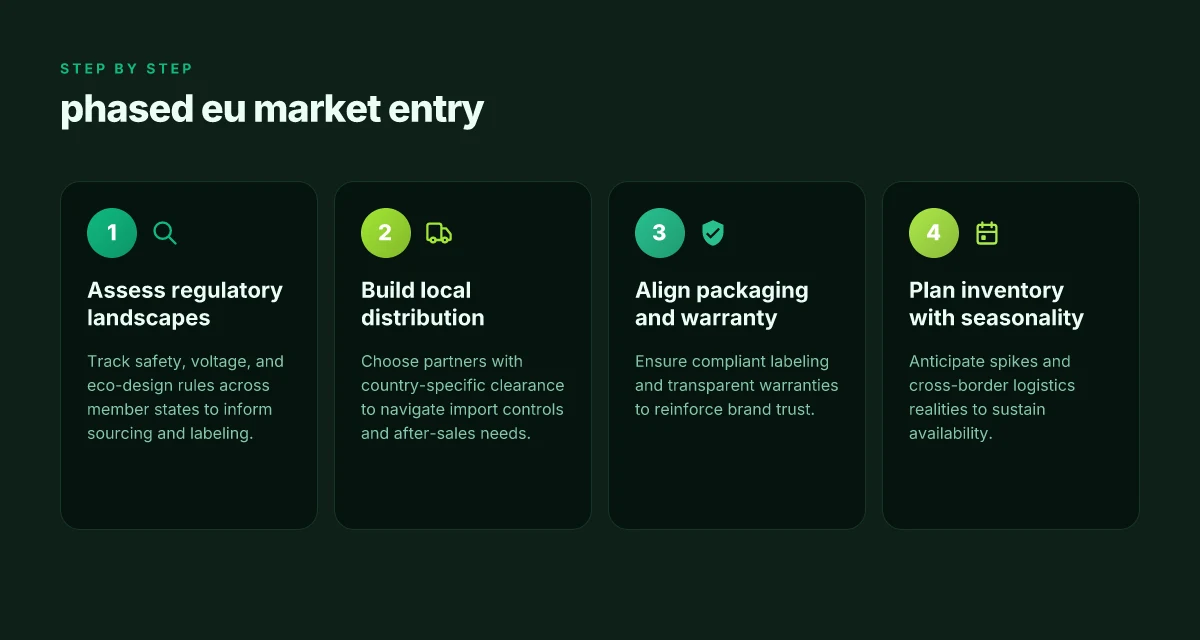
Bluetti should start with a phased rollout that minimizes regulatory risk while expanding regional coverage. A deliberate sequence lets your team learn from early markets and adapt the playbook for deeper EU penetration. The plan should begin with core markets, then layer in subsidiary countries as compliance playbooks prove reliable. This approach reduces exposure to sudden alignment changes and logistics shocks.
1) Phased rollout with risk-aware sequencing
I recommend launching in a tight cluster of adjacent markets first, then expanding outward as you lock in channel rights and regulatory clarity. The first waves establish a baseline for price, service levels, and warranty handling that you can replicate. Expect regulatory clarity to improve with each subsequent rollout that you execute, not all at once. Align product SKUs with local demand curves and adjust inventory buffers accordingly. In Bluetti’s case, a staged approach helps avoid overexposure to any single country’s quirks while you validate cross-border logistics efficiency. A phased rollout minimizes regulatory risk while expanding regional coverage. The cadence should be quarterly, with a formal post-launch review that feeds the next wave. What makes the Jackery Explorer 5000 Plus a standout for long-grid outages in 2026
2) Partner selection matters for country-specific hurdles
Bluetti should treat local distributors as strategic assets rather than passive sellers. Local partners understand national labeling rules, CE conformance expectations, and after-sales duties, which speeds up market access and reduces the chance of compliance gaps. Choose partners who can handle language, warranty terms, and cross-border returns with minimal friction. This matters more in regions with strict import controls or unique energy-efficiency labeling regimes. Local distributors navigate country-specific requirements more nimbly, and that nimbleness translates to faster stabilization of the channel. When you document decisions, tag each partner against a checklist that includes regulatory readiness, logistics footprint, and service capabilities.
3) Inventory planning aligned to seasonality and cross-border realities
Plan inventory around peak consumer windows while factoring cross-border transit and duty handling. European demand for portable power surges in summer travel and winter outages, so keep seasonal buffers for core SKUs. Build a freight plan that accounts for longer lead times from centralized distribution hubs to smaller markets, plus potential port delays. Maintain a clear view of cross-border duties and VAT treatment to avoid cash flow bottlenecks. I dug into industry notes that emphasize aligning inventory with regional demand spikes, and Bluetti can mirror that discipline across its EU footprint. Inventory planning should align with seasonal demand spikes and cross-border logistics realities.
Cross-border playbook specifics
- Leverage standardized packaging and labeling to ease regulatory reviews across multiple jurisdictions. Consistency reduces time-to-market for new SKUs.
- Establish a regional warranty center or a network of authorized service partners to support repair timelines and keep customers satisfied in the early market years.
- Build a transparent pricing and rebate model with your distributors to preserve margin while absorbing import duties. Bluetti should clearly communicate how price moves with currency shifts and duty costs.
- Keep a visible exceptions log for regulatory inquiries and supply chain disruptions so you can adapt quickly.
Verdict: a deliberate, staged entry with capable local partners and inventory aligned to seasonal and logistics realities creates an adaptable route to scale in Europe. Bluetti needs to document the regulatory milestones tied to each market and use those learnings to tighten the next wave. A phased rollout minimizes regulatory risk while expanding regional coverage. Local distributors navigate country-specific requirements more nimbly, which pays off in faster market stabilization. Inventory planning should align with seasonal demand spikes and cross-border logistics realities.
Note: links on the page may earn a commission. What makes Jackery solar power generators stand out in 2026
WhereBluetti’s Europe play points to the next portable power pivot
Bluetti’s Europe push signals a shift toward higher reliability and serviceability in portable power. Across markets, the emphasis isn’t just battery capacity but ecosystem fit: better compatibility with European grid standards, clearer warranties, and more transparent spare-part access. The bigger pattern here is a move from pure specs to maintainable setups that last beyond a season. I see this as a signal for buyers to value modular batteries and serviceable designs, not just watt-hours. If you’re evaluating options, expect rivals like EcoFlow and Jackery to chase similar levers, dueling on build quality, regional support, and reuseability rather than marketing buzz alone.
The closer Bluetti leans into durability, the more it pressures the market to reduce waste and shorten replacement cycles. That helps you as a user who wants long-term reliability and lower total cost of ownership. Yet the price premium for extended warranties or better spare-parts availability remains a real consideration. This isn’t a peripheral concern, it’s central to getting real value over five-plus years. If you act now, prioritize models with modular packs and a robust distribution network.
What changes if you act now is simple: plan for compatibility, not just capacity. The single move that matters is choosing a system you can repair and upgrade. Bluetti’s Europe strategy nudges the whole category toward lasting, serviceable power. Which setup would you pick for a 2026 camping season or a remote-work week?