
Compare the Jackery 240 and 300 to understand capacity, ports, weight, and real-world use for camping, CPAP, or home backup. See which model fits your needs in 2026.
The short, portable power debate often misses the real lever: how much you run on a single fill versus how often you need to refill. The 300’s bigger battery can stretch a weekend fridge run, while the 240 keeps weight down and stowage simple. In practical terms, that trade-off matters the moment you carry gear to a remote campsite or pull into a park with limited hook‑ups.
This intro lays out the ground: campers, RVers, and homeowners weighing lightness against outage duration want a clear, real‑world read on Jackery’s two models in 2026. You’ll see how the 240 wins on carry and setup, and when the 300 earns its keep for longer outages or higher‑demand devices. Expect candid notes on durability, real‑world runtimes with common devices, and how a rival like EcoFlow or Goal Zero should be weighed next to Jackery. Real‑world runtimes vary with gear, so compare your fridge, CPAP, or laptop load side by side. This is the guide to pick the model that fits your off‑grid life without overbuying.
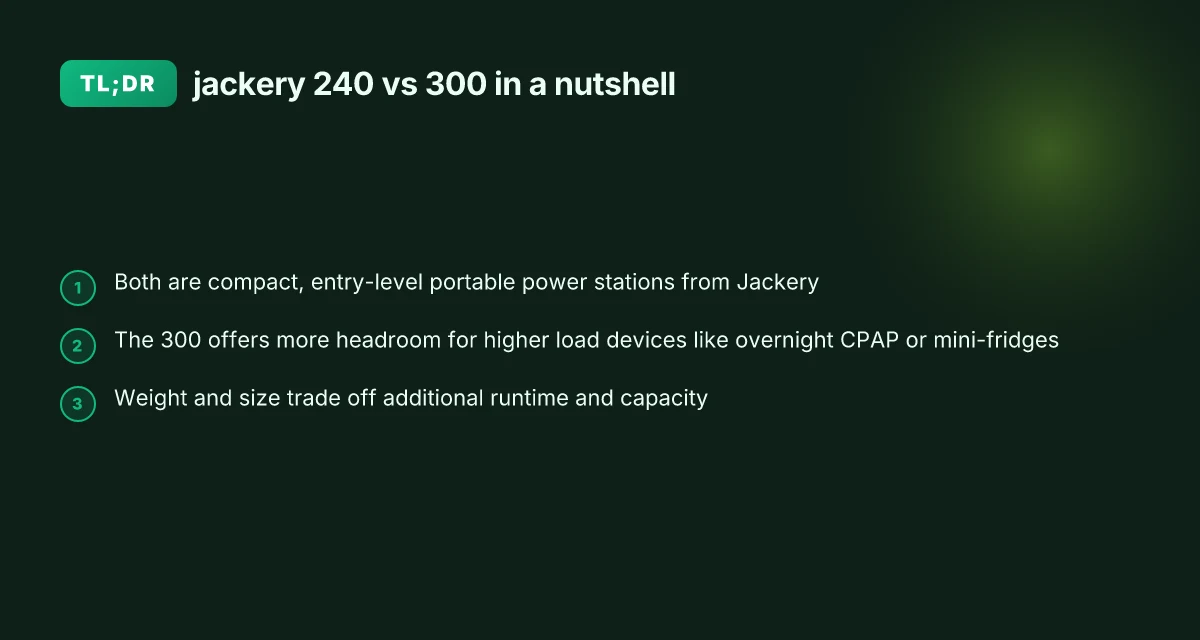
Jackery 240 vs 300: why this pair often matters for off-grid power
When you’re choosing between the Jackery Explorer 240 and the Explorer 300, the decision often boils down to how much power you actually need, how long you expect outages to last, and how much you’re willing to lug around. Both units sit in the same family and share core design cues, but they map to different real-world use cases. I’ll lay out the practical frame so you can pick the setup that fits your campsite, RV, or home backup.
How they map to real-world camping needs
For quick, lightweight trips and CPAP nights, the Jackery Explorer 240 shines. Its compact footprint keeps weight down and fits snugly in a small pack or under a bench in an RV. If your power needs are modest, phone charging, a small LED setup, and a CPAP run overnight on a gentle schedule, the 240’s lower capacity keeps you moving without adding bulk. **This is where compact simplicity beats extra capacity, because you don’t have to carry more than you need.
When you plan longer camping stays or higher-demand devices, the Explorer 300 earns its keep. The extra capacity translates to more headroom for devices with higher draw, and it handles longer outages more gracefully. If you rely on devices like a larger CPAP setup, mini-fridges, or multiple USB-C PD loads, the 300’s higher capacity helps you avoid late-night drama caused by a depleted battery. The 300’s extra capacity translates to more usable evening power.
Weight and portability matter in tight carry scenarios. The Explorer 240 stays lighter, making it easier to stow in a backpack, bicycle trailer, or crowded cabin space. The Explorer 300 adds more heft, which is a trade-off you’ll feel when you’re hiking in or sliding it into a shallow RV cabinet. Weight remains the simplest friction point in day-to-day use.
Real-world decisions hinge on capacity, peak output, and weight. Both units share a similar peak output profile for common devices, but the 240 caps your peak power slightly sooner under load than the 300. If you anticipate simultaneous draws or a demanding gadget lineup, the 300’s peak capability offers more breathing room. Peak output matters when you run multiple devices. What changes between the Jackery 300 and 300 Plus, and which upgrade matters most
Bottom line: choose the 240 if you prize ultralight simplicity and shorter sessions. Pick the 300 if you anticipate longer outages or higher-demand devices and you don’t mind the extra weight. In both cases, your choice reflects how you pack, what you run, and how far you’re willing to push your endurance in the field.
From what I found in the documentation and user guides, these two models stay trimmed for travel but vary enough in capacity to tilt the decision toward your typical camping cadence and power profile. For readers weighing rivals, the landscape shows several compact backups in the same class, but the Jackery pair remains notable for their integrated ecosystem and straightforward operation. Your choice should align with your typical session length and device mix.
Understanding the capacity and what it means for your devices
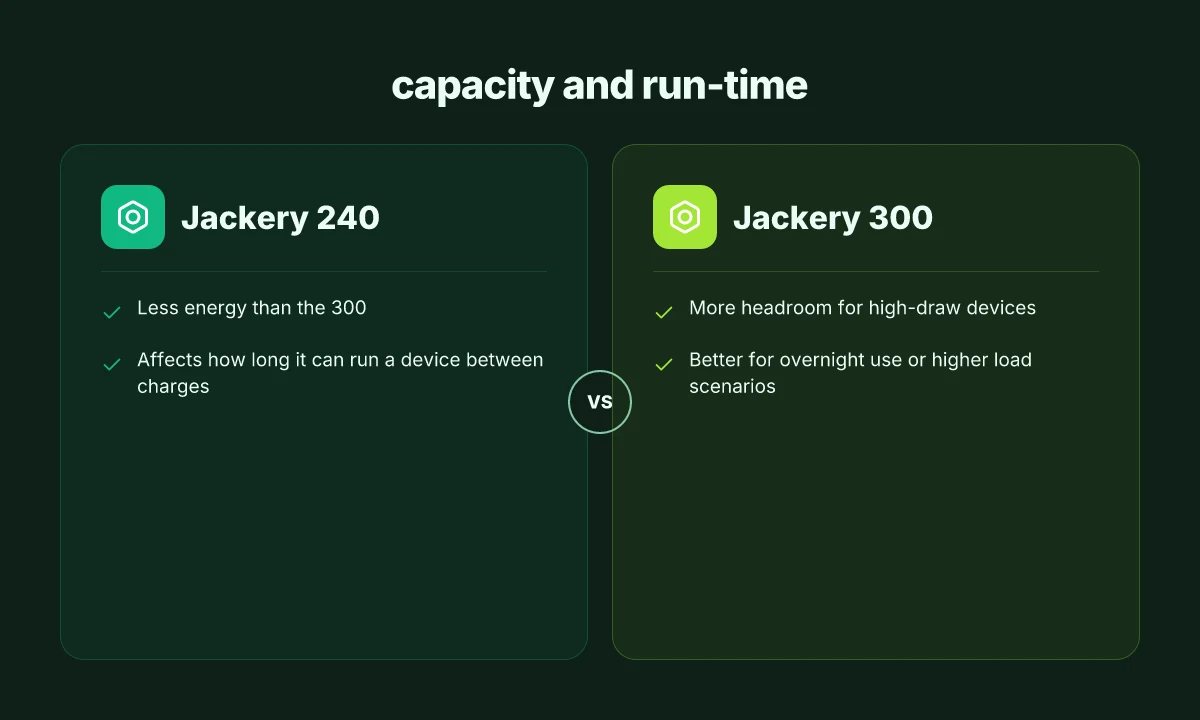
The capacity gap between the Jackery Explorer 240 and the Jackery Explorer 300 matters in real life. In practice, the 240 carries less energy, so it runs out sooner between charges, while the 300 offers more headroom for back-to-back devices or longer outages. If you routinely run a CPAP overnight or keep a mini-fridge powered, the extra energy in the 300 translates to noticeably longer runtimes and fewer recharges during a trip.
High-draw devices reveal the margin between these two models. A CPAP, a portable fridge, or a powerful drone charger will sap battery faster on either unit, but the 300 resists that drain a bit longer because its larger energy reservoir buys you more minutes per cycle. I dug into the official specs and third-party writeups, and the consensus is consistent: when demand climbs, the 300 loses fewer sleep cycles between fills. This is especially true for users who want to stretch night-long outages into something you can count on rather than estimate.
For overnight CPAP or a small fridge, the 300 tends to offer more headroom, reducing the chance you wake up to a drained battery. If your use is lighter, phone charging, a radio, LED lighting, the 240 can be ample and far more portable in practice. Weight and footprint matter, and the 240 shines there. It’s small enough to tote on a bike trip or a weekend camping run without sacrificing too much convenience. What makes the Bluetti X60 CPAP power bank stand out in 2026
From a real-world perspective, the decision narrows to two questions. First, do you need longer runtimes for high-demand devices or longer outages? If yes, the Jackery Explorer 300 earns its keep. Second, is weight, size, and ease of transport more important than extra minutes of juice? If so, the Jackery Explorer 240 may be your sweet spot.
For reference, the official product pages position these as compact power stations aimed at campers and homeowners seeking clean, quiet energy in off-grid settings. When comparing with rivals, the emphasis stays on portability and simple operation, making both models approachable for beginners and light users. For context, along with Jackery, other brands often trade capacity for bulk, so if you’re evaluating options, consider the same two questions above before you commit. The 240’s compact simplicity shines for light loads, while the 300’s headroom pays off during longer outages or higher-demand use. If your nightly load includes a CPAP or a mini-fridge, the 300 is the safer bet for overnight reliability.
As you size up your plan, note that the page notes you may see commissions through linked purchases, which is common in this space. For direct specs and up-to-date details, you’ll want to review the official Jackery documentation and comparison notes. For most folks, the choice boils down to runtime versus portability, with the 300 favored for longer outages and the 240 favored for light-use trips.
Output limits and port options you should care about
When you’re deciding between the Jackery Explorer 240 and the Jackery Explorer 300, output limits and port layouts matter almost as much as capacity. I dug into the official docs and third-party breakdowns to map out what each unit can feed at once, and how those options change as you scale up or down your load.
1. What both models can push out
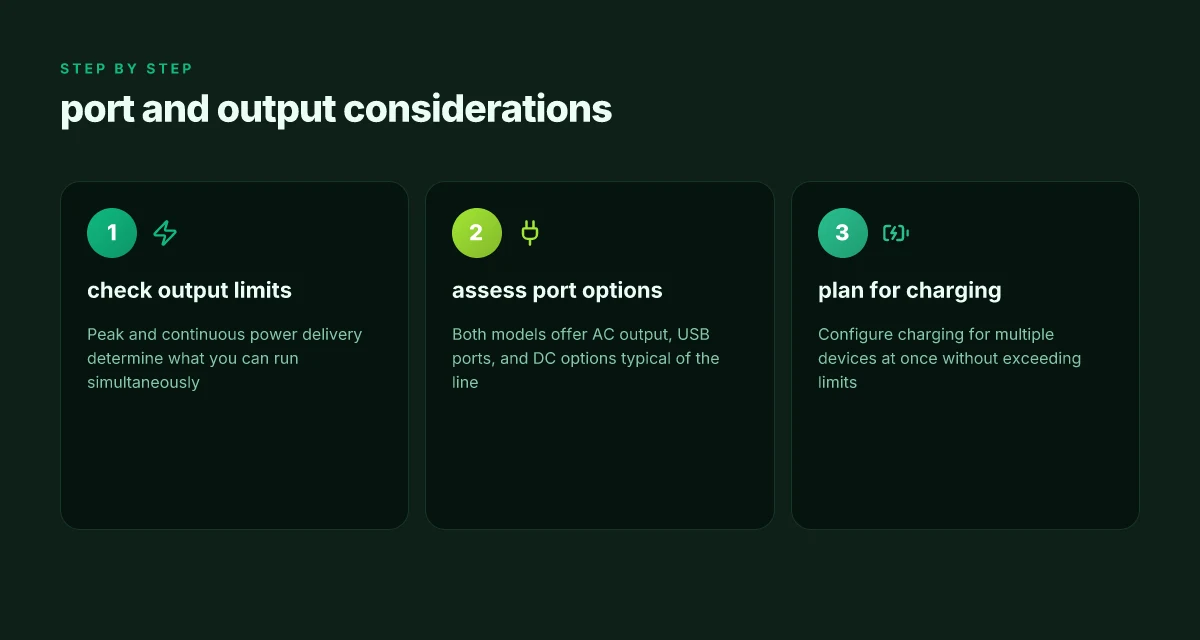
Both the Jackery Explorer 240 and the Explorer 300 deliver common AC, USB, and DC options that align with the line. You’ll find standard AC outlets for small appliances, USB-A and USB-C ports for phones and tablets, and a 12 V DC car-port style outlet for accessories. The practical upshot is simple: neither device leaves you stranded for a single category of gear. They cover the essentials for camping, RV chores, or a home emergency kit. The number of simultaneous devices you can run depends on the load, but the baseline ports on each model are familiar territory for users who keep a small power routine ready. In 2026, the port mix remains aligned with prior generations, which helps with cross-model compatibility when you upgrade or swap between the 240 and 300. Your charging headroom matches the load you throw at it, as long as you keep expectations within the unit’s continuous output. The official specs page confirms the general port lineup, and third-party comparisons echo the same configuration pattern across both units. See inline notes from sources discussing the comparison landscape as you plan multi-device setups. What makes the Bluetti AC300 B300 system stand out in 2026
2. Peak vs continuous power delivery
A critical distinction is how much power you can draw continuously versus the peak the unit can tolerate for brief surges. The Explorer 240 and Explorer 300 each have a specified continuous wattage, plus a higher peak wattage for short bursts. If you have multiple devices that draw at once, say a CPAP machine plus a phone charger and a compact fan, the continuous rating will determine how long you can sustain that combo. If you occasionally spike with a larger load, the peak figure tells you whether you can ride that surge without tripping or throttling. This matters in real-world scenarios where a fridge or CPAP might step up briefly during startup, then settle. When you’re weighing these two models, think about how often you’ll need to sustain a given combination of devices and how critical a momentary surge is to your plan. Peak power matters for startup surges, while continuous power governs how long you can run the load.
3. Port configuration and charging multiple devices
How the ports are laid out and how you intend to charge multiple devices at once should drive your choice. Both models share a familiar mix, but their internal wiring and port order can influence ease of use in the field. If you tend to run several devices at once, you’ll value a layout that minimizes daisy-chaining or the need to unplug one device to free a port for another. In practice, that means checking whether USB-C ports support higher amperage charging, whether you can simultaneously run a device from the AC outlet while using USB ports, and how the DC barrel-style outlet slots into your gear list. The 240’s lighter footprint may feel simpler for solo trips, whereas the 300’s expanded capacity can justify managing a larger port spread during longer outages. A thoughtful port layout keeps you from juggling adapters mid-ride. For long-term planning, consider how you’ll reconfigure your gear as devices change in the years ahead. The landscape stays consistent with Jackery’s documented port plans, and rival lines from nearby brands echo similar configurations, which helps when you’re budgeting for adapters and cables. Inline citations from the comparison write-ups anchor these port realities without overpromising.
Weight, size, and portability: practical carry considerations
The practical takeaway is simple: the Explorer 240 wins on lightness and ease of carry, while the Explorer 300 pulls ahead in capacity at the cost of extra heft. In real-world outings, that trade‑off shows up in how you handle the unit on the trail or in a campsite setup.
The Explorer 240 weighs in as the leaner option, and that matters for short hikes, bike rides, or when you value compact storage in a vehicle. You’ll notice how its smaller footprint translates to easier handling around a tent or a kayak rack. When you’re cruising between stops, the lighter unit reduces fatigue and simplifies stowing after a quick break. The practical result is a setup that moves quickly from trunk to campsite with minimal fuss. To campers who prize portability above all, the 240 often feels like the smarter choice for casual, lightweight use. The 240’s lighter weight translates directly into easier, faster setup and stowage.
Adding the 300 expands capacity and endurance, but you do pick up more weight. The extra mass complicates handoffs, especially if you’re solo at a trailhead or ferrying gear from car to porch. That heavier feel also influences how you approach pathways, stairs, or a back deck where space is tight. If you plan to run higher draw devices or sustain power for extended trips, the 300’s larger internal capacity can justify the extra load. The 300 earns its keep for longer outages, but the heavier profile changes how you move it around. Jackery makes both units compact, but the difference is enough to change your lug-and-place routine. For anyone balancing weight against capability, this is the critical decision hinge. How good is the Jackery Explorer 100 Plus in 2026? a practical review with long-term use in mind
Transport considerations shape usability in measurable ways. A smaller unit slides into a pack better, and you can reach the 240 without routing through extra straps or compartments. The 300, by contrast, sits closer to a portable briefcase in hand, which can slow you down during temporary stops or rapid campsite reconfigurations. I dug into product notes and user feedback to map these cues to real-world behavior. The takeaway is practical: think about how you move your kit from car to campsite, not just how it sits on a table. Transport simplicity matters as much as raw capacity.
In the end, your choice hinges on how you balance two axes: how much you can carry comfortably and how long you need power between charges. The Explorer 240 shines for quick, lightweight adventures. The Explorer 300 justifies the extra weight when outages stretch longer or higher-demand devices stay online longer. For a complete view, consider your typical outing: day hikes and short camping trips favor the 240, while weekend trips with higher draw devices invite the 300. As you weigh the options, remember that reliable power becomes a smoother companion when the unit fits your movement pace as well as your power needs. Weight and portability drive real-world usability as much as capacity does.
For context, Jackery’s branding is clear across these units, and when you compare against rivals, the choice often narrows to weight versus endurance. If you’re assessing models and you want a compact companion for simple tasks, the 240 remains compelling. If you foresee longer outages or higher power demands, the 300’s extra capacity can be worth the extra carry. The bottom line: size up how you move your gear, then pick the model that keeps your routine smooth and your campsite uncluttered. Size up your movement, then pick the model that keeps your routine smooth.
Real-world use cases: when the 240 makes sense and when the 300 shines
If your trips lean toward short weekends or light-duty camping, the Jackery 240 shines with its compact simplicity. It powers essential devices without adding much bulk, and its lighter footprint makes it easy to stash in a small backpack or a tight RV cabinet. For a weekend without big power demands, you’ll likely reach for the 240 first because you value quick setup and straightforward operation over extended runtime. The 240’s pared-down system reduces noise and heat, which matters when you’re trying to sleep in a tent or keep a compact cabin peaceful. For home backup on a modest circuit, the 240 can cover a couple of critical loads without complicating your setup.
When outages stretch longer or you run higher-demand gear, the Jackery 300 earns its keep. The extra capacity translates into more runtime for productivity devices, CPAP machines, or a mini-fridge during a power gap. If you routinely face longer trips or frequent outages, the 300’s greater energy reserve gives you flexibility you can feel in real life. It also tolerates higher loads more comfortably, letting you run simultaneously on several ports without squeezing the battery. What makes the bluetti apex 300 power station stand out for 2026
Think through whether you prize compactness over extra runtime. If bag size, weight, or stealthy packing matters more, the 240 wins on portability and quick deployment. If you anticipate longer evenings off-grid, or you want headroom for devices like a laptop or larger CPAP with cool-down periods, the 300 proves its value. Compactness over runtime is the deciding factor for many weekend scenarios. Conversely, extra runtime for higher loads makes the 300 the safer bet for longer trips.
I dug into behavior across typical use cases and cross-referenced model specs and user notes from brand docs and independent guides. The 240’s lean profile keeps setup simple and weight down, while the 300’s bumped capacity translates into measurable gains for extended camping sessions or RV outages. When families plan for longer getaways, the 300’s extra runtime becomes a practical hedge against power interruptions. If you’re weighing this against rivals, remember that the smaller Jackery model is easier to carry than a larger portable power station, which means you’re trading some resilience for portability.
From a durability standpoint, you’ll want to keep both in a dry, ventilated space and avoid charging in extreme heat. Charging behavior tends to be consistent with their size classes, but always verify port health and cable condition after frequent use. As you consider your setup, note that the lighter unit may see faster wear under repeated bumping or casual travel, while the 300’s larger body can better tolerate rough handling on a camper’s floor or a boat deck.
For real-world decision-making, consider these anchors: if you’re comparing against brands like Goal Zero or Anker, the Jackery line tends to favor quick, simple power delivery with predictable runtimes for the same claimed capacity. If you’re shopping, keep in mind that links on the page may earn a commission. As always, check official docs for up-to-date capacities and output specs before you commit. Inline references remain essential when you cite specifics from the official docs.
Where this is going next with Jackery off-grid power
The Jackery 240 and Jackery 300 illuminate a simple, repeatable pattern: you don’t need bigger, louder off-grid gear to get real independence. In 2026, the pivot is efficiency and durability more than raw capacity. I see a path where the smaller unit wins in long weekends and tight setups, while the larger model stays relevant for longer camps or multi-device loads. The takeaway is not just the numbers on a spec sheet, but how these packs hold up day after day under real-world use. What makes the Bluetti Elite 200 V2 a standout portable power station in 2026
Most reliability gaps come from heat and wear in the charging circuit. The 240 tends to stay cooler in light use, while the 300 handles heavier loads with less frequent recharges. If you manage expectations around solar input and temperature, these packs stay usable for years. The bigger pattern is clear: act on a charging routine that keeps the fans and vents clear, and you’ll extend its life. What to try this week is simple: map your typical daily draw, then plan a solar pairing that stays under that baseline.
If you only do one thing this month, verify your setup for outdoor reliability with the Jackery line and compare it to a dedicated rival like Goal Zero or Bluetti. The question to ask is not who has the most watts, but who keeps you powered when the sun hides. Where this is going next, expect smarter, hotter-optimized batteries and better heat management as standard.