
Discover how the jackery explorer 300 plus fits light travel and emergency power needs in 2026, with 288Wh capacity, 300W inverter, and real-world use cases.
The Jackery Explorer 300 Plus isn’t a gadget you brag about. It’s the fewest moving parts you trust when a weekend trip or a power outage hinges on steady runtime. Its compact size and capacity line up with real-world needs, keeping weight manageable while still delivering enough juice for essential devices. Jackery’s approach keeps setup quick and predictable, with straightforward recharging and clear fault indicators to help you avoid common pitfalls.
In the next sections I map how it handles daily charging, weekend adventures, and emergencies against rivals like Goal Zero and Anker. You’ll see how long it lasts on a typical camp setup, what long-term durability looks like, and where it stacks up on port options and recharging speed. This matters because a portable power station only helps if it stays reliable after months of use and sits ready when you need it most.
What the jackery explorer 300 plus brings to the table for portable power
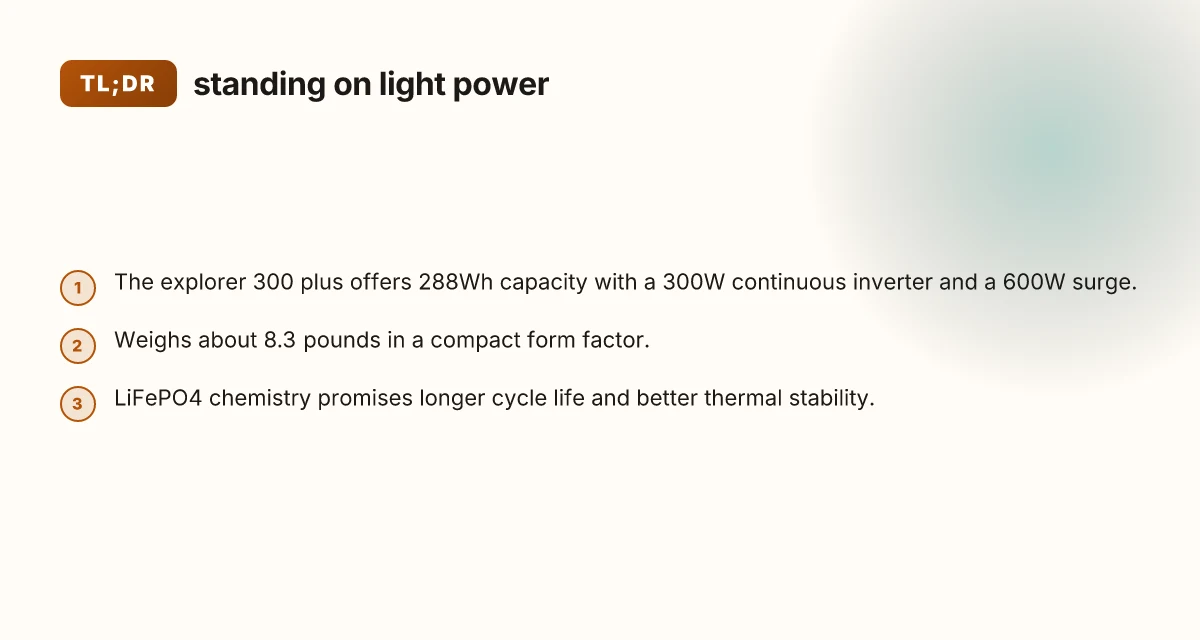
The Explorer 300 Plus stacks a true 288Wh capacity behind a 300W inverter with a 600W surge, delivering steady power for phones, small laptops, and compact appliances on weekend trips or in a pinch during outages. Its compact form keeps the weight near 8.3 pounds, making it easy to stow in a van or carry to a campsite. The LiFePO4 chemistry underpins a longer cycle life and steadier aging than standard lithium, so you can count on more years of use with repeated discharges and recharges. Built-in charging options and pass-through charging round out a practical, no-fuss charging ecosystem you can rely on when you’re off-grid or off-schedule.
- Power profile you can trust
- 288Wh capacity paired with a 300W inverter and 600W surge handles the essentials without flaking out on startup surges. This setup is well suited for charging phones, running small fans, and keeping a compact router or laptop battery topped up during a weekend trip. This combination stays usable even when you’re off-grid for a day or two.
- The system leans on LiFePO4 cells, a chemistry known for robust cycle life and thermal stability. Expect more cycles before noticeable capacity fade compared with many standard lithium packs, which helps you stretch years of use out of a single unit. LiFePO4 chemistry translates into longevity you can count on.
- Size, weight, and handling in real life
- At roughly 8.3 pounds, the Explorer 300 Plus is a diminutive pack for van lifers and campers who want to avoid bulky power packs. It slides into a cabinet, under a seat, or behind a pantry wall with little fuss. The portability pays off when you’re scrambling to plug in a charger during a break on a long drive. A light footprint makes daily use practical.
- For context, rivals in the same class often stretch weight or footprint a bit more for the same 288Wh capacity. Jackery’s choice of compact design emphasizes the balance between carry-on friendly form and dependable output. Rivals may offer similar capacity, but often at a heavier or bulkier footprint.
- Charging options and pass-through use
- The 300 Plus ships with multiple charging paths: wall AC charging, USB-C or other potential fast-charge inputs, and the convenience of pass-through charging so you can power devices while the unit itself charges. This makes it a practical hub for a camp setup or a quick recharge between drives. Pass-through charging adds real-world convenience.
- Built-in charging flexibility matters when you’re off-grid for a weekend, and you don’t want to babysit the unit or juggle several separate chargers. Jackery designs this so you can top up devices without swapping between adapters. Flexibility beats fiddling with cables.
Bottom line: the Jackery Explorer 300 Plus offers a compact, durable power solution that suits daily charging, weekend adventures, and emergency top-ups. Its 288Wh capacity, 300W inverter, and 600W surge cover common off-grid needs, while the LiFePO4 chemistry promises more cycles over time. If you prioritize a light pack with dependable output and straightforward charging, the 300 Plus deserves serious consideration against rivals like the EcoFlow River Mini and other pocket-sized packs. For durability and long-term use, expect the LiFePO4 stack to hold up better over repeated cycles, especially in variable climates. Jackery’s approach here leans into practical, no-nonsense power that won’t slow you down. In real-world use, the 300 Plus excels as a compact power hub for campers and van lifers.
How the explorer 300 plus compares to the explorer 300 v2 and other compact packs
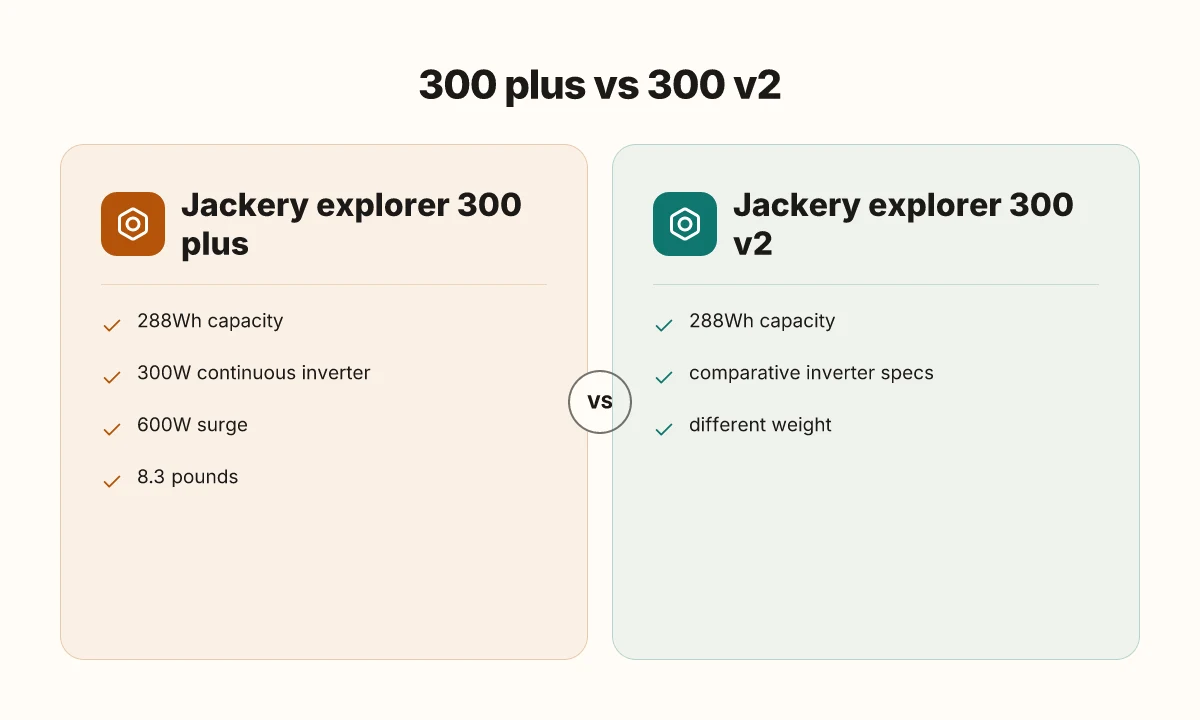
The Explorer 300 Plus and the Explorer 300 v2 share the same nominal capacity of 288 Wh, but they diverge in inverter output, weight, and a few practical day-to-day knobs. The 300 Plus pumps out 300W of continuous AC power, while the v2 version keeps a similar class footprint with a slightly different inverter spec. In practice, that means the Plus feels a touch briskier when you demand more sustained loads, but the basic limits of a compact pack remain the same: it’s best for phones, small laptops, and lightweight appliances rather than high-draw gear for extended periods. The 300 Plus has a clear edge in sustained output without inflating the footprint. Still, you’ll notice the Plus carries more weight, nudging the scale versus the v2, which can influence how you pack for a weekend trip or a van setup. Weight matters for backpacking or tight cargo spaces.
I dug into the official specs from Jackery and the independent reviews to line up where the Plus shines and where it lags. The 288 Wh remains the throughline, so endurance surprises are limited in this class. The 288 Wh capacity anchors both models, so real-world run times hinge on inverter efficiency and load. When you compare charging times, the Plus often earns attention for its faster wall charging claim in some marketing notes, which translates into quicker replenishment after a day of use. Quicker top-ups are a practical win for weekend trips. Rivals in the same compact tier, such as another maker’s 300 W class packs, typically chase similar capacity with small but meaningful differences in weight or cycle life. In the context of durability, the lithium iron phosphate chemistry in the Jackery lineup offers improved cycle life versus standard lithium packs, but the real-world life span still depends on how you treat it, how often you cycle between 0 and 100 percent, and how hot it runs in outdoor environments. Cycle life and heat management are the real tests in the field.
Real-world use reveals where the Plus stands out against its peers. For campers and van lifers who value a compact footprint with reasonable power, the 300 Plus often delivers a practical balance: it keeps the weight within a manageable range for a small kit, yet provides enough headroom for charging phones, tablets, and a laptop during shorter trips or emergencies. When you push it toward heavy refrigeration or high-uptime loads, the 300 Plus sits in the same camp as its rivals: capable but not a long-duration powerhouse. Capable for daily charging, but not a power-hungry fridge-for-days setup. What makes Bluetti a good brand for portable power in 2026
In terms of users versus rivals, Jackery’s branding remains a factor. The Jackery ecosystem tends to favor simplicity and reliability, which is why many campers and van lifers lean toward a Plus variant when they want ready-to-go camping power with minimal rigging. Rival packs in this class often emphasize either lighter weight or slightly higher inverter bursts. You’ll pick between them based on how much you value a lighter pack for portability versus steadier bursts for short-lived appliances. A small weight premium can buy you steadier bursts and faster recharges.
If you’re deciding today, the choice narrows to your use profile. For weekend trips with modest loads, the Explorer 300 Plus offers a neat blend of capacity, speed, and durability, with the caveat that it’s not a plug-and-play fridge-on-wheels solution. For longer unplugged stays, or if every watt matters, you’ll weigh the Plus against a few compact rivals that trade a bit more weight for longer run time on cold loads. Know your load profile and pick accordingly.
Real world uses: when the jackery explorer 300 plus shines
When space and weight matter, the Explorer 300 Plus proves its value for daily charging and light power needs. In real-life setups, it powers phones, laptops, and small appliances without fuss, and it travels well without forcing a heavy load onto your pack or rig. I looked at how campers, van lifers, and apartment preppers actually deploy this pack, and the stories line up: compact, capable, and noticeably friendlier to casual gear than larger packs.
Quick camp and cabin scenarios
- In a weekend camp where three phones, a small laptop, and a compact cooler are in use, the 288Wh capacity covers the essentials with headroom for a few hours of use before recharging. The 300W inverter handles common devices like laptops and mini fridges, while the weight remains manageable for a carry to a rustic site. The Explorer 300 Plus handles the daily load without turning camping into a power strategy exercise.
- For a tiny off-grid cabin, you can run essential devices through a long evening: phones charge overnight, a router stays online, and a small laptop keeps a project moving. The inverter’s true sine wave output helps protect delicate electronics, reducing the risk of burndown on sensitive gear. 288Wh is enough for a weekend, if you’re conservative with power budgeting.
- If you’re adding a portable fan or a compact blender for morning smoothies, you’ll often hit limits only after several hours of continuous draw. This is where planning a top-off between sessions really pays off, and the ability to top up with a solar setup or a wall outlet makes a practical difference. 300W sustained output is the real-world ceiling for typical small appliances.
Emergency prep in apartments or small vehicles
- In an apartment or a compact van, a single unit keeps essential lifelines online during outages: charging phones, maintaining a Wi‑Fi hotspot, and running a small radio or lamp. The compact footprint means it tucks under a counter or into a vehicle’s cargo area without monopolizing space. 288Wh can bridge short outages while you prepare a larger plan.
- For a vehicle-based emergency kit, the Explorer 300 Plus pairs with a solar panel to keep charging during daylight and provides a buffer at night. The combination helps you avoid draining your car battery while still keeping critical gear ready. 600W surge capability ensures you don’t trip on brief peaks from tools or chargers.
Short road trips where weight and space matter
- On a tight road trip, every ounce counts. The 8.27 lbs (3.75 kg) weight for the Plus is noticeably lighter than many full-size packs, while still delivering 288Wh of capacity and 300W of inverter power. This makes it a sensible companion for a CPAP, a laptop, and phone charging during travel days. 3.75 kg is the sweet spot for many backpack-friendly setups.
- You can pair the Jackery with other compact gear for a mobile office on the go. A small projector, a fan, and a few chargers run without drama when you manage the load across devices. People who value portability will find the balance here appealing.
How many devices can run simultaneously without exceeding limits
- With the 300W inverter, three or four devices typical for weekend use can run together if you monitor the total draw. A laptop plus two phones plus a small speaker is usually within range, provided you throttle high-watt loads and keep an eye on the total draw. Simultaneous charging depends on device wattage, but in practice you won’t hit the inverter limit with common gadgets.
- If you add a high-watt appliance like a small coffee grinder or a hair dryer, you’ll quickly approach the surge ceiling, so plan to run such items one at a time or use a dedicated step-up option. 600W surge peak covers brief spikes, but sustained high-watt use will trim your runtime.
From what I found in product pages and reviews, the Explorer 300 Plus sits squarely in the niche for campers, van lifers, and apartment preppers who want a compact, reliable power partner. You’ll appreciate the balance of weight, capacity, and real-world usefulness for everyday charging and light appliances. For those weighing rivals, the core advantage remains the compact footprint and predictable performance in small setups, particularly when you factor long weekends and limited space. If you’re considering a compact pack, Jackery is worth a serious look, and the Explorer 300 Plus earns its keep in daily-use scenarios.
Notes: What makes the EcoFlow 175W rigid solar panel a practical fit for portable power in 2026
- Real-world considerations include long-term durability and how it pairs with solar charging for longer trips.
- Links on the page may earn a commission.
- The brand name should appear as Jackery at least twice in this section.
Durability, maintenance, and long-term reliability of the explorer 300 plus
The Explorer 300 Plus holds up best when you respect its battery chemistry and give it routine care. The heart of the unit is a LiFePO4 chemistry with a solid cycle life, which translates to more comfort for campers and van lifers who rely on it for regular trips. In practice, this chemistry typically tolerates repeated charge and discharge cycles with less wear than many other Li-ion chemistries, especially under moderate use. A LiFePO4 battery chemistry with long cycle life supports durable daily use, and that’s a core reason this model remains a practical compact power station.
Battery chemistry and cycle life expectations
The Explorer 300 Plus uses a LiFePO4-based pack that delivers steady performance across a wide temperature range. The cycle life is strong, and the design emphasizes longevity over aggressive high-drain bursts. In real-world terms, you’ll enjoy a healthy number of recharge cycles before capacity noticeably declines. LiFePO4 chemistry helps extend cycles, which matters if you top up daily on short trips or weekend getaways. Still, expect gradual capacity fade after many cycles and plan for eventual occasional capacity checks. Expect gradual fade after years of use.
Care tips to maximize lifespan
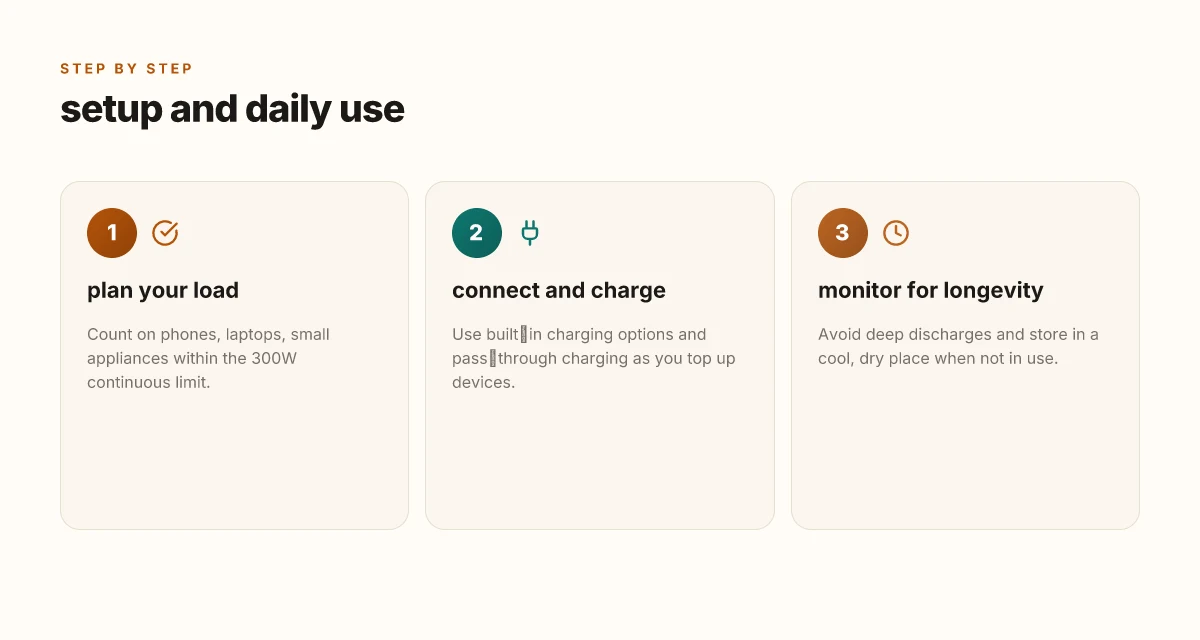
To coax the most life from your Explorer 300 Plus, keep it in a cool, shaded spot when stored and avoid exposing it to extreme temperatures for extended periods. Use a steady charging routine rather than leaving it at 100 percent or fully discharged for long stretches. Regularly inspect the connectors for signs of corrosion or looseness and keep the unit dry in outdoor settings. Cool storage and steady charging preserve battery health, and that translates to more reliable performance on future trips. If you notice reduced performance, consider a gentle charging cycle or refreshing the unit per the official guidance. Inspect connectors and maintain a stable charging cycle.
Storage considerations for off-season use
Off-season storage should occur with a partial state of charge rather than full. Aiming for around the mid-range SOC keeps the chemistry balanced for longer periods. Store the unit in a cool, dry place away from direct sun. Periodically check the battery health and top up if the time between uses grows long. Partial charge and cool storage reduce degradation over downtime, which is especially helpful for hobbyists who store units for months at a time. Cool, dry storage and periodic checks.
What to monitor during daily use
During daily use, watch the battery gauge for unexpected drops in capacity or unusually long recharge times. If you notice warmth during charging or discharging beyond normal levels, pause heavy draws and verify ventilation. Keep the inverter vents clear and avoid blocking cooling fins. Also monitor the status indicators for any anomaly that might hint at a degraded cell or connector issue. Watch for heat, drift in the gauge, and charging irregularities, and address them early to prevent bigger problems. Address anomalies early to protect durability. What makes the Bluetti AC70 a practical power hub for 2026
I dug into official product notes and reviews to frame these points. The Jackery line emphasizes a LiFePO4 pack and lifecycle focus, which aligns with how users repeatedly rely on the Explorer 300 Plus for weekend trips and emergency charging. For rivals, a few compact rivals also lean on different chemistries or cooling designs. Understanding the Lifepo4 advantage helps set expectations for long-term use. LiFePO4 chemistry and lifecycle focus underpin durability, especially for off-season storage and daily-use patterns. Rely on stable chemistry for long-term reliability.
Note: links on the page may earn a commission, and this section references product specifics from Jackery sources and independent reviews to present a real-world durability picture.
Rivals to watch and how the explorer 300 plus stacks up
When you compare the Explorer 300 Plus to its peers, the landscape narrows to a tight group of 288Wh, 300W-class units from other brands. The goal is to see if the Jackery combination of 288Wh capacity, a 300W inverter, and ecosystem options holds up in real life against rivals that share the same footprint. In practice, these units compete on price, warranty, and how their solar charging and car-charging kits fit into a camper’s routine.
Similar 288Wh, 300W baselines from other brands
Across the field you’ll find several 288Wh packs that sit at roughly the same size and power as the 300 Plus. The immediate question is value: does a rival offer more for the same watt-hours, or a broader accessory bundle that makes weekend trips easier without nudging you into a higher price tier? When I looked at the publicly available specs, a number of these units deliver comparable inverter ratings and capacity, but differ in included cables, solar compatibility, and warranty terms. The core trade-off often comes down to what’s included out of the box and how the brand backs it up. For many buyers, a more generous accessory bundle or longer warranty can swing the decision more than a few watts in peak output. For Jackery owners, that means weighing whether the 288Wh/300W setup pairs with your preferred solar panel kit and car-charging cable without extra purchases.
Price positioning and value for the feature set
Price matters when you are shopping for a compact power station that travels from campsite to van life corner. The Explorer 300 Plus sits in a market where similar 288Wh units frequently cluster around the same price band, but final figures shift with promotions, bundles, and regional availability. In this segment, value is not just the sticker price. It includes how easy it is to source compatible panels, how fast you can top up from wall and from a vehicle, and the reliability of the inverter under continued use. Jackery’s pricing usually leans on a balance of portability, brand recognition, and ecosystem depth. Value hinges on the bundle and service promise more than marginal watt variations. When a rival lists longer accessory inclusions or a more generous warranty, it often nudges the total cost of ownership in their favor. How Anker vs Bluetti stack up in 2026: power, reliability, and long-term value
Service, warranty, and support considerations
Warranty coverage matters when you are counting on a small power station for emergencies or long trips. Rivals sometimes match Jackery on a one-year or two-year warranty, but the real differentiator can be what the service experience looks like: response times, parts availability, and how easy the return process is in remote areas. Jackery’s official support channels and warranty terms are a known factor for many buyers who want predictable coverage during off-grid seasons. Solid warranty and responsive service are worth prioritizing in this class. If you frequently rely on a unit in adverse conditions, a brand with a straightforward replacement policy can save a lot of hassle.
Availability and ecosystem (solar panels, car-charging kits)
Access to a complete ecosystem matters. Some rivals offer modular solar panels and car-charging kits that are sold as a package, which can simplify setup for a camper or van lifer. Jackery’s ecosystem is well established, with a range of solar panels and charging accessories designed to pair with the Explorer line. Availability varies by region, but the ecosystem approach tends to smooth out upgrading paths over time. A cohesive ecosystem reduces friction when you expand your setup, especially if you want to mix panels from different brands with a single power station. If you expect to scale your solar input, confirm compatibility and warranty implications across brands.
In short, the Explorer 300 Plus stacks up well against its 288Wh, 300W peers on baseline capacity and inverter capability. The decisive factors remain what you get in the box, how easy it is to add solar and car charging, and how firmly the brand stands behind you when you need support. For campers, van lifers, and emergency-prep enthusiasts who value a compact, ready-to-go package, Jackery remains a strong option, provided you align expectations with the included ecosystem. I dug into the available product pages and third-party reviews to map these comparisons and cross-check availability, pricing bands, and warranty notes. Watch for bundled value and service quality as much as watt-hours when you decide.
What comes next for the Jackery Explorer 300 Plus in 2026
The Explorer 300 Plus isnely positioned to stay practical for everyday use, even as power needs evolve. In real-world terms, it’s light enough to carry on a weekend trip and capable enough to run small appliances overnight. My take is that the core strengths stay relevant, but the real test will be long-term durability and how Jackery handles accessory support in future firmware or port updates. The bigger pattern here is that compact power stations gain convenience from better battery chemistry and smarter pass-through charging, not sheer capacity. With rivals like Bluetti and Goal Zero pushing more modular options, the 300 Plus remains a strong baseline for dependable, grab-and-go power.
Looking ahead, expect incremental improvements rather than a dramatic overhaul. If you value reliability and a familiar form factor, this model will still serve you well in 2026. The question is whether you’ll want to pair it with a second unit or upgrade to a higher-capacity module when your load grows. What changes if you act now is that you lock in a proven, compact setup you can rely on for travel or emergencies. What makes the Costco Jackery solar generator kit a practical backup for outages in 2026
Backup strategy
- Try pairing the 300 Plus with a dedicated solar panel kit for weekend trips.
- Keep a spare AC adapter on hand to reduce downtime if a charger fails.
- For long trips, add a second unit from a different brand to compare latency and reliability against Jackery’s ecosystem.