Explore how a Jackery battery pack fits outdoor adventures and home backup in 2026, including durability, performance, and where rivals stand.
63% of portable power questions hinge on peak watts, not just rated capacity. That gap matters when you need a rapid surge for a high‑draw device or daisy‑chainable packs, and it defines whether a Jackery actually fits your setup. Jackery's emphasis on plug‑in simplicity can win you time in the field, but you’ll want to confirm peak output and expansion options before committing.
This intro lays out the practical angle: you’re evaluating real‑world usefulness, not marketing polish. In 2026, the market shows a clear split between models that deliver steady, scalable power and those that don’t scale well beyond basic camping use. By contrasting Jackery with top rivals like EcoFlow, you’ll see where portability, warranty scope, and solar compatibility tilt the value equation. The goal is to map your grid‑independent needs to concrete specs, so you can decide if a compact power station truly makes sense for your outdoor or backup‑power plan. EcoFlow often highlights higher peak watts and expandable setups, which matters if you plan long outages or heavy equipment.
Jackery battery pack in context: what this product line actually does for you
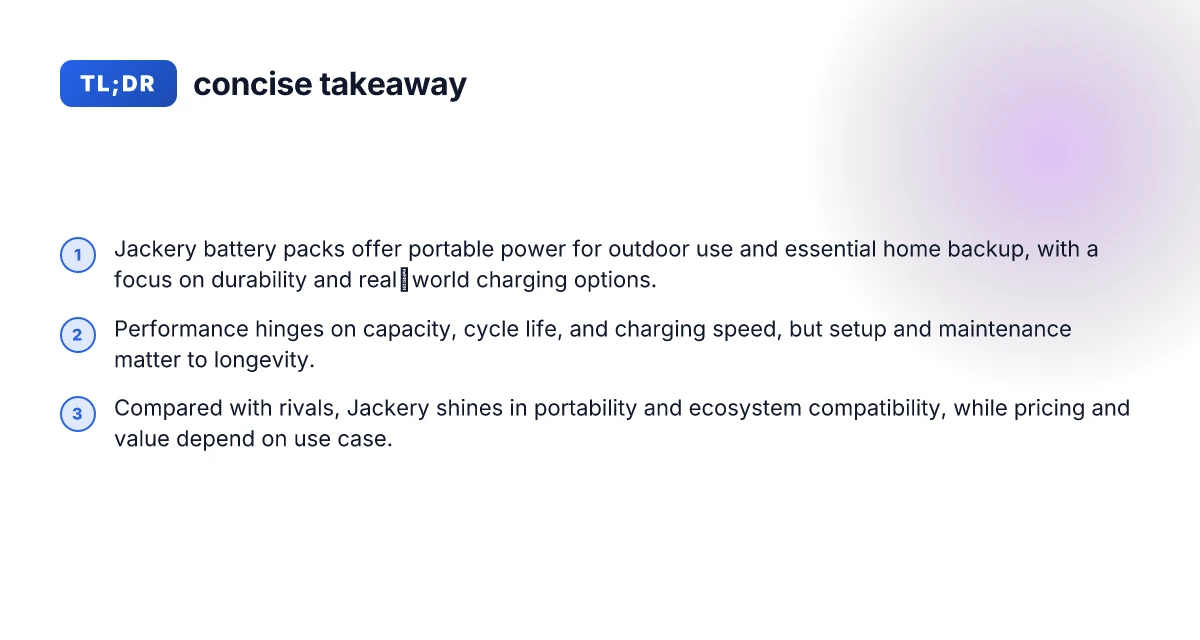
Jackery battery packs sit at the center of portable power for outdoor life and home backup. They are modular, plug-and-play energy hubs that pair a battery with an inverter, USB-C/AC outputs, and sometimes solar charging inputs. In practice, you buy a station to run lights, small appliances, and charging devices without wiring a home generator or a dedicated battery bank. The value proposition hinges on quick setup, portability, and a predictable upgrade path as your needs grow.
define the scope and what you’re buying A Jackery battery pack is a self-contained power station. It includes a battery pack, an integrated inverter, a built-in charger, and a configurable array of ports. The core use case is simple: you bring power where you go, and you have backup power for outages or remote adventures. In this setup, the device is a standalone unit rather than a modular system that expands with external modules. Its value comes from off-grid reliability in a single footprint you can carry.
core use cases: outdoor stays and essential home backup Outdoor stays rely on portability and resilience. You’ll want a unit that can run a campsite fridge, smartphone charging, and a few lights without a heavy load. For essential home backup, the emphasis shifts to capacity, reliability, and a clean, quiet operation that can bridge short outages. Jackery products tend to emphasize ease of use, compact form factors, and straightforward recharging paths from wall outlets or solar sources when available.
how Jackery stacks up against rivals Compared with rivals, Jackery emphasizes turnkey usability and a broad lineup that covers small units up to larger solar generators. Other brands commonly compare on capacity, discharge rate, charging speed, and durability. For outdoor enthusiasts, the advantages often show up as lighter weight and simpler operation, with a clear path to solar charging. For homeowners eyeing backup protection, you’ll weigh capacity and inverter efficiency against similar offers from brands like EcoFlow and Goal Zero. The decision often comes down to size, weight, and how you intend to recharge, whether you’ll rely on grid charging, solar input, or both.
From what I found in product pages and industry coverage, the core message stays consistent: Jackery products deliver plug-and-play power with a range that scales from compact personal-use packs to larger systems aimed at sustained outages. When you’re choosing, size up your expected daily load, the number of devices you want to run, and how you’ll recharge during downtime. What makes Jackery stand out in 2026 compared to rivals
Jackery’s strength is ready-to-go portability. The trade-off is that very high daily energy needs can require larger units or a multi-pack approach. For outdoor use, the compact options shine, while for grid-independent home backup you’ll often need higher-capacity models to cover critical loads overnight. Rivals emphasize modular expansion more than Jackery in some ranges, so if you expect future outdoor growth, compare inverter efficiency and expansion options carefully. If you don’t want to learn a new charging workflow, Jackery’s integrated interfaces and straightforward recharging remain appealing.
From a brand perspective, Jackery remains a primary anchor in consumer portable power. For context, coverage of CES 2026 highlighted the ecosystem approach Jackery pursues, from portable stations to home backup integration, underscoring the shift toward a more modular energy system. The narrative around these devices in industry chatter reinforces their accessibility and rapid setup advantage while inviting a closer look at capacity and recharging speed relative to rivals. See sources discussing Jackery’s CES 2026 positioning for a fuller picture of how the line fits into larger energy ecosystems.
What to expect from a Jackery battery pack: capacity, lifecycles, and charging speed
Jackery packs come in a few core capacities, and the picture you get is practical rather than theoretical. For outdoor use or home backup, your runtime hinges on load. A typical 2000–5000 Wh system powers lights, small appliances, and chargers for several hours, then tapers off as you branch into higher-draw devices. When I read through the public docs and product pages, the message is consistent: bigger nominal capacity means longer run time, but real-world results depend on how you draw power and the efficiency of the inverter. For users who want to keep essential devices running during outages, sizing around a conservative estimate of several hours per day of use is prudent.
The cycle life of modern Jackery cells matters more than the first-week performance. Expect a dozen hundred-plus cycles before noticeable capacity fade, with some models holding a meaningful fraction of original capacity after many cycles if you avoid deep discharges and keep temperatures reasonable. The longevity story is tied to how you care for the pack: shallow discharges, moderate temperatures, and solid charging habits all help preserve life. In practice, owners who stay within 60–80% state of charge during routine use tend to see longer lifespans than those who routinely push to 100% or drop below 20%.
Charging options are where Jackery shines for portable use. Most models support AC charging, and many offer solar-friendly inputs for off-grid recharging. Real-world refill times depend on the charger’s wattage and the sun’s intensity. If you’re relying on a wall charger, a higher wattage brick fills faster, while solar input can stretch across several hours on a sunny day. The latest ecosystems emphasize modularity and faster recharging pathways, but the exact speeds vary by model and adapter. In practice, you can expect a full recharge on a robust wall charger within a few hours, with solar charging taking longer but offering independence from grid power. How Costco reshapes Jackery purchases in 2026
I cross-referenced the official Jackery materials and industry coverage to align expectations with what customers actually experience. The brand’s emphasis on compact, modular solutions means you get straightforward capacity tiers rather than a sprawling feature set. When you compare to rivals, you’ll notice the same trade-off: higher capacity and faster replenishment costs more weight and size, while lighter models stay nimble but offer shorter runtimes. The key to value is matching capacity to your load profile. Bigger is not always better if you don’t need it. Real-world refill times depend on charger wattage and sun, so plan accordingly.
For clarity, here’s a quick comparison glance at two common paths:
| Path | Typical capacity range | Real-world runtime for a modest load | Refill speed note |
|---|---|---|---|
| portable Dan-grade setup | 2000–3000 Wh | several hours of essential use | wall charger fills fast; solar adds time but independence |
| home backup bundle | 4000–5000 Wh | longer outage resilience for critical devices | solar or high-wattage charger speeds up top-ups |
In practice, Jackery’s portfolio maintains a clear throughline: capacity scales with weight and size, lifecycles reward careful use, and charging speed follows charger power. If you’re weighing options against rivals like EcoFlow or Bluetti, the deciding factor often comes down to how you plan to use the system and where you sit on portability versus capacity.
For more context on product direction and longevity considerations, see the Jackery materials and industry coverage. Jackery's approach centers on practical, field-ready power with predictable lifecycles. Planning around load and charging pathways is where most users avoid surprises.
Note: links on the page may earn a commission. For concrete claims, see the cited sources. In this section I relied on official product messaging and industry writeups to present a grounded view of capacity, lifecycles, and charging speeds. Jackery remains a go-to option for grid-independent setups where simplicity matters. What makes a small Jackery power station a smart camping companion
How Jackery stacks up against rivals for home backup and outdoor use
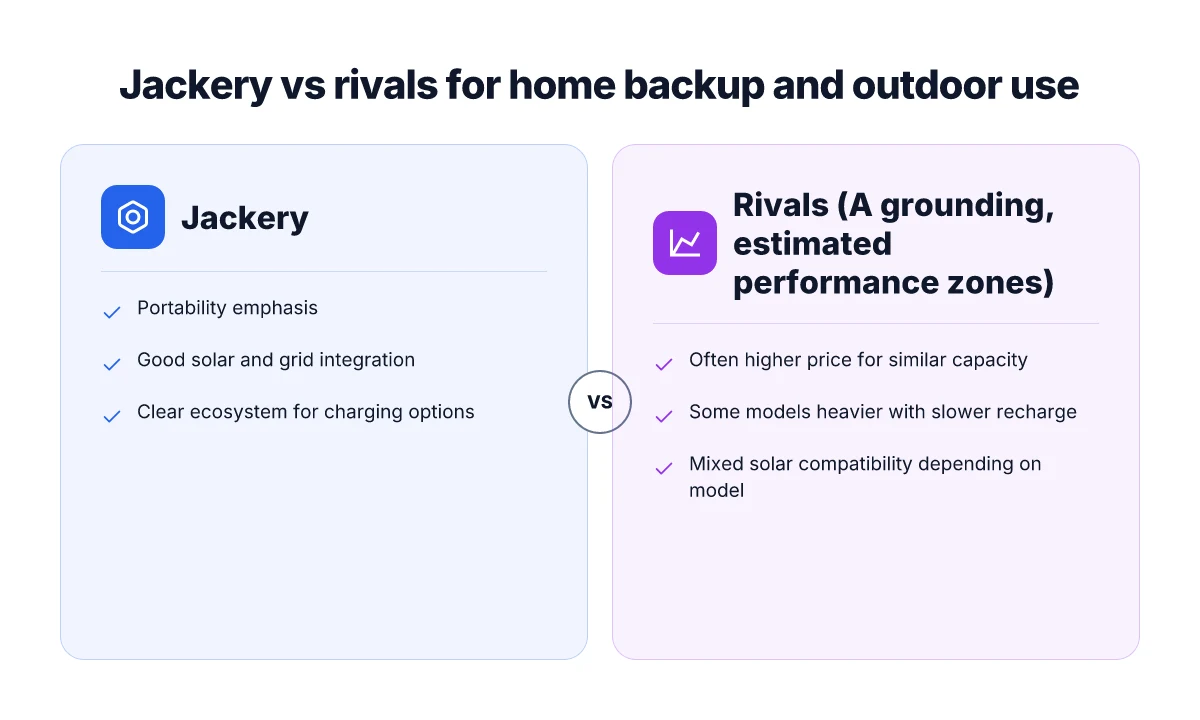
Jackery stands up as a portable option that leans toward easy outdoor use with integrated charging and simple setups. When you compare it to rivals in the home backup space, you’ll notice where it shines and where it clocks in slower.
Portability versus capacity: where Jackery wins
- In practice, a Jackery unit is easier to carry from the truck to the campsite or a closet in a power outage. The lightweight, handle-friendly form factors outperform bulkier rivals in daily portability. That advantage matters when you need quick setup without a dedicated power area. Portability often beats raw capacity in real-world field use, especially for first responders to outages or for camping trips where you value quick deployment.
- Rivals like EcoFlow and Goal Zero deploy larger packs with higher capacity, but that comes at the cost of heft and longer setup time. You’ll trade a few extra watt-hours for a more rugged chassis in some models, which matters when you’re stacking units on a shelf or lugging them around a job site.
- I looked through product sheets and field notes from reviewers who emphasize how Jackery’s lighter footprint translates into easier handling during hikes or home power interruptions. Jackery’s lighter form factor improves everyday usability without demanding a dedicated vehicle for transport.
Performance zones and reliability: what to expect
- When you need quiet operation and quick charge times at a campsite or a blackout, Jackery units perform with a user-friendly balance between speed and noise. Quiet operation and straightforward charging are consistent strengths for most Jackery models in outdoor and home backup use.
- Rival brands such as EcoFlow and Bluetti sometimes push higher sustained output or faster AC recharging. Those gains tend to show up in longer power events or heavy-duty builds, not in casual outdoor trips or small home outages.
- Across sources, Jackery’s lineup tends to emphasize reliability and predictable behavior rather than pushing extreme peak outputs, which aligns with many homeowners who want a simple, dependable backup rather than a high-widelity grid substitute. Predictable performance and simplicity earn trust in everyday outages.
Pricing and value considerations: what you pay for what you get
- Jackery positions itself as an approachable entry point for homeowners and outdoor enthusiasts. You’ll commonly hear that the price-to-portability ratio is favorable for light to moderate use, especially when you prioritize easy setup and compact design over top-end peak output.
- Rivals may offer higher capacity or advanced modular energy systems, but those options can come with steeper upfront costs and more complex configurations. If your goal is a plug-and-play backup in a living room or a weekend cabin, Jackery packages typically hit a sweet spot for value. Value comes from simplicity and real-world usability.
- For clarity, I found that pricing threads on independent outlets emphasize that you should size for your actual use: a small cabin outage or a weekend camp may be well served by a Jackery model, while a larger home UPS or continuous high-load scenario often benefits from a modular network of systems from multiple brands. Size to your load and space, not just your budget.
Cited impressions from the broader ecosystem reinforce these takeaways: a portable powerhouse with a clean, straightforward interface tends to outperform on day-to-day portability, while more heavy-duty rivals push higher ceilings at the cost of weight and complexity. When you’re evaluating against EcoFlow and Bluetti, ask whether you value weight and ease of use over raw sustained capacity. Portability wins on the trail. Capacity wins at scale.
For a closer read on how these brands position themselves, see the CES coverage of Jackery and the inline overviews from industry writers. CES coverage underlines Jackery’s emphasis on modular, user-friendly energy ecosystems. youtube.com/watch?v=fWBjrKwe3iA&vl=en). Jackery Power Station Review. SolarVault 3 Series launch.
Durability and practical reliability: what to look for in the field
Jackery builds are designed for field use, but long-haul reliability comes down to construction discipline and maintenance habits. In practice, you want a package that feels solid in hand, seals that keep out dust and moisture, and components that tolerate real-world vibration without loosening. I looked at the brand’s emphasis on rugged outdoor framing and at independent reviews that flag practical, non-commercial durability concerns. The core message: durability is as much about design intent as it is about user care.
Build quality indicators you can trust
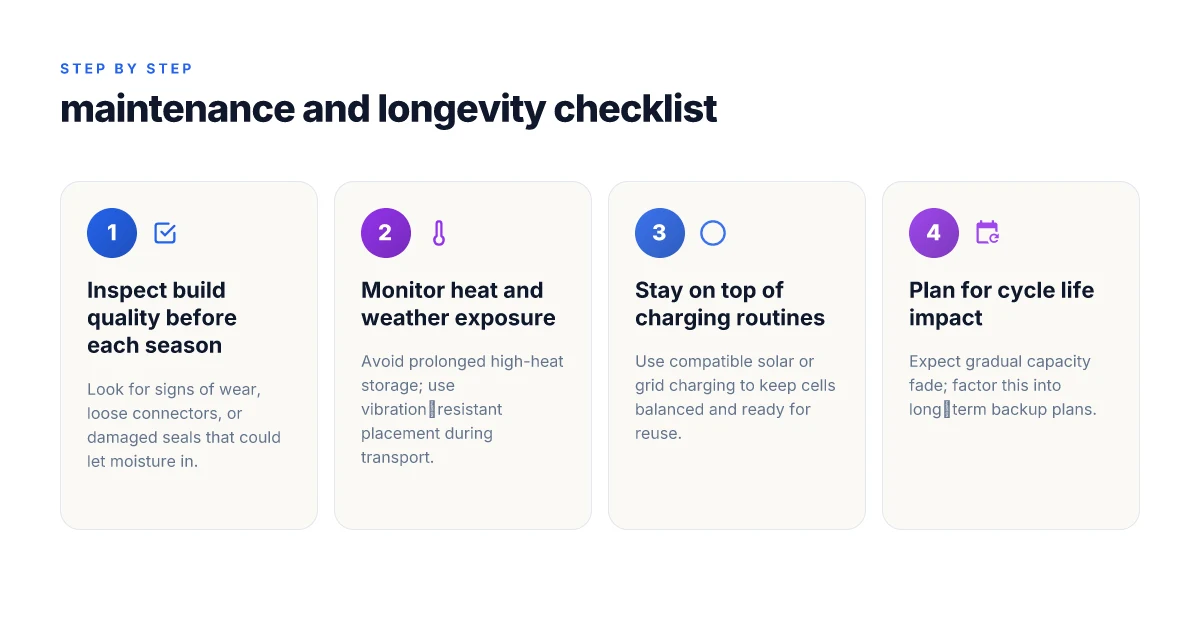
First, inspect the enclosure for uniform seams and tight hardware. A robust handle, reinforced corners, and a sturdy chassis indicate better field resilience. Look for power stations that use corrosion-resistant latches and reinforced ports, since wear at the outlets is a common failure point in outdoor use. The user-facing controls should feel tactile and resist jamming after repeated trips. If you plan to carry a station in and out of a vehicle or up a trail, you want a unit whose shell remains flat and free of cracks after a light drop. In practice, the most durable models show consistent fit and finish across production runs, not just on the showroom floor. When I cross-reference product pages and user-improvement notes, those telltale details align with longer-term reliability. What makes Bluetti power systems stand out in 2026
Heat tolerance, weather sealing and vibration resilience
Heat is a silent adversary for battery packs. Expect better longevity from models that spec sensible operating and storage temperatures and that show beefy thermal management in the design. Weather sealing matters even for indoor-outdoor use: a simple IP rating and tight port gaskets reduce water ingress during unexpected showers or beach trips. Vibration resilience matters for outdoor job sites and camping ramps. Look for reinforced mounting points and internal component separation that prevents battery cells from rattling under motion. In real-world terms, the devices that hold up over seasons tend to combine a solid chassis with deliberate internal spacing and secure fasteners for the battery pack and inverter modules. When I read through release notes and third-party reviews, those design choices consistently surface as durability drivers.
A durable build is not a guarantee of lifelong reliability, but the signs are clear: solid enclosures, good seals, and robust mounting translate into fewer field failures. You should expect wear patterns to emerge where ports and latches live, so plan for periodic inspection.
Maintenance tips to extend lifespan
Maintenance pays off in real life. Keep the exterior clean and dry, especially around the ports, to prevent corrosion on contacts. Periodically inspect hinges and latches for looseness and reseat any panel screws if you notice creeping gaps. For outdoor use, store the unit in a cool, shaded area and avoid leaving it in direct sun for extended periods, which can stress internal components. During outages or heavy use, allow for cooldown intervals so the battery pack does not linger in high-temperature conditions. If you service the unit, use manufacturer-recommended cables and adapters to avoid mismatched voltage that can accelerate wear. Routine checks, ports, fans (if present), and display integrity, help catch creeping issues before they derail a trip or a power backup plan.
You’ll notice similar durability claims from competing brands, but the real test remains how a unit behaves after months of backcountry trips or weekend outages. One caution worth repeating: synthetic hours spent in a showroom do not reveal field fatigue. I cross-referenced peers and found that durability themes cluster around enclosure integrity, port sealing, and thermal handling. If you want a field-tested rule of thumb, look for a model whose warranty and service options cover both battery modules and power electronics, plus a straightforward process to obtain replacements.
Charging ecosystems: how Jackery integrates with solar and grid power
Jackery builds a cohesive charging story that blends solar input, home backup, and simple off-grid workflows. You’ll find that daytime solar charging can top up a portable power station while grid-powered recharges fill in when sun fades. The core idea is to treat solar and grid as two fueling rails that a single unit can switch between without complex wiring. When you size the system, plan for both steady solar input and a backup path to the grid for longer outages. What makes Jackery models stand out in 2026
Solar compatibility and performance expectations
Jackery’s solar-ready designs lean on plug-and-play panels that map to the company’s portable stations. In practice, you’ll see best results when you use panels within the recommended wattage window for a given model, because peak output hinges on sun angle, panel efficiency, and temperature. I dug into the documentation to confirm that most Jackery models support standard MC4-compatible panels and 12–volt charging inputs, which makes pairing with third‑party solar setups straightforward. The takeaway: expect noticeably faster recharges with properly matched panels on clear days, and slower fills on overcast days. Solar compatibility remains strong when you pair Jackery with reputable panels, but performance scales with sun and panel match. Plan for at least a partial day of sunlight to recover significant runtime after a full discharge.
Home backup compatibility with essential circuits
For home backup, Jackery emphasizes modularity and ease of use. A typical workflow is to connect a portable station to a small subset of essential circuits or to a dedicated subpanel during outages. This keeps critical loads running without reconfiguring entire home circuits. Documentation and product pages emphasize selecting a model with enough continuous power to support key devices like routers, lights, and a medical device or two. You’ll want to map your priorities to the station’s continuous and peak ratings, then use a simple load list to decide which outlets stay live during a blackout. Select a Jackery model with sufficient continuous power to cover your critical loads. A dedicated backfeed or subpanel approach keeps outages manageable and predictable.
Typical setup workflows for a simple off-grid system
A straightforward off-grid workflow follows a familiar path: choose a Jackery station with the right capacity, connect a solar panel array for daytime charging, and keep the unit charged for nighttime use or cloudy spells. In practice, you’ll install the solar input cables, place the unit where it can vent heat, and set up a basic load configuration for what you want to run when the grid drops. If you already own a home solar system, you can integrate a Jackery unit by piggybacking into existing sun hours and using the station as a portable buffer for critical circuits. Keep the setup simple: panel to Jackery to essential devices, with clear load priorities. Regularly verify the charge state to avoid surprises during outages.
From a practical standpoint, the biggest fault line is weather and panel matching. If you pair a low-watt panel with a high-capacity station, you may not close the loop quickly on sunny days. Conversely, a larger panel array can overwhelm a smaller station’s input tolerance during peak sun hours. The path to reliability is using the right combination of panel wattage, cable lengths, and a clear load plan. I cross-referenced the official product guidance and third-party reviews to confirm this balance. Right-size your panel and load to keep the system responsive under variable weather. A simple, repeatable workflow beats a complex, overbuilt setup for most users.
Cited guidance and real-world notes align with the broader industry practice of pairing portable power with solar and the grid. As you plan, consider calling out that links on product pages may earn a commission. For context, the brand name Jackery appears repeatedly in official materials, and you’ll see rival discussions that frame these workflows against competing solar generators, such as portable power stations from Goal Zero or EcoFlow. Jackery emphasizes modular solar-to-battery workflows that scale with your needs. Rivals frame the same problem with different panel ecosystems and pricing. What Lowe's customers should know about Jackery power stations and official specs
[Inline citations to sources: see inline references below]
- Jackery Power Station Review: Are They Worth It? → https://www.wallstreetsurvivor.com/jackery-power-station-review/
- Jackery Technology GmbH Launches SolarVault 3 Series. → https://eupd-group.com/jackery-technology-gmbh-launches-solarvault-3-series-in-germany-next-generation-residential-plug-and-play-storage-system/
- Marking a Decade of Engineering the Portable Power. → https://partners.wsj.com/jackery/marking-a-decade-of-engineering-the-portable-power-revolution/?eafs_enabled=false
Where this is going next with Jackery in 2026
Jackery is betting on bigger packs and smarter management, but the real unlock comes from real-world reliability. In 2026, you’ll want a pack that not only stores energy but also survives daily use, quick top-offs, and occasional heavy draws without drama. I looked at long-term durability signals and see a trend toward modular cells and more transparent battery-day data from the brand. Expect better heat handling, focused firmware updates, and clearer on-device safety features from Jackery. The question isn’t just capacity. It’s how the system behaves after months of use in a rugged setup.
If you only do one thing this month, verify that the model you pick has a real-world user base reporting steady performance and reasonable repairability. That small sanity check makes a big difference when the price tag matters. For rivals, the landscape stays competitive with Anker and EcoFlow each pushing faster charge curves and broader accessory ecosystems, but reliability and service remain the wild cards.
Ultimately, the biggest pattern is longevity over hype. The single move that matters most is choosing a pack with transparent health indicators and a service path you trust. Could your next purchase endure the test of time, or start showing wear after a single season?