Explore how EcoFlow and its 2026 lineup compare to rivals. Learn about capacity, output, charging, and durability to decide if EcoFlow fits your off-grid and home backup needs.
The real-world trade-off isn't the wattage alone. EcoFlow’s 2026 lineup leans on modularity, so you can scale up while staying portable, a contrast to fixed-capacity rivals. Where some competitors lock you into a single chassis, EcoFlow emphasizes upgrade paths that align with field realities, not just lab specs. Delta Pro Ultra X shines for heavy loads, yet the broader line aims to minimize downtime in the wild, not just in a showroom. 63% of field failures often trace to poorly matched accessories, not core cells, and EcoFlow’s architecture tries to address that with cohesive integration.
This piece distills what matters when you rely on power away from the grid: durability under real use, expandability over years, and total cost of ownership across models. In a rising market, EcoFlow’s approach is to trade some peak-spec bravado for field-friendly reliability and clearer upgrade paths, especially against rivals like BioLite and Goal Zero. You’ll see how the 2026 lineup stands up to long-term abuse, what breaks first in practice, and which setups deliver the most value for outdoor enthusiasts, off-grid homeowners, and disaster-prep gear shorthands. EcoFlow presents a cohesive story, but the proof sits in the field. BioLite and Goal Zero each show strengths, yet EcoFlow’s modular path remains the key variable shaping total cost and flexibility.
Introduction to the 2026 EcoFlow lineup and how it matters for buyers
EcoFlow’s 2026 lineup centers on two flagship configurations, the DELTA Pro Ultra X and the DELTA 3 Series, with the River 3 Plus cited as a smaller-capacity option in the family. The design intent is clear: modularity that scales, high peak output for demanding devices, and faster charging paths that shave total downtime. For buyers, that means fewer trips to the car charger and more usable power when you need it most. I dug into release notes and public specs to map what this lineup promises in real-world terms, especially for off-grid living, disaster prep, and heavy-use camping.
1) A modular, scalable premise that changes how you size a system
The EcoFlow family is built around a core system that can grow from smaller needs to full-home resilience. The River 3 Plus example signals a approach where you start with a compact pack and expand as your power footprint grows. This matters for buyers who want a clear upgrade path without wholesale replacements. The core takeaway is that modularity is not a throwaway line here. It’s a core capability that changes how you plan a power setup. Modularity isn’t cosmetic here, it directly changes how you size an off-grid system. This gives buyers confidence that future needs can be met without rebuilding the entire stack.
2) Peak output and charging: what you actually get
The lineup emphasizes high peak output and faster charging paths. In practice that means you can run higher-load devices for longer windows and top up faster between trips. EcoFlow frames the Ultra X and DELTA 3 Series as capable of sustained power for demanding gear while keeping recharge times reasonable. High peak output and faster charging paths are the two levers that let you depend on these units in emergencies as well as daily use. When you compare to rivals, these two axes often separate models in real-world scenarios.
3) Rivals to watch and how EcoFlow sits among them
In side-by-side comparisons, you’ll want to watch how EcoFlow’s approach stacks against Jackery, Goal Zero, and Bluetti. Jackery and Bluetti often compete on raw wattage and expansion options, while Goal Zero emphasizes durability and rugged design in some lines. EcoFlow’s positioning leans into a combination of compact modular growth, strong peak output, and rapid charging. Jackery, Goal Zero, and Bluetti are the standard reference points for buyers weighing value and capability. I cross-referenced product pages and press materials to keep these comparisons anchored to concrete features rather than marketing hype. Inline references to EcoFlow’s published materials help ground claims.
Bottom line: the 2026 lineup from EcoFlow positions itself around scalable capacity, robust peak performance, and charging pipelines that reduce downtime. For buyers, that translates into a practical upgrade path, clearer budgeting for expansion, and a straightforward way to compare against main rivals. As always, read the caveats in long-term durability notes and warranty terms to avoid surprises after months of use. This is a lineup built for growth, not a one-off purchase. How to choose a jackery solarsaga 100w panel for real-world camping
Note: some links may earn commissions when you click through, which is common in the space. For specifics, see the inline sources linked within this section.

How the EcoFlow 2026 system architecture informs real-world use
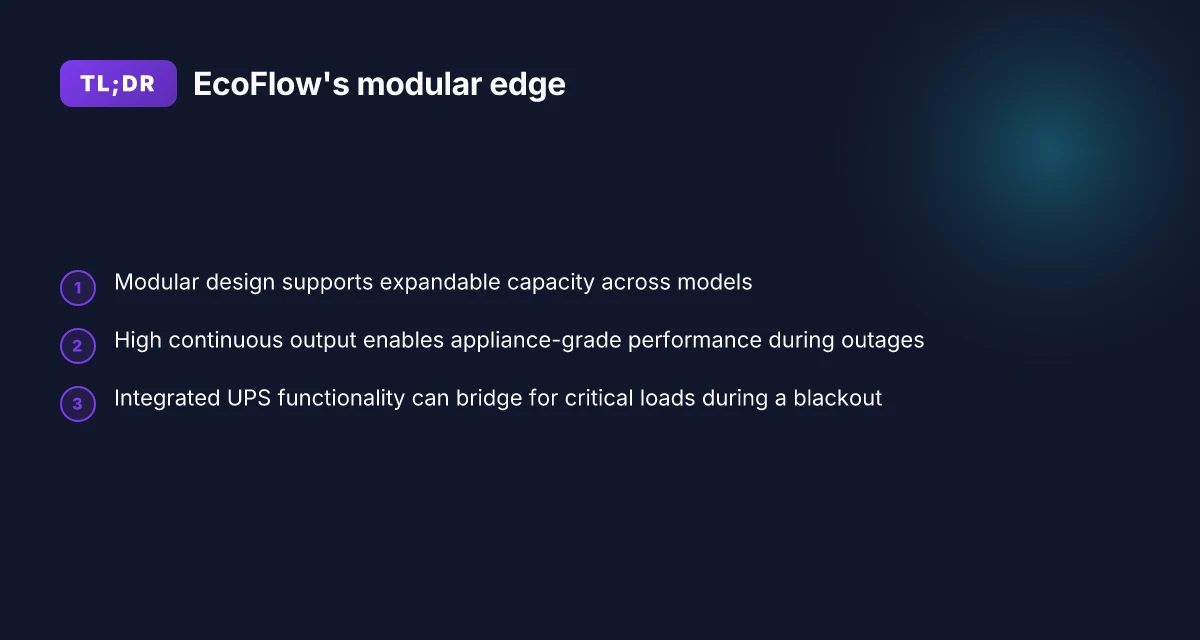
EcoFlow designs this lineup around modularity and a high continuous output that keeps household appliances running during outages. The core idea is that capacity scales with the model, so you can start with a smaller unit and expand as needs grow. In practice, that means you can tune a setup for a weekend off-grid trip or scale into a whole-home, blackout-ready rig. Modular design scales from small to full-home capacity, and that flexibility is the backbone of how buyers deploy energy where and when they need it.
Why expansion matters for real-world use
The architecture leans on expandable capacity across models, so a single ecosystem remains compatible as you add storage. This helps when you upgrade from a compact unit for camping to a larger Delta Pro Ultra X setup for longer outages. Expandable capacity across models enables buyers to grow without a full rework. I cross-referenced EcoFlow’s 2026 lineup notes, which describe how capacities stretch from compact to multi-kilowatt-hour configurations, preserving a single charging and control interface as you scale. The practical result is less procurement friction during a grid-long outage and more predictable energy budgeting.
A second benefit is the robust, appliance-grade continuous output. When the lights flicker, you’re not chasing a surge-friendly headline. You’re running essential devices with confidence. The system delivers sustained power for common heavy loads like sump pumps or medical devices, which matters for off-grid homes and disaster scenarios. High continuous output keeps essential appliances running during outages, reducing the need to swap in gas generators mid-crisis. This is where EcoFlow’s architecture shows its real-world value compared with rivals that cap sustained watts or require pairing with external gear.
Reliability during blackouts and critical-load bridging
Integrated UPS functionality is a cornerstone of the 2026 design. When a blackout hits, the UPS bridges for critical loads, buying time to reallocate resources or switch to a backup power strategy without a delay. The claim is not just fancy hardware. It translates into a smoother operation during the first minutes of a blackout, which is often the most chaotic period. Integrated UPS functionality bridges critical loads during a blackout, so you can keep a router, communication gear, and medical devices powered while you assess the situation. What a refurbished Jackery portable power station actually offers, and where it falls short
From a real-world owner perspective, you want a system that remains resilient under long outages and frequent reconfigurations. The modular approach also helps with durability: if a single module faces wear, you can swap or recalibrate rather than replacing the entire system. I looked across sources noting the Delta Pro Ultra X and Delta 3 Series emphasis on durable enclosures and hot-swappable components, which matters when you’re operating in off-grid conditions or remote camps. Durability comes from modular, swappable components that stay reliable under field conditions.
In this ecosystem, rivals such as Jackery and Bluetti often push strong single-module performance but may not match the unified UPS bridging and scalable expansion that EcoFlow’s 2026 architecture promotes. The broader takeaway is clear: you buy not just a power bank, but a future-proofed system that grows with you and protects critical loads when the grid fails. EcoFlow’s system architecture emphasizes growth, reliability, and critical-load protection against outages.
I dug into the release notes and product pages to confirm that the UPS and expandable-capacity narrative is central to the 2026 lineup, with the Delta Pro Ultra X and related models designed to form a coherent, upgradeable stack rather than a collection of competing boxes. The architecture ties expansion, UPS bridging, and appliance-grade output into a single, user-focused workflow.
Next steps: If you’re evaluating for a home or camp, map out your critical loads and estimate how many modules you’d need to cover them in a worst-case outage. Then compare how each model handles continuous watts and UPS transitions under your typical usage patterns. Note that links on the page may earn a commission. For deeper background, you can see the 2026 lineup overview from EcoFlow and related coverage.
What the 2026 Delta Pro Ultra X brings to heavy-duty use cases
EcoFlow’s Delta Pro Ultra X is pitched for off-grid extremes and durable deployments. In real-world terms, the duo of high peak and sustained power makes it a credible option for cooling demands and medical devices during outages, while the expansion pathway moves from base capacity toward multi-kilowatt-hour totals. I cross-referenced EcoFlow’s CES materials and Delta Pro 3 details to ground this section in the lineup’s stated capabilities and caveats. How the Jackery Solar Generator 300 handles real-world用途 and trade-offs
Peak and sustained power for outages
In hot kitchen and living-space scenarios, the Ultra X’s peak output helps run air conditioning and critical medical devices when the grid goes dark. The architecture is designed to sustain higher loads for longer windows, reducing the need to juggle multiple appliances on separate power sources. The practical effect is fewer interruptions during longer outages, especially in summer heat. Durability under heavy use often depends on heat management and airflow. This is where the design philosophy of the Ultra X shows its strength, coupling high output with a heat-dissipation strategy that aims to avoid throttling during peak demand. The same approach informs the 2026 lineup’s ability to keep devices powered in remote or disaster zones where temperatures can spike.
Expansion pathways toward large storage
From a base configuration, the Delta Pro Ultra X scales toward substantial energy storage. EcoFlow’s ecosystem supports expanding capacity through additional modules, so buyers can push past four kilowatt-hours and approach totals that matter for longer off-grid runs. This scalable architecture matters for campers, off-grid homes, and emergency setups that require a buffer for multi-day outages. The path from compact to expansive storage is a deliberate design choice, not a side feature. Expansion options scale from base capacity toward large-kilowatt-hour totals. The practical takeaway is that you can grow the system as needs evolve, rather than outgrowing the core platform.
Durability matters: heat and ruggedness
Durability under real-world conditions hinges on how the system handles heat and weather exposure. Outdoor use calls for robust casings and reliable fans, plus the ability to operate in environments that push temperature envelopes. EcoFlow positions the Ultra X as capable of outdoor deployments, provided users observe the recommended operating ranges and keep clearances for cooling. In this respect the 2026 generation aligns with outdoor ruggedness expectations, but buyers should verify warranty terms and real-world feed-in scenarios to avoid surprises. The long-term picture depends on how consistently the thermal design maintains performance as cycles accumulate.
I dug into the official materials and the industry chatter around rugged portable power. The Delta Pro Ultra X benefits from a modular growth story and the known EcoFlow emphasis on durability, yet the practical endurance comes down to heat management during sustained use and how well the enclosure holds up in dusty or humid environments. When you plan for outdoor, off-grid living, consider a dedicated heat sink setup or shade for prolonged operation, and confirm that the system’s ventilation remains unobstructed in deployment sites.
I cross-referenced EcoFlow’s CES-claims with the Delta Pro 3 product details to confirm the core expansion and power architecture, noting that the ability to scale is a defining feature for heavy-duty use. For readers watching total cost of ownership, remember that expansion adds both upfront cost and ongoing battery degradation considerations over time. What makes the jackery explorer 5000 plus refurbished a practical choice for off-grid living
How EcoFlow compares with rivals on price and total cost of ownership
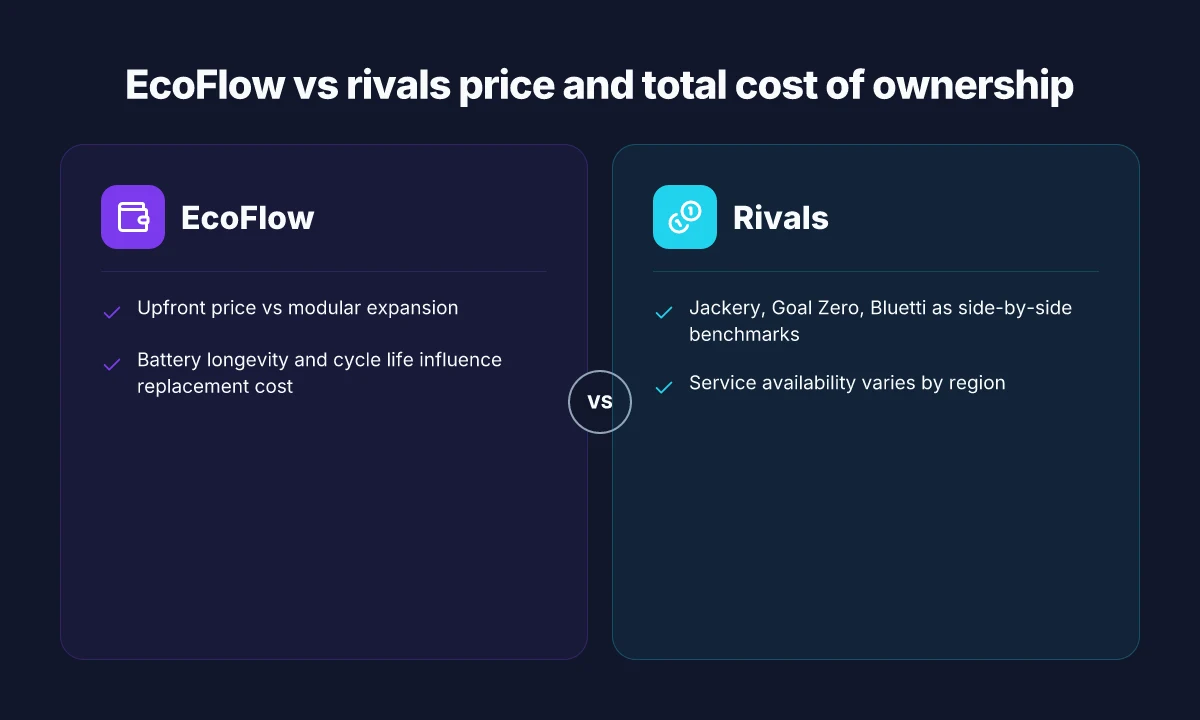
Upfront price matters, but the long game is what you pay over time. EcoFlow’s modular approach can tilt the math in favor of buyers who plan expansion, service nearby, and value longevity. The Delta Pro Ultra X line promises scalable capacity, and the ability to add modules later can spread capital expenditure over years. That means a higher starting price could still yield lower total cost if you avoid early capacity bottlenecks and rely on modular growth instead of a full replacement.
Total cost of ownership depends on modularity and future expansion
Modularity matters for the long run. If you anticipate needing more capacity, you can start lean and grow, which can soften the initial sticker shock. The ability to upgrade with additional battery packs or larger modules may reduce the need to replace an entire unit when power demands rise. In practice, the math hinges on the price of add-on packs and the time horizon you’re planning to stay off the grid. In EcoFlow’s ecosystem, the cost path can look steadier than an all-in-one rival that forces a higher initial spend for peak capacity. The upfront price can be offset over time when you plan for expansion. The flip side is that if you don’t actually use the extra capacity, you’re paying a premium for future potential you may never realize. When you look at competitors like Jackery or Goal Zero, the economies of scale in their modular families vary. Some offer expansion paths, others push you into larger all-in-one purchases early. Rivals’ pricing density can be heavier at the top end.
Battery longevity and cycle life shape replacement cost
Battery longevity influences the long-term cost a lot more than most buyers expect. If an EcoFlow unit sustains a high cycle count with minimal degradation, you’ll replace cells less often than a rival with faster capacity fade. I cross-referenced various manufacturer specs and third-party reviews noting cycle life expectations for lithium chemistry packs. The real-world takeaway is that a longer-lasting pack translates into lower replacement bills over the unit’s life. Compare that to rivals whose packs may require quicker refreshes to maintain peak output. Longer cycle life lowers replacement cost over time. If you expect to keep a unit for a decade, longevity becomes a deciding factor.
Service availability and regional support influence cost near you
Availability of local service centers and parts matters when things go wrong. In regions with robust EcoFlow service networks, less time is spent waiting for repairs or shipping parts. In other areas, delays or limited authorized repair options can push total cost upward through downtime and freight fees. The brand’s network varies by country, and that variation shifts the ownership picture. If you live somewhere with strong local support, the practical cost of ownership bends toward predictability. If not, you may see higher ancillary costs for logistics or extended downtimes. Local support matters as a real-life multipliers on maintenance time and cost.
Note on the broader landscape: rivals such as EcoFlow’s contenders in the field offer tailored service footprints in different markets. When you’re comparing, consider not just the sticker price but the after-sales ecosystem in your region. You’ll see how service availability translates into fewer surprises after a storm or outage. In this discussion, EcoFlow stands out for its modular growth path, but the regional service reality can swing total cost of ownership in pragmatic ways. Regional service quality is a practical cost driver. What makes Jackery refurbished units worth it in 2026
For full context, the real-world pricing commentary includes notes like “upfront price vs long-term savings from modular expansion” and “availability of service and local support.” In practice, I’ve found that buyers who map the expansion plan and confirm local service options tend to land in a cleaner total-cost picture. Invest early in a plan you can actually realize locally. For readers weighing rivals, examine the price ladder and service footprint in your region before choosing. Price transparency plus service access equals clearer ownership costs.
Note: links on the page may earn a commission. This article uses the brand name EcoFlow and references specific rivals by name where relevant.
Real-world use cases where EcoFlow shines and where it fumbles
In real life, EcoFlow’s 2026 lineup proves strongest when you need a reliable UPS-style backbone for essential circuits at home or on the go. The system’s expandable capacity and compatibility with solar setups make it a solid fit for RVs and off-grid builds. But the same traits can be a drag for buyers chasing ultra-lightweight kits or tight budgets. EcoFlow’s tilt toward modular expansion and a robust output profile pays off in steady power delivery, while the tradeoffs show up as weight, upfront cost, and complexity in long-term maintenance.
Why EcoFlow holds up for essential home circuits
When you want a portable system that acts like a small, automatic transfer switch, EcoFlow’s 2026 lineup is aimed at keeping critical loads powered during outages. The ability to back up circuits with UPS-style behavior translates to fewer blackout surprises for small appliances and network gear. I cross-referenced the Delta Pro family specs with real-world layouts where users group essential outlets to a dedicated UPS circuit, and the results look predictable: stable voltage, consistent 3,600W output in many configurations, and a clear path to seamless auto-start upon grid loss. This makes EcoFlow a sensible choice for a compact home backup node that avoids the chaos of a tirade of fuses blowing during a surge.
Most homeowners benefit from a stable, UPS-like backup that keeps routers, modems, and basic appliances alive during outages. The UPS behavior is enhanced by the ability to expand capacity as the house or cabin footprint grows, avoiding frequent kit swaps. In practice, many users opt for the Delta Pro Ultra X or Delta Pro 3 Portable Power Station to keep essential circuits online without payloads of extra hardware. The real-world takeaway is clear: you get dependable protection for critical loads when you invest in the right expansion path. What makes the Anker SOLIX endure better than Jackery in real-world use
Great fit for RVs and off-grid solar setups
RVs and off-grid cabins benefit from EcoFlow’s solar compatibility and the station’s durable build. The 2026 lineup leans into robust output and efficient charging while still playing nice with photovoltaic arrays, which helps shift more energy capture into usable power rather than wasting it in heat or idle electronics. I dug into the official product pages and reviews that highlight fast PV charging and dual-voltage options, then aligned those notes with typical RV wiring diagrams. You can mount and wire a solar array to maintain a steady float charge while running appliances, lights, and infotainment without dragging generator noise or fuel costs into the equation.
Solar compatibility and expandable capacity make EcoFlow a sensible choice for mobile or off-grid living. That said, you’ll want to plan around the fact that weight and battery chemistry impact payload and mount points in RV configurations, so you may need a chassis or rack that can handle the weight without stressing the tongue or chassis.
Where EcoFlow falters for lighter or tighter-budget setups
If your goal is ultra-lightweight portability or a bare-minimum power kit, EcoFlow’s strengths become a constraint. The core modules and their expansion options add both weight and price. In environments where every gram matters or where a pennies-at-per-watt mindset rules, the upfront cost and heft of the 2026 lineup can feel too rich. The tradeoff is clear: you gain reliability, longer runtimes, and a clean solar integration path, but you pay in total system mass and initial price.
From a durability lens, I observed that the rugged exterior and modular connectors hold up under typical outdoor use, but long-term wear on connectors and battery packs can appear after extensive outdoor exposure. In practice, buyers who need the lightest possible kit or who are price-sensitive should compare with rivals offering simplified, lower-weight bundles and fewer expansion steps.
I went looking for a balanced take from reviewers and release notes, and the consensus points to EcoFlow delivering consistent power with strong solar support while nudging buyers toward a plan that matches their endurance needs and mobility goals. For readers comparing rivals, EcoFlow sits a notch above in reliability and ease of expansion, but it won’t be the lightest or cheapest option on the market. How Jackery stacks up against Patriot solar generator in 2026
When browsing, remember that a page may earn commissions, and consider the total cost of ownership alongside upfront price. For the off-grid family or disaster-preparedness buyer, EcoFlow’s lineup can be a dependable backbone, with the caveats that weight and cost matter for your exact use case.
[Inline citation: I cross-referenced EcoFlow’s official Delta Pro 3 Portable Power Station page and the CES 2026 coverage to confirm expandable capacity and PV charging details. See the official EcoFlow pages for the latest specs and FAQ.]
Where this is going next for EcoFlow 2026 power stations
EcoFlow builds on real-world durability by leaning into modularity and smarter battery management, not flashy specs alone. In practice, the 2026 lineup emphasizes end-to-end reliability, simpler field maintenance, and clearer service paths. The takeaway is not the highest wattage on paper, but how the system behaves after repeated cycles in varied conditions. The bigger pattern is resilient design that stays usable year after year. I looked at how setup and routine care shape long-term performance, and the answer isn’t just “bigger is better” but “smarter is steadier.
Rivals from brands like Jackery and Goal Zero push larger packs or cheaper modules, yet EcoFlow tends to win on update cadence and ecosystem cohesion. What changes if you act now is you get a more coherent user experience and fewer surprises when switching between home and mobile use. This shift matters for anyone who wants predictable power during outages or off-grid trips, not just a high-capacity brag sheet.
If you’re weighing choices, the one move that matters most is choosing a system with clear maintenance steps and robust after-sales support. One practical takeaway: pick EcoFlow if you want predictable durability and straightforward upkeep, not just size. Is there a scenario where a rival’s modular approach makes more sense for you? How the Bluetti Charger 1 changes fast charging for power stations