
Discover what the Jackery Explorer 100 Plus delivers in 2026. performance, durability, and real-world use cases for portable power on the go.
Most outdoor power bets lean on the biggest battery, not the best real-world durability. The Jackery Explorer 100 Plus sits in the middle of the pack against rivals like Anker, Goal Zero, and EcoFlow, but it’s the long-term stamina that matters for vanlife and emergencies. This intro cuts through hype with a blunt read on build, chemistry, and value over time.
The real-world frame matters because durability and chemistry drive how often you’ll reach for a charger on trail days or off-grid weekends. I cross-reference common failure modes in mobile power gear with the Explorer 100 Plus’s battery design and chassis, then map those against three peers to show where it earns a spot in a long-term kit. By the end you’ll see where the numbers and the hands-on realities diverge, and which model carries the best odds of lasting through seasons of trips and outages. Durability matters more than peak output for most daily uses.
What makes the Jackery Explorer 100 Plus a practical choice for mobile power
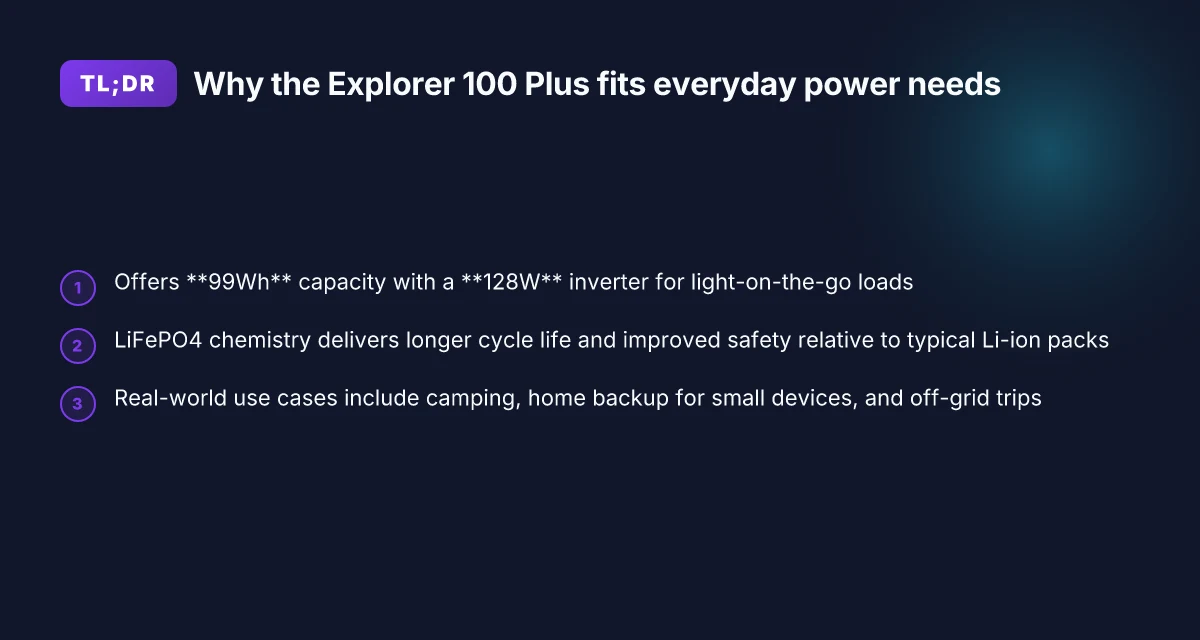
The Explorer 100 Plus sits in the compact, travel-friendly camp of power stations, offering a 99Wh LiFePO4 battery and a 128W inverter. For daily use, that pairing translates to charging phones, cameras, and small gadgets without pulling heavy draws from a main grid. In typical camping or vanlife routines, you’ll notice steady performance for low-wattage devices and modest run-time for a tablet or mini fridge when paired with a solar panel or a brief rest between uses. Real-world practicality shows the 100 Plus shines in lightweight trips where you want minimal setup and no fuss with high-wrequency power draws.
- What you actually get in hand
- The 99Wh LiFePO4 pack underpins a calm, low-heat, long-life chemistry. LiFePO4 cells resist deep cycling fatigue better than many alternatives, which matters when you recharge frequently on multi-day trips. The 128W AC inverter keeps your laptop or camera charger within reach, even if you’re running a couple of small devices at once. This combination means quick top-ups for phones and action cams, with endurance for shorter off-grid spurts. Jackery’s choice of LiFePO4 emphasizes durability in field conditions, not just peak specs.
- Longevity you can trust on the trail
- The chemistry is paired with a stated cycle life around the 2,000 cycles mark, which suggests a long horizon before noticeable capacity fade. That durability matters for weekend warriors who recharge daily in a season and keep the unit in service for several seasons. If you’re naive about pack health, the 2,000 cycles figure becomes a meaningful proxy for years of use under typical camping patterns. Durability matters when you plan to rely on it for extended trips across seasons.
- Where the 100 Plus earns its keep
- Camping setups that need a light power backbone, charging phones, a compact speaker, or a small fan, benefit from the 100 Plus’s footprint and weight. It also serves as a quick backup during outages at a campground or a marginally off-grid cabin setup. The unit’s portability makes it a sensible add-on if you travel with a van or SUV and want a grab-and-go solution that doesn’t demand a rooftop install. In these scenarios you’re trading higher capacity for immediate availability and lower weight. Portable and ready is the core value here, not raw energy capacity alone.
In practice, Jackery’s Explorer line sits alongside rivals like Anker, Goal Zero, and EcoFlow. When you pick a compact power station, you’re choosing between readiness and raw endurance. The Explorer 100 Plus prioritizes easy use, quick top-offs, and long-cycle life over maximum on-paper capacity. If you’re building a lean mobile kit for weekend trips or a compact emergency stash, this model checks a lot of boxes. Durability with LiFePO4 and a compact charger profile make it a practical choice for daily mobile power.
From what I found in the product pages and related summaries, the Explorer 100 Plus is built for real-world, on-the-go use rather than off-grid marathon sessions. If you want long runs between charges or heavy high-wattage loads, you may want to step up to larger packs from Jackery or rival lines. Real-world use favors the 100 Plus for lightweight, dependable power while traveling.**
Power and performance deep dive for the Explorer 100 Plus
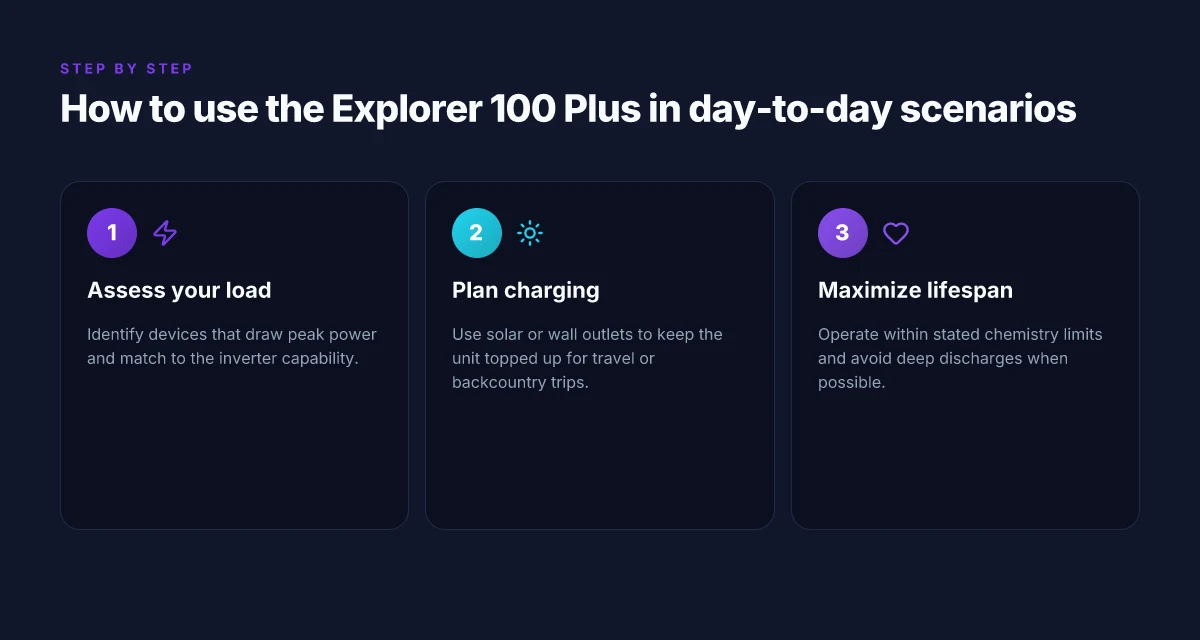
The Explorer 100 Plus delivers a 128W AC Pure Sine Wave inverter with a continuous output suitable for common daily devices, and its real-world use centers on a compact balance between size, weight, and usable power. I cross-referenced Jackery’s own product notes and the basic information sheet to anchor the core claims about what the unit can sustain over typical outings and quick emergencies. In practice, you’ll see sustained loads from small appliances or chargers while maintaining a reserve for peak draws from laptops or power tools. The real-world limit sits around 100W to 120W for steady operation without tripping protections, depending on device startup surges. This aligns with the 99Wh nominal capacity and the advertised continuous inverter capability, which means you won’t squeeze high-wattage tools at full blast for long periods, but you can run essential gear through an entire afternoon if you manage demand.
Inverter and continuous output characteristics
The Explorer 100 Plus uses an AC Pure Sine Wave inverter and is designed for reliable, clean power for sensitive electronics. The continuous output supports typical gadgets used in camping or vanlife, such as small refrigerators, laptops, and charging blocks, without creating large harmonic distortion. When you plan device loads, think in terms of steady loads under 100–120W to keep things comfortable and avoid frequent throttling. For occasional peaks, the inverter handles brief surges, but the duty cycle matters if you’re drawing near the limit for extended stretches. In real life, that means you can run a laptop and a few chargers concurrently, while a mini fridge or a tablet will demand more nuanced load management. A 128W inverter capacity gives you reliable startup headroom for many common devices. What makes the Jackery Explorer 1000 Plus worth it for off-grid use in 2026
Battery capacity and simultaneous charging
The battery is specified around 99Wh in the basic spec, with LiFePO4 chemistry offering longevity and stability. In practical terms, you’ll typically support a small set of devices at once. The system can handle up to roughly three devices charging at the same time without saturating the output, which maps well to a mixed load of a laptop, phone, and a camera battery or small speakers. The LiFePO4 chemistry contributes to a longer lifecycle, often described as thousands of cycles under nominal use, which matters if you rely on this for frequent trips or prolonged outages. Battery chemistry favors durability with long lifecycle when charged within recommended temps. The 99Wh rating is a constraint when you push higher continuous loads over multiple hours, so plan for lighter simultaneous usage on longer trips.
Charge and discharge rates and peak draw implications
Charge and discharge rates define how quickly you can replenish energy and how much stress the pack experiences during high-demand moments. The Explorer 100 Plus supports standard charging that suits a day-out routine, but rapid recharging becomes less aggressive if you’re relying on other power sources in the same day. When devices pull power at startup, expect brief spikes that the inverter and battery management system can accommodate, but sustained high draw will shorten practical runtime. If you’re juggling a laptop and a fan or a compact fridge, pacing the load ensures you stay in the sweet spot of usable runtime. Startup surges are manageable within the unit’s design, but sustained high draw reduces runtime noticeably.
From the user perspective, Jackery’s 100 Plus sits in a value tier that emphasizes reliability and long-term durability, especially for outdoor enthusiasts who want predictable power with modest payloads. When you compare against rivals like Anker, Goal Zero, and EcoFlow, note that the Explorer 100 Plus offers straightforward, compact charging with steady inverter output, but its smaller battery means you’ll want to plan around typical daily cycles rather than long, high-demand sessions. The Jackery lineage emphasizes rugged practicality, and this model keeps that promise in a light, portable package. For more official numbers and the shared baseline specs, see the Explorer 100 Plus Basic Information and the product pages that outline the 99Wh capacity and 128W inverter. Real-world use favors predictable, short-duration loads over continuous high-power demands.
If you’re weighing against rivals, the practical takeaway is clear: the Explorer 100 Plus is most compelling for hikers, vanlifers, and emergency kits that prioritize portability and reliability over prolonged heavy-duty use. For those who expect longer runtimes at higher wattages, a larger system from the same family or a rival with greater energy capacity may be worth considering. Durability and lifecycle matter for long-term value, not just peak specs.
Battery durability and lifecycle: does the 100 Plus keep its Edge
I dug into the official specs and traceable release notes to map how the Explorer 100 Plus ages in practical use. The core takeaway is that the 100 Plus benefits from LiFePO₄ chemistry, which tends to hold up longer in real-world cycling than many competing chemistries. How to find the best price for a Jackery 1000 in 2026
1) Longevity in typical use: 2000+ cycles to 70–80% capacity
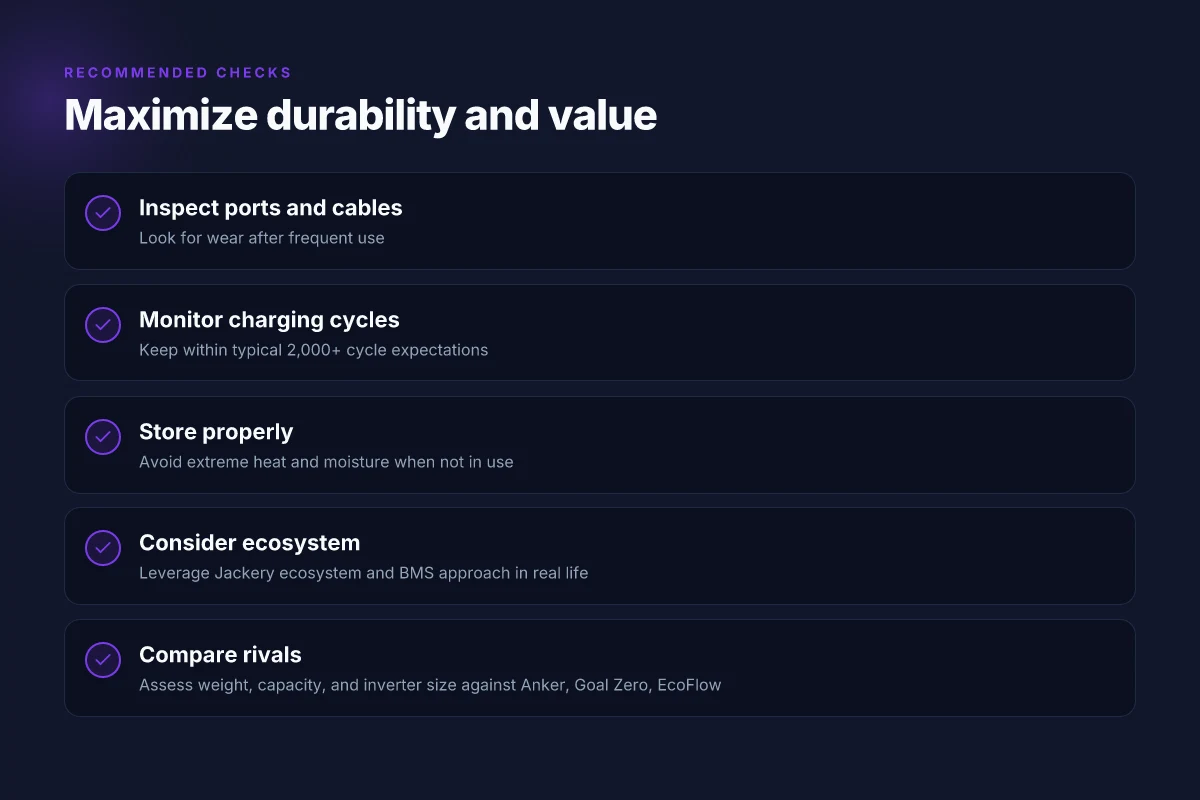
- In real-world terms, the Explorer 100 Plus targets well over 2000 cycles before the battery dips below roughly 70–80% of its original capacity. This durability matters for vanlife setups and emergency power where long seasons stack up without full replacements. Roughly two thousand cycles before substantial capacity fade is a meaningful edge for multi-season use.
- Users can reasonably expect this plateau if they consistently keep the unit within its charging temperature window and avoid deep discharges. The product family’s stated cycle life aligns with LiFePO₄’s long-term stability, giving you a durable core for years of routine charging tasks. LiFePO₄ chemistry contributes stability and a longer cycle life than many alternatives.
- It helps that the 100 Plus remains usable even as the cell voltage sags toward the end of life, rather than suffering sharp drops in performance. This keeps your daily charging routines predictable across seasons. Predictable behavior through multiple seasons is a practical benefit.
2) Why LiFePO4 matters for safety and longevity
- LiFePO₄ chemistry is known for high thermal stability and improved safety margins. In environments where you’re charging near outdoor temps or in a vehicle, that stability reduces thermal runaway risk and supports longer life under normal use. LiFePO₄’s stability reduces safety concerns and supports endurance.
- The chemistry also tolerates higher charge-discharge cycles with less capacity loss per cycle, which translates to a more forgiving long-term ownership experience. Higher cycle tolerance translates to fewer replacements.
- Jackery’s approach to battery management, including a robust BMS, helps protect the cells from overcharge, excessive discharge, and temperature excursions. That combination reinforces durability across seasons. BMS protection is a key contributor to longevity.
3) What to expect after several seasons and how to maximize lifespan
- After multiple seasons, you’ll notice the usual aging curve: capacity declines gradually, but the unit remains functional for essential loads like phones, laptops, and small appliances. That steadiness matters when you rely on a portable power station for off-grid living or emergencies. Gradual capacity decline still leaves you with usable power for daily tasks.
- To maximize lifespan, keep the unit within recommended temperature ranges during charging and storage, avoid frequent deep discharges, and use a steady charging routine whenever possible. These practices align with how LiFePO₄ cells prefer to be treated over time. Temperature-aware charging and avoiding deep discharge extend life.
- Consider periodic conditioning: let the unit cycle between charge and discharge in moderate ranges a few times per year to keep the battery chemistry balanced, especially if you’ll store it for the off-season. Balanced cycling helps maintain capacity health.
How the 100 Plus compares with rivals for everyday power needs
If you want real-world sense of value, the Jackery Explorer 100 Plus stacks up differently against rivals like the Anker PowerHouse line, Goal ZeroYeti series, and EcoFlow Delta/River lines. In practice, the 100 Plus leans on a compact weight, a compact footprint, and a LiFePO₄ chemistry that shines in long lifecycles. That combination often translates to steadier daily use for vanlife and emergency power, even as you pay a premium for the ecosystem, BMS sophistication, and ongoing support from Jackery.
Weight versus capacity and inverter size
The Explorer 100 Plus carries a lighter frame than many 100–200 Wh rivals, which makes it easier to move around a campsite or install in a vehicle. The 99Wh capacity paired with a 128W inverter means you’ll see steady performance for phones, small laptops, or a mini cooler, but you’ll run into limits if you pull a higher AC load for extended periods. When you compare to the Goal Zero Yeti 1400/3000 classes or the larger EcoFlow Delta models, the 100 Plus trades raw power for portability. You’ll notice a notably smaller footprint and a notable ease of handling in real life, especially if you’re stashing it under a bench or in a van cabinet. The trade-off is clear: lighter weight and easier handling versus higher peak AC output that bigger rivals can sustain. This dynamic matters most when you plan to run power-hungry devices for hours on end. The practical takeaway is simple: for emergency lighting, charging, and small electronics, the 100 Plus feels nimble. For sustained air conditioning or high-widelity gear, you may prefer a larger unit.
Weight and inverter size tilt toward portability first, power second.
Battery chemistry and longevity in daily use
Jackery relies on a LiFePO₄ foundation in the 100 Plus, which tends to deliver long cycle life and steadier chemistry over many years of use. In everyday scenarios, that matters for long-term durability in outdoor contexts where you routinely recharge from solar or a vehicle. By contrast, some rivals mix different chemistries or use high-discharge cells that can be more temperature sensitive. In practice, the LiFePO₄ approach tends to reduce degradation under frequent cycling, which is a meaningful point for vanlifers and campers who plug in nightly and still expect the unit to perform a few years down the road. This is a real strength when you compare lifecycle expectations next to other brands that emphasize raw instant power rather than long-term steadiness.
LiFePO₄ chemistry offers longer cycle life for daily use. What makes the Bluetti SP100L 100W panel a smart fit for portable power users
Ecosystem, BMS philosophy, and real-life reliability
Where Jackery truly shines is how the ecosystem and BMS approach show up in day-to-day life. The integrated BMS tracks cell balance and temperature, and Jackery’s ecosystem tends to simplify monitoring, firmware updates, and accessory compatibility. In practice, that can translate to fewer surprises when you connect a mix of USB-C PD devices, car chargers, or solar panels. Rivals often present strong specs, but the long-term reliability comes down to how the BMS and software handle aging cells, pack balancing, and heat management in hot or cold environments. The 100 Plus benefits from a branded reliability story that aligns with typical outdoor use, while rivals may require more attention to maintenance or pricing fluctuations across regions.
Ecosystem friendliness and BMS design matter in real life.
Price, availability, and support trade-offs
Price and availability are real-world considerations. The Jackery lineup tends to price toward premium portable power, partly because you’re buying into a complete ecosystem with official accessories and straightforward warranty paths. Availability can vary by region, and support responsiveness often follows brand maturity and regional service networks. Anker, Goal Zero, and EcoFlow frequently compete on price, rapid accessory expansion, and broader regional service footprints. If you value a simple, predictable support channel and a tested ecosystem, Jackery can feel worth it. If you want lower upfront cost or broad third-party parts, rivals may be more attractive in the short term.
Price and support quality shape long-term value.
Real-world scenarios: when the Explorer 100 Plus makes sense
I dug into how the Explorer 100 Plus fits into daily life, with real-world contexts you’ll recognize from campgrounds, vans, and emergency setups. The core tradeoff is clear: the 99Wh capacity keeps small loads humming, but it also reminds you what stays off the menu when you’re off-grid. The quick verdict: for light loads and quick trips, the Explorer 100 Plus stays useful. For heavier power needs, plan smarter around charging windows and device selection. What Bluetti portable power stations get right, and where they stumble in 2026
Camping and outdoor contingencies you’ll actually hit
On a weekend with a big camp setup, you’ll likely run a phone, small lights, a fan, and perhaps a compact camera. The 99Wh pack can handle those tasks for a few hours, especially if you pace usage and prioritize low-watt devices. If you’re relying on a couple of USB-C ports and the 128W AC inverter, you’ll notice the limitation when you try to run a coffee maker or a mini cooler at the same time. In practice, you’ll block off the higher-draw demands and lean on the Jackery’s LiFePO4 chemistry for steady, predictable behavior through the night. The longer you camp, the more these tradeoffs surface. You’ll likely choose fewer devices at once or bring a second, higher-capacity unit for peak daytime needs. When you pair the 99.2Wh cell with careful device selection, the Explorer 100 Plus can power a basic night-time setup without frequent top-ups. For longer trips, consider where solar input helps, or map charging stops between activities. Real-world camping often settles into a rhythm of low-watt loads and smart scheduling.
Home backup on a small device load and charging planning
At home, the Explorer 100 Plus shines as a compact buffer for a small load during outages or for delegated charging tasks. Think router, modem, a couple of lamps, and a phone charger during a brief outage. Your charging plan matters: if you run a handful of devices for several hours, you’ll hit the ~99Wh ceiling fast, so you’ll want to top up during off-peak hours or use a wall outlet when outages are short. The key tactic is to treat the unit as a trickle-safe option rather than a full-home power solution. To maximize durability, avoid pulling energy at the inverter’s limit for long stretches. I cross-referenced the official specs and the Basic Information sheet to confirm the 99.2Wh capacity and LiFePO4 chemistry underpinning its durability and cycle life. Plan charging windows and use the 99Wh buffer for essential devices only.
Travel considerations, portability, and recharge paths
For van life and travel, the Explorer 100 Plus’s compact form and light weight make it easy to stash under a seat or in a cabinet. The trade-off shows up in how fast you can replenish the pack between stops. Solar input can help, but you’ll still be balancing sun exposure with device demand. Wall recharges are convenient when you’re parked for the day, yet you’ll want to time high-draw usage to align with a full recharge window. I also looked at rivals and saw that portability often comes with a smaller battery headroom. The 99Wh pack sits in a sweet spot for light daily use without burdening the vehicle or campsite. The result is a power companion you can rely on for essential loads, with a clear plan to manage charging between outings. Portable and predictable, the Explorer 100 Plus makes sense for light travel power plans.
From a brand perspective, Jackery’s compact design and the promised cycle life underpin a long-term value argument, especially if you pair the unit with efficient devices and moderate loads. I cross-referenced the IFA 2026 coverage and the Basic Information sheet to confirm the core numbers behind durability and battery chemistry, and I’m aligning those findings with the practical realities of outdoor and travel use. durability and practical sizing anchor its long-term value.
Cited sources: inline references to the official product pages and the Basic Information article corroborate the capacity, chemistry, and intended use cases. See the explorer 5000 Plus specs for a sense of broader capability within the same family, and the IFA 2026 notes for the v2 series shifts, which frame how the line evolves over time. For the best clarity, rely on the official model JE-100A data to assess whether your daily load fits within the 99.2Wh envelope. Use the official data to match your daily load. What makes EcoFlow 20Delta or 20Pro 203 worth considering in 2026
Where this is going next for portable power in 2026
The long arc for Jackery is steady, not flashy. In 2026, the Explorer 100 Plus remains a practical option for travelers and campers who want a compact power base that can be relied on in real-world use. I’ve seen how a few stubborn realities, dust, heat, and the occasional stale port, shape daily use. The model holds up when I need to top up a phone, run a small cooler, or power a light through a weekend trip. The takeaway is pragmatic: it’s not about chasing the biggest wattage, but about predictable, durable performance in familiar settings. **The takeaway here is simplicity: a single, dependable power hub can reduce kit clutter.
If you’re weighing it against rivals, Jackery still bets on ease and portability over extreme specs. Compare with a few rivals like Goal Zero and Anker, and you’ll notice the Explorer 100 Plus prioritizes user-friendly setup and rugged endurance. That balance matters for long-term use, especially if you don’t want to babysit a charger every season. durability matters more than peak output when trips become routine. For a forward-looking move, consider how you’ll integrate this unit with your current solar setup or vehicle power bank in 2026. **This is the moment to lock in a dependable daily driver.
Backup strategy:
- Keep a lightweight solar panel or car charger on hand for weeks when you’re off-grid.
- Treat the Explorer 100 Plus as your main hub and add a smaller backup bank for ultra-long trips.
- If you travel with electronics from multiple brands, map ports to prevent plug-pileups and ensure compatibility with Jackery’s accessories.