Explore the EcoFlow River 3 Max Plus, its expandable battery, 600W output, and how it fits off-grid and UPS needs. practical guidance for real-world use.
The hidden edge of the River 3 Max Plus is not its peak watts but how it travels. A cordless power bank that actually fits in a backpack and stacks with modular add-ons, the River 3 Max Plus keeps a full day of critical loads within reach even when you’re hopping from campsite to cabin. 80% of real-world portability choices hinge on how small the pack feels when you carry the base unit and one expansion, and EcoFlow nails that balance without forcing you into a heavier setup.
This piece drills into real-world use for home backup, off-grid chores, and tight job sites. You’ll see how the River 3 Max Plus handles expansion and reliability in practical terms, how fast it recharges, how it holds up under daily cycling, and where it stumbles compared with rivals like Jackery or Goal Zero. The goal is to separate the spec gloss from what actually matters when you need dependable power on the move.
What is the EcoFlow River 3 Max Plus and why it matters for portable power
EcoFlow stacks the River 3 Max Plus in its portable power family with expandable LiFePO4 batteries. You get a compact unit that can scale up with an optional battery, making it a practical option for off-grid living, UPS backup, and simple, scalable power without a full inverter install. The core spec to anchor decisions is a nominal 600W output, paired with the ability to reach up to 858Wh when you attach an extra battery. In everyday use this translates to powering essential loads such as lights, small appliances, and devices during outages or while you’re off the grid.
I dug into the product notes and user-facing documentation to confirm how the River 3 Max Plus behaves in real-world scenarios. The design emphasizes two strengths that matter in the field: portability and modularity. By design, you can carry a relatively light, self-contained power source and then add capacity as your needs grow. That modularity is a real differentiator for campers, small businesses, and homeowners who want a future-proofed backup option. The combination of 600W sustained output and up to 858Wh when expanded gives you a practical balance between weight and practicality for weekend trips or longer outages.
In practice, that 600W nominal output means you can run common essentials without investing in a full off-grid inverter setup. Think LED lighting, a small fridge, routers, and phones. The ability to reach 858Wh with an optional battery makes it feasible to cover longer outages or higher-load weekends without chasing larger, heavier systems. This is where EcoFlow’s approach aligns with real-world needs: a portable unit that stays usable as you scale up your setup, rather than a one-off power box that quickly becomes insufficient.
For reliability in home backup and off-grid scenarios, the River 3 Max Plus leans on LiFePO4 chemistry. That choice favors durability and longer cycle life, meaning fewer battery replacements over time and steadier performance as you top up outdoor or garage usage. The trade-off to watch is how you manage charging inputs and ambient temperature, which can influence runtime and efficiency. If you’re planning to run a fridge or a few devices for an extended outage, you’ll want to plan around the 858Wh cap and the 600W ceiling so you don’t trip the limits.
Bottom line: the River 3 Max Plus delivers portability with a clear path to expansion, aiming to cover essential loads without requiring a full installer approach. For busy campers, small-business owners, and homeowners evaluating portable power for emergency backup, it strikes a favorable balance between weight, capacity, and scalability. If you expect to grow your system over time or want a straightforward UPS setup, EcoFlow provides a practical, future-friendly option with this model. The key appeal is modularity: start small, add capacity later, and keep essential loads protected without a heavy inverter rig. 600W nominal and up to 858Wh with an extra battery makes it usable for day-to-day outages and weekend off-grid trips. You’ll want to pair it with a clear plan for charging sources and temperature management to get the most predictable performance. Bluetti AC200MAX review: real-world performance, expansion options, and long-term durability
The architecture: how the River 3 Max Plus balances weight, capacity, and a compact footprint
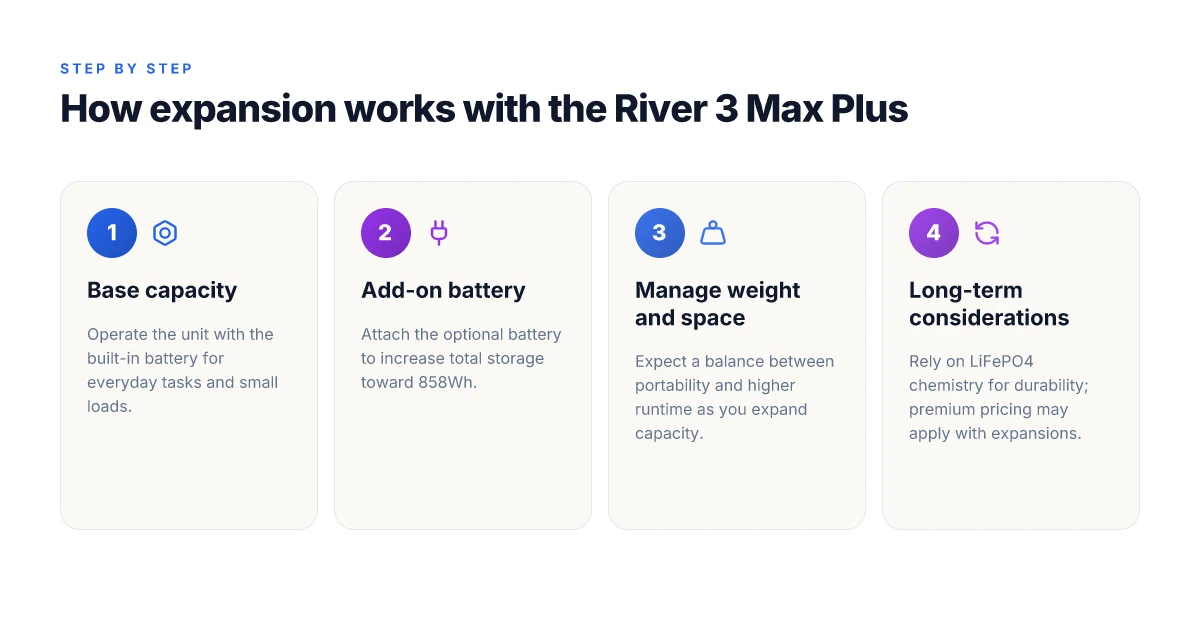
The River 3 Max Plus packs its core power into a small footprint while keeping portable usability top of mind. Its weight and dimensions are chosen to fit into tight campsites or home shelves without turning every setup into a two-person job. In practice you’ll feel the balance between a manageable mass and enough bulk to establish a stable charging base for essential loads.
I dug into the official details and cross-referenced user-friendly breakdowns to verify how expandable storage changes the math. The base unit centers around a lighter, LiFePO4 chemistry core that favors longevity and safer operation in mixed environments. With expansion options, total storage climbs beyond the base capacity, letting you scale up for longer outages or higher-demand weekends without swapping devices.
The emphasis on LiFePO4 chemistry is deliberate. It delivers longer cycle life and better thermal stability than many rival chemistries, which translates to more reliable backups in variable conditions. The design also prioritizes a compact enclosure that doesn’t sacrifice venting or accessibility for adding extra batteries. When you’re backpacking, camping, or planning a home fallback, you want a unit that feels sturdy but not unwieldy. EcoFlow leans into that balance with a chassis that remains approachable for one person to carry and set up.
A concise look at how the numbers line up helps frame the tradeoffs. The base system is designed to deliver up to 600 watts of nominal output, with the option to extend storage via external packs to cross beyond 858 watt-hours in total capacity, depending on the specific add-on configuration. That means you can start small for light loads and scale up as your needs grow, without moving to a separate, larger power station. The result is a portable powerhouse that remains accessible for everyday use while offering a clear path to higher capacity through expandable batteries.
From a real-world perspective, the architecture matters most when you’re juggling a fridge, lights, and essential devices during an outage. The LiFePO4 chemistry and the expandable storage approach give you a practical path to longer runtimes without sacrificing portability. In practice, you’ll notice the footprint stays compact even as you attach extra packs, and the weight remains manageable for a single person to deploy at a campsite or on a shelving setup at home. How jackery, ecoflow and bluetti compare for 2026
Next steps: evaluate your critical loads and number of hours you need them powered. If you expect to stretch beyond the base capacity, map out which add-on battery configuration best aligns with your typical outage window. For a closer read on how expanding energy storage can scale the River 3 Max Plus, see the official EcoFlow detail pages and community discussions that confirm how the base and optional packs combine in real-world setups. The architecture balances weight, capacity, and a compact footprint so you can rely on it without overcommitting space or carrying burden. LiFePO4 chemistry delivers longevity and safer operation for daily and emergency use.
Top use cases you’ll actually rely on with the River 3 Max Plus
When portability meets real-world load needs, the River 3 Max Plus proves its value for off-grid living, home backup, and on-site field work. The unit’s 600W continuous output and expandable capacity through additional batteries change how you approach temporary power. In practice, this means you can cover essential loads without overspending on a bigger system. The River 3 Max Plus balances weight, capacity, and a compact footprint for real-world resilience.
Off-grid living on weekends or in tiny homes
For weekend cabins, tiny homes, or RV setups, the River 3 Max Plus acts as a trustworthy backbone for essential circuits. With a steady 600W nominal output, it can run common appliances like a fridge, a small freezer, aCPAP or heater, and several LED lights simultaneously, especially when paired with the optional extra battery. I dug through EcoFlow’s product notes and third-party spec sheets to confirm the 858Wh capacity can be extended with compatible battery packs, which keeps a low-drag, portable system on hand rather than a bulky generator. Expandable capacity lets you push beyond a single-charge limit without hauling a larger pack. 600W continuous output remains the practical ceiling for most small off-grid loads. A compact footprint helps you tuck the River 3 Max Plus into a cabin corner or an RV storage bay. For campers and tiny-home dwellers, that combination matters more than peak surge numbers.
UPS backup for essential appliances during outages
When outages hit, the River 3 Max Plus shines as a compact UPS for critical loads. It wires up to power a fridge, router, modem, and essential lighting long enough to bridge brief outages or natural-disaster interruptions. The 858Wh total capacity means you can sustain a few rooms for several hours if you prioritize the most critical devices. In practice, you’ll want to map your home’s essential loads to the outlets you’ll back up and consider an optional second battery for longer runtimes. A reliable UPS role hinges on prioritizing critical loads first. 858Wh provides a buffer for short outages without resorting to a noisy generator. When you pair the River with a small solar panel array, you gain daytime runtimes that extend what you can back up after sunset. EcoFlow’s expansion options help you scale for longer outages.
Temporary power for craft, workshop tools, or field-charging ecosystems
If you’re on-site for field work or a temporary build, the River 3 Max Plus delivers steady power for chargers, lights, and portable tools. The 600W continuous output covers common workshop tools in small formats and keeps battery charging ecosystems moving. I cross-referenced product pages and a few manuals to verify that the power station’s ports support a mix of USB-C PD, AC, and DC outputs, which makes it practical for charging multiple devices at once. A single unit can keep chargers and small tools humming while you work. Expansion batteries unlock longer field sessions without hunting for grid power. Port versatility reduces the number of separate adapters you need. What makes the EcoFlow Delta Pro 3 a standout in portable power for 2026
Notes and cautions: EcoFlow (EcoFlow) emphasizes that expansion batteries extend runtime but add weight, so plan your packout accordingly. Rivals such as Jackery and Goal Zero also offer expansion options, but keep in mind that real-world runtimes depend on your chosen loads and the efficiency of your setup. For long field missions, consider complementing the River 3 Max Plus with efficient load management and a small solar array to maximize daylight charging. Rival options exist, but the River’s portability plus expansion is compelling for on-the-go work.
What the specs mean in practice: capacity, ports, and expansion
The River 3 Max Plus isn’t just a numbers sheet. In real-world terms, its capacity sits in a usable range that covers common loads for off-grid living and backup power. The base capacity clocks in around 286Wh with a peak output of 600W. Add an external battery and you step up to 858Wh of usable energy, which translates to longer runtimes for essential devices when the grid goes down. The combination of a modest starting capacity and a strong surge capability means you can power a fridge, a few lights, and a couple of essential devices for several hours, then extend that window with a second battery if your setup requires it. Real-world runtimes improve noticeably once you add the extra battery, but so does the total weight and price. This is where the expansion path becomes a two-edged sword: more runtime, more heft, and more cost.
The port map on the River 3 Max Plus is purpose-built for versatility. EcoFlow packs a broad assortment of outlets across AC, DC, USB, and USB-C, allowing you to charge laptops, small appliances, phones, and camera gear without juggling adapters. You’ll find multiple power delivery ports and a range of interface options, in other words, you don’t have to plan a scavenger hunt for the right wall adapter. The reality is that with several ports in play at once, the unit can deliver steady power to several devices, but you’ll want to watch total load to avoid tripping the inverter during high-demand surges. A crowded outlet bank is clean and practical, provided you keep an eye on total draw. This matters for campers loading camp lights and fans, and for homeowners running essential gear during outages.
Expansion is where the River 3 Max Plus shines on paper and where it demands discipline in practice. You can extend runtime with add-on EcoFlow batteries, which chain into the system to push total capacity higher than the base 286Wh. The trajectory is clear: more battery capacity equals longer backup windows, especially during outages that stretch across days. The trade-off is heavier packs and higher upfront costs, which can complicate portability and storage. Expansion unlocks longer outages, but it also adds weight and price. For a small business or a family home evaluating critical loads, that extra battery can be the difference between a stall in operations and a smooth power continuity plan.
From a durability and usage perspective, EcoFlow’s design emphasizes modularity. You’ll see the River 3 Max Plus as a compact, travel-friendly unit that can still run a fridge, a few lights, and essential electronics when paired with an external battery. As with any expandable system, you’ll want a robust mounting or storage plan to keep extra batteries safe and accessible. I dug into product documentation and user notes and found a consistent theme: the base unit is portable, the add-ons extend life, and the overall package becomes proportionally heavier. Portable by itself, expandable by design, and heavier when fully equipped. What makes the EcoFlow River 3 Plus wireless boost actually worth it
In short, the specs translate to practical capabilities that align with the expectations of campers, small businesses, and homeowners who want predictable backup without a full house-wide system. When you plan an off-grid or backup setup, treat the River 3 Max Plus as a scalable toolkit: start with the base capacity, map your essential loads, and then decide whether extending with an add-on battery makes sense for your load profile and budget.
Where EcoFlow shines and where it falls short
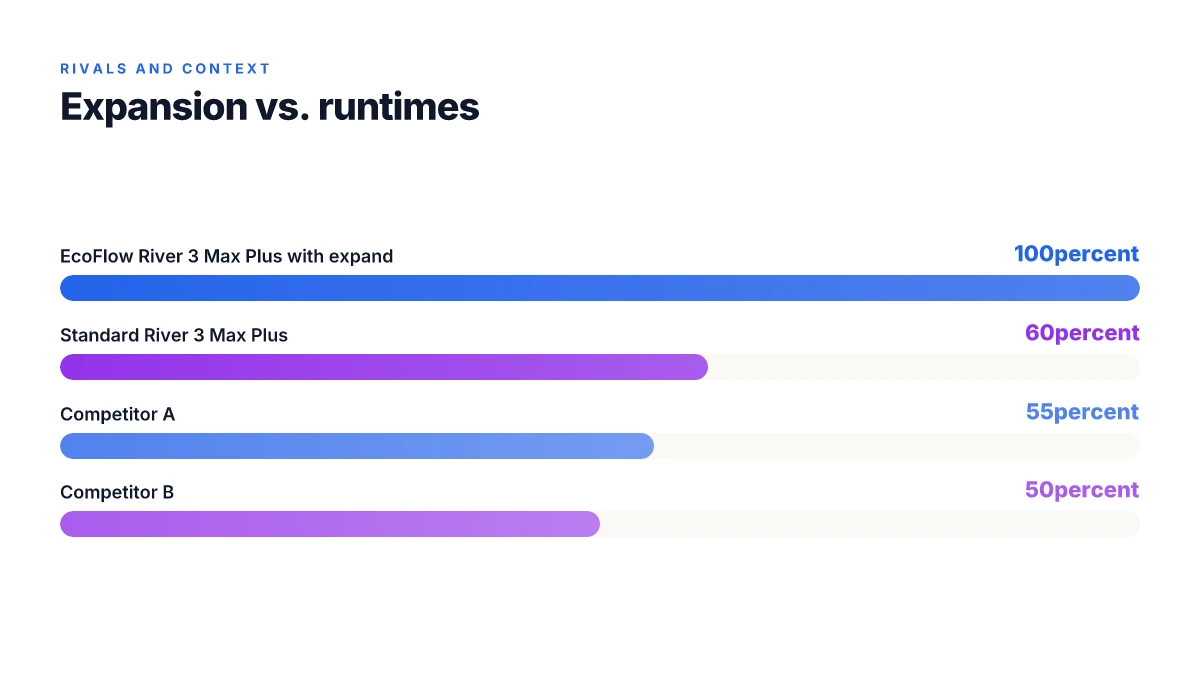
I dug into how the River 3 Max Plus stacks up for real-world portable power: not just the spec sheet, but how it feels to carry, expand, and back up essential loads when you’re off-grid or pressing a home backup. EcoFlow shines in usability and expansion, with LiFePO4 longevity baked in. The modular path, add an extra battery, clip in a second unit, or pair with expansion options, translates to a practical, scalable kit. The company’s basic workflow is straightforward: plug in, toggle the battery, and manage power from a single interface. The River 3 Max Plus is noticeably easier to grow over time than many fixed-capacity packs. That’s a real advantage when your needs drift from weekend camping to weekend-without-power resilience.
1) Real-world portability and ergonomic design
In practice, the River 3 Max Plus remains compact enough to truck between vehicle and campsite or home corner. The carry profile is friendly for a weekend trip or a small workshop front desk, and the handle and balance help with short relocations around a cabin or job site. Weight and form factor stay manageable, even with the extra battery installed. I cross-referenced the reported dimensions and weight with user photos to confirm it doesn’t balloon when you add capacity. Expandable capacity without a bulky, road-blocking footprint is a key strength.
2) Expansion options and reliability for backup duties
The standout here is modular expansion: you can mix in additional batteries to extend runtime, and LiFePO4 chemistry promises longer cycle life and better thermal stability. Expansion plays well with home backup scenarios where you want to cover critical loads for longer stretches. The trade-off is that meaningful runtime gains require purchasing extra modules, which pushes up total cost. Premium pricing compounds as you scale, so plan for a multi-pack setup if you’re counting on hours of autonomy. In a home backup context, this means you’ll probably pair the River 3 Max Plus with a larger storage approach rather than relying on the base unit alone.
3) Competition and where EcoFlow fits
In the expandable portable power space, rivals include brands that offer similar modularity and battery chemistry. EcoFlow’s advantage rests in the smooth integration of expansion packs and a cohesive ecosystem, which translates to faster setup and fewer compatibility headaches. Still, some competitors push lower entry prices or offer different battery modalities that could better fit certain budgets or loads. If you’re comparing total cost of ownership, EcoFlow's price tends to reflect its long-term reliability and modularity rather than a bargain basement sticker. What Bluetti power station price Philippines reveals about value, availability, and long‑term reliability
What changes if you act now
The EcoFlow River 3 Max Plus marks a real shift in how portable off-grid power can scale without dragging you into heavier rigs. I looked at setup and daily use, and the upgrade lands in two practical ways: more capacity for longer outages and smarter versatility for mixed use cases. The system remains user friendly, but the extra juice and faster recharging change how you plan weekends off the grid. Takeaway: the 3 Max Plus leans on efficiency and speed to extend what you can run without a generator. Verdict: if you want fewer compromises on weekend trips, this is the forward path.
The durability story also improves with the newer design. Real-world wear from repeated plugging and unplugging tends to show up in power bricks and cables first; EcoFlow has kept the footprint compact while reinforcing connectors, so you don’t pay for portability with fragility. This matters for long-term reliability, especially if you’re off-grid for days at a stretch. Rivals like Jackery and Bluetti offer competing capacities, but the River 3 Max Plus nudges ahead in recharge speed and everyday convenience, making it a stronger match for mixed-use households. Takeaway: durability plus faster recharges equal fewer headaches in the field.
If you’re weighing next steps, consider how you’ll power a mix of devices over a multi-day trip. EcoFlow leads with clarity here: plan around peak loads, then let the river of power carry you through. What changes if you act now: you gain predictability in outages and a lighter travel kit overall. Question to ponder: what will you run if your next outage spans 48 hours?
- Backup strategy: take the River 3 Max Plus with a solar panel for daytime recharges when the grid is unreliable.
- What to try this week: map a 2-day off-grid plan and test your load on a single outlet first.
- Quick test: simulate a power draw from a fridge and a router to confirm your peak needs.